The Only Tee You Need
Supima Round Neck
Fiber Guide · B2B Sourcing · Data-Driven
Acrylic Yarn for
Casualwear.
Acrylic — polyacrylonitrile (PAN) fibre, synthesised from acrylonitrile monomer at 85%+ concentration — produces a yarn that mimics wool's bulk and warmth at a fraction of the cost: acrylic staple fibre typically prices at ₹130–180/kg versus wool's ₹800–2,400/kg depending on grade.
A comprehensive breakdown for sourcing teams.
Get Sourcing Advice →Free consultation · Data-driven recommendations
Why Acrylic
What sets Acrylic apart for Casualwear.
The gap is structural, built into the properties of every fibre.
01
Thermal Performance at Accessible Price Points
The commercial case for acrylic in casualwear begins with physics. PAN fibre's thermal conductivity of 0.033–0.040 W/m·K is lower than every major competing casualwear fibre — lower than cotton (0.046–0.071), polyester (0.044–0.052), and approaching the range of wool (0.030–0.040 W/m·K). This means acrylic traps more body heat per unit weight than cotton or polyester in equivalent knit constructions, delivering warmth that genuinely tracks against wool for most end-use scenarios in the 10–20°C ambient temperature range that defines transitional-season casualwear. The practical consequence: an acrylic fleece at 250 GSM delivers warmth comparable to a 300 GSM cotton fleece, allowing lighter garments with equivalent thermal performance. For casualwear brands building a transitional-season collection — lightweight knitted pullovers, casual crewnecks, long-sleeve layering pieces — acrylic's thermal efficiency per gram is a genuine structural advantage over cotton. At yarn prices of ₹130–180/kg versus cotton at ₹250–400/kg, that thermal advantage at lower GSM produces both a functionally superior cold-weather garment and a lower cost per garment. No other mainstream casualwear fibre achieves this combination.
02
Colour Vibrancy: The Acrylic Differentiator
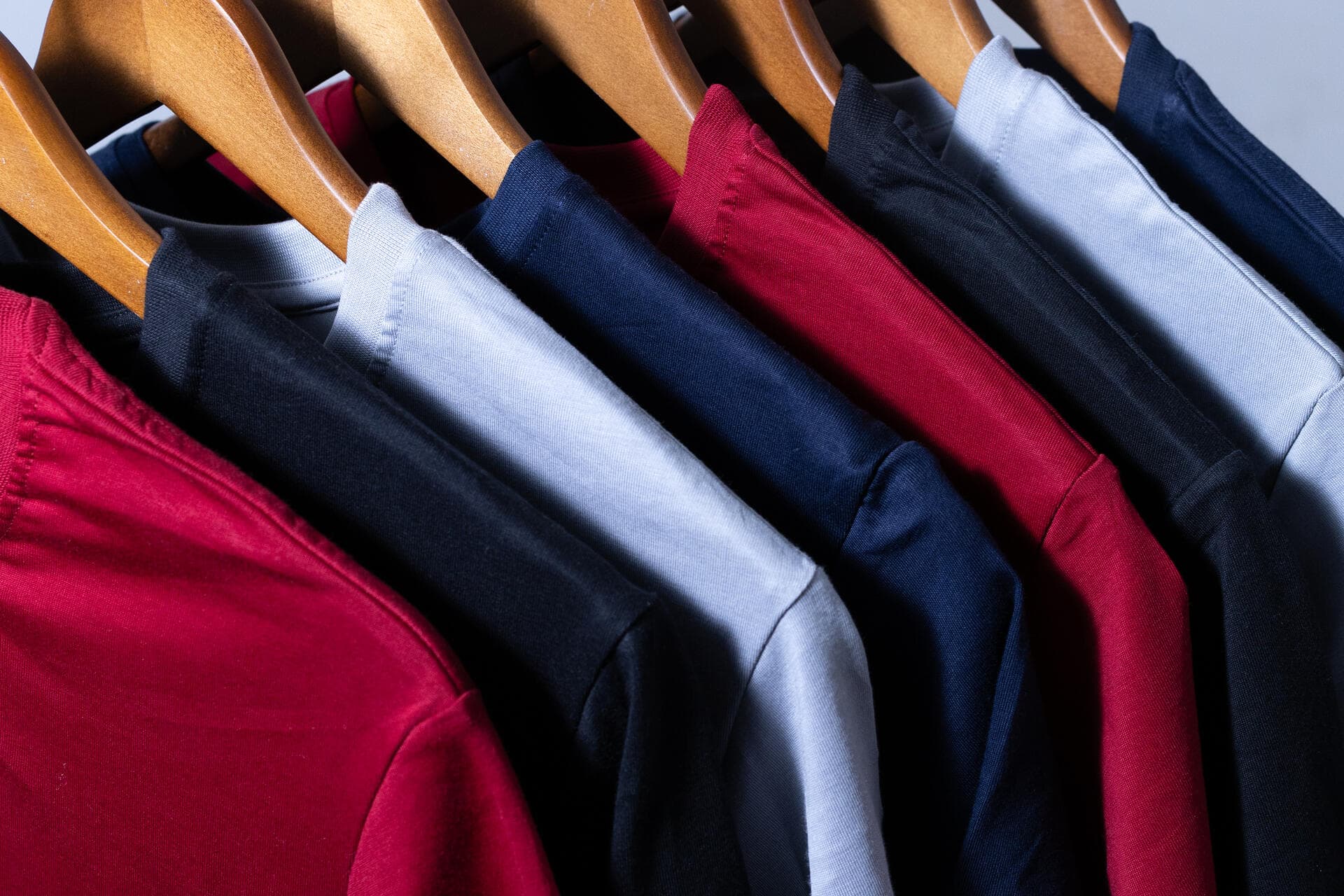
Acrylic's cationic dyeing mechanism is the reason the world's most saturated, most vividly coloured budget knitwear is almost always acrylic. PAN polymer contains anionic sulphonate groups built into the polymer chain during synthesis; cationic (basic) dyes bond ionically with these sites, producing extremely high dye uptake and coverage uniformity. The result is colour depth, brightness, and chromatic purity that reactive-dyed cotton cannot match at equivalent dye bath loading — particularly in the red, blue, and vivid spectrum where casual DTC brands building colour-forward collections need differentiation. Wash fastness for cationic-dyed acrylic: ISO 105-C06 Grade 4.5–5, consistently better than reactive-dyed cotton (Grade 4–4.5) at comparable dye bath conditions. Light fastness ISO 105-B02 Grade 5–6 for medium and deep shades — roughly one grade better than cotton, which matters for outdoor casualwear where UV exposure is a real use condition. For casualwear brands running large colour assortments (12–20 colourways per season), acrylic's dyeing consistency across a wide spectrum is a significant production advantage: colours that are difficult or expensive to achieve on cotton — vivid oranges, electric blues, saturated reds — are standard, reliable results on acrylic.
03
Anti-Pill Acrylic: Engineering the Fibre's Primary Weakness
Pilling is acrylic's most serious commercial limitation and the source of most consumer dissatisfaction with budget acrylic knitwear. Understanding the mechanism is necessary to source correctly. Pilling occurs when surface fibres work loose from the yarn structure through abrasion and then tangle into small fibre balls (pills) anchored to the fabric surface. The degree of pilling depends on two variables: fibre tenacity (weaker fibres break free more easily, forming free fibre ends that pill) and yarn construction (open, low-twist yarn structures allow more fibre mobility). Anti-pill acrylic addresses both variables. Modified PAN polymers (using comonomer systems that increase fibre tenacity above 2.2 cN/dtex versus standard acrylic's 1.8–2.0 cN/dtex) are harder for abrasion to detach from the yarn structure. Combined with tighter twist factors at spinning (twist multiplier 3.8–4.5 versus standard 3.0–3.5) and bio-polishing finish, anti-pill acrylic fabric achieves Martindale Grade 3.5–4 in knit constructions — meaningfully better than standard acrylic (Grade 2.5–3) and approaching combed cotton's 3.5–4. The sourcing implication is direct: specify anti-pill grade explicitly in your purchase order; do not accept standard-grade acrylic for any casualwear that will experience regular abrasion (collar edges, elbow zone, cuff edges). The yarn cost differential is ₹15–25/kg — an investment of roughly ₹8–12 per garment that eliminates the most common quality failure mode.
04
Wool Alternative at the DTC Price Point
Acrylic's market position as a wool alternative is commercially real, not just marketing convenience. Fine-dtex acrylic (1.2–1.5 dtex, round cross-section, high-pile structures) produces fabrics that the majority of non-technical consumers describe as "wool-like" in blind hand-feel tests. In Martindale softness evaluations, fine-dtex acrylic jersey scores within 10–15% of medium-grade wool at comparable GSM. For DTC brands building a casual knitwear collection at ₹1,500–2,500 retail price points — the segment where the customer wants warmth and softness but will not or cannot pay ₹4,000–8,000 for merino — acrylic is not a second-best option. It is the correct fibre for the price-performance target. The critical specification decision is acrylic grade. Bulk standard acrylic at 2.0–3.0 dtex feels noticeably synthetic and coarser — it is appropriate for utility outerwear and workwear but not for DTC casualwear claiming softness or premium positioning. Fine-dtex (1.2–1.5 dtex) costs ₹20–35/kg more but is the minimum spec for any acrylic casualwear that needs to survive consumer comparison to the wool-adjacent market. The difference between these two grades is not detectable in product photography but is immediately apparent to a consumer who touches the garment — and a casualwear brand's return rate will reflect that distinction within one season.
Technical Details
Manufacturing specifications.
Decision-grade specs for Acrylic in Casualwear. Open each block for the numbers, process constraints, and sourcing details that matter before production.
4 sections
25 checkpoints
Quick Read
First-pass technical cues
GSM Range
Lightweight knitted tops / long-sleeve tees: 180–220 GSM (acrylic jersey or interlock)
Yarn Count
Fine lightweight knitwear (1.2–1.5 dtex, Ne 30s–40s): For premium-positioned DTC casualwear claiming softness
Knit Construction
Single jersey: Most common for lightweight acrylic casualwear; prone to curling at edges without finishing, requires compaction and stabilisation
Shrinkage
Standard acrylic (heat-set finished): 1.0–2.0% length, 0.5–1.5% width after first wash at 30°C
GSM Range
• Lightweight knitted tops / long-sleeve tees: 180–220 GSM (acrylic jersey or interlock) • Core casualwear knitwear (pullovers, crewnecks): 250–300 GSM (acrylic fleece or heavy jersey) • Mid-weight sweaters / transitional-season layers: 280–360 GSM • Heavy-pile casualwear (bouclé, high-pile knits): 350–450 GSM • Casual lounge and at-home knitwear: 200–250 GSM (rib, jersey variants) Note: acrylic achieves warmth at lower GSM than cotton; do not spec acrylic casualwear at cotton equivalent GSM or you will overshoot warmth and hand weight.
Yarn Count
• Fine lightweight knitwear (1.2–1.5 dtex, Ne 30s–40s): For premium-positioned DTC casualwear claiming softness • Mid-count general casualwear (Ne 20s–30s, 2.0 dtex): The volume sweet spot — balance of cost, processability, and acceptable hand feel • Bulky casualwear (Ne 10s–20s, 3.0 dtex): For chunkier knitwear constructions; hand feel is noticeably coarser, appropriate for utility or heritage-aesthetic applications • Acrylic/wool blends (80/20 or 70/30): Ne 20s–30s — improves fibre recovery and hand feel; increases cost 25–40% but significantly improves wear experience
Knit Construction
• Single jersey: Most common for lightweight acrylic casualwear; prone to curling at edges without finishing, requires compaction and stabilisation • Interlock: Better dimensional stability than single jersey, more suitable for body-close casualwear silhouettes; double-knit construction at 24–28 gauge • Fleece back jersey (3-thread fleece): The dominant construction for acrylic casual outerwear — smooth face, fleece loop interior; 240–300 GSM is standard • Rib (1×1, 2×2): Used for collar, cuff, and hem components; also for full-rib knitwear aesthetic garments. Acrylic rib has lower recovery than cotton rib — add 5% elastane for rib constructions that must hold shape (waistbands, cuffs) • Bouclé and textured loop structures: Acrylic's low cost relative to wool makes it the practical fibre for high-pile and textured casualwear constructions that would be prohibitively expensive in natural fibre
Shrinkage
• Standard acrylic (heat-set finished): 1.0–2.0% length, 0.5–1.5% width after first wash at 30°C • Acrylic without heat-set finish: 3–5% — unacceptable for sized casualwear; always require heat-set specification • Heat-setting protocol: 170–180°C, 20–30 seconds on stenter frame, after dyeing and before finishing
Pilling Resistance
• Standard acrylic jersey (Ne 28s, 2.0 dtex): Grade 2.5–3 (ISO 12945-2, Martindale 2,000 cycles) • Anti-pill acrylic (modified PAN, tighter twist): Grade 3.5–4 • Acrylic/wool blend (80/20): Grade 3–3.5 (wool component improves cohesion) • Standard acrylic is not acceptable for collar edges, elbows, or cuff areas — always specify anti-pill for these zones or for the full garment
Colorfastness
• Wash fastness (ISO 105-C06): 4.5–5 for cationic-dyed acrylic — best-in-class among mainstream casualwear fibres • Light fastness (ISO 105-B02): 5–6 for mid and deep shades; 4–5 for pale/pastel shades • Rubbing fastness dry (ISO 105-X12): 4–5; wet: 3.5–4 • Perspiration fastness (ISO 105-E04): 4–4.5
Tensile Strength
• Warp/course direction (acrylic jersey, 250 GSM, Ne 24s): 280–360 N (grab tensile, ASTM D5034) • Fill/wale direction: 220–300 N • Yarn tenacity: 1.8–2.2 cN/dtex (standard); 2.2–2.8 cN/dtex (anti-pill modified grade)
MOQ Guidance
• Acrylic yarn (staple, Ne 20s–30s): 100–300 kg per count/colour from Chinese or Indian spinners — among the most accessible MOQs in casualwear fibres • Fabric (acrylic jersey or fleece, standard construction): 300–600 metres per colourway • Anti-pill acrylic fabric: 500–800 metres per colourway (fewer mills stock as standard) • Finished garments: 200–400 pieces per style/colour for basic jersey; smaller runs achievable on standard constructions due to wide fibre availability
Honest Assessment
Every fibre has limits. Here's the full picture.
Every fibre has limits. Here's the full picture.
Strengths
Limitations
Lowest raw material cost in the casualwear fibre category.
At ₹130–180/kg for standard acrylic staple, the raw material input is 60–70% cheaper than combed cotton and 80–85% cheaper than modal or wool. This creates real margin headroom for casualwear brands operating in the ₹799–1,499 retail segment or enables higher-quality construction at the same budget as cotton alternatives.
Pilling in standard constructions is a real, material problem.
Martindale Grade 2.5–3 on standard acrylic knit constructions means pilling is visible at collar edges and elbow contact zones after 10–20 wash cycles in typical casual use. This is not a solvable problem through styling choices — it is a fibre-level limitation that requires either anti-pill grade specification (cost premium ₹15–25/kg) or honest consumer expectation management. Brands that launch standard-grade acrylic casualwear without this specification will see above-average return rates and negative reviews focused on pilling. This is the single issue that causes most B2B buyers to regret acrylic sourcing decisions.
Best-in-class colour vibrancy and retention.
Cationic dye wash fastness of ISO 4.5–5 and light fastness ISO 5–6 consistently outperforms reactive-dyed cotton and disperse-dyed polyester in the vivid colour spectrum. For colour-forward DTC brands, acrylic enables colourways that simply cannot be matched on natural fibres at comparable colour durability.
Microplastic shedding is a documented, significant environmental liability.
Each machine wash cycle of a standard acrylic garment releases an estimated 730,000–1,500,000 synthetic microfibres, according to published research (Napper & Thompson, 2016; Browne et al.). These enter water systems and have been found in marine sediment, drinking water, and human tissue globally. There is no currently available at-scale solution — microfibre filters (Cora Ball, Guppyfriend) reduce shedding by 25–50% but do not eliminate it. For any brand with a sustainability or ESG communication, acrylic requires honest disclosure and active mitigation. Positioning acrylic in sustainability-forward brand communications without acknowledging microplastic shedding will damage credibility with informed buyers and increasingly, with regulators — EU microplastic regulations are advancing toward mandatory disclosure.
Genuine thermal performance below 20°C.
Acrylic's thermal conductivity of 0.033–0.040 W/m·K delivers warmth performance that tracks against wool in the 10–20°C casual use range. No other fibre delivers this thermal profile at acrylic's price point.
Hydrophobic performance limits warm-weather usability.
Moisture regain of 1–2% means acrylic does not absorb sweat, creating discomfort in ambient temperatures above 20°C or in any active use context. This is not a solvable problem through finishing. Acrylic casualwear belongs in cool-weather or transitional-season collections; positioning it as year-round will generate consumer dissatisfaction in summer months. For brands building annualised collections, acrylic is a Q4/Q1 fibre in the Indian market, not a year-round base.
Machine washable with minimal shrinkage when properly heat-set.
≤2% dimensional change after repeated 30–40°C machine wash cycles. No dry-clean requirement. For casualwear marketed to consumers who want convenience care, acrylic's wash durability is a genuine advantage over wool and many natural blends.
Not biodegradable and no credible recycled-acrylic supply chain at scale.
PAN is petroleum-derived and does not biodegrade in any commercially relevant timeframe. Recycled-acrylic fibre exists in limited commercial quantities from post-consumer reclaimed yarn, but is not available at the scale, count range, or consistency required for mainstream casualwear sourcing as of 2025. For brands building circular economy narratives or ESG compliance documentation, acrylic's end-of-life profile is a structural liability that requires honest treatment.
Wide construction range and broad mill availability.
Acrylic processes on standard knitting equipment without modification, is available from mills across every major production geography, and carries some of the most accessible MOQs in the casualwear fibre landscape — 200–400 piece minimums are achievable on standard constructions. New brands with limited capital can test the market without heavy inventory commitment.
Anti-pill variants significantly extend garment lifespan.
When specified correctly (modified PAN, ≥2.2 cN/dtex tenacity, tighter twist factor), anti-pill acrylic achieves Martindale Grade 3.5–4 — respectable casualwear pilling performance that eliminates the fibre's primary quality failure mode without moving to a more expensive base fibre.
Strength
Lowest raw material cost in the casualwear fibre category.
At ₹130–180/kg for standard acrylic staple, the raw material input is 60–70% cheaper than combed cotton and 80–85% cheaper than modal or wool. This creates real margin headroom for casualwear brands operating in the ₹799–1,499 retail segment or enables higher-quality construction at the same budget as cotton alternatives.
Limitation
Pilling in standard constructions is a real, material problem.
Martindale Grade 2.5–3 on standard acrylic knit constructions means pilling is visible at collar edges and elbow contact zones after 10–20 wash cycles in typical casual use. This is not a solvable problem through styling choices — it is a fibre-level limitation that requires either anti-pill grade specification (cost premium ₹15–25/kg) or honest consumer expectation management. Brands that launch standard-grade acrylic casualwear without this specification will see above-average return rates and negative reviews focused on pilling. This is the single issue that causes most B2B buyers to regret acrylic sourcing decisions.
Strength
Best-in-class colour vibrancy and retention.
Cationic dye wash fastness of ISO 4.5–5 and light fastness ISO 5–6 consistently outperforms reactive-dyed cotton and disperse-dyed polyester in the vivid colour spectrum. For colour-forward DTC brands, acrylic enables colourways that simply cannot be matched on natural fibres at comparable colour durability.
Limitation
Microplastic shedding is a documented, significant environmental liability.
Each machine wash cycle of a standard acrylic garment releases an estimated 730,000–1,500,000 synthetic microfibres, according to published research (Napper & Thompson, 2016; Browne et al.). These enter water systems and have been found in marine sediment, drinking water, and human tissue globally. There is no currently available at-scale solution — microfibre filters (Cora Ball, Guppyfriend) reduce shedding by 25–50% but do not eliminate it. For any brand with a sustainability or ESG communication, acrylic requires honest disclosure and active mitigation. Positioning acrylic in sustainability-forward brand communications without acknowledging microplastic shedding will damage credibility with informed buyers and increasingly, with regulators — EU microplastic regulations are advancing toward mandatory disclosure.
Strength
Genuine thermal performance below 20°C.
Acrylic's thermal conductivity of 0.033–0.040 W/m·K delivers warmth performance that tracks against wool in the 10–20°C casual use range. No other fibre delivers this thermal profile at acrylic's price point.
Limitation
Hydrophobic performance limits warm-weather usability.
Moisture regain of 1–2% means acrylic does not absorb sweat, creating discomfort in ambient temperatures above 20°C or in any active use context. This is not a solvable problem through finishing. Acrylic casualwear belongs in cool-weather or transitional-season collections; positioning it as year-round will generate consumer dissatisfaction in summer months. For brands building annualised collections, acrylic is a Q4/Q1 fibre in the Indian market, not a year-round base.
Strength
Machine washable with minimal shrinkage when properly heat-set.
≤2% dimensional change after repeated 30–40°C machine wash cycles. No dry-clean requirement. For casualwear marketed to consumers who want convenience care, acrylic's wash durability is a genuine advantage over wool and many natural blends.
Limitation
Not biodegradable and no credible recycled-acrylic supply chain at scale.
PAN is petroleum-derived and does not biodegrade in any commercially relevant timeframe. Recycled-acrylic fibre exists in limited commercial quantities from post-consumer reclaimed yarn, but is not available at the scale, count range, or consistency required for mainstream casualwear sourcing as of 2025. For brands building circular economy narratives or ESG compliance documentation, acrylic's end-of-life profile is a structural liability that requires honest treatment.
Strength
Wide construction range and broad mill availability.
Acrylic processes on standard knitting equipment without modification, is available from mills across every major production geography, and carries some of the most accessible MOQs in the casualwear fibre landscape — 200–400 piece minimums are achievable on standard constructions. New brands with limited capital can test the market without heavy inventory commitment.
Strength
Anti-pill variants significantly extend garment lifespan.
When specified correctly (modified PAN, ≥2.2 cN/dtex tenacity, tighter twist factor), anti-pill acrylic achieves Martindale Grade 3.5–4 — respectable casualwear pilling performance that eliminates the fibre's primary quality failure mode without moving to a more expensive base fibre.
Common Questions
Acrylic for Casualwear — answered.
Acrylic for Casualwear — answered.
Acrylic wins on: colour vibrancy (cationic dye wash fastness 4.5–5 vs cotton's 4–4.5), warmth-to-weight ratio (thermal conductivity 0.033–0.040 vs cotton's 0.046–0.071 W/m·K), raw material cost (₹130–180/kg vs ₹280–360/kg), and wash dimensional stability (≤2% shrinkage vs cotton's 3–5% pre-compaction). Cotton wins on: moisture management (regain 7–8.5% vs acrylic's 1–2%), breathability for warm-weather use, biodegradability, and consumer perception in sustainability-oriented markets. The practical decision point: for transitional-season and cool-weather casualwear where warmth, colour, and value are the specification drivers, acrylic is the better choice. For year-round casualwear or any brand with sustainability positioning, cotton is the more defensible base.
More Resources
Explore adjacent fibres, applications, and technical terms.
Alternative fibres for Casualwear:
Experience It
The difference isn't marketing.
It's in the fibre.
One wash cycle won't tell you. Thirty will.
Free sourcing consultation · Data-driven recommendations · No obligation
Ask about Acrylic →Available for B2B sourcing consultations