The Only Tee You Need
Supima Round Neck
Fiber Guide · B2B Sourcing · Data-Driven
Modal Yarn for
Casualwear.
Casualwear is where modal has achieved its most commercially significant foothold outside of underwear — and for reasons that go beyond marketing.
A comprehensive breakdown for sourcing teams.
Get Sourcing Advice →Free consultation · Data-driven recommendations
Why Modal
What sets Modal apart for Casualwear.
The gap is structural, built into the properties of every fibre.
01
Wash stability as the primary casualwear differentiator
The core casualwear purchase cycle is: buy, wash frequently, eventually replace when the garment looks tired. The median casualwear garment sees 50–80 wash cycles before disposal. Cotton's failure modes in this cycle are well-documented: progressive colour fade (noticeable from wash 15–20), gradual surface pilling from fibre ends working loose, and incremental hand-feel hardening as the fibre's natural waxes and processing softeners wash out. Modal's failure curve is significantly flatter. The fibre's higher degree of polymerisation (DP ~500–600 vs. cotton's ~1,000–1,500, but with higher wet modulus due to modified spinning) means the fibre swells less aggressively in water, reducing the fibre end loosening that causes pilling. Colorfastness data consistently shows modal maintaining ISO 105-C06 grade 4–4.5 through 40+ wash cycles where cotton drops to grade 3–3.5 from wash 20 onwards. For a DTC brand where product reviews are the primary acquisition channel, a statistically lower rate of "colour faded after 10 washes" reviews is a directly measurable commercial advantage.
02
Cotton-modal blend ratios: engineering the everyday luxury feeling
Pure modal casualwear is viable but cotton-modal blends are the dominant market format because they allow brands to optimise cost, wash stability, and tactile profile simultaneously. The commercially proven blend ratios are: - 50/50 cotton-modal: Most common entry point. Retains cotton's familiar weight and structure while adding modal's softness and improved colour retention. Pilling resistance improves by approximately one Martindale grade vs. pure cotton. - 60/40 modal-cotton: Shifts the hand feel decisively toward modal while maintaining cotton's dimensional stability and stitch definition. Recommended for brands marketing the "modal" story prominently. - 80/20 modal-cotton: Near-modal hand feel at reduced cost vs. 100% modal. Some reduction in the colour retention advantage; check fastness grades in bulk before committing. The cross-dyeing challenge in blends — modal and cotton dye at different uptake rates with reactive chemistry — is the primary technical consideration. See the Manufacturing section for detail. For single-colour solid casualwear, cross-dyeing produces an acceptable result; for very deep shades (black, navy, dark charcoal), dual-dye recipes may be needed to match the modal and cotton components simultaneously.
03
Colour retention as a product review and brand equity driver
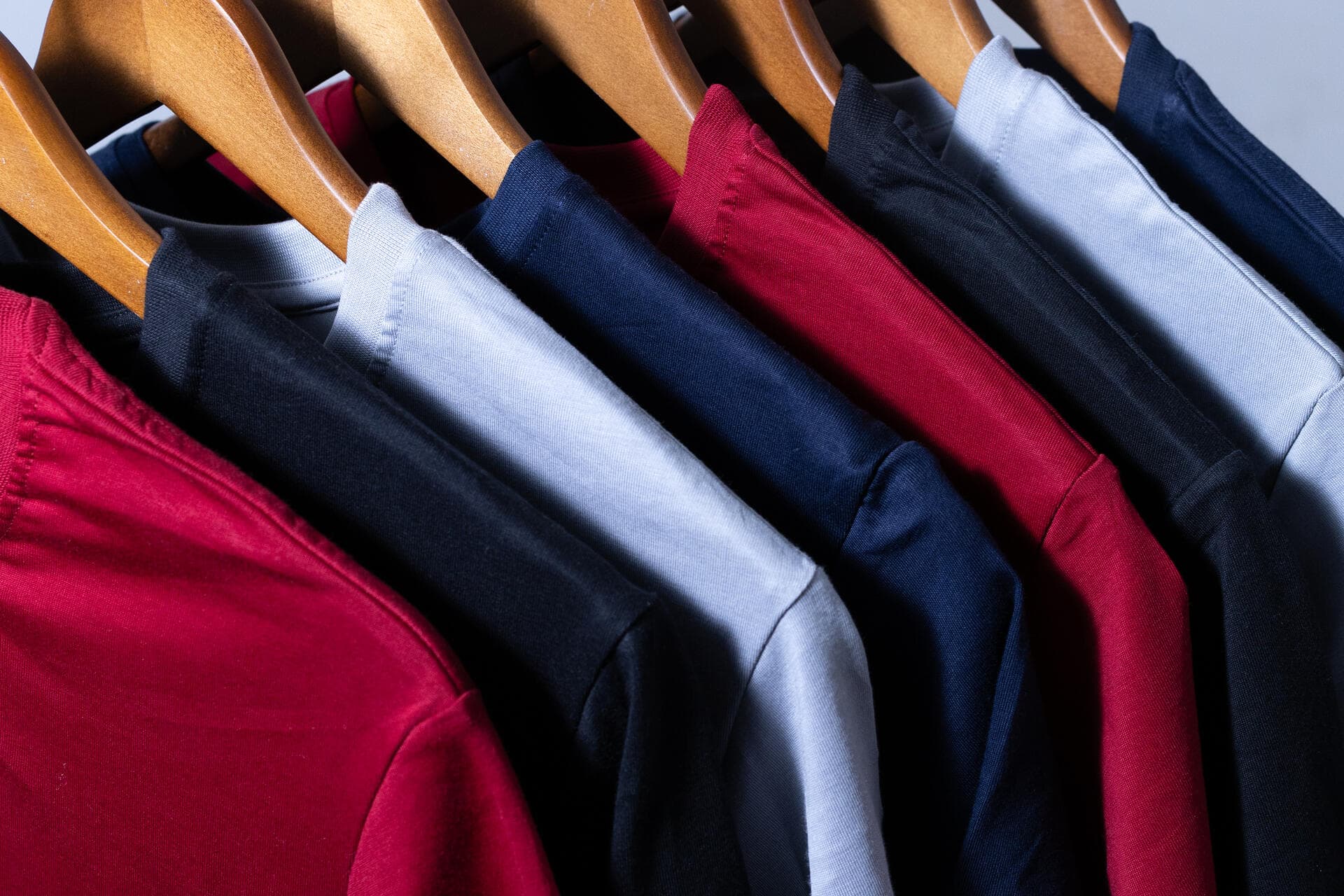
Colour-related complaints — "faded quickly," "looks washed out after a few washes" — are among the most common 1–3 star reviews for cotton casualwear on DTC and marketplace channels. Modal's reactive dye uptake is structurally superior: higher density of dye-accessible hydroxyl groups means more dye bonds per unit fibre area. A modal jersey dyed to the same specification as cotton measures a K/S value (dye depth) 20–30% higher at the same dye concentration, and loses approximately half as much K/S value over 40 wash cycles. For DTC brands, this translates directly into review language: "still vibrant after months of wear." The colour advantage is most commercially valuable in the dominant casualwear palette of washed olive, slate blue, brick red, and earthy terracotta — shades that look intentionally rich on modal but inadvertently washed-out on cotton after 15–20 cycles.
04
Everyday luxury positioning without premium pricing ceiling
The casual apparel market has a structural tension: consumers want elevated quality but won't pay luxury fibre prices for garments they wear daily. Modal occupies the resolution space. It delivers softness, fluid drape, and all-day comfort that consumers recognise as above-standard without signalling "too precious to wear regularly." The most successful modal-driven DTC brands have built positioning around modal's everyday quality narrative — the purchase logic is: "I'll wear this constantly, it'll stay soft and vibrant." That is credible with modal in a way it isn't with cotton basics, and accessible in a way it isn't with silk or cashmere. For brand owners, this means $35–$65 price points with genuinely differentiated product quality that holds up under consumer scrutiny — a combination that cotton at the same price point increasingly struggles to deliver.
Technical Details
Manufacturing specifications.
Decision-grade specs for Modal in Casualwear. Open each block for the numbers, process constraints, and sourcing details that matter before production.
4 sections
22 checkpoints
Quick Read
First-pass technical cues
GSM Range
Lightweight summer tees and tanks: 140–165 GSM
Yarn Count
Lightweight casual: 40s–50s Ne single jersey
Knit Construction
Single jersey: Dominant construction for modal casualwear. Clean face, fluid drape, good productivity on circular knitting machines.
Shrinkage
100% modal jersey: 5–7% length, 3–4% width after first wash at 30°C
GSM Range
• Lightweight summer tees and tanks: 140–165 GSM • Year-round core casualwear tees: 165–190 GSM • Casual long-sleeve and heavier basics: 190–220 GSM • Modal casual sweatshirts (loop-back or brushed): 260–320 GSM in modal-cotton blend fleece For DTC casual brands, 165–180 GSM single jersey is the volume sweet spot: heavy enough to feel substantial without being a warm-weather-only item, light enough to avoid the "thick t-shirt" consumer perception that signals poor quality.
Yarn Count
• Lightweight casual: 40s–50s Ne single jersey • Standard casualwear: 30s–40s Ne single jersey; 24s–36s Ne for interlock • Cotton-modal blends: Most commonly spun in 26s–36s Ne; the blend ratio affects the yarn count achievable (higher modal content = slightly lower count achievable at same roving input) • Heavier casual (sweatshirt fleece): 20s–24s Ne in the ground yarn; loop yarn typically 10s–16s Ne
Knit Construction
• Single jersey: Dominant construction for modal casualwear. Clean face, fluid drape, good productivity on circular knitting machines. • Interlock: Superior dimensional stability; recommended for premium casual pieces where shape retention through repeated wearing is a selling point. • French terry: Standard for casual sweatshirts and long sleeves in modal blends. Loop side can be brushed for fleece-touch finish — very effective in modal-cotton 60/40. • Rib: 1×1 and 2×2 for neck, cuff, and hem trim; full rib body is viable for casual modal basics where stretch and close fit are deliberate style choices.
Shrinkage
• 100% modal jersey: 5–7% length, 3–4% width after first wash at 30°C • Modal-cotton 50/50 blend: 4–6% length, 2–3% width (cotton stabilises slightly) • Post-compaction (sanforising): residual shrinkage 1.5–2.5% • Specify pre-compacted fabric for all retail casualwear — consumers washing at 40°C will not accept visible size reduction
Pilling Resistance
• Compact ring-spun, bio-polished modal jersey: 4–4.5 (ISO 12945-2, 2000 cycles) • Without bio-polish: 3.5–4 • Open-end spun: 3–3.5 — avoid for casualwear
Colorfastness
• Wash (ISO 105-C06, 40°C): 4–5 modal; 3.5–4.5 in blend • Rubbing dry: 4–5; wet: 3–4 (note on care labels) • Perspiration (ISO 105-E04): 4–4.5 — test for body-worn casualwear
Tensile Strength
Modal single jersey: Warp 260–320 N, Weft 200–260 N (ISO 13934-1). Adequate for casualwear stress loads; primary failure mode is pilling, not tensile.
MOQ Guidance
• Stock modal jersey (standard colours, trading company): 100–300 kg per colour • Custom colour modal jersey (mill direct): 500–1,000 kg per colour • Cotton-modal blend custom program: 500–800 kg • Lenzing-certified programs: 1,000–2,000 kg minimum
Honest Assessment
Every fibre has limits. Here's the full picture.
Every fibre has limits. Here's the full picture.
Strengths
Limitations
Wash-stable colour that survives real consumer behaviour.
ISO 105-C06 grade 4–5 through 40+ wash cycles vs. cotton's grade 3–3.5 from wash 20 onwards. For DTC brands, the reduced rate of "faded after 10 washes" reviews is directly monetisable in review score and repeat purchase.
Cost premium requires explicit brand communication.
Standard modal adds $0.80–$1.50 per garment over comparable cotton at casualwear GSM. At a $30 DTC price point this represents a 5–10% margin hit if not reflected in pricing. Brands that absorb the cost without communicating the quality story will find the economics challenging. Mitigation: the modal upgrade should be explicitly called out in product copy and actively used in acquisition messaging.
Structural softness that does not wash out.
Modal's softness derives from fibre fineness (11–13 microns), not finishing chemistry. It does not diminish over a product's commercial life the way silicone-softened cotton does. Consumers who know modal from underwear self-select with accurate expectations.
Care instruction mismatch risk at volume.
Casualwear consumers wash on autopilot — high temperature, full agitation, tumble dry. Modal fabrics that experience this regime repeatedly show accelerated hand-feel degradation and dimensional change. Pilling can develop at 30–40 wash cycles in consumer conditions that differ from lab testing conditions. Mitigation: clear, prominent care labelling and brief care education in DTC packaging inserts. Some brands have reduced return rates by adding a single wash-care card in the packaging.
Genuine year-round comfort.
Moisture regain of 11–13% keeps modal noticeably more comfortable than cotton across the 25–35°C ambient range — the primary operating environment of casualwear use in warm months and heated interiors.
Blend cross-dyeing complexity increases QC overhead.
Cotton-modal blends require more thorough shade approval protocols than single-fibre fabrics — specifically multi-light-source approval to catch metamerism. This adds 1–2 days to lab dip approval cycles and occasionally requires reformulation, extending the product development timeline. Budget for this in program planning.
Blending flexibility for cost management.
50/50 and 60/40 cotton-modal blends access the primary hand-feel and colour benefits at 30–50% fabric cost premium over cotton rather than the 60–100% premium for 100% modal — commercially viable at accessible retail price points.
Not the right choice for casualwear with high mechanical wear zones.
Collar abrasion from bags and jackets, wrist and cuff zones in long-sleeve casualwear, and seam stress points in slim-fit garments will show wear sooner in modal than in a denser cotton construction. For casualwear pieces specifically designed for durability rather than softness — workwear-adjacent styles, heavy-duty casual — cotton or a cotton-polyester blend remains more appropriate.
Lower water footprint — verifiable and retail-auditable.
30 litres/kg (modal) vs. 10,000–20,000 litres/kg (conventional cotton) is the clearest sustainability differential in casualwear fibre selection, and it holds up to retailer ESG scrutiny.
Strength
Wash-stable colour that survives real consumer behaviour.
ISO 105-C06 grade 4–5 through 40+ wash cycles vs. cotton's grade 3–3.5 from wash 20 onwards. For DTC brands, the reduced rate of "faded after 10 washes" reviews is directly monetisable in review score and repeat purchase.
Limitation
Cost premium requires explicit brand communication.
Standard modal adds $0.80–$1.50 per garment over comparable cotton at casualwear GSM. At a $30 DTC price point this represents a 5–10% margin hit if not reflected in pricing. Brands that absorb the cost without communicating the quality story will find the economics challenging. Mitigation: the modal upgrade should be explicitly called out in product copy and actively used in acquisition messaging.
Strength
Structural softness that does not wash out.
Modal's softness derives from fibre fineness (11–13 microns), not finishing chemistry. It does not diminish over a product's commercial life the way silicone-softened cotton does. Consumers who know modal from underwear self-select with accurate expectations.
Limitation
Care instruction mismatch risk at volume.
Casualwear consumers wash on autopilot — high temperature, full agitation, tumble dry. Modal fabrics that experience this regime repeatedly show accelerated hand-feel degradation and dimensional change. Pilling can develop at 30–40 wash cycles in consumer conditions that differ from lab testing conditions. Mitigation: clear, prominent care labelling and brief care education in DTC packaging inserts. Some brands have reduced return rates by adding a single wash-care card in the packaging.
Strength
Genuine year-round comfort.
Moisture regain of 11–13% keeps modal noticeably more comfortable than cotton across the 25–35°C ambient range — the primary operating environment of casualwear use in warm months and heated interiors.
Limitation
Blend cross-dyeing complexity increases QC overhead.
Cotton-modal blends require more thorough shade approval protocols than single-fibre fabrics — specifically multi-light-source approval to catch metamerism. This adds 1–2 days to lab dip approval cycles and occasionally requires reformulation, extending the product development timeline. Budget for this in program planning.
Strength
Blending flexibility for cost management.
50/50 and 60/40 cotton-modal blends access the primary hand-feel and colour benefits at 30–50% fabric cost premium over cotton rather than the 60–100% premium for 100% modal — commercially viable at accessible retail price points.
Limitation
Not the right choice for casualwear with high mechanical wear zones.
Collar abrasion from bags and jackets, wrist and cuff zones in long-sleeve casualwear, and seam stress points in slim-fit garments will show wear sooner in modal than in a denser cotton construction. For casualwear pieces specifically designed for durability rather than softness — workwear-adjacent styles, heavy-duty casual — cotton or a cotton-polyester blend remains more appropriate.
Strength
Lower water footprint — verifiable and retail-auditable.
30 litres/kg (modal) vs. 10,000–20,000 litres/kg (conventional cotton) is the clearest sustainability differential in casualwear fibre selection, and it holds up to retailer ESG scrutiny.
Common Questions
Modal for Casualwear — answered.
Modal for Casualwear — answered.
The two areas where modal measurably outperforms cotton in daily-wear t-shirts are colour retention and hand-feel longevity. Modal maintains wash fastness at grade 4–4.5 through 40+ washes; standard cotton drops to grade 3–3.5 from wash 15–20. Modal's softness is structural (based on fibre fineness, not finishing) so it does not diminish with washing the way chemically softened cotton does. The limitation: modal has lower dry tenacity in some constructions and costs significantly more per kg. For brands who compete on quality story and repeat purchase, modal wins. For pure price-compete basics, cotton remains the right call.
More Resources
Explore adjacent fibres, applications, and technical terms.
Other Modal applications:
Alternative fibres for Casualwear:
Experience It
The difference isn't marketing.
It's in the fibre.
One wash cycle won't tell you. Thirty will.
Free sourcing consultation · Data-driven recommendations · No obligation
Ask about Modal →Available for B2B sourcing consultations