Philosophy
Against Loud Fashion
Loud clothes shout for a season and embarrass you for years. We are making the boring argument.
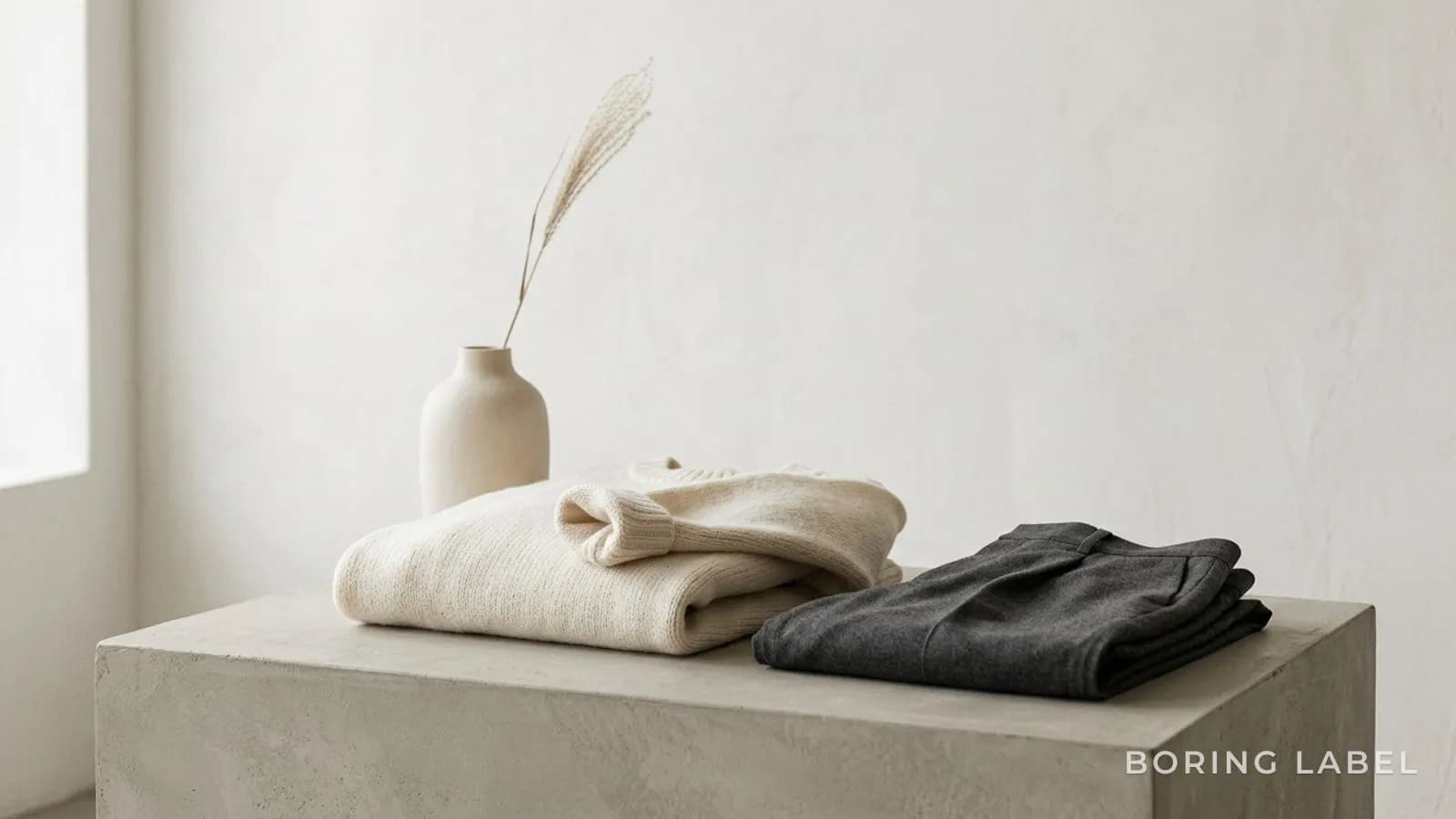
What we mean by loud
Loud fashion is not a single style. It is a strategy. It is any garment designed to be noticed first and worn second - the oversized logo, the slogan across the chest, the colourway engineered to photograph well and date fast, the silhouette that exists because it trended this quarter and will be replaced by another next quarter.
Loud clothes are built around a moment. They want to be seen on a feed, in a story, at the party where everyone is looking.
And for that single moment they often work. The problem is that you do not live in a single moment.
You live across thousands of ordinary days, and the loud garment is a stranger in almost all of them. It announced itself once, and now it just sits there, shouting a message that is no longer current, embarrassing you slightly every time you open the cupboard.
We want to make the unfashionable argument. The boring one.
That clothes which say nothing, in the right fabric and the right fit, will serve you longer, look better, and cost you less over their life than anything designed to be noticed. This is not a moral lecture and it is not minimalism-as-aesthetic.
It is a practical claim about where the value is.
The economics of the shout
Start with the money, because the economics of loud fashion are quietly brutal and almost nobody runs the numbers.
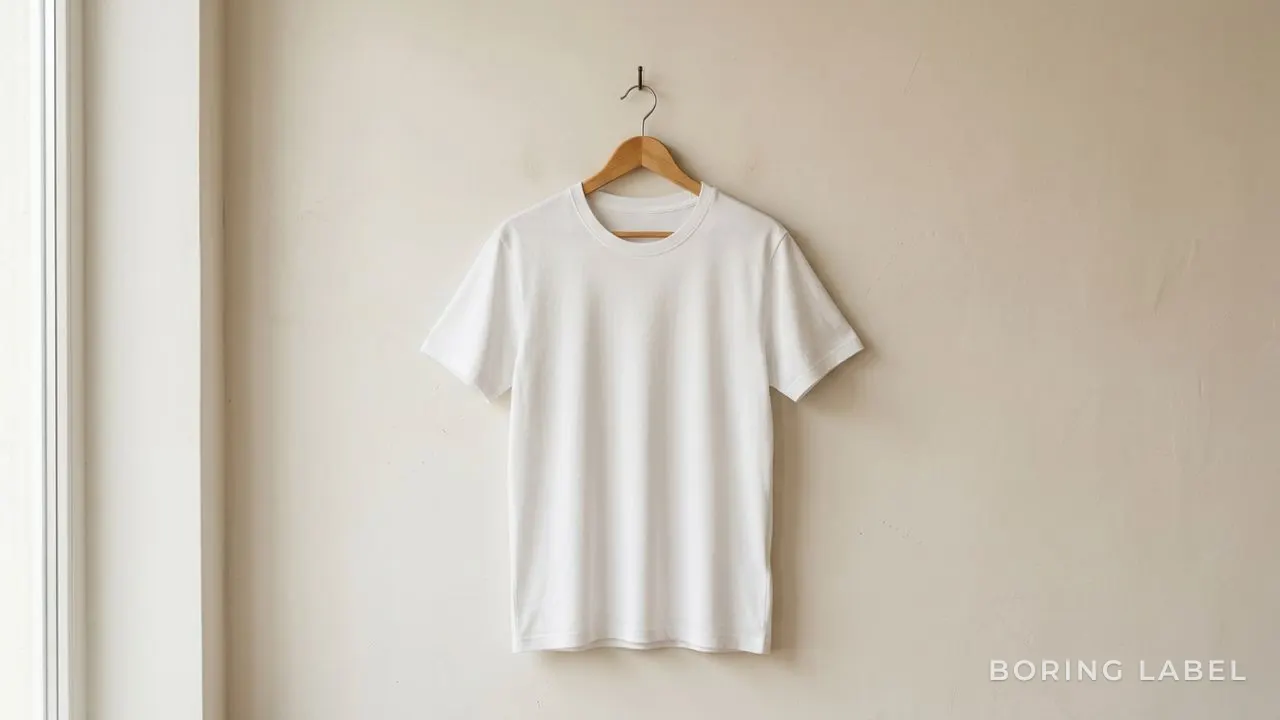
A loud garment carries a hidden tax. When a t-shirt has a large logo, a licensed print, or a graphic that took a design team and a marketing budget to produce, a meaningful slice of what you pay is going to that print and that marketing - not to the cloth on your back.
So you pay more and get less fabric for it. The loud tee is often thinner, looser in the collar, and quicker to fail than a plain one at the same price, because the cost went into the message instead of the garment.
Then there is the lifespan tax. Trend-driven and logo-driven pieces have a built-in expiry.
The graphic is tied to a season, a collaboration, a meme, a moment - and when that moment passes, the garment looks dated even if the fabric is fine. You stop wearing it not because it wore out but because it became an artifact.
A plain piece has no expiry date attached, so it keeps going until the cloth itself gives up.
This is where cost per wear becomes the only honest way to think about clothing. A garment's real price is not the tag.
It is the tag divided by the number of times you wear it. A loud tee you wear ten times before it embarrasses you costs you far more per wear than a plain one you wear two hundred times, even if the plain one cost twice as much at the till.
Consider the two paths side by side:
| Loud garment | Quiet basic | |
|---|---|---|
| What you pay for | Print, logo, marketing | Fabric, fit, construction |
| Fabric quality at price | Often compromised | Where the money goes |
| Lifespan | Tied to a trend cycle | Until the cloth wears out |
| Times worn | Few, then retired | Hundreds, across years |
| Cost per wear | High | Low |
| What it says next year | Dated | Still nothing, still right |
The quiet basic wins on every line that matters over time. The loud one only wins in the photograph.
There is a subtler cost too, easy to miss because it does not show up on any tag. Loud fashion runs on velocity.
The whole machine depends on you tiring of things quickly so you buy the next thing, which means the loud garment is not just expensive per wear - it is engineered to become unwearable on a schedule, so that the schedule keeps you shopping. You are not really buying a t-shirt.
You are buying a subscription to a feeling of newness that wears off by design, and renews itself with the next purchase. Quiet clothing opts out of the subscription entirely.
You buy the thing once, it stays right, and the machine loses a customer. That is precisely why the loud version is marketed so hard and the plain version is marketed so little: the plain one is bad for repeat business.
The wardrobe maths of saying nothing
There is a second, less obvious cost to loud clothes, and it is about combinations rather than money.
A garment that shouts can only be worn in a few ways, because the shout dominates everything. A tee with a giant graphic decides the entire outfit for you - it cannot be quietly layered, it fights with patterns, it pulls focus from anything you put near it.
It is a soloist that refuses to join the choir. So a wardrobe full of loud pieces is a wardrobe of one-outfit garments, each locked to a narrow set of occasions.
A plain garment is the opposite. It is a team player.
A clean white tee goes under a shirt, over nothing, with tailored trousers or with shorts, in a dozen registers from chai-run casual to dinner-smart. It combines.
And because it combines, a small number of plain pieces produces a large number of outfits, which is the entire logic of a minimalist capsule wardrobe. Restraint is not a sacrifice here.
It is a multiplier.
The loud wardrobe and the quiet wardrobe diverge fast:
- The loud wardrobe is large but produces few wearable combinations, because each piece insists on being the centre of attention.
- The quiet wardrobe is small but produces many combinations, because each piece is content to play a supporting role.
- The loud wardrobe needs constant topping-up as trends turn over and last season's statement becomes this season's mistake.
- The quiet wardrobe is mostly finished once it is built, with the occasional honest replacement.
- The loud wardrobe is paralysing in the morning, because each loud piece demands a whole outfit built around it.
- The quiet wardrobe is effortless in the morning, because nearly anything goes with nearly anything else.
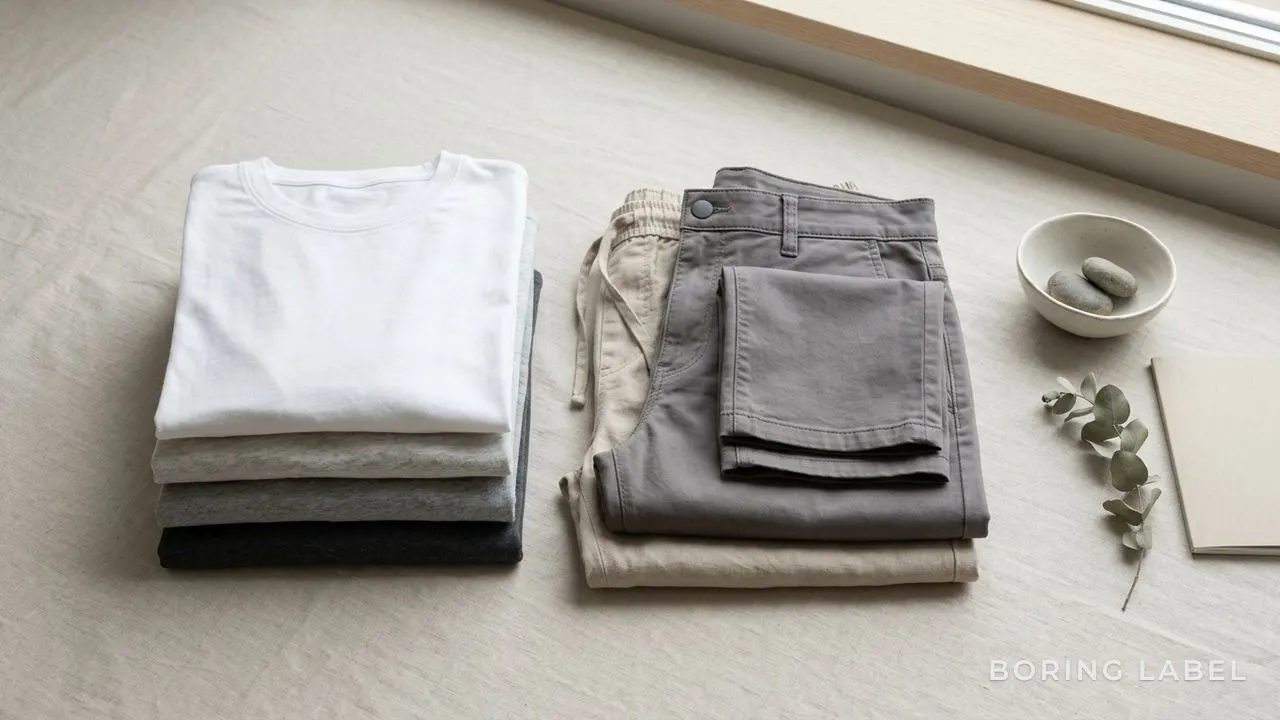
There is a maths to this that is genuinely surprising the first time you see it. Five plain tees in compatible neutrals and three pairs of compatible trousers give you fifteen workable combinations before you add a single layer, and every one of them looks intentional.
Five loud graphic tees give you five outfits, full stop, because each tee is already a complete statement that nothing can join. The plain wardrobe is smaller and yet dramatically larger in what it can actually do.
Restraint, again, is the multiplier - and loudness, for all its noise, is the thing that quietly shrinks your options.
Saying nothing with your clothes, it turns out, lets your clothes do far more.
The tyranny of the photograph
It helps to understand why loud fashion feels so compelling in the first place, because the pull is real and worth naming. We increasingly buy clothes for how they look in a single image rather than how they live across a year, and a loud garment is optimised for exactly that image.
The big graphic reads at a glance. The trend-colour pops on a screen.
The statement piece earns the comment under the post.
But the photograph is a liar about clothing, because it captures the one second the garment was built for and hides the thousand hours it will be merely worn. The tee that looks striking in a story looks tired by the third wear in real life, and you live in real life, not in the story.
When you start choosing garments for the year instead of the image, the whole calculus flips: you begin to value the things that look quietly right in every ordinary moment over the things that look loud in one engineered one. That shift - from buying for the photograph to buying for the wardrobe - is most of the move from loud to quiet.
Who the logo really works for
Here is the part that stings a little. When you wear a large logo, you are working for the brand, not the other way around.
A logo turns your chest into a billboard. You paid for the garment, and now you spend your days advertising the company that sold it to you, for free, to everyone who sees you.
The brand gets the exposure. You get to be the medium.
It is one of the few transactions in life where you pay to do someone else's marketing, and the loud-fashion industry depends on enough people never noticing the trade.
The deeper psychology is about borrowed status. A loud logo is a shortcut - it tries to borrow the brand's image and staple it to yours, so that the watch or the swoosh or the four letters do the talking before you have said a word.
But borrowed status is fragile. It depends entirely on the audience recognising the reference and agreeing it is impressive, and the moment the brand falls out of favour or the logo becomes too common, the borrowed status evaporates and you are left holding an expensive advert for something that no longer signals what you hoped.
Quiet clothing makes the opposite bet. It refuses to borrow.
It lets the fabric, the fit, and the way you carry yourself do the signalling - things that do not depend on anyone recognising a reference, and that read as confidence rather than aspiration. This is the real idea underneath the no-logo clothing instinct: that the most assured thing you can wear is something that announces nothing at all.
The person who needs no logo is, paradoxically, the one who looks like they could afford any of them.
There is an Indian angle to this worth saying plainly. We have a long, deep tradition of letting cloth itself carry status - the quality of a weave, the hand of a fabric, the restraint of a well-made garment in a plain colour.
The logo-as-status idea is a relatively recent import, and a slightly insecure one, dependent on borrowed Western brand recognition to do its talking. Quiet dressing is, in that sense, not a new minimalist fad but a return to an older and frankly more confident instinct: that the people who know cloth do not need a label to tell them what they are looking at, and that the loudest thing in the room is rarely the most expensive.
Quiet is not the same as plain-boring
We should be honest about the obvious objection: does not all this lead somewhere dull? A grey life in grey tees, beige on beige, the personality leached out in the name of restraint?
No. And the distinction matters.
Quiet clothing is not the absence of character. It is character expressed through better materials rather than louder graphics.
The interest moves from the surface to the substance.
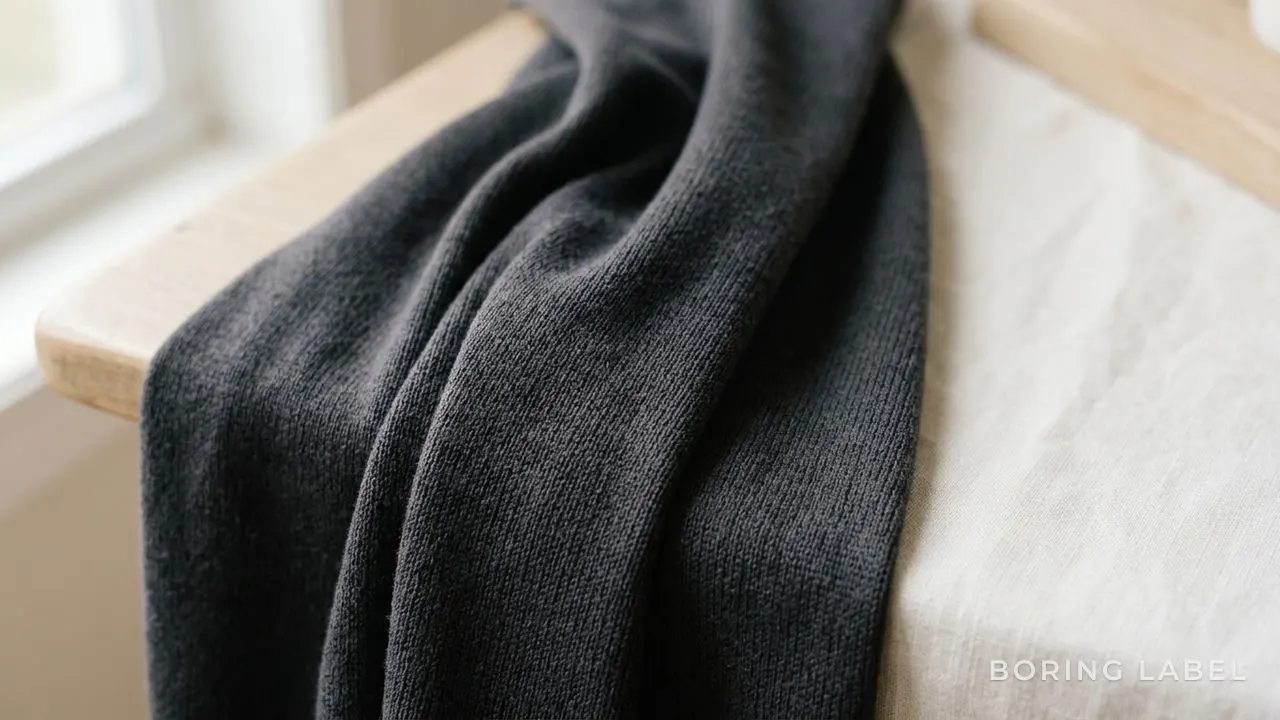
A loud garment finds its interest in print and slogan. A quiet garment finds it in fabric, fit, texture, and proportion - the weight and drape of a good cotton, the exact set of a collar, the way a hem falls, the subtle depth of a well-dyed black against a soft un-dyed cream.
These are quieter pleasures, but they are real ones, and they are the pleasures that survive being looked at for years rather than seconds. This is what quiet luxury in India actually points at, underneath the hashtag: an old idea that the cloth should do the talking, and that the people who know, know, without needing a label to tell them.
Restraint, done well, reads as taste. A monochrome outfit in three textures of the same colour is not boring - it is composed.
A perfectly plain tee on someone who chose it for the fabric and the fit is not a lack of style. It is a kind of style that does not need to raise its voice.
There is a fuller argument about this in minimalism is restraint, not deprivation, but the short version is: quiet is a choice with intention behind it, and intention is exactly what reads as personal style.
How to dress quietly without dressing dull
If the argument lands, the practice is simple. Quiet dressing is not a vow of self-denial; it is a set of small, deliberate choices that compound into a wardrobe that works.
A few principles to build on:
- Buy for the fabric, not the front. When you pick up a garment, ask what it is made of and how it is made before you look at what it says. The cloth is the part you live with. The graphic is the part you tire of.
- Choose a tight palette. Stick to a small set of neutrals that work with each other - white, grey, charcoal, navy, a good black. When everything matches everything, every piece earns its place and the whole wardrobe gets quietly more useful.
- Let one detail carry the interest. A quiet outfit is not a flat one. Let texture, or a single considered piece, or the fit itself be the point. You do not need a slogan when the proportions are right.
- Judge a piece by its third year, not its first day. Before you buy, ask whether you will still want to wear this when the season that produced it is long gone. If the answer depends on a trend holding, put it back.
- Reach for the thing you forget you are wearing. The best garment in your cupboard is usually the one that asks nothing of you - the plain, well-made staple you pull on without a thought, like our round-neck tee. Comfort and quietness are close cousins.
None of this requires discipline so much as a change of taste - learning to find the loudness slightly tiring and the quietness genuinely satisfying. Most people who make the switch never go back, because they discover that getting dressed got easier and they started looking, oddly, more like themselves.
A fair answer to the obvious objections
Two honest objections deserve honest answers, because the case for quiet is not the case for joylessness.
"Does this not just mean dressing like everyone else?" The opposite, in practice.
A wardrobe of loud logos is a wardrobe of borrowed identities - you are wearing the brand's idea of itself, the same idea everyone else with that logo is wearing. Quiet dressing forces the personality back onto you: the fit you choose, the palette you settle on, the way you put pieces together, the small details that are actually yours.
Plain is a blank that you fill. Loud is a stencil that fills you in.
"Is there never a place for a statement piece?" Of course there is.
The argument is not that you must purge every graphic and live in greige forever. It is about the ratio.
A wardrobe that is ninety percent quiet and ten percent considered statement is balanced and personal; a wardrobe that is ninety percent statement is exhausting, expensive, and dated within a year. The occasional loud piece, chosen because you genuinely love it rather than because it trended, can sit happily inside a quiet wardrobe.
The problem was never one bold garment. It was a whole cupboard built to be noticed.
The boring argument, made plainly
So here is the case, stated without ornament, because the whole point is that ornament is the thing we are arguing against.
Loud clothes are built for a moment and charge you for the privilege - in money that goes to the print instead of the cloth, in a lifespan tied to a trend you cannot control, in a wardrobe of garments that refuse to combine, and in the quiet indignity of advertising someone else's brand on your own chest. They win the photograph and lose almost everything that comes after it.
Quiet clothes make the opposite trade. They put the money into fabric and fit, they outlast the trend cycle because they never joined it, they combine endlessly because they pull no focus, and they let you do the signalling instead of the logo. They are boring in exactly the way that good infrastructure is boring: you stop noticing them, and that is the highest compliment a garment can earn.
We are a brand that makes plain things on purpose, so of course we would say this. But the argument stands on its own, with or without us.
Test it against your own cupboard rather than our word: look at the things you actually reach for, week after week, and the things that hang untouched. We would wager the untouched ones shout and the reached-for ones are quiet.
That pattern is not an accident. It is the whole argument, already proven in your own wardrobe, waiting for you to notice it.
The next time something loud catches your eye, run the simple test: will I still want to wear this when its moment has passed? If the honest answer is no, you have just identified the most expensive thing on the rail.
Buy the boring one. It will still be right long after the loud one is a story you tell about a phase you went through.
Boring Label
Wear the point of the article.
One honest tee. Heavyweight combed cotton, a collar that holds, a fit that actually fits. No logo, no noise.
Shop the round-neck teeFree shipping across India · Easy returns
Keep reading
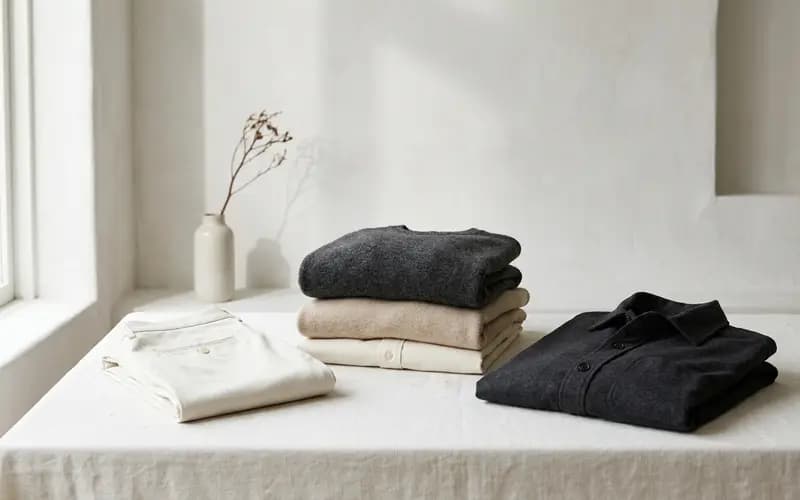
No-Logo Clothing: Why Less Branding Wins
A logo turns you into free advertising. No-logo clothing is a quiet refusal — and it ages far better.
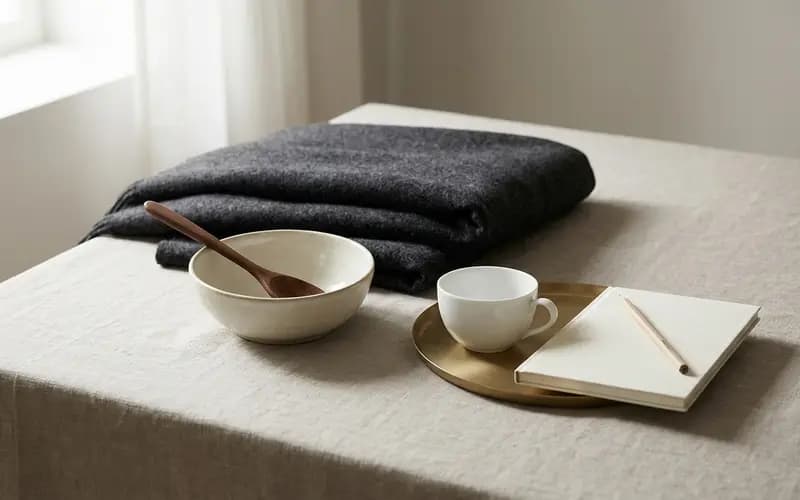
Minimalism Is Restraint, Not Deprivation
Minimalism got mistaken for deprivation. It is really about restraint: fewer things, better chosen.
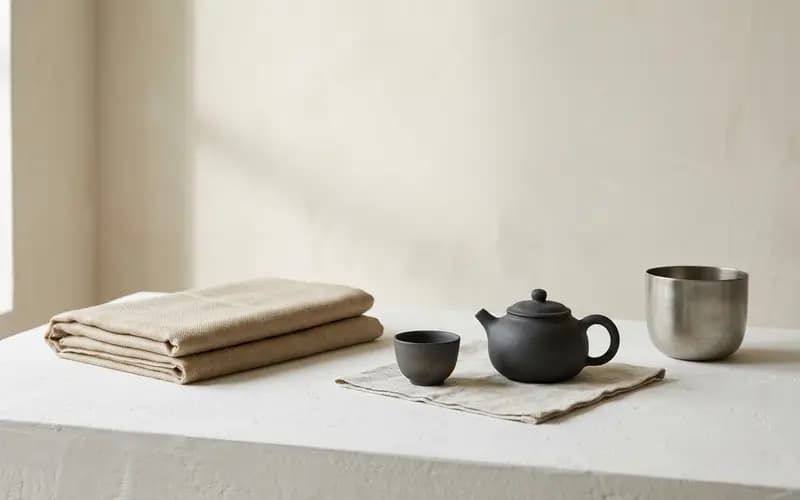
Quiet Luxury in India: What It Really Means
Quiet luxury arrived in India as a hashtag. Underneath it is an old idea: let the cloth do the talking.
Stay in the loop
New writing, no noise
Occasional notes on fit, fabric, and dressing simply well. No spam, unsubscribe anytime.
Subscribe