Capsule
The Minimalist Capsule Wardrobe for Men
A capsule is not fewer clothes for its own sake. It is a small set that combines into many good outfits.
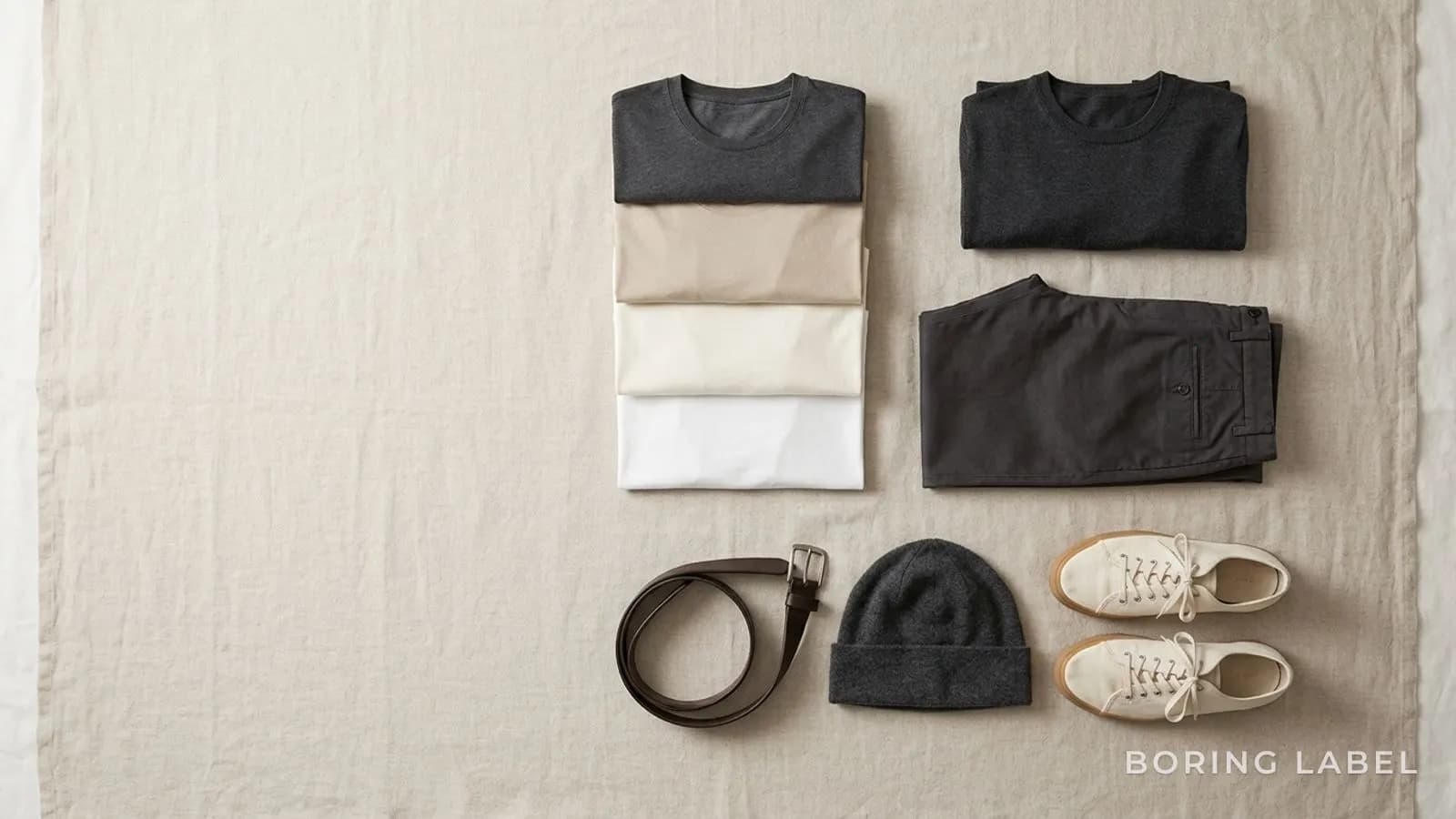
What a capsule wardrobe really is
A capsule wardrobe is a small, deliberate set of clothes where almost everything works with almost everything else. That is the whole idea in one line.
Not a number on a spreadsheet, not a monk-like vow to own thirty items and no more, and definitely not a punishment. It is a closet engineered so that getting dressed stops being a daily problem you have to solve from scratch.
Most men already own a version of this without naming it. There is a handful of things you actually reach for, and then there is the dead weight - the gifted shirt with the wrong collar, the slim jeans you bought two sizes ago, the novelty tee from a trip you no longer remember. The capsule is just the act of being honest about which clothes are doing the work and which are sitting there making the decision harder.
The payoff is real and it compounds. When every piece shares a colour family and a fit logic, you stop standing in front of the wardrobe at 8am. You stop buying things that match nothing.
Your cost-per-wear drops because the items you own get worn into the ground instead of orbiting around unworn. And, quietly, you start looking more put-together, because consistency reads as intention.
This guide is the practical version. No vague talk about "investment pieces" and no list of forty things you must buy.
We will define the core, work out the colour logic, get the fit right, and turn it into a system you can run on autopilot. The whole thing is built around tees, because for most men in India the tee is the single most-worn garment of the year, and a capsule that gets the tee wrong gets everything wrong.
Why "capsule" is the wrong word and the right idea
The term sounds clinical, like something an algorithm assembled. Ignore the branding.
What we are describing is older and simpler than the hashtag. A tailor in any Indian town will tell you the same thing your grandfather knew: own a few things, own them well, look after them, and you will always be dressed properly.
The capsule is that wisdom written down with a method attached.
There is also a quiet emotional reason it works, and it is worth naming. A crowded wardrobe is a small, daily source of low-grade stress.
Every morning it presents you with a problem and a faint sense of waste - all those clothes, and still nothing feels right. A capsule removes the problem.
You open the wardrobe and everything in it is something you chose, that fits, that matches. The relief of that is bigger than it sounds, and it lasts.
The core: what actually earns a hanger
Start with the pieces you wear most, and buy those well before you buy anything else. The mistake nearly everyone makes is spending on the rare, exciting item - the leather jacket, the statement sneaker - while the foundation stays cheap and tired.
Reverse it. The boring core is what you are seen in 300 days a year.
Here is a sensible men's core. You can run a full year on this in most Indian cities, adding a single layer for the few cold weeks.
- Plain tees, five to seven of them. Round-neck, in your tested colours. This is the backbone. If you get nothing else right, get these right.
- Two pairs of trousers. One dark (charcoal or navy), one neutral (stone, khaki, or light grey). Both well-fitted, both able to go up or down a notch in formality.
- One pair of good jeans. A mid-to-dark indigo with no rips, no heavy fading, no logos on the back pocket. Dark denim is the most flexible thing in a man's wardrobe.
- An overshirt or light layer. Something to throw over a tee that makes the outfit read "considered" instead of "just woke up". An unlined overshirt works nine months a year here.
- A crisp shirt, ideally two. One white, one in a muted colour or a small check. These cover anything that asks for a collar.
- One pair of clean, simple shoes. White leather sneakers or a low minimalist trainer that goes with all of the above. No chunky branding.
- One slightly smarter shoe if your life needs it - a loafer or a clean derby for the occasions a sneaker cannot carry.
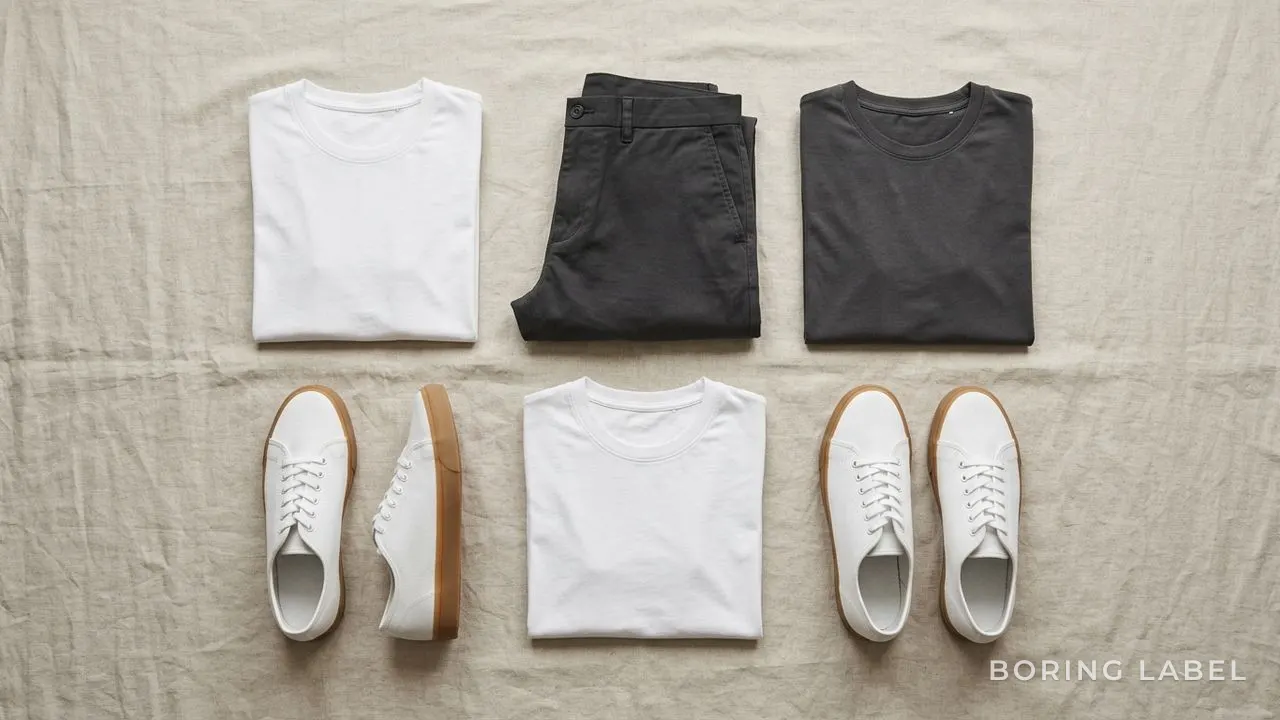
That is roughly fifteen pieces of clothing and two pairs of shoes. From it you can build dozens of outfits, because the parts were chosen to combine rather than to compete.
Notice what is missing: nothing here is loud, nothing is trend-locked to one season, and nothing only works with one other specific item. That is the test for the core - if a piece only works with one outfit, it does not belong in the core.
The one-in, one-out rule that keeps it small
A core only stays a core if it has a hard edge. The moment you start adding a sixth pair of trousers "just in case", the discipline leaks and you are back to a crowded wardrobe with a tidy name.
The rule that holds the line is simple: when something new comes in, something old goes out. New tee, retire a tired one.
New layer, donate the one you stopped reaching for. This keeps the count flat and forces you to be honest about whether the new thing is actually better than what it replaces, or just newer.
Why the tee carries the most weight
In a hot country, the tee is not a layering afterthought, it is the main event. You wear it alone, you wear it under the overshirt, you wear it under the open shirt, you wear it to the office on casual days and to dinner on relaxed ones. A man can wear a great tee five days a week and look intentional every time.
This is exactly why the tee is worth getting right and worth getting boring. A tee with a clean collar that holds its shape, a body that skims rather than clings or tents, and a colour that sits inside your palette will quietly do more for your appearance than any flashy purchase.
If you want the full breakdown of what "right" means here, the t-shirt fit guide covers shoulder seams, body taper and hem length in detail. For most men, our round-neck tee is the kind of foundation piece this whole capsule is designed around: no logo, built to outlast trends, made to be worn into the ground.
The colour logic that makes everything match
This is the part that does the heavy lifting, and it is the part most people skip. A capsule works because of its colour discipline, not because of how few items it contains. Twelve pieces in clashing colours is a worse wardrobe than twenty in a tight palette.
The rule is simple. Pick a small palette and stay inside it.
When everything shares a colour family, everything matches by default, and you never again have to think about whether the top "goes" with the bottom. The thinking was done once, up front.
A reliable men's palette splits into three jobs:
- Neutrals (the base): white, black, grey, navy. These are the colours your trousers and most of your tees live in. They go with each other and with everything else.
- One earth tone (the warmth): olive, tan, stone, or a muted brown. This stops an all-grey-and-black wardrobe looking like a uniform in the bad sense. One is enough.
- One quiet accent, optional: a muted blue, a deep maroon, a forest green. Used sparingly, on a single tee or shirt, to add a note without breaking the harmony.
That is it. Resist the urge to add a bright.
Brights are the items that end up unworn, because they only match one or two other things and they date faster. If you love a colour, buy it in the smartest, most muted version of itself.
Here is how the palette maps onto the core:
| Piece | Capsule colour choices |
|---|---|
| Tees | White, black, grey, navy, olive |
| Trousers | Charcoal, stone |
| Jeans | Dark indigo |
| Overshirt | Olive, stone, or navy |
| Shirts | White, muted blue or small check |
| Sneakers | White or off-white |
| Smart shoe | Brown or black leather |
Every row shares DNA with every other row. A white tee works with charcoal trousers, with stone trousers, with dark jeans, under the olive overshirt, under the white shirt.
There is no combination here that fails. That is what a colour-disciplined capsule buys you.
If you want a deeper take on which shades to buy and in what order, the piece on essential t-shirt colours is a useful companion to this section.
Start with three colours, not ten
If this feels like a lot, start smaller. The minimum viable men's tee palette is white, grey, and navy or black.
Those three cover almost everything and never fight. Add olive when you are ready for a touch of warmth.
Add a fourth tee colour only when you have genuinely worn the first three into rotation and know you want more. Buying breadth before you have tested depth is how wardrobes bloat.
A note on undertone
Two greys are not the same grey, and this is where amateur capsules quietly fall apart. Keep your neutrals in the same temperature family.
If your greys lean cool and blue, do not pair them with a warm, yellowish stone that fights them. Pick a lane - cool neutrals or warm neutrals - and the matching becomes effortless rather than approximate.
This sounds fussy and is the difference between a wardrobe that looks coordinated and one that looks merely tidy. When you shop, hold pieces against each other in daylight, not under shop lighting, which flatters and lies.
Get the fit right or none of it matters
Colour gets you matching. Fit gets you looking good.
You can own the most disciplined palette in the country and still look sloppy if the clothes do not fit, and you can look sharp in three colours if they do. Fit is not negotiable in a capsule, because every piece is going to be seen constantly.
There is no hiding a bad-fitting item in a small wardrobe.
The good news is that fit is learnable and mostly comes down to a few checkpoints. For tees, the four that matter are the shoulder, the chest, the length, and the sleeve.
- Shoulder seam: it should sit at the edge of your shoulder, where the arm meets the body, not halfway down the bicep and not pulled up onto the shoulder bone. This is the single most important fit point and the one cheap tees get wrong most often.
- Chest and body: the fabric should follow your shape with a little room, not cling and not tent. You should be able to pinch an inch or so of fabric at the side, no more.
- Length: the hem should land around the middle of your fly, roughly covering your belt and a touch of the trouser below it. Too long reads sloppy, too short reads outgrown.
- Sleeve: for a regular tee, the sleeve ends around the mid-bicep. Not flapping at the elbow, not strangling the arm.
If you only ever buy tees that pass these four checks, you will never look cheap regardless of price. The quickest way to nail it is to measure a tee you already love and match the numbers, which the guide on how to measure your t-shirt size walks through step by step. Do it once and every future order fits.
Regular or oversized, choose on purpose
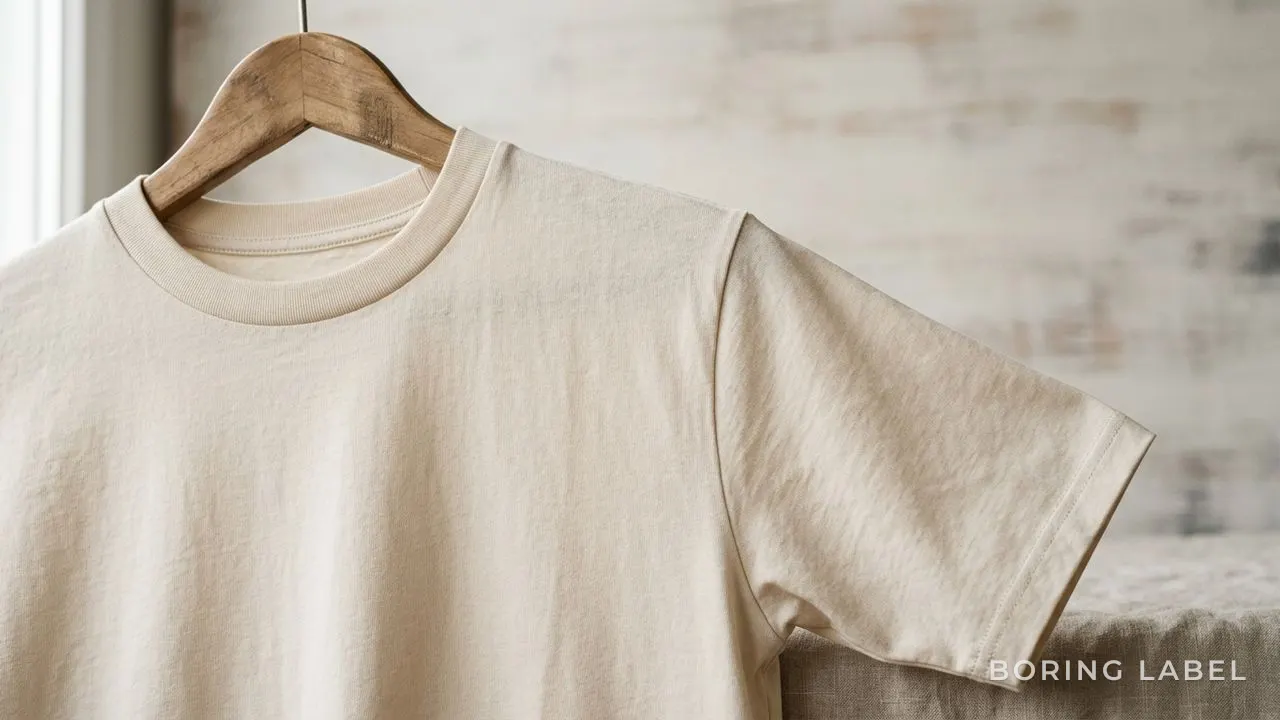
A capsule can be built on either a regular or a relaxed silhouette, but pick a lane and commit, because mixing wildly different fits is what makes a small wardrobe look incoherent. A regular fit frames the body and reads classic and smart.
A relaxed or boxy fit drapes and reads modern and easy. Both are valid.
What does not work is owning three of each at random and trying to combine them. Decide which silhouette is yours, buy the core in that silhouette, and let the consistency do its quiet work.
Trousers and jeans deserve the same scrutiny
Men obsess over tee fit and then ruin the outfit below the waist. The same logic applies.
Trousers should sit at your natural waist without a belt fighting to hold them up, taper cleanly through the leg without clinging to the thigh, and break lightly at the shoe - a small fold of fabric, not a puddle. The single most common error is length: trousers that bunch over the shoe age an outfit instantly and make you look shorter.
If a tailor near you can take up a hem for fifty rupees, that is the highest-value fifty rupees in your wardrobe. Buy for the chest and the waist, then alter the length, because length is the easy fix and width is the hard one.
Fabric and weight, the India edit
A capsule that ignores climate is a fantasy borrowed from a colder country. The men's capsules you see photographed in cold cities lean on wool, layers, and heavy fabrics that would be miserable in Chennai in May. Build for where you actually live.
For most of India, most of the year, the answer is cotton, and the variable that matters is weight, measured in GSM (grams per square metre). Lighter fabric breathes and dries faster, which is what you want in heat and humidity. Heavier fabric holds shape and feels substantial, which is what you want in the few cool weeks and in air-conditioned offices.
| GSM range | Feel | Best for |
|---|---|---|
| 140 to 160 | Light, airy, slight translucency | Peak summer, humid coastal heat |
| 160 to 190 | Balanced, the all-rounder | Most of the year, most of India |
| 190 to 220 | Substantial, structured, opaque | Winter, AC offices, a premium hand-feel |
For a capsule meant to run year-round in a hot country, a mid-weight tee around 180 GSM is the sweet spot. It is opaque enough to look proper, light enough to wear in the heat, and substantial enough not to feel cheap.
The piece on the t-shirt GSM guide goes deeper on what the number predicts about quality, but the headline is: do not chase the highest GSM thinking heavier always means better. In Indian heat, heavier often just means hotter.
Beyond weight, look for combed cotton over carded for the core tees. Combing removes the short fibres that cause pilling and that fuzzy, worn-out look after a few washes. It is the difference between a tee that still looks good after a year and one that looks tired after a month, and it is largely invisible on the tag, so you have to know to ask.
One layer is usually enough
Most of India does not get a real winter, so the urge to buy heavy outerwear for a capsule is usually misplaced money. For the handful of genuinely cold weeks in most of the country, a single mid-weight layer - an overshirt, a light knit, or one good sweatshirt - does the job over a tee.
The exception is the north and the hills, where an actual jacket earns its place. But for Mumbai, Bangalore, Chennai, Hyderabad and most of the plains, resist building a cold-weather wardrobe you will wear for three weeks.
Buy one good layer, wear it those weeks, and put the rest of the budget into the tees and trousers you live in.
How to actually wear it: the 30-second morning
Here is where the capsule pays you back. Because the system is built, getting dressed becomes a sequence of trivial choices rather than a daily design problem.
The formula, most days, is: one tee + one bottom + one optional layer + shoes. Every item in each slot works with every item in the other slots, so you literally cannot pick a bad combination. Pull a tee, pull a bottom, decide if the day needs a layer, done. The decision that used to take ten minutes and a few false starts now takes thirty seconds, because the wardrobe was designed to make wrong answers impossible.
A few worked examples from the core above:
- Errand day: grey tee, dark jeans, white sneakers. Three pieces, takes ten seconds, looks effortless.
- Casual office: navy tee, charcoal trousers, white sneakers or the smart shoe. Add the olive overshirt if the AC bites.
- Dinner: black tee, dark jeans, the leather shoe. Optionally the white shirt open over the tee. Quietly sharp.
- Travel: white tee, stone trousers, overshirt, sneakers. Comfortable, photographs well, survives a long day.
None of this requires thought once the pieces are in place. That is the entire point - the capsule moves the effort to the front, into the buying and the editing, so the daily experience is frictionless. For more on the deliberate, repeatable version of this, see uniform dressing, which takes the idea to its logical end: deciding what you wear once, and being done.
Layering multiplies a small wardrobe
The fastest way to get more outfits from fewer pieces is to layer. A tee on its own is one outfit.
The same tee under an open shirt is another. Under the overshirt, a third.
Under both with the shirt as a mid-layer on a cold day, a fourth. Three or four core items combine into a surprising number of distinct looks once you start stacking them, which is why the overshirt and the open shirt earn their place in the core despite being worn less often than the tees themselves.
They are multipliers.
Accessories: small, quiet, optional
A capsule does not need much in the way of accessories, and the ones it does need should follow the same restraint. A simple watch, a plain leather belt that matches your smart shoe, and maybe one pair of sunglasses with a classic shape.
That is plenty. The accessory is there to finish the outfit, not to announce itself.
The same logic that keeps the clothes quiet keeps the accessories quiet: nothing logo-heavy, nothing trend-locked, nothing that only works with one specific look. A man in plain, well-fitted clothes and one good watch reads as more considered than the same man wearing four competing statement pieces.
Building it without buying everything at once
You do not assemble a capsule in a single shopping trip, and you should not try. The fastest route to a bloated, regret-filled wardrobe is to buy fifteen things in one afternoon based on a guide you read that morning. Build it the slow way, and it will be a wardrobe you actually wear.
Step one: audit what you own. Pull everything out. Make three piles - love and wear, neutral, and never wear.
Be ruthless about the third pile. The clothes you never reach for are not assets, they are clutter that makes the daily decision harder.
If decluttering is the hard part for you, the method in how to declutter your wardrobe is built to be repeatable so the clutter does not creep back.
Step two: identify the gaps. Lay your "love and wear" pile against the core list above. What is missing?
Most men find they have plenty of tees but in the wrong colours, or good trousers but no decent layer. Buy to fill the specific gap, not to add generally.
Step three: replace, do not accumulate. When a core tee wears out, replace it with the same thing in the same colour. This is the secret to a capsule that stays a capsule.
You are not constantly adding, you are maintaining a known set. The wardrobe stops growing, which is the whole idea.
Step four: buy the best version you can of each core slot. Because the core is small and worn constantly, spending a little more per item is rational - the cost-per-wear collapses when a tee gets worn two hundred times instead of twenty. A more expensive tee that lasts three years is cheaper than three cheap ones that each last a season. The maths is laid out fully in cost per wear, but the instinct is right: for the few things you wear constantly, buy well once.
A rough budget order
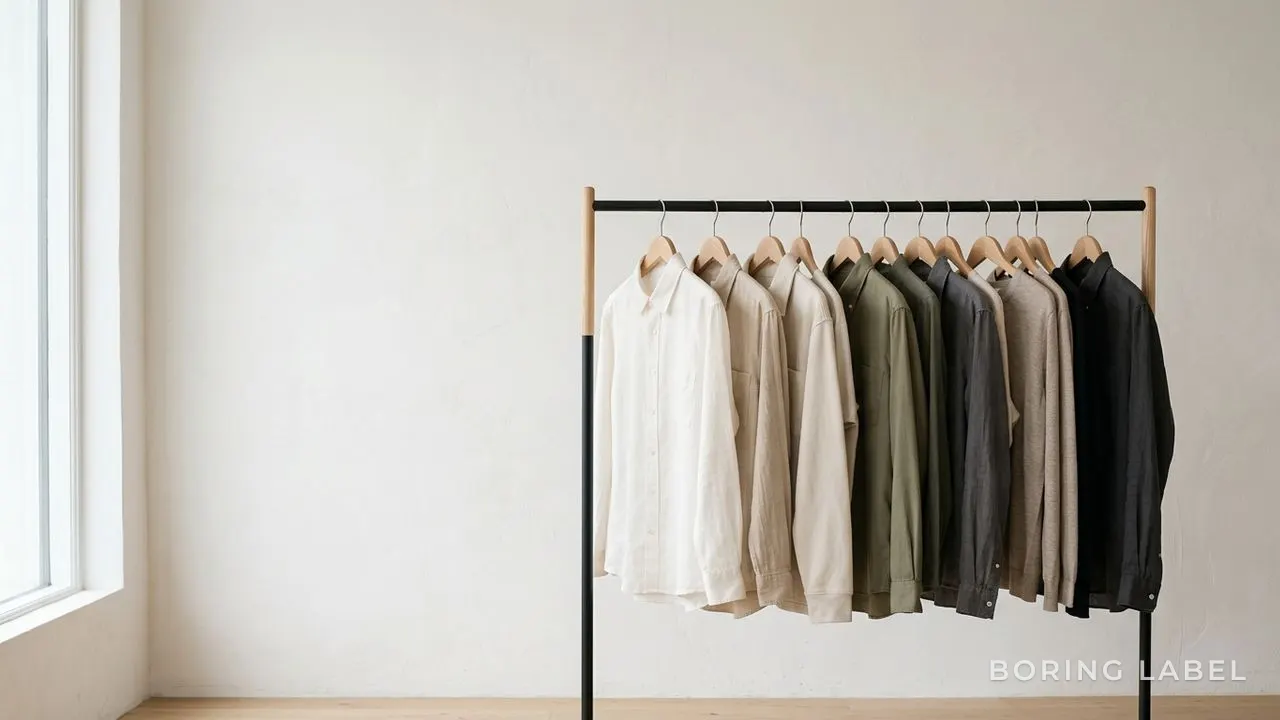
If money is tight and you are building from near-scratch, spend in this order and you will look good fastest. First, three tees in your core colours, because they are worn most and seen most.
Second, one pair of trousers that fits properly, hemmed if needed. Third, a pair of clean white sneakers, because shoes anchor an outfit and cheap battered shoes undo good clothes.
Fourth, the overshirt or layer. Everything after that is refinement.
This sequence puts your money where your wear is, which is the whole financial logic of the capsule: spend on what you are seen in most.
Maintenance: keep the capsule alive
A capsule is not a one-time build, it is a standing arrangement, and it survives on two habits.
The first is care. A small wardrobe of well-chosen pieces is worth looking after, and looking after clothes is mostly about doing less to them, not more. Wash cold, wash inside-out, skip the dryer when you can, and do not over-wash - a tee worn for a few light hours rarely needs a full machine cycle.
Heat and friction are what age a garment fastest, and the dryer delivers both. Air-drying alone extends the life of a tee dramatically and keeps the collar and shape intact.
The full routine is in how to wash t-shirts so they last longer, and it genuinely doubles the working life of your core.
The second is discipline at the point of buying. The threat to any capsule is the impulse purchase - the sale item, the trend piece, the thing a friend has. The defence is a single question: does this fit my palette and replace or extend an existing slot, or is it just new?
If it is just new, it does not come home. This is not deprivation.
It is the same restraint that made the capsule work in the first place, applied continuously.
Rotate to wear evenly
A small wardrobe wears out unevenly if you let it. You will have a favourite grey tee that gets worn twice as often as the others and dies twice as fast, leaving you with a gap and a set that no longer matches in age.
The fix is dull and works: pull from the back of the stack, not the top. Wash, fold, and return each tee to the bottom of its pile so the whole set rotates through wear at the same pace.
They age together, they retire together, and you replace in clean batches rather than scrambling for one odd tee that no longer exists in the same shade.
The takeaway: a capsule is a decision, made once
The reason a capsule wardrobe feels so good to live with is not minimalism for its own sake, and it is certainly not about owning the smallest possible number of things. It is that you have moved the hard work to the front and bought yourself a frictionless daily life in return.
You decide your palette once. You learn your fit once.
You buy the core slowly and well, and you maintain it by replacing rather than accumulating. After that, getting dressed is a thirty-second non-event, your clothes always look intentional because they were chosen to, and your money goes further because each piece gets worn into the ground.
The men who look quietly, consistently good are almost never the ones with the biggest wardrobes. They are the ones who figured out a small, sharp set of clothes that works, and then stopped fiddling.
That is the whole game. Build the core, hold the palette, get the fit right, and let the boring, beautiful consistency carry you.
If the idea appeals and you want to push it further, uniform dressing is the next logical step, and the women's version of this same method lives in the women's capsule wardrobe guide. Start with the tees, and the rest builds itself.
Boring Label
Wear the point of the article.
One honest tee. Heavyweight combed cotton, a collar that holds, a fit that actually fits. No logo, no noise.
Shop the round-neck teeFree shipping across India · Easy returns
Keep reading
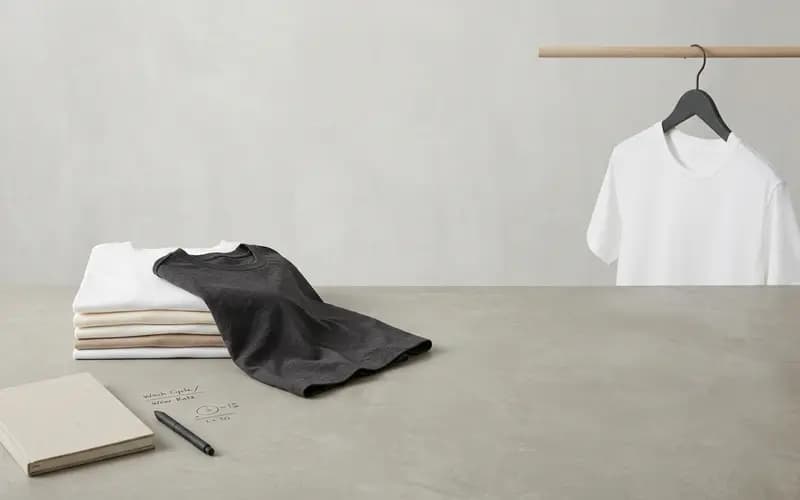
How Many Plain T-Shirts Does a Man Need?
Do the laundry maths, land on your real number, and discover why repetition beats variety in the drawer.
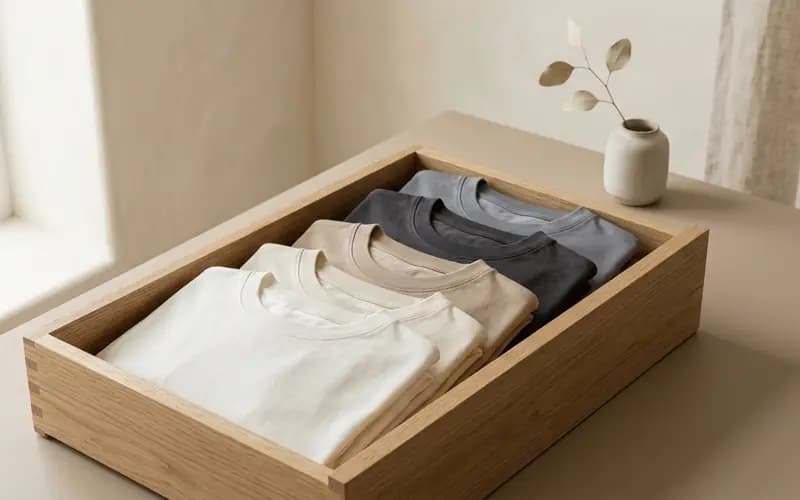
The Drawer of Tees You Never Wear (And How to Fix It)
Decluttering empties the drawer. The rebuy decision is what stops it refilling with tees you never wear.
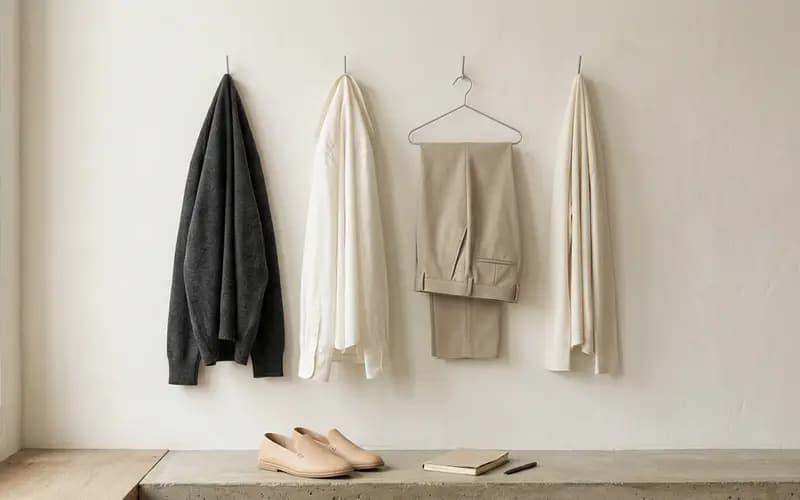
Uniform Dressing: One Outfit, Every Day
Jobs, Zuckerberg, and a lot of quietly stylish people share one habit: they decided what they wear, once.
Stay in the loop
New writing, no noise
Occasional notes on fit, fabric, and dressing simply well. No spam, unsubscribe anytime.
Subscribe