Styling
Layering Basics
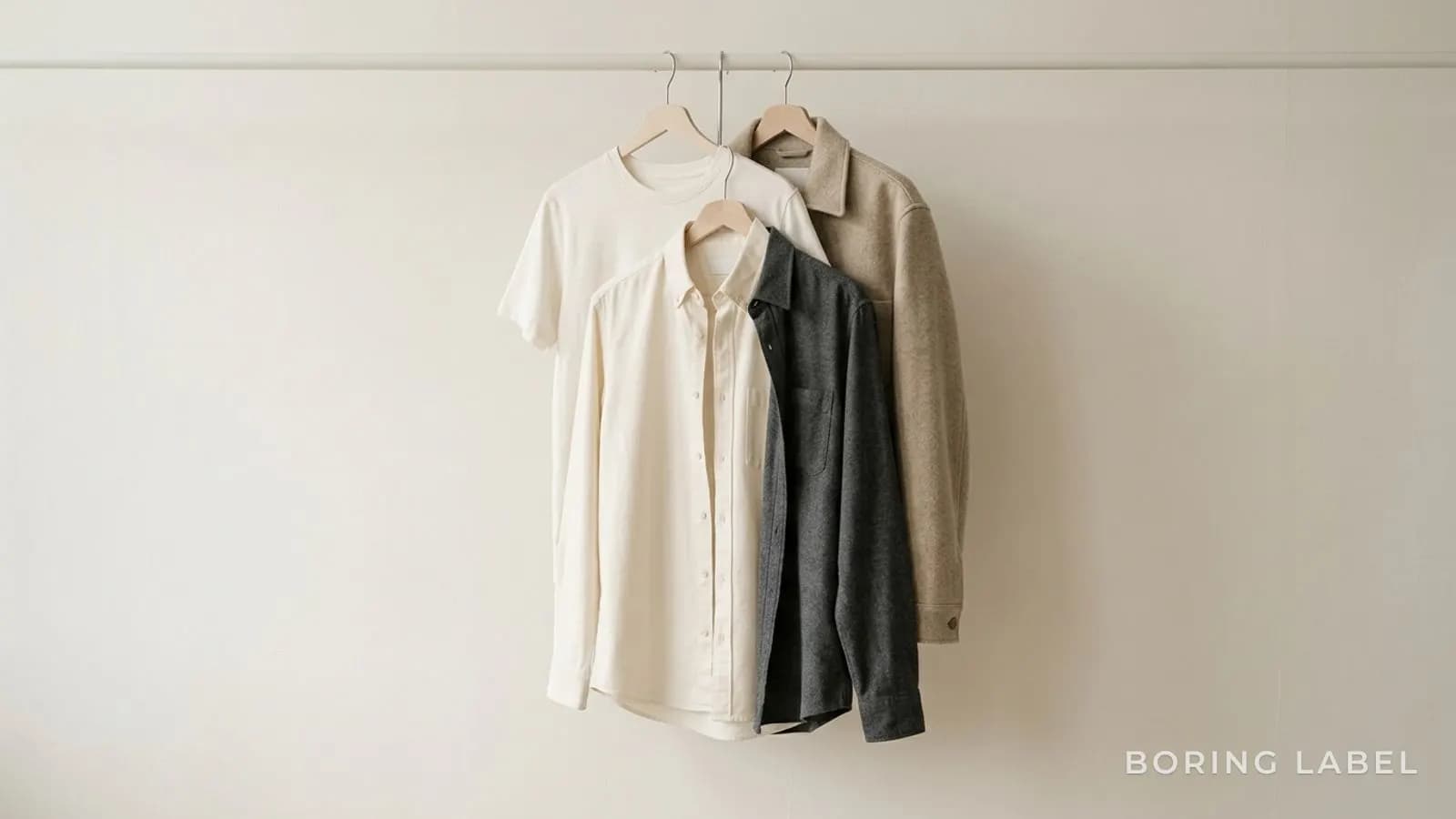
Layering is the multiplier on a small wardrobe. Get three rules right and a tee becomes ten outfits.
Why layering is the cheapest way to own more outfits
There is a quiet maths problem at the heart of every wardrobe. You own a fixed number of clothes, and you want to look different on a reasonable number of days.
The slow, expensive answer is to buy more. The fast, free answer is to learn to layer.
Layering is the multiplier on a small wardrobe. A single t-shirt worn alone is one outfit.
The same tee under an open shirt is a second. Under an overshirt, a third.
With a jacket over the shirt, a fourth. You have not bought anything new - you have just combined what you own in different stacks, and each stack reads as a distinct outfit.
This is how a handful of good basics turns into weeks of looks.
The reason most people do not layer well is not a lack of clothes. It is a lack of rules.
They throw a jacket over a tee, notice it looks slightly off, and conclude that layering "is not for them." It almost always is. The off-ness comes from breaking one of three simple rules about weight, length, and colour.
Get those right and a tee becomes ten outfits. This piece is about those three rules, plus the practical reality of layering in a country where, for half the year, the problem is heat, not cold.
The three rules that make layering work
Almost every layering failure traces back to one of these. Learn them and you can stop guessing.
Rule one: layers go light to heavy, thin to thick
The layer closest to your skin should be the lightest and thinnest. Each layer outward gets a little heavier and more structured.
So: a lightweight tee, then a shirt or light knit, then an overshirt or jacket. Never the reverse.
This sounds obvious, but it is the most common mistake. People put a chunky knit under a thin shirt, or a heavy tee under a light overshirt, and the proportions feel wrong without their being able to say why.
The eye expects density to increase as it moves outward, the same way it does on a person dressed for cold. When you invert it, the outfit looks bottom-heavy and confused.
The practical version: your base tee should always be the thinnest thing in the stack. This is one more argument for a well-made lightweight tee with a smooth, flat finish - a thick or bulky tee fights every layer you put over it and creates lumps at the seams.
A tee that sits close and flat under a shirt is doing its job.
Rule two: layers should differ in length, slightly
When you stack pieces, their hems should not all end at exactly the same point. A small, deliberate stagger - the tee a touch shorter than the shirt, the shirt a touch shorter than the jacket, or the reverse done on purpose - gives the outfit visible structure.
The eye reads the layers as distinct, and the look gains depth.
When every hem lands on the same line, the layers blur into a single confusing mass, and you lose the whole point of layering, which is visible separation. You do not need a big difference.
A few centimetres is enough for the eye to register "these are separate things."
The common version of this rule in practice: a slightly longer tee peeking below a shorter overshirt or jacket, or a crew tee whose hem sits cleanly above the hem of an open shirt worn over it. Both read as intentional.
What does not read well is a long tee, a long shirt, and a long jacket all ending in the same spot.
Rule three: keep the colour story tight
Layering multiplies the surfaces on your body, which multiplies the chances for colour to clash. The fix is the same one that makes monochrome outfits so foolproof: limit your palette.
The more layers you add, the fewer colours you should use.
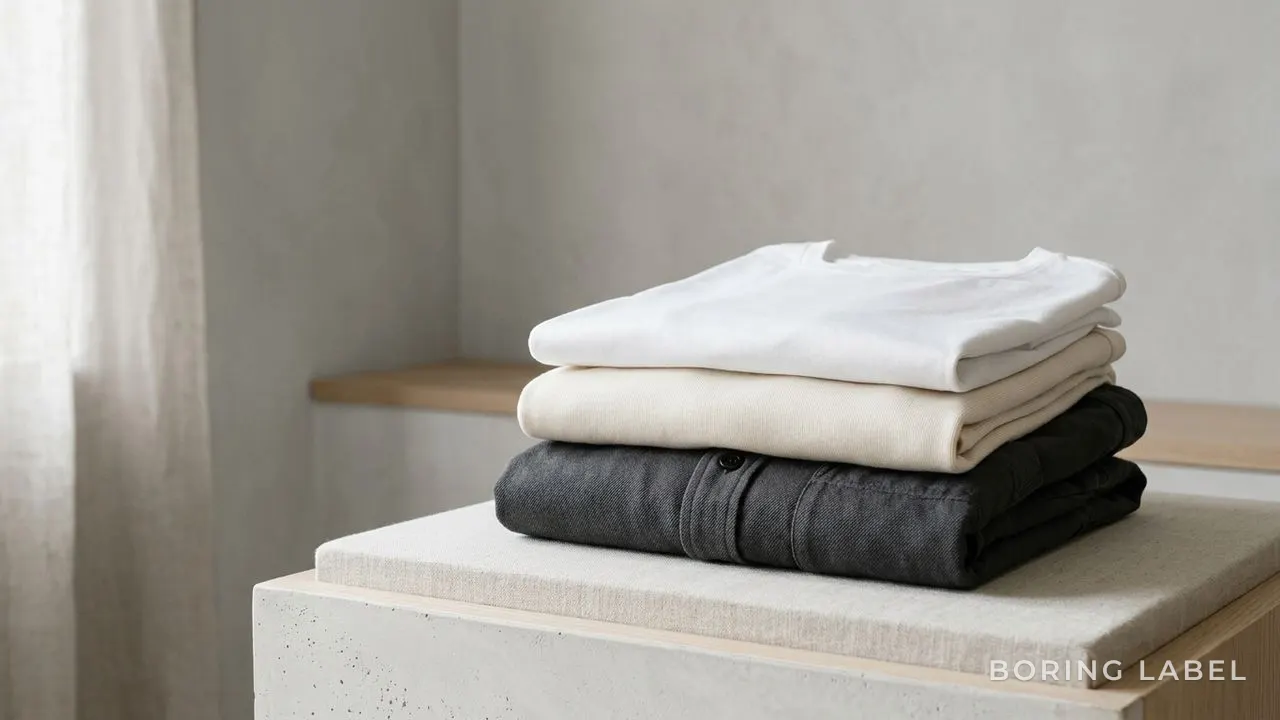
A safe default is two neutrals plus, at most, one accent. A white tee, a navy overshirt, grey trousers - three pieces, two neutrals and a third neutral, zero clash risk.
Once you are comfortable, you can introduce a single colour: the same outfit with an olive overshirt instead of navy. What you avoid is three strong colours stacked on top of each other, which turns a calm layered look into visual noise.
The deeper you go into layering, the more this rule matters, because each new layer is a new chance to get colour wrong. When in doubt, repeat a colour you are already wearing rather than introducing a new one.
A worked example: one tee, several outfits
Let us prove the multiplier with a single white tee and the kind of pieces most people already own.
| Outfit | The stack | When |
|---|---|---|
| 1 | White tee, alone, with trousers | Hot day, casual |
| 2 | White tee under an open chambray shirt | Daytime, relaxed-smart |
| 3 | White tee under a knit, sleeves pushed up | Cool evening |
| 4 | White tee under an open overshirt | Smart-casual, transitional |
| 5 | White tee, shirt, and an unstructured jacket over | Dressed-up, cooler weather |
Five distinct outfits, one tee, four other pieces you likely already have. That is the entire argument for layering in one table.
Notice that the base never changes - a good plain white tee is the foundation every one of these stacks is built on, which is exactly why it earns the title of most useful thing in the wardrobe. If you want twelve full looks built around it, the white tee styling guide takes this much further.
The lesson generalises. Swap the white tee for black, navy, or grey, and you get another five outfits per colour.
A small set of base tees plus a few mid-layers produces more combinations than you will ever wear in a week.
The base layer is the foundation, so treat it that way
Everything above rests on one thing being right: the tee underneath. A layered outfit is only ever as good as its base, and the base is the piece nobody sees most of but everyone feels the effect of.
A few things make a tee a good base layer specifically:
- It is thin and smooth. Per rule one, the base must be the lightest thing in the stack. A flat, fine jersey lies close to the body and disappears under a shirt instead of bunching.
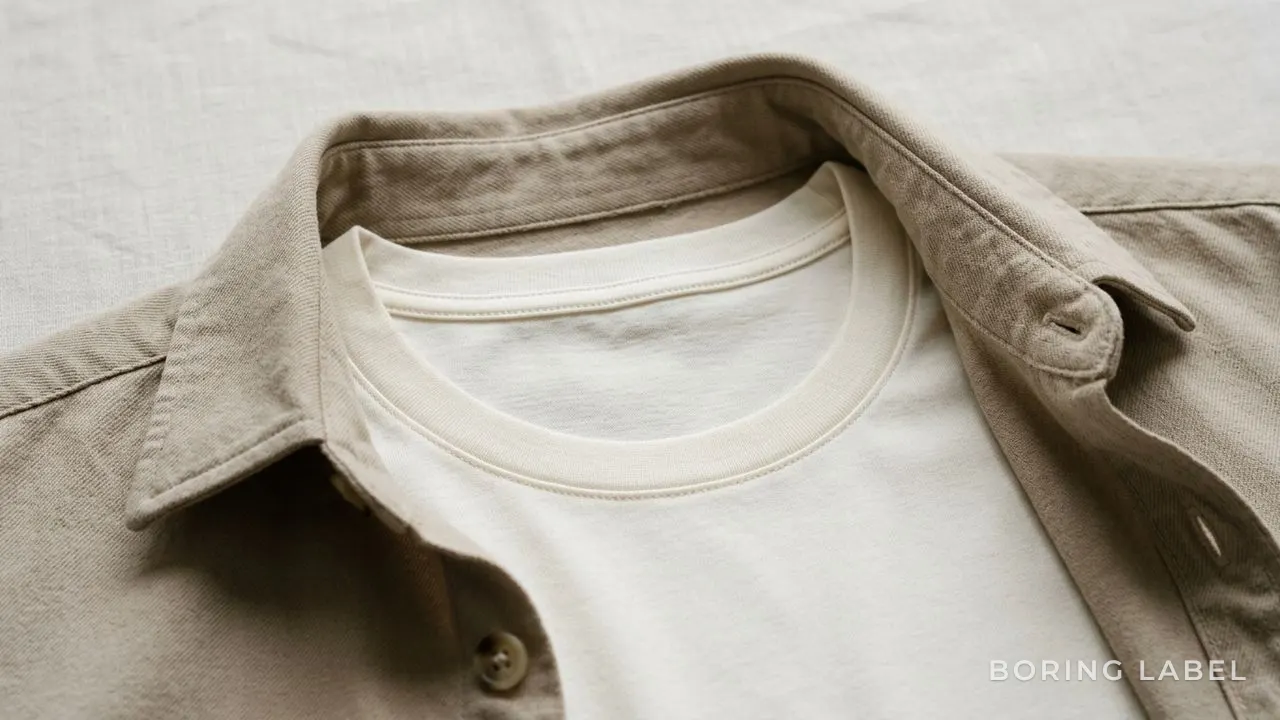
- The neckline sits clean. A collar that has stretched out and gone wavy ruins a layered look, because it is often the only part of the base on show. A tee that holds its neck is non-negotiable for layering.
- It is opaque enough to wear alone too. Since the base doubles as a full outfit on hot days (outfit 1 in the table above), it needs enough weight to not go see-through. This is the small tension in base layers: thin enough to layer, opaque enough to stand alone.
That balance - light, smooth, holds its shape, opaque enough - is exactly what a well-made tee delivers and a cheap one does not. A bulky, shapeless, or sheer tee undermines every layer you put on top of it.
If you are going to invest in one thing for a layering wardrobe, make it the base. Our round-neck tee was built to sit flat under a shirt and still hold up worn on its own, which is the whole job of a base layer.
Layering in Indian heat: the real challenge
Most layering advice is written for cold climates, where the goal is warmth and you can stack freely. In much of India, for much of the year, that advice is useless.
The problem is not staying warm. It is layering for style and ventilation while it is 35 degrees outside.
This is genuinely harder, and it is where generic guides fall down.
The trick is to layer open and light, not closed and warm. You are not trapping heat - you are adding a second surface that you keep unbuttoned and breathable.
A few heat-friendly tactics:
- The open overshirt over a tee. An unbuttoned, lightweight overshirt or camp-collar shirt worn open over a tee adds a whole layer of style while letting air move through the front. This is the workhorse of warm-weather layering. You get the depth of a layered look with almost none of the heat penalty, because nothing is closed.
- Roll and push. Sleeves rolled to the forearm vent heat and read as relaxed. A pushed-up sleeve on a light knit is both cooler and better-looking than a sleeve worn down.
- Choose breathable mid-layers. A lightweight cotton or linen overshirt breathes; a dense synthetic one turns into a sauna. The same logic that governs a breathable summer tee applies to the layer over it - natural fibres and an open weave move air, tight synthetics trap it.
- Layer for the air-conditioning, not the street. A lot of Indian life moves between a hot outside and a cold mall, office, or cab. A light layer you can carry, throw on inside, and take off outside is the most practical kind there is. Pack the layer rather than wear it, and you have solved both temperatures with one piece.
The mental shift is this: in heat, a layer is a removable, openable thing you add for looks and ventilation, not a thing you button up for warmth. Once you stop thinking of layers as insulation, hot-weather layering stops feeling like a contradiction.
For monsoon, the priority shifts again to fabrics that dry fast and do not cling, but the open-layer principle still holds - a light overshirt you can shed when it gets sticky beats a closed one you are stuck in.
The mid-layers worth owning
If layering is leverage, the mid-layers are the lever, and a small, well-chosen set of them does more than a cupboard full of random pieces. You do not need many.
You need the right few, chosen so they stack cleanly over almost any base tee you own.
Here is the short list that earns its place in most wardrobes.
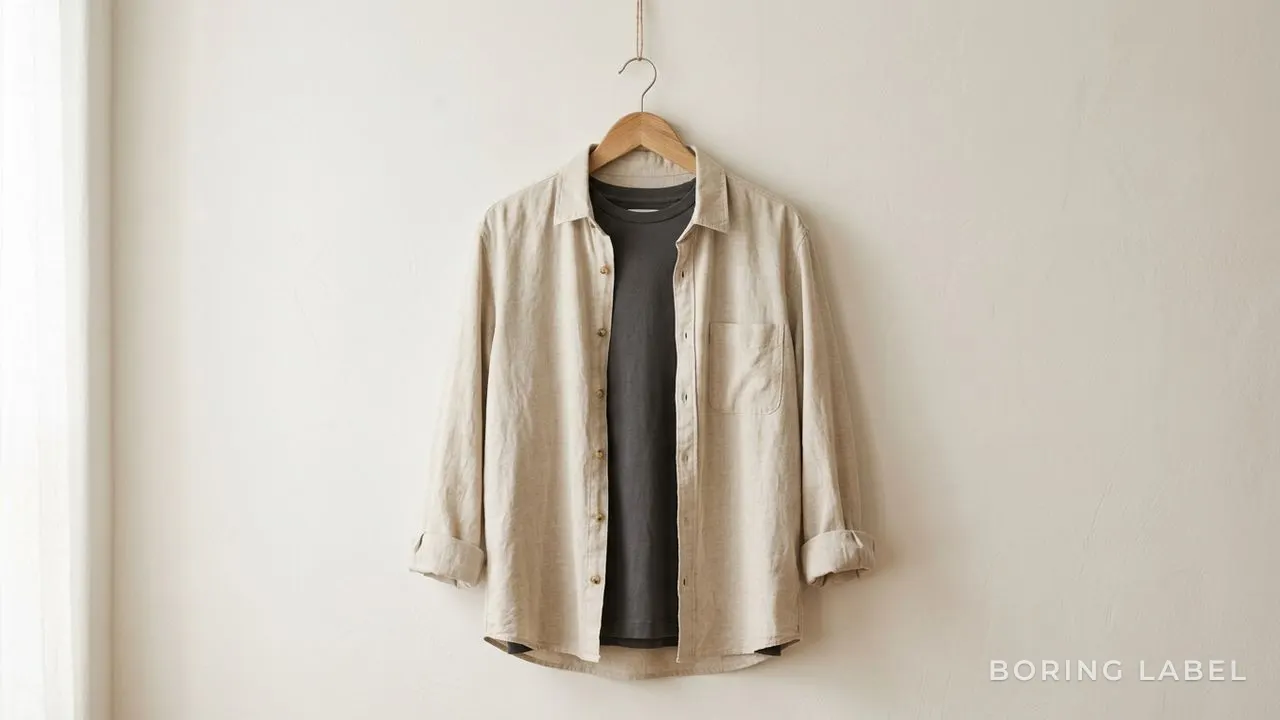
- The open overshirt. A lightweight, unlined shirt cut a touch heavier than a normal shirt - sometimes called a shacket. Worn open over a tee, it is the single most useful layering piece for warm and transitional weather. Buy it in a neutral and it goes over every tee you own.
- The chambray or linen shirt. Lighter than an overshirt, dressier, breathable. Worn open it layers; worn buttoned it is an outfit on its own. Two jobs from one piece.
- The fine-gauge knit. A thin crew or half-zip in cotton or merino. It layers under a jacket and over a tee without bulk, which is exactly what rule one asks for. Avoid the chunky version for layering - it is too dense to sit under anything.
- The unstructured jacket or overshirt in a darker neutral. The outermost layer for cooler days. Unstructured means soft and unlined, so it drapes rather than stands away from the body, and it plays nicely over the lighter layers beneath.
Notice the pattern: every one of these is a neutral, every one is relatively light, and every one works open as well as closed. That is what makes a mid-layer flexible.
A bright, heavy, fussy mid-layer might look good in one specific outfit and refuse to cooperate with anything else. The boring neutral overshirt quietly multiplies your whole wardrobe.
Buy these the way you would buy a capsule wardrobe: in a tight palette, chosen to go with everything, not to stand out on their own. The mid-layer's job is to combine, not to dazzle.
Proportion: the rule behind the rules
There is a quieter principle sitting underneath the three rules, and once you see it, layering gets easier to judge by eye. It is proportion - the relationship between the volumes of your layers and the shape they make together.
A good layered outfit has a deliberate silhouette. Either it tapers - fuller on top, leaner on the bottom, or vice versa - or it holds a clean, consistent line.
What it should not do is pile volume on volume until you look wider than you are tall. A baggy tee, under a loose shirt, under an oversized jacket, with wide trousers, is technically layered and looks like a heap.
The fix is to let one part of the outfit stay lean. If your top half is doing a lot - several layers, some volume - keep the bottom half clean and relatively slim.
If you are wearing wide or relaxed trousers, ease off on the layering up top. The eye wants one area of interest and one area of calm, not interest everywhere.
This matters more for layering than for single pieces, because every layer you add is more fabric, and more fabric is more volume to manage. The people who layer well are not adding the most pieces - they are managing proportion so the stack still reads as a clean shape.
When a layered outfit feels off and it is not weight, length, or colour, it is almost always proportion.
Common layering mistakes and the fixes
Even with the three rules, a few specific errors come up again and again. Here is how to catch them.
- Everything the same weight. Three medium-weight pieces stacked together look flat and bulky. Fix: make sure each layer steps up in density. Thin tee, medium shirt, structured jacket.
- Hems all at one line. Covered above, but worth repeating because it is so common. Fix: stagger the lengths a little, on purpose.
- Too many colours. Four surfaces, four colours, total chaos. Fix: two neutrals and one accent, maximum. Repeat colours rather than add them.
- A bulky base. A thick tee under a shirt creates lumps and ruins the line. Fix: the base is always the thinnest piece.
- Closed-up layering in heat. Buttoning everything in 35-degree weather is miserable and looks try-hard. Fix: layer open, roll sleeves, and let air through.
- Forgetting the base shows. People treat the tee as invisible and let a stretched collar or a faded colour ruin the look. Fix: the visible parts of the base - neckline, hem - need to be in good shape, because they are part of the outfit.
Run any layered outfit against this list before you leave and you will catch almost every problem.
Caring for a layering wardrobe
A layering wardrobe has a hidden vulnerability: it relies on every piece keeping its shape, because the pieces are judged against each other. A tee that has gone baggy, a shirt whose collar has wilted, a knit that has stretched at the cuffs - any one of these throws off the careful weight and length relationships the whole system depends on.
In a single-piece outfit you might get away with it. In a stack, the weak piece drags down everything around it.
So the care that keeps layering looking sharp is the same care that keeps any basic looking sharp, with one extra point of attention: shape retention. A few habits do most of the work.
- Wash cold and gently. Hot water and rough cycles are what stretch necklines and warp hems over time. Cold water and a gentle setting slow that ageing dramatically, which keeps your base tees fitting the way the stack needs them to.
- Dry flat or hang with care. Heavy wet knits stretched over a thin hanger come out misshapen at the shoulders, which ruins them as mid-layers. Dry knits flat. Air-dry tees rather than tumble them, and they hold their length and neckline far longer.
- Retire pieces from the front line. A tee that has lost its shape is not rubbish - it is a gym tee or an undershirt now. Move it out of the layering rotation rather than letting it quietly degrade your outfits. A layering wardrobe works best when every piece in it is still doing its job properly.
This is less about fussiness and more about protecting the system. The reason a small, well-kept set of basics out-layers a large, tired one is that the kept pieces still relate to each other the way the rules require.
Good washing habits are what let a base tee stay a base tee for years instead of months.
The takeaway: layering is leverage, not luxury
The instinct, when you want more outfits, is to buy more clothes. Layering is the argument against that instinct.
It is the single highest-return skill in dressing, because it costs nothing and multiplies what you already own. Three rules - light to heavy, stagger the lengths, keep the colours tight - turn a modest set of basics into weeks of distinct looks.
And it starts from the bottom of the stack. A good base tee is what every layered outfit is built on, the way a good foundation is what every building is built on.
Get the base right - thin, smooth, holds its shape, opaque enough to stand alone - and everything you put over it works harder. Get it wrong and no jacket saves you.
So before you add another item to the cart, open your wardrobe and try stacking what is already there. Most people are one or two open overshirts and a single rule away from doubling their outfits.
That is leverage, and it is sitting in your cupboard already.
Boring Label
Wear the point of the article.
One honest tee. Heavyweight combed cotton, a collar that holds, a fit that actually fits. No logo, no noise.
Shop the round-neck teeFree shipping across India · Easy returns
Keep reading
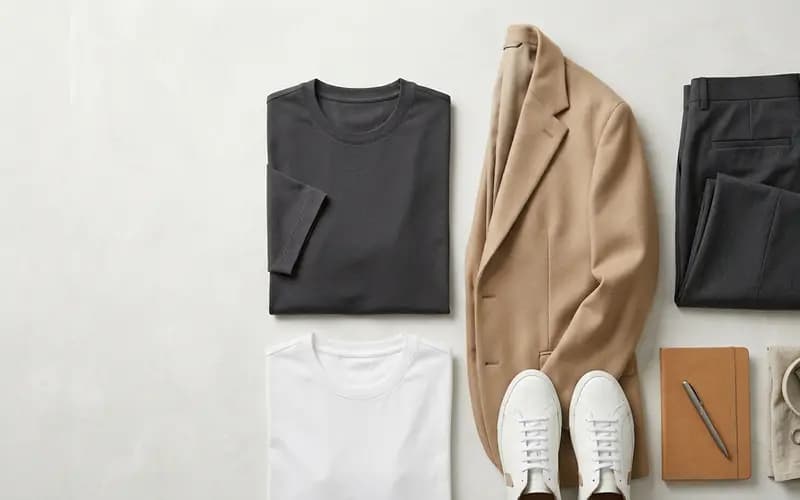
The Round-Neck Tee as Office & WFH Wear
The plain tee quietly became office wear. Here is what makes one look meeting-ready, and how to layer it for a hybrid week.
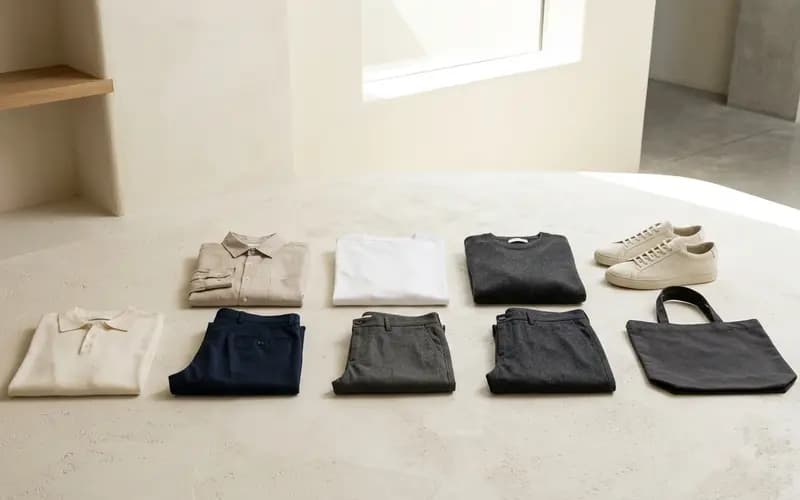
Smart Casual Basics Every Wardrobe Needs
Smart casual confuses people because nobody defines it. Here is the basics list that nails it.
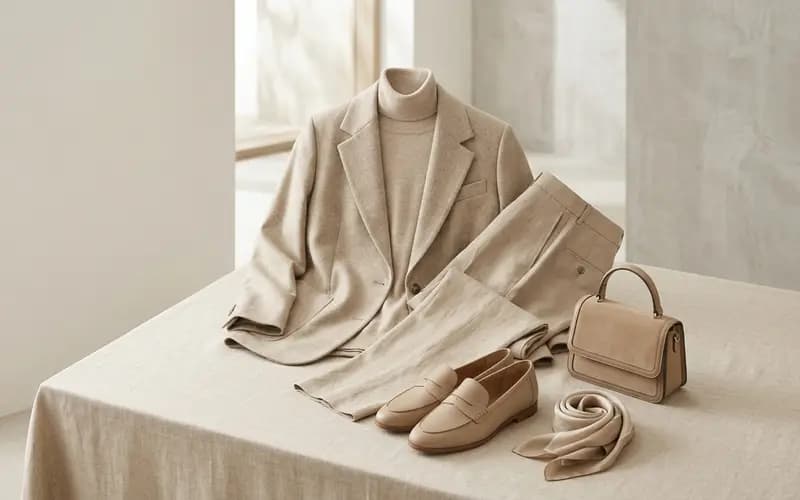
The Monochrome Outfit: A Simple Formula
Dressing in one colour sounds risky and is actually the easiest way to look pulled together.
Stay in the loop
New writing, no noise
Occasional notes on fit, fabric, and dressing simply well. No spam, unsubscribe anytime.
Subscribe