Styling
How to Wear a Plain Tee to Work and Working From Home
The plain tee quietly became office wear. Here is what makes one look meeting-ready, and how to layer it for a hybrid week.
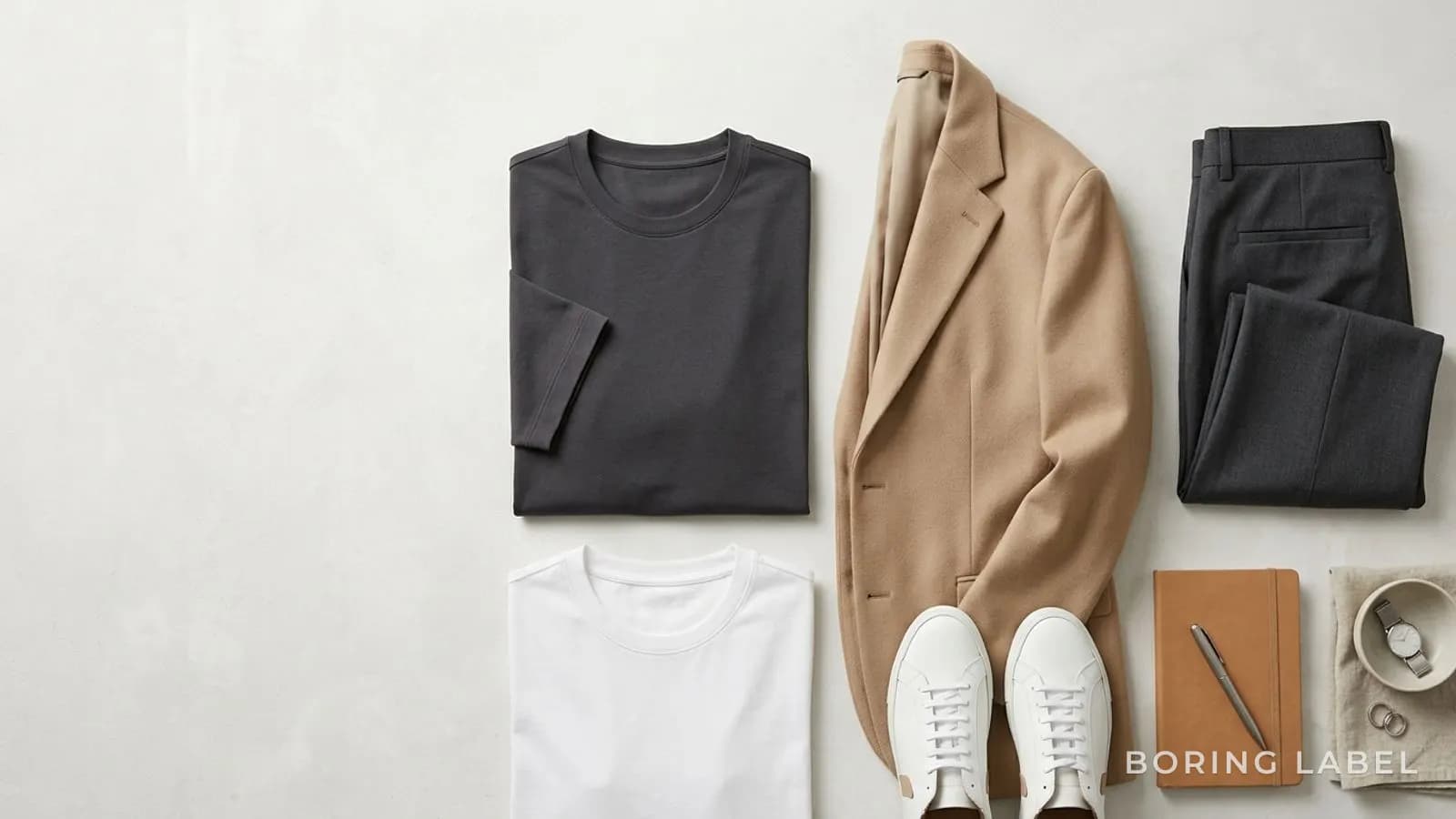
The Tee Quietly Became Office Wear
Somewhere in the last few years, the rules about what you wear to work loosened so much that most people stopped knowing what they actually are. The five-day suit-and-tie office is largely gone.
So is the assumption that a t-shirt is strictly weekend gear, something you change out of before anything important happens. In between those two extinct certainties is where most of us now live: a hybrid week of video calls from a spare room, two or three days in an office with no written dress code, the occasional client meeting, and a manager who would find a tie faintly alarming.
In that world the plain round-neck tee has quietly become one of the most useful things in a wardrobe. Not the printed band tee or the gym tee, but a clean, well-cut, solid-colour crew - worn on its own when the day is informal, layered under a shirt or an overshirt or a jacket when it needs to lift.
It is comfortable enough for a long day at a desk and, worn correctly, presentable enough for a meeting. The catch is in those two words: worn correctly.
The same garment can read as quietly put-together or as if you forgot to get dressed, and the difference is smaller and more controllable than most people assume.
This is a guide to making a plain tee work for the modern, blurry, half-at-home office - what makes one look meeting-ready and another look sloppy, how to layer it so it reads intentional rather than lazy, and why the part of the tee that does the heavy lifting is the part most people never think about. By the end you will be able to look at your own tees and sort the work-appropriate ones from the ones that should stay at home, and know exactly why each falls where it does.
Why the Tee Earns Its Place in a Hybrid Week
Before the styling, it helps to be clear about why the tee belongs at work at all, because the answer shapes everything else. The hybrid week makes a specific, awkward demand of your clothes: the same outfit often has to survive both a morning of solo work at home and an afternoon of being seen.
You do not want to change twice a day. You want one set of clothes that is genuinely comfortable for hours of sitting and typing, and still acceptable when the camera turns on or you step into the office.
A structured shirt is comfortable enough but fussy - it creases, it gapes, it needs ironing, and it can feel like a small daily performance. A hoodie or a graphic tee is comfortable but reads as off-duty the moment anyone sees it.
The plain round-neck sits exactly in the gap. It has the comfort of casual wear and, in the right fabric and fit, enough restraint to pass as deliberate.
It is the lowest-effort garment that still clears the bar of looking like you meant it.
There is a second, less obvious reason. Most modern offices have drifted toward what people loosely call smart casual, and the spine of smart casual is a small set of quiet, high-quality basics rather than anything flashy.
A good plain tee is one of those load-bearing basics - it works under a blazer, over which it reads as intentional rather than underdressed, and it works alone on the relaxed days. If you are building a wardrobe around restraint rather than variety, which is the whole logic of a minimalist capsule wardrobe for men, the plain tee is one of the few pieces that pulls double duty across nearly every day of the week.
And the hybrid week is hard on clothes in a way the old office never was. You wear the same handful of things far more often, because you are dressing for comfort and repetition rather than display. That high-rotation, high-wash life is exactly the condition under which a cheap tee falls apart fastest and a good one earns its keep - a point we will return to, because it is where the choice of tee actually pays off.
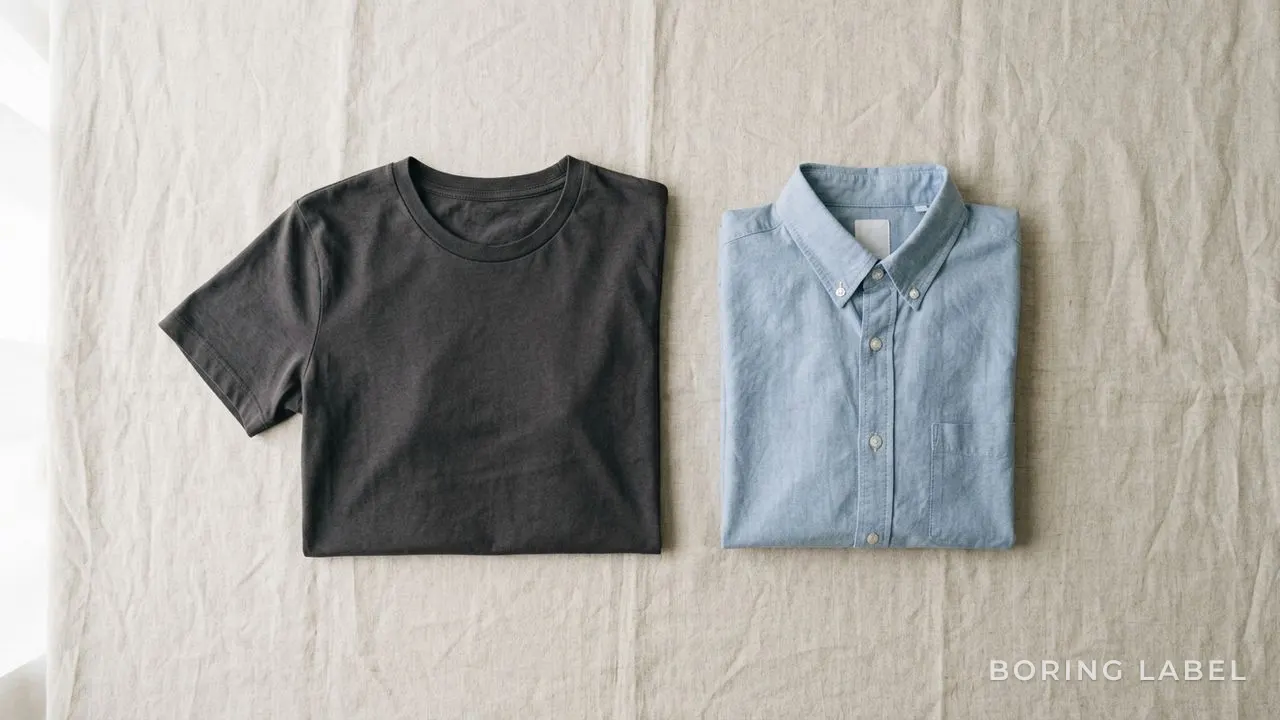
Meeting-Ready vs Sloppy: The Real Difference
Here is the part that matters most, because it is where almost all the work is. Two people can wear the same colour tee to the same call and look completely different - one composed, one like they rolled out of bed.
The gap is not about how expensive the tee is. It is about a handful of specific, fixable things.
Get these right and a plain tee reads as a deliberate choice; get them wrong and no price tag saves it.
Fit Above the Waist Is Almost Everything
On a video call and across a meeting table, people only ever see you from roughly the chest up. That means the fit of the tee around the shoulders, chest, and neckline carries the entire impression, and the rest of it - how it falls at the hip, the length - barely registers. This is good news, because the top half is the easiest part to get right.
A meeting-ready tee sits cleanly on the shoulder, with the shoulder seam landing at the actual edge of your shoulder, not halfway down your arm and not pulled up onto it. The chest has a little room but no billowing excess.
The fabric skims rather than clings or tents. A sloppy tee fails on one of two opposite ends: either it is too big, with the shoulder seam drooping and a pool of slack fabric reading as shapeless, or it is too tight, pulling across the chest and clinging in a way that looks like effort in the wrong direction.
The target is the boring middle - a clean, even drape with no drama. If you are unsure where you sit, our t-shirt fit guide walks through how each measurement should fall, and the oversized vs regular fit comparison is worth a read, because oversized - whatever its merits on a weekend - almost never reads as meeting-ready.
The Neckline Is the One Detail Everyone Sees
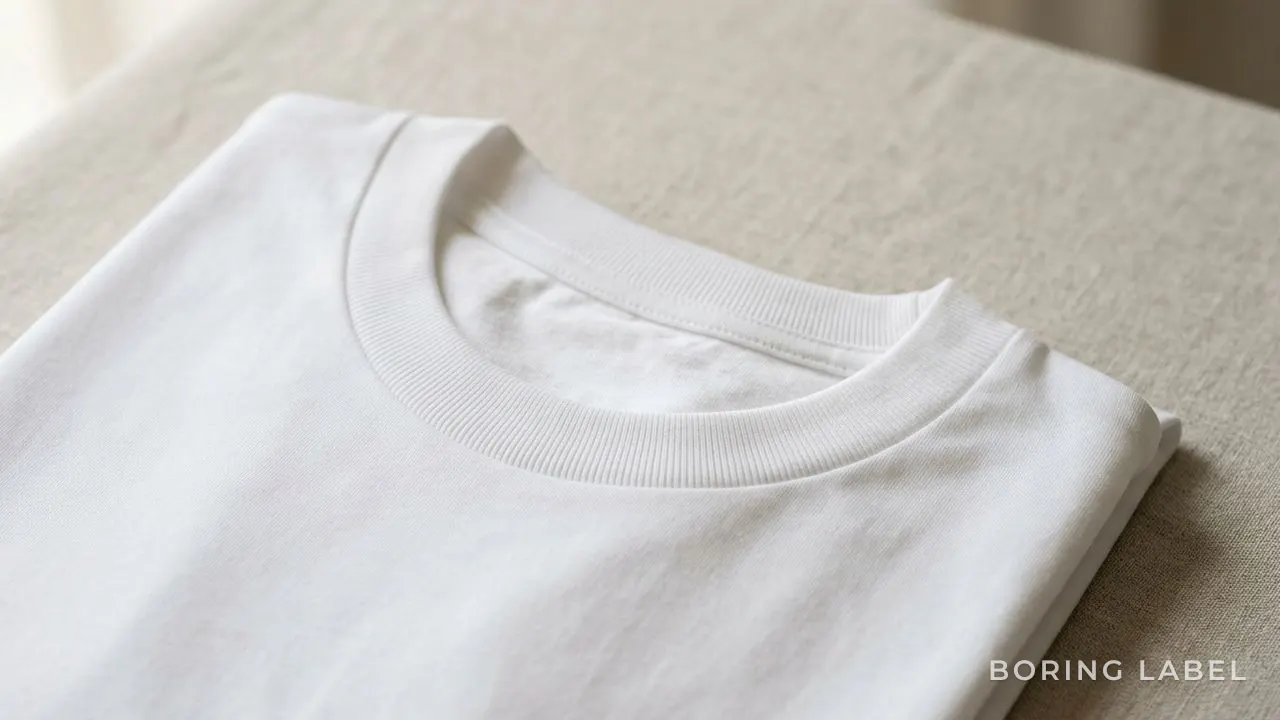
If fit above the waist is most of the impression, the neckline is the single most-scrutinised inch of the whole garment, because it sits right under your face - the one place a camera or a colleague's eye is always pointed. A round neck that holds its shape, sits flat against the collarbone, and stays where it should reads as crisp.
A neckline that has gone loose and wavy, curls outward, or sags away from the neck reads as worn-out and tired, even if the rest of the tee is fine. This is why a stretched-out collar is the fastest way to make an otherwise decent tee look cheap on camera.
There is also the choice of neckline itself. For work, the round neck is the safe, modern default - clean and unfussy.
The deep V-neck, by contrast, tends to read as trying slightly too hard and shows more chest than most meetings call for. A plain crew is the quieter, more professional shape, which is part of why it has become the default neckline of smart-casual dressing.
Whatever you choose, the test is the same: does the neckline still snap back to its shape after a wash, or has it gone slack? A tee that fails that test has quietly aged out of your work rotation.
Colour: Boring Is the Point
For work, the most useful tees are the least interesting ones. A solid white, a charcoal or mid-grey, a navy, a soft black, a muted olive or stone - these read as considered and pair with anything you might layer over them.
Bright colours, busy patterns, and anything with a slogan or logo pull attention and break the quiet, composed effect you are after. There is a real case for going further and keeping a whole outfit in one tonal family - a grey tee under a grey knit, a stone tee under a tan overshirt - because a monochrome outfit reads as deliberate and quietly expensive with almost no effort, which is exactly the register a work tee wants.
The whole appeal of a plain tee at work is that it disappears into the outfit and lets you, rather than your clothes, do the talking.
If you are building a small set of work tees, a tight palette of neutrals is far more useful than a drawer of colours, because neutrals layer and combine without thought. Our guide to essential t-shirt colours covers which few earn their place; for office use, lean even harder toward the quiet end of that list. One genuinely good white and one good grey will out-earn a rainbow of cheaper colours you have to think about every morning.
Condition: The Quiet Killer
The last difference is the one nobody likes to hear: a tee that is technically the right fit and colour can still look sloppy because it is simply tired. Pilling across the chest, a greyed-out white, a collar that has lost its snap, faint bobbling under the arms - these are the small signals that read, instantly and subconsciously, as scruffy.
The fix is partly care and partly buying tees that resist this kind of ageing in the first place. A tee that pills and fades after a month was never going to survive the office; one made to hold its surface and colour will look meeting-ready for far longer.
We will come back to why some tees age gracefully and others do not, because for office wear it matters more than almost anything else.
How to Layer a Tee So It Reads Intentional
A plain tee alone is fine for the most relaxed days, but the real flexibility comes from layering - and layering is where most people either unlock the tee's potential or undo it completely. The principle behind every good layered look is the same: the tee should look like a deliberate part of the outfit, not like an undershirt that happened to be visible.
The whole craft of layering basics is making each piece look chosen. Here is how to apply that to the office tee specifically, layer by layer.
Tee Under a Blazer or Unstructured Jacket
This is the workhorse of modern smart-casual dressing, and it is the look most worth getting right. A clean tee under a blazer reads as relaxed confidence - you are dressed up enough to show you took the meeting seriously, but loose enough to signal you are not anxious about it. The crisp white tee under a dark blazer has, fairly or not, become a small uniform of the put-together modern professional, and there is a surprising amount of craft in getting that one combination exactly right - our guide to how to style a white t-shirt digs into the small choices that separate sharp from sloppy.
The details that make it work are specific. The tee must be well-fitted, because a blazer is structured and any excess fabric bunches visibly underneath it - a slightly trimmer tee than your everyday default usually layers best here.
The neckline should be a clean round neck that sits flat; a sagging collar peeking out of a sharp jacket undoes the whole effect. And the colours should be quiet, so the tee anchors the look rather than competing with the jacket.
Done right, this is one outfit that carries you from a desk to a client lunch without a single change. The unstructured or softer blazer, increasingly the office default, is even more forgiving than a sharp tailored one, because it expects a relaxed layer underneath.
Tee Under an Overshirt or Shacket
The overshirt - a shirt cut heavy enough to wear like a light jacket, sometimes called a shacket - has become one of the most useful layering pieces in the smart-casual wardrobe, precisely because it is the gentle middle ground between a shirt and a jacket. Over a plain tee it reads as relaxed but considered, which is exactly the register most hybrid offices want. It is ideal for the in-between days that have no clear dress code and the in-between weather that is too warm for a jacket and too cool for a tee alone.
The tee here can be a touch more relaxed than under a blazer, because the overshirt is itself a casual piece, but the same neckline and condition rules apply - the bit of tee showing at the collar and under the open front is on display, so it needs to look fresh. Match this with simple bottoms and the whole thing holds together without looking like you tried. This is a textbook smart-casual move, and if you want the broader logic of building outfits in this register, our guide to smart-casual basics lays out the small set of pieces that combine into most of these looks.
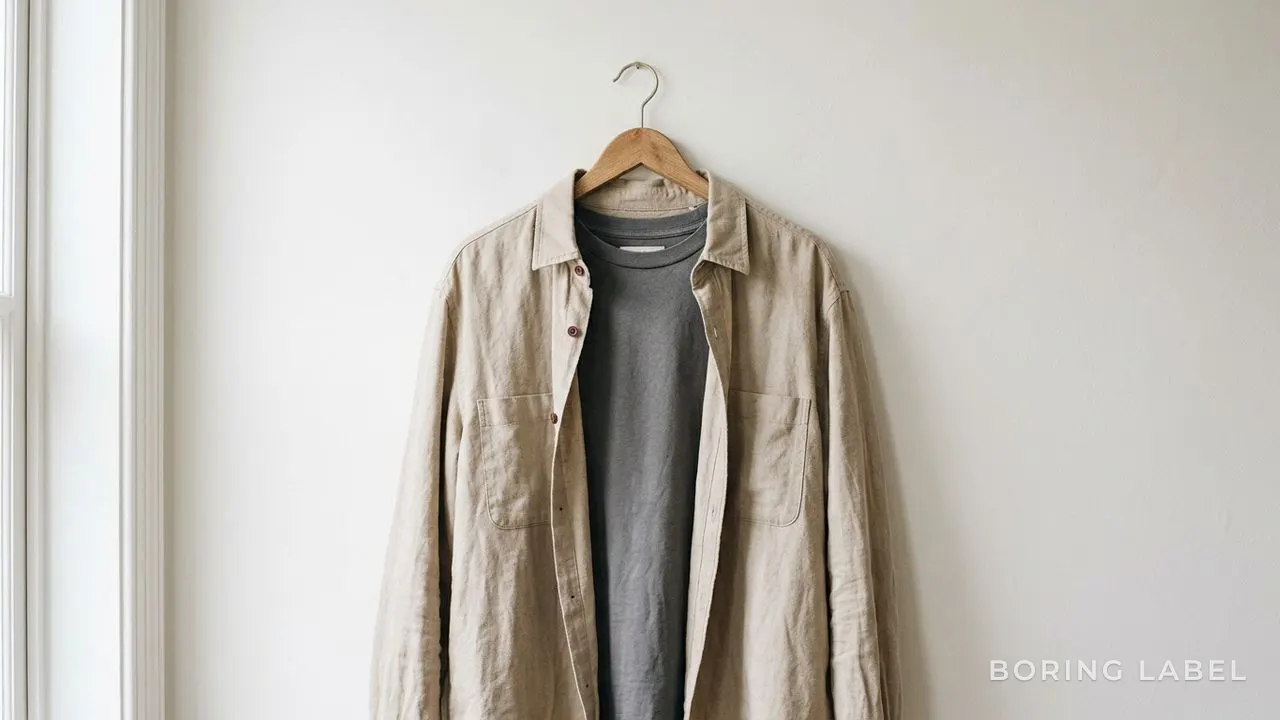
Tee Under an Open Shirt
Wearing an open, unbuttoned shirt over a plain tee is the most casual of the layered looks, but it still works for relaxed office days and most video calls. The tee provides the clean base; the open shirt adds a layer of texture and intent so you do not read as wearing just a tee. A neutral tee under a soft check or a plain oxford is an easy, low-effort combination that looks more considered than the effort it actually takes.
The thing to watch is contrast and tidiness. A crisp white or grey tee under a darker open shirt gives a clean, deliberate line.
The tee's neckline, again, is the giveaway - it is framed by the shirt's open collar, so a stretched or grubby neckline ruins an otherwise easy look. Keep the tee fresh and this becomes one of the most repeatable outfits in a hybrid week.
Tee Under a Knit or Jumper
In an air-conditioned office or a cool-weather stretch, a fine-knit jumper or sweater over a plain tee is a clean, warm, and quietly smart option. Only the neckline of the tee shows above the knit, which means - you are sensing the theme - the neckline is doing almost all the visible work. A round-neck tee under a crew jumper gives a layered neckline that reads as intentional; the small band of tee at the collar lifts the whole thing and stops the knit from looking flat against bare skin.
Because so little of the tee is visible here, this is the one layering case where an older or less perfect tee can sometimes still serve - as long as the neckline is intact. But the moment that collar sags above the jumper, the illusion breaks. The neckline really is, across every single one of these looks, the part of the tee that decides whether the layer reads as deliberate or accidental.
The Work-From-Home Half of the Equation
So far this has leaned toward the seen part of the hybrid week - meetings, the office, the camera. But a large share of the week is the unseen part: hours alone at a desk, no camera on, nobody to impress.
It would be easy to assume the tee does not matter on those days. In practice the opposite is true, and it changes how you should think about the whole rotation.
The first reason is comfort under load. Working from home means sitting in the same garment for eight, ten, twelve hours.
A tee that is too tight, too rough, or fabric that holds heat becomes genuinely distracting over a full day - you notice it, you fidget with it, it sits between you and the work. A tee in a smooth, breathable fabric at a sensible weight just disappears, which is exactly what you want from clothing you are not thinking about.
The qualities that make a tee comfortable for a long desk day - softness, breathability, a weight that neither clings nor swelters - are the same ones that make it good in general, so there is no trade-off between the comfortable home tee and the presentable office tee. They are the same tee.
The second reason is the camera, which collapses the line between seen and unseen at a moment's notice. The defining feature of the hybrid day is that an unplanned call can arrive any minute.
If your work-from-home tee is also presentable, that call is no event - you turn the camera on and you look fine. If your home tee is a faded, stretched relic, every surprise call becomes a small scramble, or a small embarrassment.
Dressing the home half of the week in tees that could pass on camera removes that friction entirely. You are not dressing up; you are simply wearing tees good enough that being seen in them is never a problem.
And the third reason is psychological, and quietly real. There is a well-worn observation that what you wear at home affects how you work at home - that putting on something clean and deliberate, even a plain tee, helps mark the line between off-duty slouch and working focus in a way that a worn-out sleep tee does not.
It is a soft claim and easy to overstate, but most people who work from home recognise something in it. A decent tee is a small, low-effort way to get dressed for work without getting dressed up.
There is also the unglamorous fact of laundry. Working from home means you cycle through tees faster - you wear them longer each day and you wash them more often, because they are doing the job a whole work wardrobe used to spread across many garments. That heavy wash load is precisely where cheap tees collapse and good ones prove their worth, which brings us to the point that, for office and home wear alike, quietly matters most.
Why Fabric Quality Decides Everything for a Work Tee
Everything above - the meeting-ready look, the layering, the all-day comfort, the surprise-camera readiness - rests on one thing the tee is actually made of. You can get the fit and colour and styling perfect, but if the fabric is poor, the tee will not stay meeting-ready for long, and the whole system quietly degrades.
For a work tee, worn and washed far more than any weekend garment, fabric quality is not a luxury detail. It is the thing that decides whether the tee keeps doing its job.
The mechanism is simpler than it sounds, and it comes down to the cotton. Most of what goes wrong with a tee - the pilling, the fuzzing, the limp grey look a white tee gets, the collar that loses its snap - traces back to short fibres in cheap cotton working loose with wear and washing.
A tee made from better cotton, with the short fibres removed, stays smooth, holds its colour, and keeps its surface clean for far longer. The full story of why is worth understanding, and we lay it out in combed cotton vs carded, but the short version is this: the part of the cotton that makes a tee look cheap is removable, and good tees have it removed.
This matters disproportionately for a work tee for a clear reason. Recall that almost all the visible impression - on camera, across a desk, peeking out of a blazer - comes from the neckline and the upper chest.
Those are exactly the areas that pill first, sag first, and fade first on a poor tee. So the fabric quality shows up precisely where you can least afford it to.
A cheap tee does not fail invisibly at the hem; it fails at the collar and the shoulders, in full view, on the part you cannot hide. The reasons a tee starts to look cheap - dull colour, a fuzzy surface, a wavy neckline - are the same reasons it stops looking meeting-ready.
And the hybrid week amplifies all of this. Because you wear and wash work tees so much more than occasional garments, the gap between a good and a bad tee widens fast.
A cheap tee washed two hundred times in a year of hybrid work is a different, sadder object by month three. A good one washed the same amount still looks like itself.
This is the whole case for cost-per-wear, and a plain work tee is close to the ideal example of it: you wear it constantly, so the small premium for a tee that survives the rotation is divided across hundreds of wears and disappears. The arithmetic is laid out in our piece on cost-per-wear, and few garments make the case as cleanly as a tee you wear to work most days of the week.
There is one honest limit worth stating, because price is not a guarantee on its own. A tee being expensive does not automatically make it good - plenty of pricey tees are average cotton with a markup.
What you are actually paying for is the cotton and the construction: long-staple, combed cotton, a clean neckline that holds, a weight suited to the climate. When those are right, the tee earns its keep.
When they are not, no price tag rescues it. The skill is buying for the fabric, not the label.
A Small Work-Tee System You Can Actually Run
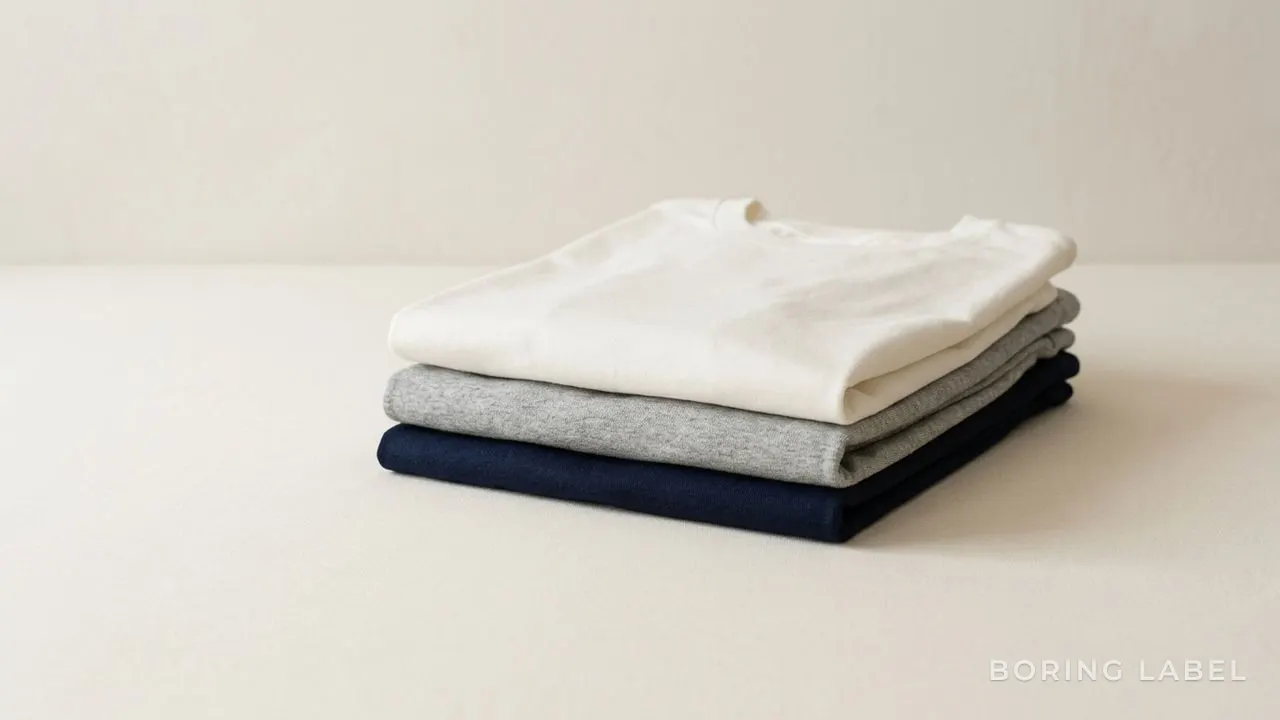
Pulling it together, you do not need many tees to cover a hybrid week well. You need a few good ones in the right colours, kept in good condition, and a clear sense of how to wear and layer them.
That is the whole system, and it is deliberately small - the point of dressing this way is to spend less attention on clothes, not more. A drawer of three or four genuinely good plain tees will serve you better than a dozen mediocre ones, because the good ones layer reliably, survive the wash, and never make you think twice before a call.
The colours to start with are the quiet ones: a white, a grey, a navy or soft black. Those four cover nearly every layering combination and nearly every meeting.
Keep them well - wash them gently, do not cook them in a hot dryer, and retire any tee whose neckline has gone slack before it embarrasses you on camera. The habits that keep tees alive are simple, and our guide to washing t-shirts so they last longer covers the few that matter most; for a tee you wear to work weekly, that care is the difference between a year of service and three months.
Then wear them with a little intent. Alone on the relaxed days, with attention to fit and a fresh neckline.
Under a blazer or overshirt when the day needs lifting. Under a knit when it is cold.
The same handful of tees, worn across all of those, quietly covers the entire blurry spectrum of the modern week - and that quiet coverage, doing a lot while drawing no attention, is exactly the point. There is a whole philosophy of building a wardrobe this way, around a few repeated pieces rather than constant variety, and if it appeals you will find it in uniform dressing; the work tee is one of its most natural building blocks.
The Takeaway: A Tee That Disappears Is a Tee That Works
The plain round-neck tee belongs at work now, and not as a compromise - as a genuinely good answer to a genuinely awkward question, which is how to dress for a week that is half-seen and half-private, half-relaxed and half-professional, all of it lived in the same set of clothes. The tee covers that whole range better than almost anything else in a wardrobe, precisely because it is comfortable enough to forget and, worn correctly, presentable enough to be seen.
Worn correctly turns out to be a short list. Fit it cleanly across the shoulders and chest, where everyone actually looks.
Keep the neckline crisp, because it sits right under your face and gives everything away. Stick to quiet colours so the tee disappears into the outfit.
Layer it with intent - under a blazer, an overshirt, an open shirt, a knit - so it reads as chosen rather than accidental. And buy it in cotton good enough to stay that way through the heavy wash-and-wear of a hybrid week, because the fabric fails exactly where you cannot hide it.
A long-staple combed-cotton round-neck tee in a quiet colour is built for precisely this - trim enough to layer cleanly, with a neckline made to keep its shape through the washing a work tee actually gets.
Get those right and the tee does the one thing you most want from work clothes: it stops being something you have to think about. You put it on, you look composed whether the camera turns on or not, and you get on with the day. That is a quiet, useful, slightly underrated kind of good - which is exactly what a plain tee, made well and worn with a little care, is for.
Boring Label
Wear the point of the article.
One honest tee. Heavyweight combed cotton, a collar that holds, a fit that actually fits. No logo, no noise.
Shop the round-neck teeFree shipping across India · Easy returns
Keep reading
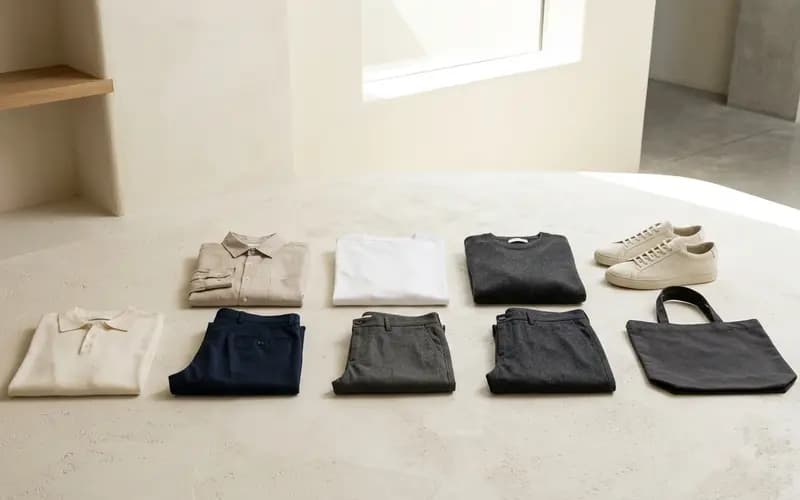
Smart Casual Basics Every Wardrobe Needs
Smart casual confuses people because nobody defines it. Here is the basics list that nails it.
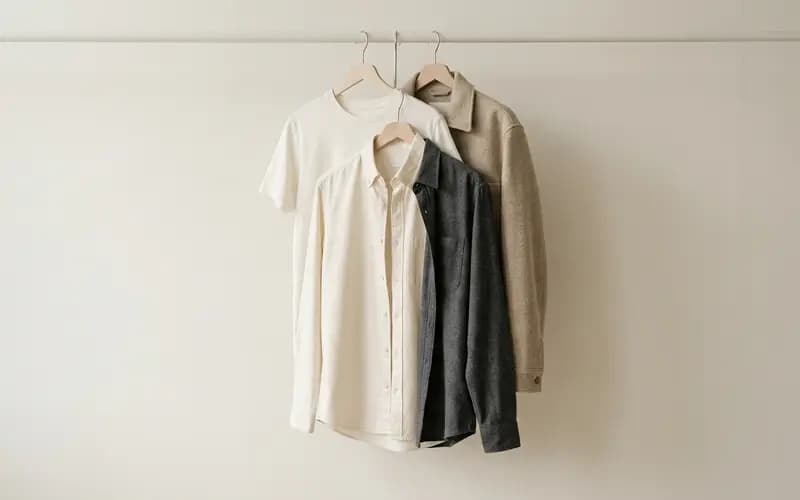
Layering Basics: Build Outfits That Work
Layering is the multiplier on a small wardrobe. Get three rules right and a tee becomes ten outfits.
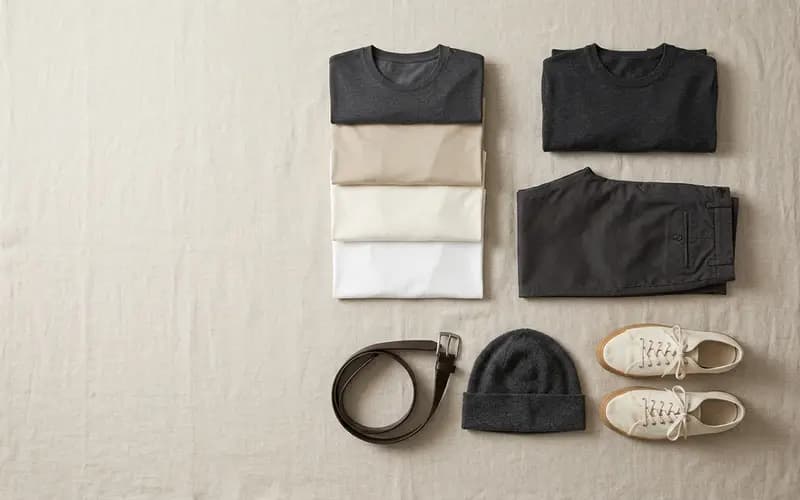
Minimalist Capsule Wardrobe for Men: The Guide
A capsule is not fewer clothes for its own sake. It is a small set that combines into many good outfits.
Stay in the loop
New writing, no noise
Occasional notes on fit, fabric, and dressing simply well. No spam, unsubscribe anytime.
Subscribe