Buying
The 30-Wash Test - How to Judge a T-Shirt's Durability
Most tees survive the first wash. The honest test is thirty. Here is what fails, when it fails, and how to check before you commit.
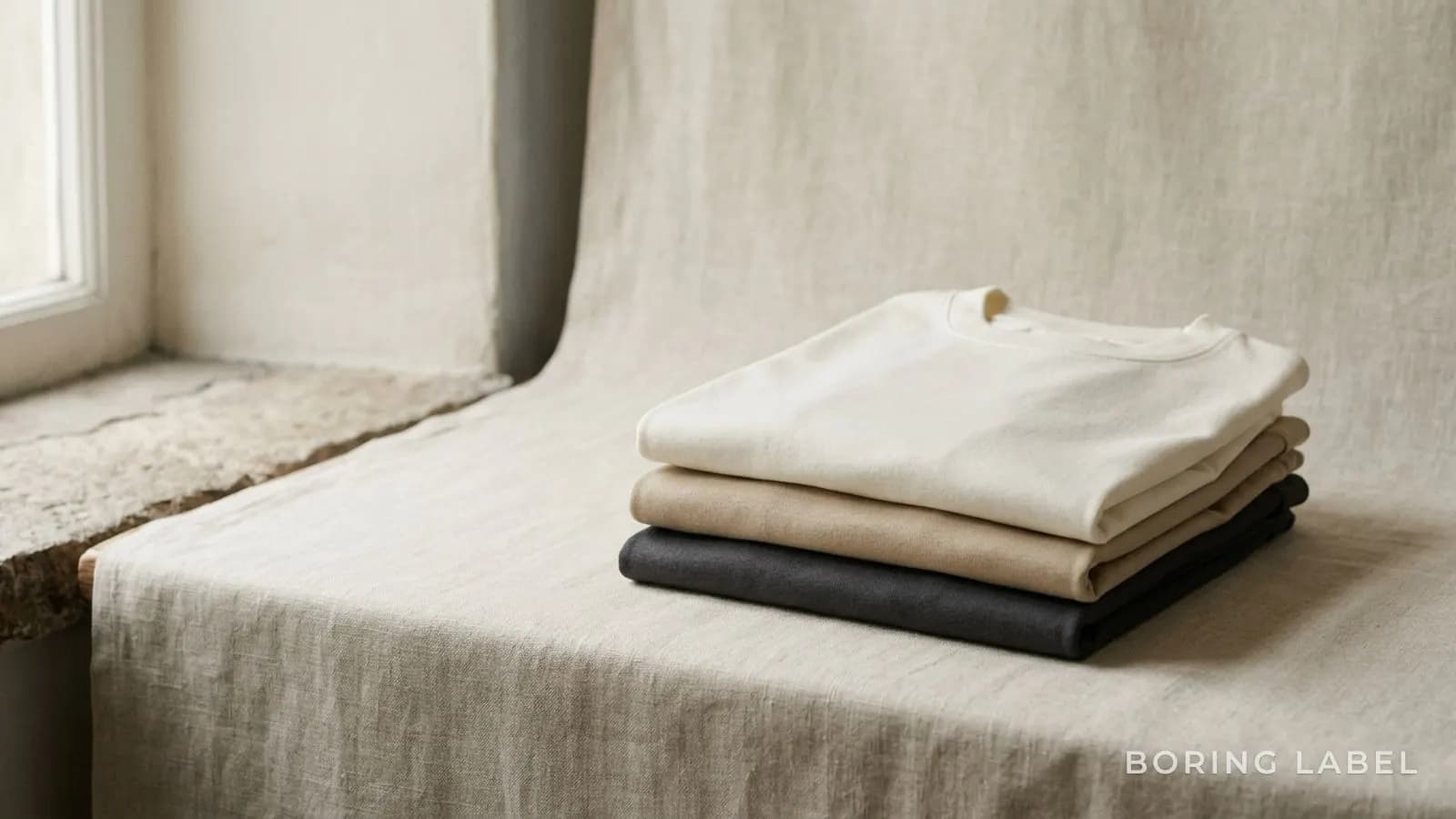
A t-shirt does not die in the shop. It dies in the laundry.
Every tee looks good on the rack. Crisp, even colour, a collar that sits flat, a body that hangs straight.
That is the easy part, and it tells you almost nothing. The shop version of a t-shirt is a promise it has not been asked to keep yet.
The real test starts the first time it goes through a wash, and it ends somewhere around the thirtieth, by which point the shirt has either earned its price or quietly confessed that it never deserved it.
This is the gap most people never see coming. You judge a tee by how it feels when you try it on, then act surprised six months later when the collar gapes, the black has gone the colour of wet slate, and the hem has twisted itself round to the side like it is trying to escape.
None of that was random. All of it was decided before you bought the thing, by the cotton, the yarn, the dye, and the stitching, and all of it would have shown up if you had known where to look and how long to wait.
Thirty washes is how long you wait. It is not a marketing number, although plenty of brands have noticed it makes a tidy guarantee.
It is roughly six months of normal life - one wash a week, give or take - and it happens to be the exact window in which a t-shirt's quality stops being a matter of opinion and becomes a matter of evidence. So this is a guide to that evidence: what actually fails over those thirty washes and why, how the industry measures durability with real numbers, how you can run your own version of the test at home, and what to look for at the point of purchase so you do not have to learn it the hard way thirty washes later.
What actually fails, and when
People talk about a tee "wearing out" as if it were one event. It is not.
It is a series of separate failures, each with its own cause and its own timeline, and they show up in a fairly predictable order. Learn the order and you can read a shirt's future from its first few washes.
Here is the map. Every one of these is a distinct failure mode with a distinct driver, and the "when" column is the useful part - it tells you whether you are looking at a fabric problem, a construction problem, or just life.
| Failure mode | What causes it | When it usually shows |
|---|---|---|
| Collar stretch ("bacon neck") | Heat and agitation degrading the rib, plus the weight of a wet shirt hung by the neck | Washes 5 to 15 |
| Shrinkage | Cotton that was never pre-shrunk, hot water, the dryer | Washes 1 to 10 |
| Pilling | Short fibre ends working loose and balling up under friction | Washes 10 to 30 |
| Colour fade | Surface dye washing off because it was never bonded to the fibre | Washes 1 to 30 |
| Hem twist (spirality) | Knit tension left in tubular fabric with no side seams to anchor it | Washes 3 to 15 |
| Thinning and holes | Repeated abrasion on a low-weight, weak-fibre knit | Washes 50 to 100 |
| Neck-tape failure | Tape applied with a single line of stitching, or just glue | Washes 10 to 30 |
| Shoulder seam sag | The shoulder is cut on the stretchiest grain and was never stabilised | Washes 15 to 40 |
The pattern hiding in that table is the most useful thing in this whole piece, so it is worth saying plainly. If a tee fails early - in the first ten or fifteen washes - the problem is the fabric and the dye.
That is raw material quality, decided at the mill. If it fails in the middle of the range, washes fifteen to thirty, the problem is construction: the seams, the tape, the way it was put together.
And if it only starts to go beyond thirty washes, you are usually looking at honest wear, which is the cotton doing its job and slowly losing to physics. Cheap shirts fail in the first category.
Good shirts, if they fail at all in normal life, fail in the third. The whole point of the thirty-wash window is that it is long enough to tell those three stories apart.
A couple of these deserve a closer look because they get blamed on the wrong thing. Collar stretch, the dreaded bacon neck, is not caused by your head being too big.
It is the rib knit losing its recovery, partly from heat and partly from being hung up wet so gravity drags on it for hours. Once it has gone, it is gone - you cannot wash a stretched collar back to shape.
And hem twist, where the side of the shirt slowly rotates until the seam that should sit at your side ends up at your belly, is almost a signature of cheap construction. It happens when fabric is knitted in a tube with no side seams, so there is nothing to hold the grain straight, and the residual tension from knitting unwinds itself a little more with every wash.
A tee with real side seams largely cannot do this. That is part of why we build ours with them, and it is one of the quickest tells you can check before buying - reach inside and feel for a seam running down each side.
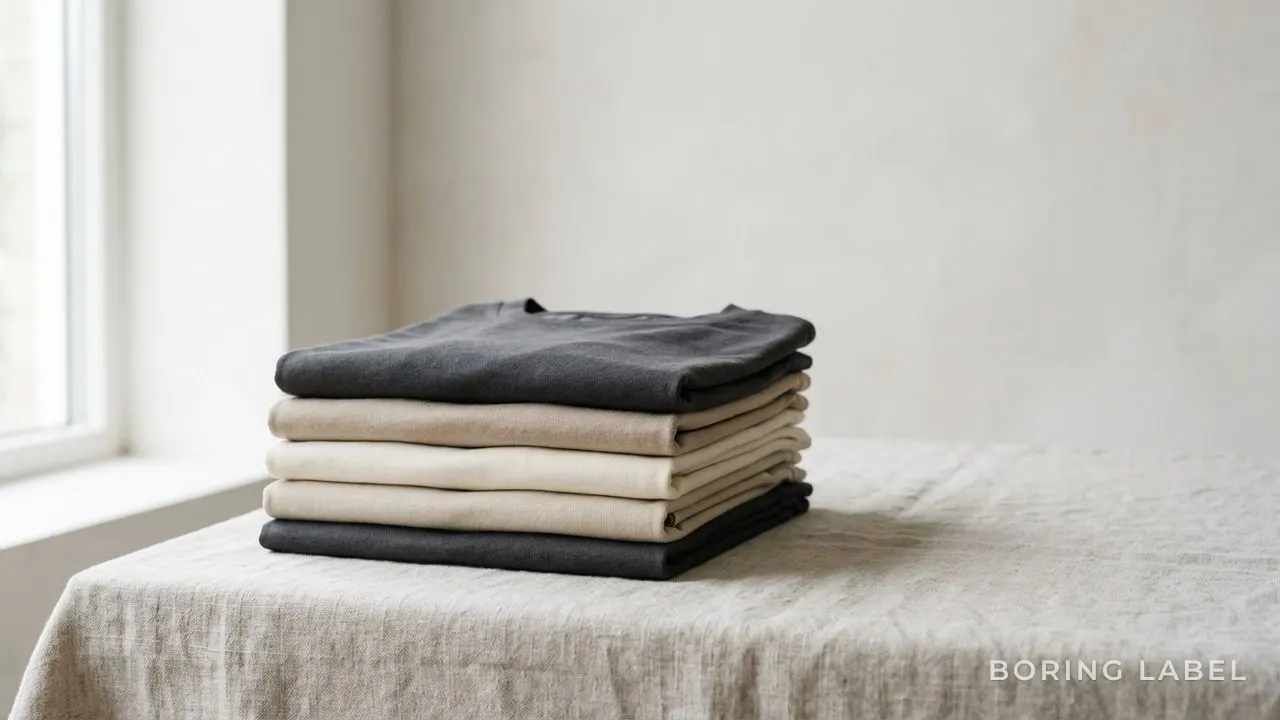
How the industry actually measures this
Here is the part that should make you trust durability claims less, or at least make you ask better questions about them. The clothing industry does not guess at this stuff.
There are standardised laboratory tests, with numbers and grades, that measure exactly the failures in that table. When a brand says a tee resists fading or will not shrink, there is a real test behind that claim - or there should be, and knowing the tests lets you tell the difference between a measured promise and a hopeful one.
There are four that matter for a t-shirt.
The first is AATCC 61, which measures colourfastness to laundering. It is an accelerated test: the fabric is run in roughly 49-degree water with steel balls for agitation, and a single cycle is built to approximate five ordinary home washes.
The result comes back as a grade from 1 to 5, where 5 means no visible change and 1 means the colour has clearly shifted. It also grades staining separately - whether the dye bleeds onto other fabric.
A result of grade 4 or better is what you want; that is a fabric that holds 80 to 90 per cent of its brightness through normal washing. Cheap pigment-dyed shirts often come in at 1 or 2, which is the lab's way of saying they will look tired in a month.
The second is ISO 6330, the domestic washing standard. This one does not grade anything by itself - it is the agreed way to wash and dry a garment so that other measurements are comparable.
Its value is the checkpoints. The standard specifies measuring after 3 washes, after 10, and after 30, which is not a coincidence and is exactly the rhythm this article is built around.
Shrinkage is measured as a simple percentage: original dimension minus final dimension, divided by the original. A pre-shrunk cotton tee should stay under about 3 per cent; an untreated one will happily lose 5 to 8.
The third is the Martindale pilling test. A disc of fabric is rubbed against an abrasive surface for thousands of cycles - commonly 5,000, 10,000, 20,000 - and then graded 1 to 5 for how badly it pills, with 5 meaning no pills at all.
Combed, ring-spun cotton typically scores 4 to 5 at 10,000 rubs. Ordinary carded cotton often lands at 2 to 3, which is the difference between a shirt that stays smooth and one that goes fuzzy across the chest.
The fourth, AATCC 135, is a gentler shrinkage test over three home wash-and-dry cycles, used mostly for the shrinkage figures brands are legally required to disclose in some markets. It is milder than ISO 6330, so a shirt can pass it and still disappoint over a longer run, which is worth remembering when a label quotes a flattering shrinkage number.
Lined up, the four tests cover the failures that actually matter, and they show why thirty washes is the honest checkpoint rather than three.
| Standard | What it measures | Scale or checkpoints | What "good" looks like |
|---|---|---|---|
| AATCC 61 | Colour fade and bleeding | Grade 1 to 5; cycles approximate 5 home washes each | Grade 4+ |
| ISO 6330 | Shrinkage and general appearance | Checkpoints at 3, 10, 30 washes | Under 3% shrink for pre-shrunk |
| Martindale | Pilling resistance | Grade 1 to 5 at 5k to 20k rubs | Grade 4+ at 10k+ |
| AATCC 135 | Shrinkage (home laundering) | 3 wash-and-dry cycles | Under 3% |
I am deliberately not quoting you a set of lab grades for our own tees here, because numbers without the full test report attached are just decoration, and you should be sceptical of any brand that throws a grade at you with no context. What I will say is that the reason to care about these tests is not so you can demand certificates.
It is so you understand that durability is measurable. It is not a vibe.
When someone promises a tee will survive thirty washes looking new, they are making a claim that a laboratory could check, and the good brands build to pass that check whether or not they ever show you the paperwork.
Why thirty, specifically
Thirty is not arbitrary, and it is not chosen because it sounds impressive. It falls out of how people actually use t-shirts.
The average person washes a given shirt about once a week. Over a year that is roughly fifty washes, which means thirty washes is around six months of ownership.
That alone makes it a natural review point - it is the moment you have lived with a shirt long enough to know it, but not so long that ordinary ageing muddies the picture. More importantly, it is the point where every one of the early failure modes has had time to appear if it was ever going to.
Think about what has happened by wash thirty. Shrinkage has fully stabilised - almost all of it occurs in the first three to ten washes, so by thirty the shirt is whatever size it is going to be.
The colour has settled into its true long-term state; the fade pattern is set. Any weak seam has been stressed enough times to start giving way.
Pilling, if the fibre is prone to it, has shown up. The neck tape and collar have been through enough heat and pulling to reveal whether they were built properly.
In other words, thirty washes is where all the cheques the brand wrote come due at once.
This is also, not coincidentally, where the cost-per-wear maths starts to separate the field hard. A budget tee is usually visibly tired by wash twenty to twenty-five - dulled, slightly bobbly, collar going soft.
A well-made one looks close to new at thirty and keeps going for a hundred more. From that point the gap between them widens every single week.
We have written the full version of that argument in cost per wear, and it is worth reading alongside this, because durability and cost-per-wear are really the same idea looked at from two ends: durability is what happens to the shirt, cost-per-wear is what happens to your wallet because of it.
So when you see a "30+ wash guarantee" - and yes, that is exactly the promise we make on our own tees, alongside zero fade and zero shrinkage - read it as a brand staking its claim at the precise point where quality and compromise stop looking alike. It is not saying the shirt expires at wash thirty-one.
It is saying: by the checkpoint where most tees have started to let you down, this one will not have. Beyond thirty, honestly, how long it lasts depends as much on you as on us, which is a good moment to mention that washing cold and air-drying can comfortably double a tee's life.
The full method is in our guide to washing t-shirts so they last longer, and it is the cheapest upgrade available to any shirt you already own.
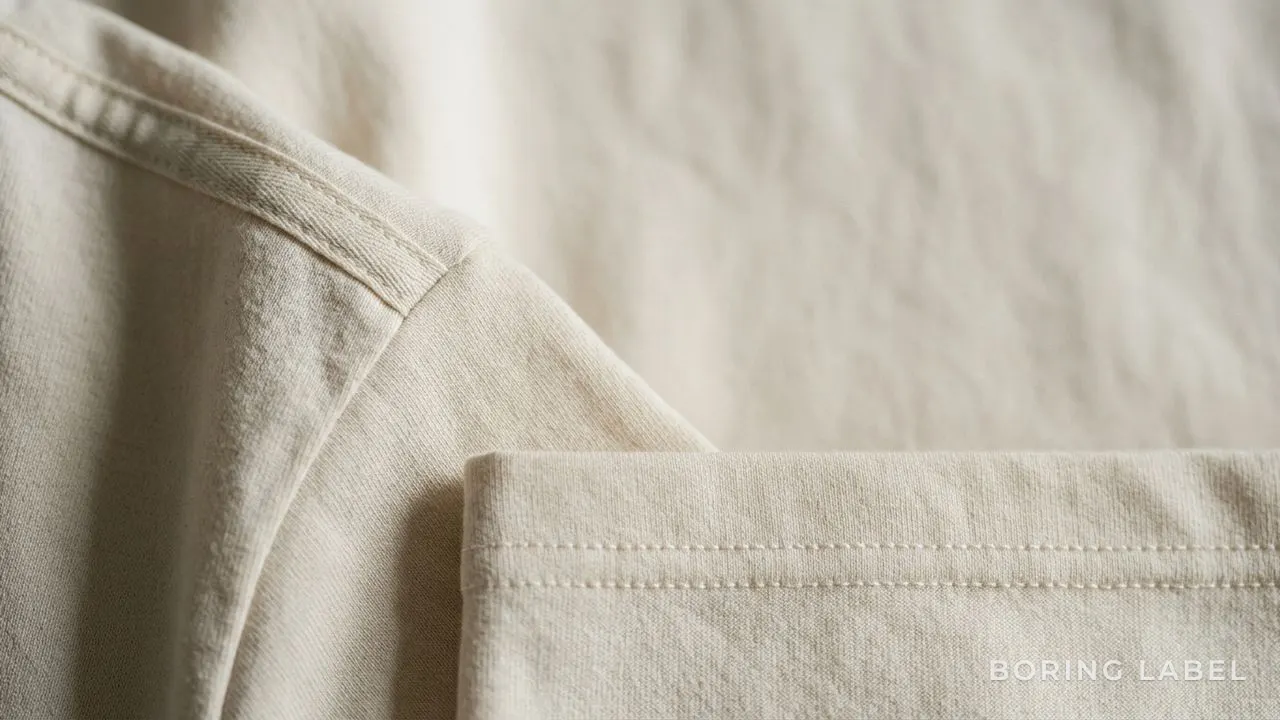
Run your own thirty-wash test
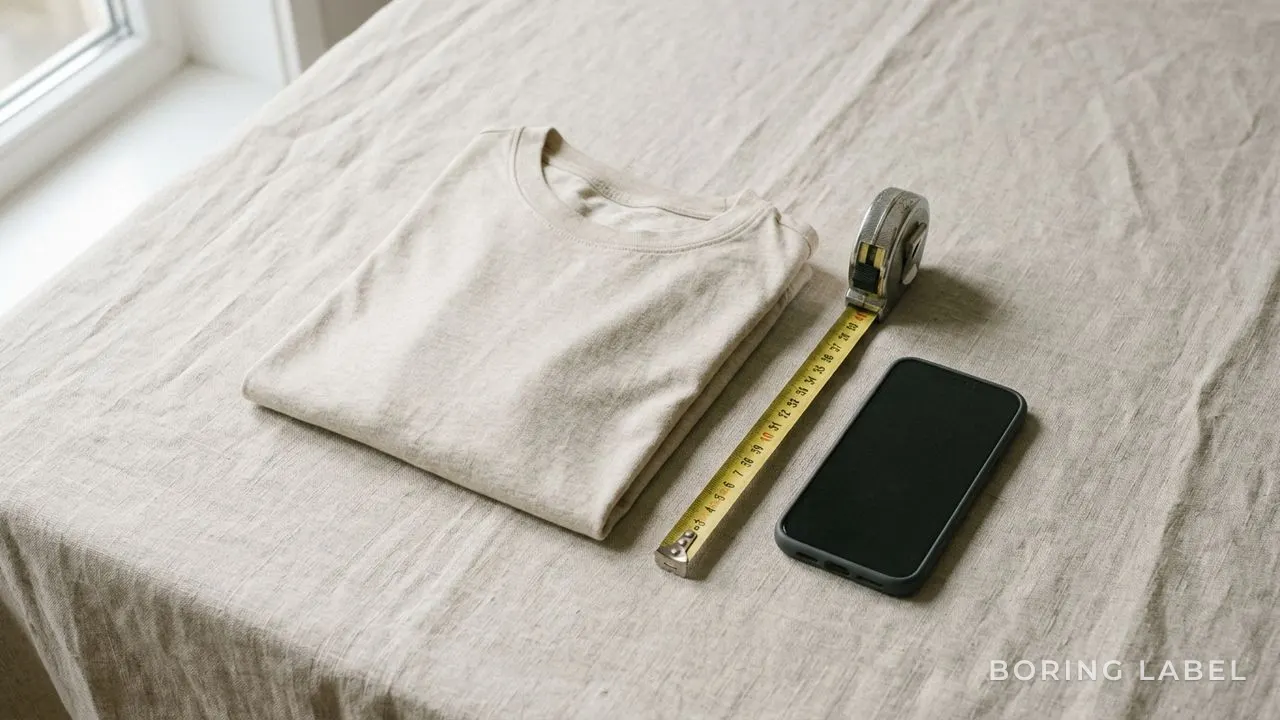
You do not need a laboratory to do a version of this. You need a measuring tape, a phone camera, and the patience to be a bit systematic for a few months.
What you are running is a comparative test, not a precision one - you will not get lab-grade numbers, but you will get an honest, repeatable answer to the only question that matters: is this shirt as good as it claimed to be? Run it on a tee you are unsure about, or run it on two shirts at once to settle an argument between brands.
The whole thing rests on one principle: measure the shirt before it has been washed, then measure it again the same way at the same checkpoints. Everything below is just detail in service of that.
Set the baseline, before the first wash. Lay the shirt flat on a table with no pulling or stretching. Measure three things and write them down to the nearest half a centimetre: the full width from armpit to armpit, the full length from the highest point of the shoulder to the hem, and the collar opening laid flat.
With a fine marker you can put tiny reference dots on the inside of the shirt at the exact points you measured, so you measure the same spots every time. Then photograph it - front, back, and a close-up of the collar and one shoulder - in daylight, ideally with a plain white sheet of paper in the frame so you can correct for lighting later.
Finally, just look at it: note the collar's springiness when you tug it gently, check there are side seams, feel whether the neck tape is stitched down firmly, and confirm the surface is smooth with no pilling. That is your zero point.
Wash it the same way, every time. Consistency is the entire game, so pick parameters and do not deviate. Cold water, around 30 degrees, because that is what sensible everyday care looks like.
A normal cycle with a gentle detergent, a modest dose. Wash it inside out with a few similar-coloured items so it is a realistic load, not a lonely shirt slapping around an empty drum.
And dry it flat or on a rack, out of direct sun - no tumble dryer, because the dryer is a separate punishment that would muddy what you are trying to measure. If you want to also know how the shirt survives the dryer, that is a fair test too, but run it as a separate experiment; do not change the rules halfway.
Stop and measure at 10, 20, and 30. At each checkpoint, repeat the baseline measurements exactly. Work out shrinkage as a percentage for length, width, and collar separately - original minus current, divided by original, times a hundred.
A good pre-shrunk tee should stay under about 2 to 3 per cent even at thirty; if you are seeing 5 or more, the cotton was never properly stabilised. Re-photograph in the same light and line the images up next to the baseline.
Fade is brutally obvious when you see wash zero and wash thirty side by side - your eye will tell you instantly whether the colour has held or drifted. Then grade the pilling by eye on a rough 1 to 5 scale: 5 is smooth, 4 is a few pills only visible up close, 3 is obvious pilling, 2 and 1 are bad.
Check the high-friction zones first - collar, underarms, the chest where a bag strap rides. And inspect the structure: any holes, loose threads, a collar that no longer springs back, neck tape lifting at the edge, seams puckering or fraying.
By wash thirty you will have a small folder of photos and a short table of numbers, and the verdict will be sitting right there in front of you. The questions to answer are blunt ones.
Would I be happy still wearing this? Does it match what the price and the marketing promised?
Would I buy it again? A shirt that passes all three has earned its place.
One that fails has told you something useful about the brand for next time.
What actually drives durability
If the test tells you whether a shirt is good, this section tells you why - which is what lets you predict the result before you have washed it even once. Durability is not luck. It is the sum of four decisions a brand makes, and you can read most of them at the point of sale if you know what you are feeling for.
The fibre. This is the foundation, and it is mostly about staple length - how long the individual cotton fibres are. Ordinary cotton has fibres around 20 to 25 millimetres long.
Extra-long-staple cotton, the family that includes Supima and Pima, runs 35 to 40 millimetres. That difference sounds trivial and is anything but.
Longer fibres make stronger, smoother yarn with far fewer loose ends poking out, and loose ends are exactly what break off and ball up into pills. Long-staple cotton also takes dye more evenly and deeply, which is half of why it holds colour.
The practical upshot is that an ELS cotton tee tends to last meaningfully longer than a regular-cotton one before it thins or pills, which is precisely why we build on Supima rather than commodity cotton. You cannot always see staple length on a label, but "Supima", "Pima", or "extra-long-staple" is the phrase to look for, and the hand feel - dense, smooth, slightly cool - is a decent tell.
The yarn. Two processes separate good yarn from cheap yarn. Combing runs fine brushes through the cotton to pull out the short, weak fibres before spinning, which leaves a cleaner, stronger yarn that pills far less.
Ring-spinning twists the fibres into a denser, tighter strand than the cheaper open-end method, giving more strength and better colour retention. Combed and ring-spun together is the premium combination, and it is the reason a good tee can score well on that Martindale pilling test while a cheap one goes fuzzy.
On a label this shows up as "combed cotton" or "ring-spun"; in the hand it feels smooth and substantial rather than slightly fluffy and loose.
The dye. This is the single biggest reason cheap colour fades and good colour does not, and it comes down to chemistry. Cheap shirts often use pigment or direct dyes, which essentially sit on the surface of the fibre held by a binder.
Washing lifts that surface layer off, so the colour drops noticeably in the first five to ten washes and never comes back. Reactive dyes are different: they form an actual chemical bond with the cotton fibre, becoming part of it rather than sitting on top.
That is why reactive-dyed fabric can hold its colour through fifty washes and more, and it is what serious brands use for any dark or saturated shade. Reactive dyeing costs more, which is exactly why budget shirts skip it.
When a tee promises minimal fade, bonded dye is the mechanism doing the work - and it is why a claim like our own zero-fade promise is a statement about dye chemistry rather than wishful thinking.
The construction. Finally, the building. Pre-shrinking - sanforising - means the fabric is deliberately shrunk before the shirt is cut, so it has little left to give on your watch; that is the difference between a 2 per cent shirt and an 8 per cent one.
Seams matter enormously: a single line of stitching can split and unravel somewhere between fifty and a hundred washes, whereas a double-stitched seam holds even if one thread goes, because the second is still doing its job. Then there is the quiet, invisible stuff that separates a serious tee from a pretender.
A strip of tape stitched across the back of the neck, the taped collar, stops the neckline stretching out and hides the raw seam - and there is a well-worn line in the trade that if you cannot find the tape inside the collar, the brand cut the corner. Twill tape stabilising the shoulder seams stops them sagging along that stretchy grain.
Real side seams, as mentioned, stop the body twisting. None of this is visible in a photo and all of it is felt in ten seconds with your hand inside the shirt, which is why learning to check it is the best buying skill you can develop.
That hand-check is the whole game, really. Reach inside a tee before you buy: feel the neck tape, run a finger down for side seams, check whether the hem is double-stitched, judge the weight and smoothness of the cloth.
A heavier, denser knit - mid-weight and up - generally outlasts a thin one simply because there is more fabric to wear through. We dig into how to weigh all this against price in affordable versus premium t-shirts, because the honest answer is that more money does not automatically buy more durability; it only does when it has been spent on these specific things rather than on a logo.
A few honest caveats
Two things worth saying plainly, because over-promising on durability is its own kind of cheap.
First, "zero fade" and "zero shrinkage" are targets, not laws of physics. Even the best reactive-dyed, long-staple cotton tee, treated well, will show a sliver of change under close inspection over a long enough life - the claim means imperceptible to normal eyes through the guaranteed window, not literally unchanged at the molecular level forever.
Any brand telling you their cotton is immortal is lying, and we would rather you held us to "looks new at thirty washes" than to an impossible absolute. The guarantee is a confidence statement about a real, testable window, and that is exactly as far as it should be read.
Second, care does a lot of the work past the checkpoint. The thirty-wash promise assumes sensible laundering - cold water, no dryer, out of the harsh sun.
Boil a good tee in hot washes, tumble it dry, and bake it on a sunny terrace every day and you can absolutely defeat better cotton and construction than most shirts will ever have. The shirt gives you a high ceiling.
How close you get to it is partly down to how you treat it, which loops straight back to the washing guide and to the simple truth that the cheapest way to make any tee last is to stop laundering it so aggressively.
The bottom line: thirty washes is the only review that counts
A t-shirt on a hanger is a sales pitch. A t-shirt at wash thirty is the truth. Everything that determines whether a tee is worth its price - the fibre, the yarn, the dye, the seams, the tape - is invisible at the point of sale and undeniable by the thirtieth wash, which is roughly six months of ordinary life and exactly the window where quality and compromise stop looking the same.
You do not have to take any brand's word for where that line falls, ours included. Measure a shirt before its first wash, wash it the same gentle way thirty times, and look at the photos and the numbers side by side.
The shirt will tell you what it is. If it holds its size, keeps its colour, stays smooth, and keeps its collar and seams intact, it has passed the only exam that matters and it will keep paying you back for years.
If it does not, you have learned something cheap for the price of one disappointing tee.
That is the whole reason we build the way we do - Supima cotton, a taped collar, real side seams, reactive colour, and a flat ₹1,299 with a 30+ wash guarantee attached - not because the spec sheet is impressive on a shelf, but because it is what survives the test once the shelf is long forgotten. If you want to see the result of all of it in one place, our round-neck tee is built to walk out of wash thirty looking like wash one. But the principle holds whoever you buy from, so do the only thing that ever really settles it.
Wash it thirty times. Then decide.
Boring Label
Wear the point of the article.
One honest tee. Heavyweight combed cotton, a collar that holds, a fit that actually fits. No logo, no noise.
Shop the round-neck teeFree shipping across India · Easy returns
Keep reading
Cost Per Wear: The Only Clothing Maths You Need
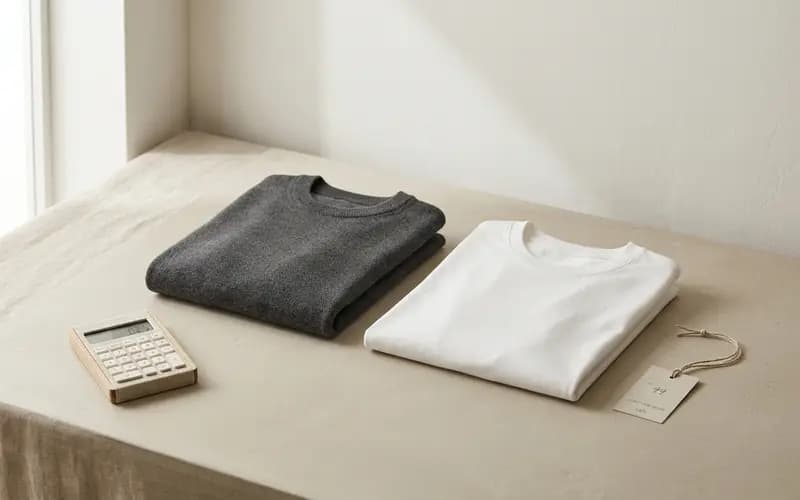
The cheapest tee on the shelf is often the most expensive one you will own. Cost-per-wear explains why.
How to Wash T-Shirts So They Last Longer
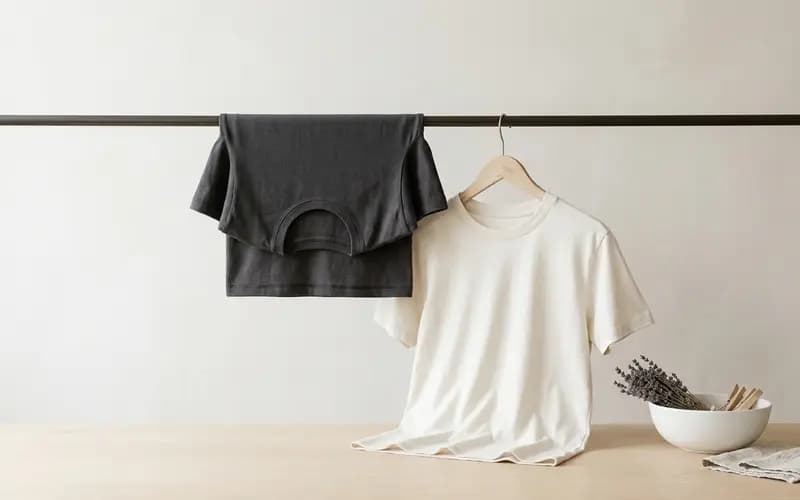
Your washing machine ages a tee faster than wearing it does. Five habits that undo most of the damage.
Affordable vs Premium T-Shirt: Worth It?
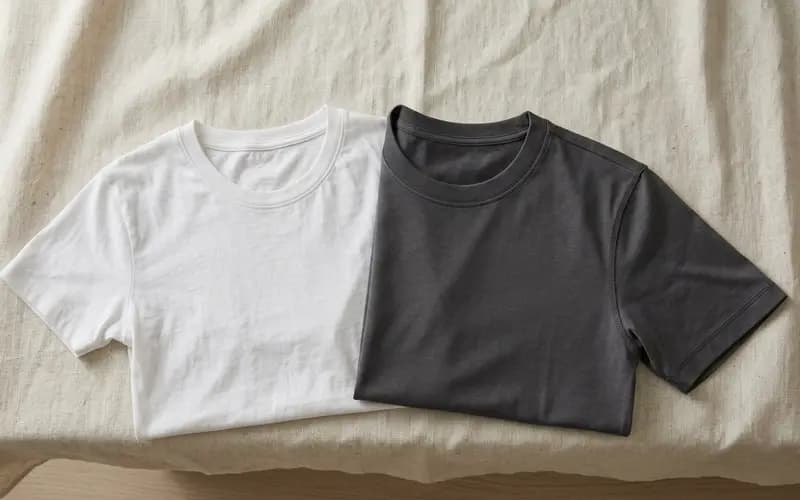
A 1,500-rupee tee is not always better than a 400-rupee one. Here is what the extra money should buy.
Stay in the loop
New writing, no noise
Occasional notes on fit, fabric, and dressing simply well. No spam, unsubscribe anytime.
Subscribe