Fabric
The detergent guide for India: top-load, front-load, and bar-soap habits
Detergent choice and dosing matter more than the washing machine. A practical guide matched to top-load, front-load, and hand-wash habits across India.

The detergent matters more than the machine
Most people troubleshoot fading, stiffness, or that faint sour smell in their clothes by blaming the washing machine. The detergent is usually the actual variable doing the damage.
India runs three very different laundry habits side by side: top-load machines, front-load machines, and hand-washing with bar soap. Each interacts with detergent chemistry differently, and using the wrong product or dose for your method is the single most common cause of dull, stiff, or fading tees.
This guide breaks down what actually works for each washing method, why hard water changes the equation, and how to dose detergent so your cotton tees stay soft instead of turning cardboard-stiff over a few months.
Why top-load and front-load need different detergents
Top-load machines use a lot of water and a central agitator or pulsator to move clothes through it. That high water volume means detergent gets diluted fast, so top-load formulas are built to work at higher concentrations relative to the wash load.
Front-load machines use far less water, tumbling clothes through a smaller amount of solution and relying on mechanical action rather than volume. Standard top-load detergent used in a front-load machine oversuds badly, because the formula was never built for low-water conditions.
That excess suds does real damage over time: it coats fibres in residue that does not rinse out fully, leaving fabric feeling stiffer and looking duller wash after wash, exactly the kind of gradual fading covered in our colour fading guide.
The fix is straightforward. Buy detergent explicitly labelled for your machine type, front-load or top-load, rather than assuming any powder or liquid works everywhere.
Front-load formulas, usually labelled low-suds or HE for high efficiency, are built to rinse clean in a low-water cycle. Using the correct type is a bigger factor in fabric longevity than most people realize when shopping.
Powder versus liquid versus bar soap, honestly compared
Each format has a real trade-off, not just a price difference.
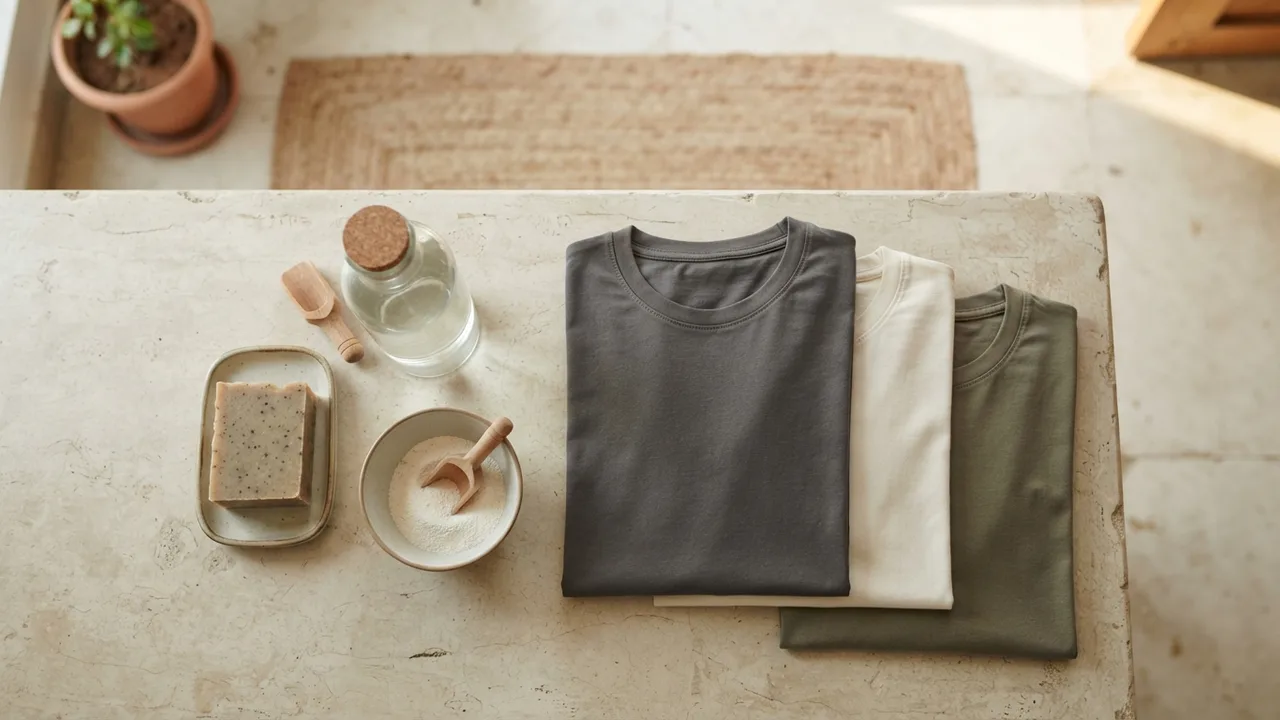
Powder detergent is the most common choice across Indian households and works well in both machine types when dosed correctly. Its downside is that it dissolves less completely in cold water, and undissolved powder residue is a common cause of white streaks and stiff patches on dark tees.
Liquid detergent dissolves fully at any water temperature, which makes it the more reliable choice for cold-water washing, the setting recommended for most cotton tees in our wash care guide. It also tends to be gentler on fibre over repeated washes, though it typically costs more per wash than powder.
Bar soap, still widely used for hand-washing across India, is excellent at cutting through visible dirt and sweat but is genuinely harsh on fabric if used with heavy scrubbing. Repeated hard scrubbing with bar soap is one of the more common causes of premature pilling on cotton knits, because the mechanical friction, not the soap itself, breaks down surface fibres.
If you hand-wash, use bar soap with a light rubbing motion rather than aggressive scrubbing, and rinse thoroughly, since incomplete rinsing leaves soap residue that attracts more dirt over subsequent wears.
The dosing mistake almost everyone makes
More detergent does not mean cleaner clothes. It usually means the opposite.
Overdosing is the single most common laundry mistake across all three washing methods. Excess detergent that does not rinse out fully sits in the fibre, attracting more dirt over time, causing stiffness, and contributing to the musty smell that will not wash out no matter how many extra cycles you run, a problem covered in depth in our t-shirt smell guide.
The actual correct dose is almost always less than what the cap or scoop implies for a full load. Most detergent packaging is designed around a maximum load, and a typical home wash with five to eight tees is a partial load that needs a fraction of the suggested amount.
A reliable rule: use two-thirds of the recommended dose for a normal load, and cut it further, to about half, if you live somewhere with genuinely hard water, since the same detergent needs to work harder to lather and rinse in mineral-heavy water.
Hard water changes the entire equation
Most of urban India deals with hard water to some degree, and this interacts directly with detergent performance. Hard water is loaded with calcium and magnesium ions that react with detergent, forming a scummy residue called soap curd that clings to fabric fibres rather than rinsing away.
That residue is what makes clothes washed in hard water feel gradually stiffer and look duller over months, even with a good detergent and correct dosing. It is a big enough problem that it deserves its own deep dive, covered fully in our hard water and clothes guide.
The short version for detergent choice: in genuinely hard-water cities, look for detergents with built-in water softening agents, usually listed as zeolites or polycarboxylates on the ingredient panel, or add a separate water softener to the wash. Skipping this step means even a premium detergent underperforms.
A quick comparison table
| Method | Best detergent type | Key risk if done wrong |
|---|---|---|
| Top-load machine | Top-load formula, powder or liquid | Oversudsing with wrong formula |
| Front-load machine | Low-suds / HE liquid | Residue buildup, dull fabric |
| Hand-wash | Bar soap or liquid, light agitation | Fibre damage from hard scrubbing |
| Hard water areas | Detergent with softening agents | Stiff, grey-looking fabric over time |
| Dark or printed tees | Liquid, cold wash | Powder residue streaks, print cracking |
Building a simple routine that actually protects your tees
You do not need a complicated system, just a few consistent habits matched to your washing method.
For machine washing: use the correct formula for your machine type, dose at roughly two-thirds the recommended amount, and wash in cold water where possible, since heat accelerates both dye fading and fibre wear.
For hand-washing: use bar soap or a mild liquid detergent, agitate gently rather than scrubbing hard, and rinse at least twice to ensure no residue remains in the weave.
In hard water cities: add a water softener or choose a detergent formulated for hard water, and consider an extra rinse cycle to fully clear mineral residue that a single rinse often misses.
A well-made round-neck tee is built to hold its colour and shape through a genuinely long wash life, but that life depends heavily on what detergent touches it every single wash. Our full care guidance treats detergent choice as seriously as fabric choice, because in practice it matters just as much.
Eco-friendly and skin-sensitive detergent options
Detergent choice also matters for anyone with sensitive skin or eczema, a genuinely common concern given how much fabric sits against skin through humid Indian summers.
Fragrance and dye additives in standard detergents are the most common irritants, not the cleaning agents themselves. Detergents labelled fragrance-free or formulated for sensitive skin remove most of these additives while keeping the core cleaning chemistry intact, and they are increasingly available across major Indian retailers rather than only in specialty stores.
Plant-based or enzyme-based detergents have also become more widely available in the past few years and generally rinse cleaner than older heavily-surfactant formulas, leaving less residue behind in the fibre. This matters doubly in hard water areas, where residue buildup is already a bigger risk than in soft water regions.
If you are washing tees you plan to keep for years, as most considered wardrobes do, a slightly gentler detergent formula is a small ongoing cost that pays off in both skin comfort and fabric longevity.
Fabric softener: helpful or unnecessary

Fabric softener is worth a direct mention because it interacts with all three detergent formats differently and is often oversold.
Softener works by coating fibres with a thin waxy layer that makes fabric feel smoother to the touch, but that same coating slightly reduces the fabric's natural moisture absorption, which matters in humid weather when you want a tee to manage sweat efficiently rather than repel it.
For most well-made cotton tees washed correctly with the right detergent, softener is genuinely optional rather than necessary, since good cotton develops its own softness through repeated gentle washing. It becomes more useful specifically in hard water areas, where it can offset some of the stiffness that mineral buildup causes, though a proper water softener addresses the root cause more effectively than fabric softener treats the symptom.
Quick answers to common detergent questions
Can you use top-load detergent in a front-load machine occasionally? It is not ideal, since it oversuds in low-water conditions, but a single accidental use will not ruin fabric. Regular use is what causes visible residue buildup over time.
Does more detergent mean cleaner clothes? No, and it is one of the most common misconceptions in home laundry. Overdosing leaves more residue behind, not less dirt removed.
Is liquid detergent always better than powder? Not universally, but liquid dissolves more reliably in cold water, which makes it the safer default for the cold-wash routine most cotton tees benefit from.
Storing detergent correctly also matters
A small, often-overlooked detail: how you store detergent affects its performance almost as much as which one you buy.
Powder detergent left in a humid bathroom or a container without a tight seal absorbs moisture from the air, clumping and becoming harder to dissolve fully, which directly increases the risk of undissolved residue on fabric. Store powder in a dry cupboard, ideally with the container lid sealed tightly between uses.
Liquid detergent is more stable but still degrades slightly faster in direct sunlight or high heat, both common in Indian storage areas near windows or on balconies. Keeping it in a cool, shaded spot preserves its cleaning effectiveness over the months a large bottle typically lasts.
These small storage habits are easy to overlook but genuinely extend how well your detergent performs, wash after wash.
The bottom line
The detergent aisle is confusing by design, with dozens of formulas claiming the same benefits. The practical rule that actually protects your clothes is simple: match the formula to your machine type, dose less than the package suggests, and account for hard water if your city has it.
Get those three things right and most of the fading, stiffness, and lingering odour problems that plague Indian laundry routines disappear on their own, no fabric softener or special treatment required.
Boring Label
Wear the point of the article.
One honest tee. Heavyweight combed cotton, a collar that holds, a fit that actually fits. No logo, no noise.
Shop the round-neck teeFree shipping across India · Easy returns
Keep reading

Hard Water Is Ruining Your Clothes: A City-by-City Problem
Mineral-heavy water dulls and stiffens fabric over months of washing. A city-by-city look at hard water severity across India and how to counter it.

How to Wash T-Shirts So They Last Longer
Your washing machine ages a tee faster than wearing it does. Five habits that undo most of the damage.

Why Your T-Shirt Still Smells After Washing
It looks clean but smells sour the moment it warms up. The real reason is the fabric, not your laundry routine.
Stay in the loop
New writing, no noise
Occasional notes on fit, fabric, and dressing simply well. No spam, unsubscribe anytime.
Subscribe