Seasonal
Festive Minimalism: Dressing for Diwali Without the Ethnic Overload
Diwali does not require maximalism. Rich colour, good fabric, and one considered accent carry the festival better than head-to-toe embellishment.
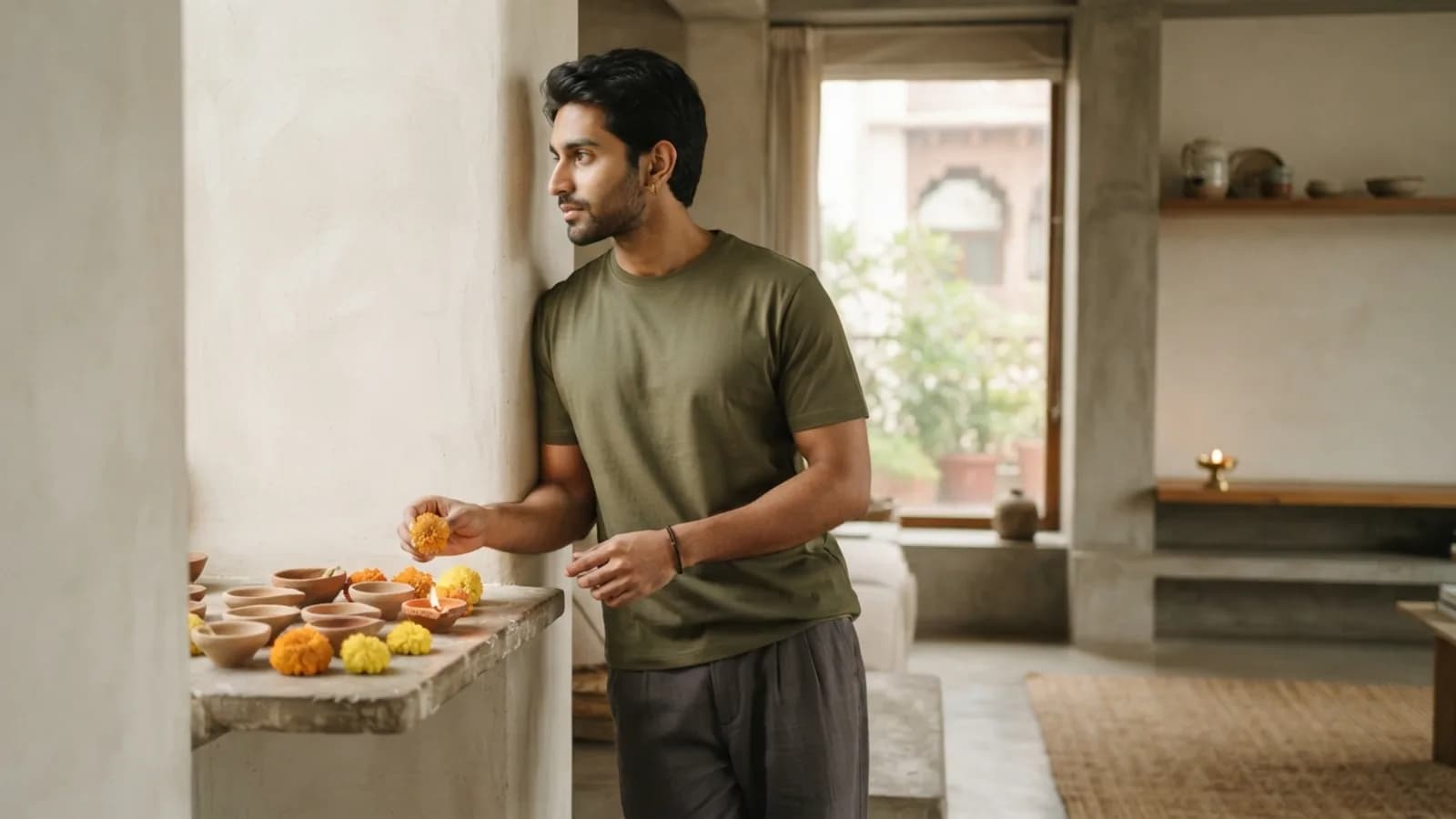
Diwali dressing has quietly become an arms race
Every October, the same pattern repeats. Instagram fills with sequins, heavy embroidery, and colour combinations loud enough to be seen from across a crowded hall, and by the third puja of the season, most people are exhausted by their own wardrobes.
Nobody actually enjoys getting dressed for the fifth event in nine days when every outfit has to top the last one. That treadmill is optional.
Diwali does not require maximalism. It requires warmth, festivity, and a sense of occasion, and all three are achievable with restraint rather than volume.
This guide is about dressing for the festival without buying into the idea that more embellishment equals more festive. A well-chosen minimal outfit, built around good fabric and one or two considered accents, reads as more deliberate than a loud one, and it survives five back-to-back events without looking repeated.
Why loud dressing burns out by the third event
Diwali in most Indian households and social circles is not one event. It is a run of them, a family puja, an office celebration, a friend's card party, a society gathering, sometimes all inside a single week.
Heavy embellished outfits are built to be seen once. Sequins photograph well in a single evening but start to feel like a costume by the second wearing, and most people quietly know this, which is why so many closets have three barely-worn heavily embroidered kurtas gathering dust by December.
A minimal wardrobe solves this differently. A well-made kurta in a rich solid colour, a good pair of well-cut trousers, and a handful of quality basics can be recombined across five events without ever looking like the same outfit twice, because the combinations do the work that embellishment used to.
This is the same logic behind a capsule wardrobe, just compressed into festival season. Fewer pieces, worn more deliberately, outperform a closet stuffed with one-event outfits.
What "festive" actually means when you strip away the embellishment
Festive dressing has three real components, and embellishment is only one of them, arguably the least important.
Richness of colour does most of the emotional work. Deep maroon, bottle green, midnight blue, mustard, and rust all read as festive because they are saturated and warm, not because of what is printed or stitched onto them.
A plain kurta in a genuinely rich maroon looks more festive than a pale pastel one covered in sequins, because the colour itself is doing the signalling.
Fabric with visible texture is the second lever. Silk, silk-blends, and a good linen all catch light differently than flat cotton poplin, and that light-catching quality reads as special-occasion even with zero embroidery.
Fit and finish is the third, and the one people underrate most. A kurta that fits through the shoulders and drapes cleanly, with pressed seams and a clean hem, looks considerably more put-together than a loosely fitted one covered in decoration.
Get these three right and you have festive dressing without a single sequin in sight.
The minimalist Diwali outfit, built piece by piece
Start from the base layer up, because that is where the actual comfort of a nine-day festival season is decided, not at the outer layer everyone photographs.
The base
If you are wearing a kurta over trousers, what sits under the kurta rarely shows, but on warmer days, or at daytime events, a plain round-neck tee works as a standalone layer under an open kurta or a Nehru jacket, especially at casual family functions where full traditional wear feels like overkill.
Keep it in a deep, festival-appropriate tone rather than white, since white under warm-toned festival lighting can look flat and slightly out of place next to richer colours around it.
The outer piece
One well-made kurta or a fitted Nehru jacket in a rich solid colour does more than three loud ones. If you are choosing one piece to invest in this season, put the money into fabric quality and fit rather than embellishment; a silk-blend kurta in deep bottle green will outlast and outperform a polyester one covered in stonework, both in how it looks and how long it lasts past this Diwali.
The one considered accent
This is where you get to add festivity without noise. A single piece of jewellery, a pocket square in a contrasting jewel tone, or a stole in gold or copper does the job that head-to-toe embellishment used to do, and it can be swapped between events to vary the look without buying new clothes each time.
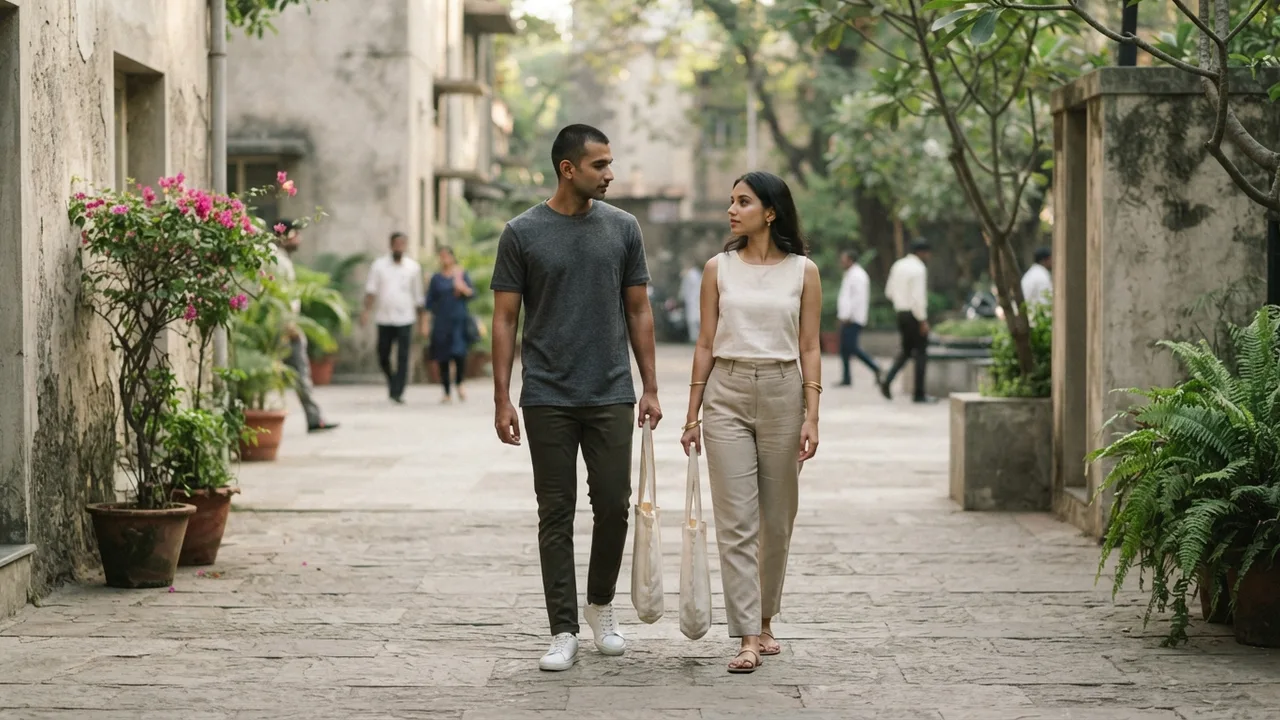
Colour palette that carries the whole festival
If you are building a small festive rotation rather than buying one outfit per event, pick three to four colours that all coordinate with each other, so pieces can mix without a single one looking out of place.
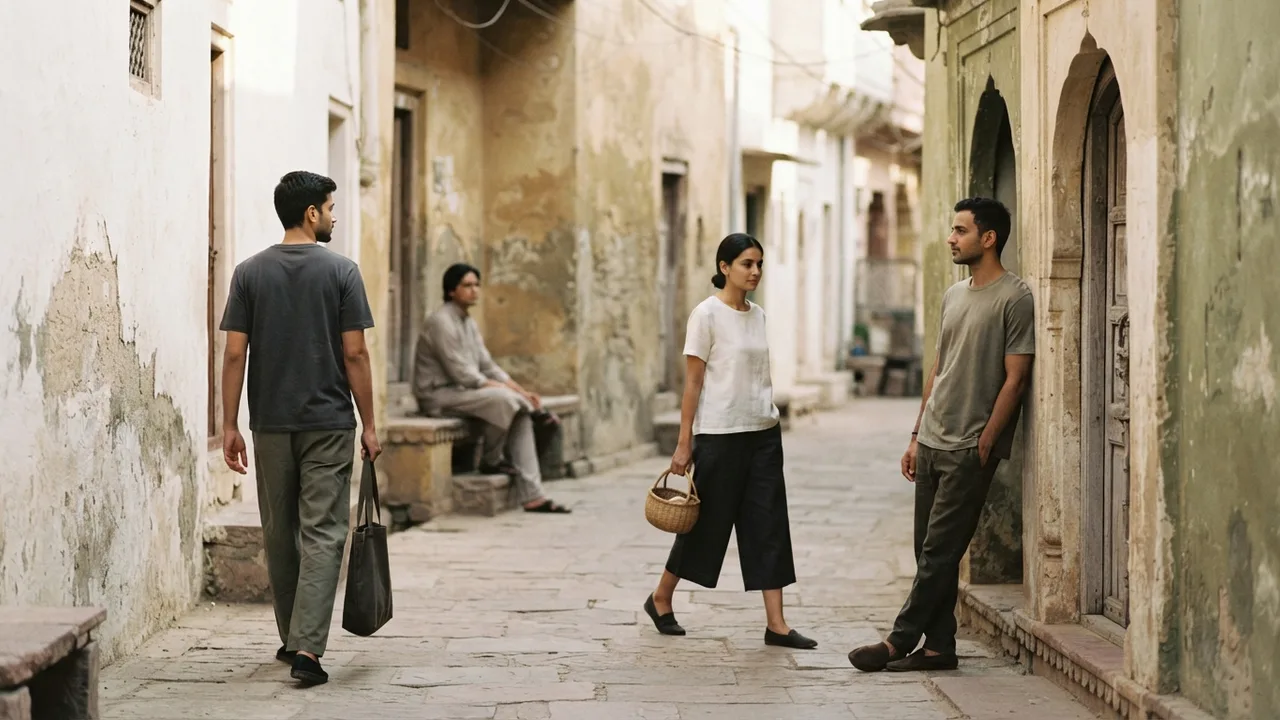
| Colour | Reads as | Pairs well with | Best for |
|---|---|---|---|
| Maroon | Rich, traditional, warm | Gold, cream, charcoal | Evening puja, family gatherings |
| Bottle green | Modern, festive, versatile | Mustard, cream, black | Office celebrations, card parties |
| Mustard | Bright without being loud | Maroon, olive, brown | Daytime events, casual pujas |
| Midnight blue | Formal, contemporary | Silver, white, grey | Corporate Diwali events |
| Rust | Warm, earthy, distinctive | Cream, olive, brown | Society gatherings, informal dinners |
Pick two or three from this table and you have a coordinated capsule that carries the whole nine-day stretch without repetition feeling obvious.
Our piece on essential t-shirt colours applies the same coordination logic to everyday basics, and the underlying principle transfers directly: a tight, considered palette photographs better and mixes further than a wide, uncoordinated one.
Layering for Diwali's actual weather
Late October in most of North India means warm days and genuinely cool evenings, sometimes a 15-degree swing between a 2pm office celebration and an 8pm family puja. Layering is not optional if you are attending events across the day.
A light base, a mid-weight outer piece you can remove as the evening cools, and one warmer layer for the actual night events covers the full swing without packing a separate outfit for each temperature. Our layering basics guide covers the mechanics in more depth, but the Diwali-specific version is simple: start light, carry warm, and let the outer piece do the temperature work rather than piling on separate garments.
In Mumbai, Chennai, and other cities where October still runs humid, skip the heavier layers altogether and lean on richer colour and better fabric to carry the festive weight instead.
Skip the sequins, keep the sparkle
The instinct to add embellishment usually comes from wanting to look festive, not from actually wanting to wear sequins. Once you separate those two things, the choice gets easier.
A well-fitted piece in a rich, saturated colour, finished cleanly, with one considered accent, delivers the festive feeling that the outfit was chasing in the first place, minus the itch, the dry-clean bills, and the outfit you will wear exactly once.
This is the minimalism-as-restraint argument applied to a season that actively resists it, and it holds up better than the alternative across nine straight days of dressing.
Lighting changes everything, plan for it
Diwali is lit almost entirely by diyas, fairy lights, and warm indoor bulbs rather than daylight, and that warm-toned lighting changes how colours read compared to how they look in a shop under cool white light. This is the single biggest reason people end up disappointed by an outfit that looked great when they bought it.
Warm lighting flatters deep, saturated tones, maroon, bottle green, mustard, rust, all the colours already recommended in this guide, because warm light adds to their richness rather than washing them out. It does the opposite to pale pastels and cool-toned colours like icy blue or lavender, which can look flat or slightly grey under diya and fairy-light glow.
If you are unsure how a piece will look at the actual event, check it under a warm lamp at home before deciding, rather than trusting how it looked under a shop's bright white lighting. This single check prevents most of the "it looked different in the store" disappointment that drives unnecessary last-minute shopping during the festival week.
Shopping smart before the season starts
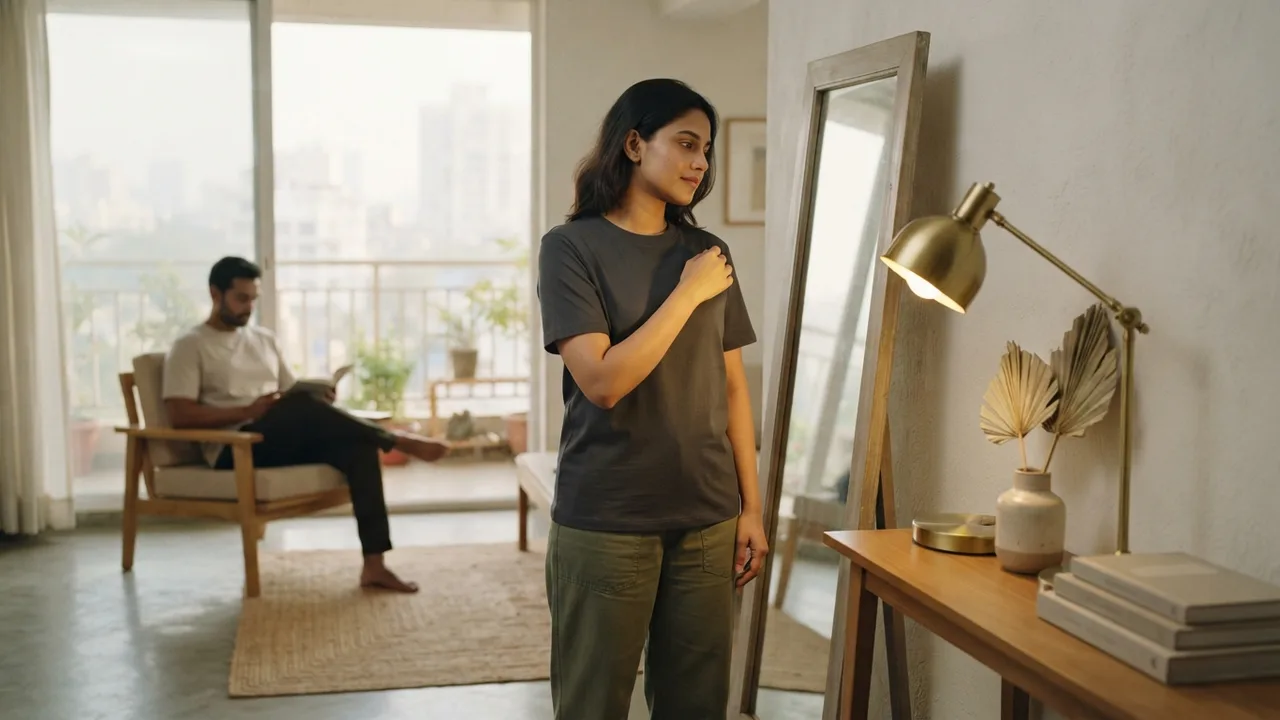
Most Diwali shopping happens in a rush during the last two weeks of the festival, which is exactly when prices peak and good stock runs out first. Buying your core pieces, the kurta, the tee, the one accent, a month ahead means better selection and calmer decision-making.
Try everything on together before the season starts, not separately. A kurta that fits well on its own can drape differently over a tee than over nothing, and the only way to know is to check the full combination in one sitting, ideally with the shoes and any accessories you plan to wear.
Buy one extra base-layer tee beyond what you think you need. A nine-day festival stretch with multiple events means more washing than usual, and having a spare in rotation means you are never reaching for a damp or wrinkled piece an hour before a puja.
Gifting the same restraint to others
If Diwali gifting is also on your list this year, the same minimalist logic applies well to clothing gifts. A well-made round-neck tee in a rich, versatile colour, gifted with a short note about fit and fabric, tends to get worn far more often than a loud printed piece that only suits one specific occasion.
Our t-shirt gifting guide covers sizing and colour choices in more depth, and the timing works well, a thoughtful, quality basic given during the festival of light tends to become a genuinely reached-for piece long after the diyas are packed away, rather than a one-time festive gift.
The takeaway
Diwali rewards warmth and intention, not volume. A tight rotation of rich-coloured, well-fitted basics and one or two festive outer pieces will carry you through every event of the season without the fatigue of chasing louder and louder outfits.
Buy less, buy better, and let the fabric and colour do the festive work that embellishment was never really doing on its own. That is a wardrobe you will still want to wear next Diwali too.
Boring Label
Wear the point of the article.
One honest tee. Heavyweight combed cotton, a collar that holds, a fit that actually fits. No logo, no noise.
Shop the round-neck teeFree shipping across India · Easy returns
Keep reading
The 2026 Wedding Guest Palette: Wine, Green, Blue
Deep, photograph-friendly colours are replacing pastel across the 2026 wedding season. Here is how to build one reusable capsule around them.
Minimalism Is Restraint, Not Deprivation
Minimalism got mistaken for deprivation. It is really about restraint: fewer things, better chosen.
Layering Basics: Build Outfits That Work
Layering is the multiplier on a small wardrobe. Get three rules right and a tee becomes ten outfits.
Stay in the loop
New writing, no noise
Occasional notes on fit, fabric, and dressing simply well. No spam, unsubscribe anytime.
Subscribe