Capsule
Your first-job wardrobe: 10 pieces for the first office
A ten-piece, tee-first office capsule wardrobe with buying priority and budget staging built for a first salary and unclear dress codes.

Your first office wardrobe is a system, not a shopping list
Most first-job wardrobe advice is a list of items: two shirts, one blazer, black shoes. Lists like that miss the actual problem, which is that a first job usually comes with an unclear dress code, a tight starting salary, and five days a week of needing to look put together without repeating an obvious outfit.
The real task is building a small system where every piece combines with several others, so ten pieces produce closer to twenty outfits than ten. That is the difference between a wardrobe that works and a pile of clothes that happens to be office-appropriate.
This guide gives you exactly ten pieces, in the order to buy them, built around how most Indian offices actually dress today: smart casual more often than formal, air-conditioned indoors, genuinely hot commutes, and a first-month budget that rarely stretches as far as anyone would like. For the deeper logic behind why fewer, better pieces beat a large wardrobe, our smart casual basics guide is a useful companion read.
Piece one to three: the tee base that carries the week
Start with tees, not shirts, even for office wear. Most modern Indian offices, especially in tech, startups, and a growing share of traditional companies, treat a clean, well-fitted tee as entirely acceptable for four out of five days, reserving a proper shirt for client meetings or the occasional formal day.
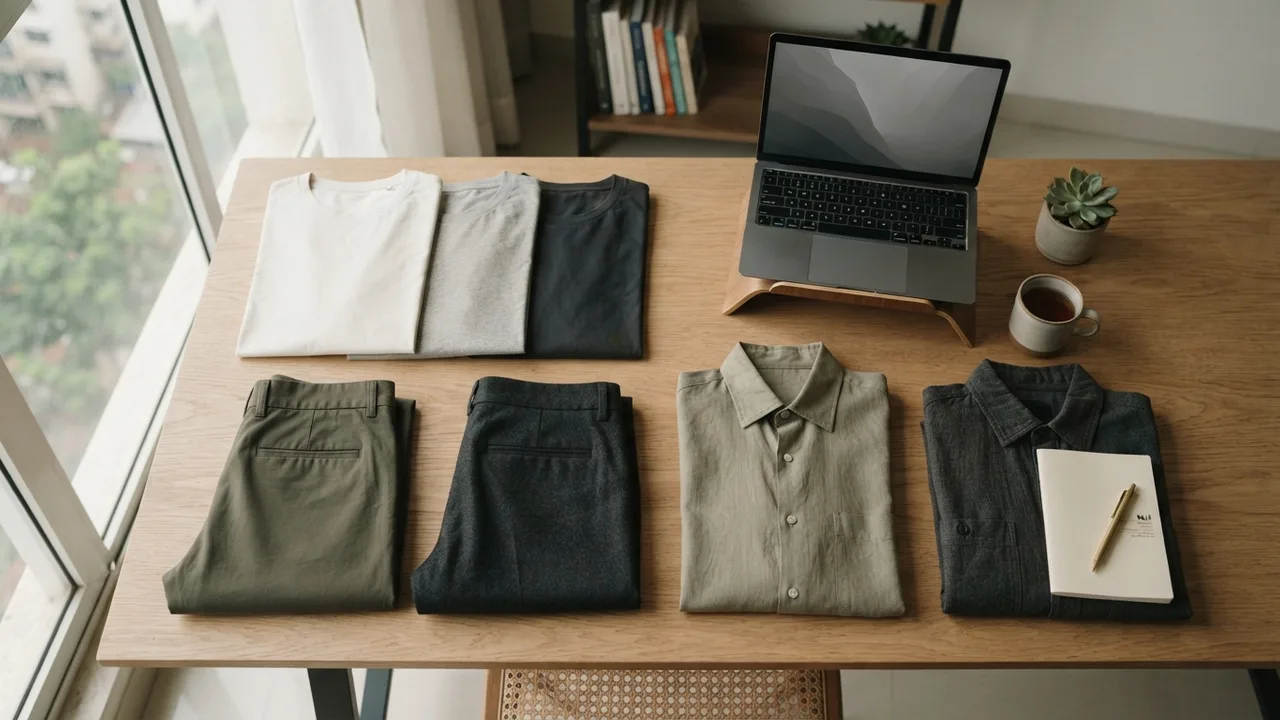
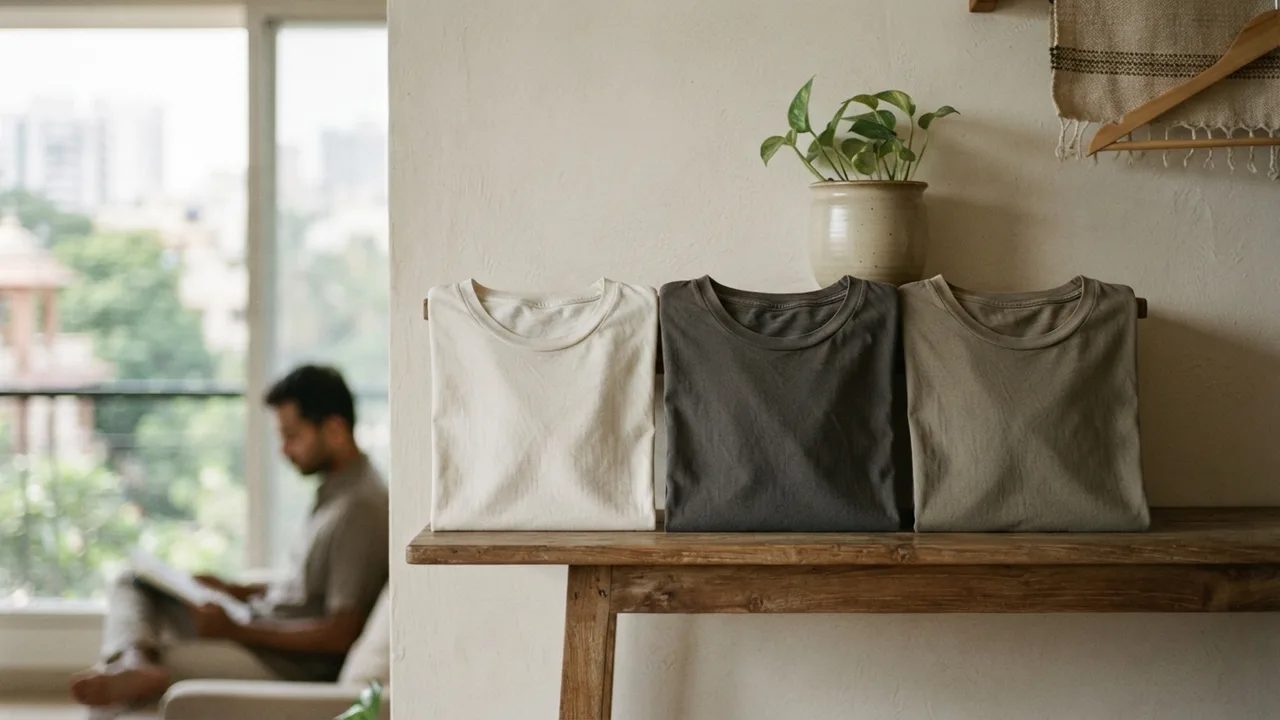
Three tees in neutral colours, charcoal, navy, and a warm stone or olive, form the base layer of the entire ten-piece system. A round-neck tee in a mid-weight cotton reads as put-together rather than casual sloppy, especially paired correctly with the trousers and layer pieces below, and it survives a genuinely hot commute better than any collared shirt will.
Our guide on t-shirts for office and WFH goes deeper into which cuts and colours read as professional versus purely casual, worth reading before your first week if your new office's dress code is still an unknown.
Piece four and five: trousers that do double duty
Two pairs of trousers complete the base: one in a dark neutral like charcoal or navy in a straight or slightly tapered cut, and one in a lighter stone or khaki for variety. Both should be a fabric with a little structure, not joggers, even in a casual office, because trousers with some structure elevate a plain tee into something that reads intentional rather than thrown together.
This is the pairing that does the most quiet work in a first-job wardrobe. A tee that would look purely casual on its own reads as smart casual the moment it sits above a well-fitted pair of structured trousers, which is exactly the effect you want when you are still working out what your specific office actually expects.
The ten-piece breakdown
Here is the complete list, in buying priority order, with what each piece is actually for.
| Piece | Quantity | Primary job | Buy priority |
|---|---|---|---|
| Neutral round-neck tees | 3 | Daily base layer, four days a week | ✓ First |
| Structured trousers | 2 | Elevates tees to smart casual | ✓ First |
| Collared shirt | 1 | Client meetings, formal days | ✓ Second |
| Overshirt or light blazer | 1 | Layering, instant polish | ✓ Second |
| Formal shoes | 1 pair | Meetings, interviews | ✓ Second |
| Casual loafers or sneakers | 1 pair | Daily commute comfort | ✓ Third |
| Belt | 1 | Ties the trousers and shoes together | ✓ Third |
Ten pieces, seven categories, and every single one of them combines with at least two others in the list. That is the actual test of whether a wardrobe works: not how many pieces you own, but how many genuinely different-looking outfits they produce together.
Why the tee-first approach beats the shirt-first default
The traditional advice, buy five formal shirts before anything else, assumes a dress code that fewer and fewer Indian offices actually enforce daily. It also front-loads your spending on the pieces you will wear least often in a genuinely casual or hybrid office, while leaving your daily comfort layer, the tee, as an afterthought bought cheaply and without much thought.
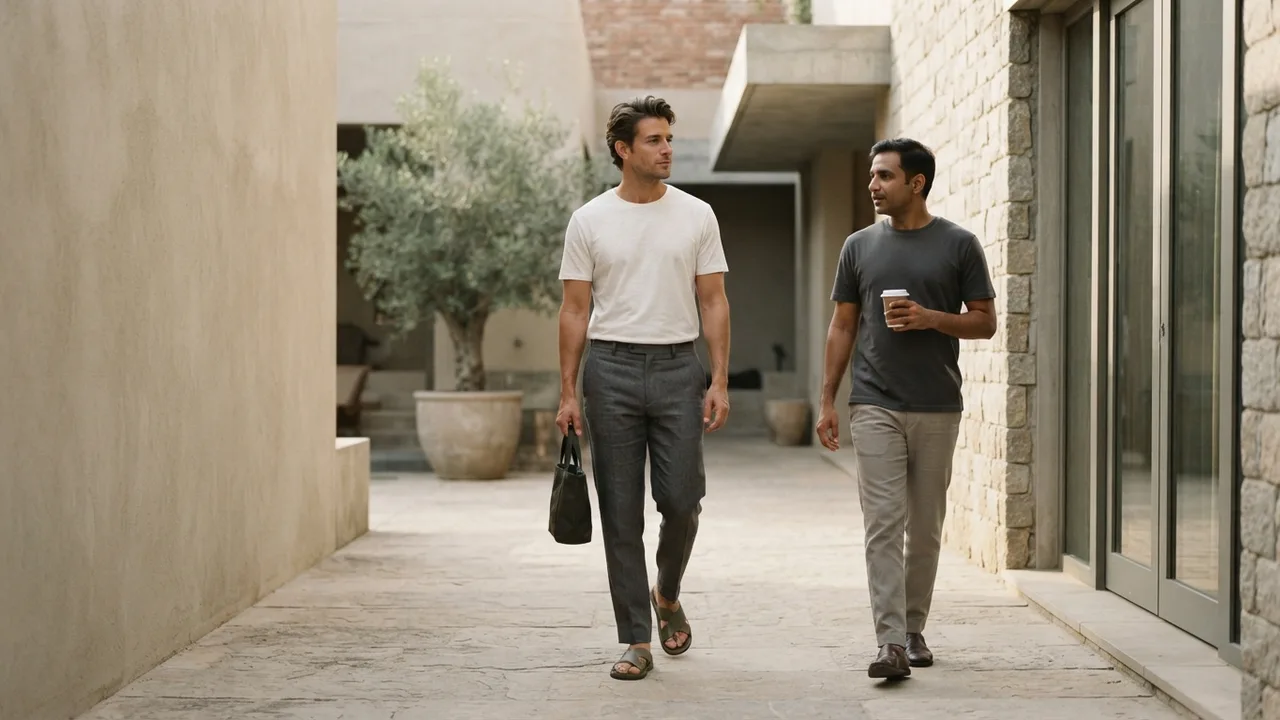
Flipping the order, tees and trousers first, one shirt and one blazer second, means your money goes to what you actually wear most days, following the same cost-per-wear logic that applies to any wardrobe decision. It also protects you from over-committing to a formal look before you have actually observed what your specific team wears, which almost always differs from what the HR onboarding email implies.
Give it two weeks of observing before buying the shirt and blazer; most new hires guess the dress code wrong in one direction or the other during week one.
Colour discipline is what makes ten pieces feel like more
The system above only works if the colours are chosen to combine, not to express personality on day one. Charcoal, navy, and a warm neutral tee all sit comfortably under the same blazer and above the same two trouser colours, producing far more usable combinations than three tees in unrelated bright shades ever would.
Our essential t-shirt colours piece explains the logic behind this kind of tight, deliberate palette, and a first-job wardrobe is exactly the scenario where it pays off fastest: colleagues notice a repeated bright print far quicker than they notice a repeated neutral, even if you are technically wearing the same three tees on rotation. This is also, quietly, the look most senior people in any Indian office already default to once they stop experimenting and start optimising for mornings that do not require decisions.
Our piece on quiet luxury in the Indian context covers this shift in more depth, and a first job is often the moment people start noticing it in their own choices.
Budgeting the ten pieces realistically
A first salary rarely allows buying all ten pieces in month one, and it should not try to. Spend the first month's clothing budget entirely on the tee-and-trouser base, roughly five to six pieces, which alone covers a full working week without repetition inside the first two weeks.
Add the shirt, overshirt, and formal shoes in month two once you have observed the actual office culture and know whether you genuinely need something more formal or whether the base already covers ninety percent of your days. This staged approach also protects you from the common first-job mistake of overspending on formalwear in week one, only to realise by week three that the office is far more casual than the interview suggested.
Making it last through a genuinely demanding first year
A first job means more wear-and-tear on clothes than most people expect: daily commutes, long hours, occasional late-night work, and far less time for careful laundry than college or home life allowed. Building the wardrobe well matters less if the pieces do not survive the actual pace of working life.
Wash tees on a cool cycle and air dry where possible; heat is the fastest way to shrink a well-fitted tee out of the shape that made it work in the first place. Our full routine in how to wash t-shirts so they last longer is worth following closely during a first year especially, since a tighter budget means each piece has to earn a longer working life than it might later, once a second income bump allows for more frequent replacement.
Rotate all three tees evenly rather than reaching for a favourite every day; even wear across all three extends the useful life of the whole set rather than wearing out one piece twice as fast as the others.
Reading your specific office correctly
Every piece of advice in this guide assumes a smart-casual-leaning office, which describes a large share of Indian workplaces today but not all of them. Spend your first week observing rather than buying, paying attention to what your direct manager and the two or three people you interact with most actually wear, since they are a far better signal than a generic company dress code document.
A finance or legal firm in a metro city may genuinely expect shirts and formal trousers most days, in which case the ten-piece system above should flip its priority order: shirts and structured trousers first, tees as the casual Friday or WFH layer second. A startup or product company, especially outside the most formal client-facing roles, often runs the other way entirely, where a tee is the default and a blazer only appears for investor meetings or external events.
Either way, the underlying principle holds regardless of which direction your specific office leans: buy the pieces you will wear most often first, and let the second wave of purchases respond to what you actually observed rather than what you assumed on day one.
Interview and first-week specifics worth planning for
Two moments in a first job deserve slightly more formal planning than the daily rotation: the final interview round if you have not started yet, and the first week itself, when first impressions with a new team still matter more than they will six months in. For an interview, lean toward the collared shirt and formal shoes from the ten-piece list even in a casual office, since it signals effort without overdressing badly.
For the first week on the job, a small amount of deliberate overdressing, relative to what you will settle into later, is a reasonable and common strategy. It is easier to relax into a more casual rotation once you have observed the office for a week than to walk back an underdressed first impression, and the ten-piece system here supports both directions without requiring anything extra.
The takeaway: build outfits, not a shopping list
Buying ten pieces at once is not required either. Spread the purchases across your first two paychecks if that suits your budget better, and the sequence in this guide still holds.
A first-job wardrobe succeeds or fails on how well its pieces combine, not on how many items sit in the cupboard. Ten pieces, bought in the right order and in colours chosen to work together, will carry you through more genuinely different-looking days than twenty pieces bought without a system.
Start with the tee-and-trouser base, observe your actual office before spending on formalwear, and let the wardrobe grow deliberately from a foundation that already works. That is the entire difference between dressing well on a first salary and simply owning a lot of clothes.
Boring Label
Wear the point of the article.
One honest tee. Heavyweight combed cotton, a collar that holds, a fit that actually fits. No logo, no noise.
Shop the round-neck teeFree shipping across India · Easy returns
Keep reading
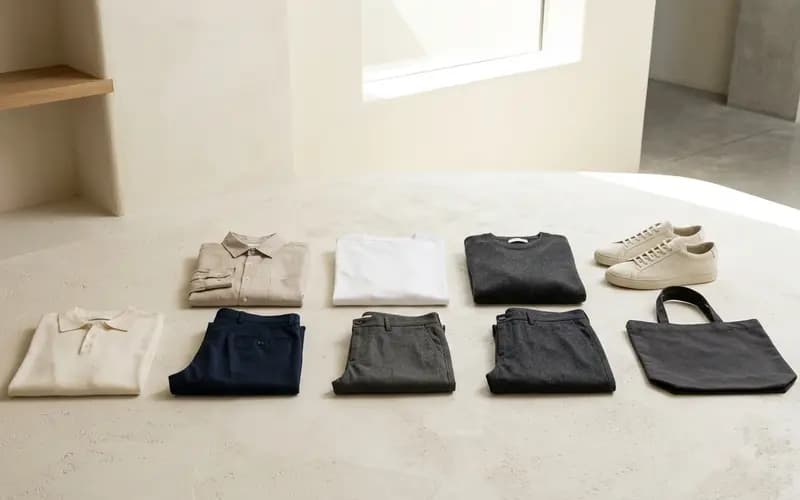
Smart Casual Basics Every Wardrobe Needs
Smart casual confuses people because nobody defines it. Here is the basics list that nails it.
The Round-Neck Tee as Office & WFH Wear
The plain tee quietly became office wear. Here is what makes one look meeting-ready, and how to layer it for a hybrid week.
Cost Per Wear: The Only Clothing Maths You Need
The cheapest tee on the shelf is often the most expensive one you will own. Cost-per-wear explains why.
Stay in the loop
New writing, no noise
Occasional notes on fit, fabric, and dressing simply well. No spam, unsubscribe anytime.
Subscribe