Styling
How to Style an Oversized T-Shirt
The line between 'relaxed' and 'borrowed from someone bigger' is all about proportion. Here is how to hold it.
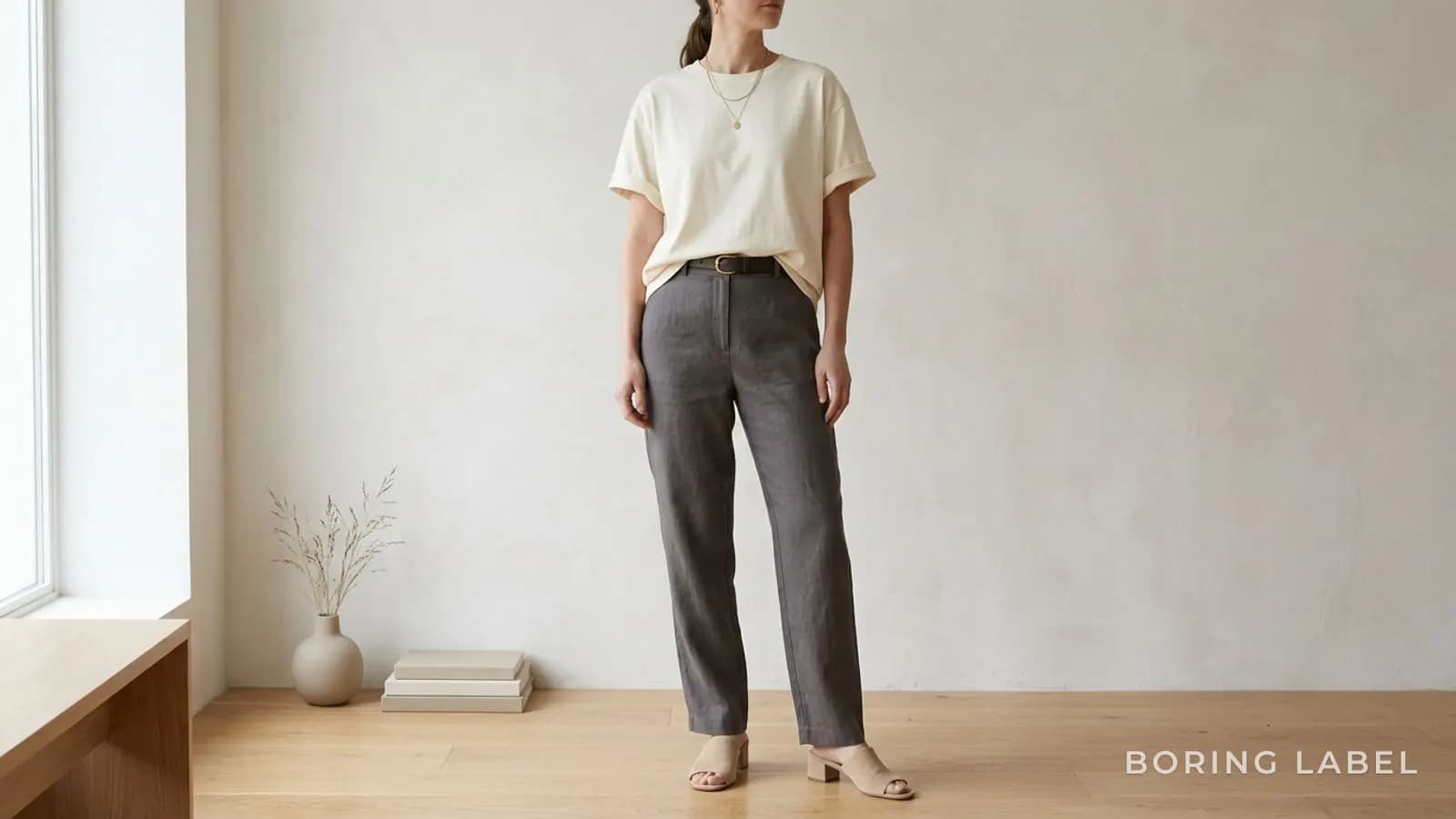
The thin line between relaxed and sloppy
There is a version of the oversized t-shirt that looks expensive, deliberate, and quietly cool. And there is a version that looks like you raided a larger person's cupboard in the dark.
They can be the exact same tee. The difference is not the garment - it is proportion, and proportion is something you can learn in an afternoon.
Most people who try oversized and conclude "it does not suit me" actually got one thing wrong, usually the same thing: they let the whole outfit go big. A big tee over big trousers reads as a tent.
A big tee that swallows the shoulder and hangs to mid-thigh reads as a nightdress. The fix is almost never to abandon the look.
It is to control where the volume sits and to put something fitted somewhere to balance it.
So this guide is really about one idea, applied in different ways: an oversized tee is volume on your top half, and volume needs a counterweight. Get the counterweight right and a big tee reads as intentional, modern, and relaxed.
Get it wrong and the same tee reads as a mistake. Everything below is a way of getting the counterweight right.
A quick reality check before we go further. "Oversized" does not mean "any size up." A deliberately oversized tee is cut to drape - a dropped shoulder, a roomy body, a length that is generous but not endless.
A regular tee that simply happens to be two sizes too big is a different thing, and it usually just looks too big. If you want to understand exactly where that boundary sits, the breakdown in oversized vs regular fit is worth reading alongside this.
The short version: shape matters more than sheer size.
The one rule that makes oversized work
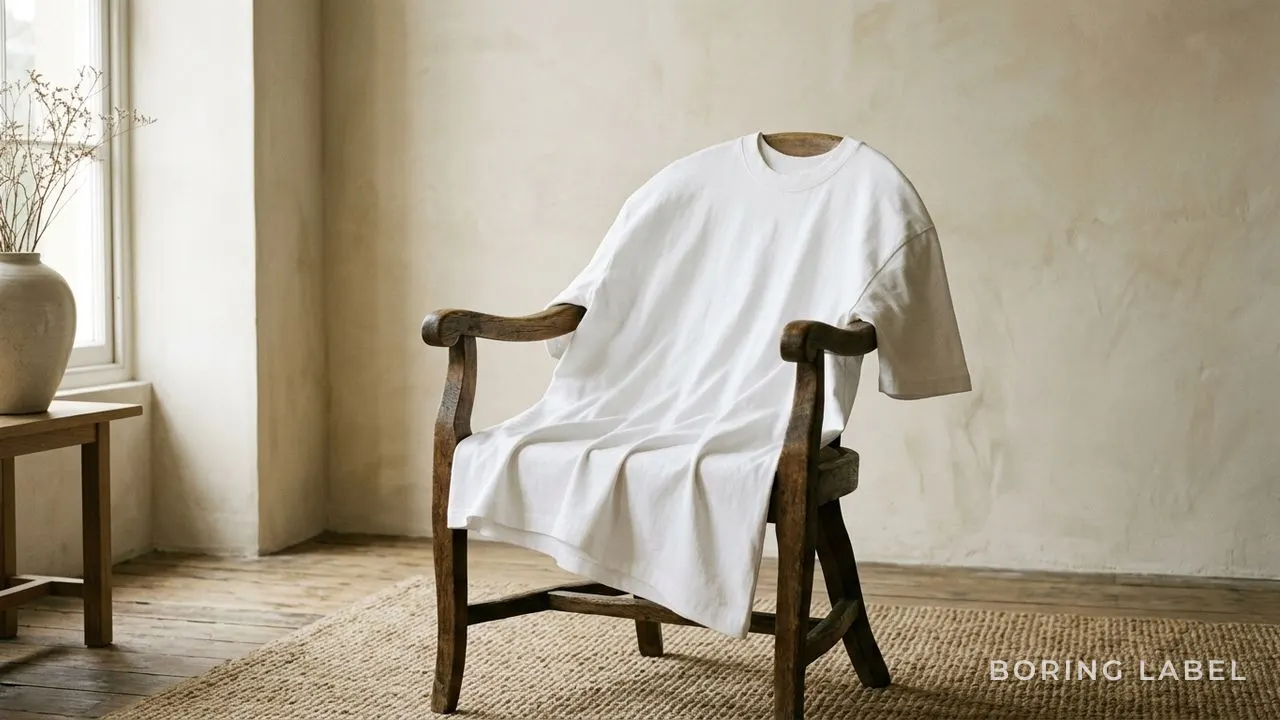
If you remember nothing else, remember this: balance volume with structure. An oversized tee is loose, so something else in the outfit should be fitted, tucked, or tailored. That is the whole game.
You have three main levers to pull, and you usually only need one of them at a time:
- Fit the bottom half. Big tee, slim or straight trousers. The looseness up top is balanced by a cleaner line down below. This is the easiest and most reliable version.
- Tuck to create a waist. A front tuck or half-tuck on an oversized tee tells the eye where your body actually is, so the volume reads as a deliberate shape rather than a shapeless drape.
- Define the shoulder or the frame. A structured overshirt, a denim jacket, or a tailored layer over the tee gives the top half an edge and an outline, which stops the softness from reading as sloppiness.
Get one of those three right and you are most of the way there. The mistakes happen when you pull none of the levers - big top, big bottom, no tuck, no structure - and let the whole silhouette float. Volume with no counterweight is the entire problem, every time.
Here is the same idea as a quick reference you can hold in your head while you get dressed.
| If your top is... | Your bottom should be... | Why |
|---|---|---|
| Oversized tee | Slim or straight trousers | Balances volume with a clean line |
| Oversized tee | Tailored shorts (above knee) | Shows leg, offsets the bulk up top |
| Oversized tee | Wide-leg, but tucked at front | Volume both ends needs a defined waist |
| Oversized tee | Skinny or fitted jeans | Strong contrast, deliberately fashion-forward |
Notice that even the wide-leg row insists on a tuck. The moment both halves go loose with no waist marked, the outfit loses its shape. That tuck is doing all the work.
Proportion, in plain terms
People say "proportion" like it is mysterious. It is not. It is just where the volume sits relative to your body, and where your eye is told the body actually is.
An oversized tee adds bulk to your upper half and hides your waist. Your job is to give the eye a reference point so it does not assume the bulk is your actual size. There are three reference points you can hand it:
- A waist. Created by a tuck. The single most powerful move.
- A leg line. Created by fitted trousers or visible leg in shorts. Tells the eye your lower half is lean even if the top is loose.
- A shoulder line. Created by a structured layer. Gives the soft top half a hard outline.
You only need to supply one of these clearly. Supply none and the outfit drifts.
Supply all three and you can risk genuinely wide trousers and still look sharp. Most days, one is plenty, and the front tuck is the one that does the most for the least effort.
Length is half the battle
There is a length sweet spot for an oversized tee, and it is narrower than people think. The hem should land somewhere around the middle of your hip, give or take.
Too short and the "oversized" effect disappears and it just looks like a slightly baggy regular tee. Too long - past the hip, heading toward mid-thigh - and it starts to look like a dress, or like the tee is wearing you.
If a tee you like runs too long, a front tuck instantly fixes it: tucking the front raises the visible front hem and reintroduces a waist at the same time, solving two problems with one move. This is why the tuck keeps coming up. It is not a styling flourish; it is structural.
Five oversized outfits that actually land
Enough theory. Here are five complete looks, each built on the balance rule, from easiest to most fashion-forward.
The easy weekend: oversized tee, straight jeans, clean sneakers
The most foolproof version. A drapey oversized tee, straight-leg jeans that are not themselves baggy, and a pair of low, clean sneakers.
The jeans supply the leg line, so the tee can be as relaxed as you like up top. Add a loose front tuck if the tee runs long.
This is the look that proves oversized does not have to be complicated - it just has to be balanced.
The shorts version: oversized tee, tailored shorts, canvas shoes
For hot days, this is the cleanest oversized look there is, because bare leg is the most efficient counterweight to a bulky top. Tailored or chino shorts that sit just above the knee, an oversized tee over them, canvas or leather sneakers.
The exposed leg does all the balancing work for you, which is why oversized reads so easily in summer. Keep the shorts on the cleaner side - drawstring gym shorts pull the whole thing toward loungewear.
The tucked statement: oversized tee, wide-leg trousers, front tuck
This is the fashion-forward, both-halves-loose look, and it only works because of the tuck. Wide-leg trousers, an oversized tee tucked at the front into the waistband, flat shoes or chunky sneakers.
The front tuck draws a waist across the middle of an otherwise voluminous outfit, and that single line is what holds the whole thing together. Skip the tuck here and you are a column of fabric; keep it and you are deliberately, confidently styled.
The layered look: oversized tee under an open overshirt
An oversized tee under an open, structured overshirt or shacket, with straight or slim trousers. The overshirt gives the soft top half a defined frame and a column of structure, so the tee's looseness reads as texture rather than shapelessness.
This is layering doing the balance work instead of a tuck, and it is a great cold-weather answer. If you want to go further with combining pieces this way, layering basics covers the weights and lengths that make multiple pieces sit well together.
The monochrome move: oversized tee and trousers in one tonal family
Keep the oversized tee and the trousers in the same colour family - all stone, all charcoal, all off-white - and the outfit reads as one long, deliberate line. Tonal dressing hides the volume by removing the contrast that would otherwise draw attention to where the tee balloons.
A tuck still helps, but the matched palette does a lot of the smoothing on its own. It is the quiet, grown-up way to wear oversized.
Common mistakes and the quick fix for each
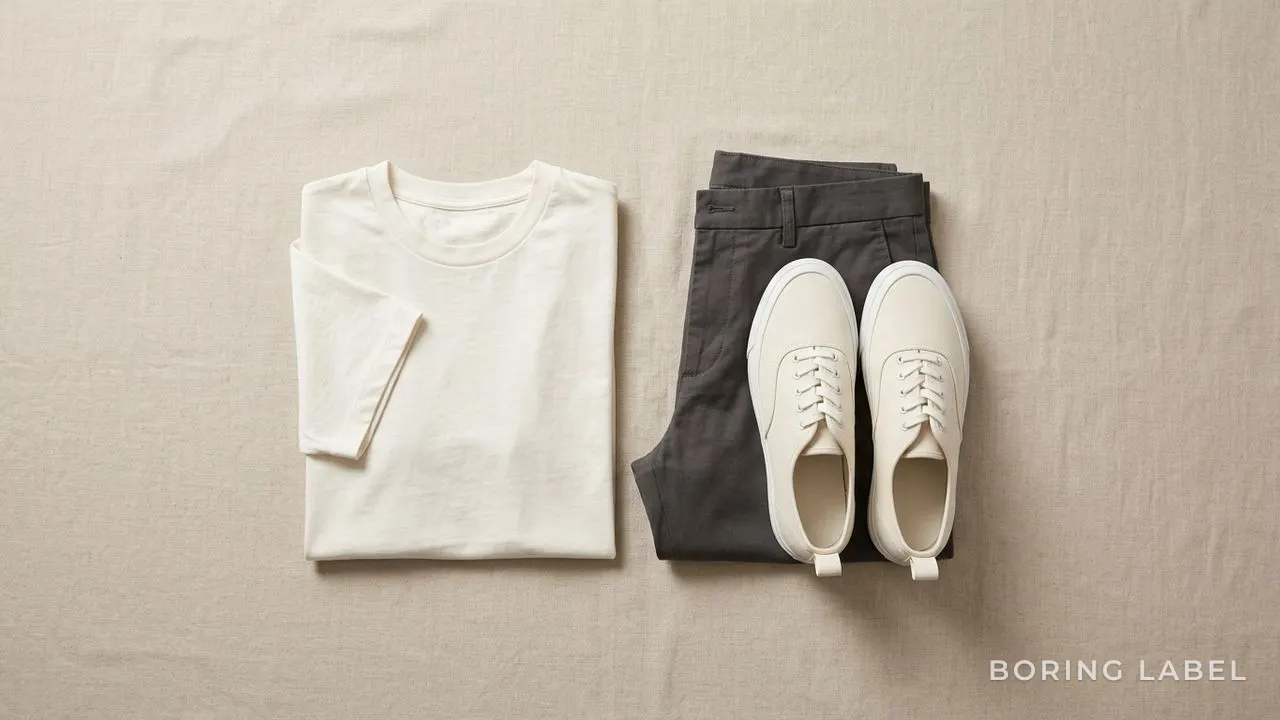
Most oversized failures are one of a handful of repeat offenders. Here is the lineup, with the fix.
- Big top, big bottom. The classic tent. Fix: fit one half. Slim the trousers or tuck the tee.
- Hem too long. It reads as a dress. Fix: front tuck to lift the visible hem, or size down to a true oversized cut rather than a too-big regular one.
- Dropped shoulder hanging halfway down the arm. Reads as borrowed. Fix: a true oversized tee drops the shoulder a little on purpose, but not to the elbow. If the shoulder seam is near your elbow, the tee is just too big, not oversized.
- Thin, clingy fabric. Oversized lives on drape, and thin fabric does not drape - it clings and creases. Fix: a tee with a bit of weight to it falls in clean folds instead of sticking to you. This is one of the few places where fabric matters as much as fit.
- No reference point anywhere. No tuck, no leg line, no structure. The eye has nothing to anchor to. Fix: supply exactly one of the three reference points.
That fourth point deserves a moment. The whole oversized aesthetic depends on the fabric falling in clean, heavy folds.
A flimsy tee cannot do that - it bunches, twists at the seams, and clings where you least want it to, and the look dies. A tee with genuine weight and a proper knit drapes from the shoulder the way the look needs.
If you only upgrade one thing about your oversized tees, upgrade the fabric weight before anything else.
Body type: who should reach for it, and how
Oversized is not universally flattering in its loudest form, but a controlled version works for almost everyone. The adjustment is in how much volume you allow and where you put the counterweight.
| Frame | What to do | What to avoid |
|---|---|---|
| Tall and lean | You can run more volume; the height carries it | Tees so long they reach mid-thigh |
| Shorter | Choose a true oversized cut, not a too-big regular; always tuck the front | Long hems that cut your leg line short |
| Broader build | Moderate oversized with structure; a layer helps | Clingy fabric and tent-like both-loose looks |
| Slim | Oversized reads easily; lean into contrast with fitted trousers | Going loose top and bottom and vanishing |
The common thread: shorter frames benefit most from the front tuck, because the visible-leg-line ratio matters more when you have less height to spare. Broader frames benefit most from structure and from avoiding clingy fabric. Everyone benefits from picking a true oversized cut rather than simply buying their normal tee two sizes up, because the cut is what makes the drape sit right.
Shoes and the finishing details
The shoe quietly decides which direction an oversized outfit leans. Same tee, same trousers - change the shoe and you change the whole register.
- Clean low sneakers keep it casual and easy. The default.
- Chunky sneakers lean into the fashion-forward, streetwear side; they balance volume up top with weight down low.
- Loafers or clean leather pull oversized toward smart-casual, especially with the tee tucked and trousers tailored.
- Sandals work for the summer shorts and wide-leg versions, but keep them clean and minimal.
Beyond shoes, keep the rest restrained. Oversized is already a strong silhouette statement, so it does not need loud accessories competing with it.
One watch, maybe a cap, and let the proportion do the talking. The mistake is to treat a bold silhouette as a licence to add more boldness everywhere else.
The opposite is true: the bigger the shape, the calmer everything else should be.
How to actually do the front tuck
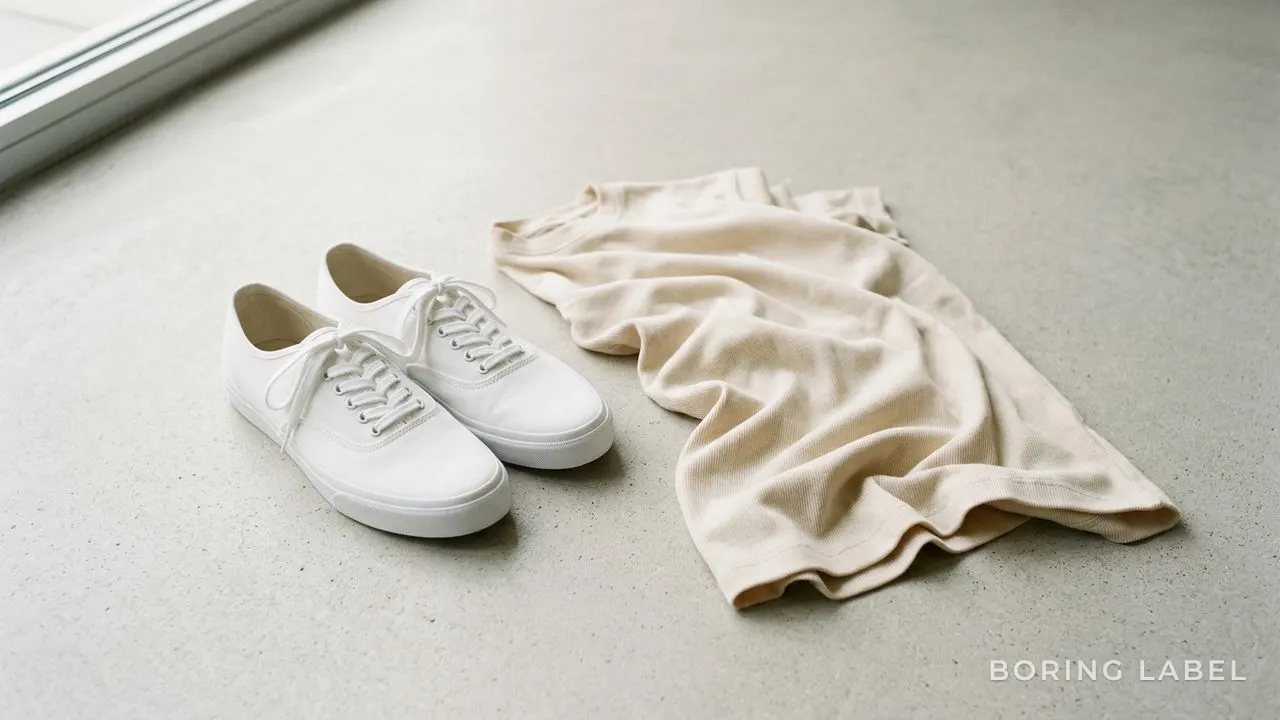
The front tuck comes up so often in this guide that it deserves a proper how-to, because most people do it badly and then decide it does not work for them. Done well it is invisible as an effort and obvious as a result. Done badly it looks like your tee got caught in your waistband.
Here is the method, step by step:
- Stand naturally and find your waistband. Not your hip, your actual waistband. The tuck only works if the trouser sits high enough to have a waistband worth tucking into.
- Tuck only the front centre. Take roughly the middle third of the front hem - not the sides, not the back - and push it in just behind the waistband. The sides should fall out naturally on their own.
- Tuck shallow, then let it blouse. Push a little extra fabric in so the tee puffs out slightly above the waistband rather than being pulled flat and tight. That gentle blouse is what reads as relaxed; a tight, flat tuck reads as trying too hard.
- Pull the sides down to soften the transition. Give the side hems a light tug so the in-and-out transition is gradual, not a hard line. The eye should read a soft drape, not a fold.
- Check it in motion. Walk a few steps. A good front tuck stays put and stays soft. If it pulls flat or pops out, you tucked too much or too little - adjust and try again.
The whole thing takes five seconds once it is a habit. The reason it matters so much for oversized specifically is that an untucked oversized tee gives the eye zero information about your waist, so it assumes the widest point of the drape is your body. The front tuck hands the eye your real waistline, and the volume above it instantly reads as a choice rather than a size.
Oversized for men and for women
The balance principle is the same for everyone, but the most natural pairings differ a little, so it is worth splitting them out.
For men, oversized tends to read best with straight or slightly relaxed trousers and clean or chunky sneakers, with the tee either left long for a streetwear lean or front-tucked into tailored trousers for a sharper take. The most common men's mistake is going baggy top and baggy bottom in the name of comfort, which erases the silhouette entirely. Pick one half to keep clean.
For women, oversized opens up a few more silhouettes - the tee works beautifully half-tucked into wide-leg trousers, knotted at the side over a midi skirt, or worn long over leggings or fitted jeans with the volume deliberately played up. The skirt and the fitted-leg combinations give an easy, automatic counterweight. The most common mistake mirrors the men's one: pairing the oversized tee with an equally loose bottom and losing all shape.
The shared lesson across both is the one this whole guide keeps landing on. The garment is unisex; the technique is unisex; only the favourite pairings shift. Whoever is wearing it, the rule is the same - one fitted element, one defined reference point, and the volume stays a feature instead of becoming the whole story.
Quick answers to common questions
A few things people ask whenever oversized comes up, answered plainly.
- Does oversized work if I am short? Yes, with two adjustments: choose a true oversized cut rather than a too-big regular, and always front-tuck so your leg line stays as long as possible. Avoid hems that fall past the hip.
- Can I wear oversized to a slightly smart event? Front-tuck it into tailored trousers, add loafers, and keep the fabric clean and matte. It will read as smart-casual, not formal. For genuinely formal, switch to a fitted tee.
- Why does my oversized tee look sloppy when others look cool? Almost always fabric weight or a missing counterweight. Thin fabric clings instead of draping, and no tuck or fitted bottom means the eye has nothing to anchor to. Fix one or both.
- Should the oversized tee be a different colour from my trousers? Either works. High contrast reads fashion-forward; tonal (same family) reads quiet and elegant and hides the volume. Pick based on the mood you want.
- How oversized is too oversized? When the shoulder seam hangs past the middle of your upper arm or the hem reaches mid-thigh, you have crossed from oversized into too-big. Size down.
When oversized is the wrong call
Honesty matters more than selling you a look. Oversized is not always the right answer, and pretending otherwise would make this guide useless.
If the occasion needs a sharp, fitted silhouette - certain formal settings, anywhere you want to look crisp and contained rather than relaxed - a regular or slim fit simply does the job better. Oversized reads as casual and a little fashion-led by design, and no amount of clever tucking fully removes that register.
That is a feature when you want ease and a bug when you want polish. For those days, reach for a clean regular-fit tee instead, and the companion guide on how to style a white tee covers the smarter, more fitted end of the spectrum in detail.
There is also a comfort-versus-effort trade. Oversized can be the most comfortable thing you own and also, done carelessly, the sloppiest.
If you are not going to bother with the tuck or the balance on a given day, a well-fitting regular tee will look more put-together with zero styling effort. Oversized rewards a little intention; regular forgives the lack of it.
Choose based on how much attention you actually have to spare that morning, not on which is fashionable.
A genuinely well-made tee in a true oversized cut - the kind of round-neck tee that holds its shape and drapes instead of clinging - is what makes the whole approach repeatable rather than a one-off lucky outfit. The garment has to be able to do the job before any of these techniques can.
The takeaway: control the volume, do not fear it
Oversized has a reputation for being either effortlessly cool or quietly embarrassing, and the gap between the two is smaller and more controllable than most people assume. It comes down to one habit: never let the volume float unchecked. Give the eye a waist, a leg line, or a structured frame - just one is usually enough - and a big tee transforms from shapeless to deliberate.
So do not treat oversized as a personality you either have or do not. Treat it as a technique.
Pick a true oversized cut in a fabric with enough weight to drape properly. Decide where your counterweight is going to come from before you walk out the door.
Tuck when in doubt. Keep the rest of the outfit calm.
Do that, and the same tee that looked like a mistake last year becomes one of the most relaxed, modern, genuinely cool things in your wardrobe - and it took nothing more than understanding where to put the volume.
Boring Label
Wear the point of the article.
One honest tee. Heavyweight combed cotton, a collar that holds, a fit that actually fits. No logo, no noise.
Shop the round-neck teeFree shipping across India · Easy returns
Keep reading
How to Style a White T-Shirt: 12 Outfits
Plain white tee, infinite outfits. Here are twelve that work, from chai-run casual to dinner-smart.
Oversized vs Regular Fit T-Shirt: Which Suits You
One drapes, one frames. Neither is 'better' — it depends on your frame and what you wear it with.
Layering Basics: Build Outfits That Work
Layering is the multiplier on a small wardrobe. Get three rules right and a tee becomes ten outfits.
Stay in the loop
New writing, no noise
Occasional notes on fit, fabric, and dressing simply well. No spam, unsubscribe anytime.
Subscribe