Fabric
How to remove haldi, oil, and ink stains from a t-shirt
Haldi needs cold water and sunlight, oil needs dish soap and warmth, and ink needs the right solvent for the ink type, with speed mattering more than any product.
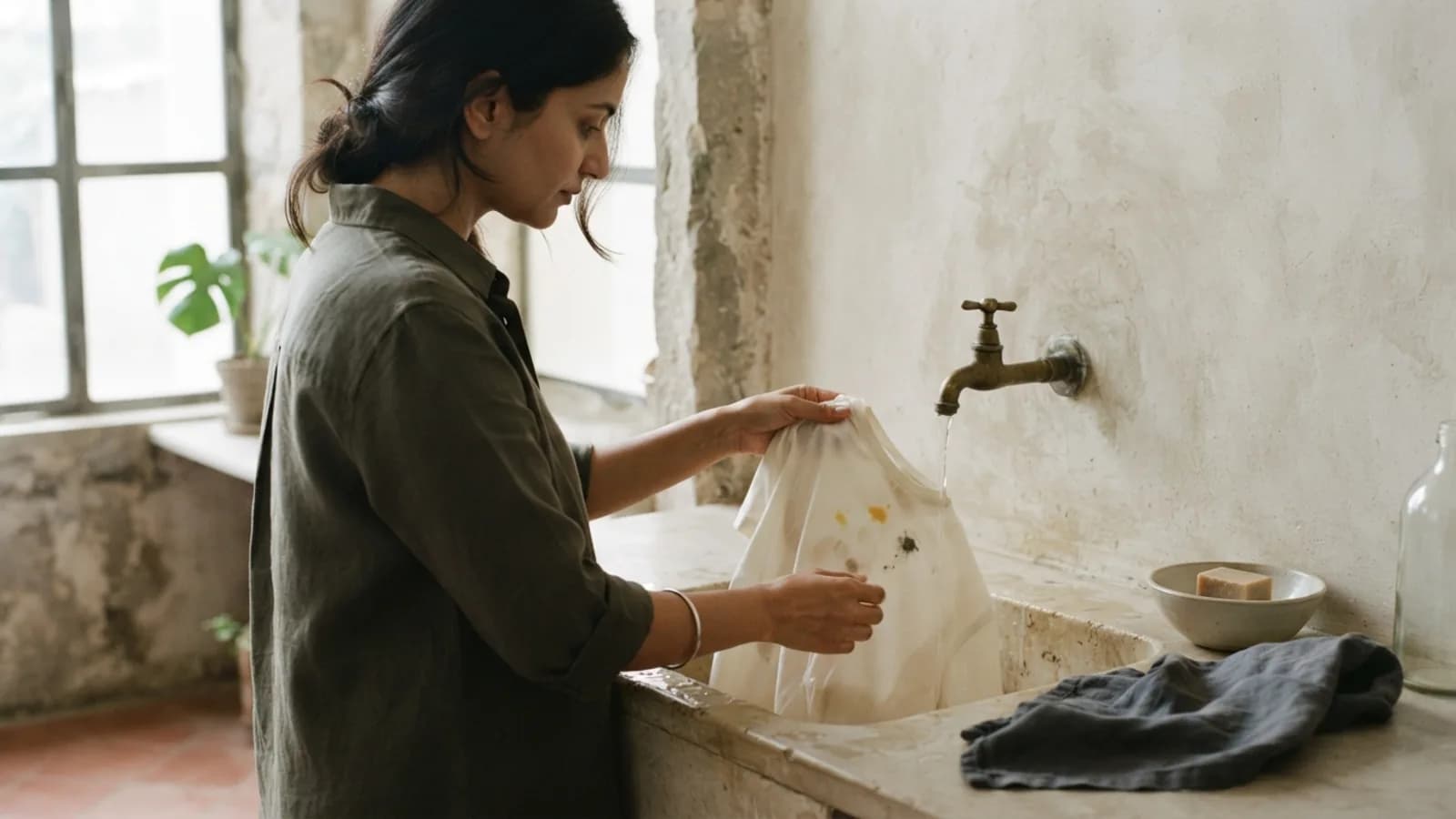
The first rule: identify the stain before you touch it
Every stain removal mistake starts with the same error, reaching for hot water and detergent before knowing what you are dealing with.
Haldi, oil, and ink each need a completely different first move, and the wrong one can set a stain permanently within minutes. Cold water first, always, unless you know for certain the stain is oil-based.
This guide covers the three stains that ruin the most cotton tees in Indian households, why they behave the way they do, and the exact sequence that gets them out without bleaching the fabric or fading the colour around the spot.
Haldi stains: the one that scares people most, and should not
Turmeric stains terrify people because they look permanent within seconds, but haldi is actually one of the more treatable stains if you act fast.
Curcumin, the pigment in turmeric, is fat-soluble and highly reactive to alkaline conditions and sunlight. That single fact explains almost the entire removal method.
Step one: never rinse with hot water first. Heat sets curcumin into the fibre almost instantly, turning a fixable stain into a permanent one. Cold running water only, and rinse from the back of the fabric to push the pigment out rather than through it.
Step two: sun exposure works better than most detergents. Curcumin breaks down under UV light. If the tee is white or light-coloured, lay the stained area flat in direct sunlight for one to two hours after the initial cold rinse, and you will often see the yellow fade dramatically on its own.
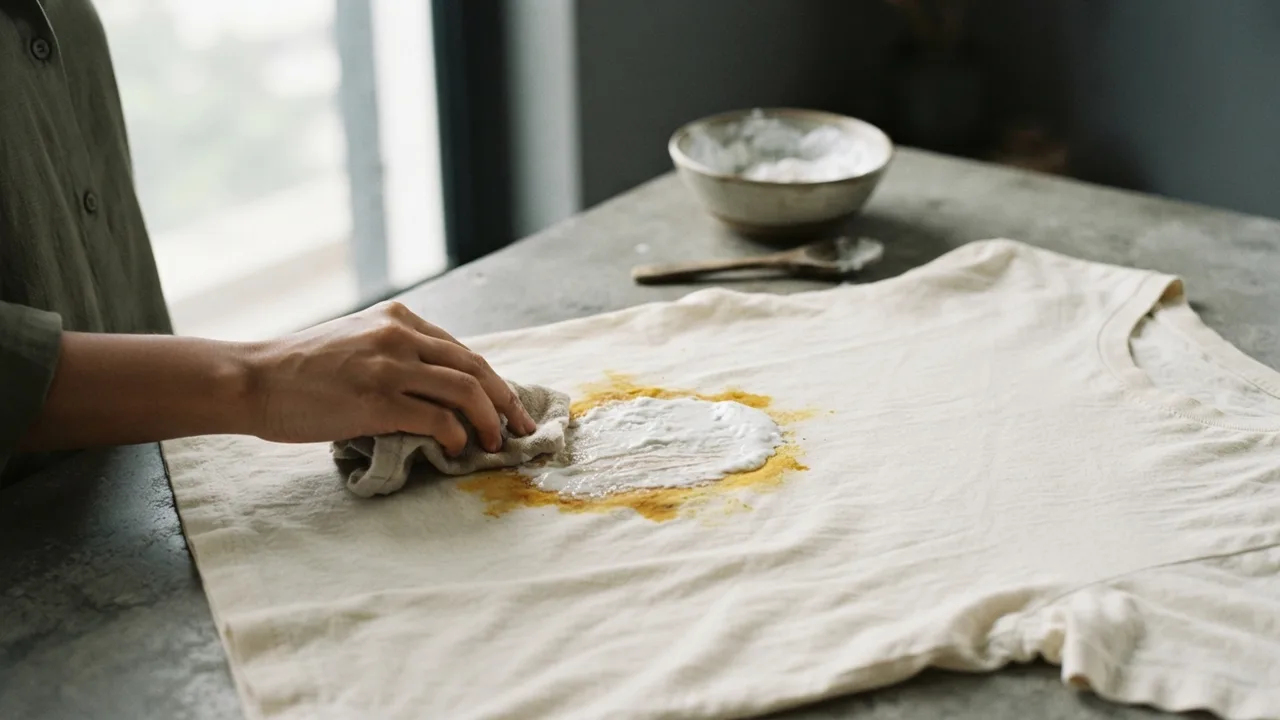
Step three: use a mild alkaline paste for what sun does not remove. A paste of baking soda and a small amount of water, worked gently into the stain and left for 20 minutes before washing, finishes the job for most fresh haldi marks. Dish soap works as a backup because it is formulated to break down fat-soluble pigments like curcumin more effectively than regular laundry detergent.
Old, set-in haldi stains are harder. If the stain has already been through a hot wash or dryer cycle, expect partial improvement rather than full removal, since heat has likely bonded the pigment to the fibre.
Oil stains: the opposite rule applies
Oil behaves nothing like haldi, and that is the trap. People instinctively reach for cold water on every stain, but oil needs the opposite treatment.
Step one: absorb before you wash. Blot excess oil with a paper towel or cornstarch immediately. Do not rub, since rubbing pushes oil deeper into the weave rather than lifting it off the surface.
Step two: apply dish soap directly, not laundry detergent. Dish soap is engineered to cut through grease, which is exactly what laundry detergent is not optimised for. Work a small amount directly onto the stain with your fingers or an old toothbrush and let it sit for 10 to 15 minutes.
Step three: wash in the warmest water the fabric label allows. Unlike haldi, oil actually responds well to warm water because heat helps break the oil's bond with the fibre once the dish soap has already loosened it. Check the tee is not still stained before drying, because heat will set any remaining oil residue permanently, the same way it sets protein stains.
A quick test before drying: hold the fabric up to light. If you can still see a faint translucent patch where the oil was, do not dry it yet. Repeat the dish soap treatment and wash again.
Ink stains: the trickiest of the three
Ink is the least forgiving stain because its chemistry varies wildly depending on the pen. Ballpoint ink is oil-based, gel ink is water-based, and permanent marker sits somewhere in between.
For ballpoint ink, rubbing alcohol is the most reliable home fix. Dab, do not rub, using a cotton ball soaked in isopropyl alcohol, working from the outside of the stain inward so it does not spread. Place a clean cloth underneath the fabric to absorb the ink as it lifts, and switch to a fresh spot on the cloth as it picks up colour.
For gel or water-based ink, cold water and a mild detergent paste usually work, since gel ink has not bonded with oils the way ballpoint ink has. Avoid alcohol here, since some gel ink dyes react to alcohol by spreading rather than lifting.
For permanent marker, honestly, manage expectations. Rubbing alcohol or hand sanitiser can lighten it, but full removal from cotton is uncommon once it has dried for more than a few hours. Test any solvent on an inside seam first, since alcohol can also lift colour from dyed fabric.
The universal ink rule across all three types: never put an ink-stained garment in the dryer until you are certain the stain is gone. Heat is permanent for ink the same way it is for oil and haldi.
The stain removal comparison at a glance
| Stain type | First move | What works | What to avoid |
|---|---|---|---|
| Haldi (turmeric) | Cold water rinse immediately | Sunlight, baking soda paste, dish soap | Hot water, delayed treatment |
| Oil or grease | Blot, do not rub | Dish soap, warm final wash | Cold-only wash, rubbing while wet |
| Ballpoint ink | Dab with alcohol | Isopropyl alcohol, blotting cloth | Rubbing, spreading motion |
| Gel or water-based ink | Cold water, mild detergent | Detergent paste, gentle soak | Alcohol, which can spread dye |
| Any set-in stain | Test before drying | Repeat treatment, sun for haldi | Dryer heat before stain is fully gone |
Why prevention beats removal, especially for good cotton
Every method above works better on fresh stains than old ones, which is the real lesson here.
The single biggest factor in whether a stain comes out completely is how fast you act, not which product you use. A haldi splash treated within the hour has a far higher success rate than the same splash treated the next day.
This is also where fabric quality plays a quiet role. Denser, well-woven cotton resists deep stain penetration better than thin, loosely knit fabric, because there is less open space in the weave for pigment or oil to seep into.
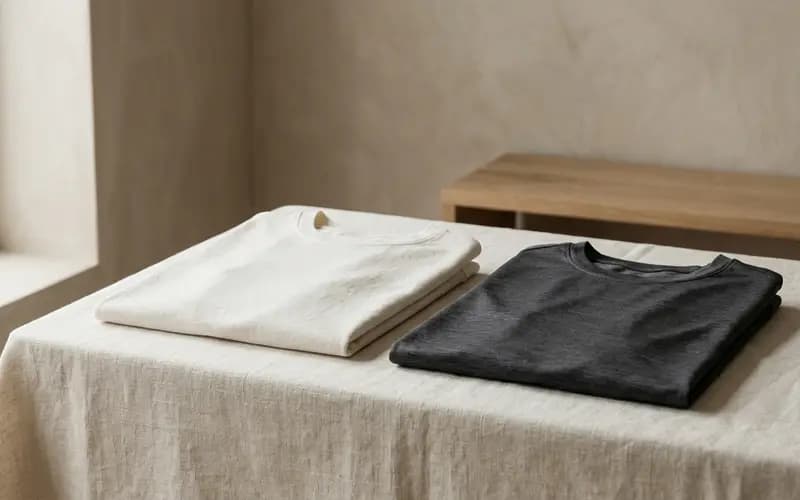
It is one of the reasons we build the Boring Label round-neck tee from a tighter weave rather than the thinnest, cheapest cotton available. A tighter weave will not make a tee stain-proof, nothing does, but it does buy you extra minutes before a stain sets, which is often the difference between a full recovery and a permanent mark.
A general stain removal sequence worth memorising
!Minimalist editorial photo illustrating it is one of the reasons we build the [boring label round-neck tee from a tighter weave rather than the thinnest, cheapest cotton available. a tighter weave will not make a tee stain-proof, nothing does, but it does buy you extra minutes before a stain sets, which is often the difference between a full recovery and a permanent mark., muted neutral tones, soft natural light, premium plain t-shirt context](/images/blog/remove-stains-from-tshirts/inline-3.webp)
If you forget everything else in this guide, remember this order for any unknown stain on cotton.
- Identify roughly what the stain is before doing anything.
- Cold water first, unless you are certain it is oil or grease.
- Blot, never rub, to avoid spreading the stain or damaging fibres.
- Targeted treatment based on stain type, not a generic stain remover spray.
- Check under light before drying, since heat sets almost every stain permanently.
- Repeat if needed, since most tough stains need two treatment cycles, not one.
This sequence is also part of the thinking behind our broader care instructions, because stain removal and everyday washing follow the same underlying principle. Cold water and gentle handling protect both the fabric and the fight against whatever landed on it.
When to accept the stain and move on
Not every stain comes out, and that is worth saying plainly rather than promising miracles.
Old turmeric that has been through a hot dryer, dried permanent marker, and heavily set oil stains on light fabric sometimes will not fully disappear no matter what you try. In those cases, a tee that has done its job for a year or two of regular wear has earned its retirement rather than a losing battle with bleach.
Our guide on tees you never wear and when to retire a t-shirt covers exactly this decision point, because knowing when to let go is as useful as knowing how to clean.
The takeaway
Haldi needs cold water and sunlight, oil needs dish soap and warmth, and ink needs the right solvent for the right ink type. Speed matters more than any specific product, and heat is the enemy of every stain until it is fully gone.
Get these three right, and you will save far more tees than you lose, which matters most when the tee in question is one you actually paid attention to buying.
Boring Label
Wear the point of the article.
One honest tee. Heavyweight combed cotton, a collar that holds, a fit that actually fits. No logo, no noise.
Shop the round-neck teeFree shipping across India · Easy returns
Keep reading

How to Wash T-Shirts So They Last Longer
Your washing machine ages a tee faster than wearing it does. Five habits that undo most of the damage.
Why Your T-Shirt Still Smells After Washing
It looks clean but smells sour the moment it warms up. The real reason is the fabric, not your laundry routine.
Why White T-Shirts Turn Yellow (and How to Stop It)
The collar and armpits yellow for two different reasons - and most fixes make it worse. What is really happening, and how to stop it.
Stay in the loop
New writing, no noise
Occasional notes on fit, fabric, and dressing simply well. No spam, unsubscribe anytime.
Subscribe