Buying
How to Spot a Fake Premium T-Shirt
Premium is a claim anyone can print on a tag. Here is how to check the stitches, fabric and seller before you pay for the story.
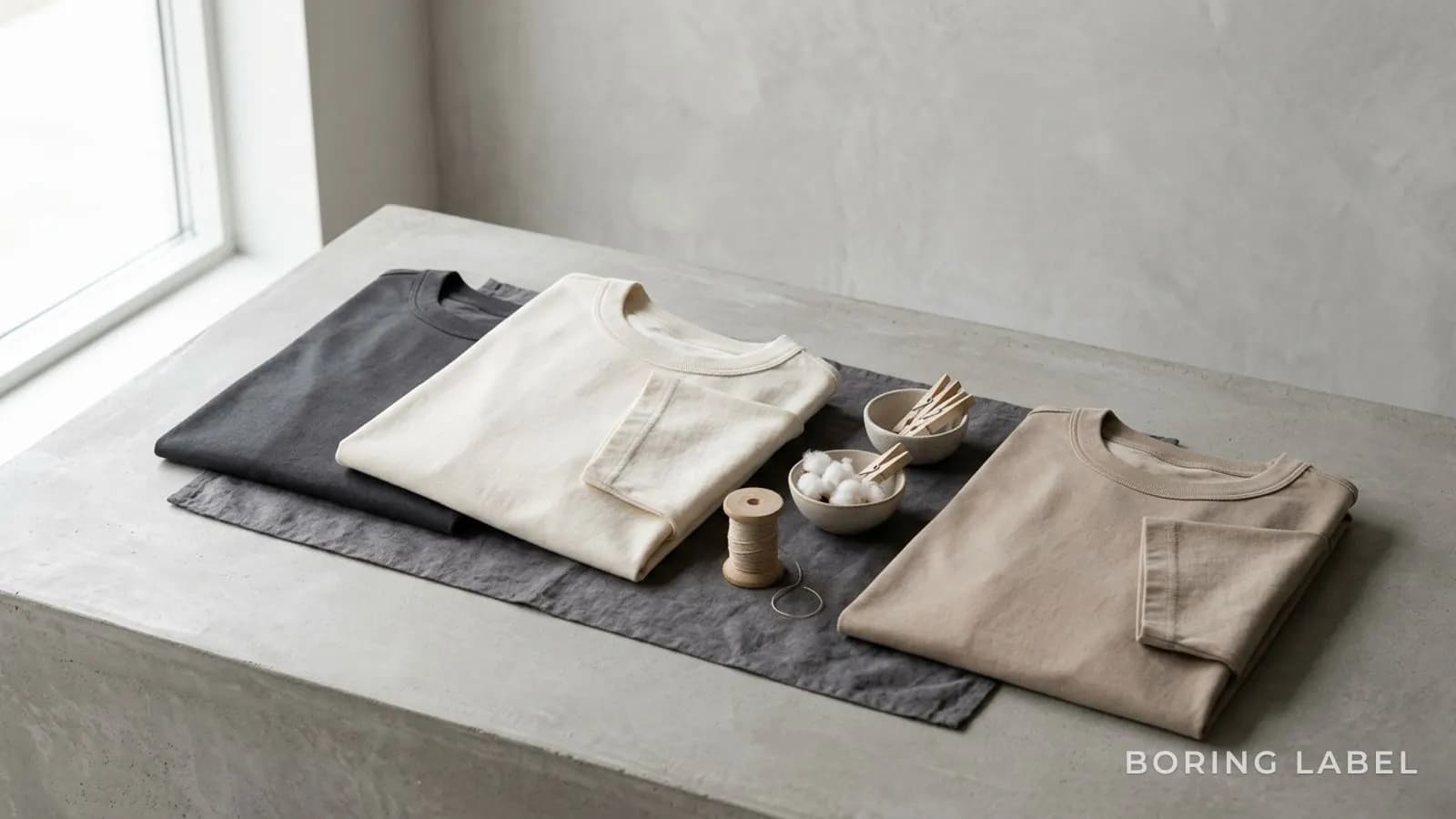
Two completely different lies wearing the same word
When people say a tee is "fake", they usually picture one thing: a knock-off with a famous logo stitched crooked on the chest. That kind of fake is real and worth catching. But it is only half the problem, and honestly the smaller half for most people buying plain basics in India.
The other fake is quieter and far more common. Nobody copied a logo.
Nobody broke a trademark. A seller just bought a stack of thin, cheap blanks - the sort that leaves a factory for eighty or a hundred rupees - printed "100% Supima" or "premium combed cotton" on a stiff little tag, listed it at ₹999 or ₹1,299, and let the word "premium" do the rest.
No law was broken. You were just quietly lied to about what the cloth actually is.
So there are two fakes, and they need two different defences. The counterfeit fakes a brand.
The "premium" blank fakes a quality. The first you catch by checking the trademark and the seller.
The second you catch by checking the garment itself, because the seller has told you nothing true to check. This guide covers both, and most of it is about the second one, because it is the trap that catches careful people who would never fall for a dodgy Gucci tee.
The good news is that cloth cannot lie the way a listing can. A photo can be styled, a tag can be printed, a price can be set at anything.
But the stitch count, the collar, the weight, and the way the dye behaves in water are physical facts, and you can read every one of them yourself. That is what we are going to do.
By the end you will be able to pick up a "premium" tee, or read its product page, and tell within a minute or two whether the price is buying you cotton or buying you a story.
Fake one: the counterfeit, copying a brand
This is the straightforward one. Someone has taken a real brand - Nike, Polo, a designer name - and copied the logo, the tags, and the packaging onto a cheaper garment.
India has a lot of it. Amazon's own counterfeit unit reports seizing millions of units a year and has pursued tens of thousands of bad actors since 2020.
In January 2026 the Delhi High Court issued injunctions naming Amazon, Flipkart and Meesho over counterfeit listings, and Meesho says it delisted around 42 lakh counterfeit products under its own clean-up drive. The scale is not theoretical.
The tells for a counterfeit are mostly about the brand furniture rather than the cloth:
| Tell | Genuine branded item | Counterfeit |
|---|---|---|
| Price vs official retail | Within a sensible range of the brand's own price | 50 to 80 percent below official retail for no clear reason |
| Care tag print | Crisp, thin, even text, printed both sides, soft tag material | Blurry or smudged text, often one side only, cardboard-stiff tag |
| Font and logo | Consistent weight and spacing, sharp edges | Letters slightly too thick or thin, uneven spacing, fuzzy logo |
| Packaging | Branded, considered, protective | Flimsy poly mailer, no branding, sometimes looks reused |
| Seller | The brand, or an authorised seller | Unknown third party, often overseas, no real history |
The font tell is the one most people miss. Counterfeiters frequently copy a logo by photographing and resizing it, which thickens or thins the strokes a touch.
Hold a suspected fake tag next to a picture of the real one and the letters will not quite match. And the blunt heuristic still works: if a tee that retails at a few thousand rupees is being sold for four hundred by a seller you have never heard of, you are not getting a steal.
You are getting a copy, or nothing at all.
One practical defence on the big marketplaces: check who actually fulfils the order. On Amazon, "Sold by [unknown name]" through a third party carries far more counterfeit risk than something shipped and sold through Amazon's own fulfilment. It is not a guarantee, but the unknown third-party seller is where most of the fakes live.
Fake two: the cheap blank dressed up as premium
Now the interesting one. No brand was copied here. The whole con lives in a single word - premium - and in fibre claims that sound specific but point at nothing you can verify.
Here is the economics, because it explains everything that follows. A genuinely premium tee costs real money to make: long-staple cotton costs more than ordinary upland, combing throws away the shortest fibres and bills you for their absence, careful stitching and honest weight add up.
Below a certain price, that cotton simply cannot be in the garment. So a seller who wants the margin without the cost buys a thin five-ounce blank for a hundred-odd rupees, prints "Supima" or "premium ring-spun" on it, and sells it for ten times what it cost.
The label is free to print. The lie is in the gap between the word and the cloth.
The reason this works is the same asymmetry that makes all bad cotton thrive online, which we go deep on in how to spot good cotton when you are buying online. In a shop you would feel the thinness in four seconds and put it back.
Online you find out only after it ships, after you have paid, and often after the easy-return window has closed. The cost of the bad decision lands on you, later, not on the seller at the till.
So the defence cannot be the seller's word, because the seller's word is the product. The defence is the garment. Below is the whole physical checklist - the things a cheap blank cannot fake even when the listing says anything it likes.
The buyer's checklist: what the cloth tells you
You do not need a lab. A magnifying glass or a phone camera on macro, a window, a sink, and your own hands cover almost all of it.
Stitching: count the stitches
Stitch density is one of the cleanest tells, because it is mechanical. A premium tee runs roughly sixteen to twenty-two stitches per inch on its seams - tight, even rows that look almost machine-perfect under magnification.
A cheap blank often runs ten to twelve, with visible gaps and uneven spacing. Count along an inch of a seam; the difference is obvious once you have seen it once.
| Stitching tell | Genuine premium | Cheap blank |
|---|---|---|
| Stitches per inch | About 16 to 22, tight and uniform | About 10 to 12, loose, gaps visible |
| Hems (sleeve and bottom) | Clean double-needle hem, two even parallel rows | Single wavering row, or skipped stitches |
| Side seams | Neat, often flatlock, smooth against skin | Bulky overlock, rough, sometimes twisting |
| Thread tails | Clipped flush or sewn back in | Loose threads hanging at hems and seams |
| Thread colour | Matches the fabric, even tension throughout | Mismatched dye lot, tension varies |
The double-needle hem deserves a word, because it confuses people. A double-needle hem has two parallel rows of stitching on the sleeve and bottom - it is stronger and it is what better tees use there.
Single-needle construction is not automatically cheap; on side seams it is actually the premium choice because it is flatter and less bulky. The tell is not single versus double in the abstract.
It is whether the stitching, whatever type, is tight, even and finished, or loose, wandering and trailing threads. Cheap is cheap regardless of needle count.
The collar: the part that dies first
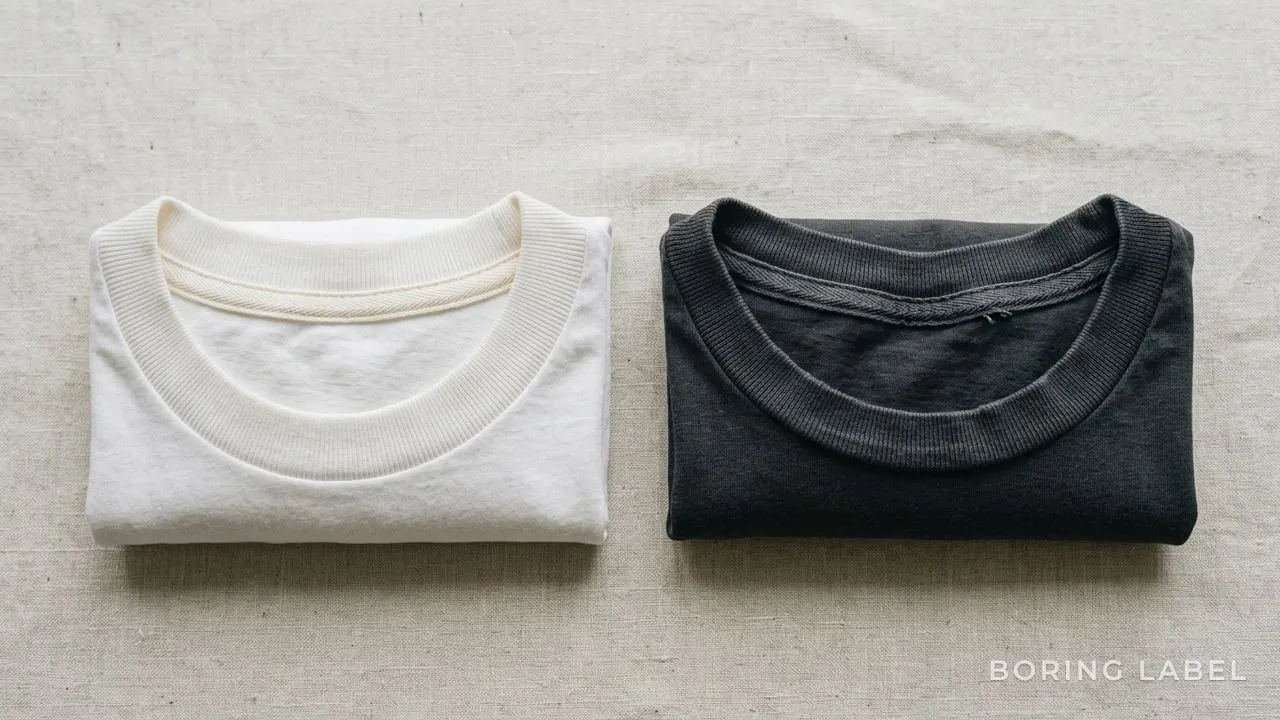
If you check one thing, check the collar, because it is where cheap tees give up. A good collar is proper knitted ribbing, attached cleanly, and supported by a strip of tape sewn across the back of the neck so it holds its shape.
The ribbing on a quality tee is dense - often a tight one-by-one knit - and it springs back when you stretch it. Industry wash tests put a good ribbed collar at close to ninety percent of its original thickness after fifty washes; a plain cheap knit can drop well below that.
A fake-premium collar gives itself away fast. The ribbing is loose or the neck tape is glued or fused on rather than sewn, so it separates and flakes after a handful of washes.
Pinch the collar between two fingers: a premium one feels dense and springy and snaps back, a cheap one feels flat and floppy and stays where you stretched it. That stretched-out, wavy "bacon neck" after five washes is the cheap blank announcing itself.
The neck tape is the giveaway counterfeiters and cheap sellers can least afford to get right, because doing it properly costs real machine time.
Fabric weight and the window test
Weight is measured in GSM, grams per square metre, and it is the number sellers lie about most because it is the easiest to assert and the hardest for a buyer to check from a photo. Rough benchmarks worth memorising: under about 160 GSM is lightweight and often see-through, 165 to 185 is the everyday mid-weight zone, and 200 and up is properly heavyweight.
A tee marketed as "premium" that quietly lists five ounces - around 150 GSM - is not premium. That is entry-level weight wearing a premium price.
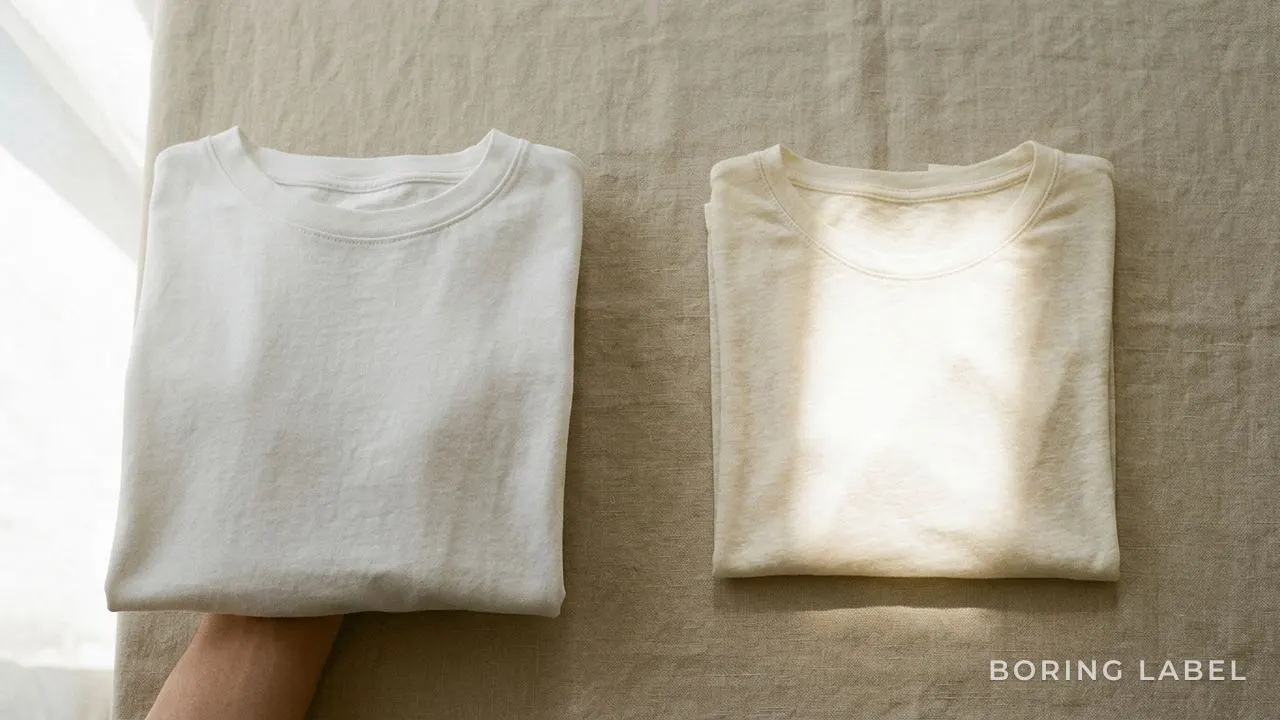
You do not have to trust the number. Hold the tee up to a bright window.
A genuine mid-weight or heavier tee is opaque; you cannot see your hand through it. A thin blank glows - you see light and shadow straight through the cloth.
Cheap thin tees are very often photographed only against dark backgrounds for exactly this reason, so when a listing never once shows the fabric backlit or flat in good light, assume it is hiding the thinness.
One more weight trick to know: a high GSM number on its own does not prove quality either, because you can pack weight into a fabric with cheap short-fibre yarn and still get something that feels rough and pills in a month. Weight tells you how much cotton, not how good it is. Pair the window test with the pilling and hand-feel checks below before you trust it.
Hand-feel, dye evenness and the soak test
Run your hand flat across the surface. Good combed long-staple cotton feels smooth and clean, almost cool.
A cheap blank feels rough and you can often feel or see a faint halo of tiny standing fibres - that fuzz is next month's pilling, already present. Ring-spun combed cotton pills noticeably less than cheap open-end cotton, and the difference shows after just three or four washes.
If a tee that claims Supima or premium cotton is covered in little bobbles around the collar and cuffs after a wash or two, the fibre claim was false, whatever the tag said.
Dye is the last home test and the most satisfying. Look first at evenness - premium dyeing is uniform across the whole garment, while cheap dye leaves faintly darker and lighter patches.
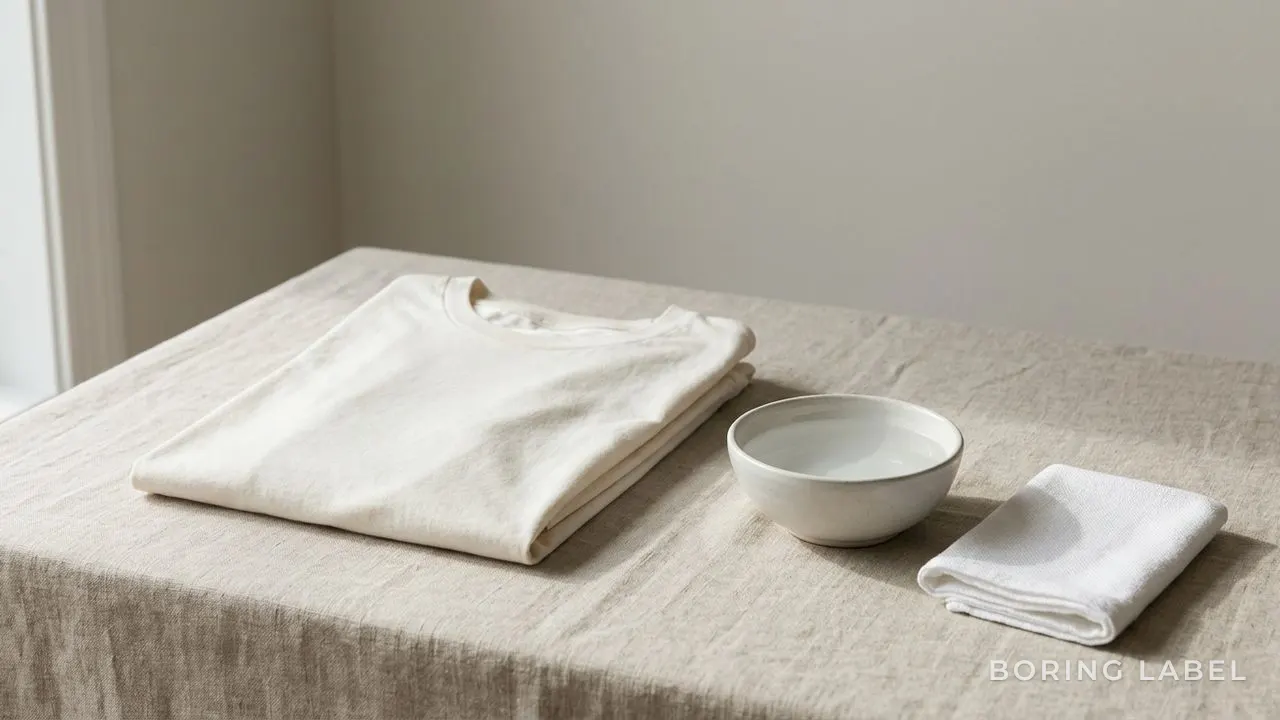
Then test fastness. Fill a sink with cold water and soak the tee for half an hour.
With good dye the water stays clear or barely tinted and a white cloth pressed against the wet fabric stays white. With cheap dye the water discolours and the white cloth picks up the colour.
That tee will bleed onto everything in its first proper wash. We unpack why some tees are doomed to pill and fade in why a t-shirt looks cheap, but the soak test gives you the answer in thirty minutes flat.
The care tag and packaging
Finally, the tag itself, which straddles both kinds of fake. A genuine premium care tag has crisp, thin, precise printing on soft tag material, names the fibre specifically - "100% Supima cotton", often with origin - and lists real care instructions.
The fake version reads like cardboard, smudges, and stays vague: "premium cotton", "Pima blend", or just "100% cotton" with nothing else. Vagueness on a tag is not shyness.
It is the absence of anything specific worth declaring, which is itself the answer.
Verifying the fibre claim without any equipment
Three of the tools you need cost nothing and need no lab.
The burn test, for whether it is really cotton
This is the fastest way to catch a "100% cotton" claim that is actually a blend. Snip a small piece - a centimetre square - from somewhere hidden, like an inside seam allowance, and hold it to a flame at arm's length.
- Pure cotton burns quickly, smells like burning paper or wood, and leaves a soft grey ash that crumbles between your fingers. It does not shrink away from the flame.
- Polyester or nylon shrinks away from the flame, melts, balls up, smells like plastic, and leaves a hard bead you cannot crumble.
- A cotton-poly blend does both at once: it burns and melts, the smell is mixed, and the ash has hard bits in soft grey.
Sellers love to claim "100% Supima" on a tee that is really eighty percent cotton and twenty percent polyester, because the blend is cheaper and hides behind a similar look. The burn test exposes that in under a minute, and the snipped corner from an inside seam will never show.
Supima, and how to actually verify it
Supima is worth understanding properly because it is the claim most abused in India. Supima is not a vague marketing word - it is a trademark for extra-long-staple Pima cotton grown in the USA, licensed and audited by the Supima Association. That licensing is exactly what makes it verifiable and hard to fake legally.
To check a Supima claim, look for three things. First, the Supima name with the registered trademark symbol; a real licensee uses it properly.
Second, a mill or licensee named somewhere - genuine Supima products tend to disclose where the cotton was spun. Third, internal consistency: Supima must be one hundred percent to carry the name, so "Supima blend" or "Supima-style" is a contradiction and a red flag on its face.
The Supima Association publishes its licensed mills and brands, and newer Supima products increasingly carry QR codes linking to chain-of-custody verification. A seller who genuinely has Supima has every reason to point you at that proof.
A seller who is bluffing will wave the word and go quiet the moment you ask which mill. If you want the deeper comparison of what makes the fibre actually different, that lives in our piece on the premium-versus-affordable question, affordable versus premium t-shirts.
GOTS, and the GSM sense-check
If a tee claims organic, the standard to look for is GOTS - the Global Organic Textile Standard - which audits the whole chain from farm to finished garment. A real GOTS claim comes with a certification number you can search on the GOTS database. "Eco-friendly", "organic-inspired" or a GOTS logo with no number behind it means nothing; the number is the whole point.
And the GSM sense-check ties the fibre claim back to the price. If a listing claims "premium Supima" but only discloses five ounces, the maths already fails - that is everyday weight, not premium, regardless of the fibre word attached to it. When the weight, the fibre claim and the price do not agree with each other, trust the cheapest part of the story, because that is usually the true one.
Marketplace red flags, with the India context that matters
The garment tests work once the tee is in your hands. Online, you are catching the fake before it ships, off the listing alone. The patterns are consistent across Amazon, Flipkart, Meesho and Instagram, and a few are specific to how scams run here.
| Red flag | What it really signals |
|---|---|
| Price far below market for the claimed fibre | The cotton it claims cannot exist at that price |
| Seller account under six months old | Opened to scam and vanish before reviews catch up |
| Only five-star reviews, all text, all from new accounts | Mule-account reviews seeded the same month |
| Vague fibre claim, no mill, no GSM | Nothing specific worth declaring - the blank is cheap |
| UPI or prepaid only, COD refused "for bulk orders" | Removes accountability and makes disappearing easy |
| Tracking number that does not match the courier | A real AWB from an unrelated parcel, used to stall you |
| Polished stock photos, broken-English description | Photos lifted from a real brand, copy written by the scammer |
The India-specific version of fake two runs largely through Instagram and Meesho. The Instagram dropship playbook is well documented: a scammer buys an aged account with a few thousand followers so it looks established, posts professional photos copied from legitimate stores, runs targeted ads into tier-two and tier-three cities where an influencer-style post carries trust, accepts only UPI or NEFT, and then provides a fake AWB number to delay complaints before going private or deleting the account after a week or so. Meesho's own ratings tell the broader story - it sits around 1.7 stars on Trustpilot across many thousands of reviews, with recurring complaints about quality, fakes and refunds, and faced an FIR in early 2026 over alleged fake goods.
What buyers actually report receiving is the part that should make you cautious. It is not always a slightly-worse tee.
People report getting a completely different item, used or smelly clothing, visibly stained or damaged garments, or a thin glued-label blank in place of the "Supima" they paid ₹599 for. The forums and consumer-review sites are full of the wholesale-to-consumer version of the scam too: someone buys blanks for a few dollars and resells them as forty-dollar premium tees.
When a brand cannot justify its price with anything specific, that gap is usually where the scam lives.
The "too cheap to be real" maths
There is one calculation that catches more fake-premium tees than any single physical test, and you can do it in your head before the parcel ever ships. Work backwards from cost.
A genuine extra-long-staple cotton tee, made well, costs the maker real money in fibre, combing, spinning and stitching before a single rupee of margin or shipping is added. By the time it reaches you with an honest profit on it, a real premium plain tee sits comfortably above a thousand rupees, and often well above that.
That floor is not greed; it is what the cotton and the construction actually cost.
So when a listing shouts "Supima" or "premium" at ₹499 or ₹599, the number is doing the confessing for the seller. There is no version of that garment that contains licensed long-staple cotton, a taped collar, honest weight and a fair margin at that price.
Something in the claim is false: either the fibre, or the construction, or the existence of the parcel at all. A rock-bottom price on a premium claim is one of the few signals that is reliable on its own, because it rules the claim out on arithmetic alone.
The reverse never holds - a high price proves nothing, since printing a big number on a tag is free - but a price that is too low to physically contain the cotton it claims is a fake you can spot without touching the cloth.
The defence online is the same discipline you use in the hand, moved earlier. Read the listing for what it is willing to commit to.
A real premium seller names the cotton, states the GSM, shows the fabric flat and backlit, and carries reviews that are specific and spread over time. A fake leans on adjectives, hides the cloth behind styling, and gathers vague day-one praise.
If you only have the photos to go on, our full method for reading a product page like an inspector is in how to spot good cotton online, and a shortlist of brands worth trusting is in the best plain t-shirt brands.
How an honest brand makes the fake obvious by contrast
Here is the quiet pattern under everything above. A fake survives on vagueness. So the simplest way a real brand defeats fakes is to be specific in exactly the places a fake stays silent, and to invite the checks a fake cannot pass.
That means naming the spinning mill rather than saying "premium mills". It means publishing the GSM and the yarn spec as a number, not as the word "heavyweight".
It means putting the fibre claim next to its proof - the Supima licence or the certification number you can actually look up - instead of just the word on a tag. A counterfeit cannot copy a working licence without committing fraud, and a cheap blank cannot survive a stated GSM and a published mill, because the moment the number is on the page you can hold the cloth to the window and check it.
Specificity is not marketing. It is the brand handing you the tools to catch it if it lies, which is the most credible thing a seller can do.
It is worth saying plainly what this asks of a brand, because it is not free. Naming your mill exposes it to anyone who wants to check whether the cloth that arrives matches the mill that was promised.
Publishing a GSM number invites the window test. Printing a licence or certification number you can search is an open dare.
A seller running the fake-premium con cannot do any of this, because every specific claim is a thread you could pull. That is exactly why specificity is the signal worth shopping for - it is the one thing a fake cannot copy cheaply, and it costs an honest maker nothing but the confidence that its cloth survives being looked at.
This is the whole reason we describe what we make the way we do. Our round-neck tee is extra-long-staple Supima cotton, priced at ₹1,299, and we state the cotton, the weight and the construction plainly, with a promise we are willing to be held to: zero fade, zero shrinkage, and a guarantee across thirty washes and beyond.
We would rather hand you the spec sheet than the adjectives, because the cotton is the part we want you to examine, not the part we want you to overlook. A brand confident in its cloth makes itself easy to inspect.
A brand that hides the cloth is telling you something, and it is worth hearing.
The bottom line
There are two fakes, and now you can catch both. The counterfeit copies a brand, and you catch it on the tags, the fonts, the packaging and the seller.
The fake-premium blank copies a quality, and you catch it on the cloth itself - the stitch count, the springy taped collar, the opaque weight at the window, the dye that holds in the soak, the burn test that proves the fibre, and the price that has to add up to the claim. The listing can say anything.
The garment cannot.
So treat every "premium" tee as guilty until inspected, online and in hand. Count the stitches, pinch the collar, hold it to the light, check the maths. The sellers betting on you not bothering are exactly the ones you are trying to avoid - so bother, and they lose.
Boring Label
Wear the point of the article.
One honest tee. Heavyweight combed cotton, a collar that holds, a fit that actually fits. No logo, no noise.
Shop the round-neck teeFree shipping across India · Easy returns
Keep reading
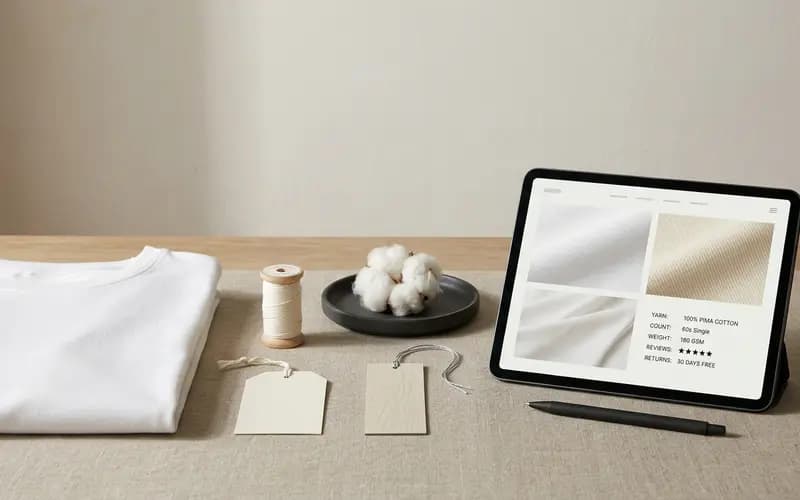
How to Spot Good Cotton Online (Without Touching It)
The touch test is gone when you shop online. Here are the six proxy signals that tell good cotton from bad before you spend.
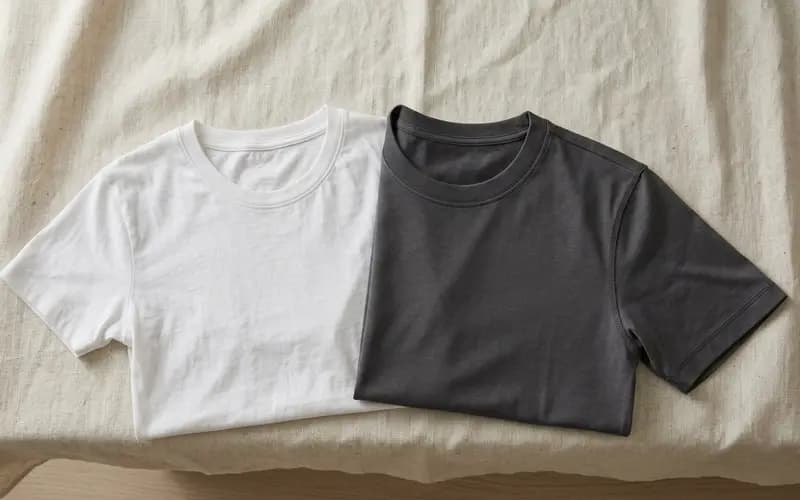
Affordable vs Premium T-Shirt: Worth It?
A 1,500-rupee tee is not always better than a 400-rupee one. Here is what the extra money should buy.
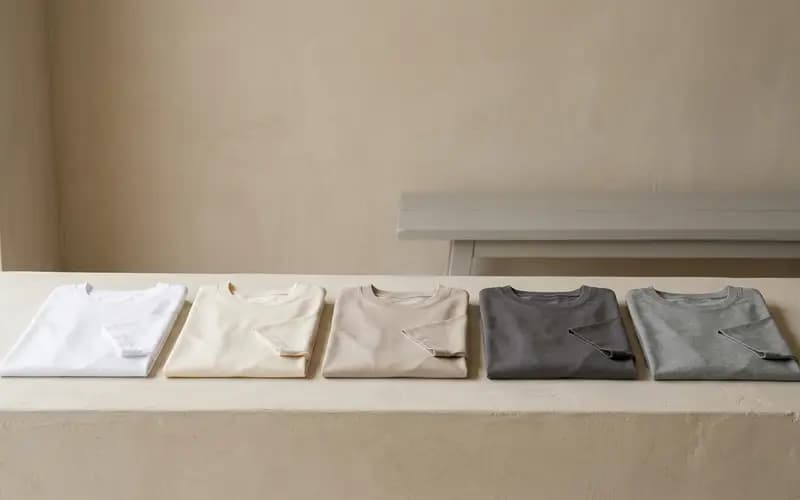
Best Plain T-Shirt Brands in India
Plain tees are everywhere and mostly mediocre. Here is how to judge a good one — and where they actually are.
Stay in the loop
New writing, no noise
Occasional notes on fit, fabric, and dressing simply well. No spam, unsubscribe anytime.
Subscribe