Fit
Why a T-Shirt Looks Cheap
It is rarely the price. It is the collar, the GSM, and the seam — three things you can spot in seconds.
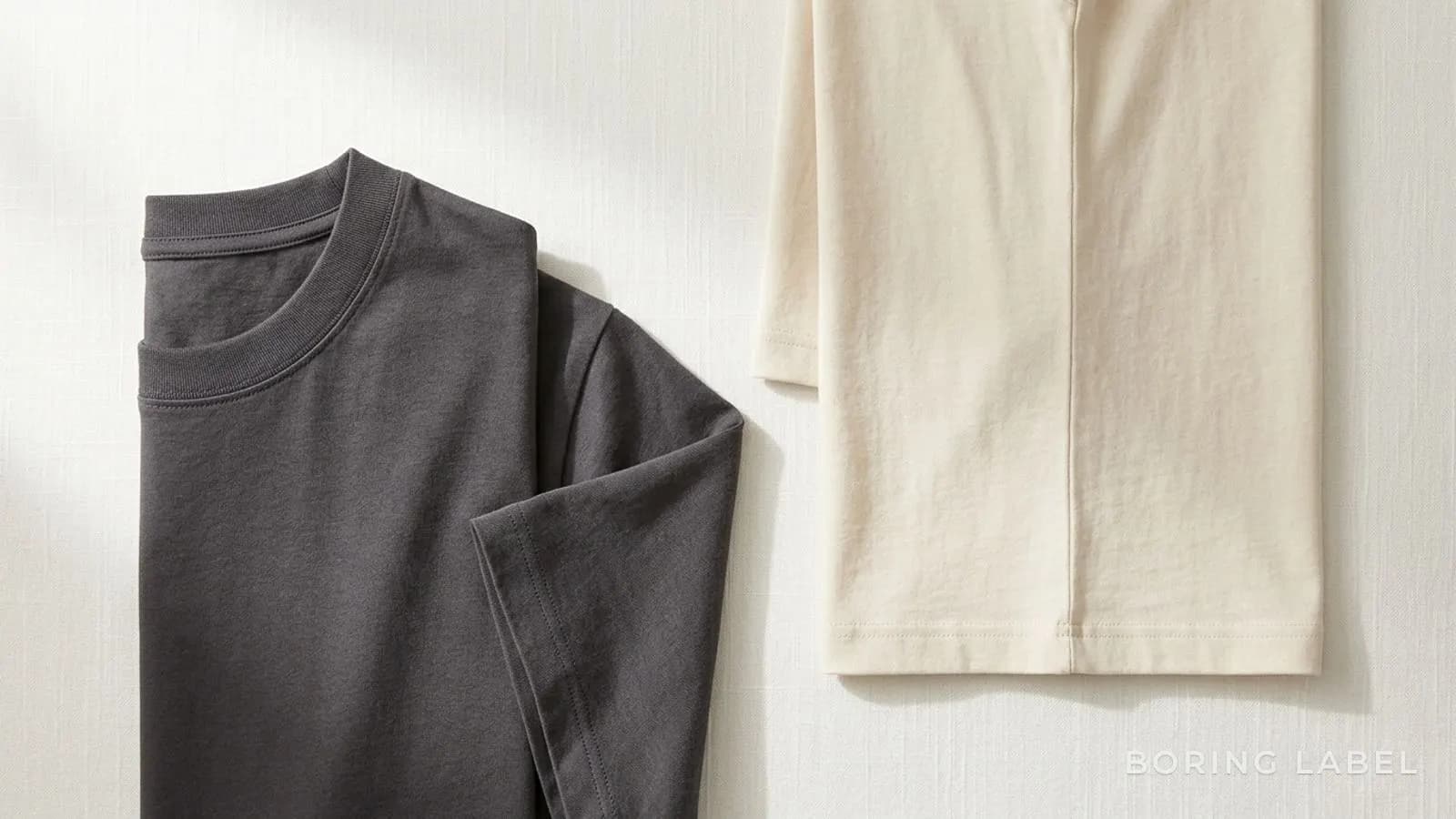
It Is Almost Never About the Price
There is a comfortable lie people tell themselves about clothes: cheap things look cheap, expensive things look expensive, and the gap is simply money. It is a lie because it lets you off the hook.
Spend more, look better, done.
Walk through any office, any cafe, any wedding reception in India and the truth is messier. You will see a 400-rupee tee that reads clean and considered, and a 2,500-rupee one that looks like it has been slept in.
The difference is not the rupee figure on the receipt. It is a short list of physical things you can learn to see in a few seconds, and once you can see them, you cannot unsee them.
This is good news, actually. It means you stop paying for the brand name and start paying for the things that matter.
It means you can spot a quietly excellent tee at a market stall and walk past an overpriced one in a flagship store. The skill is cheap to acquire.
You just need to know where to look.
We will start with the three things that give a cheap tee away instantly, then go deeper into the smaller tells, then hand you a checklist you can run in a changing room or while scrolling a product page.
The Three-Second Test: Collar, Weight, Seam
If you have only three seconds with a t-shirt, look at three things. The collar, the fabric weight, and the side seam.
Get these three right and the tee will almost certainly look good. Get them wrong and no amount of styling rescues it.
The Collar Is the First Thing People See
Your face is the centre of attention, and the collar sits right under it, framing everything. A collar that has lost its shape drags the whole tee down with it.
This is why a tired old favourite tee starts to look sad long before the fabric itself wears out - the neck goes first, and the neck is what people see.
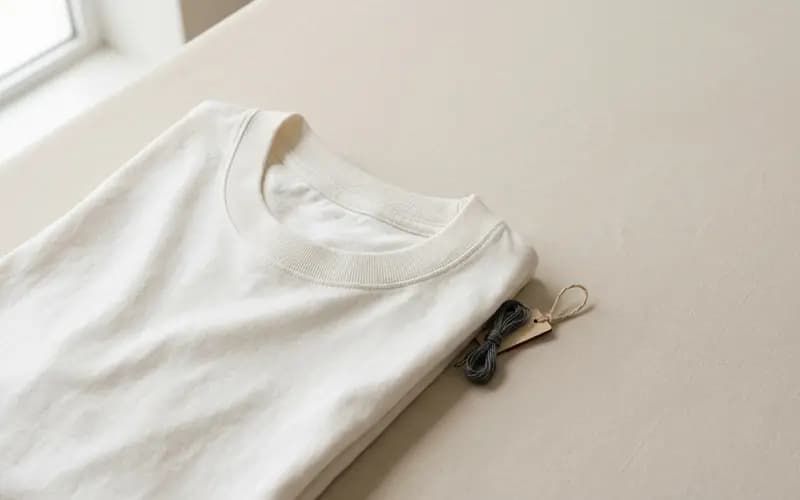
A good crew neck on a fresh tee is firm. Pinch it and it springs back.
It sits close to the base of the neck without choking, and the ribbing - that finely knitted band of fabric - is dense and even, usually a touch heavier than the body of the shirt. That density is the whole point.
The ribbing has to take more stress than any other part of the garment because it gets stretched over your head every single time you wear it.
Cheap collars fail in predictable ways:
- The funnel neck. The collar gapes away from the skin and sits too wide, leaving a loose ring of fabric that never lies flat. It looked fine on the hanger and wrong the moment a human put it on.
- The wave. After a few washes the collar develops a rippled, lettuce-leaf edge instead of a clean circle. This is the ribbing stretching out and refusing to recover. It is permanent.
- The thin band. Some makers save a few rupees by using a narrow, low-density rib. It feels flimsy under the fingers and goes shapeless fast.
You can check most of this before buying. Hold the collar up to the light and look at the ribbing.
Is it dense and tight, or can you see gaps in the knit? Stretch it gently sideways and let go.
Does it snap back or sulk? A collar that does not recover in the shop will not recover in your wardrobe.
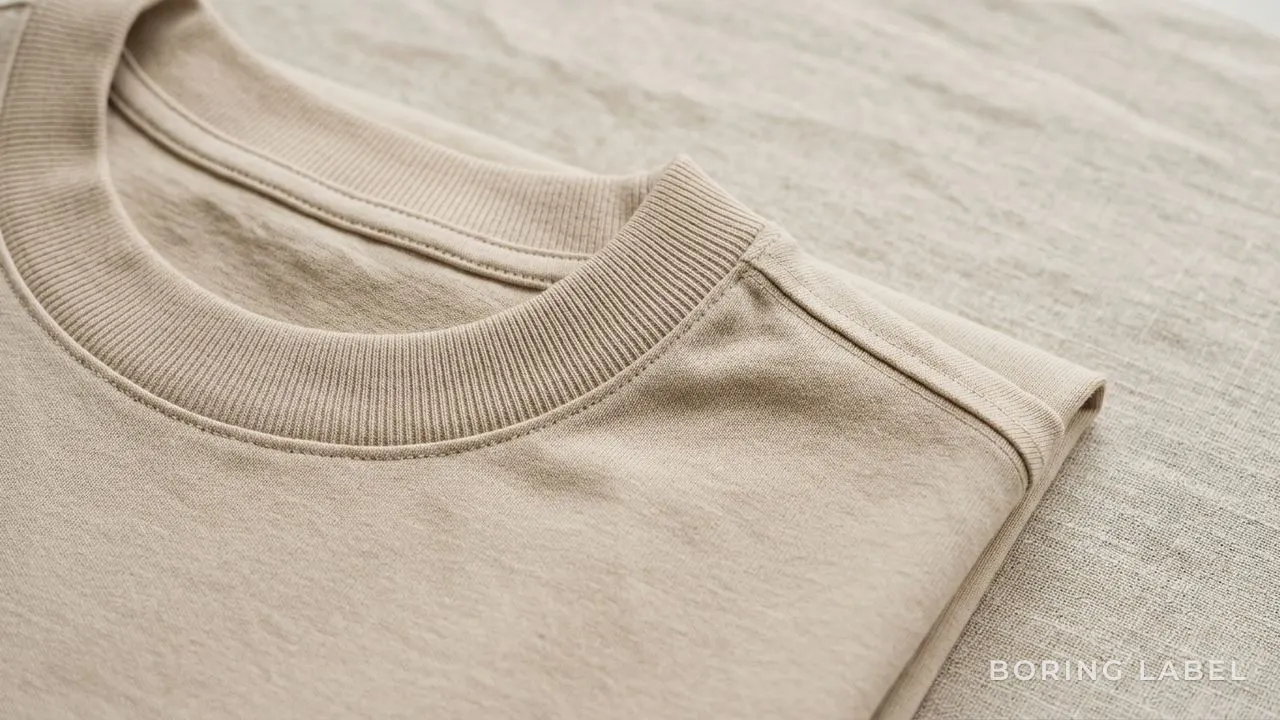
Fabric Weight Decides Whether It Drapes or Clings
The single biggest reason a tee looks cheap is that it is too thin. Hold a thin tee up to a window and you can see your hand through it.
Put it on and it shows every contour, clings where you do not want it to, and reveals the outline of whatever is underneath. It reads as an undershirt that escaped, not a finished garment.
This is where GSM comes in - grams per square metre, the standard measure of fabric weight. We have a full GSM guide if you want the complete picture, but the short version is this:
| GSM range | Feel | How it looks |
|---|---|---|
| Under 140 | Very thin, see-through | Cheap, clings, shows everything |
| 150 to 180 | Light to medium | Good for peak Indian summer, can still look thin |
| 180 to 220 | Substantial, structured | The sweet spot - drapes, holds shape, looks finished |
| 220 plus | Heavy, boxy | Premium feel but hot for most of the Indian year |
Notice that heavier is not automatically better. A 240 GSM tee in a Chennai April is a mistake, however expensive.
The trick for India is to find fabric that feels substantial without being a furnace - which is less about raw weight and more about the cotton itself and the knit. A well-spun mid-weight tee can look more expensive than a cheap heavy one, because the yarn is finer and the surface is cleaner.
But as a starting filter, if you can read a newspaper through the shirt, put it back.
The Side Seam Twist Is the Tell Most People Miss
Here is the one almost nobody checks, and it is the clearest signal of all. Lay a t-shirt flat and look at the side seam running from the armpit down to the hem.
On a well-made tee it runs in a straight, clean line. On a cheap one, it spirals - the seam wanders toward the front or back as it goes down, and the whole shirt looks like it is slowly trying to rotate around your body.
This twisting is called spirality, and it happens because of how the fabric was knitted and finished. Cheaper open-width or tubular knits, made fast and finished poorly, have a built-in lean in the yarn that was never corrected.
Wash the tee once or twice and the lean reveals itself: the side seam migrates, the hem goes wonky, and the printed graphic - if there is one - sits at a slight angle forever.
You cannot fix spirality. No iron, no wash, nothing.
It is baked into the cloth. So check for it before you buy and check it again after the first wash.
Lay the tee flat, smooth it out, and trace the side seam with your eye. If it does not fall straight, the tee will never sit right.
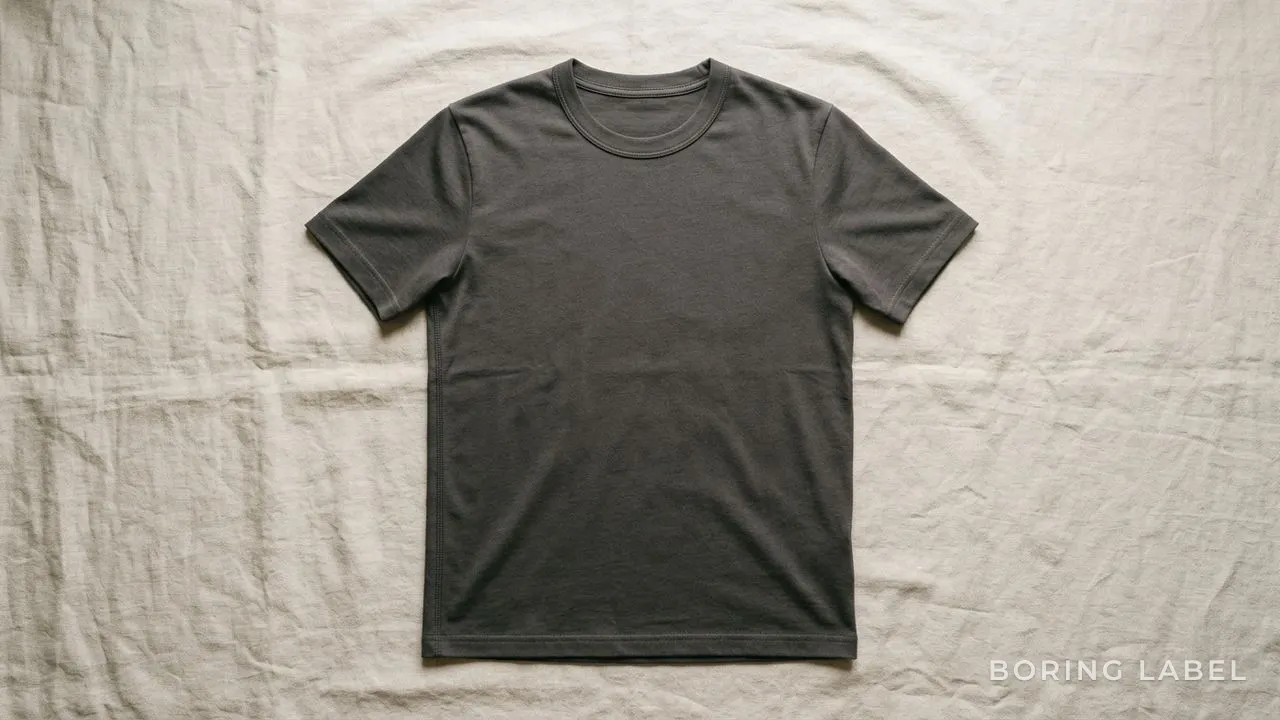
The Quieter Tells That Separate Good From Great
The three-second test catches the disasters. The next layer of detail is what separates a perfectly decent tee from one that genuinely looks like money.
These are the things tailors and fabric people notice that most shoppers never register.
Shoulder Seams That Sit Where Your Shoulder Ends
The seam joining the sleeve to the body should land right at the edge of your shoulder, where the flat top of your shoulder breaks into the curve of your arm. When it sits there, the tee looks tailored and your frame looks square.
When the seam droops down onto your upper arm, the shirt reads as too big and sloppy - unless you are deliberately going oversized, which is a different and intentional thing entirely. We get into that in our fit guide.
The cheap-tee version of this is the seam landing in no-man's-land: a centimetre or two past the shoulder edge on a tee that is otherwise trying to be a regular fit. It is not oversized enough to look styled and not fitted enough to look sharp.
It just looks like it was cut wrong, because it was.
Stitching: Single Versus Double, and Why Hems Matter
Look at the hem at the bottom of the tee and the cuffs of the sleeves. Premium tees almost always use a double-needle hem - two parallel rows of stitching that you can see from the right side.
It is not decoration. Two rows of stitching are dramatically stronger and lie flatter than one, and they stop the hem from curling and rolling after washing.
A single row of stitching, or a hem that puckers and waves, is a sign that the maker was racing to keep costs down. The hem is the last thing to be sewn and the easiest place to cut a corner, so it is a reliable place to judge the whole garment.
Flip the tee inside out as well and look at the seams. Clean, tight, even stitching with the loose threads trimmed says someone cared.
Skipped stitches, fraying, and a forest of stray threads say nobody did.
Stitch Density and the Feel of the Cloth
Run the fabric between your thumb and forefinger. Good cotton has a smooth, slightly cool, even surface.
Cheap cotton feels fuzzy, slightly rough, or oddly papery. That fuzz is loose short fibres sitting on the surface, and they are the reason cheap tees go bobbly and dull so fast.
This comes straight back to the yarn. Better tees use combed cotton, where the short fibres are literally combed out before spinning, leaving only the long ones.
The result is smoother, stronger, and far less prone to fuzzing. Carded cotton skips that step and keeps the short fibres in, which is cheaper but shows.
The difference is real enough that we wrote a whole piece on combed versus carded cotton, and you can often feel it with your fingertips before you ever read a label.
Colour That Has Depth, Not Flatness
A cheap black tee is rarely truly black. It is a slightly washed-out charcoal that looks dusty even when new, and within a few washes it fades to a sad grey.
A good black tee has depth - it looks properly, richly black, and it holds that colour because the cotton was dyed thoroughly rather than dunked quickly.
The same applies across the board. White that looks faintly grey or yellow-tinged.
Navy that reads more like a muddy slate. Colours that look uneven across the surface.
These are dyeing shortcuts, and they show most cruelly in plain tees where there is nothing else to look at. With a plain tee, the colour is the entire design, so it has to be right.
Why Cheap Tees Are Built to Fail
It helps to understand why these problems cluster together. They are not random.
A maker working to a rock-bottom price is making a series of linked decisions, and every one of them points the same direction.
They buy cheaper yarn, which means carded cotton full of short fibres, which means fuzzing and pilling. They knit it fast on settings that leave spirality in the cloth.
They use a thinner construction to save on cotton, which gives you the see-through, clingy weight. They skip the combing, skip the proper dyeing time, use a thin collar rib, and sew a single-needle hem to save seconds per garment.
None of these individually destroys a tee. Together they guarantee one that looks cheap from day one and worse by month three.
The flip side is that a maker who gets the fundamentals right tends to get all of them right, because they come from the same mindset: do the unglamorous things properly. That is why our advice is to judge a tee on its construction, not its label.
A label tells you about marketing. A side seam tells you the truth.
This is also the honest argument against assuming expensive equals good. Plenty of expensive tees are cheap tees with a markup, sold on a logo.
You are paying 2,000 rupees for 300 rupees of construction and 1,700 rupees of brand. Once you can read the garment itself, the price tag stops being able to fool you in either direction.
What the Fabric Surface Tells You Up Close
There is a final layer of judgement that takes practice but pays off forever: reading the surface of the cloth itself, the way a fabric person does. It sounds fussy until you do it once and realise how much information is sitting there in plain sight.
Hold the tee under a steady light and tilt it. A good jersey has a clean, even face - the little V-shaped loops of the knit are uniform, the surface is smooth, and the colour sits flat and consistent across it.
A cheap one shows its problems immediately under angled light: a faint fuzz standing off the surface, uneven patches where the yarn ran thick then thin, and sometimes a slight sheen in places where the knit was pulled too tight.
That unevenness is not cosmetic. Thick-and-thin yarn is weak yarn, because the thin spots are where holes start.
A surface fuzz is loose short fibre, which is future pilling you can see today. And a tight, shiny patch is tension that will pucker and pull as soon as the tee is washed.
None of these get better with time. They are the cloth telling you, before you have spent a rupee, exactly how it intends to age.
The Knit Gauge Nobody Mentions
Knitted fabric has a gauge - how many stitches sit in a given width. A finer gauge, more stitches packed in, gives a smoother, denser, more refined surface and a tee that looks more expensive.
A coarse gauge looks rough and loose and reads cheap even in decent cotton. You do not need to count stitches.
Just compare two tees side by side under light and the finer-knit one is obvious: tighter, cleaner, more like a finished garment and less like raw material. When you find a tee whose surface looks genuinely smooth and dense, that fineness is a large part of why.
How Cheap Construction Plays Out Over a Year
It helps to picture the whole arc, because the tells we have covered are not static. They are the starting conditions of a slow decline, and a cheap tee declines on a predictable timeline.
In the first week, a cheap tee often still looks acceptable, which is exactly the trap - the shortcuts are present but not yet visible. By the first wash, the collar has lost a little snap and the side seam has begun to lean.
By month one, the surface fuzz has organised itself into the first pills around the friction zones - under the arms, where a bag strap rides, along the hem. By month three, the colour has gone flat, the collar waves, and the shoulders have started to thin.
By month six it is the tee you no longer reach for and cannot quite say why. The why is everything on this list, arriving on schedule.
A well-made tee runs the opposite arc. It looks good on day one and looks roughly the same on day two hundred, because there were no shortcuts to unravel.
This is the real value of construction: not that a good tee starts better, but that it stays where it started. You are paying for a flat line instead of a downward slope.
The Cheap-Tee Checklist You Can Actually Use
Here is everything condensed into a checklist you can run in a changing room, at a stall, or against a product page online. You will not be able to check every point online, but the photos and description usually cover half of them, and the rest you confirm the moment it arrives.
Before you buy - the physical checks:
- Collar. Dense, even ribbing? Springs back when stretched? Sits flat without gaping?
- Weight. Can you see through it against the light? If yes, walk away. Aim for that substantial-but-breathable mid-weight.
- Side seam. Lay it flat. Does the seam fall straight, or spiral toward the front?
- Shoulder seam. Does it land at the edge of your shoulder when you try it on?
- Hem and cuffs. Double row of stitching? Flat, not curling or puckering?
- Inside seams. Clean and tight, or fraying with loose threads everywhere?
- Hand feel. Smooth and even, or fuzzy and rough?
- Colour. Deep and consistent, or flat, dusty, and patchy?
After the first wash - the checks that reveal the truth:
- Did the collar keep its shape or go wavy?
- Did the side seam stay straight or start to twist?
- Did the colour hold or fade?
- Did the surface stay smooth or start to pill?
A tee that passes the before-checks and survives the after-checks is a keeper, whatever it cost. And the way you wash it matters enormously to that second set of results - cold water, inside out, and air drying will protect even a modest tee.
We cover the full routine in how to wash t-shirts so they last longer, and it genuinely makes a budget tee outlast an abused premium one.
What This Means for How You Shop
The whole point of learning to read a t-shirt is that it changes your relationship with buying clothes. You stop being a passive shopper who hopes the price is a proxy for quality, and you become someone who can tell.
That is a quietly powerful shift.
It means you can buy a 500-rupee tee with confidence because you checked the collar, the weight, and the seam, and they were right. It means you can walk out of an expensive shop empty-handed because the 3,000-rupee tee twisted at the side seam and you were not going to pay for that.
It means fewer regretful purchases shoved to the back of the drawer, and more tees you actually reach for.
Our own bias is toward the round-neck tee we make, built deliberately to pass every check on this list - dense collar, mid-weight Supima cotton, straight seams, double-needle hems. But the deeper point stands no matter what you buy: a t-shirt does not look cheap because it was cheap.
It looks cheap because of specific, visible, fixable choices in how it was made. Learn the five or six things that matter, run the checklist, and you will never again mistake a price tag for quality.
The tee will tell you the truth if you know how to look. Now you do.
Boring Label
Wear the point of the article.
One honest tee. Heavyweight combed cotton, a collar that holds, a fit that actually fits. No logo, no noise.
Shop the round-neck teeFree shipping across India · Easy returns
Keep reading
Why T-Shirt Collars Sag and Stretch (and How to Stop It)
The neck almost always dies first. The four reasons collars sag - and how to spot a good one before you buy.

T-Shirt Label Jargon Decoded: What Actually Matters
What pre-shrunk, bio-washed, GSM, single jersey and ring-spun really mean - and which terms are quality signals versus marketing.

Why T-Shirts Pill (and How to Stop It)
Pilling is not bad luck. It is short fibres rubbing loose — and it is largely avoidable.
Stay in the loop
New writing, no noise
Occasional notes on fit, fabric, and dressing simply well. No spam, unsubscribe anytime.
Subscribe