Lists
Wearing the Same Clothes Every Day
Wearing the same thing daily is not boring or lazy. The psychology says it is a quiet advantage.
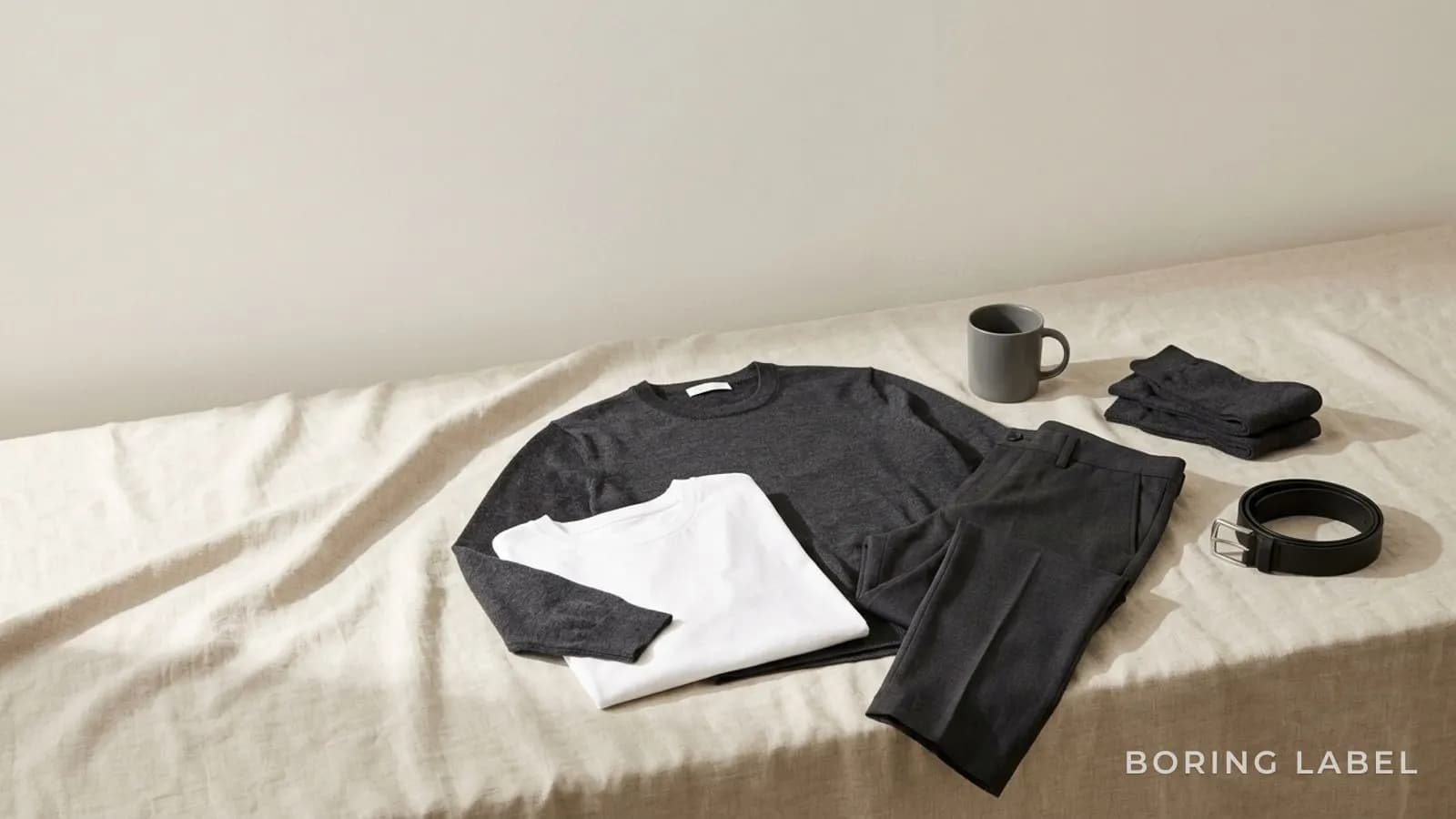
The habit that looks lazy and isn't
There is a particular reaction people have when they learn someone wears more or less the same thing every day. They assume one of two things: either the person is too lazy to care, or too dull to have taste.
Both assumptions are wrong, and the psychology behind the habit explains why.
Wearing the same outfit daily, or a very small rotation of near-identical ones, is not the absence of a decision about clothes. It is a single, larger decision made once and then protected.
Instead of choosing an outfit three hundred and sixty-five times a year, you choose a system once and wear it. What looks like laziness from the outside is, underneath, a deliberate strategy for spending less mental energy on something that was draining more of it than you realised.
This article is about why that strategy works. Not the fashion of it, which we have covered elsewhere, but the psychology: what the daily clothing decision actually costs you, what removing it gives back, and why a striking number of high-output people, from founders to artists to scientists, have quietly arrived at the same conclusion.
By the end you should be able to decide whether it is a habit worth borrowing, and how to borrow it without becoming a caricature.
A note on what this is not. This is not an argument that you must own one outfit and nothing else, or that variety in dress is a moral failing.
Plenty of stylish, happy people enjoy choosing clothes and would hate this habit. The point is narrower and more useful: for a certain kind of person, the daily clothing decision is a small, repeated tax, and there is a real, well-understood psychological benefit to stopping paying it.
Decision fatigue is the core mechanism
Start with the idea that does most of the explaining. Your capacity to make good decisions is not unlimited.
It behaves more like a resource that depletes over a day. Every choice you make, large or small, draws a little from the same pool, and as the pool drains, the quality of your decisions falls.
Psychologists call this decision fatigue, and it is the single best lens for understanding why people simplify their wardrobes.
The clothing decision is a uniquely bad offender for three reasons. First, it comes early, often before you have done anything that matters, so it taxes you while the pool is still full and you would rather spend it elsewhere.
Second, it is genuinely complex: weather, the day's meetings, what is clean, what goes with what, whether the thing still fits. Third, it is utterly repetitive, the same problem solved again every morning, with almost no compounding reward for solving it freshly each time.
Remove that decision and you do two things at once. You free up a slug of mental energy at the start of the day.
And, more subtly, you protect the quality of every decision that comes after it, because you did not spend down the pool on something trivial. The argument is not that choosing a shirt is exhausting in some dramatic way.
It is that it is a small, pointless drain, repeated daily, and small pointless drains are exactly what a thoughtful person should want to eliminate.
Why small decisions punch above their weight
It is tempting to dismiss this. How much can picking a shirt really cost?
The honest answer is: not much, on any single morning. The cost is in the repetition and the timing.
A small tax paid once is nothing. A small tax paid every morning, before the important work, compounds into a real and recurring drag.
There is also a hidden cost beyond the choice itself: the residue. A decision you are slightly unsure about does not end when you make it.
A flicker of "is this right?" follows you out the door and sits in the background. Multiply that low-grade uncertainty across a wardrobe of mismatched options and you carry a faint, constant hum of unresolved choices.
A fixed outfit silences the hum. You left the house, and the question simply did not come up.
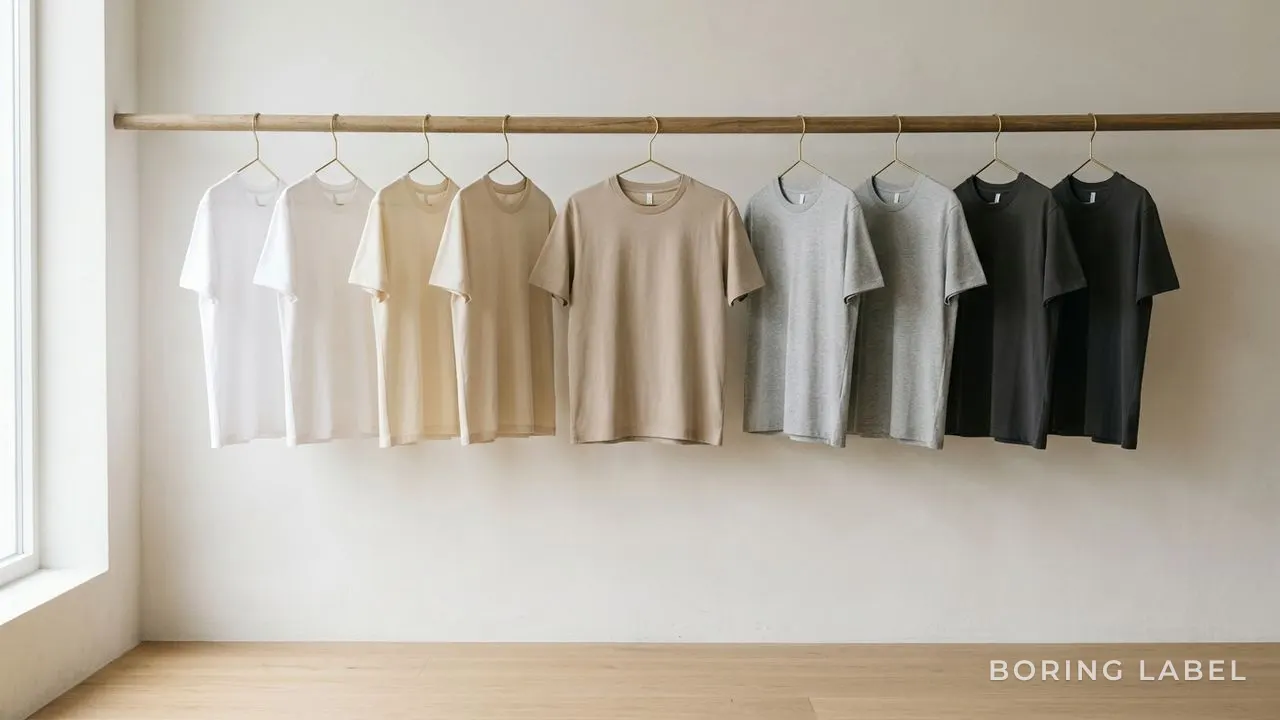
The high performers who chose a uniform
The habit gets associated with a handful of famous names, and it is worth being honest about why. The point is not that copying their wardrobe makes you successful.
The causation does not run that way. The point is that a number of people whose entire job is making consequential decisions independently arrived at the same small tactic, which suggests the tactic is solving a real problem.
The reasoning they tend to give is remarkably consistent. They describe wanting to make as few trivial decisions as possible so that their finite supply of good judgement is reserved for decisions that actually matter.
The clothing choice is the obvious first thing to cut, because it is daily, low-stakes, and easy to systematise. It is the lowest-hanging fruit in the entire project of simplifying a life.
What is interesting is the range of people who land here. It is not only tech founders.
Artists who want their attention on the canvas, not the cupboard. Writers protecting their best hours.
Scientists, chefs, designers. The common thread is not personality or industry but a particular relationship with attention: these are people who treat their focus as scarce and valuable, and who therefore resent anything that spends it cheaply.
We pulled the broader pattern apart in uniform dressing, but the psychological core is this: when your work depends on your attention, you guard your attention, and the wardrobe is an easy thing to stop guarding badly.
The point is the pattern, not the people
It is worth resisting the celebrity-worship reading of this. The lesson is not "dress like a billionaire and become one."
It is far more ordinary and far more useful: when many people with very different lives, working on very different problems, independently reach for the same small habit, the habit is probably solving something structural rather than personal. Decision fatigue is structural.
It applies to a schoolteacher and a surgeon and a freelancer in exactly the same way. The famous names are useful only as proof that thoughtful people, given the choice, often choose to stop choosing.
You can take that proof and apply it to a life that looks nothing like theirs.
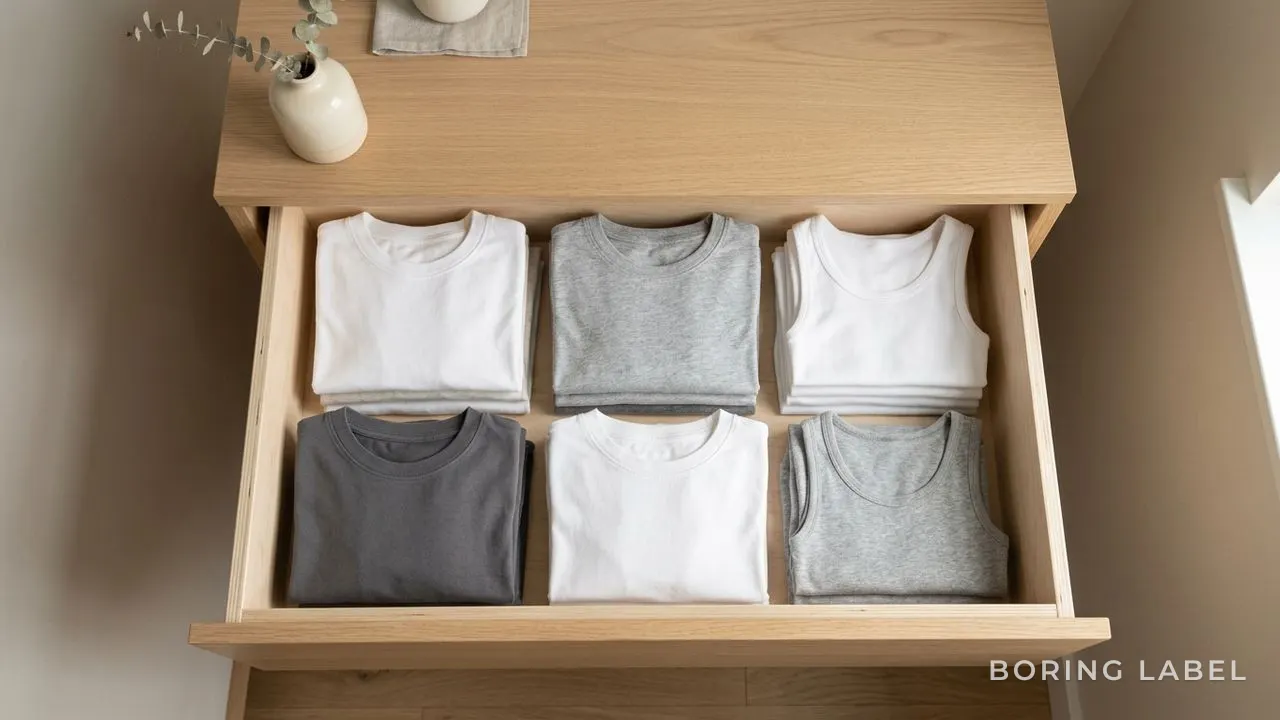
Identity, signalling, and the freedom of a fixed look
Decision fatigue explains the practical benefit, but it does not explain why the habit feels good, why people who adopt it rarely go back. For that you need to talk about identity.
What you wear is a signal, to others and, crucially, to yourself. A fixed outfit changes both signals in interesting ways.
To others, a consistent look becomes a kind of personal mark. It reads as someone who has decided who they are and is no longer auditioning.
There is a quiet confidence in it. Constantly-changing dress can signal a person still searching for an identity; a stable, considered look signals one already found.
This is not about looking expensive or fashionable. It is about looking settled, and settled is an underrated form of attractive.
To yourself, the effect is subtler and possibly more important. When you stop using clothes to perform a different version of yourself each day, you stop the small internal negotiation about who to be this morning.
The outfit becomes a constant, and constants are calming. You get to define your look once, deliberately, in line with who you actually are, and then inhabit it without renegotiating daily.
That is a real freedom, and it is the part people do not expect until they feel it. It pairs naturally with the broader idea in minimalism as restraint: you are not depriving yourself of expression, you are choosing your expression once and then being free of the choice.
The fear of looking boring, examined
The objection everyone raises is the fear of being thought boring or noticed for wearing the same thing. Examine it and it mostly dissolves.
People are far less observant of your clothes than you imagine; the spotlight you feel on yourself is largely self-generated. Most colleagues could not tell you what you wore yesterday, let alone whether it was the same as the day before.
And to the extent anyone does notice, the read is rarely "boring." A deliberate, consistent, well-fitting look reads as intentional, even stylish.
The people who actually look boring are not the ones in a considered uniform; they are the ones in ill-fitting, careless, randomly-assembled outfits. A uniform is the opposite of careless.
It is care, applied once, thoroughly, and then trusted. The fear of being boring is, ironically, best solved by exactly this habit, as long as the uniform itself is a good one.
Focus, flow, and one less thing in the morning
Beyond the start-of-day energy saving, there is an effect on attention through the rest of the day that is harder to measure but real. Anything unresolved in your environment quietly occupies a sliver of attention.
An outfit you are unsure about is a small open loop. Closing that loop, by making the outfit a non-question, frees a sliver of attention for the work in front of you.
For people who do focused or creative work, this matters more than the time saved. The hard part of deep work is not finding the minutes; it is protecting the attention from a hundred small intrusions.
The morning wardrobe decision is one such intrusion, and an easily removed one. Get dressed without thinking, and you arrive at your desk with your attention intact and your first real decision of the day still ahead of you, unspent.
There is a simple test for whether this applies to you. Think back over the last week.
Did getting dressed ever cause a moment of friction, a delay, a faint irritation, a "nothing works" spiral in front of the cupboard? If yes, even occasionally, you are carrying a cost a uniform would remove.
If getting dressed is genuinely a pleasure you look forward to, this habit is not for you, and that is completely fine.
The comfort of an external constant
There is one more psychological thread worth pulling, and it is less about productivity than about calm. Humans find a particular kind of comfort in stable rituals, in parts of life that do not have to be renegotiated.
A morning that runs on rails, the same kettle, the same route, the same clothes, asks nothing of you and gives back a small, reliable steadiness. Novelty is stimulating, but stimulation is not always what a busy mind wants first thing in the day.
A fixed wardrobe becomes one of those stabilising constants. It is a corner of life that is simply settled, that you no longer have to manage or worry about or get right.
In a day that will throw plenty of genuine uncertainty at you, having pre-decided the trivial things is quietly grounding. You are not removing pleasure from your life; you are removing one source of low-grade morning churn, and putting something dependable in its place.
This is why people who adopt the habit describe it in emotional terms more than practical ones. They rarely say "I save four minutes."
They say it feels lighter, calmer, that one nagging thing is gone. The time saved is almost beside the point.
The real return is the absence of a small, recurring worry, and the steadiness that absence leaves behind. It is the wardrobe equivalent of a clear desk: the order on the outside translates into a little more order on the inside.
What it costs and where it gets in the way
Honesty requires naming the downsides, because the habit is not free of them. A fixed wardrobe trades flexibility for simplicity, and flexibility has genuine value in some lives.
Here is a clear-eyed comparison.
| Dimension | Variety dressing | Uniform dressing |
|---|---|---|
| Morning decision cost | High, every day | Near zero |
| Mental energy at day's start | Spent partly on clothes | Preserved for real work |
| Self-expression through clothes | Wide, daily | Defined once, fixed |
| Risk of looking careless | Higher, more chances to misfire | Lower, the look is pre-vetted |
| Adaptability to occasions | High | Needs deliberate exceptions |
| Upfront effort | Low, decided as you go | High, you must design the uniform well |
The real costs are two. First, the upfront work: a uniform only saves you energy if it is a good uniform, and arriving at one that genuinely fits, suits you, and covers your life takes deliberate thought you cannot skip.
Get this wrong and you have simply locked in a bad outfit. Second, the occasions: a rigid uniform handles a wedding, a funeral, or a beach holiday poorly, so you need a small set of deliberate exceptions rather than pretending one outfit covers everything.
The honest verdict is that uniform dressing suits some lives far better than others. If your days are fairly consistent, your work rewards focus, and clothes are not a hobby you love, the trade is strongly in your favour.
If your days swing wildly across contexts, or dressing is a genuine joy, the variety column is where you belong, and no amount of decision-fatigue theory should talk you out of it.
How to borrow the benefit without going extreme
You do not have to wear one literal outfit to get most of the psychological payoff. The benefit comes from removing the daily decision, and there are gentler ways to remove it that keep some variety.
- Build a tight rotation, not a single outfit. Pick a small set of interchangeable pieces in a fixed palette so that any top goes with any bottom. You still get a little variety, but you never actually make a decision, because every combination already works. This is the practical heart of the minimalist capsule wardrobe.
- Standardise the foundation, vary the edges. Keep a constant base, the same kind of tee, the same trousers, and allow yourself small variation in the layers or accessories on top. The decision shrinks to a trivial one without disappearing entirely.
- Decide the night before, once. If a fixed wardrobe feels too far, simply move the decision out of the depleted morning. Choosing tomorrow's clothes the evening before, when the stakes feel low, removes most of the morning fatigue without committing to sameness.
- Pick a uniform for one context only. Many people run a strict work uniform and dress freely at the weekend. You ringfence the decision-saving where it matters most, on workdays, and keep variety where you actually enjoy it.
The deeper point is that this is a dial, not a switch. At one extreme is the single repeated outfit; at the other is full daily variety.
Most of the benefit lives well before the extreme. You can capture the calm, focus, and freed energy with a smart rotation and never own ten identical shirts.
The fuller list of payoffs, practical and psychological, is laid out in the benefits of uniform dressing if you want to weigh them before turning the dial.
Designing the uniform itself
If you do decide to commit, the design of the uniform is where the whole thing succeeds or fails, and it deserves real thought rather than a snap choice. A uniform only pays you back if it is genuinely good, so the upfront work is non-negotiable.
Three principles keep you out of trouble.
First, choose pieces that are quietly excellent rather than attention-grabbing. You will wear this often, so it has to bear repetition.
A loud print or a trend-led cut gets tired fast; a plain, well-fitting tee in a good fabric does not. The pieces that survive heavy rotation are almost always the simple, well-made ones.
A great round-neck tee in a steady palette is the archetypal uniform building block precisely because it does not shout and does not date.
Second, get the fit exactly right before you commit, because every flaw gets multiplied by frequency. A small annoyance in a shirt you wear twice a year is nothing; the same annoyance in a shirt you wear four days a week is a daily irritation.
Spend the effort on fit once, properly, and you remove a hundred small frustrations later.
Third, build in just enough redundancy. A uniform you cannot wear because it is in the wash is not a uniform, it is a single point of failure.
Owning several of the same good piece is not excess; it is what makes the system actually run day to day. The aim is that you can always reach for the look without thinking, which only works if the look is always available.
The takeaway: it is a system, not a surrender
The instinct to see daily sameness in dress as laziness gets the psychology exactly backwards. Lazy is reaching into a chaotic cupboard every morning and pulling out whatever, hoping it works, paying a small tax in energy and certainty before the day has even begun.
Deliberate is deciding, once, what you wear and why, and then being free of the question forever.
What the founders and artists and scientists understood is not a secret about clothes. It is a general principle about attention: your supply of good judgement is finite, so you should refuse to spend it on things that do not deserve it.
The wardrobe is simply the most obvious, lowest-cost place to apply that principle. Cut the trivial decision, keep the energy for the decisions that change your life.
So the real question is not whether wearing the same clothes every day is boring or impressive. It is whether the daily clothing decision is quietly costing you more than it is worth.
For a lot of thoughtful, focused people, it is, and the fix is almost embarrassingly simple. Decide your look once, with care.
Build a small set of good, well-fitting clothes around it. And then stop thinking about it, and go spend that attention on something that actually matters.
That is not surrender. That is a system, and systems are how serious people protect the things they cannot afford to waste.
Boring Label
Wear the point of the article.
One honest tee. Heavyweight combed cotton, a collar that holds, a fit that actually fits. No logo, no noise.
Shop the round-neck teeFree shipping across India · Easy returns
Keep reading
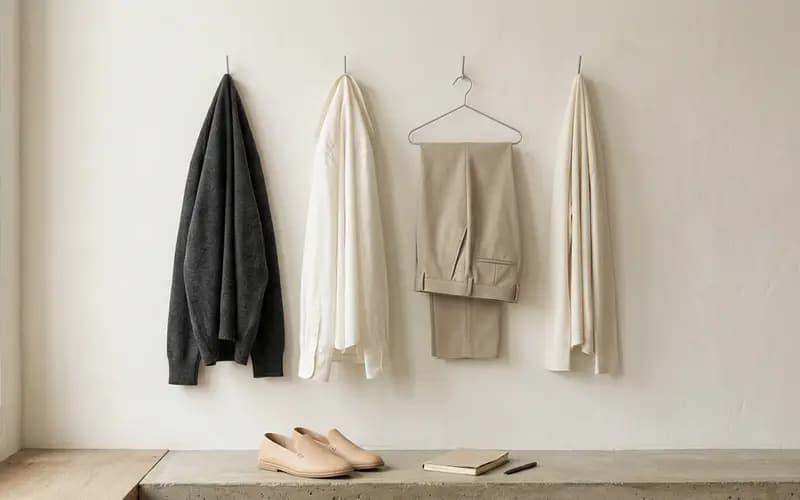
Uniform Dressing: One Outfit, Every Day
Jobs, Zuckerberg, and a lot of quietly stylish people share one habit: they decided what they wear, once.
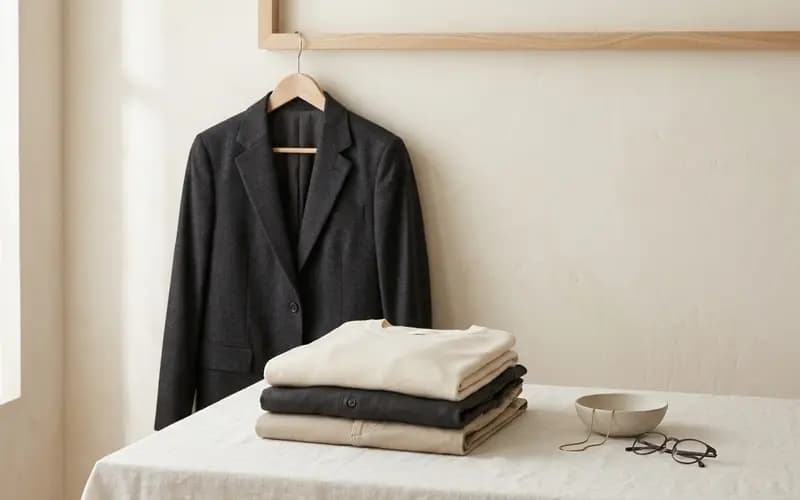
The Real Benefits of Uniform Dressing
Fewer choices in the morning is the headline. The compounding benefits are more interesting.
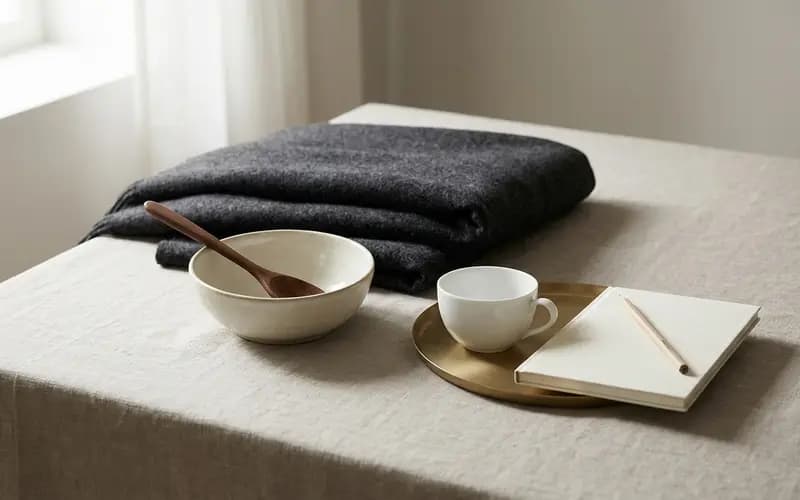
Minimalism Is Restraint, Not Deprivation
Minimalism got mistaken for deprivation. It is really about restraint: fewer things, better chosen.
Stay in the loop
New writing, no noise
Occasional notes on fit, fabric, and dressing simply well. No spam, unsubscribe anytime.
Subscribe