Capsule
The Benefits of Uniform Dressing
Fewer choices in the morning is the headline. The compounding benefits are more interesting.
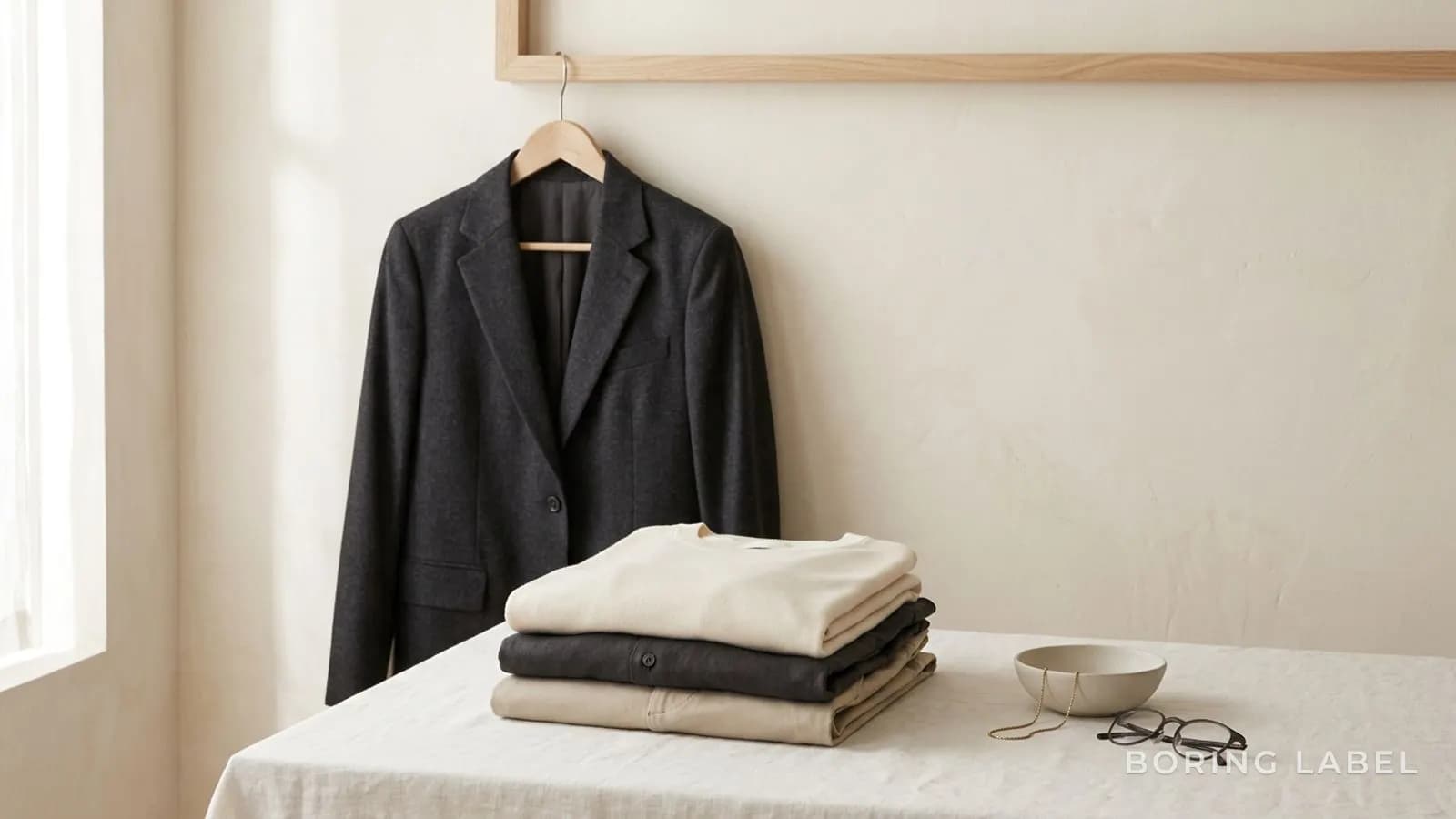
The headline benefit, and why it is the smallest one
The obvious benefit of uniform dressing is the one everybody leads with: fewer choices in the morning. You decide what you wear once, and then you stop deciding.
The ten minutes of standing in front of the wardrobe, the false starts, the outfit you change at the last second - all of it gone. That is real, and it is worth having.
But it is also the least interesting benefit, and if it were the only one, the habit would not have the grip it does on the people who adopt it. The morning time saving is the door.
The room behind the door is where it gets good. The genuine value of a personal uniform shows up over months and years, in your money, your attention, your appearance, and your sense of yourself, and most of it compounds in ways that a single saved morning never hints at.
This piece is about those deeper benefits. We will go past the decision-fatigue headline into the parts that actually change how you live - the financial maths, the psychological dividend, the way it sharpens how you are seen, and the quieter wins around stress and identity.
Some of these are practical and measurable. Some are softer but, for many people, more important.
Taken together they explain why a habit that sounds restrictive ends up feeling like freedom.
If you want the build instructions rather than the case for it, uniform dressing walks through designing your formula and choosing the pieces. This piece is purely about why it is worth doing in the first place.
Less decision fatigue, properly understood
Start with the famous one, because it is real, but understood badly. The usual framing is that you have a fixed number of decisions in you each day, and clothes waste some, so deleting the clothing decision leaves more for important things.
That is roughly true but a little too neat.
The sharper way to put it is about friction and quality, not quantity. The clothing decision is not just one more item on a list.
It is a recurring, low-value, oddly effortful decision that arrives at the worst possible time - first thing, before coffee, when your judgement is at its weakest. It is the kind of decision you can genuinely get wrong, and getting it wrong colours the start of your day.
Removing it is not about preserving some decision battery. It is about deleting a reliable source of early friction and the small, sour mood that a bad outfit choice can set off.
A uniform converts that open question into a closed one. Open questions nag; closed questions are silent.
You do not weigh options because there are no options to weigh. The benefit is not that you have "saved" a decision to spend elsewhere, it is that the decision simply no longer happens, and the mild background hum it used to produce is gone.
For a deeper look at the mechanism, the psychology of wearing the same clothes every day goes into why this affects focus and mood more than the time saved would suggest.
The compounding nature of a daily saving
It is worth pausing on the word compounding, because it is doing real work here. A benefit you collect once is a one-off.
A benefit you collect every single morning, automatically, for years, is something else entirely. The clothing decision is not a big tax on any given day - it is a small tax levied daily and forever.
Small and daily is precisely the shape of thing worth automating, because the saving accrues without any further effort from you. You set it up once and then the dividend pays out every morning for the rest of your life, which is why careful people who think in these terms find a uniform almost irresistible once they see the structure of it.
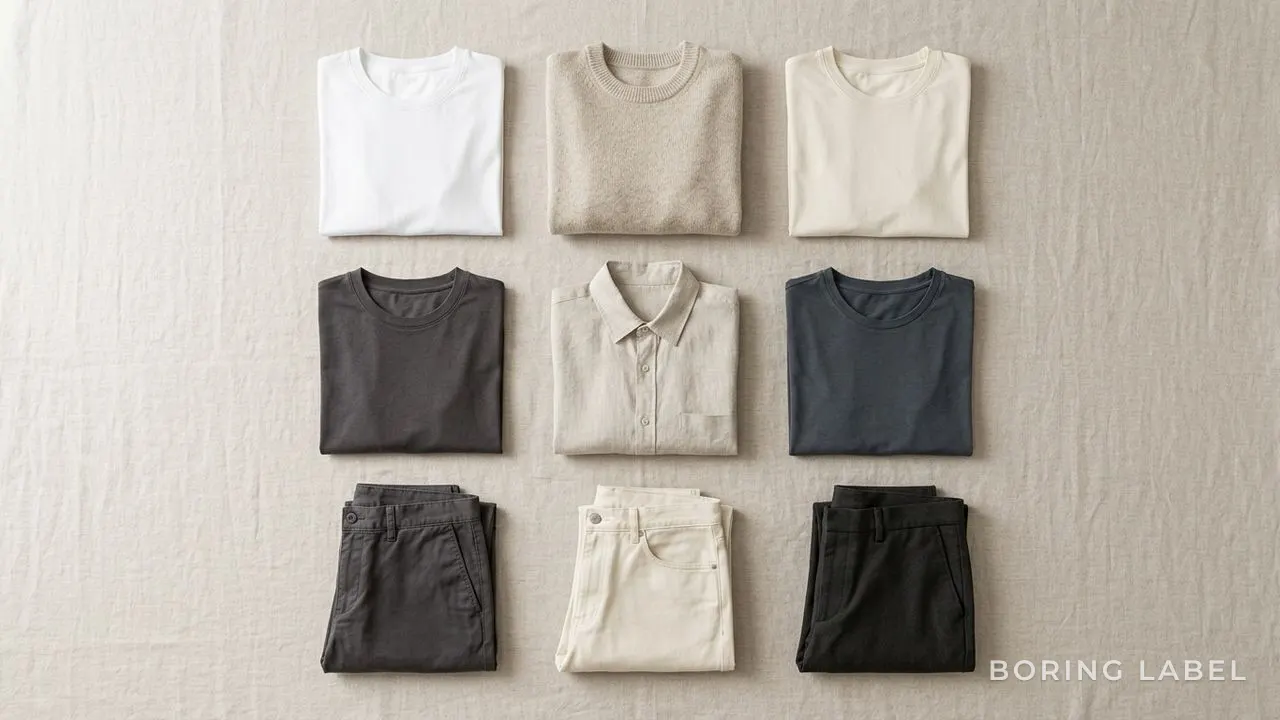
Lower cost-per-wear, and a wardrobe that stops bleeding money
Here is the benefit nobody puts on the poster, and it might be the most concrete: a uniform is significantly cheaper to run than a varied wardrobe, despite often costing more per item.
The logic runs through cost-per-wear, the only clothing maths that tells the truth. The real cost of a garment is not its price tag, it is its price divided by the number of times you wear it.
A 2,000-rupee tee worn 200 times costs ten rupees a wear. A 600-rupee tee worn 15 times before it pills, sags, and falls out of rotation costs forty rupees a wear.
The cheaper tee was the expensive one. The full version of this argument lives in cost per wear, but the uniform makes it work harder than any other wardrobe strategy, for two reasons.
First, the pieces get worn into the ground. A uniform item is in constant rotation, so its wear count climbs fast and its cost-per-wear collapses. Nothing sits unworn.
Compare that to a varied wardrobe, where most items are worn rarely, never reaching the wear count that would justify their price.
Second, the impulse spend dries up. Most clothing waste is not the considered purchase, it is the impulse - the sale item, the trend piece, the thing you bought to feel something, that gets worn twice. A uniform gives you a simple, ruthless filter: does this fit my formula?
Almost every impulse buy fails that test, so it never leaves the shop. You stop buying clothes you do not wear, which is where most people's clothing money actually goes.
Here is the same thing as a comparison.
| Varied wardrobe | Uniform wardrobe | |
|---|---|---|
| Items owned | Many, mostly idle | Few, all active |
| Cost per item | Often lower | Often higher |
| Wears per item | Low | Very high |
| Cost per wear | High | Low |
| Impulse spend | Frequent | Rare, filtered out |
| Money on unworn clothes | Significant | Near zero |
The counterintuitive result is that buying fewer, better pieces and wearing them constantly is the cheap option, not the expensive one. The uniform is, quietly, a money strategy.
It is the same logic that drives buy less, wear more - the most economical and the most sustainable wardrobe is the one you actually wear out.
A quick word on buying multiples
The one place a uniform asks you to spend up front is in buying multiples of the hero piece - several of the same tee so you always have a clean one. This feels like a splurge and is actually the opposite.
Those multiples share the rotation, so each gets worn often, so each has a low cost-per-wear. And because they are identical, replacing a worn-out one is a known, boring transaction rather than a fresh shopping trip with all its impulse risk.
Multiples are how the uniform stays both cheap and frictionless.
The hidden cost a varied wardrobe never shows you
There is a cost in a normal wardrobe that never appears on any receipt: the money tied up in clothes you do not wear. Most people have a wardrobe that is more than half dead weight - things bought on impulse, things that never quite fitted, things bought for a version of their life that did not arrive.
That money is gone, spent on garments doing no work. A uniform has almost none of this, because every piece in it is chosen to be worn and is worn.
The capital is not sitting idle on hangers. When you account honestly for the unworn, the uniform's financial advantage is even larger than the cost-per-wear table suggests, because the comparison wardrobe is quietly carrying a pile of sunk cost it never admits to.
A sharper personal brand
The third benefit is about how you are seen, and it is more powerful than it sounds. A uniform becomes a signature.
Over time, people associate the look with you - the grey tee, the specific simplicity - and that association is a form of personal branding that costs nothing to build and nothing to maintain.
This matters more than vanity. Being visually legible - recognisable, consistent, the same person each time - reads as steadiness and self-knowledge.
It suggests someone who has figured something out and is not performing for the room. In a world of constant visual noise and rotating trends, the person who simply looks like themselves every day stands out by not trying to.
There is a taste dimension too, and it is worth being blunt about. A well-run uniform reads as more stylish than a varied wardrobe of mismatched experiments, not less.
Restraint is a signal of taste; loudness and variety, more often than not, are signals of effort and uncertainty. The person in the same clean, well-fitted plain tee looks more considered than the person in a different bold graphic every day.
This is the whole argument behind the case against loud fashion - quiet, consistent, well-made clothes age better and read better than clothes that shout for a season.
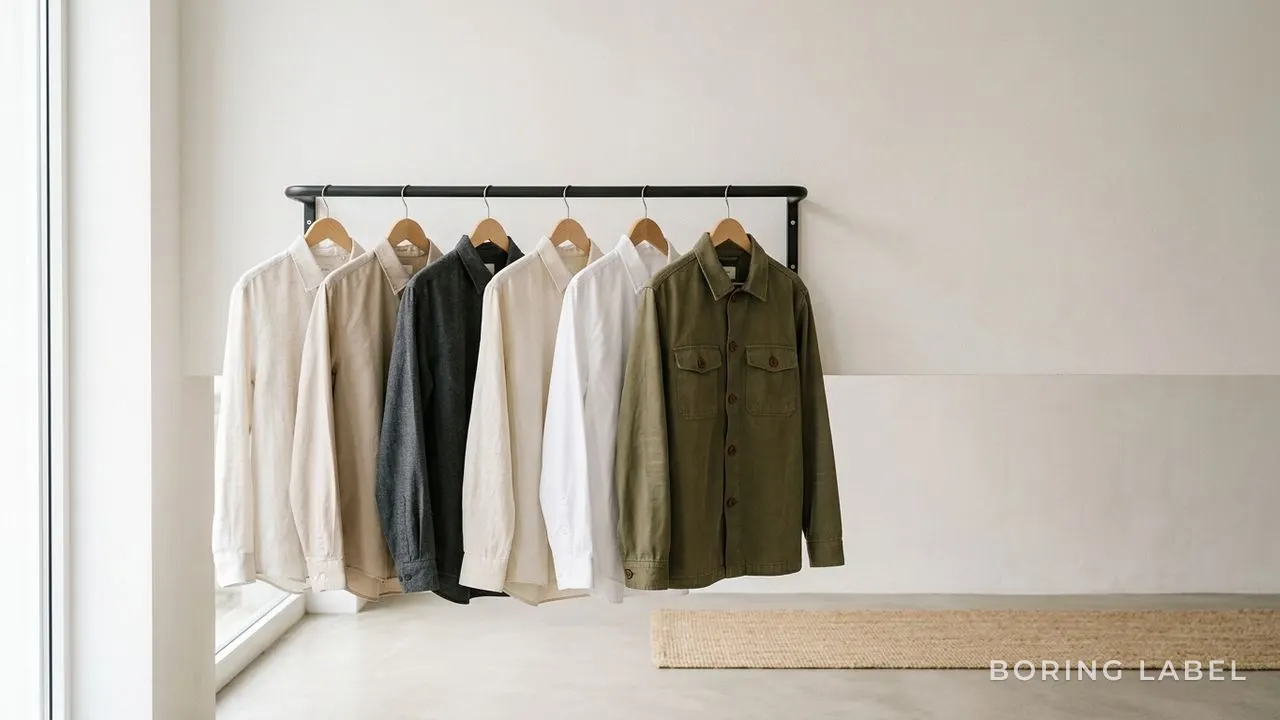
The uniform also forces the quality question. Because you wear the same few pieces constantly and on full display, they have to be good - a weak piece has nowhere to hide.
That pressure is a feature. It pushes you toward fewer, better things, which is exactly what makes the signature work.
A logo competes with your signature; a plain piece lets the signature be yours, which is part of why a no-logo foundation suits a uniform so naturally and why something like our round-neck tee is built plain on purpose.
Legibility scales with how often people see you
The branding benefit is not equal for everyone, and it is worth being honest about who gets the most from it. The more people see you - if you teach, present, sell, lead a team, run a business, or are simply around the same faces every day - the more a consistent look pays off, because repetition is what builds the association.
If you mostly work alone and see few people, the signature effect is smaller and the other benefits carry more of the weight. This is not a reason to skip a uniform if you are solitary; the money and attention wins stand on their own.
But for anyone whose work involves being seen and remembered, the personal-brand dividend is large and almost entirely free, which makes the case especially strong.
The quieter wins: stress, confidence, and identity
The remaining benefits are softer, harder to measure, and for a lot of people the ones that make the habit stick once they have tried it.
- Confidence on demand. Because your uniform is a tested outfit, every time, you stop second-guessing it the moment you leave the house. The "do I look alright?" question never fires, because the answer is permanently yes. You carry a small, steady assurance into the day that has nothing to do with effort and everything to do with the question being closed.
- Less stress in transitions. Packing for a trip, getting dressed for an early start, leaving the house in a hurry - all the moments where the clothing decision usually adds friction become trivial. A uniform packs itself; everything matches everything, so the minimalist travel wardrobe is just your uniform in a smaller bag. The high-stress moments lose their clothing component entirely.
- A settled sense of self. This is the one people struggle to articulate until they feel it. When your outward presentation is consistent and resolved, it stops being something you perform each morning and becomes simply a fact about you. You are not assembling an identity daily; you have one, and you wear it. That settledness is oddly grounding. It is one fewer thing about yourself that is up for negotiation each day.
- Freed attention for what matters. Add up the morning friction, the shopping time, the standing-in-front-of-the-mirror, the low-grade mood effects of a bad outfit choice, and it is more attention than it looks. A uniform reclaims all of it and points it at things with actual stakes. This is the same restraint-as-richness idea behind minimalism as restraint - owning exactly the right things, not as few as possible, so the things you own stop demanding your attention.
None of these show up on a spreadsheet, which is exactly why they get overlooked. But ask anyone who has run a personal uniform for a year what they actually value about it, and they rarely lead with the saved minutes.
They talk about feeling settled, looking like themselves, and not thinking about clothes anymore. The practical benefits get you in the door; these are the ones that keep you there.
Why the soft benefits outlast the hard ones
There is a pattern worth noticing in how people talk about a uniform over time. In the first weeks, they cite the practical wins - the faster mornings, the simpler laundry, the money not spent.
These are what they expected and what sold them on the idea. But a year in, the language changes.
They stop mentioning the minutes saved and start describing something closer to relief: the absence of a small daily worry, the quiet of not having to present a fresh self each morning, the ease of being recognisably one person. The hard benefits are what convince you to start.
The soft ones are what you would actually miss if you stopped, and they are the reason almost nobody who runs a real uniform for a year goes back to a rotating wardrobe. The friction they remember is not the time.
It is the low, constant, barely-noticed effort of deciding who to be each morning, and the calm of having simply answered the question.
A small win that is easy to miss: laundry and storage
Two more practical dividends rarely get mentioned because they are unglamorous, but anyone who has lived a uniform notices them quickly. Laundry gets simpler - a small set of similar pieces in a tight palette washes together without sorting puzzles, and there is no agonising over a delicate this or a special-wash that, because the whole wardrobe runs on one routine.
Storage gets simpler too. A uniform needs far less space, which in Indian homes where wardrobe space is genuinely tight is not a trivial benefit.
Fewer things, neatly stacked, all in rotation, takes a fraction of the room a sprawling wardrobe demands, and a tidy, half-empty wardrobe is its own small daily pleasure.
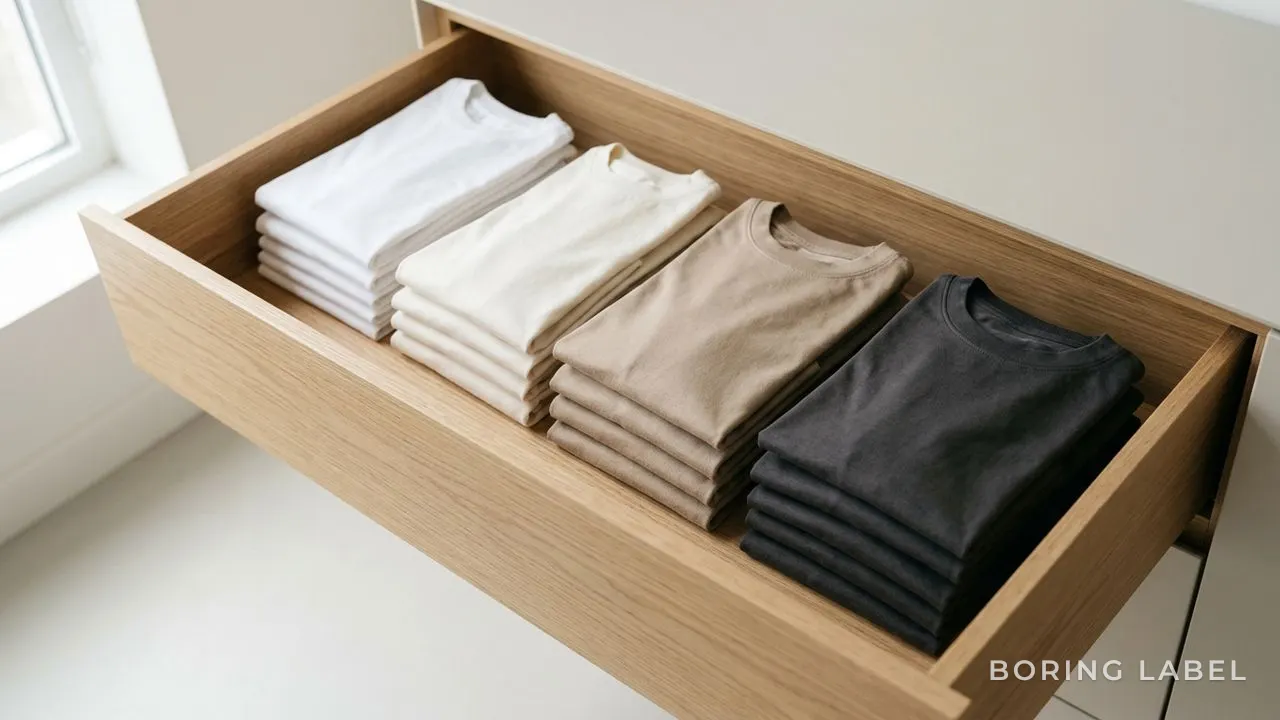
Who it suits, and who it does not
In the interest of honesty, a uniform is not for everyone, and pretending otherwise would undercut the case. The benefits land hardest for people who experience clothing choice as friction rather than pleasure - who would happily delete the decision if they could.
If dressing is a genuine creative outlet you look forward to, a strict uniform will feel like loss, not gain, and you should not force it. There is no virtue in the constraint for its own sake.
But for the large majority who find the daily clothing question mildly annoying and slightly stressful, who want to look good without thinking about it, and who would rather their money and attention went somewhere with stakes - the benefits stack up fast and run for years. You do not have to go all the way to a single rigid formula to capture most of them.
Even a loose uniform, a strong default you deviate from on purpose, delivers the bulk of the financial and psychological wins. The benefits scale with commitment, but they start the moment you stop treating each morning as a blank page.
You can capture most of it without going extreme
The all-or-nothing framing puts a lot of people off, and it is wrong. You do not have to wear one identical tee for the rest of your life to get the benefits.
The financial wins - lower cost-per-wear, no impulse spend, no idle capital - arrive as soon as you commit to a tight palette and a small set of repeated pieces, even if you allow yourself some variation within it. The decision-fatigue win arrives the moment your default is strong enough that you reach for it without thinking on most days.
The signature effect builds even from a loose, recognisable consistency. So if the strict version feels like a step too far, run a relaxed one.
You will keep almost all of the upside and lose very little, and you can always tighten it later once you have felt how good the calm is.
The takeaway: the small saving that compounds
The benefit people sell uniform dressing on - fewer choices in the morning - is true, and it is the least of it. The real returns are the ones that compound.
Money, because the pieces get worn into the ground and the impulse spend dries up. Attention, because a closed question stops nagging.
Reputation, because consistency reads as taste and self-knowledge. And a quieter sense of self, because your appearance stops being a daily performance and becomes simply a fact.
A single saved morning is a small thing. A small thing repeated every day for years, paying out across your wallet, your focus, your appearance, and your peace of mind, is not small at all.
That is the case for uniform dressing - not that it makes any one day dramatically better, but that it removes a recurring tax you have been paying without noticing, and quietly hands the proceeds back to you for the rest of your life.
The mistake is to judge the habit by a single day, where the upside looks trivial, instead of by the year, where it has had time to compound. Run it for twelve months and the picture is clear: more money kept, less attention spent, a sharper and steadier presence, and a wardrobe that has stopped being a source of friction and started being a source of quiet.
Few small decisions in life pay back at that rate, for that long, for so little ongoing effort. If the case has landed, the uniform dressing guide is where you turn it into a formula you can start living tomorrow.
Boring Label
Wear the point of the article.
One honest tee. Heavyweight combed cotton, a collar that holds, a fit that actually fits. No logo, no noise.
Shop the round-neck teeFree shipping across India · Easy returns
Keep reading
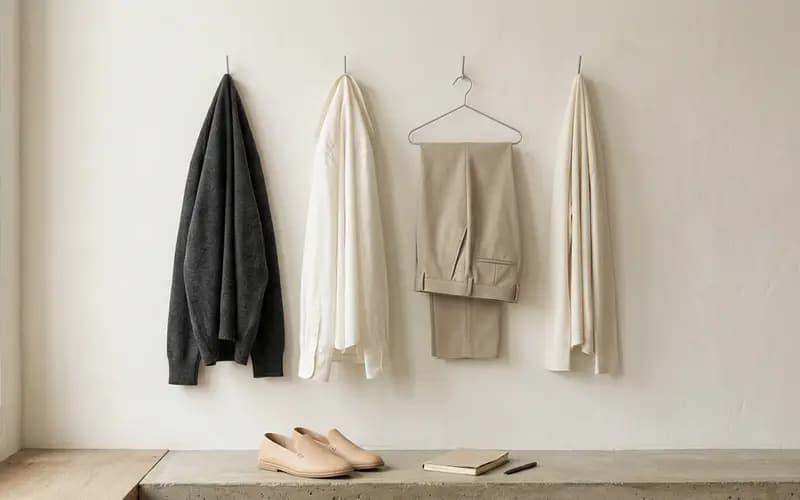
Uniform Dressing: One Outfit, Every Day
Jobs, Zuckerberg, and a lot of quietly stylish people share one habit: they decided what they wear, once.
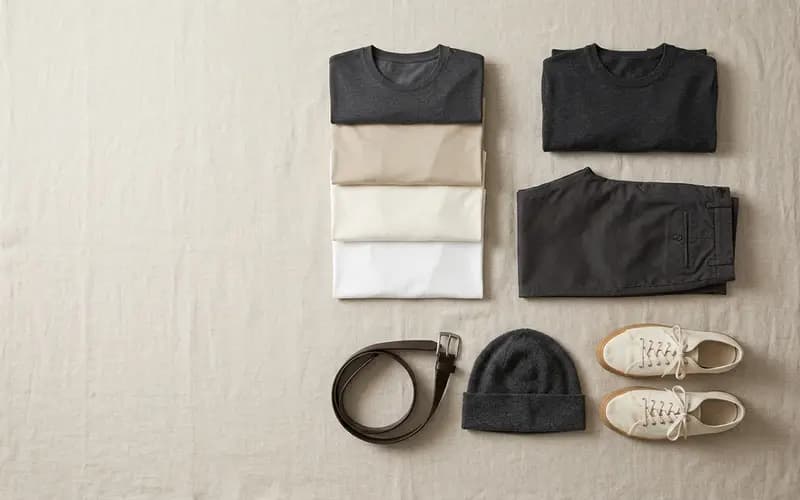
Minimalist Capsule Wardrobe for Men: The Guide
A capsule is not fewer clothes for its own sake. It is a small set that combines into many good outfits.
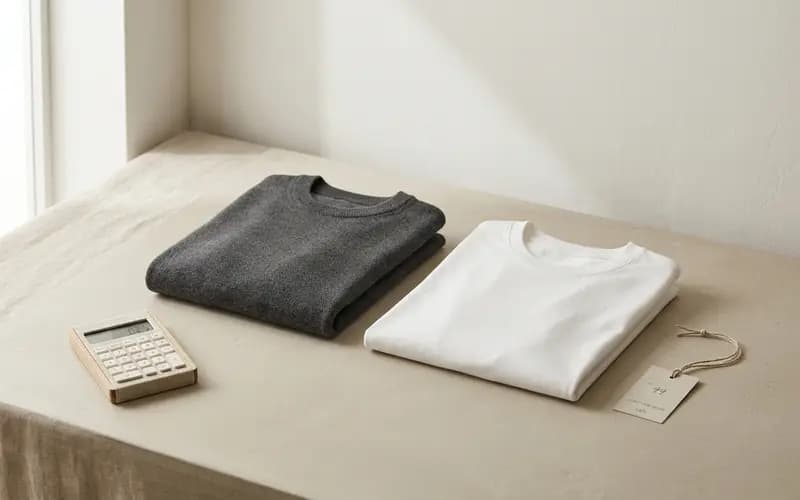
Cost Per Wear: The Only Clothing Maths You Need
The cheapest tee on the shelf is often the most expensive one you will own. Cost-per-wear explains why.
Stay in the loop
New writing, no noise
Occasional notes on fit, fabric, and dressing simply well. No spam, unsubscribe anytime.
Subscribe