Capsule
The Minimalist Capsule Wardrobe for Women
Start with tees that fit beautifully and a tight colour story. The rest of the capsule builds itself.
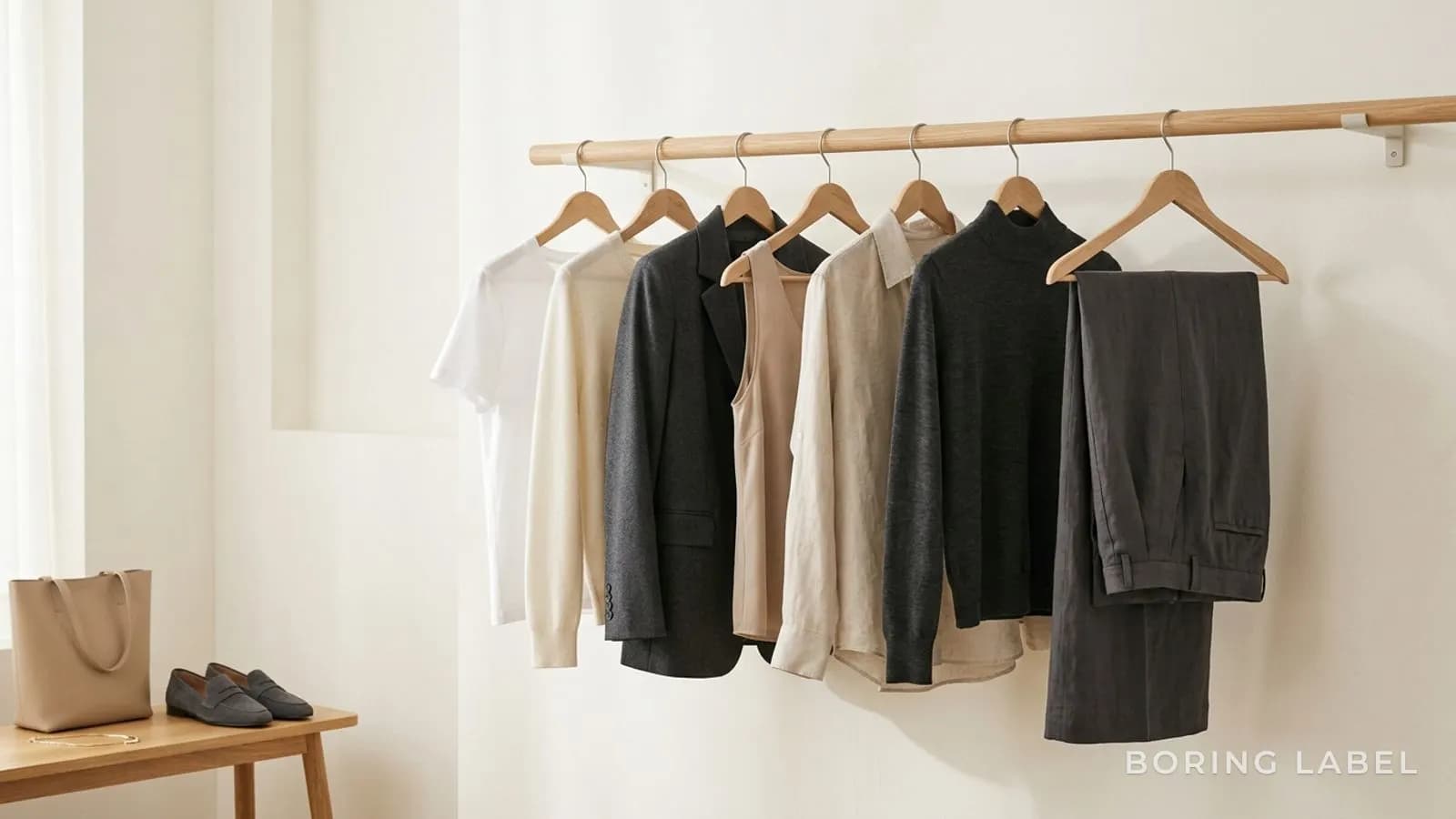
Start with the tee, not the trend
Most capsule wardrobe advice for women starts in the wrong place. It starts with a mood board, a colour-of-the-season, or a list of "investment pieces" that someone else decided you need. Then you buy the things, hang them up, and somehow still stand in front of a full wardrobe with nothing to wear.
The reason is simple. A capsule wardrobe is not a collection of nice individual items.
It is a system - a small set of pieces engineered so that almost any top goes with almost any bottom and almost any layer. The magic is not in any single garment.
It is in the combinations. And the easiest place to get the combinations right is at the bottom of the stack, with the piece you wear most and notice least: the tee.
A great tee is the quiet engine of a women's capsule. It is the thing you reach for under a blazer, over a slip skirt, tucked into trousers, knotted at the waist, layered under a shirt.
If your tees fit beautifully and sit in a tight colour story, half your outfits are already solved before you add anything else. If they fit badly or fight each other on colour, no amount of clever layering will save the wardrobe.
So that is where we start. Not with the statement coat. With the three or four tees that everything else hangs off.
What "fits beautifully" means on a tee
For women, the fit details that separate an expensive-looking tee from a forgettable one are specific:
- The shoulder seam sits on the edge of your shoulder, not halfway down your arm (unless you have deliberately chosen an oversized cut, which is a different, intentional thing).
- The neckline is clean and holds its shape - a collar or neckband that lies flat and does not stretch out into a sad gape after a few washes.
- The body skims rather than clings. A tee that clings to every contour reads cheaper and less comfortable than one that drapes with a little ease. Length matters too: long enough to tuck or leave out, not so short it rides up.
- The fabric has a little weight. Thin, see-through cotton looks cheap no matter the brand. You want enough density that it hangs nicely and you are not fighting transparency in daylight.
These are the same fundamentals whatever your size or shape - get the shoulder, neckline, drape, and length right and the tee flatters. A piece like our round-neck tee is built around exactly these details, in long-staple cotton that holds its shape, which is the kind of base layer a capsule is supposed to be built on.
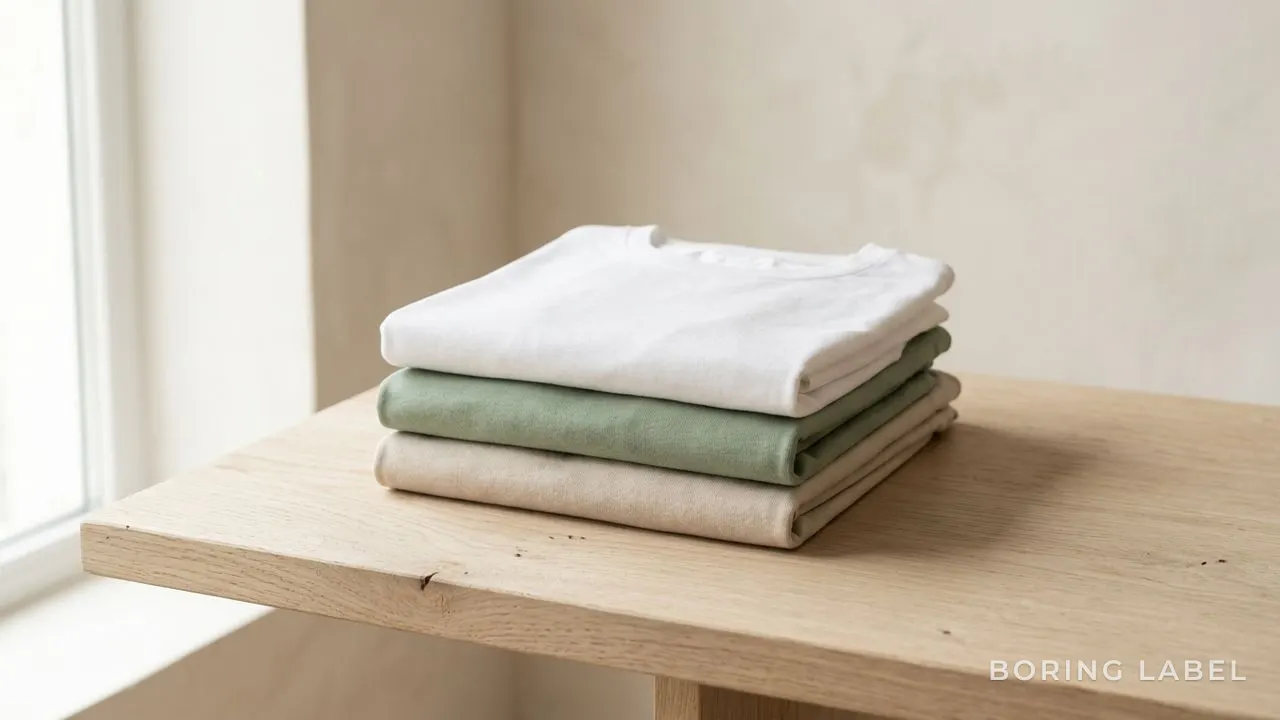
Why the base layer decides everything above it
It is worth understanding why the tee carries so much weight in a women's capsule specifically. A tee is the most layered piece you own.
It goes under blazers, under slip dresses, under open shirts and cardigans; it gets tucked, half-tucked, knotted, and left out. Every one of those is a different outfit, and every one of them depends on the tee underneath sitting cleanly.
A tee that gapes at the neck ruins the half-tuck. A tee that clings ruins the layering, because it shows every bump of the piece on top.
A tee that is too short rides up the moment you tuck it. So the failures of a cheap tee do not stay contained to the tee - they spread upward and spoil the more expensive pieces you put over it.
This is the quiet reason capsule wardrobes built on poor basics never quite work: the foundation keeps undermining the structure. Spend here, and everything above it gets easier.
The colour story that does the heavy lifting
If fit is the first decision, colour is the second, and it is the one that quietly makes or breaks the whole wardrobe. A capsule works because everything matches everything, and the only way to guarantee that is to limit your colours to a tight, deliberate palette.
The structure that works best is three groups:
- Two or three neutrals - your anchors. White, black, and one warm or cool neutral (stone, taupe, soft grey, or navy). These are the colours your tees, trousers, and basic layers live in. They go with absolutely everything, including each other.
- One or two soft colours - your "almost neutrals". A dusty rose, sage, soft blue, or muted olive. These read as colour but behave like neutrals, so they still combine widely without shouting.
- At most one accent - a single colour you genuinely love, used sparingly in a scarf, a knit, or one top. Not three accents. One.
The discipline is in the refusal. Every time you add a colour outside the palette, you add a piece that only goes with a fraction of your wardrobe, and the system frays.
A bright print top might be lovely on its own and still be the reason you "have nothing to wear" - because it goes with almost nothing you own. This is the same principle behind the essential t-shirt colours to own: buy in a sensible order, stay neutral at the base, and every piece works with every other.
A simple women's capsule palette
If you want a tested starting point, this palette is hard to beat:
| Role | Colour | Where it lives |
|---|---|---|
| Anchor 1 | White / off-white | Tees, a shirt, a knit |
| Anchor 2 | Black or charcoal | Tee, trousers, a dress |
| Neutral | Stone / taupe | Trousers, jacket, knit |
| Soft colour | Sage or dusty blue | A tee, a cardigan |
| Accent | One you love | Scarf or single top |
Five colours, all of which sit together comfortably. Build the bulk of your wardrobe in the three neutrals, use the soft colour to add quiet interest, and let the accent appear once. This palette alone will produce more wearable outfits than a wardrobe three times its size in random colours.
The core pieces: what actually goes in
Here is the heart of it. A women's capsule needs surprisingly few pieces, because each one is doing several jobs.
Below is the core. Treat numbers as a starting point and adjust to your life - someone in a corporate office needs more tailoring; someone working from home needs less.
Tops (the layer that multiplies)
- 3 to 4 great tees in your neutrals plus one soft colour. White and black are non-negotiable; add a stone or navy and one soft shade. These are the most-worn, hardest-working pieces in the whole wardrobe.
- 1 to 2 button-up shirts - one crisp white or pale blue, optionally one in a relaxed neutral. Worn buttoned, worn open over a tee, sleeves rolled. Enormous range from one piece.
- 2 to 3 knits - a fine-gauge crew or V-neck, a cardigan, and (climate permitting) one heavier knit. The cardigan especially earns its place as a flexible layer.
Bottoms (where you can be ruthless)
- 1 pair of well-cut dark denim - a deep wash, no rips, in a cut that suits you (straight and high-rise flatter most frames and date the slowest).
- 1 pair of tailored trousers in a neutral - stone, black, or charcoal.
- 1 to 2 skirts or a second trouser, depending on your taste. A midi skirt in a neutral is a quiet workhorse.
Dresses and one-pieces
- 1 to 2 simple dresses in neutral or soft colours. A slip dress or a clean shift does double duty: worn alone in heat, or layered over a tee and under a jacket the rest of the year. One dress, several outfits.
Outerwear and layers
- 1 well-cut blazer or unstructured jacket in a neutral - the single biggest upgrade to how put-together you look.
- 1 casual jacket - a denim jacket, a field jacket, or a trench depending on climate.
That is roughly 15 to 20 pieces. From them, with a coherent palette, you can build dozens of genuinely different outfits - which is the entire point.
This is not deprivation; it is leverage. We make the broader case in minimalism is restraint, not deprivation, but the wardrobe proves it on its own: fewer pieces, more outfits, less time deciding.
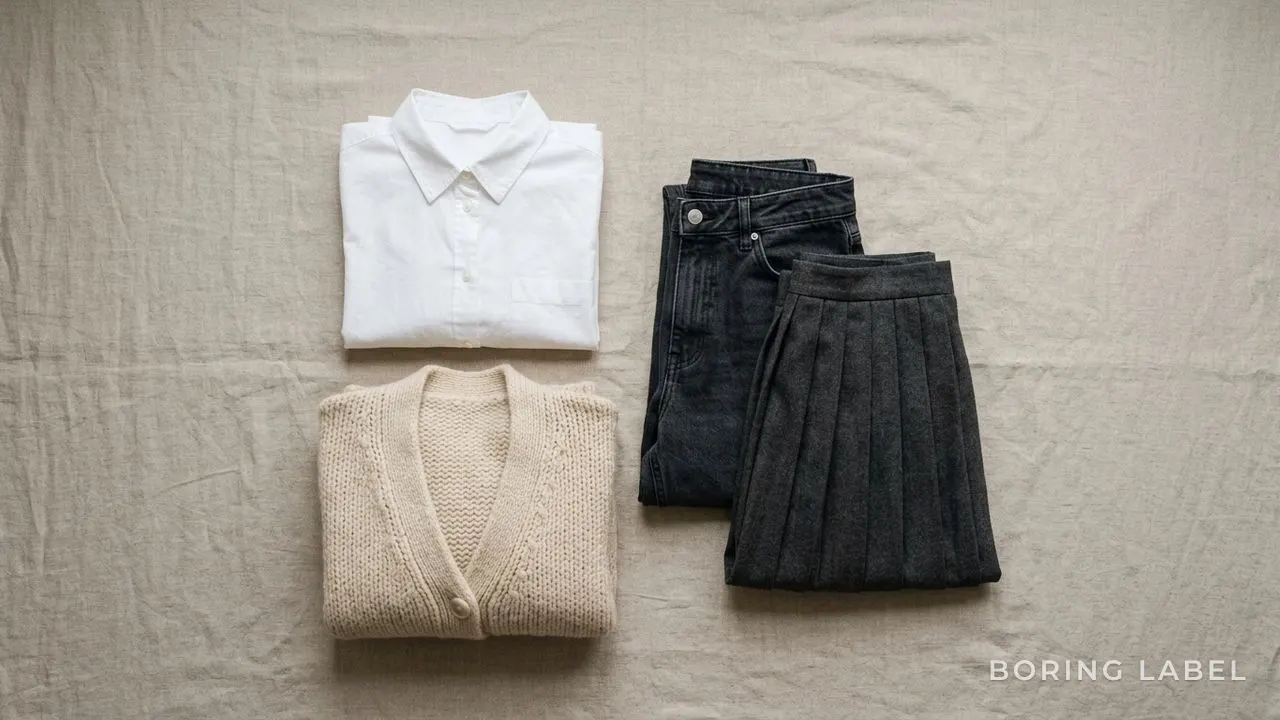
The pieces people regret buying
It is as useful to know what to leave out as what to put in, because the items that bloat a wardrobe without earning their place are remarkably consistent. Be wary of:
- The single-occasion statement piece. The bold printed dress bought for one event that then goes with nothing. If you cannot build three everyday outfits around it, it is a costume, not a capsule piece.
- Trend items with a short half-life. Anything loudly "of the moment" dates fast and drags the whole wardrobe with it. Buy these rarely, cheaply, or not at all.
- Duplicates in disguise. A fifth black top in a slightly different cut feels like variety and behaves like clutter. If it does a job an existing piece already does, skip it.
- The aspirational size or style. Clothes bought for the life or body you imagine rather than the one you have. They hang unworn and quietly make you feel worse every time you see them.
A capsule stays powerful only because it stays disciplined. Every piece that does not multiply with the rest is dead weight, and dead weight is exactly what the "I have a full wardrobe and nothing to wear" feeling is made of.
How a few pieces become many outfits
The part that surprises people is just how much a small core produces once you start combining. Take the tees alone and watch them multiply across the wardrobe:
- Tee + tailored trousers + blazer - sharp enough for most offices and meetings.
- Tee + dark denim + cardigan - the everyday default, comfortable and pulled-together.
- Tee tucked into a midi skirt + sneakers - relaxed but considered, brilliant for warm weather.
- Tee layered under a slip dress - turns a summer dress into a year-round piece.
- Tee + trousers + open white shirt - quiet, smart, no effort visible.
- Tee knotted at the waist + high-rise denim - casual with a bit of shape.
One tee, six distinct looks, and that is before you change the tee colour or swap the bottom. This is the compounding that makes capsules work, and it is why the tee deserves the attention. Each well-chosen base piece does not add one outfit; it multiplies the outfits you already have.
Layering is the multiplier here, and it follows a few simple rules of weight, length, and proportion - lighter pieces under heavier ones, varying lengths so layers peek out, contrast in texture rather than clashing colour. If you want to get deliberate about it, layering basics walks through exactly how to stack pieces so they read as styled rather than bulky.
Building it without wasting money
You do not build a capsule by deleting your wardrobe and buying everything new in a weekend. That is expensive, stressful, and tends to produce a wardrobe full of pieces you chose in a panic. Build it the slow, cheap way instead.
Step one: shop your own wardrobe
Before buying anything, lay out what you already own and sort it into three piles: love and wear, neutral palette and good fit; works but wrong colour; and does not fit or never worn. The first pile is your capsule starting point - you already own more of it than you think.
The third pile is a lesson in what to stop buying. Pulling this together is its own small project, and how to declutter your wardrobe lays out a calm, repeatable method for it so you are not just guessing.
Step two: find the gaps
With your "love and wear" pile assembled, the gaps become obvious. Maybe you have five tees but they are all black and you need a white and a neutral.
Maybe you have tops for days and one tired pair of trousers. Buy only to fill real gaps, in your palette, best version you can afford.
This stops the single most common capsule mistake: buying more of what you already have plenty of.
Step three: buy quality at the base, save at the edges
Spend where it shows and where it gets worn hardest - the tees, the denim, the one good blazer. These are the pieces that are seen constantly and that ruin an outfit when they look cheap.
Save on the pieces you wear rarely or that hide under others. Good basics genuinely do not have to be expensive, and we map out where the honest bargains are in the best wardrobe basics under ₹1000 - but the rule of thumb holds: invest in the base layer, economise at the margins.
Step four: stop
This is the hardest step and the most important. Once the capsule is complete and working, stop adding to it.
Replace pieces as they genuinely wear out, in the same palette, but resist the constant pull to "add just one more". A capsule only stays a capsule if it stays small.
The discipline of stopping is what keeps the system coherent.
The India-specific reality
A women's capsule in India has to survive real Indian conditions, and the generic Western capsule advice quietly ignores most of them.
Heat and humidity are the first. A wardrobe built on layers and substance has to bend for 40-degree summers.
The fix is fabric, not abandoning the plan: lean on breathable long-staple cotton and linen, keep summer tees in the mid-weight range that drapes well without baking you, and let your palette go lighter through the hot months - more whites, stones, and soft colours, fewer heat-trapping blacks. A good summer tee can still look substantial and expensive without being a sweat trap if the cotton and weave are right.
The seasonal swing is the second. Most of India runs three distinct climates across the year - a long hot summer, a wet monsoon, and a short cooler stretch - so a single fixed capsule does not quite work.
The smarter structure is a core that runs year-round (your tees, denim, neutral trousers) plus a small seasonal rotation: lighter pieces and linen for summer, a couple of layers for the cool months, quick-drying fabrics for the rains. The core stays constant; only the edges change.
Versatility across occasions is the third, and it is where a capsule genuinely shines here. Indian life moves fast between registers - work, family events, casual outings, the occasional dressier evening - and a well-built capsule with one good blazer, a simple dress, and a tight colour story handles almost all of it without a special-occasion wardrobe gathering dust.
The same tee that goes to the office under a blazer goes to a casual dinner under a slip dress. That range is exactly what you are buying.
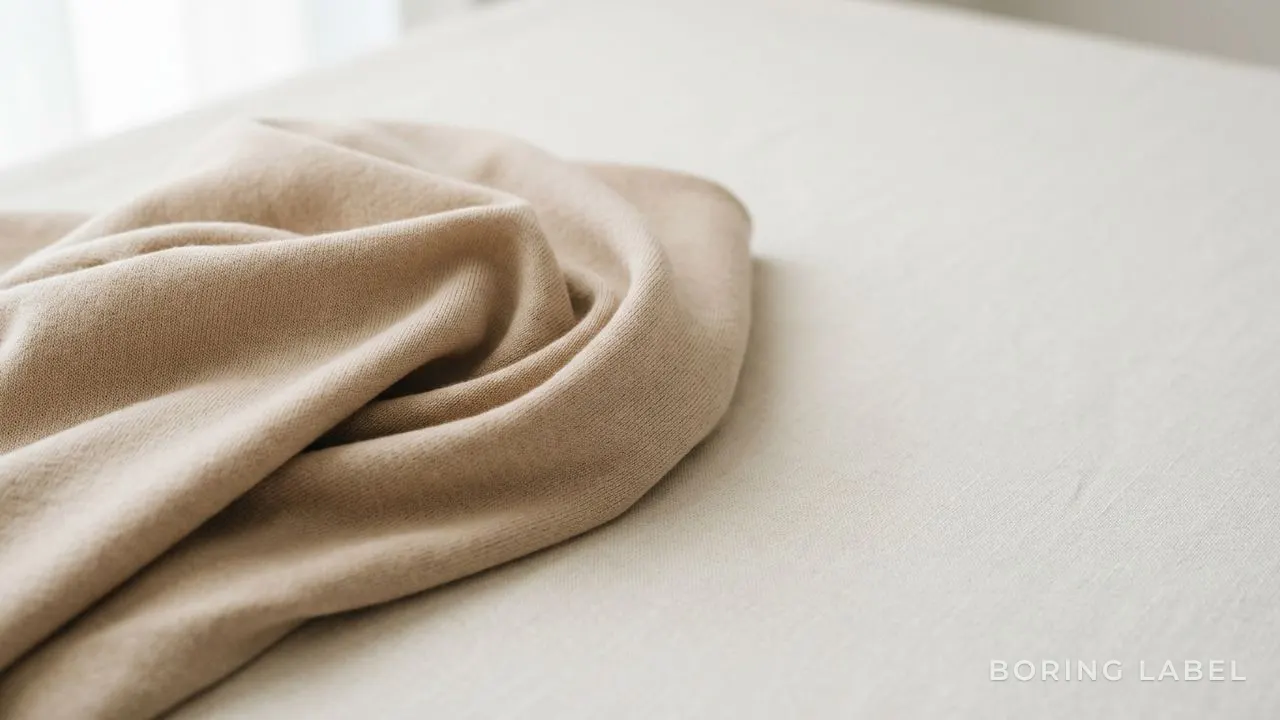
Making it last in Indian conditions
A small wardrobe only works if the pieces survive, and Indian conditions are hard on cloth - strong sun, hard water, long humid stretches, and a lot of washing. A few habits keep a capsule looking new far longer:
- Dry in shade, never direct sun. Indian sun is fierce enough to bleach colour out of a dark tee in a single afternoon. Hang in airflow but out of the glare.
- Wash cold and inside out. It protects colour and surface against the fading that hard water and heat accelerate.
- Wash less, air more. Humidity tempts you to over-wash. Airing a worn-once tee overnight is usually enough and ages it far slower than another cycle.
- Treat sweat promptly. In the heat, underarm staining and odour set in fast. A quick rinse and air the same day prevents the slow yellowing that retires a white tee early.
Because a capsule has fewer pieces doing more work, this care is not fussiness - it is what protects the whole system. A worn-out white tee is not one item lost; it is a hole in a dozen outfits. Looking after the few good things you own is the quiet half of the discipline.
The quiet confidence of owning enough
The promise of a capsule wardrobe is not really about clothes. It is about what disappears when the clothes are sorted: the morning standing in front of the wardrobe, the low-grade guilt of unworn purchases, the recurring "I have nothing to wear" in front of a full rail, the slow drain of money on pieces that go with nothing.
When your tees fit beautifully and sit in a tight palette, when every top genuinely goes with every bottom, getting dressed stops being a decision and becomes a reflex. You reach in, you pull out pieces you already know work together, you leave. The wardrobe gives back time and attention you did not realise it was taking.
And the look that results is quietly, durably good. Not loud, not trend-chasing, not desperate to be noticed - just well-fitting, well-chosen clothes in colours that flatter, worn by someone who clearly knows what suits them. That reads as confidence, and confidence is the most stylish thing a person can wear.
So start where it actually starts. Get three or four tees right - fit, fabric, palette.
Build out slowly from there in a disciplined set of colours. Buy to fill real gaps, invest at the base, and then have the discipline to stop.
The wardrobe that results will be smaller than the one you have now, and it will dress you better every single day. That is not a compromise.
That is the whole point.
Boring Label
Wear the point of the article.
One honest tee. Heavyweight combed cotton, a collar that holds, a fit that actually fits. No logo, no noise.
Shop the round-neck teeFree shipping across India · Easy returns
Keep reading
Minimalist Capsule Wardrobe for Men: The Guide
A capsule is not fewer clothes for its own sake. It is a small set that combines into many good outfits.
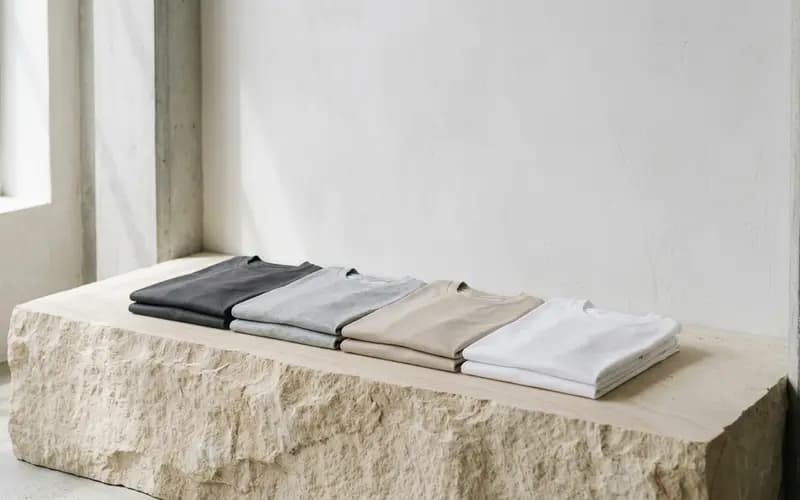
The Essential T-Shirt Colours to Own
Buy these colours in this order and every tee works with everything else you own.
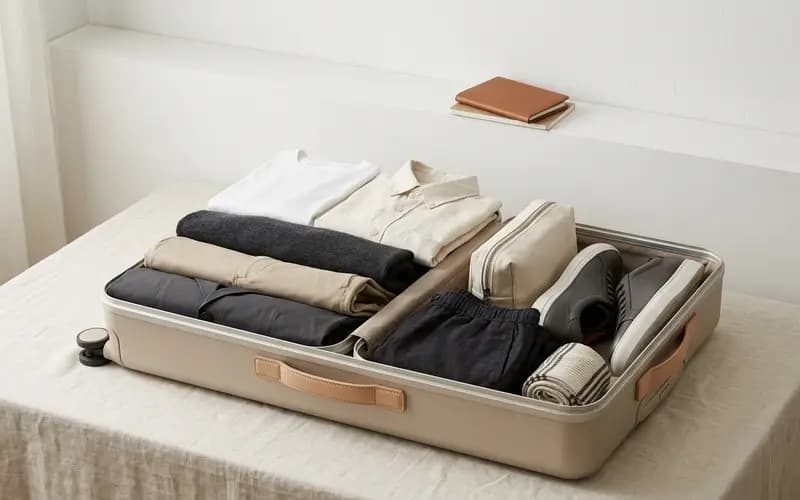
Minimalist Travel Wardrobe: Pack Light, Look Good
The secret to packing light is not rolling technique. It is a wardrobe where everything matches everything.
Stay in the loop
New writing, no noise
Occasional notes on fit, fabric, and dressing simply well. No spam, unsubscribe anytime.
Subscribe