Capsule
The Minimalist Travel Wardrobe
The secret to packing light is not rolling technique. It is a wardrobe where everything matches everything.
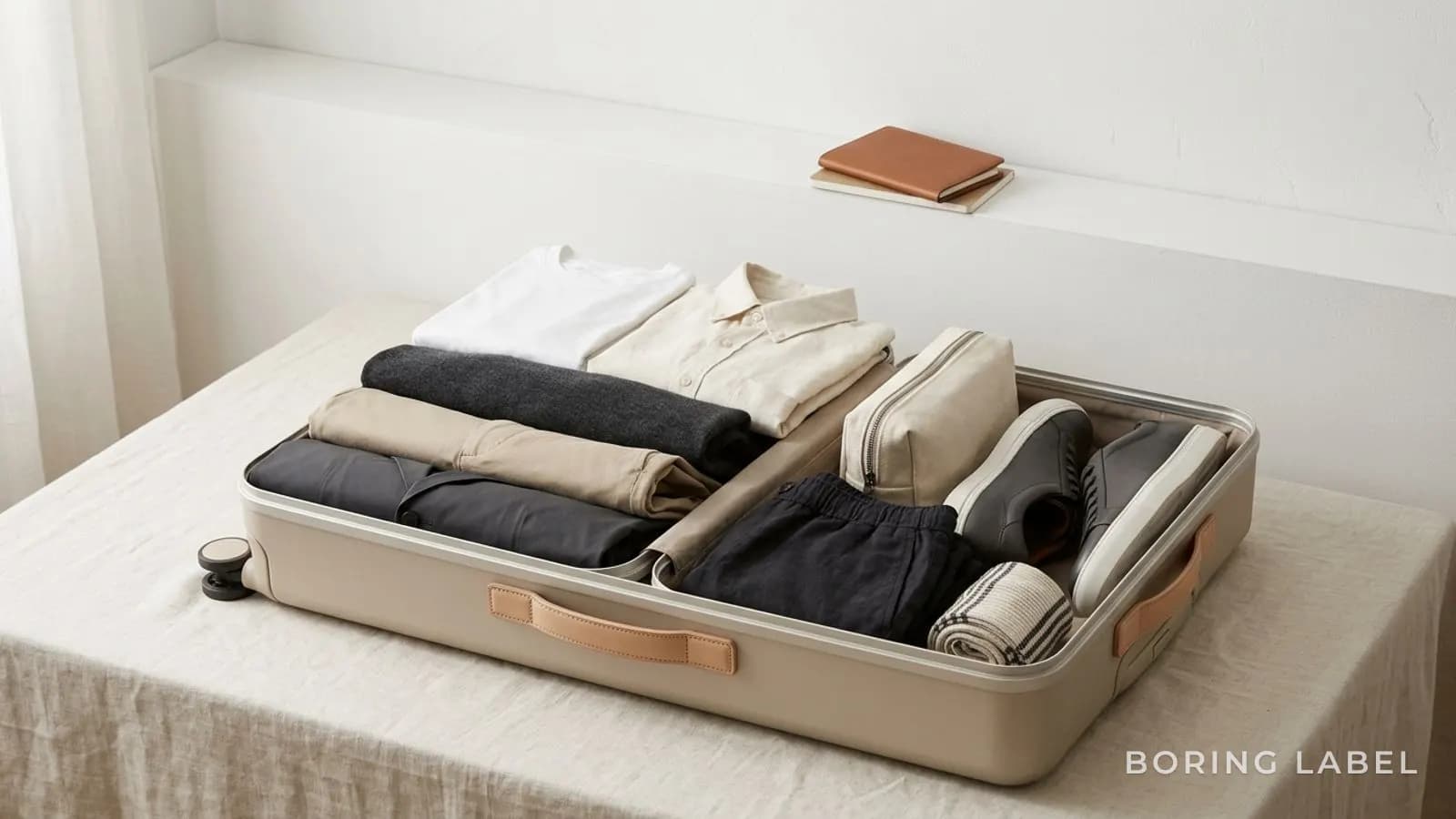
Packing light is a wardrobe problem, not a folding problem
Every "pack light" guide opens with rolling technique, as though the reason your bag is heavy is that you folded wrong. It is not. You can roll, cube, and vacuum-compress all you like - if you packed twelve pieces that do not go together, you will still wear the same three and carry the other nine around the world for nothing.
The real secret to travelling with a carry-on is decided long before you start packing. It is the wardrobe itself.
Pack a set of clothes where everything matches everything, and the maths changes completely. Suddenly six tops and three bottoms are not nine items - they are eighteen outfits, because any top works with any bottom.
You stop packing outfits and start packing a system.
That is the whole game. A minimalist travel wardrobe is just a capsule wardrobe with the discipline turned up, because the cost of a useless piece is no longer just clutter at home - it is weight on your back and space you do not have.
Travel forces the clarity that a capsule rewards. Get the wardrobe right and packing becomes a five-minute job; get it wrong and no folding trick will save you.
Why "everything matches everything" is the only rule that matters
A normal wardrobe can carry dead weight - the top that only goes with one skirt, the trousers that match nothing. At home, they just sit there. In a carry-on, they are a disaster, because every piece is supposed to multiply with every other.
The way you guarantee this is the same way a capsule does it: a tight colour palette and pieces in compatible styles. If your tops are all in two or three colours that go together, and your bottoms are all neutrals, then literally any combination works.
There is no such thing as a mismatched outfit, because you engineered mismatching out of the system at the point of packing. That is what lets a week of clothes fit in a bag the size of a laptop case.
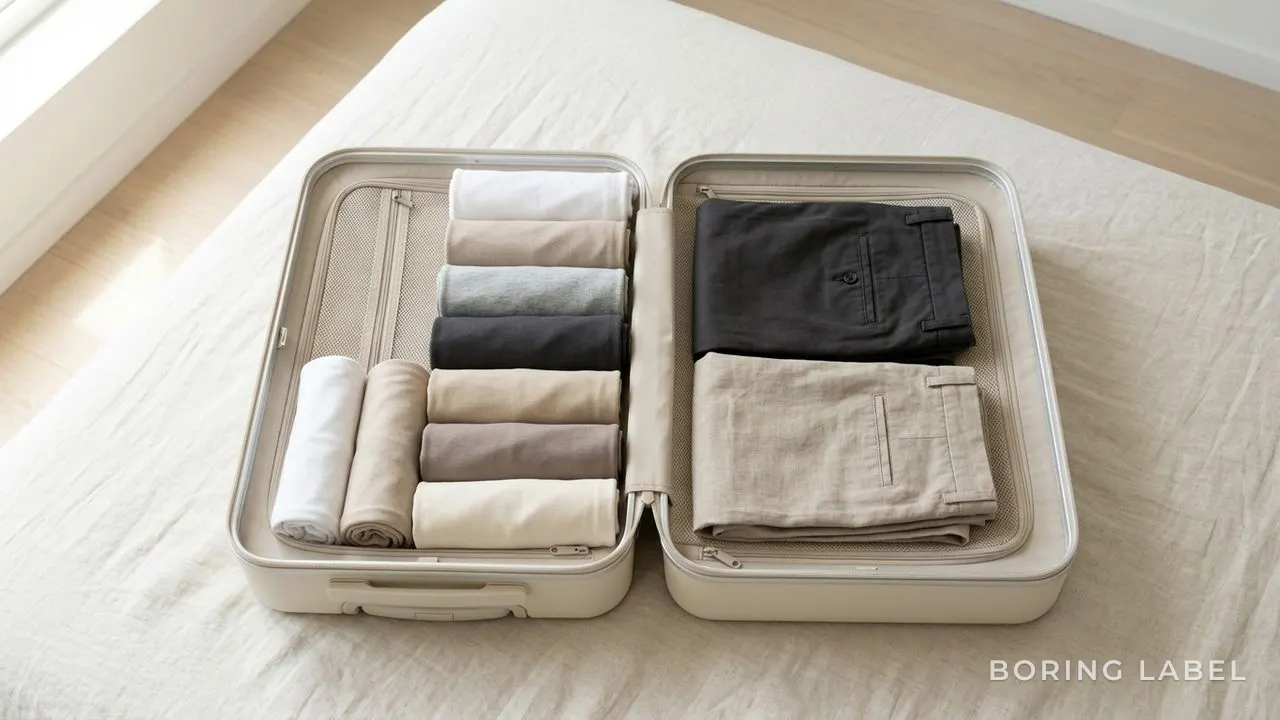
Weight is the honesty check
There is a useful brutality to packing for a carry-on: weight does not lie. At home, a useless garment just hangs there, costing you nothing visible.
In a bag, every piece that does not multiply is dead weight you carry through every airport, up every flight of stairs, into every taxi. Travel turns the abstract discipline of a capsule into a physical, immediate cost, which is exactly why it is the best teacher of the principle.
So before any item goes in, ask the carry-on question: how many outfits does this create, and with how many of the other pieces? A tee that goes with both bottoms and layers under the shirt is creating a dozen outfits. A novelty top that goes with one bottom is creating one, and costing the same space and weight. Packed honestly, this question alone strips a bag down to its working core - and the working core is almost always smaller than fear tells you it is.
The colour rule that makes a carry-on possible
If you take one thing from this, take the palette. It is the single decision that determines whether your bag is light or heavy, because it determines whether your pieces multiply or just pile up.
The rule for travel is stricter than for a home capsule: two or three neutrals as your base, and at most one accent colour. That is it. Resist everything else, however tempting it looks laid out on the bed.
Here is why it is non-negotiable on the road. With a disciplined palette, the number of outfits you can build from a fixed number of pieces explodes:
| Pieces packed | Random colours | Disciplined palette |
|---|---|---|
| 4 tops, 2 bottoms | 4 to 5 safe outfits | 8 outfits, all wearable |
| 5 tops, 3 bottoms | 6 to 7 safe outfits | 15 outfits, all wearable |
| 6 tops, 3 bottoms + 1 layer | 8 to 9 safe outfits | 18+ outfits with layering |
The left column is what happens when you pack things you like individually. The right column is what happens when you pack a system.
Same bag, same weight, more than double the outfits - purely from colour discipline. A useful base palette for travel is black, white, and one neutral (stone, navy, or olive) for your core, plus optionally one soft accent in a single top or scarf.
This is the same logic behind the essential t-shirt colours to own, just applied with no room for error.
Why neutrals also hide the wear
There is a practical bonus. Neutral, mid-tone colours hide creases, dust, and the odd spill far better than bright colours or whites do, which matters when you are wearing the same few pieces for a week and washing them in a hotel sink.
A stone tee will look fine on day four in a way a pale lemon one will not. Travel is hard on clothes; neutrals forgive it.
What actually goes in the bag
Here is a carry-on wardrobe that covers roughly a week - and, because everything mixes, a fortnight just as easily, since you are doing laundry either way. Adjust for climate and trip type, but the structure holds.
The tees: your hardest-working layer
- 3 to 4 tees in your palette - say two neutrals, one white, one soft colour. These are the core of the whole bag. You will wear them alone, layered under a shirt, under a jacket, knotted or tucked. They get the most use and so they need to be the best pieces you own.
This is exactly where quality earns its place. A travel tee gets worn hard, washed in sinks, dried on radiators, and crammed back into a bag, and a cheap one will look tired and stretched by day three.
A well-made tee in long-staple cotton - something like our round-neck tee - holds its shape and colour through that abuse, packs down small, and dries reasonably fast. On a trip where you only have three or four tees, each one matters enormously, so buy them well.
The whole system rests on this layer behaving.
The bottoms: two, maybe three
- 1 pair of dark denim - goes with every top, dresses up or down, hides wear. The single most useful travel bottom.
- 1 pair of neutral trousers or chinos - lighter, smarter, cooler in heat.
- Optionally 1 pair of shorts or a skirt for hot climates or relaxed days.
Two bottoms in neutrals already combine with every top you packed. A third only earns its place if your trip genuinely spans very different settings or temperatures.
The layers: where one bag covers many climates
- 1 lightweight overshirt or shirt - worn open over a tee, or on its own. Adds an outfit and a bit of warmth.
- 1 packable layer - a fine knit or a light jacket depending on where you are going. This is your temperature insurance.
Layering is what lets a single small bag handle a cold plane, a hot afternoon, and a cool evening on the same day. The trick is weight and proportion - light pieces under heavier ones, varying lengths so the layers read as deliberate - and layering basics covers the mechanics if you want to get it right rather than guess.
Everything else
- 1 pair of versatile shoes worn on the plane (clean sneakers usually win - smart enough for most things, comfortable for walking) plus possibly one packed pair if your trip demands it.
- Underwear and socks for a few days, washed and rotated.
- One scarf or accessory - light, adds variety, doubles as a blanket on cold flights, a sun cover on hot ones, and a quick way to make the same outfit look different on consecutive days. A single well-chosen scarf is the highest outfit-per-gram item you can pack.
That is a complete carry-on wardrobe: roughly four tops, two or three bottoms, two layers, and a pair of shoes. From it, with a disciplined palette, you build more outfits than you have days, which is precisely the point - and exactly the leverage a minimalist capsule wardrobe gives you at home, just compressed into a bag.
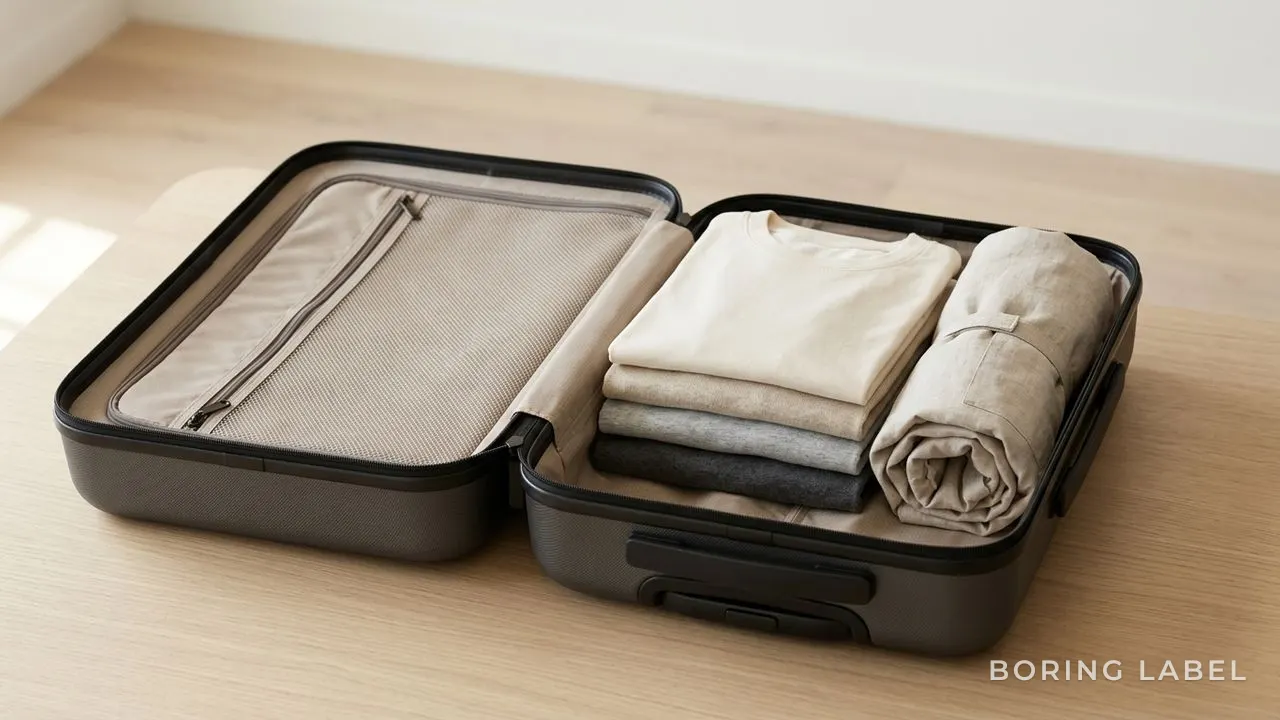
Pack so it stays packable
How you pack matters less than what you pack, but it is not nothing. Two habits keep a minimal bag genuinely minimal across a trip:
- Roll the tees, fold the structured pieces. Rolling soft knits saves space and limits hard creases; folding shirts and jackets keeps their shape. Mixing the two correctly is most of the "how do they fit so much in" trick.
- Leave deliberate room. Pack to about three-quarters full. The empty quarter is for the day's worn clothes, a souvenir, and the simple sanity of not wrestling a stuffed bag shut every morning. A bag packed to bursting is a bag you dread repacking.
And resist the single biggest carry-on mistake: the "just in case" pile. The fancy outfit for the dinner that might happen, the warm layer for the cold snap that probably will not come, the second pair of shoes for the occasion you have not planned.
These are the pieces that get worn never and carried always. If you genuinely need an option for a real, scheduled event, pack it.
If it is insurance against an imagined one, leave it - the system already covers far more than you fear.
A week of outfits from a tiny bag
It helps to see the multiplication actually play out. Take a bag with four tees (white, black, stone, soft blue), two bottoms (dark denim, stone chinos), and one overshirt. Watch a week assemble itself:
- Day one (travel): stone tee, dark denim, overshirt open, sneakers. Comfortable for the plane, smart enough to arrive in.
- Day two: white tee, stone chinos. Clean and cool for a warm day of walking.
- Day three: black tee, dark denim. The reliable default.
- Day four: soft blue tee, stone chinos, overshirt knotted at the waist. A bit of colour.
- Day five: white tee under the overshirt buttoned up, dark denim. Reads almost like a shirt outfit.
- Day six: stone tee, dark denim, sleeves rolled. Easy.
- Day seven: black tee, stone chinos, overshirt over the top. Smart enough for a nicer dinner.
Seven distinct outfits, none repeated, from seven pieces of clothing plus shoes. And that is without doing laundry or counting the variations from tucking, rolling, and knotting. Each piece is pulling its weight several times over, which is exactly what you need when weight is literal.
Tuning the core for the trip
The base wardrobe stays the same; what changes between trips is the small set of edges around it. You do not rebuild from scratch for each holiday - you keep the proven core and swap two or three pieces to suit the conditions. This is the single biggest time-saver in packing, because most of the decisions are already made.
| Trip type | Keep (the core) | Swap in | Drop |
|---|---|---|---|
| Hot beach or coast | Tees, one bottom | Shorts, linen shirt, sandals | The knit, the jacket |
| City break, mild | Tees, denim, chinos | One smarter shirt, the overshirt | Shorts |
| Hill station or cold | Tees, denim | A warmer knit, a real jacket, closed shoes | Shorts, the lightest tee |
| Mixed business and leisure | Tees, denim, chinos | One blazer-ish layer, smart shoes | The most casual layer |
Notice how much stays constant. The tees and at least one neutral bottom are in every column, because they are the pieces that work everywhere.
The variation is two or three items at the edges - the warmth, the formality, the climate insurance. Once you internalise this, packing becomes a matter of starting from a fixed list and adjusting three lines, not staring at a wardrobe wondering where to begin.
The core does the heavy lifting; the swaps handle the specifics.
The India and tropical-travel reality
If you are travelling within India or anywhere hot and humid, the standard Western "pack light" wardrobe needs adjusting, because it assumes a temperate climate that most of the country does not have.
Heat is the main constraint. A wardrobe built on layers runs into 40-degree afternoons fast. The answer is fabric: favour breathable long-staple cotton and linen, keep your tees in a mid-weight that drapes well without soaking through, and lean your palette light - more whites and stones, fewer dark colours that bake in the sun and show sweat.
A genuinely breathable tee makes the difference between a bag you enjoy and a bag full of damp cloth. We cover how to choose for the climate in the most breathable fabric for summer.
The monsoon adds a second rule: things must dry fast. If you are travelling in the rains or to a humid coast, prioritise fabrics that dry overnight, because sink-washing only works if the piece is wearable again by morning.
Cotton that is too heavy will still be damp at sunrise. Pack one or two genuinely quick-drying pieces and rotate hard.
Internal travel spans climates in a way short Western trips rarely do. A single trip might take you from a hot plain to a cool hill station, so your one packable layer is doing serious work. Choose it deliberately - a fine knit or light jacket that compresses small but actually keeps you warm.
Laundry is part of the system
The reason a week of clothes covers two weeks is laundry. A minimalist travel wardrobe assumes you will wash as you go - a sink rinse every couple of nights, the occasional proper wash.
This is not a compromise; it is the design. It is why fabric quality and drying speed matter so much, and it is why four good tees beat eight mediocre ones.
You are not packing enough clothes for the whole trip. You are packing enough to rotate, and washing the gap.
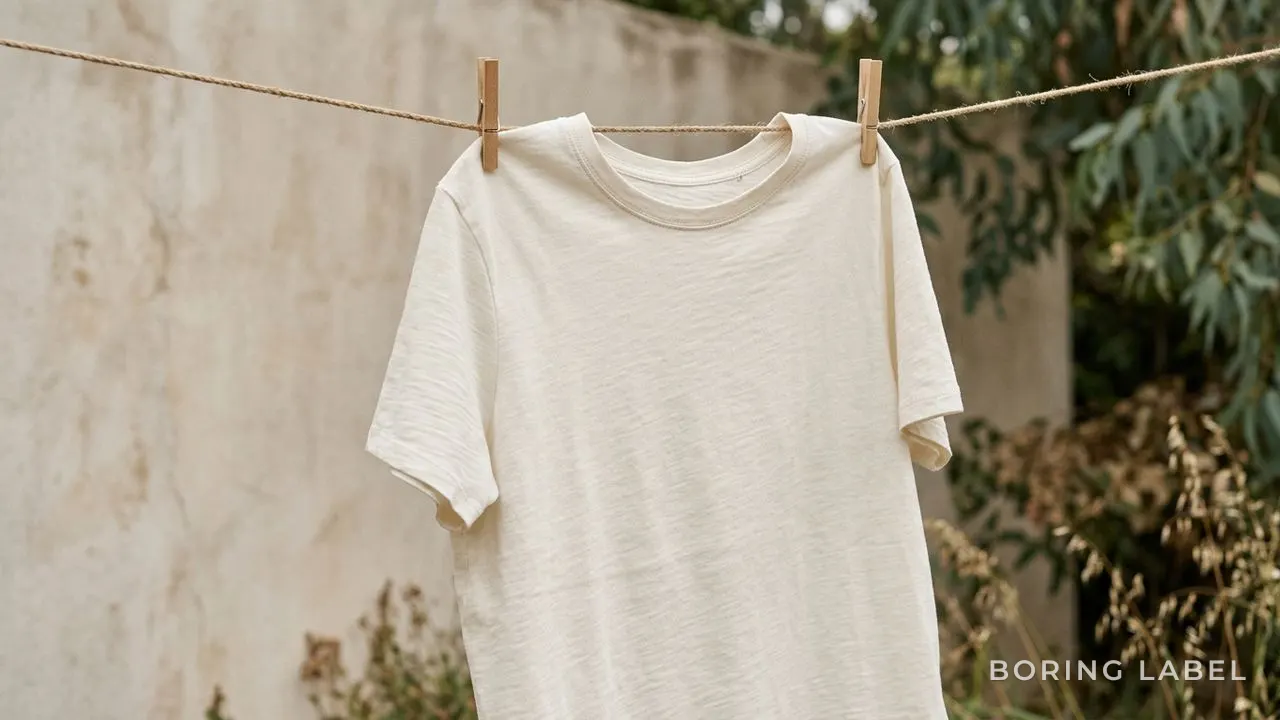
The sink-wash routine that makes it work
Washing on the road is simpler than people fear, and getting it right is what lets four tees behave like eight. The routine:
- Rinse the same night you wear it. Sweat and dust set in over time, so do not let a worn tee sit damp in the bag. A few minutes in the basin with a little soap, a gentle wring, and you are done.
- Roll in a towel to remove water. Lay the wet tee flat on a hotel towel, roll the two together, and press. This pulls out most of the moisture and is the difference between dry-by-morning and still-damp.
- Hang in airflow, not direct sun. A hanger on the curtain rail near a fan or an open window dries faster than a sunny sill and does not bleach the colour.
- Rotate, never stockpile. The whole point is that you only ever need a couple of clean pieces ahead. Two tees in rotation, washed nightly, will carry you indefinitely.
This is exactly why fabric choice is not a luxury on a trip but the thing the whole bag depends on. A heavy or cheap tee will still be damp at sunrise and tired by day three; a good long-staple cotton tee rinses clean, dries overnight, and holds its shape through weeks of this treatment. The laundry routine and the fabric quality are two halves of the same system, and together they are what turn a tiny bag into a full holiday's worth of clean clothes.
Pack the system, not the clothes
The reason most people overpack is fear. Fear of the occasion they did not plan for, the weather that might turn, the outfit they might want. So they add "just in case" pieces, and those pieces - the ones that match nothing and get worn never - are exactly the weight that makes a bag heavy and a trip annoying.
A minimalist travel wardrobe kills that fear with structure instead of volume. When everything matches everything, you are never stuck, because every combination already works.
When your fabrics are good, you are never grubby, because they wash and dry and hold up. When your palette is tight, you always look pulled-together, because there is no way to clash.
The system covers the contingencies that "just in case" pieces were supposed to cover, at a fraction of the weight.
So stop thinking about your suitcase as a container for outfits and start thinking about it as a small, deliberate wardrobe. Pick two or three neutrals and one accent.
Pack four excellent tees, two or three neutral bottoms, two layers, and a pair of shoes that does most jobs. Make sure every top goes with every bottom before you close the bag.
Then accept that you will wash as you go.
Do that, and the carry-on stops being a constraint and becomes a relief. You move through airports without checking bags, you get dressed in seconds, you never stand in a hotel room wondering what goes with what, and you look quietly good the whole trip.
The lightest bag is not the one packed by the best folder. It is the one packed from the best wardrobe.
Boring Label
Wear the point of the article.
One honest tee. Heavyweight combed cotton, a collar that holds, a fit that actually fits. No logo, no noise.
Shop the round-neck teeFree shipping across India · Easy returns
Keep reading
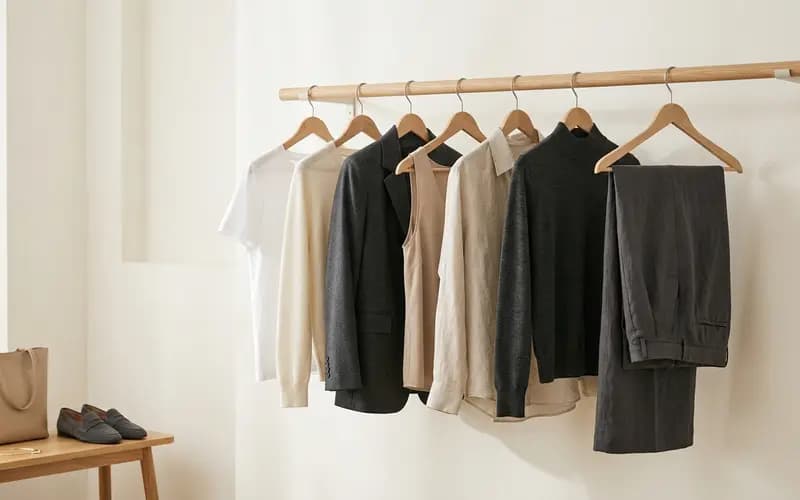
Minimalist Capsule Wardrobe for Women
Start with tees that fit beautifully and a tight colour story. The rest of the capsule builds itself.
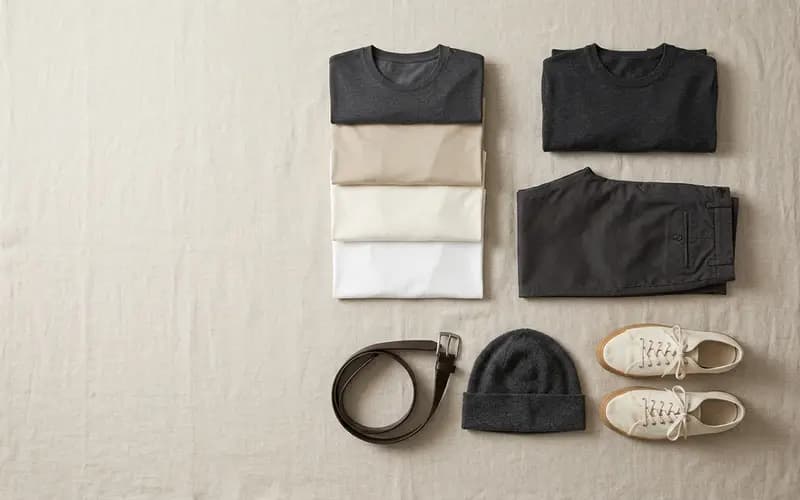
Minimalist Capsule Wardrobe for Men: The Guide
A capsule is not fewer clothes for its own sake. It is a small set that combines into many good outfits.
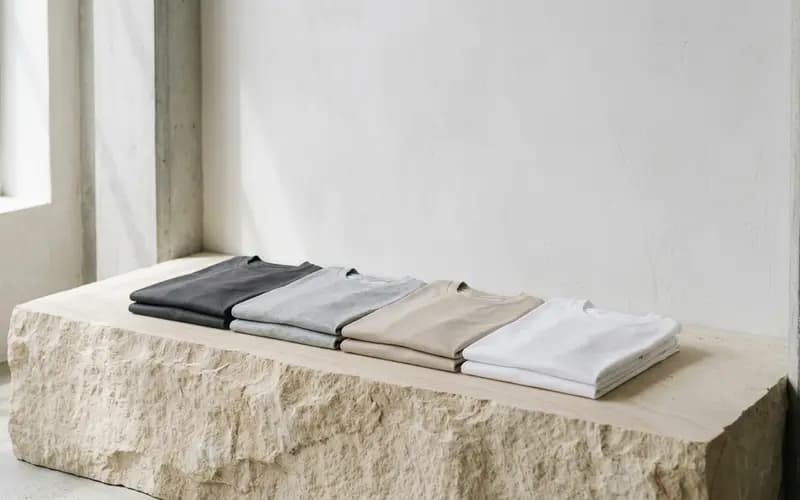
The Essential T-Shirt Colours to Own
Buy these colours in this order and every tee works with everything else you own.
Stay in the loop
New writing, no noise
Occasional notes on fit, fabric, and dressing simply well. No spam, unsubscribe anytime.
Subscribe