Fabric
Dryer vs line dry in India: what each does to cotton
Line drying beats a dryer for cotton longevity almost every time, but monsoon humidity is the one real exception worth planning around.
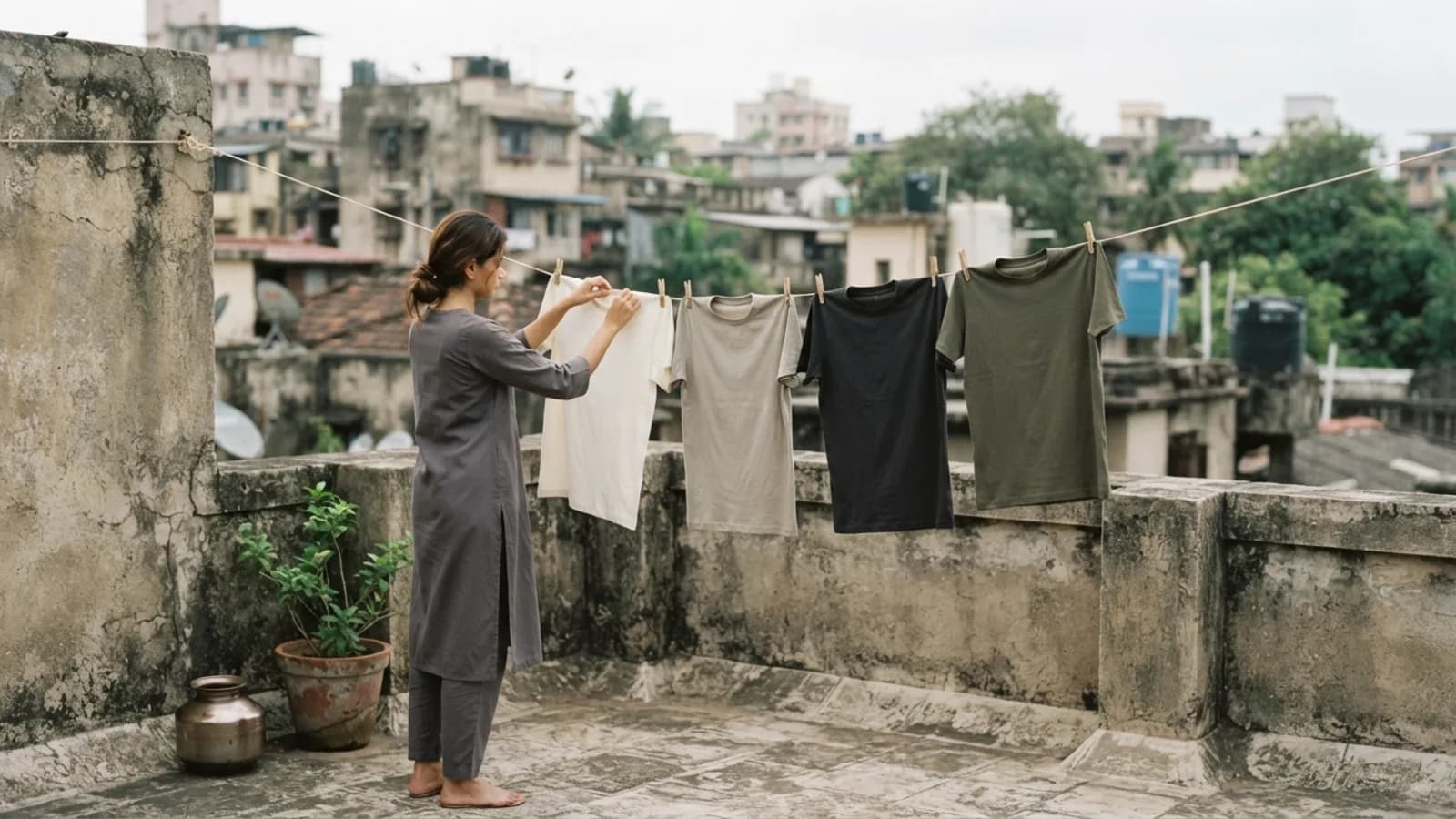
The short answer: line dry wins for cotton, almost every time
Most Indian homes do not have a dryer, and that is not a loss.
Line drying is gentler on cotton fibres than any machine dryer, and it costs nothing to run. The only real argument for a dryer is speed during a heavy monsoon week when nothing dries outdoors for days.
For everything else, the sun and a breeze do a better job than heat and tumbling ever will.
This guide breaks down exactly what each method does to a cotton tee at the fibre level, when a dryer is genuinely worth the electricity, and how to line dry without turning your clothes stiff, faded, or misshapen.
What heat actually does to cotton fibres
Cotton is a natural fibre, and natural fibres do not love repeated heat cycles.
Every time a cotton tee goes through a hot dryer, the fibres lose a small amount of moisture they need to stay flexible. Over dozens of cycles, that moisture loss adds up to fibre that is drier, more brittle, and more prone to breaking.
This is a big part of why t-shirts pill faster when dried on high heat. Broken fibre ends work their way to the surface and tangle into little balls.
Heat also accelerates shrinkage. If you have ever wondered why cotton tees shrink more than you expected, the dryer is usually the bigger culprit, not the wash.
Hot air causes the cotton weave to contract and tighten, and that contraction is mostly permanent after the first two or three dryer cycles. Line drying skips this step entirely because there is no forced heat pulling the fibres tight.
Elastane and stretch blends suffer even more. High heat breaks down the elastic fibres woven into stretch cotton, which is why a dryer-heavy tee loses its recovery and starts sagging around the collar and cuffs within a season.
What line drying actually does
Air drying works through slow, even evaporation instead of forced heat.
The fibres relax back to their natural shape as the water leaves them, rather than being pulled and tumbled while wet. This is the single biggest reason line-dried cotton keeps its shape and softness for far longer than dryer-dried cotton.
There is a real trade-off, though. Line-dried cotton often comes out slightly stiffer than dryer-dried cotton, especially if you skip a proper rinse or use hard water.
That stiffness is not fibre damage. It is mineral residue and soap left in the weave, and a few minutes in direct sun and a light hand-shake before hanging usually fixes it.
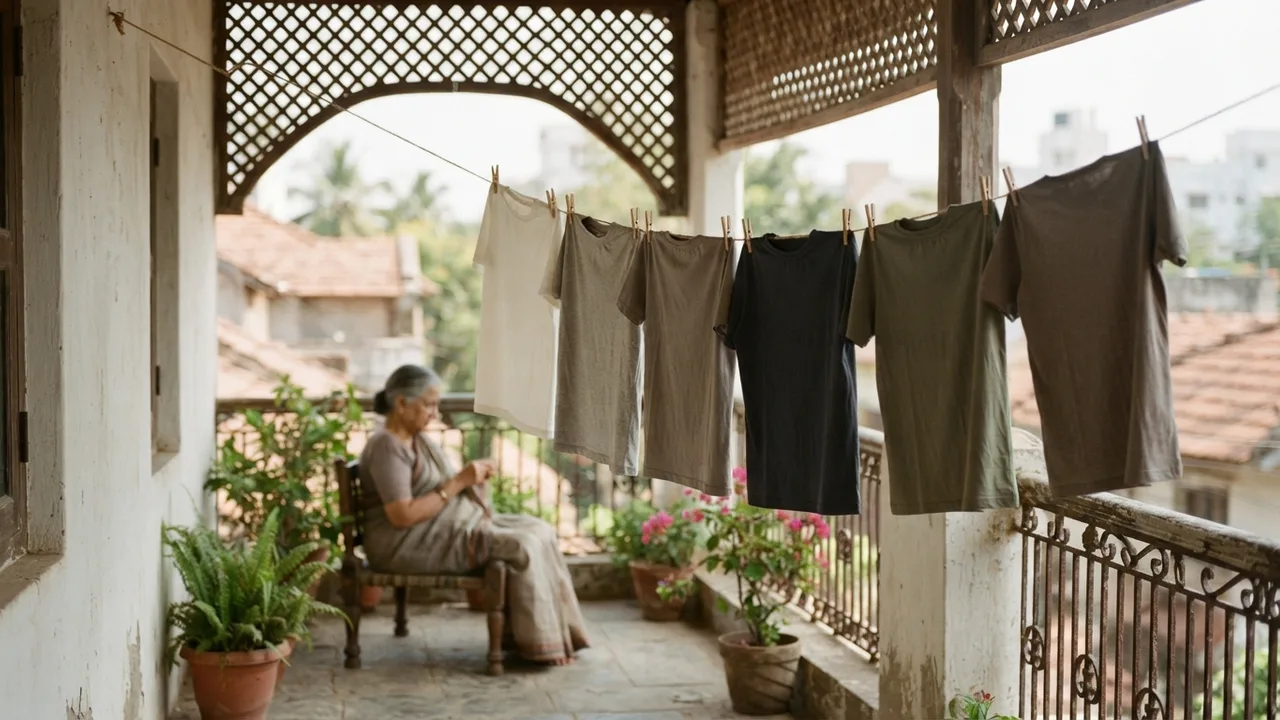
Sun exposure itself is a mixed blessing. UV light is a natural disinfectant and helps kill odour-causing bacteria, but prolonged direct sun on the same spot will fade darker colours over months.
The fix is simple: hang tees inside out, in a shaded or partially shaded spot, rather than in blazing full sun for hours. This one habit alone saves colour more than any detergent choice.
Head to head: dryer vs line dry
| Factor | Machine dryer | Line dry |
|---|---|---|
| Shrinkage risk | High, especially first few cycles | Very low |
| Fibre lifespan | Shorter, heat breaks down fibres over time | Longer, gentler on the weave |
| Softness | Softer immediately after, then declines | Slightly stiffer, softens with wear |
| Speed | Fast, 30 to 60 minutes | Slow, 3 to 8 hours depending on humidity |
| Colour retention | Good if on low heat | Good if hung in shade, poor in direct sun |
| Elastane and stretch fabric | Degrades faster | Holds recovery longer |
| Electricity cost | Real, adds up over a year | None |
| Best for | Monsoon emergencies, towels, bedsheets | Everyday tees, GSM cottons, anything you want to last |
Notice the pattern. A dryer wins on speed and nothing else.
Line drying wins on almost every metric that actually determines how long a t-shirt lasts. That is why most care guides built around cotton longevity default to air drying as the standard, not the exception.
When a dryer genuinely makes sense
There are real situations where line drying is not practical, and pretending otherwise just leads to a house full of damp laundry.
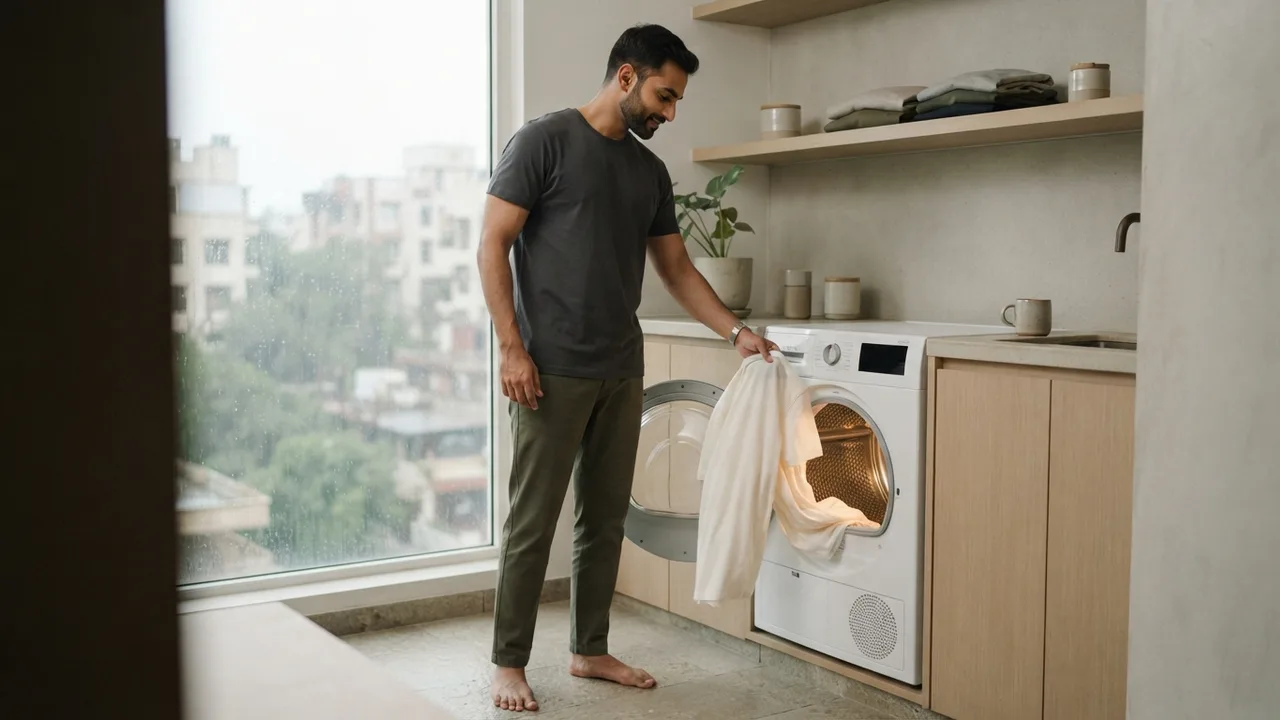
Monsoon weeks with no dry air. When humidity sits above 85 percent for days, clothes on a line will not fully dry, and damp cotton left too long starts to smell of mildew. A short dryer cycle on low heat, just enough to finish drying, beats a garment that never fully dries.
Heavy fabrics like towels and bedsheets. These take far longer to air dry and are less sensitive to shrinkage since they are usually pre-shrunk cotton terry or blends built for machine use.
Time-pressed households. If the choice is between a 45-minute dryer cycle and clothes that sit wet in a hamper for two days because there is nowhere to hang them, the dryer protects the fabric more than neglect does.
If you do use a dryer, always choose the lowest heat setting and remove garments while still slightly damp, then let them finish air drying. This single adjustment cuts most of the shrinkage and fibre damage a dryer causes, while still saving real time.
The right way to line dry in Indian conditions
Line drying is simple, but a few habits make a large difference over a garment's life.
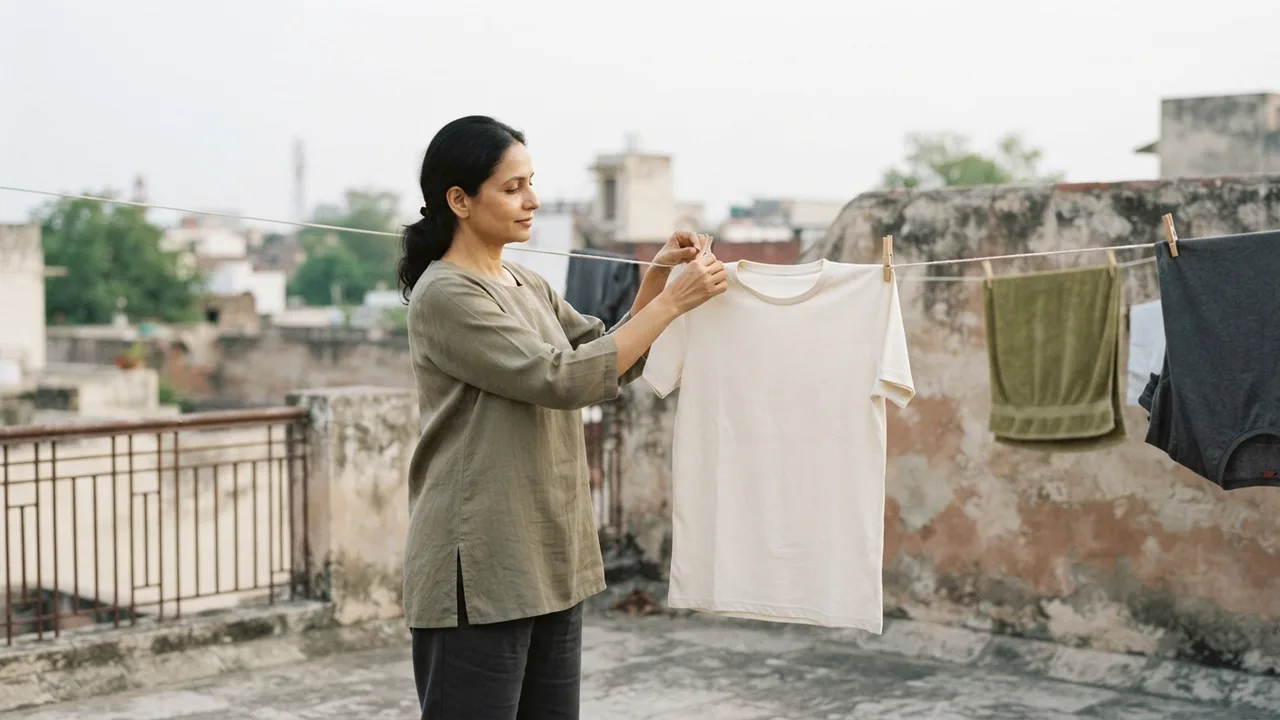
Shake and reshape before hanging. Snap the tee once to loosen the fibres and pull the shoulders and hem back into shape. This one step does most of the work that would otherwise require ironing.
Hang inside out. This protects colour and any printed graphics from direct UV exposure, which matters most for darker shades that fade visibly over a season.
Use a wide hanger, not a clip line, for shaped tees. Clipping a wet tee by the shoulder seam stretches that seam over time and creates the sag some brands try to disguise with heavier fabric. A hanger distributes weight evenly across the shoulder line.
Avoid direct sun on humid days. Counterintuitively, blazing sun on a very humid day can bake the outer layer of the fabric while the inside stays damp, which is worse for fibre health than a shaded breeze. A covered balcony with airflow dries faster and more evenly than you would expect.
Do not overcrowd the line. Garments touching each other trap moisture between them and slow drying, which is exactly the condition that breeds the musty smell described in our guide to why t-shirts smell after washing. Leave a hand's width of space between each piece.
Why this matters more for well-made cotton
!Minimalist editorial photo illustrating do not overcrowd the line. garments touching each other trap moisture between them and slow drying, which is exactly the condition that breeds the musty smell described in our guide to [why t-shirts smell after washing. leave a hand's width of space between each piece., muted neutral tones, soft natural light, premium plain t-shirt context](/images/blog/dryer-vs-line-dry-india/inline-3.webp)
The trade-off between dryer and line dry matters most for cotton that was made to last.
A cheap, thin tee will wear out from friction and repeated wear regardless of how you dry it, so the difference is smaller. A heavier, well-constructed cotton tee, the kind built around a real GSM and a stable weave as explained in our t-shirt GSM guide, rewards careful drying with years of extra life.
This is part of the thinking behind how we build the Boring Label round-neck tee. A heavier, tightly woven cotton holds its shape through both drying methods better than a light, loosely knit one, but it still performs best with air drying as the default.
If you already own tees that have gone through years of dryer cycles and feel thinner or looser than they used to, that is expected wear, not a manufacturing flaw. Switching to line drying from here on will slow further damage even if it cannot reverse what has already happened.
The monsoon exception, worked out properly
The monsoon deserves its own note because it is the one season where the simple "always line dry" rule breaks down.
Between June and September in most of India, humidity regularly sits high enough that a tee hung indoors can take a full day or more to dry, and clothes left damp that long start to smell. Our monsoon clothing guide covers the fabric side of this in depth, but the drying method matters just as much as the fabric choice.
The practical fix is a hybrid approach. Hang clothes near a fan or in the most airflow-heavy spot in the house first, and only reach for the dryer if the garment is still damp after six or seven hours.
Running clothes through a full dryer cycle from soaking wet is the most damaging way to use a dryer, both for shrinkage and for the electricity bill. A short finishing cycle on low heat, after most of the moisture has already evaporated naturally, is a reasonable middle ground for the wettest months of the year.
The bottom line
Line drying is the better default for cotton t-shirts in almost every Indian household, and the difference compounds over years of washing, not just one cycle. A dryer is a useful tool for emergencies, heavy fabrics, and the worst monsoon weeks, not a daily habit.
If longevity matters to you, and it should if you are paying for quality cotton rather than fast fashion, the choice is straightforward. Hang it, shake it, keep it out of harsh direct sun, and save the dryer for the days the weather genuinely leaves you no other option.
That single habit, more than any detergent or fabric softener, decides how a good cotton tee looks in its third year compared to its first.
Boring Label
Wear the point of the article.
One honest tee. Heavyweight combed cotton, a collar that holds, a fit that actually fits. No logo, no noise.
Shop the round-neck teeFree shipping across India · Easy returns
Keep reading
How to Wash T-Shirts So They Last Longer
Your washing machine ages a tee faster than wearing it does. Five habits that undo most of the damage.
Do Cotton T-Shirts Shrink? Why, How Much & How to Stop It
Why cotton tees shrink, how much to expect, and the simple care routine that keeps a good tee its size.
Monsoon Clothing: What to Wear in the Rains
The monsoon punishes the wrong fabrics. Dress for fast-drying and you stay comfortable through it.
Stay in the loop
New writing, no noise
Occasional notes on fit, fabric, and dressing simply well. No spam, unsubscribe anytime.
Subscribe