Fabric
The T-Shirt GSM Guide
GSM is the most quoted, least understood number on a tee. Here is what it actually predicts about quality.
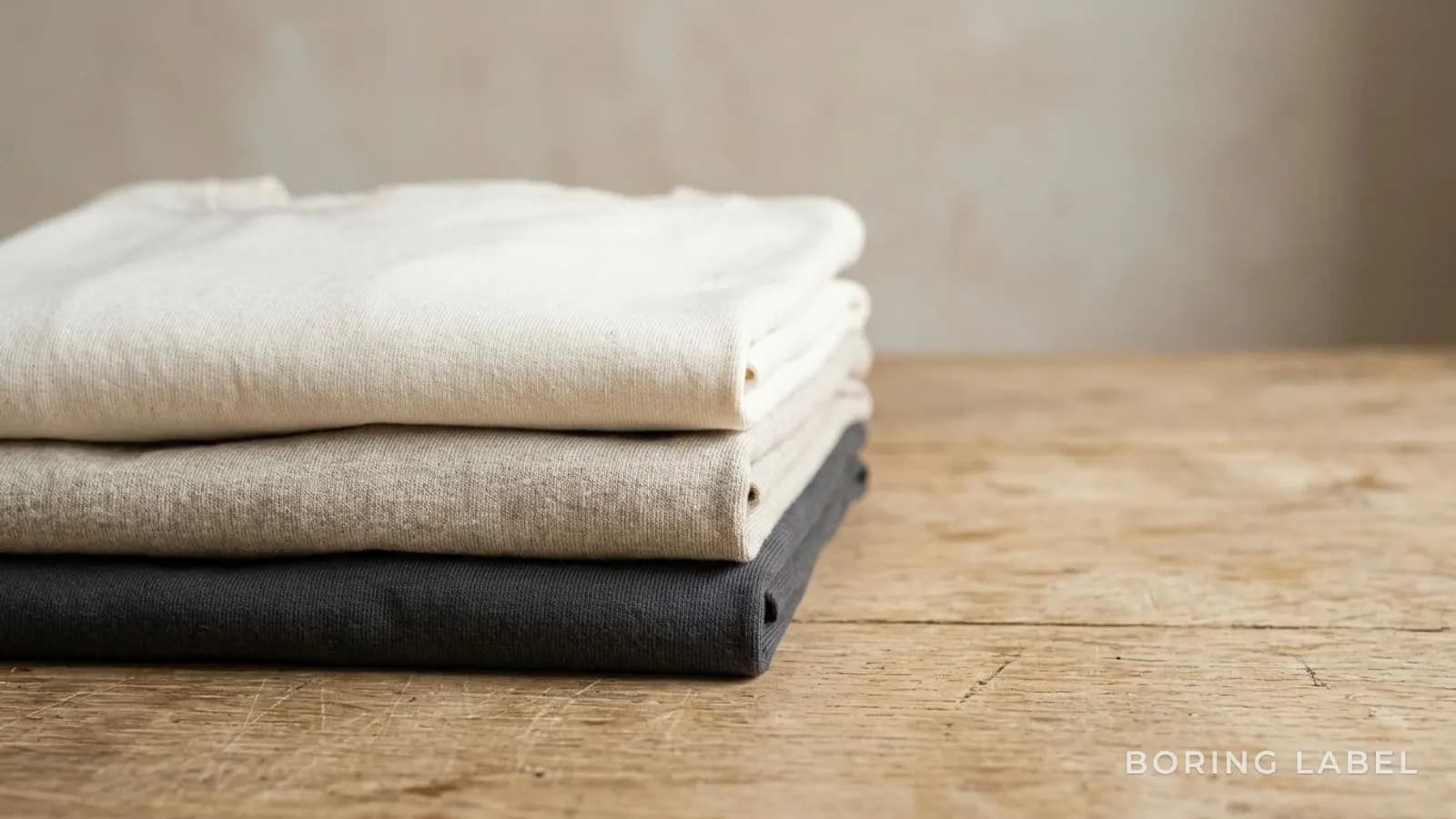
What GSM actually measures
GSM stands for grams per square metre. It is the weight of the fabric, nothing more.
Take a one-metre-by-one-metre sheet of the jersey your tee is cut from, drop it on a scale, and the reading is the GSM. A 180 GSM fabric means a square metre of it weighs 180 grams.
That is the entire definition.
It is worth being blunt about what GSM is not, because the number gets loaded with meaning it does not carry. GSM is not softness.
It is not quality. It is not how long the tee will last, and it is certainly not the price.
A heavy tee can be cheap and scratchy; a lighter one can be soft and superb. GSM measures weight, and weight is only one ingredient in a good tee.
What makes GSM genuinely useful is that this one honest number quietly predicts three things you actually care about. It predicts how heavy and substantial the tee feels in the hand and on the body.
It predicts opacity - how much light passes through, which decides whether a white tee shows your skin or your vest underneath. And it predicts, in a rough way, how the tee will hold its shape over years of washing, because heavier knits tend to resist sagging better than flimsy ones.
That is why GSM is the most quoted number on a tee spec and also the most misunderstood. It tells you something real and measurable, which is rare in a market full of vague words like "premium" and "luxurious".
But people then treat it as a quality score, assume higher is better, and buy a thick tee that bakes them through an Indian summer. The number is honest.
The interpretation is usually wrong. The rest of this guide fixes the interpretation.
How GSM is measured and why numbers vary
You do not need to measure GSM yourself, but knowing how it is done explains why two tees both labelled "180 GSM" can feel different, and why some brand numbers should be taken with a pinch of salt.
The standard method is simple. A technician cuts a precise circle of fabric with a known area using a round die cutter, weighs it on a sensitive scale, and scales the result up to a full square metre.
Cut a 100 square centimetre swatch, weigh it, multiply by 100, and you have the GSM. It is a quick, repeatable lab test, which is exactly why it became the industry's favourite shorthand.
Two honest complications follow. First, GSM is measured on the finished fabric, and fabric changes through production - washing, shrinking, and finishing all shift the weight slightly.
A number quoted on raw greige fabric can differ from the tee you actually receive. Second, GSM says nothing about how that weight is distributed.
The same 180 grams can be spun into a dense knit of fine yarn or a looser knit of thicker yarn, and those two fabrics feel and behave differently despite the identical number.
This is the first crack in "just read the GSM". The number is real, but it is a single measurement of a fabric that has several independent properties.
It is necessary information and nowhere near sufficient. Keep that in mind every time a brand leads with GSM and stays quiet about everything else - the quiet is often the tell.
The practical GSM ranges
Here is the part you came for: what the bands actually mean in wear, mapped to real use and to Indian conditions.
| GSM band | Feel | Opacity | Best for |
|---|---|---|---|
| 120-150 | Airy, thin, drapey | Often sheer | Layering, peak summer, undershirts |
| 160-190 | Balanced, substantial | Reliably opaque | Everyday wear, the all-rounder |
| 200-240 | Heavy, structured, crisp | Fully opaque | Statement basics, cooler months |
| 240+ | Dense, boxy, rugged | Opaque, stiff | Heavyweight and workwear styles |
120 to 150 GSM: lightweight
Lightweight jersey is cool, airy, and drapes softly over the body. It moves well and breathes well, which sounds perfect for heat until you notice the catches.
Thin fabric is frequently see-through, especially in white and pale colours, so it often needs something underneath. It also tends to lose its shape faster and show wear sooner, because there is simply less fabric to take the strain.
Lightweight tees earn their place as layering pieces under a shirt or overshirt, as genuine peak-summer pieces where airflow trumps everything, and as undershirts. As a standalone everyday tee they are a compromise: cool, but flimsy and short-lived.
160 to 190 GSM: the everyday sweet spot
This is the band most good everyday tees live in, and for India it is the right default. It is substantial enough to drape properly from the shoulder, hang cleanly, and stay reliably opaque - a white tee here will not betray what is underneath.
It is light enough to wear comfortably through a hot day. It holds its shape through washing far better than lightweight jersey, but it does not feel like armour.
If you buy one weight of tee and want it to work for most occasions and most of the Indian calendar, you buy in this band. It is the all-rounder, and "all-rounder" is exactly what an everyday tee should be.
200 to 240 GSM: heavyweight
Heavyweight fabric has real presence. It feels dense and premium in the hand, holds a crisp structured shape, and stands slightly away from the body rather than clinging.
It is durable and it photographs beautifully, which is why so many "premium" and streetwear tees sit here. The trade-off is heat: more fabric means more warmth, so a heavyweight tee that feels luxurious in December feels like a punishment in May.
Heavyweight tees are statement basics and cooler-month pieces. In most of India they are a seasonal pleasure, not an everyday summer staple.
240 GSM and above: serious weight
Above 240 you are into genuinely heavy, boxy, rugged territory - the dense fabric of premium heavyweight and workwear styles. It is built to last and to hold a structured silhouette.
It is also warm, stiff, and quite specific in look. Lovely for what it is, wrong for a daily summer tee in a hot country.
Notice the pattern. Heavier is not better, it is just heavier.
The "best" GSM is entirely a function of what you want the tee to do and the weather it has to do it in. For an everyday Indian tee, the answer lives firmly in the 160 to 190 band, and chasing a bigger number usually buys you discomfort, not quality.
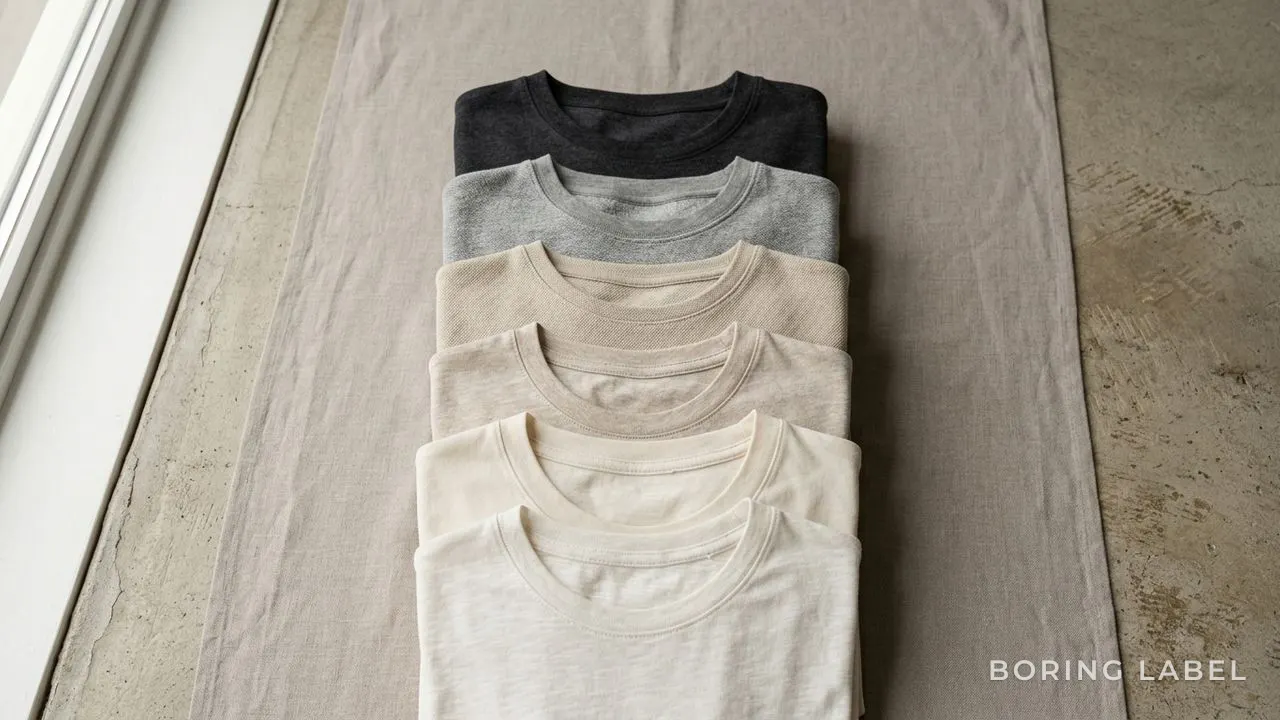
GSM is not the whole story
This is the heart of it, and the thing most GSM advice gets wrong. GSM is a weight, and weight is one of several things that decide whether a tee is good. Read GSM alongside these and you will never be fooled by a number again.
Fibre quality is the big one. A high GSM made from cheap, short-staple, carded cotton will still pill, sag, and feel rough, because the weight is made of poor fibre. A moderate GSM in combed, long-staple cotton will outlast and outfeel it comfortably.
The fibre decides softness, strength, and whether the tee fuzzes up - we cover exactly why in combed cotton versus carded. A brand quoting a big GSM but going quiet on staple length and combing is hoping the number distracts you from the fibre.
Knit construction matters as much as weight. The same GSM can be a dense, tightly-knitted fabric or a loose, open one. A tight knit holds its shape and resists pilling; a loose knit moves under friction and frees the fibre ends that become pills. Two identical GSM numbers can age completely differently because of how openly they are knitted.
Yarn and finishing do real work. Well-twisted yarn traps loose fibre ends; soft loosely-spun yarn lets them escape. A proper finish - singeing or bio-polishing - removes surface fuzz before it can pill.
None of this shows up in the GSM, and all of it shows up in how the tee looks after a year. If you want the full mechanics of why tees go bobbly, we wrote why t-shirts pill on exactly that.
So the right way to read GSM is as one line in a four-line spec: weight, fibre, knit, finish. A tee that gives you all four honestly is a tee with nothing to hide. A tee that leads with GSM and is vague on the rest is using the one honest number as a smokescreen for the parts it would rather you did not examine.
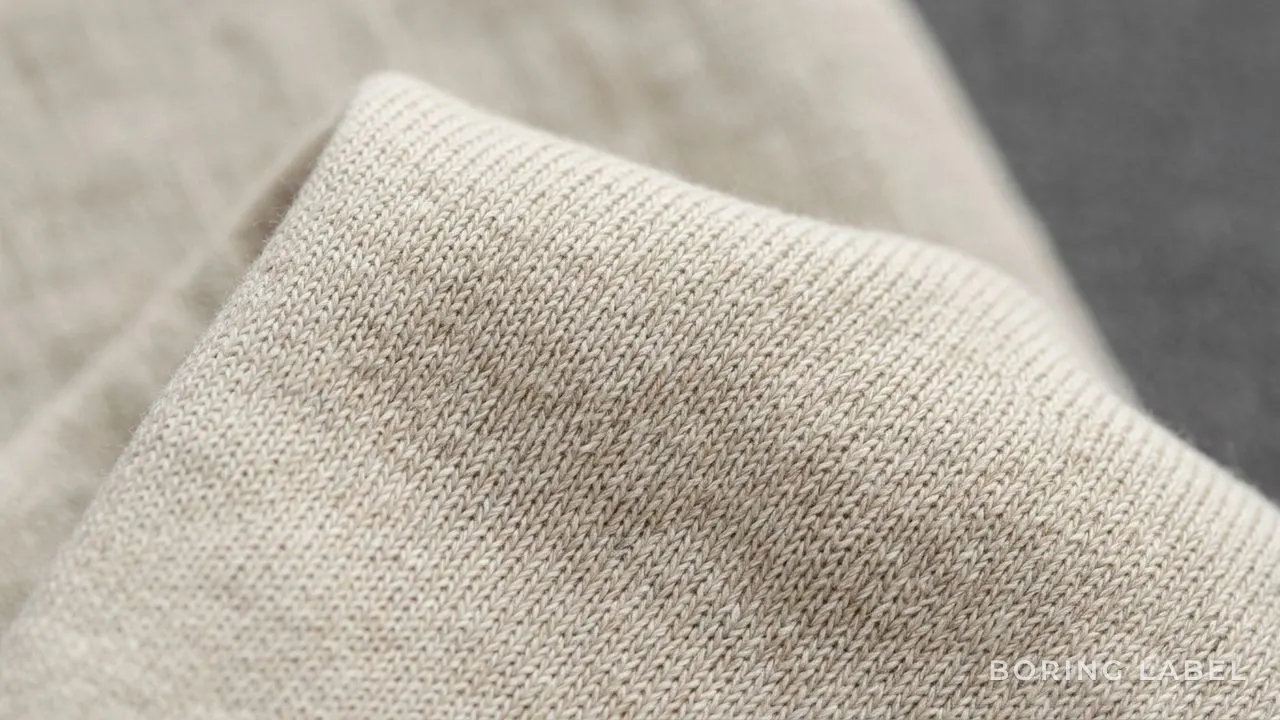
GSM and Indian weather
Because India is hot for most of the year and humid for much of it, GSM matters here in a way it does not in temperate countries, and the standard internet advice - which skews toward heavy "premium" tees - is often actively wrong for our climate.
The core tension is simple. Higher GSM means more fabric, more trapped air, and more absorbed sweat, all of which mean more warmth and slower drying.
In a Delhi summer or a Chennai monsoon, that is the opposite of what you want. A heavyweight 230 GSM tee that reviewers abroad call "luxurious" will leave you damp and overheated through an Indian afternoon.
So for most of the year in most of India, lean lighter than the international "premium" consensus suggests:
- Peak dry heat: a light-to-mid knit, 150 to 180 GSM, breathes and dries best. Sweat evaporates fast in dry air, so cotton's slow-drying weakness barely shows.
- Humid coastal heat: keep it light and soft, and let the fabric and fit do the work, because heavy cotton soaks and clings when the air will not take more moisture. Weight matters even more here.
- The short cool season and air-conditioned offices: this is where a heavier 200 GSM-plus tee finally makes sense and feels great.
Weight is only part of staying cool, though - the fibre, the weave, and the colour matter alongside it. We pull the whole picture together in the most breathable fabric for summer.
The GSM takeaway for India is this: do not buy the heaviest tee you can find and assume you bought the best. For most of our year, a mid-weight everyday knit is both cooler and more sensible than a heavyweight, and it is no less well-made.
Common GSM myths, cleared up
GSM attracts confident, wrong advice the way few clothing numbers do. Clearing the common myths is the fastest way to stop overpaying for the wrong thing.
Myth: higher GSM is always better. This is the big one, and it is simply false. Higher GSM is heavier, and heavier is better only if you actually want a warmer, denser, more structured tee.
For everyday summer wear in India, a higher GSM is usually worse - warmer and slower to dry. The "best" GSM depends entirely on use and climate, not on the size of the number.
Anyone who tells you to just buy the heaviest tee is giving you advice tuned for a cold country.
Myth: GSM tells you the quality. It tells you the weight. A heavy tee made of cheap short-staple carded cotton will feel rough, pill fast, and sag, while a mid-weight tee in combed long-staple cotton will outlast and outfeel it.
Quality lives in the fibre, knit, and finish far more than in the weight. A big GSM on poor cotton is a heavy disappointment.
Myth: GSM tells you the softness. It does not. Softness comes from fibre quality and finishing.
Some heavy tees feel like cardboard; some light ones feel like butter. The two properties are independent, which is why you must judge softness by hand and weight by spec, never assume one from the other.
Myth: a 180 GSM tee from brand A equals a 180 GSM tee from brand B. Two tees at the same GSM can differ because the weight can be spun as fine dense yarn or thick loose yarn, knitted tight or open, and measured before or after washing and shrinking. The number is comparable as a rough band, not as a precise promise. Treat a quoted GSM as "roughly this weight class", not as a guarantee of identical fabric.
Myth: more GSM means it lasts longer. Partly true, mostly not. Heavier knits do tend to resist sagging better, so weight helps durability a little.
But a tee's lifespan is decided far more by fibre and finish - a well-finished combed mid-weight tee will outlast a heavy carded one that pills and goes thin. Weight is a minor durability factor wearing the costume of a major one.
Strip away the myths and one rule remains: GSM is an honest weight and nothing more. Every time you catch yourself assuming a bigger number means better, softer, or longer-lasting, stop - it means heavier, and only heavier.
GSM, fit, and how a tee drapes
GSM does one thing people rarely connect to it: it largely decides how a tee hangs on the body. Weight is what makes fabric drape, and drape is a big part of why some tees look good and others look like a bedsheet.
A lightweight 140 GSM tee is soft and fluid. It clings and follows the body closely, which can look sloppy on a relaxed cut because there is no weight to make it fall cleanly - it just drapes over whatever is underneath.
Light fabric also shows every line beneath it, which is part of why low-GSM whites read as cheap. It works for a deliberately soft, draped, summer look, but it will not give you structure.
A mid-weight 170 GSM tee has enough body to fall properly from the shoulder and hang in a clean line, while still moving softly. This is why the everyday band looks right in so many situations: it has the weight to drape with intention rather than cling, but not so much that it stands stiffly off the body. If you want one weight that simply looks correct, this is it.
A heavyweight 220 GSM-plus tee has real structure. It stands slightly away from the body, holds a boxy or crisp shape, and barely shows what is underneath.
This is exactly the look streetwear and "premium" tees chase, and the weight is doing it. Worn oversized, a heavy tee holds its shape and looks intentional; worn the same way, a light tee just collapses.
So if a structured, architectural silhouette is the goal, weight is not optional - it is the whole mechanism.
The practical lesson is that GSM and the fit you want have to agree. A relaxed or oversized cut needs some weight to look deliberate rather than baggy.
A slim summer tee can afford to be lighter because the fit, not the weight, gives it shape. Choosing GSM in isolation from the cut is how people end up with a tee that is technically fine and somehow looks wrong - the weight and the fit were pulling in different directions.
How to use GSM when you shop
Pull it into a short routine you can run on any tee, in a shop or on a product page.
- Find the GSM, then read the rest of the spec. If the GSM is the only number quoted and there is no mention of combed cotton, staple length, or knit, treat the silence as information. Good tees have more to say than their weight.
- Match the band to the use, not to your ego. For an everyday Indian tee, aim for 160 to 190. Drop lighter for peak summer and layering, go heavier only for cooler months or a deliberate structured look. Resist the instinct that bigger is better.
- Do the light test. Hold the tee up to a window. If you can read your hand through a white tee, it is too sheer for standalone wear regardless of what the label claims. Opacity is the most useful thing GSM predicts.
- Do the hand test. A good mid-weight tee feels substantial and slightly dense, with a smooth, clean surface. Thin and slack means flimsy; fuzzy and lofty in the shop means future pilling. Weight should come with body, not just heft.
- Cross-check against fit and finish. Weight that comes with a twisting seam, a floppy collar, or a loose knit is weight wasted. We cover those tells in why your t-shirt looks cheap - they travel together with the spec.
Run that and GSM goes from a number you half-trust to a tool you use. You will stop overpaying for heaviness you do not want and start reading the whole fabric instead of one line of it.

What we chose, and why
Our round-neck sits squarely in the everyday band, around the middle of 160 to 190 GSM, and that is a deliberate choice rather than a cost-saving one. We wanted a tee heavy enough to fall properly from the shoulder, hang cleanly without clinging, and stay completely opaque in white, yet light enough to live in through an Indian summer rather than survive it. The number serves the wearing.
We could have pushed the GSM higher. A 220 GSM tee photographs as more "premium" and lets a brand quote a bigger, more impressive figure.
But it would also be warmer, slower to dry, and worse for the climate most of our customers actually dress for. Choosing the everyday band over a bigger number is choosing the wearer over the spec sheet, and we are happy to make that trade in public.
Just as importantly, we did not stop at the weight. The fabric is combed, long-staple cotton in a firm knit, finished to keep the surface clean, because a good GSM in poor fibre is a wasted number.
The weight is the headline; the fibre, knit, and finish are why the weight is worth anything. That is the whole argument of this guide, applied to one tee.
The one thing to remember
GSM is the most quoted, least understood number on a tee, and now you understand it. It is a weight - grams per square metre - and it honestly predicts feel, opacity, and shape retention. That makes it genuinely useful, and rare, in a market full of empty words.
But it is one number on a fabric with several properties, and higher is not better - it is just heavier. The best GSM is the one that suits what you want the tee to do and the weather it has to do it in.
For everyday wear in India, that is a mid-weight knit in the 160 to 190 band, not the heaviest tee on the shelf. And whatever the weight, it is only as good as the fibre, knit, and finish underneath it.
Read GSM as one honest line in a four-line story, never as the whole story, and the number stops being marketing and starts being maths you can actually use.
Boring Label
Wear the point of the article.
One honest tee. Heavyweight combed cotton, a collar that holds, a fit that actually fits. No logo, no noise.
Shop the round-neck teeFree shipping across India · Easy returns
Keep reading

T-Shirt Label Jargon Decoded: What Actually Matters
What pre-shrunk, bio-washed, GSM, single jersey and ring-spun really mean - and which terms are quality signals versus marketing.
Modal vs Cotton vs Poly-Blend: T-Shirt Fabrics
Feel, breathability, sweat, odour, durability and cost - the honest, India-first guide to choosing a t-shirt fabric.

Why T-Shirts Pill (and How to Stop It)
Pilling is not bad luck. It is short fibres rubbing loose — and it is largely avoidable.
Stay in the loop
New writing, no noise
Occasional notes on fit, fabric, and dressing simply well. No spam, unsubscribe anytime.
Subscribe