Capsule
The new-parent wardrobe: low-effort dressing that still looks intentional
New parents do not lose their style sense, they lose morning bandwidth. This five-tee system removes the decision without removing the polish.
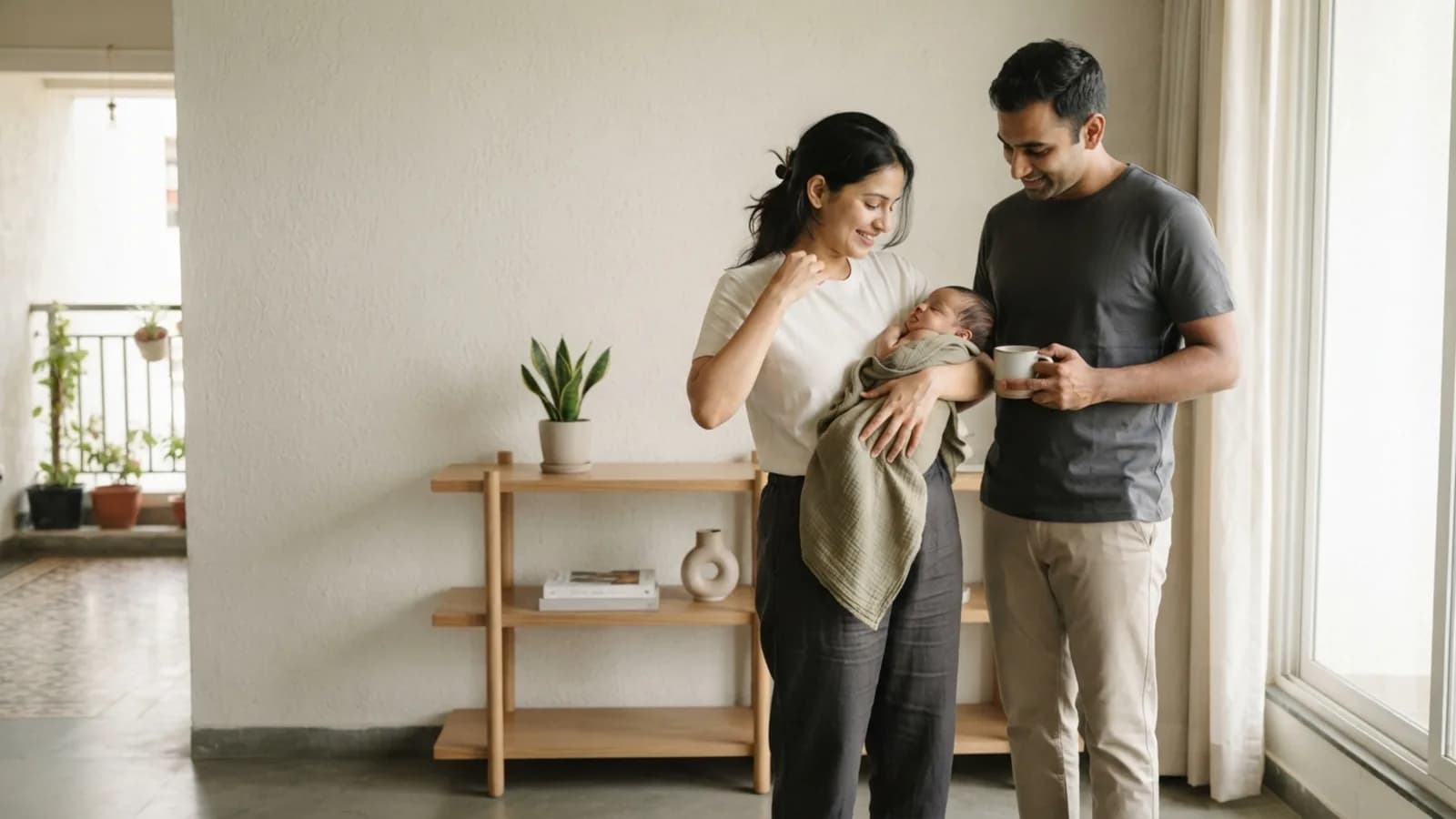
Why new parents stop dressing well, and how to fix it without trying harder
New parents do not lose their sense of style. They lose the twenty minutes a morning used to take to plan an outfit.
A baby does not care what you are wearing at 3 AM. Your brain, running on four hours of broken sleep, cannot handle a decision tree either.
The fix is not more effort. It is fewer decisions, made once, that keep working for months.
This guide builds that system: a small rotation of plain t-shirts and a handful of matching bottoms that always look intentional, even when you picked them half asleep. It is built around India's climate and Indian family routines, not a Pinterest board from a colder country.
The real problem is decision fatigue, not laziness
Ask any new parent why they stopped dressing up and most will say "no time." The honest answer is closer to no bandwidth.
Research on decision fatigue shows that willpower and judgment degrade with every choice you make in a day, and a newborn adds dozens of tiny choices before 7 AM. Feeding, burping, nappy changes, soothing.
By the time you reach the wardrobe, your brain has nothing left for "does this pair with that."
Stylists call this the uniform effect: pick a formula once, and never re-decide it. It is why founders and CEOs wear the same outfit daily, and why the same logic works even better for a parent who is optimizing for survival, not personal branding.
Our guide to uniform dressing covers this pattern in depth if you want the full psychology behind it.
Build a five-piece core, not a wardrobe
A new-parent wardrobe needs one core decision: five to six plain t-shirts in colours that all work with the same two or three bottoms.
Stick to a tight palette. Charcoal, navy, olive and one warm neutral cover almost every context a parent moves through in a day, and our essential t-shirt colours guide breaks down exactly why these four survive every season.
Pick a fit that is genuinely comfortable, not aspirational. A slightly relaxed regular fit works better here than anything slim, because you will be sitting on the floor, bending over a crib, and carrying weight on one hip all day.
Fabric matters more than usual. Spit-up, milk stains and sudden diaper leaks are now part of your daily reality, so a fabric that resists staining and washes easily beats one that merely looks premium.
A well-made round-neck tee in combed cotton handles this better than most casual wear because it holds shape and colour through frequent, hot washes. Our care guide has the specific wash settings that keep dark colours from fading under that kind of load.
The math: five tees really is enough
Parents often over-buy because they fear running out of clean clothes. The math says otherwise if you do laundry twice a week, which most Indian households already do.
| Wardrobe size | Wash frequency needed | Cost over 1 year (₹800/tee avg) | Realistic for new parents |
|---|---|---|---|
| 3 tees | Every 2 days | ₹2,400 | ✗ Too tight, stress-inducing |
| 5-6 tees | Twice a week | ₹4,000-4,800 | ✓ The sweet spot |
| 10+ tees | Once a week | ₹8,000+ | ✗ Wasted spend, clutter |
Five to six tees in a rotation gives you two full washes of buffer even if laundry day slips by a couple of days, which it will. Our piece on how many t-shirts you actually need walks through this math for other lifestyles too, and the new-parent case sits close to the low end because the outfit barely varies day to day.
Shopping for the wardrobe before the baby arrives
Most new-parent wardrobe planning happens too late, in the exhausted first weeks, when there is no time to think about clothes at all. The better window is the third trimester, when energy is still reasonably steady and online shopping is easy.

Buy for the body you have during pregnancy's final weeks and the body you will have for the first few months postpartum, not the pre-pregnancy size. A slightly relaxed fit accommodates both stages without needing two separate wardrobes bought a few weeks apart.
Resist the urge to buy the whole rotation in one colour. A single palette that repeats charcoal, navy, olive and one warm neutral prevents the "everything looks the same" fatigue that a monochrome capsule can create if pushed too far, while still keeping the decision-making simple.
Order slightly ahead of when you think you will need it. Deliveries, exchanges and the general chaos of a newborn's first weeks make same-day errands to a store nearly impossible, and having the tees already washed and in rotation before the due date removes one more thing from an already full plate.
What partners and grandparents can learn from this system
New-parent wardrobe advice usually addresses one parent, but co-parents and involved grandparents benefit from the same logic. A shared, simple palette across the household means nobody is scrambling to find something presentable for a hospital visit, a paediatrician appointment or a sudden video call with family abroad.
If both parents adopt a similar five-tee rotation in coordinating, not matching, colours, it becomes easier to grab whatever is clean rather than hunting for a specific outfit. This shared simplicity matters more in joint-family households common across India, where multiple adults are often getting a newborn ready for the day at once and competing for the same limited bandwidth.
Grandparents visiting for extended stretches, common in Indian families in the weeks after a birth, benefit from the same reduced-decision approach. Nobody in this phase of life needs to be solving a wardrobe puzzle before 7 AM.
Dress for the tasks, not the occasion
New-parent life collapses "office," "casual," and "home" into one continuous stretch. The clothes need to survive all three without a costume change.
Spit-up and stains. Darker mid-tones hide the inevitable far better than pastels or white. If you love a white tee, save it for the rare outing without the baby and keep what makes white tees go see-through in mind before wearing one on duty.
One-handed dressing. A round neck goes on faster than a button-down when you are holding a baby with the other arm. Skip anything with fiddly closures for daily wear.
Heat and sweat. A baby generates its own body heat against you, and Indian summers add more on top. Lightweight, breathable cotton in the 160-190 GSM range, explained in our GSM guide, keeps you from overheating during feeds and carries.
Grandparents and visitors. A clean, well-fitted plain tee reads as put-together even on zero sleep. This is the entire point of a quiet-luxury approach: the fewer distracting details in the outfit, the less obvious it is that you did not plan it.
The two-bottom rule

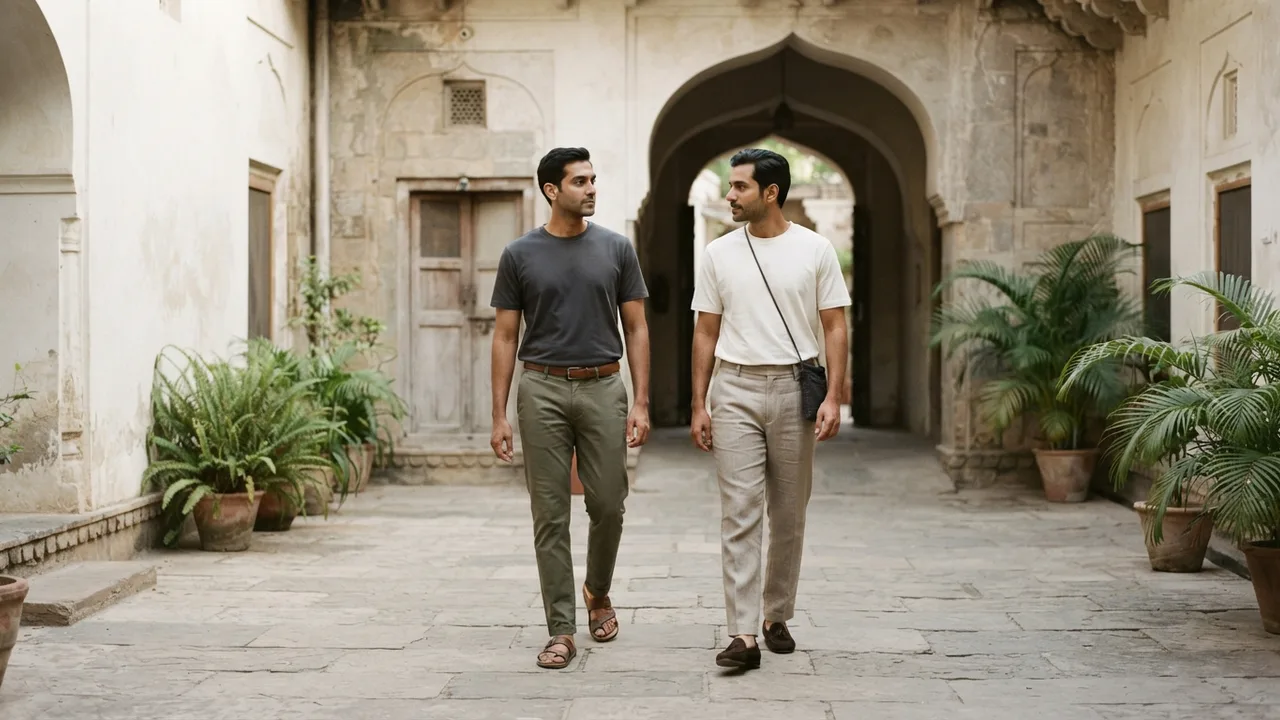
Match your five tees to exactly two bottoms: one relaxed joggers or pyjama-style pant for home, one chino or straight trouser for anything outside the house. This alone eliminates half the daily decisions.
Every tee should work with both. That is why the tight, muted palette from earlier matters so much.
Once the pairing is fixed, getting dressed becomes grab-and-go instead of a mental negotiation. Parents who set this up in the first month report far less morning stress than those who keep buying "one more nice outfit" that never quite fits into the rotation.
Nursing and postpartum comfort
For nursing parents, fit changes matter more than colour or style. A slightly looser tee accommodates a changing torso without needing a whole new wardrobe every few weeks.
Avoid anything with a tight crew neck that restricts access; a round neck with a touch of stretch give works better for quick access during feeds. Fabric softness against sensitive, postpartum skin also matters more than usual.
Combed cotton, free of harsh finishing chemicals, is gentler than cheaper carded cotton, and the difference is explained in our combed vs carded cotton comparison.
Handling laundry chaos with hard water and long dry spells
Indian cities vary wildly in water quality, and hard water is common in large parts of the north and west. Hard water speeds up fading and stiffens cotton over time if you are not careful with detergent and rinse cycles.
Wash new-parent loads in cold water on a gentle cycle, and skip fabric softener, which coats fibres and reduces absorbency exactly when you need tees that wick sweat and milk fastest. Our how to wash t-shirts so they last longer guide covers the specific settings that protect colour and shape through frequent washing.
Air-dry indoors during monsoon stretches when the machine dryer is not an option, and keep the rotation slightly larger, six tees instead of five, during that season so damp laundry never becomes the bottleneck.
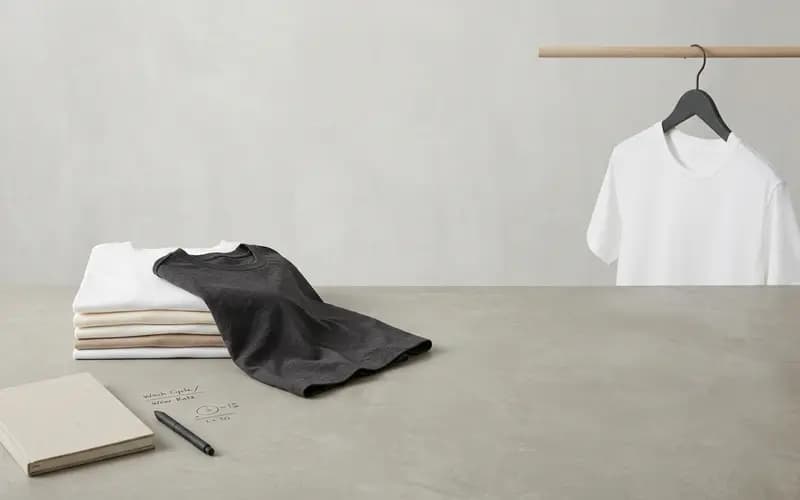
!Minimalist editorial photo illustrating wash new-parent loads in cold water on a gentle cycle, and skip fabric softener, which coats fibres and reduces absorbency exactly when you need tees that wick sweat and milk fastest. our [how to wash t-shirts so they last longer guide covers the specific settings that protect colour and shape through frequent washing., muted neutral tones, soft natural light, premium plain t-shirt context](/images/blog/new-parent-wardrobe/inline-3.webp)
When the baby starts moving, the wardrobe shifts again
The system above is built for the newborn stage, feeding, carrying, spit-up management, but it evolves once a baby starts crawling and pulling up on furniture, usually somewhere between six and twelve months. Fabric durability starts to matter more than softness at this stage, since a curious, grabby toddler pulls at hems and collars far more than a newborn ever does.
A slightly more structured knit, still soft but with a tighter weave, holds up better to this kind of handling than the very light, loose knits chosen for newborn comfort. The same charcoal-navy-olive palette still works, so the wardrobe does not need to be rebuilt from scratch, just refreshed with slightly sturdier versions of the same pieces as the older ones show wear.
This is also the stage where floor time increases dramatically, crawling, playing, sitting on rugs and tiled floors, which means knees and hems take more abrasion. Buying the next round of tees one size up and in a marginally heavier GSM, rather than an identical replacement, saves a second wardrobe overhaul a few months later.
What this system saves you
The real win is not aesthetic. It is time and mental energy, at the exact moment you have neither.
A five-tee, two-bottom system takes the morning decision from "what do I wear" down to "did I do laundry," which is a far smaller question. Over a year, that difference adds up to hours of reclaimed decision-making that go toward the baby instead of the closet.
It also happens to look better than a chaotic wardrobe of half-matched pieces, because a tight, consistent palette always reads as deliberate, even when the person wearing it has not had a proper night's sleep in weeks. That quiet consistency is the whole idea behind Boring Label's approach to basics: fewer, better pieces that you do not have to think about twice.
FAQ
How many t-shirts does a new parent actually need? Five to six in a tight, matching colour palette covers most households doing laundry twice a week, with enough buffer for a missed wash day.
What colour t-shirts hide spit-up and stains best? Charcoal, navy and olive hide stains far better than white or pastel shades, which show every mark and go translucent when wet.
Is cotton or a blend better for new-parent t-shirts? Combed cotton in a mid-weight GSM works best for daily wear because it is soft against sensitive postpartum skin, washes easily, and holds colour through frequent hot washes.
Boring Label
Wear the point of the article.
One honest tee. Heavyweight combed cotton, a collar that holds, a fit that actually fits. No logo, no noise.
Shop the round-neck teeFree shipping across India · Easy returns
Keep reading
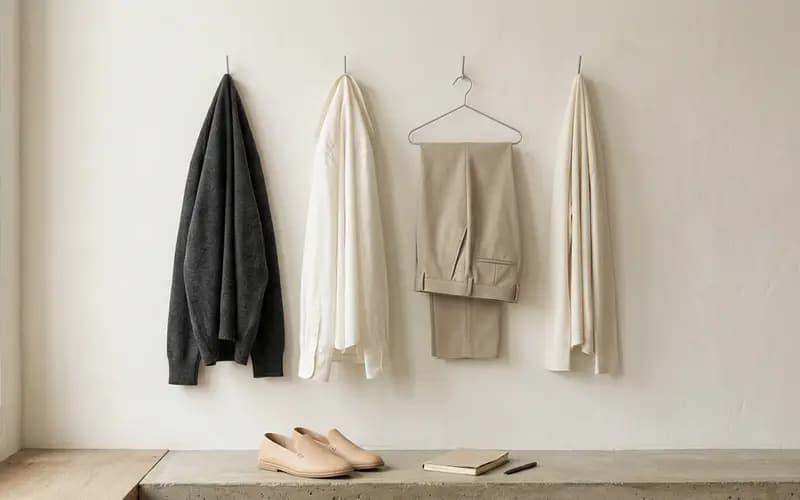
Uniform Dressing: One Outfit, Every Day
Jobs, Zuckerberg, and a lot of quietly stylish people share one habit: they decided what they wear, once.
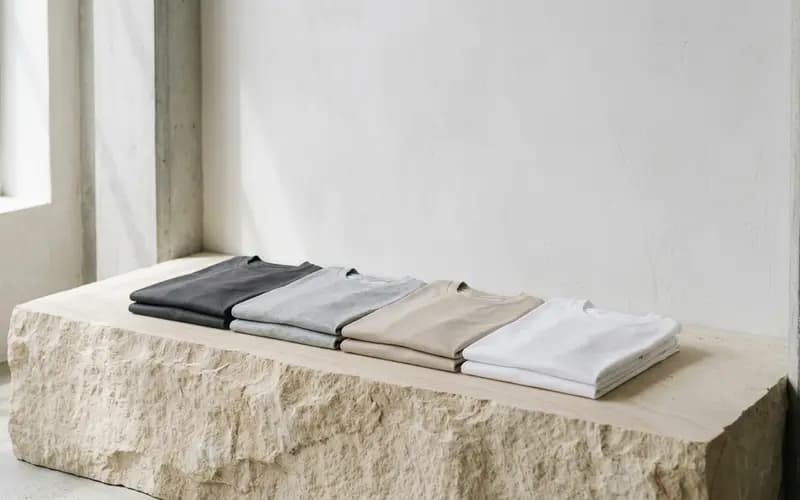
The Essential T-Shirt Colours to Own
Buy these colours in this order and every tee works with everything else you own.
How Many Plain T-Shirts Does a Man Need?
Do the laundry maths, land on your real number, and discover why repetition beats variety in the drawer.
Stay in the loop
New writing, no noise
Occasional notes on fit, fabric, and dressing simply well. No spam, unsubscribe anytime.
Subscribe