Sustainability
Is Organic Cotton Actually Worth It in India?
Organic is a farming method, not a quality grade. What GOTS really means, the greenwashing to dodge, and whether the premium is worth it.
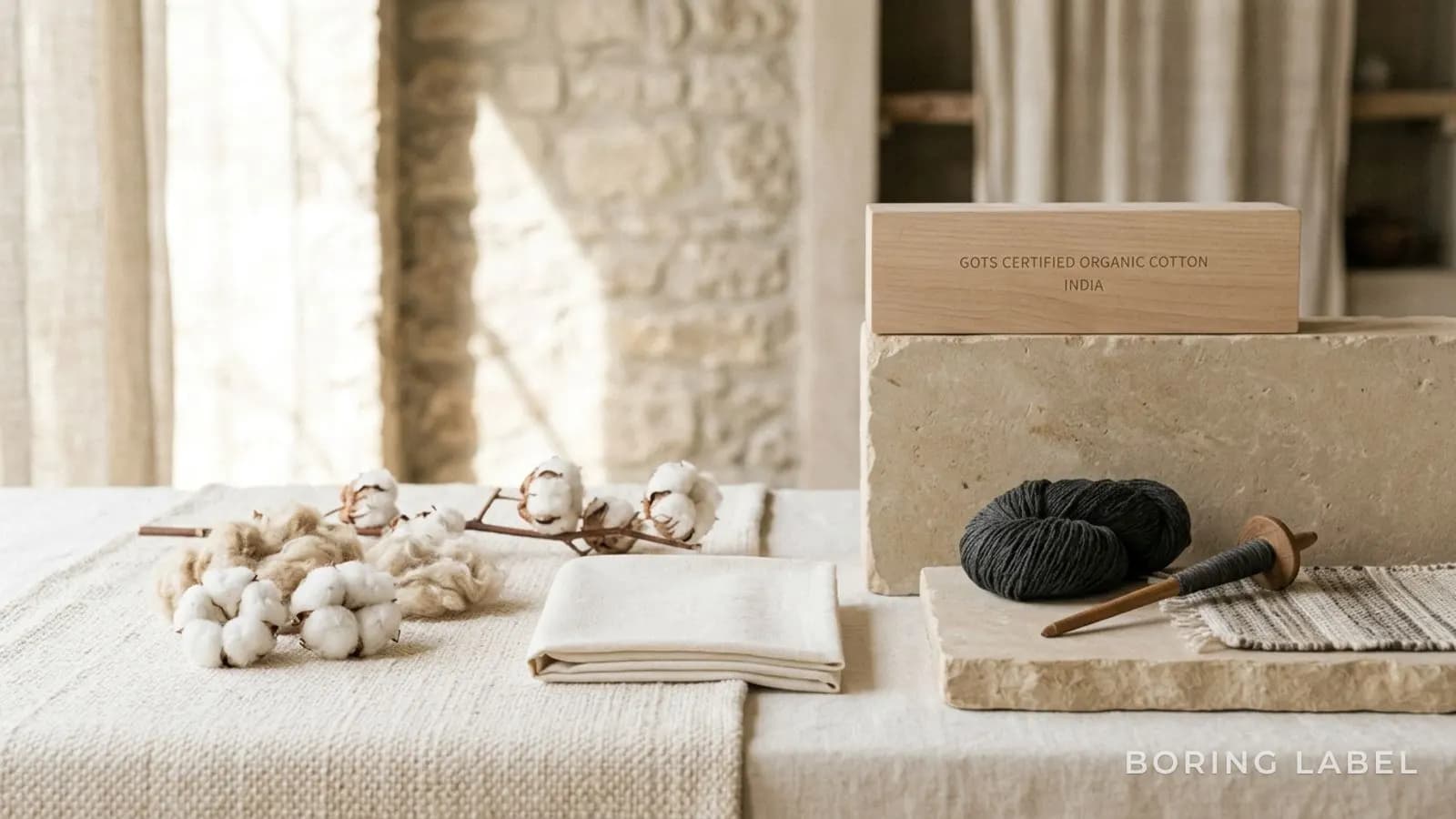
The Question Behind the Question
You are standing in front of two plain white t-shirts. One says organic cotton on the tag and costs noticeably more.
The other says nothing about its farming and costs less. The obvious question is whether the organic one is worth the extra money.
But there is a quieter question hiding underneath it, and it is the one almost nobody asks: worth it for what, exactly? Worth it for the planet?
For your skin? For how long the tee lasts?
For how it feels in a Mumbai July? Those are four different questions, and organic cotton answers them very differently.
Here is the thing the marketing never tells you straight. Organic is a description of how the cotton was farmed.
It is not a description of how good the cotton is. A fibre can be grown with zero synthetic pesticides and still be short, weak, and prone to pilling.
A fibre can be grown conventionally and still be long, strong, and smooth. The two qualities - farming method and fibre quality - are almost completely independent, and conflating them is the single biggest mistake an Indian buyer makes when reaching for the organic label.
This is an honest breakdown, not a sales pitch for organic cotton and not a takedown of it. By the end you will understand what organic actually certifies, what GOTS and the other badges genuinely guarantee, where the real environmental benefits are and where the greenwashing creeps in, why none of it tells you whether the tee will survive two summers, and whether the premium is justified for someone shopping in India specifically.
We make plain tees from long-staple combed cotton, and we are not organic-certified, so we have every reason to be straight with you about where each thing helps and where it does not.
What "Organic Cotton" Actually Means
Start with the word itself, because it is doing less than you think and more than you think at the same time.
Organic cotton is cotton grown without synthetic pesticides, without synthetic fertilisers, and without genetically modified seeds. Farmers use natural pest control, crop rotation, and soil-enrichment methods instead of the chemical inputs that dominate conventional cotton farming.
That is the whole definition at the farm level. It is a statement about inputs and process - what went onto the field and into the soil - and nothing else.
Notice what is missing from that definition. There is no mention of fibre length.
No mention of strength. No mention of how the cotton is spun, combed, or knitted into cloth.
Organic certification cares deeply about the chemistry of the field and says almost nothing about the physical quality of the fibre that comes off it. A field can be immaculately organic and still produce ordinary short-staple cotton, the same upland variety that fuzzes and pills in cheap tees everywhere.
This is the first honest point, and it is the most important one in the whole article: organic is an ethics-and-environment claim, not a quality claim. When you pay the organic premium, you are paying for how the cotton was grown, not for how the resulting tee will feel or last.
Those can come together, but they do not come together automatically, and the label does not promise it.
It helps to separate cotton into two questions that get tangled constantly:
- How was it grown? Organic versus conventional. This is about pesticides, soil, water, and the people who farmed it.
- How good is the fibre? Long-staple versus short-staple, combed versus carded, ring-spun versus open-end. This is about how the tee feels and how long it survives.
The organic label answers only the first question. Everything you care about as a wearer - softness, smoothness, pilling, longevity - lives almost entirely in the second.
Keep these two columns separate in your head and most of the confusion around sustainable cotton dissolves.
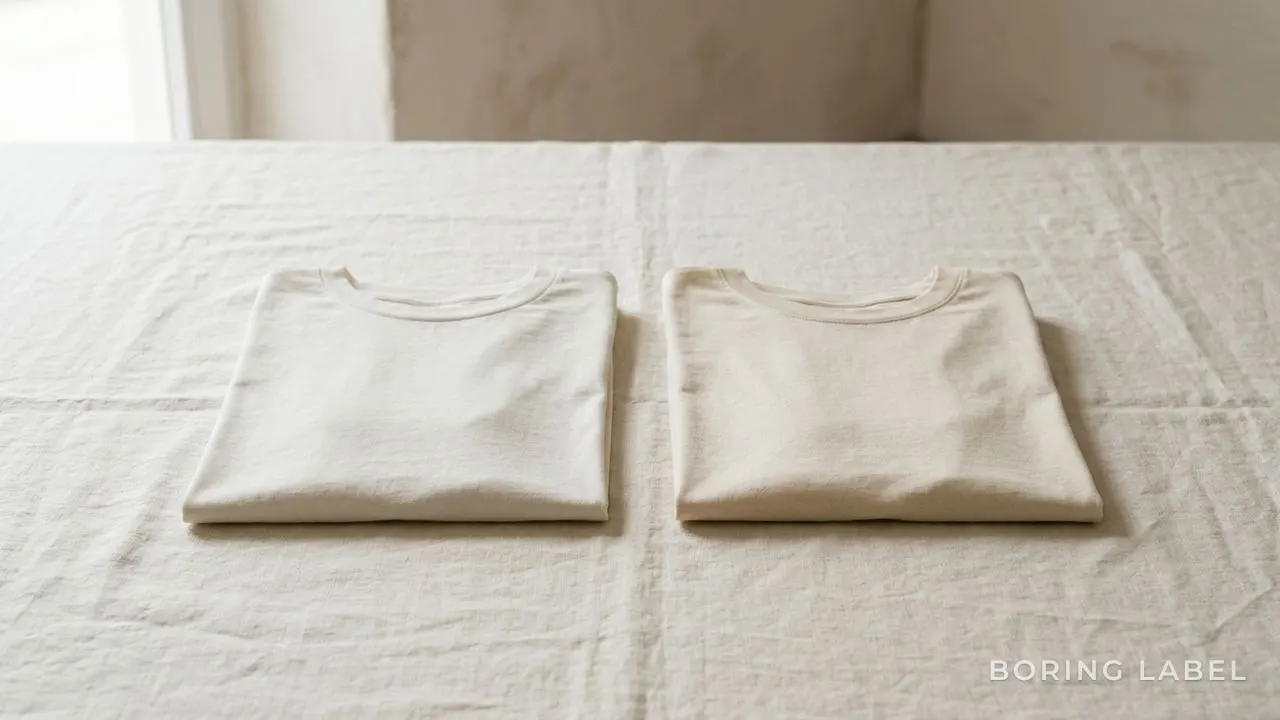
GOTS and the Alphabet Soup of Certifications
If organic is a loose word, certifications are the attempt to make it mean something specific and auditable. This is where it gets genuinely useful, because the badges are not all equal and knowing the difference protects you from paying for a word that was never verified.
The word organic on a tag, by itself, is close to meaningless. Anyone can print it.
There is no garment-police checking that the cotton in your tee was actually farmed the way the tag implies. What turns the word into a real claim is third-party certification - an independent body that inspects the supply chain and puts its name on the line.
The gold standard for textiles is GOTS.
What GOTS Actually Certifies
GOTS stands for Global Organic Textile Standard, and it is the most credible badge in this space for a reason: it covers the whole chain, not just the field. Here is what it genuinely requires, kept to the parts you can stand on.
- Organic fibre content thresholds. A product labelled organic must contain at least 95 percent certified organic fibres. A product labelled made with organic must contain at least 70 percent. So the same word can mean two different things depending on the exact phrasing, and the percentage matters.
- Traceability back to the farm. Fibre has to be traceable to the farm group it came from, with region and origin recorded, and in places like India there is a farm-and-gin registry that cotton must be logged in before it can enter the GOTS system at all. Raw cotton is also restricted on how far it can travel from farm to gin.
- Chemical restrictions through processing. The dyes and auxiliary chemicals used in turning fibre into cloth have to meet environmental and toxicological criteria. This is the part people forget: a cotton tee can be grown organically and then dyed with nasty chemistry, and GOTS is one of the few standards that polices the dyeing too.
- Social criteria. GOTS also carries labour requirements through the supply chain, so it is partly a working-conditions standard, not only an environmental one.
- Annual third-party inspection. Certification is not a one-time sticker. It requires recurring independent audits to keep.
That last point is the whole value of the badge. GOTS is expensive and demanding precisely because it is verified repeatedly by someone with no stake in selling you the tee.
That verification is what you are really paying for when you buy genuinely certified organic cotton - not the word, but the audit trail behind it.
The Other Badges, Briefly
You will see other marks, and they are not interchangeable. Some certify only the fibre at the farm and say nothing about how it was processed downstream.
Some are recycled-content standards that have nothing to do with organic farming at all. Some are broad sustainability or chemical-safety marks that test the finished product for harmful substances but make no claim about pesticides on the field.
None of this is fraud - they each certify something real - but they certify different things, and a brand can wave a legitimate badge that does not actually mean what you assumed it meant.
The practical rule: if the environmental and social story is the reason you are paying more, look for GOTS specifically, and look at whether the tag says organic (95 percent) or made with organic (70 percent). If a brand just prints the word organic with no certifying body named, treat it the way you would treat a tee that just says cotton with no other detail - as a claim nobody verified.
Why the Certification Costs What It Does
It helps to understand why a genuinely certified tee costs more, because it stops you resenting the premium and stops you overpaying for the fake version. Certification is not free.
A brand has to keep records traceable back to specific farm groups, submit to recurring independent inspection, restrict its dye and chemical choices to an approved list, and pay the certifying body for the audits - every year, not once. Those costs are real and they are ongoing, and they are spread across the tees that carry the badge.
So part of the organic premium is genuinely funding the verification machinery, which is the thing that makes the word trustworthy in the first place. That is money well spent if farm ethics is what you came for.
The flip side is the reason the uncertified version exists at all. Skipping certification while still printing the word organic costs nothing and risks little, because almost no shopper checks.
This is exactly why the named badge matters so much: it is the difference between paying for an audited claim and paying for an unaudited one that happens to use the same word. The premium without the certification is the worst deal in the category - you carry the cost of the word with none of the verification behind it.
Reading a Tag in Ten Seconds
In a shop, you rarely have time to research a brand's supply chain. You do have ten seconds to read a tag, and that is usually enough to sort the honest claims from the loose ones.
Look for three things in order. First, is a certifying body actually named, or is it just the bare word organic floating on its own?
A named body is a real claim; a bare word is a hope. Second, does it say organic or made with organic - the former is the higher fibre threshold, the latter is the lower one, and both are legitimate but they are not the same.
Third, and separately, does the tag say anything about staple length or combing - because that is the quality axis, and a tag can be loud about organic while saying nothing about whether the tee will pill. A tag that names a certifier and also specifies long-staple combed cotton is telling you it got both columns right.
A tag that only shouts organic is telling you about one.
The Genuine Benefits - and the Greenwashing
Now the even-handed part. Organic cotton has real, defensible advantages.
It also sits at the centre of some of the most confident-sounding claims in fashion, several of which are shakier than they appear. Separating the two is the only way to spend honestly.
What Holds Up
The clearest benefit is the one in the definition: no synthetic pesticides and no synthetic fertilisers on the field. Conventional cotton is a chemically intensive crop.
It is commonly cited that cotton occupies only a small share of the world's agricultural land - around 2.5 percent - while accounting for a strikingly larger share of global pesticide use. The exact figures vary by source and year, but the direction is not seriously disputed: conventional cotton is heavy on agrochemicals relative to how much land it uses.
Removing those synthetic inputs is a genuine good - for the soil, for waterways near the farm, and most concretely for the farm workers who would otherwise handle and breathe those chemicals. That last point is easy to forget from a distance: in a cotton-growing country like India, the people most protected by organic farming are the people in the field.
Organic methods also tend to build healthier soil over time through crop rotation and natural fertilisation, which has knock-on benefits for long-term land health. And the GOTS chemical restrictions on dyeing mean a certified organic tee is less likely to carry harsh processing chemistry next to your skin.
These are real. If your reason for buying organic is reducing agrochemical load and supporting safer farm labour, the premium buys you something concrete and verifiable - provided it is actually certified.
What Gets Oversold
The water story is where it gets slippery. You will see confident claims that organic cotton uses dramatically less water than conventional - sometimes huge percentages.
Treat these with caution. Water use depends enormously on region, climate, and farming practice, and organic yields per acre tend to be lower, which complicates any simple per-shirt comparison.
In some regions and on some measures organic does use less water; on others, once you account for the lower yield, the advantage shrinks or disappears. The honest version is: organic cotton can use less water, but the blanket dramatic figures are not reliable, and anyone quoting a precise eye-popping number is usually repeating marketing rather than settled fact.
This is the soft underbelly of greenwashing in cotton. The pattern is familiar: take a genuine but modest benefit, attach a dramatic number to it, print it big, and let the shopper assume the whole garment is virtuous.
A tee can be organic at the fibre and still be shipped halfway around the world, dyed loudly, sewn under unknown conditions, and built to last a single season. The organic badge addresses one slice of the footprint and is sometimes used to imply the entire thing is solved.
That is not organic cotton's fault - it is how the word gets used.
So the even-handed read is this. The benefits are real but specific: fewer farm chemicals, safer farm labour, cleaner soil, restricted dye chemistry if certified.
The benefits are not unlimited, and the most dramatic claims - especially around water - are the ones to distrust. Buy organic for the reasons that hold up, not for the poster numbers.
Why Organic Says Nothing About How the Tee Wears
This is the section the sustainable-fashion conversation almost always skips, and it is the one that matters most once the tee is actually on your back. Organic farming and fibre quality are different axes entirely, and a tee can score high on one and low on the other.
Think back to the two columns. Farming method - organic or conventional - is set in the field.
Fibre quality - how the tee feels and how long it lasts - is set by completely different factors that the organic label never touches:
- Staple length. This is the length of the individual cotton fibres, and it is the foundation of quality. Long-staple cottons have fibres roughly in the high-thirties of millimetres; ordinary upland cotton sits around twenty. Longer fibres make stronger, smoother, less fuzzy yarn. A field can be perfectly organic and grow short-staple upland cotton, or grow long-staple cotton conventionally. Organic certification has no opinion on staple length at all. If you want the deeper version of why this single number drives so much, we walk through it in Supima versus regular cotton.
- Combing. Combing is a processing step that strips out the shortest fibres after the cotton is cleaned, leaving only the long ones - which is what stops a tee from going fuzzy and pilling. It is a mill decision, not a farm decision, so an organic tee can be combed or uncombed, and most cheap ones skip it. The full mechanism is in combed cotton versus carded, and the short version is that this step, not the farming, is what governs pilling.
- Spinning and knit. How the fibre is twisted into yarn and knitted into cloth decides smoothness, drape, and weight. Again, none of it is set by whether the field used pesticides.
Put plainly: you can buy an organic tee that pills within a month, and you can buy a conventional tee that stays smooth for years. The organic badge is silent on every property you actually feel and notice.
It tells you something true and worthwhile about the farm, and nothing whatsoever about whether the tee will look good after thirty washes.
This is not an argument against organic. It is an argument against assuming organic means good.
If a tee is both certified organic and made from long-staple combed cotton, you are getting the farming ethics and the wearing quality together, and that is a genuinely excellent garment. But the two have to be checked separately, because the label only ever confirms one of them.
Durability Is Its Own Kind of Sustainability
Here is the angle that reframes the whole question, and it is the one we care about most as a brand that is not organic-certified.
The most environmentally costly thing about a t-shirt is usually not how the cotton was farmed. It is how many times you have to replace it.
Every tee that fuzzes out, thins at the shoulders, or pills into shabbiness in a year is a tee you throw away and buy again - and the replacement carries its own full footprint of growing, spinning, dyeing, shipping, and eventually landfilling. A garment's footprint is spread across every wear it gives you.
A tee worn three hundred times has amortised its impact far more thoroughly than three tees worn a hundred times each and binned.
This is why durability is a form of sustainability in its own right, and an under-rated one. A long-staple combed-cotton tee that survives years of washing, holds its shape, and resists pilling quietly does something the organic badge does not: it reduces the number of tees that have to be made in the first place.
The greenest tee is often the one you do not have to buy again. We make this case at length in buy less, wear more, and it sits at the heart of the broader argument in fast fashion versus slow fashion - that the rate of replacement, not the label on any single item, is where most of the damage and most of the savings live.
None of this cancels out the farm-level benefits of organic. A tee that is both organic and durable is better than one that is only durable.
The point is narrower and more honest: longevity is a real environmental contribution, it is independent of the organic question, and it is the contribution a quality plain tee makes whether or not it carries a green badge. If you are choosing where to put your money and your attention, a tee built to last many years is doing sustainability work every day it stays out of the bin.
Here is the same idea laid against the organic axis, so you can see they are two separate levers rather than one:
| Question | What organic certification answers | What durability answers |
|---|---|---|
| Pesticides and farm chemistry | Yes - that is its core claim | No |
| Safer conditions for farm workers | Yes, if GOTS-certified | No |
| Dye and processing chemistry | Yes, if GOTS-certified | No |
| Will the tee resist pilling | No | Yes - driven by staple and combing |
| Will it last years of washing | No | Yes |
| Does it reduce how often you re-buy | No | Yes - the largest hidden footprint |
Two different columns, two different kinds of good. The mistake is treating the left column as if it covered the right.
Is the Premium Worth It for an Indian Buyer?
So, money on the table, shopping in India: is the organic premium justified? The honest answer is that it depends entirely on which of the four questions you are buying to answer - and the Indian context shifts the maths in a few specific ways.
When the Premium Makes Sense
If your reason for buying is the farm-level ethics - cutting agrochemical load and supporting safer conditions for cotton workers - then in India that reason has unusual weight. India is one of the largest cotton-growing countries in the world, and a great deal of that farming happens close to home.
The people most directly protected by organic methods are workers in the same country you are shopping in, not an abstraction across an ocean. If that is what moves you, genuinely certified organic cotton - GOTS, with the badge actually named - is worth the premium, because you are paying for a verified reduction in real harm.
If you can find a tee that is both certified organic and long-staple combed, that is the best of both worlds, and the premium covers two different goods at once. That combination is rarer than the marketing implies, so check both, not just the badge.
When the Premium Is Doing Less Than You Think
If your reason for buying is how the tee feels, how smooth it is, or how long it lasts, organic certification is not the lever you want - and paying the organic premium for those qualities is paying for the wrong thing. A short-staple organic tee will still pill.
An uncombed organic tee will still fuzz. For feel and longevity, the things to check are staple length and combing, which a tee can have with or without an organic badge, and which cost money for entirely separate reasons.
Buying organic to get a tee that lasts is like buying free-range eggs to get a bigger omelette - the label is real, but it is answering a different question.
There is also a uniquely Indian wear pattern to weigh. Tees here get washed often - frequently after a single wear in peak summer heat - and that high wash frequency is exactly where durability pays off and where pilling shows up fastest.
Under that kind of washing, a smooth long-staple combed tee separates from a fuzzy one quickly, organic or not. So for the climate you actually live in, the wearing-quality column tends to matter day to day even more than it does in cooler countries, while the organic column keeps its value but stays in its own lane.
There is a comfort dimension layered on top of this too. In Indian heat a tee is often the only thing between you and the day, worn close to warm, damp skin for hours.
Smoothness there is not a luxury detail - a fibre that sits cleanly against the skin feels cooler and less abrasive than a fuzzy one, by afternoon especially. That smoothness comes from staple length and combing, not from how the field was farmed.
So if your priority is how the tee feels through a long humid day, you are once again in the quality column, not the organic one. An organic short-staple tee can feel rougher against sweaty skin than a conventional long-staple combed one - the badge does nothing for the sensation you actually live with.
Weighing It Honestly Against a Budget
Most people are not choosing between identical tees where only the farming differs. They are choosing where a limited clothing budget goes.
Seen that way, the question is not just is organic worth it but is organic the best use of this particular rupee, and the answer turns on your goal. If you buy four cheap tees a year because they wear out, the most impactful change you can make is usually not switching those four to organic - it is buying fewer, better-made tees that you do not have to replace, which cuts the total number of garments produced on your behalf.
If, on top of that, you can route your spend toward genuinely certified organic, you stack a second good on the first. But durability first, certification second, tends to be the order that does the most with a real budget - because the replacement you avoid is the footprint you never create.
The Honest Bottom Line on Price
Price alone never guarantees quality - an expensive organic tee can be short-staple and uncombed, and a modest non-organic tee can be long-staple and combed. The premium is justified when it is buying a thing you actually want: verified farm ethics, or genuine fibre quality, ideally both.
It is not justified when it is buying a word you assumed meant more than it does. The skill is the same one that runs through all sensible buying - knowing what you are paying for before you pay.
If you want the broader version of that calculation, cost per wear is the frame that ties farming, quality, and longevity into a single number you can actually act on.
Where We Stand - and Why We Say It Plainly
We make plain tees from long-staple combed cotton, built for Indian heat, at a fixed ₹1,299 round-neck tee. We are not organic-certified, and we are not going to imply otherwise to ride a popular word.
Our argument is the durability one. We chose long-staple combed cotton because it is the version that resists pilling, stays smooth, and survives the heavy wash cycles an Indian wardrobe puts a tee through - and a tee that lasts years is, in our view, doing real and continuous environmental work by reducing how often it has to be replaced.
That is a different kind of sustainability from organic farming, not a substitute for it, and we would rather name it accurately than blur the two. If farm-level certification is your priority, a GOTS-certified tee answers that better than we do, and we will say so.
What we will not do is pretend the organic badge means more than it does, or that durability cancels out the genuine farm-level benefits of organic. Both are real.
They answer different questions. An honest brand tells you which question its product is built to answer and lets you decide whether that is the one you are asking.
The Takeaway: Buy for the Reason That Holds Up
Organic cotton is worth it - for the right reasons, verified the right way. It is a genuine reduction in farm chemistry and farm-worker harm, and in a major cotton-growing country like India those benefits land close to home and matter.
When it is certified by a body that actually names itself, GOTS above all, the premium buys you something real: an audited supply chain rather than a printed word.
What organic cotton is not is a guarantee of a good tee. It says nothing about staple length, nothing about combing, nothing about whether the shirt will stay smooth and survive years of washing.
Those qualities live in a separate column entirely, and they are the ones you feel every day and the ones that, through longevity, quietly do the largest share of the environmental work - because the tee you never have to replace is the one with the smallest footprint of all.
So decide which question you are buying to answer. If it is farm ethics, pay the premium and demand real certification.
If it is feel and longevity, look at staple and combing, organic or not, and judge the tee on how it is built to wear. The dishonest move - the one the marketing quietly encourages - is to pay for one and assume you got the other.
Now you can tell them apart, hold each claim to its own evidence, and spend on the thing you actually wanted. That clarity is worth more than any badge.
Boring Label
Wear the point of the article.
One honest tee. Heavyweight combed cotton, a collar that holds, a fit that actually fits. No logo, no noise.
Shop the round-neck teeFree shipping across India · Easy returns
Keep reading
Supima vs Regular Cotton: Is Premium Cotton Worth It?
Premium cotton is heavily marketed and barely understood. Here is the honest case for long-staple cotton — and where the price tag lies.
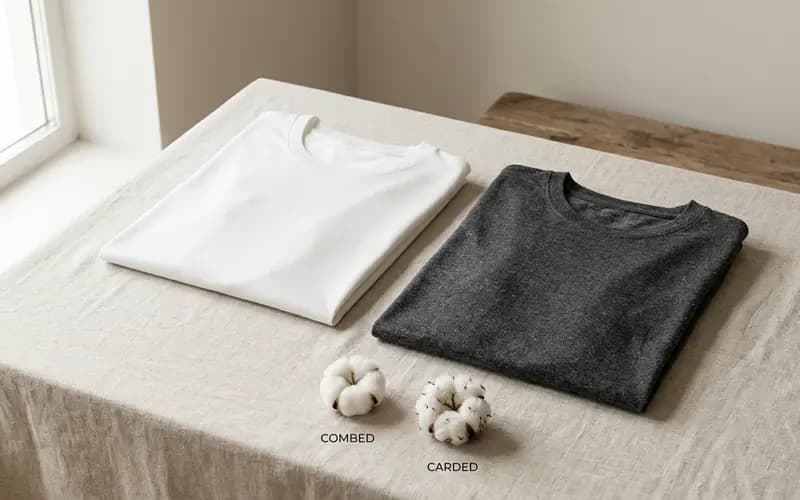
Combed Cotton vs Carded: Why It Matters
One extra step removes the short fibres that make a tee fuzz, pill, and weaken. That step is combing.
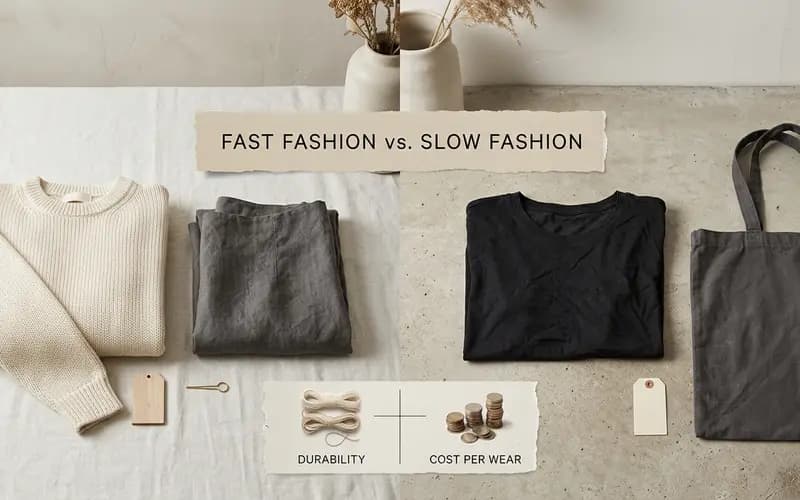
Fast Fashion vs Slow Fashion: The Honest Comparison
Slow fashion is not about guilt. It is a different maths on cost, quality, and how long things last.
Stay in the loop
New writing, no noise
Occasional notes on fit, fabric, and dressing simply well. No spam, unsubscribe anytime.
Subscribe