Sustainability
Fast Fashion vs Slow Fashion
Slow fashion is not about guilt. It is a different maths on cost, quality, and how long things last.
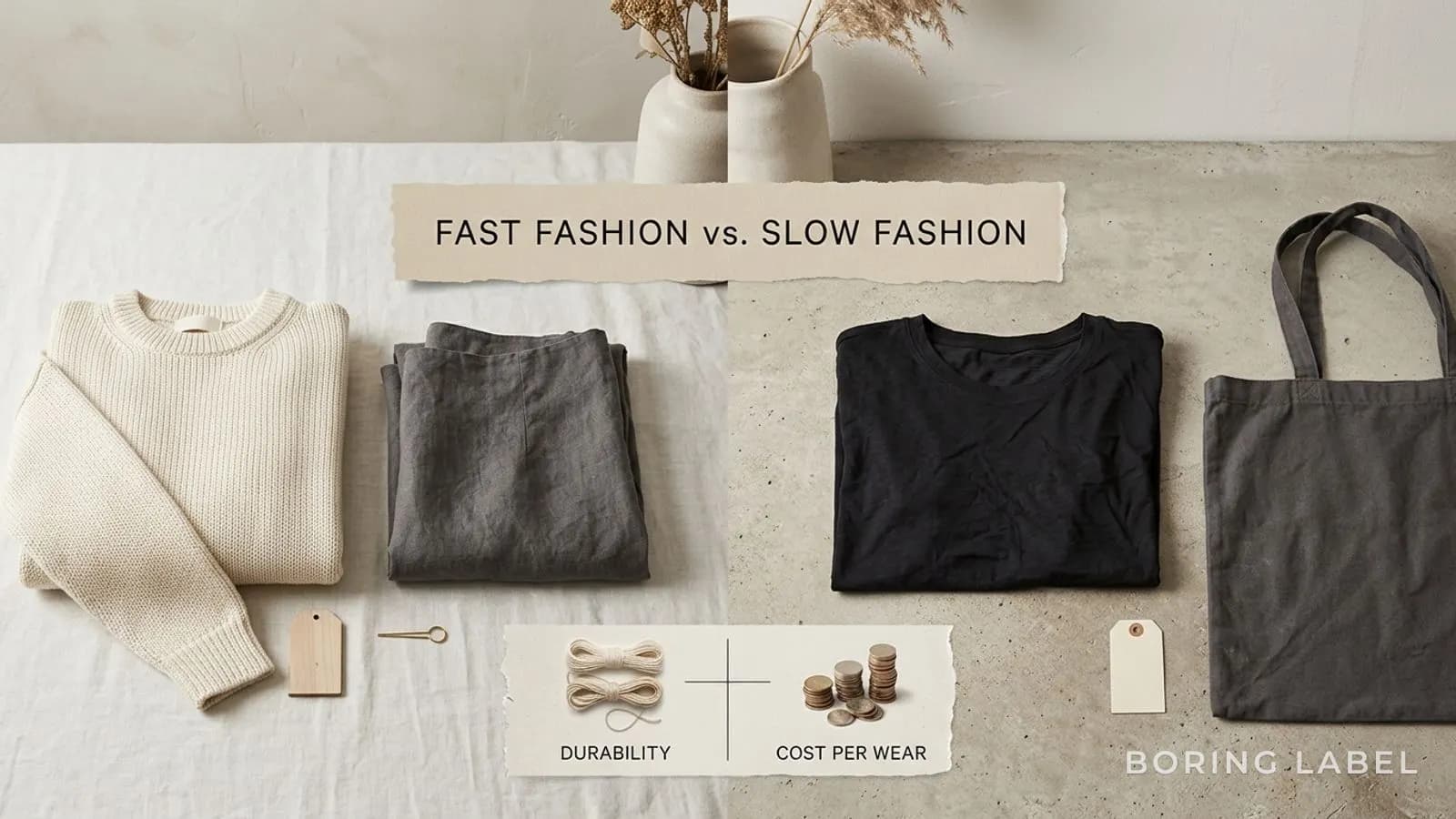
Two different machines, not two moral camps
Most writing on fast fashion versus slow fashion reads like a sermon. You are meant to feel guilty about the cheap haul, nod along about the planet, and then quietly keep shopping the way you always did because the lecture did not actually help you decide anything on a Tuesday afternoon with a 60 percent off banner in front of you.
We are going to skip the sermon. Fast fashion and slow fashion are not good and evil. They are two different machines built to do two different jobs, and once you understand what each machine is optimised for, the choice stops being about morality and starts being about maths, fit, and how long you actually want your clothes to last.
Fast fashion is a speed machine. Its entire reason to exist is to copy a trend, get it onto a rack within weeks, sell it cheap, and move on before the trend cools. Everything about it - the fabric, the stitching, the price, the marketing - serves that single goal of moving volume fast.
Slow fashion is a longevity machine. Its job is to make fewer things, make them properly, and sell them to someone who will wear them for years rather than weeks. The fabric, the construction, and the price all serve that goal instead.
Neither machine is lying to you. They are just built for opposite outcomes. The mistake is using one when you wanted the other - buying a speed-machine tee and being surprised it falls apart, or buying a longevity-machine coat for a trend you will hate by next season.
This post is the honest comparison: what each approach really costs, where each one genuinely wins, and how to choose without going broke or going holier-than-thou.
What "fast" and "slow" actually mean
The labels get thrown around loosely, so let us pin them down before comparing anything.
Fast fashion describes a production model, not a specific brand. The defining features are a very short design-to-shelf cycle, frequent new "drops" to keep you coming back, low prices made possible by cheap materials and high-volume manufacturing, and a business model that depends on you buying a lot and replacing often. The garment is not really meant to last; it is meant to sell.
Slow fashion is the opposite production logic. Fewer designs, released less often, made from better materials with more careful construction, priced higher because each unit costs more to make and the brand is not relying on volume to survive. The garment is meant to be worn for a long time, and the whole model only works if it actually is.
A few honest caveats, because the labels lie at the edges:
- Expensive does not automatically mean slow. Plenty of premium-priced brands run a fast-fashion model underneath the markup. A high price tag can be brand tax, not better cloth. We get into this properly in affordable vs premium t-shirts.
- Cheap does not automatically mean fast-and-bad. A small maker selling a simple, well-made tee at a fair price is doing slow fashion even if it is not labelled that way.
- "Sustainable" on a tag means almost nothing on its own. It is one of the most over-used words in retail. Judge the garment, not the adjective.
So when we say fast versus slow, read it as "built to be replaced" versus "built to last", regardless of the logo or the price.
The honest comparison
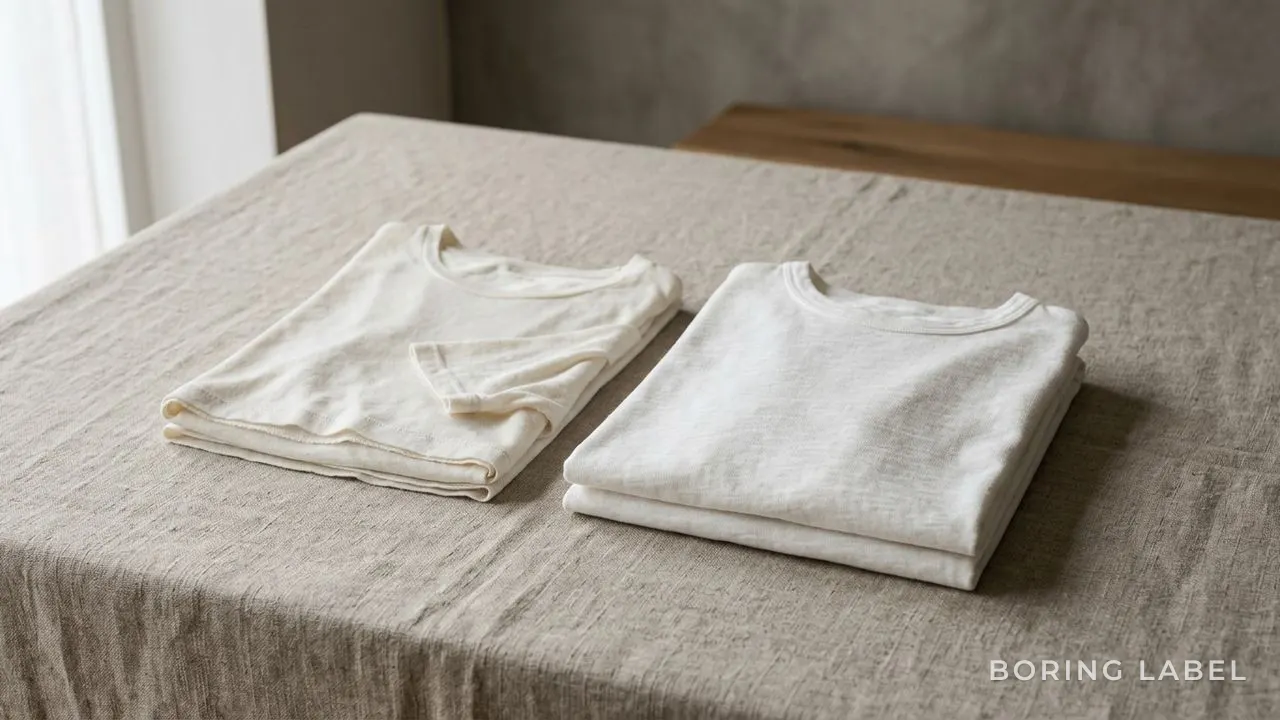
Here is the side-by-side, with no thumb on the scale. Both columns have real advantages.
| Factor | Fast fashion | Slow fashion |
|---|---|---|
| Upfront price | Low - easy to say yes | High - you feel it |
| Cost per wear | Often high (short life) | Often low (long life) |
| Fabric quality | Thin, frequently blended for cost | Heavier, better fibres |
| Construction | Single-stitched, quick seams | Reinforced, finished seams |
| Lifespan | Weeks to a couple of seasons | Several years |
| Trend response | Very fast, always current | Slow, deliberately timeless |
| Fit consistency | Varies drop to drop | Usually consistent over time |
| Choice / variety | Enormous, constant novelty | Narrow, curated |
| Best for | Trends, one-offs, fast-changing sizes | Daily staples you wear to death |
Read that table twice, because the interesting bit is that fast fashion genuinely wins some rows. It is unbeatable on upfront price, on variety, and on responding to a trend you only want for one summer. If you are eighteen and your body and taste are both still changing every year, paying slow-fashion prices for a wardrobe you will outgrow is not virtuous, it is wasteful.
The row that decides most everyday purchases, though, is cost per wear - and that is where the fast machine quietly loses.
The maths nobody does at the till
Walk into a shop, see a tee at 400 rupees next to one at 1,400 rupees, and your brain does the obvious sum: the cheap one saves 1,000 rupees. That sum is wrong, because it measures the wrong thing.
The price tag tells you what you pay once. It says nothing about what you pay per wear, which is the number that actually leaves your wallet over time.
Cost per wear is simple: total cost divided by the number of times you wear it. We give it a full treatment in cost per wear, but here is the short version applied to fast versus slow.
Take a realistic example. A fast-fashion tee at 400 rupees that goes baggy at the neck, twists at the side seam, and pills across the back after roughly 25 washes. You stop reaching for it well before then, but say you genuinely wear it 25 times.
- 400 rupees / 25 wears = 16 rupees per wear
Now a well-made tee at 1,400 rupees - heavier combed cotton, reinforced shoulder seam, a collar that holds - that you happily wear once a week for three years.
- That is roughly 150 wears over three years.
- 1,400 rupees / 150 wears = about 9.3 rupees per wear
The "expensive" tee is cheaper. Not by a little - by roughly 40 percent per wear. And that calculation is generous to the cheap one, because it ignores the part where you replace the 400-rupee tee three or four times to match the lifespan of one good one, and the part where the cheap one looks tired long before it actually disintegrates.
Here is the same logic as a quick comparison:
- Buy cheap, buy often. Four tees at 400 rupees across three years = 1,600 rupees spent, and at no point do you own anything that looks good.
- Buy once, buy well. One tee at 1,400 rupees across three years = 1,400 rupees spent, and you look sharp the whole time.
You spent less and looked better. That is the entire argument for slow fashion stated without a single mention of the planet. The environmental case is real and we will get to it, but you do not need it to justify the decision - the household budget already does.
Where fast fashion genuinely makes sense
This is the part the sermons skip, and skipping it is why nobody believes the sermons. Fast fashion is the right tool for several real situations, and pretending otherwise just makes the slow-fashion argument sound dishonest.
- Fast-changing bodies. Kids, teenagers, pregnancy, a body mid-transformation from training. Buying durable, expensive clothes for a size you will leave in four months is throwing money away. Buy cheap, wear it out, move on.
- Genuinely short-lived trends. A loud colour or a novelty cut you want for exactly one season and will be embarrassed by next year. Do not spend slow-fashion money on something with a built-in expiry date. We argue this point harder in against loud fashion.
- One-time or rare-use items. A costume, a single themed event, a colour you need once. Cost per wear is irrelevant when the planned number of wears is two.
- Cash-flow reality. Sometimes 1,400 rupees is simply not in the account this month and 400 is. Buying the cheap tee now and the good one later is a perfectly sane sequence. Slow fashion as a guilt-trip aimed at people who cannot afford the upfront cost is just snobbery.
- Testing a new style. Not sure if oversized suits you? A cheap version to experiment with before committing to a good one is sensible, not wasteful.
The honest position is not "fast fashion bad". It is "fast fashion is a specialist tool, and most people misuse it as a general-purpose one." Reach for it on purpose, for the situations above, and it is fine. Default to it for everything you wear daily, and it quietly drains you.
Where slow fashion earns its keep
The flip side: slow fashion is the right tool for the clothes that do the heavy lifting in your week. These are your staples - the things you wear over and over, where wear-count is high and lifespan compounds.
The staples worth buying slow:
- Everyday t-shirts. The single most-worn item most people own. High wear-count, so even a small per-wear saving adds up fast. This is the clearest case for spending properly. A good round-neck tee is the definition of an item where slow fashion pays off.
- The white and black tees you reach for weekly. Plain, timeless, worn constantly. Trend risk is zero, so there is no reason to buy them cheap and replace them endlessly.
- Trousers and denim you live in. High wear, high stress on seams, and a cut you want to stay consistent.
- A jacket or overshirt you layer year after year. Bought once well, it outlasts five cheap ones and looks better doing it.
- Knitwear. Cheap knits pill and lose shape almost immediately; good ones stay handsome for years.
The unifying rule: the more often you will wear something, and the less likely the style is to date, the stronger the case for buying it slow. A plain tee scores maximum on both counts, which is exactly why it is the item we keep coming back to.
What makes a garment actually "slow" - actually built to last - is not the label. It is concrete, checkable things:
- Combed cotton rather than carded, so it does not pill - the difference is explained in combed cotton vs carded.
- A sensible GSM for the climate (more on this below).
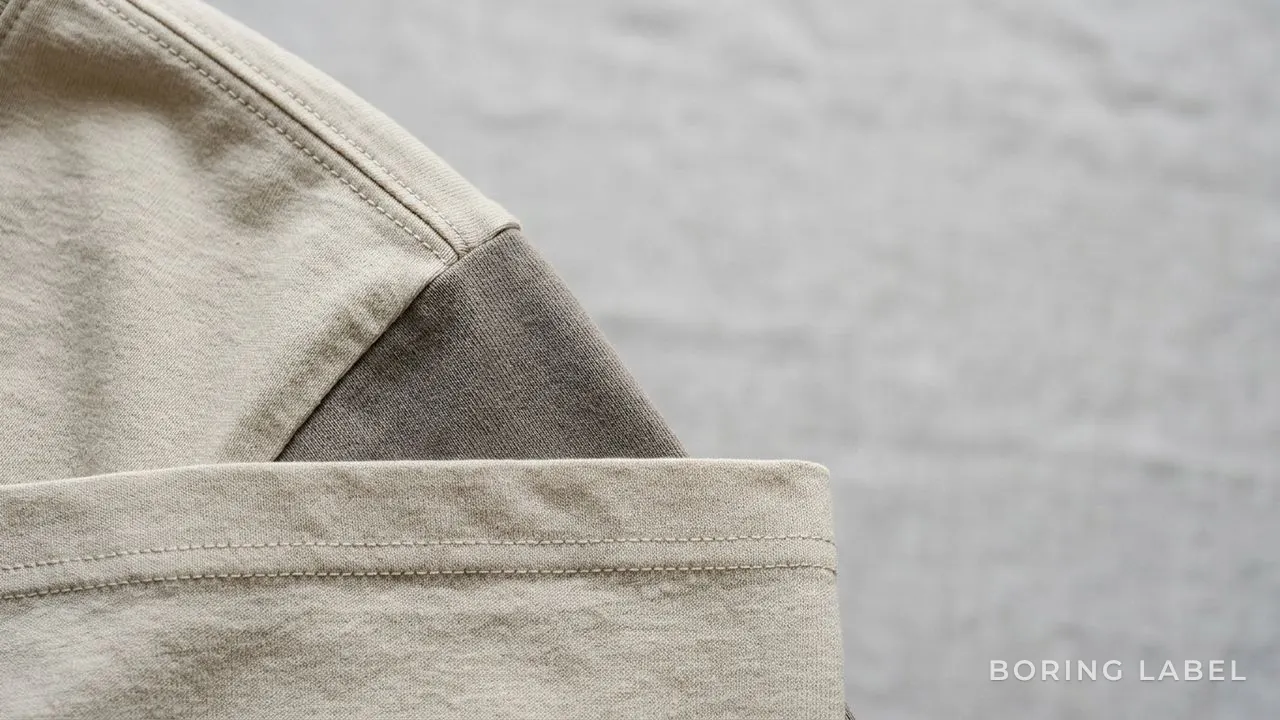
- Reinforced shoulder seams and a double-stitched hem.
- A collar with enough body to keep its shape after washing.
- Straight side seams that do not spiral after a few washes.
If those things are present, the garment is slow fashion in the only sense that matters, whatever the marketing says.
The India-specific reality
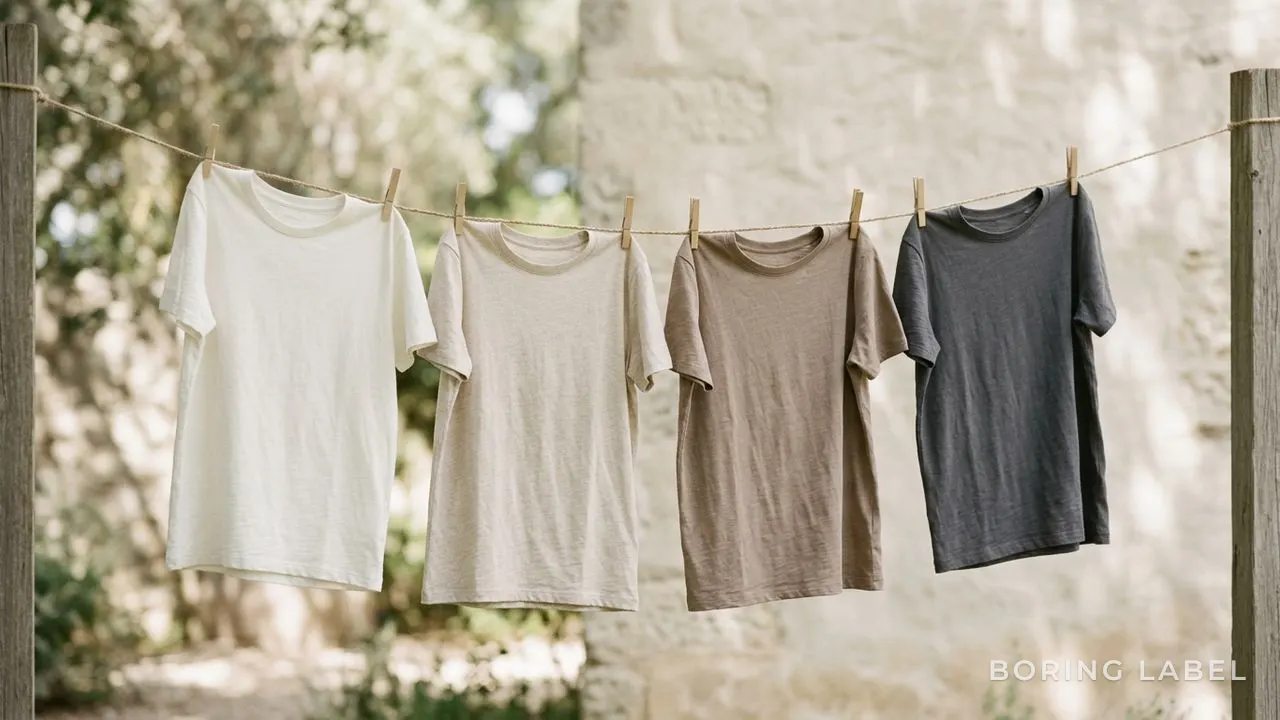
Most fast-versus-slow writing is imported from cooler climates and quietly assumes a wardrobe built for autumn. In Indian conditions the calculation shifts, and ignoring that leads people to buy the wrong "good" clothes.
Heat changes what "quality" means. In a Delhi or Chennai summer, a heavy 240 GSM premium tee is not a luxury, it is a punishment. Quality here is not just thickness - it is the right weight for the weather.
For most of the Indian year, a tee in the 160 to 190 GSM range hits the sweet spot: substantial enough to hang well and last, light enough to breathe. We size this up properly in the GSM guide.
The point for this discussion: do not equate slow fashion with heavy fabric. The slow choice in Indian heat is a well-made lighter tee, not a thick one.
Washing is harder on clothes here. Frequent washing in hot weather, strong detergents, and line-drying in direct sun all age fabric faster. That cuts both ways.
It makes cheap tees fail even sooner, strengthening the slow-fashion case. But it also means a good tee only delivers its long life if you actually look after it - which most people do not.
The single highest-return habit is learning to wash tees so they last longer; it can do more for cost per wear than the purchase decision itself.
Price psychology is real. A 1,400-rupee tee feels expensive in a market full of 300-rupee ones, and that feeling is legitimate - it is a meaningful amount of money. The honest framing is not "1,400 is cheap actually". It is "1,400 once buys what 1,600 across four purchases does not, and you look better the entire time." The slow-fashion case in India is strongest precisely because it saves money, not despite the higher sticker.
Discount culture distorts everything. Indian retail runs on the permanent sale. A garment "reduced" from 2,000 to 600 was very likely built to a 600-rupee spec and marked up so the discount feels like a win.
A strike-through price is marketing, not information. Judge the cloth in your hands, never the number with a line through it.
The environmental angle, briefly and honestly
We promised no sermon, so this stays short and avoids invented statistics.
The plain facts are not seriously disputed: clothing manufacturing uses a lot of water and energy, and a wardrobe built on rapid buying and discarding produces far more textile waste than one built on keeping things for years. Cheap synthetic-blend fabrics also shed plastic microfibres in the wash, which is its own quiet problem.
Here is the part that matters and gets buried under the guilt: the most sustainable garment is almost always the one you already own and keep wearing. Not the organic-cotton one, not the recycled-polyester one, not the one with the green hangtag. The one you wear two hundred times instead of twenty.
Extending the life of clothes you already have beats almost any "eco" purchase, because the purchase you do not make has the lowest footprint of all. We make this case fully in buy less, wear more.
So the environmental argument and the financial argument point the exact same way, which is convenient and not a coincidence. Buying fewer, better things and wearing them to death is cheaper for you and lighter on the planet at the same time.
You do not have to choose between your wallet and your conscience. They agree.
The thing to be wary of is using "sustainability" as a reason to buy more - a closet full of well-meaning eco-labelled clothes you barely wear is not sustainable, it is just expensive clutter with a good story. The footprint lives in the buying, not the adjective.
A practical hybrid strategy
Nobody real is purely fast or purely slow, and the people who claim to be are usually exaggerating. The sensible approach is a hybrid that uses each machine for the job it is good at. Here is a strategy that works without requiring sainthood or a large budget.
Split your wardrobe into staples and experiments.
- Staples - buy slow. The plain tees, the trousers, the one good jacket, the basics you wear weekly and that never go out of style. Spend properly here, because high wear-count makes the per-wear maths overwhelming. This is maybe 70 percent of what you actually wear and a smaller share of what most people spend.
- Experiments and trends - buy fast, sparingly. The seasonal colour, the cut you are testing, the one-event piece. Keep this deliberately small. The trap is letting the fun experimental purchases quietly become most of your spending while your staples stay cheap and tired.
Use a few simple rules to hold the line:
- The thirty-wear test. Before buying anything, ask honestly: will I wear this at least thirty times? If yes, lean slow and buy it well. If no, either buy it cheap or do not buy it.
- Buy staples to last, trends to bin. Match the durability of the purchase to the expected life of the style. A timeless item deserves good construction; a trend does not.
- Replace, do not accumulate. When a good staple finally wears out, replace it with another good one. Resist letting failed cheap purchases pile up as "backups" you never wear.
- Care is part of the strategy. Slow fashion only pays if you maintain it. Cold wash, inside out, line-dry out of direct sun. The longevity you paid for is partly your responsibility to protect.
Run this hybrid for a year and two things happen. You spend less overall, because the expensive staples stop needing constant replacement and the cheap experiments stay a small line item. And you look noticeably better, because the clothes you wear most are the ones built best.
The takeaway: it was never about guilt
Fast fashion versus slow fashion is sold to you as a moral question and it is really an engineering one. Fast is a speed machine, brilliant for trends and changing sizes and one-off needs.
Slow is a longevity machine, brilliant for the staples you wear to death. Trouble only starts when you use one in the other's job - and the most common, most expensive mistake is buying your everyday clothes from the speed machine.
The single decision that fixes most of it: buy your staples slow, buy everything else rarely. Spend properly on the handful of things you wear every week, because high wear-count turns a higher price into a lower cost per wear, and timeless styling means you never have to replace them for fashion's sake. Be cheap and ruthless about the rest, and buy little of it.
Do that and you end up spending less money, owning fewer things, looking sharper, and shedding less waste - all from one boring, unglamorous habit that no haul video will ever sell you. That is the whole game.
Not guilt, not hashtags, not a green hangtag. Just fewer, better things, worn for a long time.
Boring Label
Wear the point of the article.
One honest tee. Heavyweight combed cotton, a collar that holds, a fit that actually fits. No logo, no noise.
Shop the round-neck teeFree shipping across India · Easy returns
Keep reading
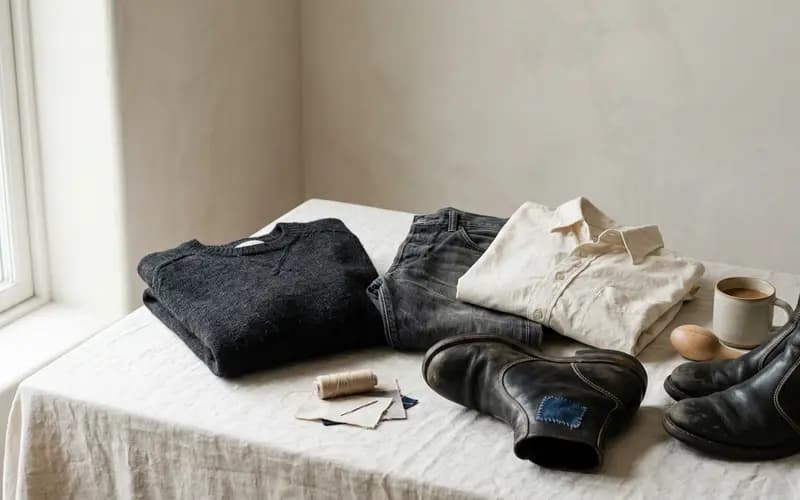
Buy Less, Wear More: A Practical Guide
The greenest tee is the one you wear two hundred times. Buying less is the whole strategy.
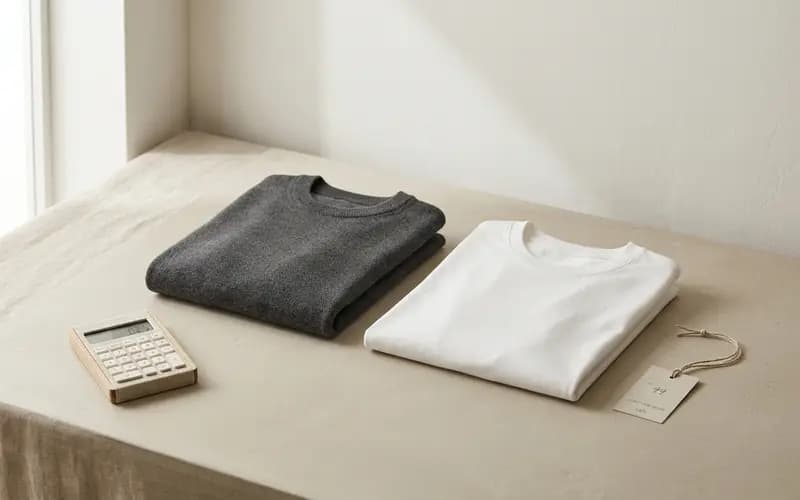
Cost Per Wear: The Only Clothing Maths You Need
The cheapest tee on the shelf is often the most expensive one you will own. Cost-per-wear explains why.
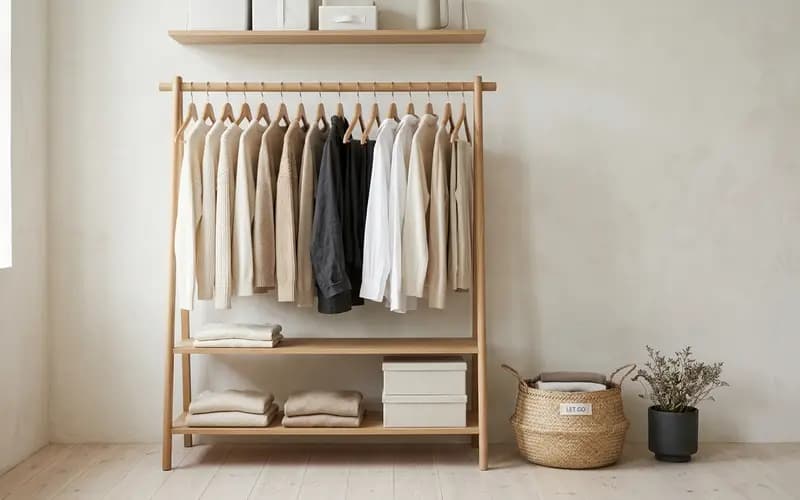
How to Declutter Your Wardrobe (and Keep It That Way)
Decluttering is easy once; keeping it decluttered is the real skill. Here is the system.
Stay in the loop
New writing, no noise
Occasional notes on fit, fabric, and dressing simply well. No spam, unsubscribe anytime.
Subscribe