Sustainability
Buy Less, Wear More
The greenest tee is the one you wear two hundred times. Buying less is the whole strategy.
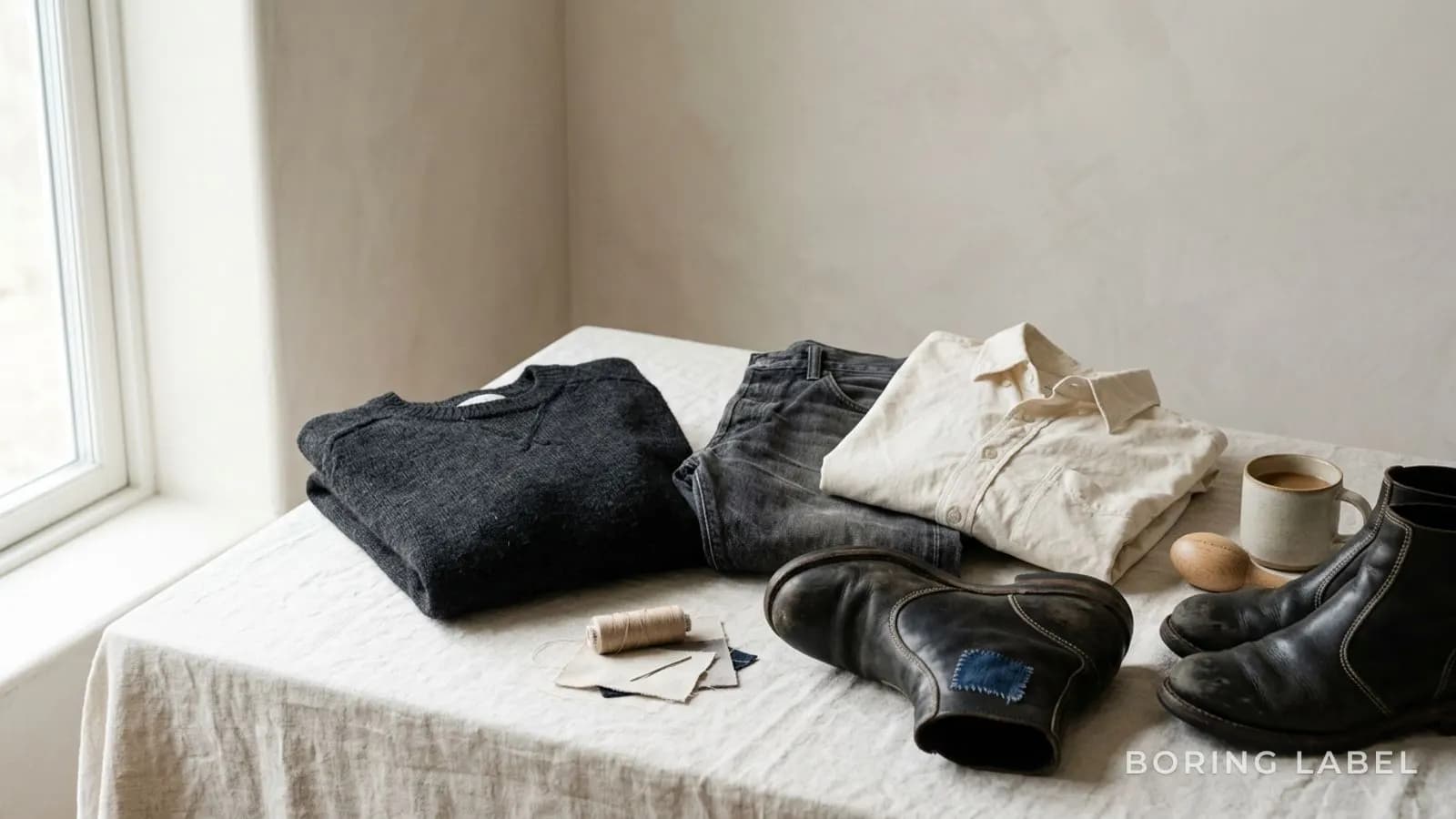
The greenest garment is the one you already own
There is a quiet trick the sustainable-fashion conversation plays on you. It spends most of its energy on what to buy - organic this, recycled that, a certified label, a greener material - and almost none on the thing that actually matters most, which is how much you buy and how long you keep it. The shift is subtle and convenient: it turns sustainability into another shopping category, which is the one outcome that keeps everyone selling.
The maths is not subtle, though. A garment's biggest environmental cost is its existence: the water, energy, dye, and materials that went into making it before it ever reached you, plus the transport that carried it to your door.
Once it exists, the most sustainable thing that can happen to it is that you wear it, repeatedly, for years. A tee worn two hundred times has spread its entire footprint across two hundred wears.
The same tee worn five times and discarded has concentrated that footprint into five. Same garment, fortieth of the impact per wear.
Nothing you can choose at the point of purchase comes close to that ratio.
This reframes the whole problem. The question is not "how do I buy sustainably?"
It is "how do I buy less and wear what I have to the end?" That is a less marketable answer, because nobody profits from you not shopping, which is exactly why you do not hear it as often.
But it is the honest one, and it is the entire strategy. Everything else - the certifications, the recycled blends, the conscious collections - is at best damage reduction layered on top of a purchase that may not have needed to happen.
This post is the practical version of that idea. Not a guilt trip and not a list of certifications to memorise - a usable method for buying less, choosing better when you do buy, and wearing things out the way they are meant to be worn out. It is the same instinct that an older generation in India never lost, dressed up here as a deliberate strategy rather than a necessity.
Why "buy less" beats "buy green"
Buying a more sustainable version of something you did not need is still buying something you did not need. The greener material reduces the impact of the garment; it does not eliminate it, and it does nothing about the impulse that produced the purchase. Two reasons "buy less" is the stronger lever, and both are worth holding onto when the marketing pulls the other way.
Nothing beats not making it. The most efficient garment, environmentally, is the one that was never manufactured because you did not buy it.
No greener cotton, no recycled blend, no clever supply chain comes close to the impact of a purchase that simply did not happen. Restraint is the only genuinely zero-footprint option.
Everything else is a smaller number, not zero. This is uncomfortable for the industry to say out loud, because the industry's entire premise is that you keep buying, just more thoughtfully.
But the arithmetic does not care about the business model.
Longevity multiplies everything. Because a garment's footprint is essentially fixed at production, every additional wear divides that fixed cost further.
Doubling how long you keep something roughly halves its impact per wear, for free, with no new purchase and no new material. There is no fibre innovation that delivers that kind of return.
Wearing things longer is the highest-leverage sustainable act available to an ordinary person, and it costs nothing - it actually saves money while it does it.
This is also, conveniently, the cheapest way to dress. Buying less and keeping things longer saves money and reduces impact at the same time - the two goals point in the same direction, which is rare enough to be worth noticing.
Usually doing the right thing costs more; here it costs less. We make the financial version of this argument in full in cost per wear; this is the same idea wearing a different coat.
The footprint per wear, illustrated
A simple comparison to make it concrete. Imagine the same garment under three different ownership habits. The numbers are illustrative, but the shape of them is exactly right.
| Habit | Times worn | Footprint per wear | Cost per wear (₹800 tee) |
|---|---|---|---|
| Fast-fashion churn | 8 | Very high | ₹100 |
| Average ownership | 40 | Moderate | ₹20 |
| Buy-less-wear-more | 200 | Very low | ₹4 |
The numbers move together. The habit that is gentlest on the planet is also gentlest on your wallet.
Same garment, same price, wildly different outcomes - and the only variable is how you treat it after you buy it. That is the whole insight on one row.
The ₹800 tee is not expensive or cheap in itself; what makes it one or the other is entirely how many times it leaves the wardrobe.
The buy-less half: choosing well, rarely
Buying less does not mean buying nothing. It means buying deliberately, so that the few things you do acquire actually get worn to the end rather than abandoned after a fortnight. A handful of rules make this work, and they are about judgement at the point of purchase, which is where most waste is decided.
Buy for the life you actually live. Most wardrobe waste is aspirational - clothes bought for a version of you that goes to more events, lives in a cooler climate, or has a different routine than you really do.
Buy for your real Tuesday, not your imagined Saturday. The things you wear constantly are worth real money; the things for rare occasions are worth very little per wear, no matter how good they look on the rail.
Be ruthlessly honest about which life you are dressing.
Default to versatile and plain. A garment that goes with many things in your wardrobe will be worn far more than one that goes with few.
Plainness and neutral colour are not aesthetic preferences here - they are longevity strategies, because they maximise the number of outfits a single item belongs to. A loud print belongs to one or two outfits; a plain tee belongs to a dozen.
A wardrobe where everything matches everything gets worn harder, and we lay out the colour logic in the essential t-shirt colours.
Buy quality where the wear is. Spend on the things you wear most, because that is where durability pays off and where cheap fails fastest.
A foundation tee you wear weekly justifies good fabric and construction; an occasion piece worn twice a year does not. Knowing the tells of quality matters here - why a tee looks cheap covers the collar, the GSM, and the seam, which are where cheap clothes betray themselves first and fastest.
Impose a waiting period. The simplest anti-impulse tool: when you want to buy something non-essential, wait a week.
Most wants evaporate in that time. The ones that survive a week are usually the ones worth buying.
This single habit cuts more waste than any material choice you could make, and it costs nothing but a little patience.
A short checklist before any purchase
Run a quick mental check before buying. If a candidate purchase fails two or more of these, put it back and revisit it in a week.
- Will I wear this at least once a week, in the life I actually live?
- Does it go with at least five things I already own?
- Is it well-enough made to survive two hundred wears?
- Do I have a clear gap it fills, or am I just shopping?
- Would I still want it in a week?
This is not about denying yourself. It is about making sure the things you bring home are things you will wear into the ground, which is the only purchase that is good for both your money and the planet. A wardrobe assembled this way is smaller, but every piece in it pulls its weight.
The wear-more half: making things last
The other half of the strategy is the one most people skip: actually wearing things to the end. Clothes rarely die of old age.
They die of neglect, bad laundry, and quiet abandonment in the back of the wardrobe. Each of those is fixable, and fixing them is where the longevity multiplier actually gets earned.
Treat the washing machine as the enemy. Most garment wear happens in the wash, not on your body.
Hot water, harsh cycles, and the tumble dryer age clothes faster than years of wearing them ever would. Cold water, gentle cycles, washing inside-out, and air-drying undo most of that damage and can roughly double a garment's life on their own.
We cover the full routine in how to wash t-shirts so they last longer - it is the single highest-return habit on this page, and it is free.
Wash less often. A surprising amount of laundry is reflexive rather than necessary.
Outerwear, jeans, and lightly-worn tops often need airing, not washing. Every wash you skip is wear you save, water you save, and energy you save, all at once.
Smell and visible dirt are the real signals; "I wore it once" is not a reason on its own. Hang it up, let it breathe, and wear it again.
Fix small things before they become big things. A loose button, a tiny seam opening, a faint stain - all trivial to fix early and wardrobe-ending if ignored.
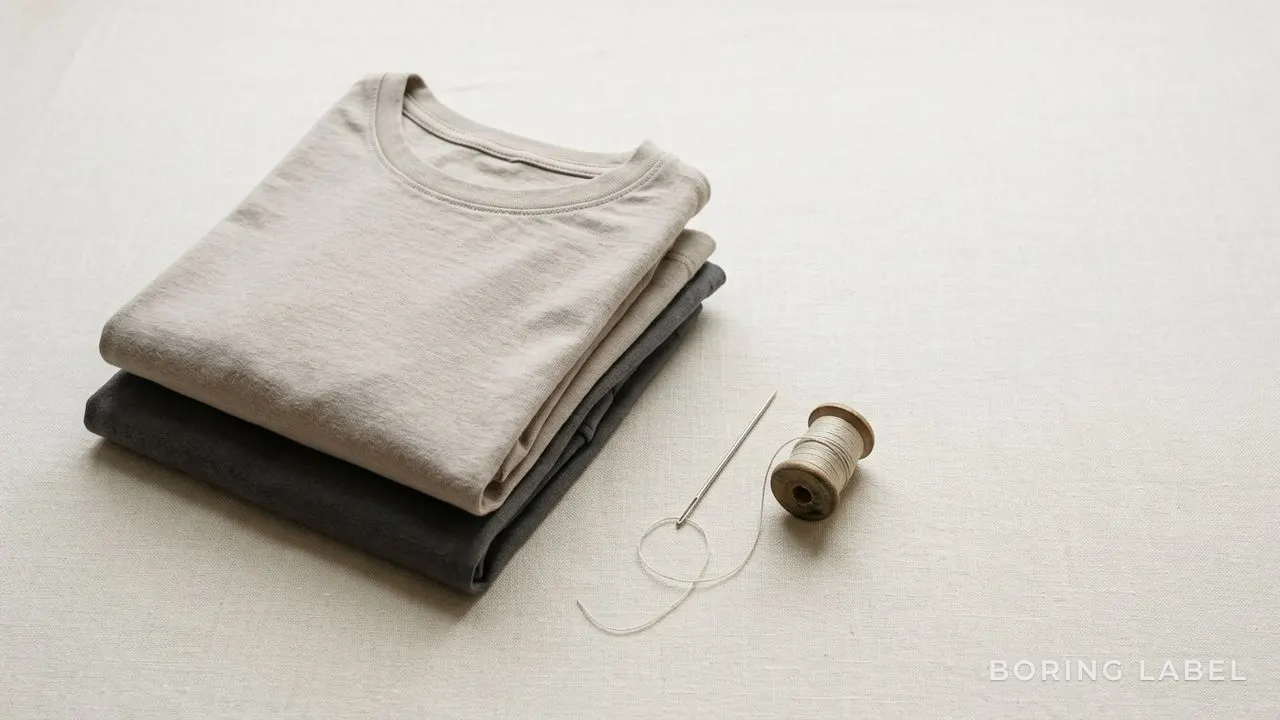
A basic repair kit and ten minutes saves a garment that would otherwise be quietly retired to the back of a drawer. This is an old habit India never fully lost - the neighbourhood tailor and the darning needle are still within reach - and it is worth keeping rather than treating clothes as disposable.
Rotate so nothing dies young or lingers unworn. Two failure modes sit at opposite ends: wearing one favourite into the ground while the rest sit unused, and buying things that never get worn at all.
A small, well-chosen wardrobe that you rotate through evenly solves both. Everything gets used; nothing gets thrashed.
This is part of why a deliberate capsule works so well - decluttering your wardrobe is the method for getting there and, more importantly, for staying there.
What ending well looks like
Wearing more also means thinking about a garment's end of life, because the goal is for nothing to leave your wardrobe with wear still left in it. A few principles for that final stage:
- Wear it until it is genuinely done - thin, stained beyond rescue, structurally finished. Not until it is merely no longer new, which is a different and much earlier point.
- Demote, do not discard. A tee too tired for outside is fine for sleep, lounging, or workouts. Give it a second job before you give up on it entirely.
- Repurpose the truly finished. A worn-out cotton tee is excellent cleaning cloth. The fibre still has a use even when the garment does not, and cotton rags beat paper towels for most jobs.
- Pass on what you stopped wearing but is still good. Things you bought wrong but are still wearable belong with someone who will wear them, not in a bin. A friend, a family member, a donation - anything but landfill.
The aim is that nothing leaves your wardrobe with wear left in it. A garment that exits genuinely used-up has done its full job, and its footprint has been spread as thin as it can go. That is the quiet victory of this whole approach: not a dramatic gesture, just a thing worn all the way out.
The hidden cost of cheap
There is a counter-argument that sounds sensible and is worth dismantling, because a lot of buying hides behind it: if a tee only costs a few hundred rupees, why agonise? Just replace it when it wears out.
Cheap and frequent feels harmless precisely because each individual purchase is small. The trap is in the word "each."
The cheapest tees are usually built to a price that guarantees a short life. Thin fabric from short, carded fibres, loose knit, a collar that goes wavy in a month, side seams that twist after a wash - these are not accidents, they are what the low price buys.
A garment engineered to be cheap is, very often, engineered to fail, and it does its job on schedule. You are not buying a tee; you are renting one for a season.
The footprint table earlier shows what that does to impact per wear, but it does the same to your money. Eight wears at a few hundred rupees, repeated, quietly outspends one good tee worn two hundred times - and it outspends it while producing several times the waste.
This is the part that makes "buy less" and "buy better" the same instruction rather than two competing ones. The wear-it-out strategy needs garments that can be worn out, which means a floor of quality below which the maths stops working no matter how careful you are.
You cannot wash gently and repair early your way to longevity in a tee that was made to dissolve. Below a certain build quality, durability is simply not on offer, and the only honest move is to step up to a garment that has it.
We make the full quality-versus-price case in affordable vs premium and fast fashion vs slow fashion - both land on the same conclusion from different directions.
The practical reading is not "always buy expensive." It is "buy at the level where wearing it out is actually possible, then wear it out." For everyday basics that you live in, that level is usually a notch above the cheapest shelf and well below the branded premium - the boring middle where the fabric is good, the construction is sound, and there is no name to inflate the price.
Breaking the buying reflex
Knowing all of this and actually buying less are two different things, because the pull to buy is engineered and constant. Sales, drops, limited editions, free-shipping thresholds, the small dopamine of a parcel arriving - the whole machinery is built to convert a passing want into a purchase before the want can fade.
Restraint is not a personality trait you either have or lack; it is a set of frictions you can put in your own way. A few that work.
Unsubscribe and unfollow the triggers. Most impulse purchases start with a notification or a feed.
A sale email you never see cannot tempt you. A brand you do not follow cannot show you its new drop.
Removing the inputs is far easier than resisting them, and it is a one-time action that pays off indefinitely. Cut the supply of temptation and the demand for willpower drops with it.
Make buying slightly inconvenient. Saved cards and one-tap checkout exist to remove the pause where you might reconsider.
Put the pause back. Make yourself type the card number, or keep a single list of "things I might buy" and only revisit it once a month.
The friction does the work that willpower struggles to.
Shop your own wardrobe first. Before buying anything, look properly at what you already own, including the things pushed to the back.
A surprising amount of "I have nothing to wear" is really "I have forgotten what I have." Rediscovering a good tee you stopped reaching for is the cheapest possible purchase - it is free, and it is already paid off.
Replace, do not accumulate. A useful rule: a new garment enters only when an old one is genuinely finished and leaves.
This keeps the wardrobe at a steady size and forces each new purchase to justify itself against the thing it is replacing. It also means you only ever buy what you have proven you actually wear out, which is the best possible buying signal.
The India advantage
A buy-less, wear-more habit is, in a sense, a return to something India practised by default not long ago. Within living memory, clothes were bought rarely and deliberately, repaired as a matter of course, handed down, and worn until genuinely done.
The local tailor altered and mended; nothing wearable was thrown away. That was partly necessity, but it produced exactly the low-waste, high-longevity relationship with clothing that the sustainable movement is now trying to teach back to the world.
The infrastructure for it still exists here in a way it does not everywhere. A tailor who can take in a seam or replace a zip is usually a short walk away and inexpensive.
Alterations and repairs that would cost a fortune elsewhere are routine and cheap. This is a genuine advantage for anyone wanting to wear things longer - the support system for keeping clothes alive is intact.
The task is mostly to stop treating clothing as disposable and to use the repair culture that is already on the doorstep.
Less, but worn to the end
The sustainable wardrobe is not a shopping category. It is a habit, and the habit is unglamorous: buy less, choose well, and wear things until they are actually finished.
No certification matches the impact of a tee worn two hundred times, because the impact was set the day it was made and your only real power is to divide it across as many wears as possible. The most sustainable shirt in the world is the one already in your drawer, worn again tomorrow.
The part the industry will not emphasise is that this strategy asks you to buy less from everyone, including the people selling you the green version. That is precisely why it is trustworthy.
It is the one piece of sustainable-fashion advice that nobody profits from you taking, which is a fair sign it is the honest one. When the advice and the seller's interest finally diverge, the advice is usually worth more.
So spend your attention where it counts. Buy slowly and deliberately, default to versatile and well-made, wash gently, repair early, and wear everything to the end.
Do that and you will own less, spend less, and waste far less - without ever having to think about your wardrobe as a moral project at all. The greenest tee really is the one you wear two hundred times.
Buying less is the whole strategy, and wearing more is how you finish the job.
Boring Label
Wear the point of the article.
One honest tee. Heavyweight combed cotton, a collar that holds, a fit that actually fits. No logo, no noise.
Shop the round-neck teeFree shipping across India · Easy returns
Keep reading
The Drawer of Tees You Never Wear (And How to Fix It)
Decluttering empties the drawer. The rebuy decision is what stops it refilling with tees you never wear.
How Many Plain T-Shirts Does a Man Need?
Do the laundry maths, land on your real number, and discover why repetition beats variety in the drawer.
How to Declutter Your Wardrobe (and Keep It That Way)
Decluttering is easy once; keeping it decluttered is the real skill. Here is the system.
Stay in the loop
New writing, no noise
Occasional notes on fit, fabric, and dressing simply well. No spam, unsubscribe anytime.
Subscribe