Fabric
Supima Cotton vs Regular Cotton
Premium cotton is heavily marketed and barely understood. Here is the honest case for long-staple cotton — and where the price tag lies.
Why a ₹500 Tee and a ₹1,299 Tee Feel Like Different Worlds
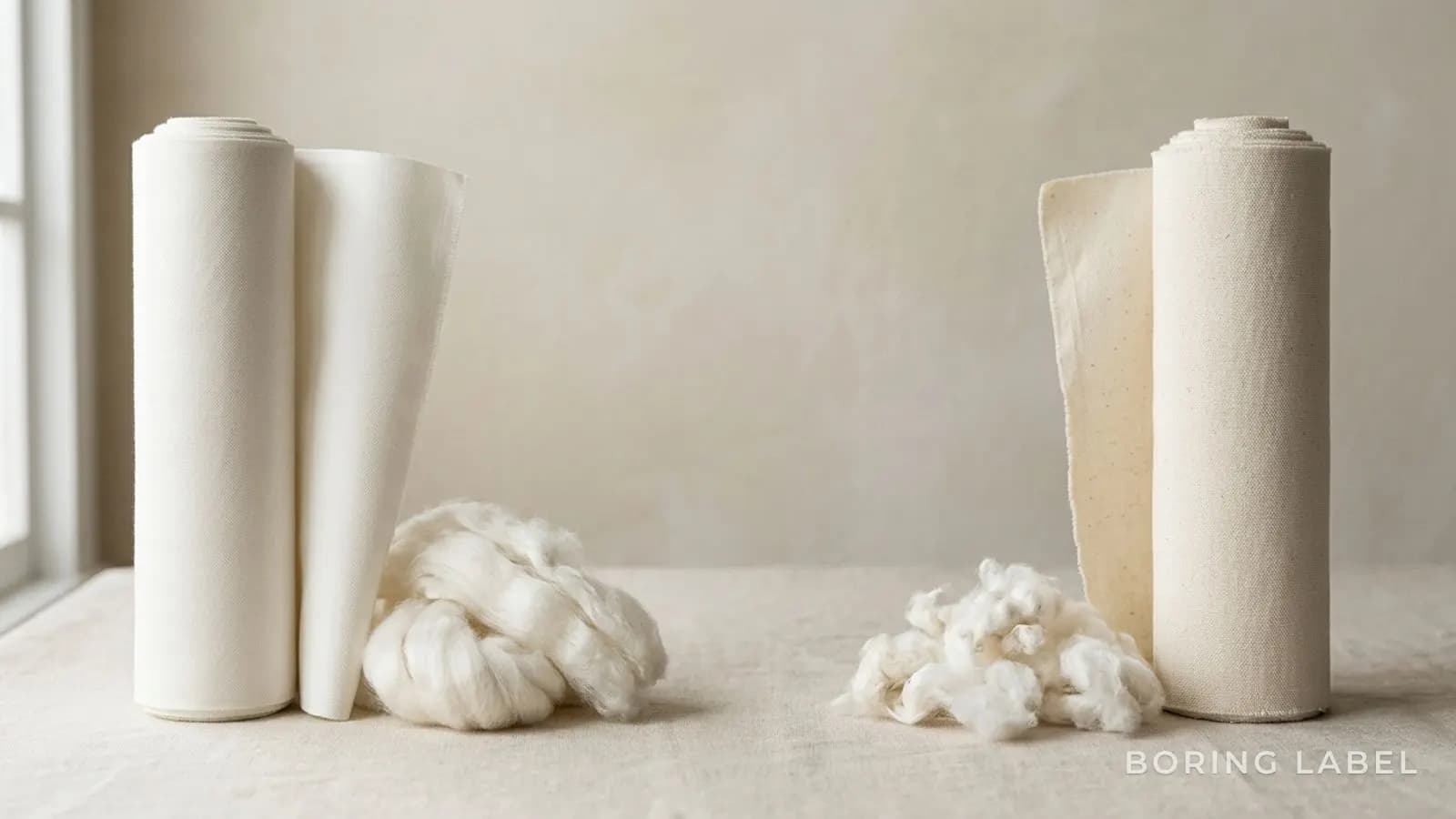
Hold a ₹500 plain tee in one hand and a good Supima tee in the other, and the difference shows up before you have read a single tag. The cheaper one feels a little dry, a little fuzzy, slightly stiff.
The Supima one feels cool, smooth, almost liquid as it folds over your fingers. They are both cotton.
They are both plain. One of them costs nearly three times the other.
And the honest question every sensible buyer asks is: what exactly am I paying for, and is it worth it?
That question deserves a real answer, not a brochure. Premium cotton is one of the most marketed and least understood things in clothing.
The word Supima gets stamped on tags, the price climbs, and most people are left guessing whether they bought something genuinely better or just paid a tax on a nicer-sounding name. This piece is the long answer.
By the end you will know what Supima actually is, where the extra cost comes from, what it fixes, what it does not fix, and how to tell whether the ₹1,299 tee in front of you is the real thing or just a story.
We will not pretend Supima is magic. It is not.
It will not keep you cool in 95 percent humidity, it still shrinks if you abuse it, and a high price tag on its own proves nothing. But on the things it does control - smoothness, pilling, strength, how long the tee survives - the gap between it and ordinary cotton is real, measurable, and large enough to change the maths of what a t-shirt actually costs you over its life.
That is the case worth making carefully, so let us make it.
What Supima Actually Is (And Isn't)
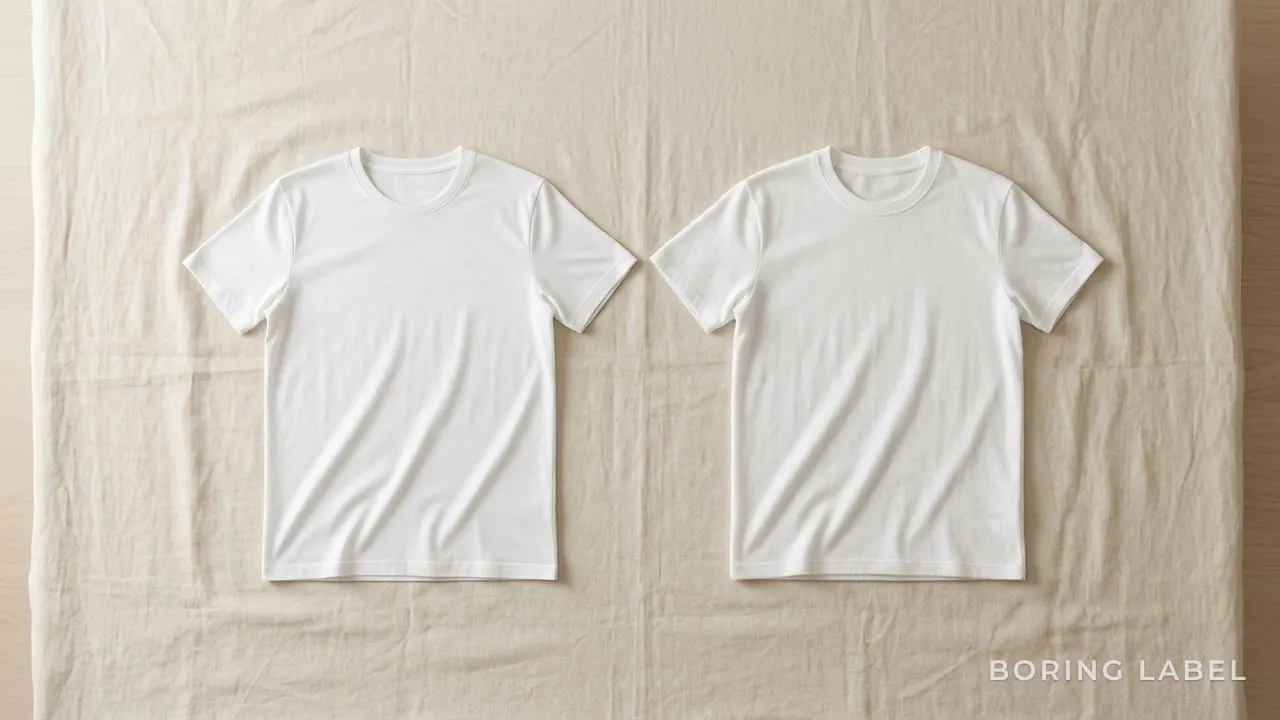
Most of the confusion around premium cotton comes from three words people use as if they mean the same thing: cotton, Pima, and Supima. They do not. Untangling them is the single most useful thing you can do before spending money, so we will go slowly.
Ordinary Cotton Versus Long-Staple Cotton
Almost all the cotton in the world is what the trade calls upland cotton. It is hardy, cheap to grow, and grows nearly everywhere.
Its fibres - the individual strands that get spun into yarn - are short, typically around 20 millimetres long. That short fibre length, called the staple, is the root of most of the things people dislike about cheap tees, and we will come back to why.
A small slice of the world's cotton is long-staple, or extra-long-staple (ELS) cotton. These plants produce fibres closer to 35 to 38 millimetres - nearly twice as long.
Pima cotton is one of these long-staple varieties, grown in the United States, Peru, Australia, and a few other places. Egyptian Giza cotton is another.
Long fibres are harder to grow, give lower yields per acre, and are fussier about climate, which is exactly why ELS cotton is a tiny fraction of global production - well under three percent of all the cotton grown.
So the first thing to fix in your head: Supima is not a separate plant. It is a specific, certified slice of long-staple Pima cotton. The premium starts with biology - longer fibres - and biology is the part marketing cannot fake.
Pima Versus Supima: The Trademark That Matters
Here is the trap. "Pima" is a generic word.
Any brand, anywhere, can print "Pima cotton" on a tag, and there is no central body checking whether the fibre inside is genuinely long-staple, where it was grown, or how good it is. Pima is a description, and descriptions are cheap.
"Supima" is different. It is a registered trademark, managed by the Supima Association of America since 1954, and it can legally only be applied to 100 percent American-grown ELS Pima cotton from licensed sources.
To put a Supima tag on a garment, a brand has to be part of a tracked, licensed chain that runs from the farm to the finished shirt. The cotton is grown in a handful of US states - Arizona, California, New Mexico, Texas - under conditions that suit long-staple fibre.
The Supima Association has gone further than paperwork. Genuine Supima can be verified through fibre forensics - DNA-level marking and isotope-based origin testing of the kind used to confirm where a fibre actually came from.
The point is not that you, the buyer, will run a lab test. The point is that "Supima" is a claim somebody can be held to, whereas "premium cotton" or even bare "Pima" is a claim nobody owns.
When you are deciding whether a price is honest, the difference between a trademark with a traceable chain and a vague adjective is most of the answer.
Where Egyptian Giza Fits
People often ask whether Egyptian cotton beats Supima. The honest answer is that the famous Giza varieties have a slightly longer staple - some Giza grades run a couple of millimetres longer than Supima.
But two things matter more than that small gap. First, "Egyptian cotton" is, like "Pima", a loosely policed term; plenty of fabric labelled Egyptian is blended or of ordinary grade, because the name sells.
Second, the very best Giza is rare, expensive, and hard to source consistently, whereas Supima's whole system is built around consistent, verifiable supply. A reliable long-staple cotton you can actually trust beats a legendary one you cannot confirm.
The millimetre war is mostly marketing; provenance and consistency are the real contest.
A Myth Worth Killing Early: GSM Is Not Quality
Before we go further, kill one belief that wastes people's money constantly: the idea that a heavier tee is automatically a better tee. GSM - grams per square metre - measures how much fabric is in the shirt, not how good that fabric is.
A dense 240 GSM tee spun from short, carded upland cotton will still pill, still feel rough, and still thin out, no matter how substantial it feels on the rack. A well-made 160 to 180 GSM Supima tee can outlast it comfortably.
Weight and fibre quality are independent levers. If you want the full picture of how weight actually behaves in Indian heat, our GSM guide walks through the numbers - but the rule to carry here is simple: never read GSM as a quality score.
It is a weight, nothing more.
The Durability Angle: Pilling, Strength, and Why Cheap Tees Die Young
This is where long-staple cotton stops being a story and starts being physics. Almost every way a cheap tee disappoints you - it goes fuzzy, it pills into little balls, it thins at the shoulders, it loses its shape - traces back to one thing: short fibres. Understand the mechanism once and the rest is obvious.
Why Your ₹500 Tee Pills After a Few Weeks
When cotton is spun into yarn, the long fibres get gripped and locked into the twist of the thread. The short fibres cannot be properly held - they are too small - so their ends poke out of the surface of the yarn rather than lying inside it. A yarn made mostly of short fibres is therefore hairy, covered in thousands of tiny loose ends.
Every time that fabric rubs - against a bag strap, a seatbelt, the inside of a jacket, or just itself in the wash - those loose ends work free and tangle into the small hard balls we call pills. This is the entire reason budget tees go bobbly, often within the first ten to fifteen washes.
It is not bad luck or bad washing; it is short fibres doing exactly what short fibres do. We dig into the full mechanism in why t-shirts pill, but the headline is that pilling is a fibre-length problem.
Supima's long fibres change the equation. Because the fibres are nearly twice as long, far more of each one is anchored inside the twist of the yarn, and far fewer ends stick out to break free. There is no honest way to promise a Supima tee will never pill - any fabric can pill under enough abuse - but it resists pilling for years rather than weeks, and that difference is the one you actually live with.
Smoothness and Strength Come From the Same Place
The same long fibres that resist pilling also make the fabric smoother and stronger. Smoother, because a surface of cleanly bound long fibres reflects light evenly and feels cool and slick rather than fuzzy and warm - that "buttery" hand people describe is not a vague impression, it is the absence of protruding fibre ends.
Stronger, because long fibres bound tightly into the yarn carry load far better than short fibres that are barely held at all. Long-staple cotton is consistently regarded as meaningfully stronger than ordinary upland cotton, which is why a Supima tee resists thinning, stretching out of shape, and developing holes for much longer.
So smoothness, pilling resistance, and durability are not three separate features you are paying for three times. They are one property - long fibres - showing up in three places. That is what makes long-staple cotton an unusually efficient upgrade: a single change in the raw material improves several different things you care about at once.
Shrinkage: What Supima Does and Doesn't Fix
Here is a piece of honesty most premium-cotton sales pages skip. Supima shrinks.
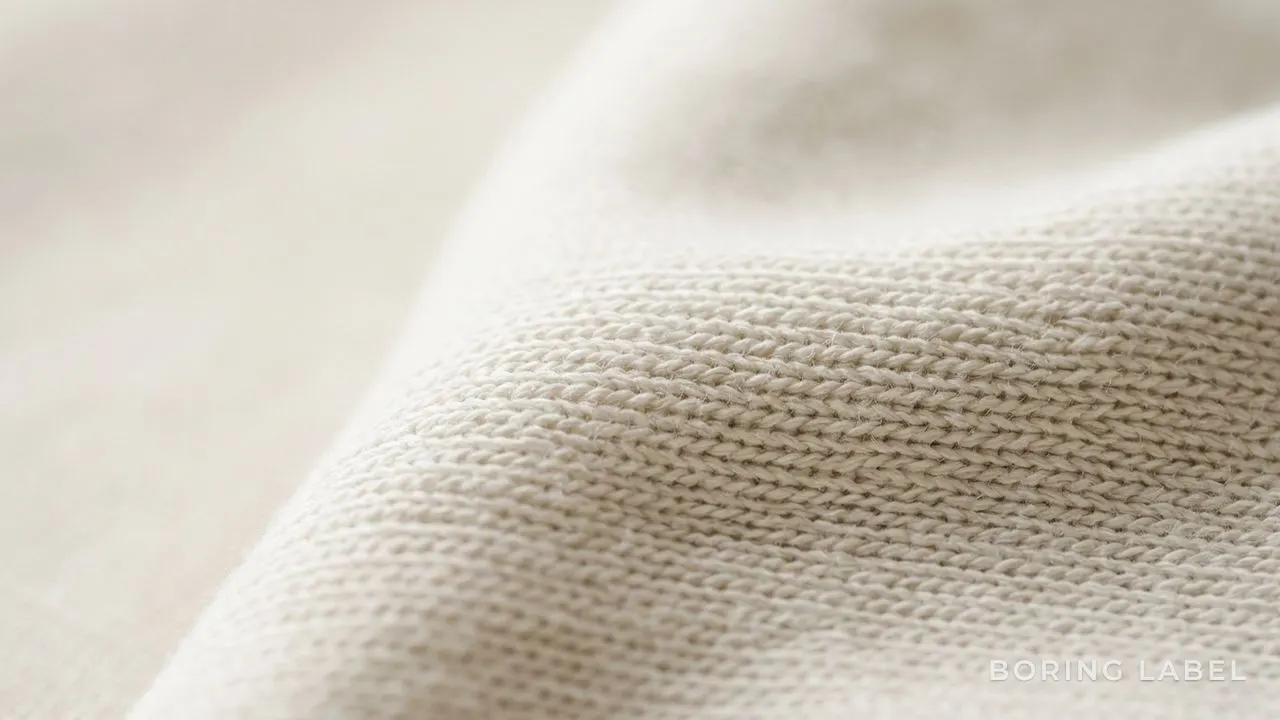
All cotton shrinks, because knitting stretches the yarn slightly and the first hot wash lets it relax back. What is fair to say is that well-made long-staple cotton tends to shrink less and more predictably than cheap short-staple cotton - the stronger, more uniform yarn holds its dimensions better - and that a tee finished properly (pre-shrunk during manufacturing) settles down after the first wash or two rather than continuing to shrink for months.
But it is not shrink-proof, and pretending otherwise sets you up to feel cheated. Wash it cold, skip the hot tumble dry, and dry it flat or on a hanger, and a good Supima tee will hold its size and shape for years.
Boil it and bake it in a hot dryer and it will shrink and distort like any other cotton. Premium fibre buys you a better starting point and more forgiveness; it does not buy you the right to ignore the care label.
We cover the full routine in how to wash t-shirts so they last longer, and it matters more for an expensive tee, not less.
Cost-Per-Wear: Why the Expensive Tee Is Often the Cheap One
Now the part that actually settles the "is it worth it" argument - and the part Indian buyers, who are rightly careful with money, tend to find most convincing once they see it laid out. The trick is to stop counting what a tee costs to buy and start counting what it costs to wear.
The Maths, Done Honestly
Imagine a ₹500 short-staple tee. In real use - washed often, worn hard - that kind of tee tends to start pilling within weeks and look tired within a year, after perhaps fifty to seventy wears before you stop reaching for it. Call it ₹500 over 60 wears, which is a little over ₹8 a wear, and then you buy another one.
Now a ₹1,299 Supima tee. Because it resists pilling, holds colour, and does not thin out, it stays in your real rotation for years - several hundred wears is entirely normal for a well-cared-for long-staple tee. Spread ₹1,299 across, say, 250 wears and you are paying around ₹5 a wear, and you have not had to re-shop, re-decide, and re-buy three times in between.
Two honest caveats, because the maths only works if you respect them. First, the wear counts above are reasonable illustrations, not laboratory guarantees - your own laundry habits move them a lot.
Second, and this is important, a high price does not by itself buy durability. There are ₹1,200 tees made of ordinary cotton that will not outlast a careful ₹500 one.
The durability comes from the long-staple fibre and the construction, not from the number on the tag. The cost-per-wear case for Supima holds only when the Supima is real - which is exactly why the rest of this piece spends so long on how to tell.
If you want to run these numbers for your own wardrobe, our cost-per-wear guide gives you the formula.
The Hidden Costs of Buying Cheap Repeatedly
Cost-per-wear understates the case slightly, because the cheap tee carries costs that never show up on its price tag. Every time one wears out you spend time and attention re-shopping.
You carry the small ongoing irritation of owning a wardrobe full of things that look slightly tired. And there is the waste: a tee binned after a year and replaced three times sends three times as much to landfill as one tee worn for four years.
None of that appears at the till, but you pay it. The deeper argument for owning fewer, better things is in buy less, wear more - and it is as much a financial argument as an aesthetic one.
India, Humidity, and What Premium Cotton Really Does for You
A lot of premium-cotton writing is written for cool, dry climates and quietly assumes you live in one. You probably do not. So here is the section that matters most for an Indian wardrobe, written without the usual fantasy.
The Honest Truth About Cotton and Humidity
Cotton is breathable and absorbent - it pulls sweat off your skin, which is why it feels better than polyester in heat. But absorbent has a flip side: cotton can hold a lot of moisture, and in genuinely extreme humidity - monsoon air at 90 percent and up - a saturated cotton tee will feel damp and cling, Supima included.
Long-staple cotton does not change the basic physics of the fibre. If your single highest priority is staying dry in peak monsoon, very light, fast-drying fabrics and looser weaves matter more than fibre pedigree.
We compare the options in the best breathable fabrics for summer.
So let us be plain: Supima solves fibre quality, not weather. Anyone who tells you a premium tee will keep you cool in a Chennai August is selling you a feeling, not a fact.
Where Supima Genuinely Helps in Indian Conditions
That said, the Indian climate is exactly where Supima's real strengths pay off hardest, for a reason that has nothing to do with feeling cool in the moment. India is hot, and that means tees here get washed constantly - often after a single wear in summer.
High wash frequency is precisely the condition that destroys cheap cotton fastest: every wash works more short fibres loose, fuzzes the surface a little more, fades it a little more. A tee washed two hundred times a year in Delhi heat ages far faster than the same tee would in a mild climate where it is washed thirty times.
This is why long-staple cotton arguably matters more in India, not less. The smoother surface also sits more kindly against warm, damp skin than a fuzzy one, and a cleaner yarn handles repeated washing without going rough.
You are not buying a tee that defeats the weather. You are buying a tee that survives the punishing wash-and-wear cycle the weather forces on it, and still looks good at the end of it.
That is the realistic promise, and it is a genuinely valuable one.
How to Spot Real Supima and Avoid Paying Premium for Ordinary Cotton
Everything above only pays off if the cotton is genuinely what the tag claims. Because "premium" and even "Pima" are loosely policed words, this is where a careful buyer protects their money. Here is how to read a tee like someone who knows the trade.
Read the Label Like a Skeptic
- "100% Supima cotton" or a licensed Supima tag - the strongest signal, because Supima is a trademark tied to a traceable, US-grown chain. A brand using it has agreed to be held to it.
- "Pima cotton" with no further detail - possibly genuine long-staple, possibly not. Pima is a description anyone can print. Treat it as a maybe, not a yes.
- "Premium cotton", "luxury cotton", "combed cotton" - these describe processing or marketing, not staple length. Combed cotton is a real and worthwhile upgrade - it removes short fibres after the fact, and we explain it fully in combed cotton vs carded - but it is not the same as starting with long-staple fibre. Good, not the same.
- Just "cotton", or no fibre detail at all - assume ordinary short-staple upland cotton. Makers who use long-staple cotton almost always say so, because they paid for it.
Trust Your Hands
The touch test from our how to spot a cheap-looking tee guide works here too. Real long-staple cotton feels smooth and cool, almost slick, with a faint even sheen when you hold it to the light.
Ordinary cotton feels fuzzier and warmer, and held up to a window it shows a faint halo of tiny fibres standing off the surface - that halo is the future pilling, visible before you have bought it. Softness alone is not the test, because fabric softener and finishing chemicals make cheap tees feel plush when new and then wash straight out.
You are feeling for smoothness, not just plushness.
The Red Flags
Be most suspicious when the price and the claim do not match. Genuine Supima carries a real cost from farm to shelf - the long-staple cotton itself, the lower yields, the licensed supply chain.
A tee claiming Supima at a suspiciously low price is the one to doubt. Vague premium language with no specific fibre claim, a "Supima-feel" or "Supima-blend" hedge rather than a straight 100 percent Supima statement, and a brand that will not tell you the fibre content at all - those are the signs you are paying a premium price for an ordinary product.
The whole reason we put long-staple combed cotton into our own round-neck tee and say so plainly is that the claim is only worth anything if you can hold the maker to it.
Organic, Premium, and Why They Are Different Questions
One more source of confusion, because it costs people money and goodwill. Many buyers fold "organic" and "premium" into a single vague idea of "good cotton". They are answers to completely different questions.
Organic refers to how the cotton was farmed - without synthetic pesticides and fertilisers, to a certified standard. It is a question about the environment and farming practice.
Long-staple quality - Supima, Pima, ELS - refers to the fibre itself, its length and strength. It is a question about how the finished tee will feel and last.
These do not move together. Organic cotton is often shorter-staple, which means it can be softer when new but less durable over time.
Long-staple cotton is usually conventionally grown. You can have one without the other, and you can occasionally find certified organic long-staple cotton - but it is rare and costs more again, because you are paying for two separate things at once.
The practical point: decide which problem you are solving. If you want a tee that lasts and resists pilling, that is a fibre-quality question, and long-staple is the answer.
If your priority is farming impact, that is an organic question. Confusing the two is how people end up disappointed by a soft organic tee that wore out, or a durable premium tee that was not grown the way they assumed.
For the wider trade-offs between fast and slow fashion, see fast fashion vs slow fashion.
Your Biggest Questions, Answered
A short, honest FAQ for the things people actually ask before they buy.
Is Supima really worth nearly three times the price of a regular tee? On cost-per-wear, usually yes - if the Supima is genuine and you care for it, it tends to outlast several cheap tees and works out cheaper per wear. If you only ever wear a tee a handful of times, or you abuse it in a hot dryer, the gap narrows and a careful budget tee may be the rational choice. Worth it is a function of how much you wear it and how well you treat it.
Does Supima shrink? Yes, all cotton can shrink. Well-made, properly finished long-staple cotton tends to shrink less and more predictably, and it settles after the first wash or two rather than shrinking endlessly. Cold wash, no hot tumble dry, dry flat or hung, and it will hold its size for years.
How do I know a tee is genuinely Supima? Look for an explicit 100 percent Supima claim from a brand willing to stand behind it, not vague "premium cotton" or a "Supima-feel" hedge. Back it up with the touch and light tests. Be suspicious of a Supima claim at a price too low to support real long-staple cotton.
Will it pill at all? Any fabric pills under enough friction, so no honest answer is "never". But long-staple cotton resists pilling for years rather than weeks, because the long fibres stay anchored in the yarn instead of working loose. It is the single biggest visible difference over time.
Is a heavier (higher GSM) tee better? No. GSM is weight, not quality.
A heavy tee of short-staple cotton still pills and roughens. A sensible mid-weight long-staple tee will usually outlast and out-feel it.
Judge fibre and weight separately.
Won't it feel hot and clammy in Indian humidity? In extreme monsoon humidity any saturated cotton clings - Supima does not change that. Where it wins is durability through the heavy wash-and-wear cycle that Indian heat forces on your tees, and a smoother surface against warm skin. For peak-humidity comfort specifically, lighter fast-drying fabrics matter more than fibre grade.
Is It Worth It? The Honest Verdict
Here is the summary, with nothing oversold.
Supima is genuine long-staple American Pima cotton, protected by a trademark and a traceable supply chain, which is why "Supima" is a claim that means something while "premium cotton" usually means nothing. The longer fibres are not a marketing flourish; they are the physical reason the fabric feels smoother, resists pilling for years instead of weeks, holds colour and shape, and survives far more washes before it thins out. On cost-per-wear, a real Supima tee that you look after is very often the cheaper choice in the long run, not the expensive one - especially in India, where constant washing punishes cheap cotton fastest.
What it will not do is defeat the weather, escape the laundry rules, or justify its price purely by costing more. It will not keep you dry in peak monsoon.
It still needs a cold wash and no hot dryer. And a high price tag on ordinary cotton is exactly the trap this whole guide exists to help you avoid - the value is in the fibre, not the figure.
So the rule is simple. For the plain tees you actually live in - the ones in heavy rotation, washed weekly, worn close to the skin, expected to look good for years - genuine long-staple cotton earns its premium many times over, and the cost-per-wear maths backs it up.
For something you will wear a handful of times, or abuse, save your money. The skill is telling which tee is which before you spend, and now you can: read the label like a skeptic, trust your hands, doubt a claim that is too cheap to be true, and count the wears, not the rupees.
Premium cotton, bought knowingly, is one of the few upgrades in clothing that quietly pays you back. Bought blindly, it is just a bigger number.
The difference is entirely in knowing what you are looking for.
Boring Label
Wear the point of the article.
One honest tee. Heavyweight combed cotton, a collar that holds, a fit that actually fits. No logo, no noise.
Shop the round-neck teeFree shipping across India · Easy returns
Keep reading
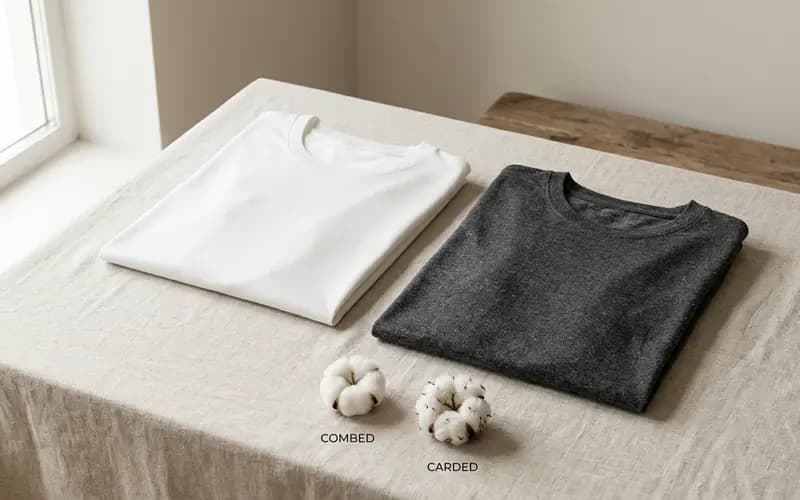
Combed Cotton vs Carded: Why It Matters
One extra step removes the short fibres that make a tee fuzz, pill, and weaken. That step is combing.
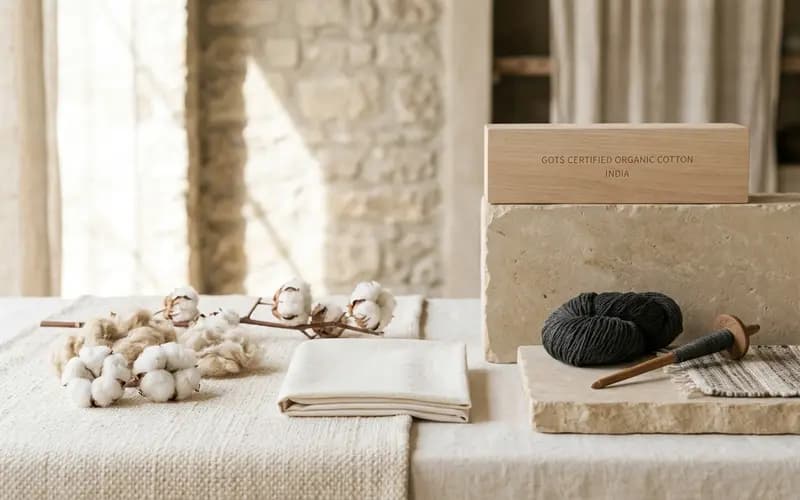
Is Organic Cotton Worth It in India? Honest Take
Organic is a farming method, not a quality grade. What GOTS really means, the greenwashing to dodge, and whether the premium is worth it.
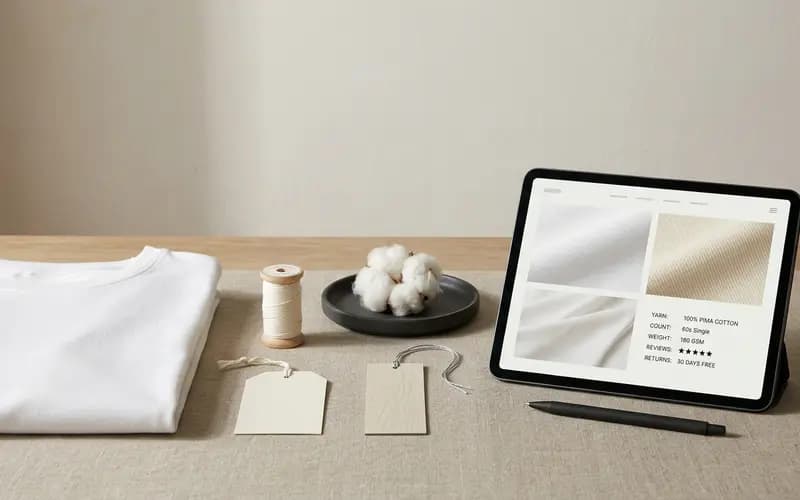
How to Spot Good Cotton Online (Without Touching It)
The touch test is gone when you shop online. Here are the six proxy signals that tell good cotton from bad before you spend.
Stay in the loop
New writing, no noise
Occasional notes on fit, fabric, and dressing simply well. No spam, unsubscribe anytime.
Subscribe