Fabric
Why T-Shirt Collars Sag, Stretch and Go Wavy - and How to Prevent It
The neck almost always dies first. The four reasons collars sag - and how to spot a good one before you buy.
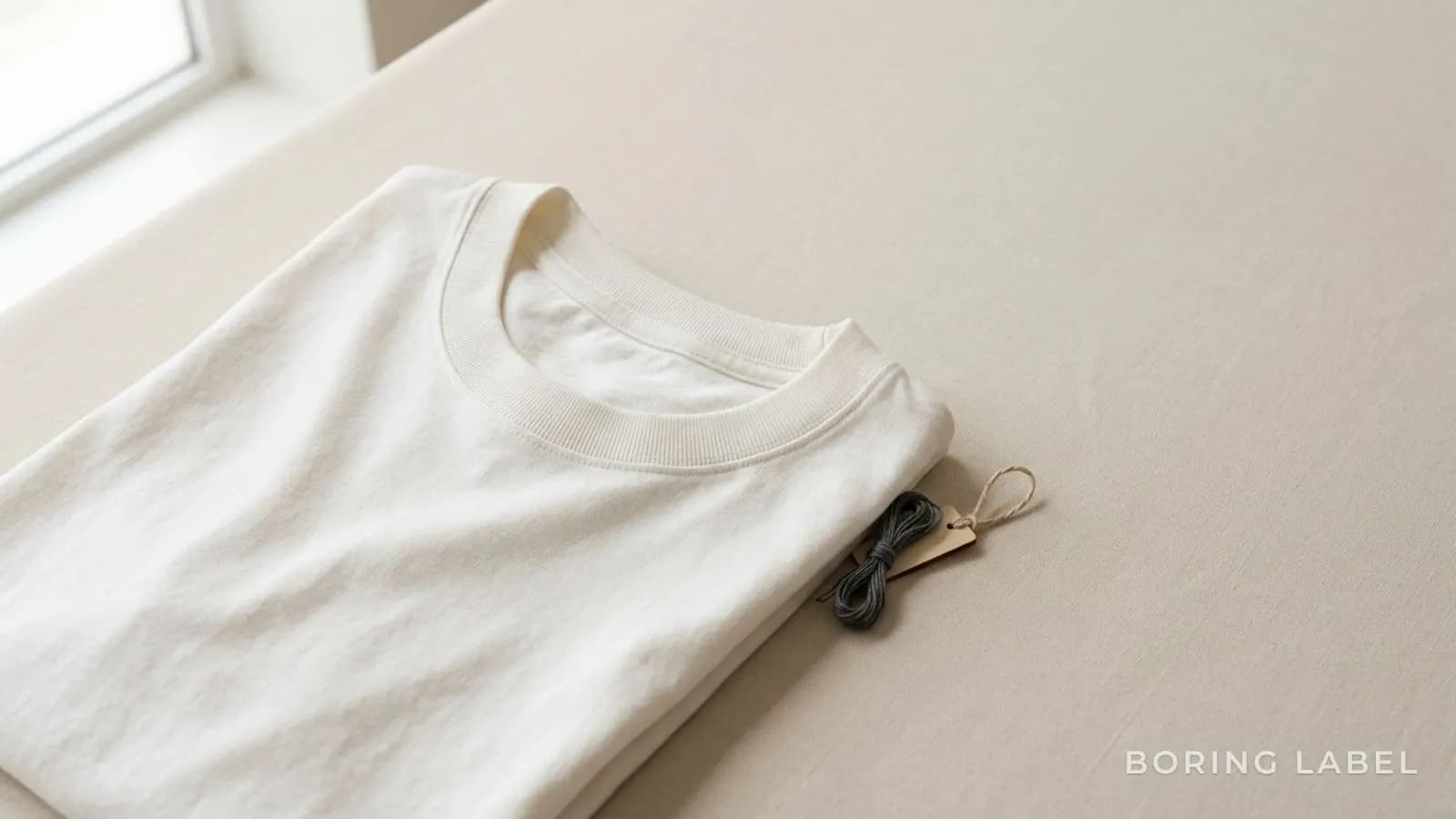
The First Part of a Tee to Die
Pay attention to your tees the next time you sort the wardrobe, and you will notice something. The body of a cheap tee can still look fine - the colour holding, the fabric intact - while the collar has given up completely.
It sits wide and floppy where it used to sit snug. It ripples in little waves instead of lying flat.
It has gone soft and tired in a way no amount of ironing fixes. The shirt is technically still wearable, but it reads as old, and the collar is the single thing telling everyone so.
This is the quiet truth about t-shirts: the neck almost always dies first. You can buy a tee with beautiful long-staple combed cotton, a sensible weight, clean dyeing - and still watch the collar wave and sag within a season, because the collar is built separately from the body and follows entirely different rules.
Most fabric advice you read, including a lot of ours, is about the body of the shirt. The collar is a different engineering problem hiding in plain sight on the same garment.
By the end of this you will understand exactly why collars sag, stretch, and go wavy - the mechanical reasons, not vague ones - and how to tell a collar that will last from one that will not, with your hands, before you buy. You will also know what habits of yours are quietly killing collars that were fine to begin with, because some of this is the shirt and some of it is you.
Why the Collar Is a Separate Problem From the Shirt
Start here, because it reframes everything. The body of a t-shirt is a large, flat, relatively unstressed piece of jersey.
It hangs off your shoulders, it gets stretched a little across the chest, and mostly it just sits there. The collar lives a completely different life.
It is a small ring of fabric that gets pulled, stretched, twisted, and dragged over the widest part of your body - your head - every single time you put the shirt on and take it off.
Think about the actual geometry. Your head is bigger around than your relaxed neck.
To get the shirt on, the collar has to stretch wide enough to clear your skull, then snap back to sit at your neck. It does this twice a day, every day, for the life of the shirt.
No other part of the tee is asked to stretch to nearly its limit and recover, hundreds of times, on a fixed schedule. The collar is the one component under genuine repeated mechanical stress, and that is why it is the one that fails.
So a collar is not just "the top edge of the shirt." It is a small, hardworking, separately constructed component with its own fabric, its own seams, and its own way of going wrong.
A maker can get the body of the tee completely right and still cut corners on the collar, because the collar is fiddly and cheap to skimp on and most buyers never inspect it. Understanding what good collar construction looks like is therefore one of the most useful and least discussed skills in buying tees - more telling, in many ways, than the things people obsess over.
It is one of the quiet reasons a cheap tee looks cheap long before the fabric itself wears out.
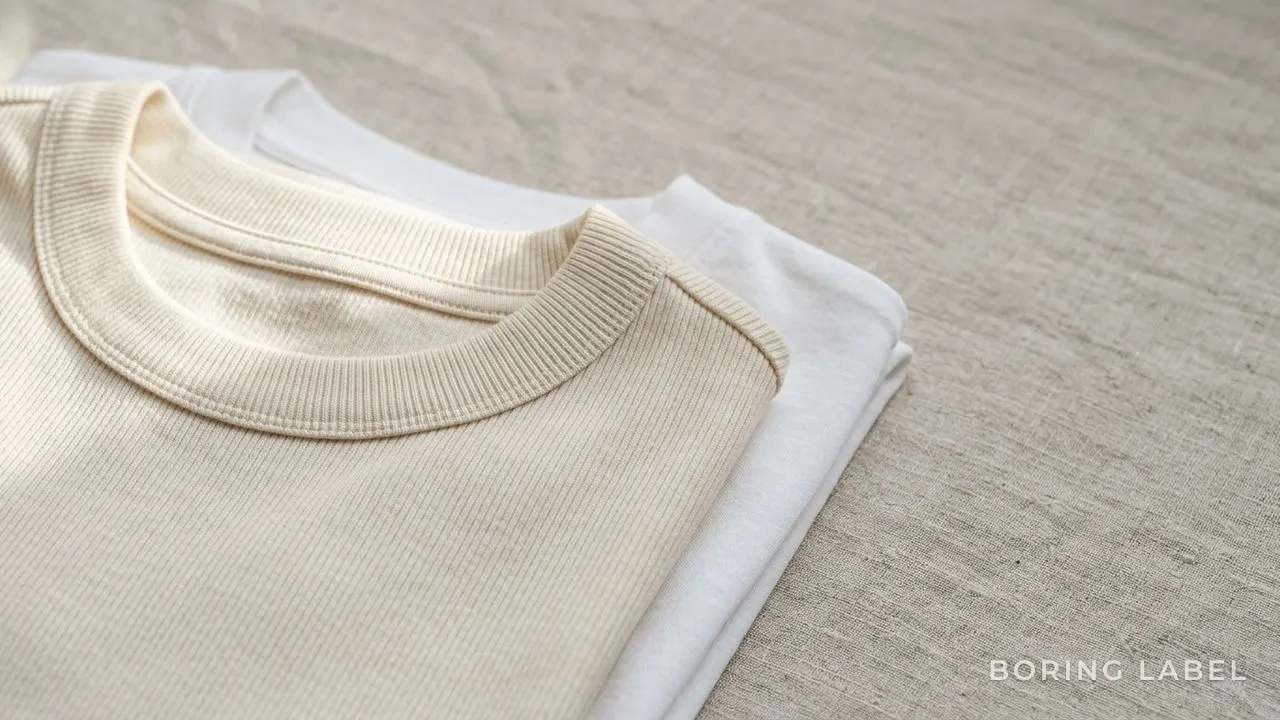
What a Collar Is Actually Made Of
To see why collars fail, you need to know how one is built, because almost every failure traces to a specific shortcut in the construction. A t-shirt collar is not just the body fabric folded over.
It is, on any tee worth buying, a distinct strip of fabric - usually a different knit from the body - attached around the neckline. There are three parts that matter.
The Rib
The collar itself is almost always made of rib knit, not the plain jersey the body uses. Rib knit is a different construction: instead of a smooth flat face, it is built from alternating raised and recessed columns - little vertical ridges you can feel with a fingernail.
This structure is what gives a collar its stretch and, crucially, its recovery. When you pull a rib sideways, the ridges open up like an accordion; when you let go, they want to close back.
That spring-back is the whole job of the collar. A good rib stretches to clear your head and then pulls itself flat again.
You will see ribs described as 1x1 or 2x1 (sometimes 2x2). The numbers just mean the pattern of the ridges - one column up, one down, versus two and one.
The practical point is not the exact number; it is that a tighter, denser rib with good recovery hugs the neck and bounces back, while a loose, thin, sloppy rib gives up. A collar made from a flimsy rib - or worse, from a strip of the same plain jersey as the body, with no rib structure at all - has nothing pulling it back into shape.
It stretches once and stays stretched.
The Elastane
Pure cotton rib stretches and recovers reasonably, but it has limits, and under daily head-clearing stress it slowly loses its snap. This is why better collars commonly blend a small amount of elastane (spandex/Lycra) into the rib - often just a few percent.
That elastane is the difference between a collar that recovers like new for years and one that gradually relaxes wider. It is genuinely a place where a tiny addition of a synthetic fibre, in the collar only, makes cotton tees better rather than worse.
A pure-cotton rib can be excellent if it is dense and well-knit, but a touch of elastane in the rib is one of the clearest signs a maker took the neck seriously.
The Tape
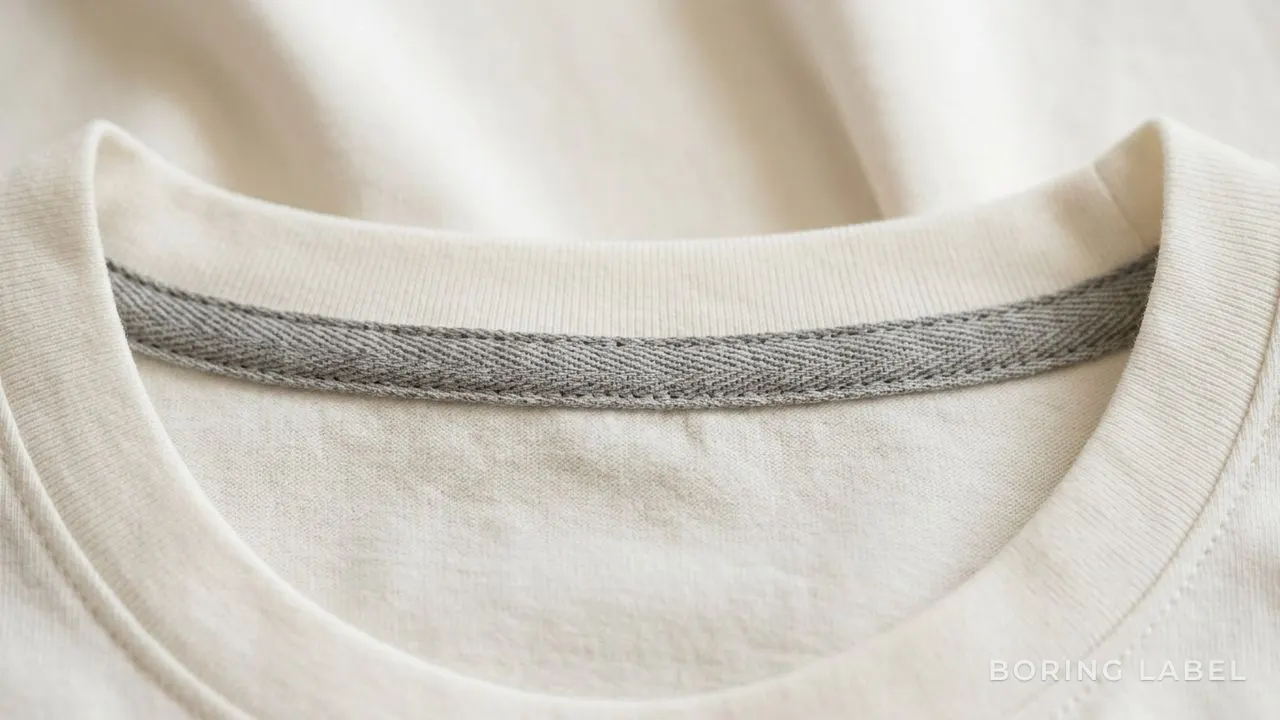
This is the part nobody talks about and the one that separates a tee that holds up from one that does not. Run a finger along the inside of the collar of a good shirt, across the back of the neck.
You should feel a thin strip of woven fabric covering the seam where the collar meets the body - it usually runs from one shoulder to the other across the back. That is the neck tape (also called back-neck tape or collar tape).
Its job is structural. A knitted seam alone is stretchy in every direction, including the one direction you do not want the neckline to stretch - wider and wider with every wear.
The neck tape is woven, not knitted, so it barely stretches lengthwise. Sewn across the back neckline, it acts like a seatbelt: it lets the rib do its stretchy job over your head, but it stops the whole neckline opening from creeping permanently wider over months.
A taped neck stays the size it was made. An untaped neck slowly widens until it gapes.
Cheap tees skip the tape to save a few rupees of material and a sewing step, and that single omission is behind a huge share of saggy collars.
The Four Reasons Collars Sag, Stretch and Go Wavy
Now the failures themselves. There are really four, and a sagging collar is usually a combination of them rather than a single cause. Knowing all four lets you diagnose a dying collar on sight - and, more usefully, spot the construction that prevents each one before you buy.
1. Thin or Poorly Set Ribbing
The most common cause is simply a bad rib. Either the rib is too thin and loose to have meaningful recovery, or it is set badly during sewing.
There is a small craft detail here that matters more than its obscurity suggests: a well-made collar has its rib cut slightly shorter than the neckline opening it is sewn into - commonly a few percent shorter - so the rib is under a little tension when attached. That gentle built-in tension is what makes the collar pull inward and lie flat against the neck.
Get this wrong and you get waviness. If the rib is cut the same length as the opening or longer, there is no inward tension, so the collar has nothing holding it taut.
The result is a neckline that ripples in little waves instead of lying flat - the classic wavy collar. It is not that the fabric "stretched"; it is that it was never set under tension to begin with.
So waviness is often a manufacturing tell from day one, visible on a brand-new shirt if you look. A collar that lies dead flat and slightly hugs inward was set properly.
One that already waves on the shelf will only get worse.
2. No Neck Tape
The second cause is the missing seatbelt described above. Without woven tape across the back neck, the knitted seam is free to stretch in the one direction it should not.
Every time you yank the shirt over your head, you tug the neckline a fraction wider, and with nothing woven to stop it, those fractions add up. Over a few months the opening creeps permanently larger - it sits lower, gapes at the front, and slides off one shoulder.
This is the slow, irreversible widening people describe as a collar "stretching out," and it is overwhelmingly a tape problem. The rib can be fine and the neck will still widen if there is nothing anchoring the seam.
3. Low-Grade Yarn in the Rib
Even a well-designed rib fails fast if the cotton in it is poor. The same logic that governs the body of a tee governs the collar, only more harshly, because the collar works harder.
A rib spun from short-fibre, carded cotton is weaker and recovers worse than one spun from long-staple combed cotton; under the relentless stretch-and-release of daily wear, the weaker yarn fatigues, the loops enlarge and stop springing back, and the collar goes slack. If you want the underlying mechanism, it is the same short-fibre story we tell in combed cotton versus carded - except a collar is the one place on a tee where that yarn quality is tested to its limit every day.
A premium body fabric married to a cheap rib is a common and frustrating combination, and the neck always betrays it first.
4. Hanger and Hot-Dryer Abuse
The fourth cause is not the shirt at all - it is what you do to it. Two everyday habits quietly destroy collars that were built perfectly well.
The first is hanging tees by the shoulders on a hanger. A wet or even just heavy tee hung this way puts the entire downward weight of the fabric onto the shoulder seams and the neckline, stretching the collar out under gravity for hours or days at a time.
Knitted cotton is happy to take a new shape if you hold it there long enough, and a hanger holds it there. Folding tees, or hanging them only briefly and never wet, spares the collar this slow pull.
The second is the hot dryer. High heat is the enemy of any elastane in the rib - it breaks down the stretch fibre over time, so the collar loses its snap and never fully recovers afterward.
Heat also shrinks and distorts cotton unevenly, and the thin ring of the collar distorts faster than the broad body. A tee that is line-dried or tumbled cool keeps its collar honest for far longer.
Most of what people blame on "cheap fabric" is partly hot-dryer damage, and the collar shows it first because it is the most heat-sensitive part. We go deeper into all of this in how to wash t-shirts so they last longer, but the short version for collars is: no hot dryer, no hanging while wet.
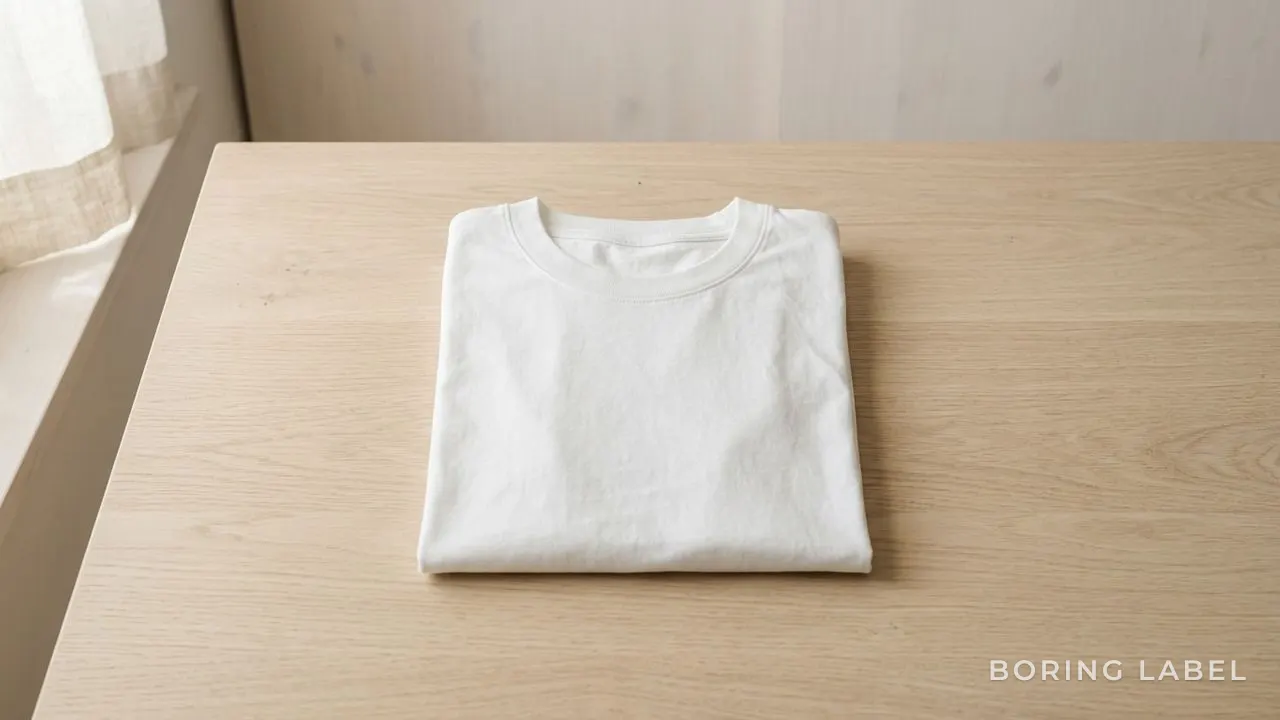
Good Collar vs Bad Collar, Side by Side
Here is the honest comparison laid out plainly. Most of these you can check in a shop in under a minute, and they tell you more about how the tee will age than the price tag does.
| What to check | Bad collar | Good collar |
|---|---|---|
| Rib structure | Thin, flat, sloppy - or plain jersey, no real rib | Dense ribbed knit with clear ridges and spring-back |
| Recovery | Stretch it and it stays stretched | Stretch it and it snaps back to shape |
| Neck tape | None - seam exposed inside the back neck | Woven tape stitched across the inside back neck |
| Elastane in rib | Usually none | Often a few percent, for lasting recovery |
| How it lies | Waves or ripples, even when new | Lies dead flat, hugs slightly inward |
| Yarn | Short-fibre carded cotton, fuzzy | Long-staple combed cotton, smooth |
| After 30 washes | Wide, floppy, wavy, gaping | Still close to its original shape |
The single most predictive line in that table is recovery. Everything else is a contributing cause; recovery is the result you can test directly with your fingers, and it bundles up rib quality, yarn quality, and elastane into one honest answer.
A Few Collar Myths Worth Clearing Up
Because collars are so rarely discussed properly, a handful of half-truths circulate, and they push people toward the wrong tees. Three are worth correcting directly.
The first is that a thicker, heavier shirt automatically has a better collar. It does not.
The weight of a tee - its GSM - describes the body fabric, and the collar is a separate piece that can be flimsy on a heavy shirt or excellent on a light one. We pull GSM apart properly in the GSM guide, but for collars the point is simple: a substantial body tells you nothing about the neck.
You still have to check the rib and the tape yourself. Plenty of weighty tees pair a lovely thick body with a thin, untaped collar that gapes by autumn.
The second myth is that a tight, narrow collar that feels a bit snug when new is a sign of poor sizing. Often it is the opposite.
A collar set under proper tension is meant to sit close and pull slightly inward; a little snugness on day one is frequently the sign of a well-built neck that will stay close rather than droop. The collars that feel generous and relaxed straight out of the bag are sometimes the ones with no inward tension at all - comfortable now, gaping later.
Judge a collar by how it recovers, not by how loose and easy it feels in the first wear.
The third is that there is nothing you can do once a collar starts to go. Stretching is largely irreversible - once the loops have enlarged and the yarn has fatigued, no wash brings the snap fully back - but you can slow a healthy collar down enormously and rescue a mildly distorted one a little.
A cool wash, no hot dryer, no wet hanging, and the occasional reshape while damp will keep a good collar honest far longer than most people manage. This is part of the broader truth that care narrows the gap between a cheap tee and an expensive one more than buyers expect, a theme we keep returning to in how to wash t-shirts so they last longer.
It will not resurrect a dead neck, but it will keep a living one alive for years.
How to Test a Collar Before You Buy
You do not need a label to judge a collar. You need thirty seconds and your hands. Here is exactly what to do, in order.
The Stretch-and-Release Test
This is the one that matters most. Take the collar between your fingers and gently stretch a section of it sideways - the way it stretches to clear your head - then let go and watch.
A good collar springs back immediately and flat, returning to its original shape with obvious snap. A bad collar comes back slowly, incompletely, or stays visibly looser than it started.
If you can see the rib hanging slightly wider after one gentle stretch, imagine it after three hundred. That is your answer.
Do this on every tee before you buy and you will quietly reject most of the bad ones.
The Inside-Back-Neck Check
Turn the collar inside out, or just slip a finger inside the back of the neck, and feel along the seam across the back. You are looking for a thin, flat strip of woven tape covering the join.
If it is there, the maker reinforced the neck against widening. If your finger meets only a bare knitted seam with nothing covering it, the neck has no seatbelt and will tend to stretch wider over time.
This single check filters out a large share of tees that will sag, and almost nobody does it.
The Lie-Flat Look
Lay the tee on a flat surface and look at the collar straight on. It should lie flat and even all the way around, sitting slightly inward against itself, with no ripples.
If it waves or ruffles on a brand-new shirt sitting still on a table, that is a setting fault baked in at manufacture - the rib was not attached under proper tension - and it will not improve with wear. A flat collar on a new tee is a sign the neckline was sewn with care.
The Rib-Density Feel
Pinch the collar fabric and feel its substance against the body fabric. A good collar rib feels denser and more substantial than you might expect - it should not feel like the same thin jersey as the body, and it should not feel flimsy or papery.
Density in the rib is a proxy for recovery: there is simply more structure there to spring back. A collar that feels thinner and slighter than the shirt body is a warning.
What Good Collar Construction Looks Like, Start to Finish
Pull the four good signs together and you have a picture of how a properly built neck is made, in sequence - and like most quality in clothing, it is a chain where each step sets a ceiling for the next.
It starts with the yarn. A collar spun from long-staple combed cotton has the strength and smoothness to recover well under daily stress; a collar from short-fibre carded cotton is fighting uphill from the first wear.
On top of that good cotton, a dense rib knit - rather than a thin one or plain jersey - gives the collar its accordion stretch and its will to spring back. A small amount of elastane blended into that rib locks in the recovery so it survives years of head-clearing rather than months.
Then the rib is cut slightly short and attached under gentle tension, so the finished collar lies flat and hugs inward instead of waving. And finally a strip of woven neck tape is sewn across the back, anchoring the seam so the whole opening cannot creep permanently wider.
Five steps, each cheap to skip, each invisible to a buyer who does not know to look. A maker can do all five for a few rupees more and a little more care, or skip every one of them and ship a tee whose collar is wide and wavy by the end of summer.
The frustrating part is that the difference is nearly impossible to see in a photo and trivial to feel in person - which is exactly why the stretch-and-release test and the inside-back-neck check are worth making into habits. They cost you nothing and they catch the corner-cutting that no product description will admit to.
This is also why a collar is one of the truest tests of whether a maker actually cares or is just charging premium prices for a basic tee. The body fabric is easy to talk up in marketing.
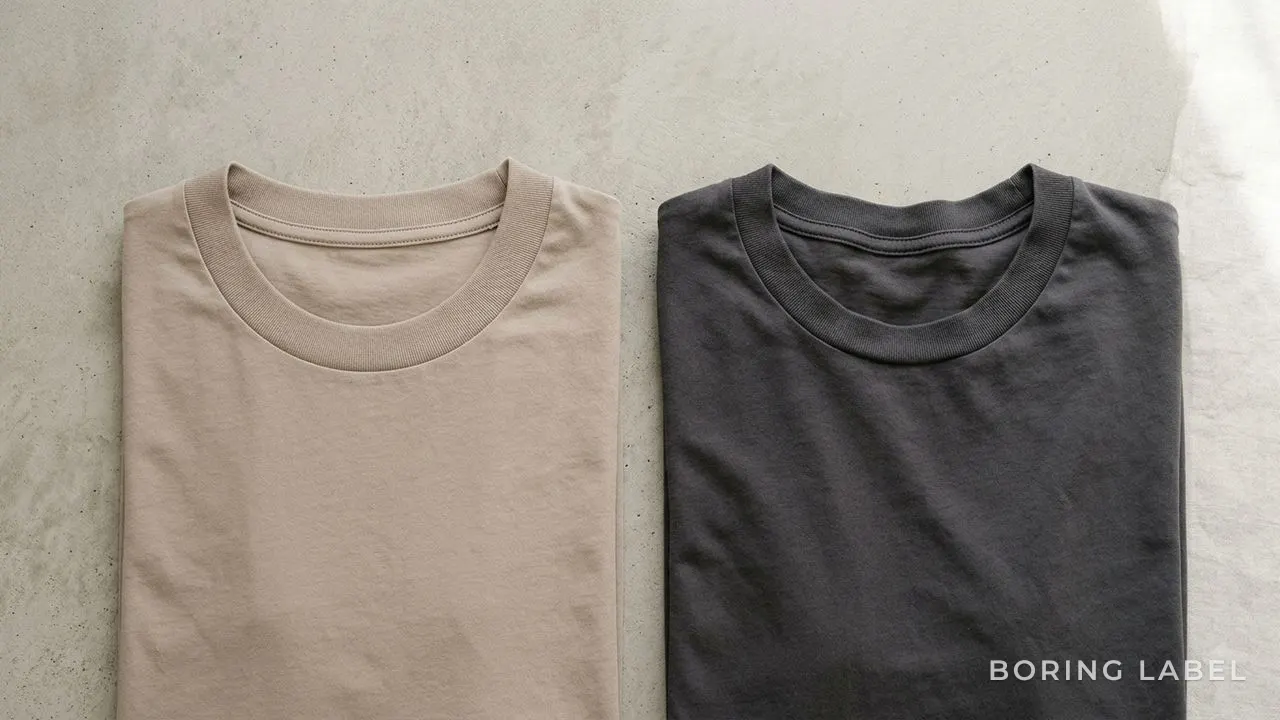
The neck tape is hidden inside the back of the shirt where no campaign photo ever shows it. A brand that taped the neck, blended elastane into a dense rib, and set the collar under tension did so for the buyer who will wear the shirt for years, not the one scrolling past an image.
It is the same restraint-over-flash thinking behind no-logo clothing: the value is in the part you do not show off.
Being Honest About the Limits
A few honest caveats, because no construction detail is magic and it would be dishonest to pretend otherwise.
First, even the best collar will not last forever if you abuse it. A premium taped collar with elastane in the rib, hung wet on a wire hanger and tumble-dried hot every wash, will still go slack faster than a modest collar treated kindly.
Construction buys you a much longer runway, not immortality. The shirt and your habits both matter, and good habits are free.
Second, no single feature guarantees a good collar on its own. A neck tape on a flimsy rib still sits on a flimsy rib.
Elastane in a collar made of weak short-fibre yarn only delays the slackening. The features work as a set, which is why the recovery test - the real-world result of all of them together - is more reliable than ticking any one box.
Judge the outcome, not just the spec.
Third, price alone proves nothing about the collar. Plenty of expensive tees skip the neck tape, and the occasional inexpensive one includes it.
The whole point of learning to feel for these things is that it frees you from trusting the price tag. A modest tee with a dense, taped, well-set collar will outlast a designer one with a sloppy untaped neck, every time.
Cost is a weak signal; your fingers are a strong one.
And finally, collars are not the only place a tee can disappoint - they are just the first and most visible. The fit, the weight, the cotton in the body, the way it holds colour all matter too, and a great collar on a thin, clingy, badly cut shirt is still not a great shirt.
The collar is one component of several. It happens to be the component most likely to fail first and most likely to be quietly skimped, which is why it deserves a closer look than it usually gets.
Why This Matters More in Indian Wardrobes
There is a regional angle that makes the collar question sharper here than in cooler countries. In the Indian climate, tees get washed far more often - sometimes after a single wear in peak summer - and worn through far more put-on, take-off cycles per shirt over its life.
Both of those are exactly the stresses a collar is least able to take. More washes means more chances for a hot dryer or a hard wring to distort the neck.
More wears means more head-clearing stretches asking the rib to recover. The collar, already the hardest-working part of the tee, works hardest of all in a hot, sweaty, wash-heavy life.
That is why, when we built our round-neck tee, the neck got as much attention as the body - long-staple combed cotton through the rib, not just the panels, with the rib set under tension to lie flat and a woven tape across the back to keep the opening honest through season after season of washing. It is not a glamorous part of the shirt to talk about, and it never photographs well, but it is the part most likely to decide whether the tee still looks right in two years or looks tired by next summer. Heat and frequent washing are precisely the conditions that expose a cut-corner collar fastest, and the same conditions reward a well-built one most.
The Takeaway: Judge the Neck, Not the Tag
A t-shirt collar is a small, separately built, hardworking component that almost always wears out before the rest of the shirt - and almost everything about whether it lasts is decided by construction you can feel before you buy. Sagging, stretching, and waviness are not mysteries or just "what happens to old tees."
They have four specific causes: a thin or poorly set rib, no neck tape, low-grade yarn in the collar, and the slow damage of hangers and hot dryers. Two of those are the maker's doing and two are yours, and knowing which is which is half the battle.
The good news is that you do not need a label or a price tag to tell a good collar from a bad one. Stretch it and watch it recover.
Feel inside the back neck for the woven tape. Lay it flat and check it does not wave.
Pinch the rib and feel for real density. Those four checks take under a minute and catch the corner-cutting that no marketing will ever admit to - and they apply to a thousand-rupee tee and a five-thousand-rupee one alike.
The collar is where a tee tells the truth about how it was made. Learn to read it, treat the good ones kindly, and the part that usually dies first becomes the part that quietly proves the shirt was worth buying.
Boring Label
Wear the point of the article.
One honest tee. Heavyweight combed cotton, a collar that holds, a fit that actually fits. No logo, no noise.
Shop the round-neck teeFree shipping across India · Easy returns
Keep reading
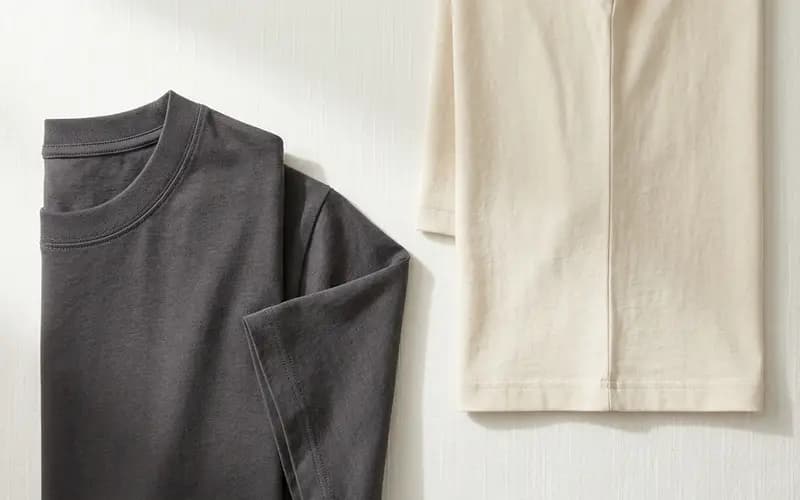
Why Your T-Shirt Looks Cheap (and the Fix)
It is rarely the price. It is the collar, the GSM, and the seam — three things you can spot in seconds.

Why T-Shirts Pill (and How to Stop It)
Pilling is not bad luck. It is short fibres rubbing loose — and it is largely avoidable.

How to Wash T-Shirts So They Last Longer
Your washing machine ages a tee faster than wearing it does. Five habits that undo most of the damage.
Stay in the loop
New writing, no noise
Occasional notes on fit, fabric, and dressing simply well. No spam, unsubscribe anytime.
Subscribe