Fabric
Why some tees feel cool to touch: the fabric science
Cool-touch fabric works through fast heat conduction on contact, a real but narrow effect. Breathability and moisture-wicking matter more over a full Indian workday.

Why your hand can tell a fabric is cool before your skin can
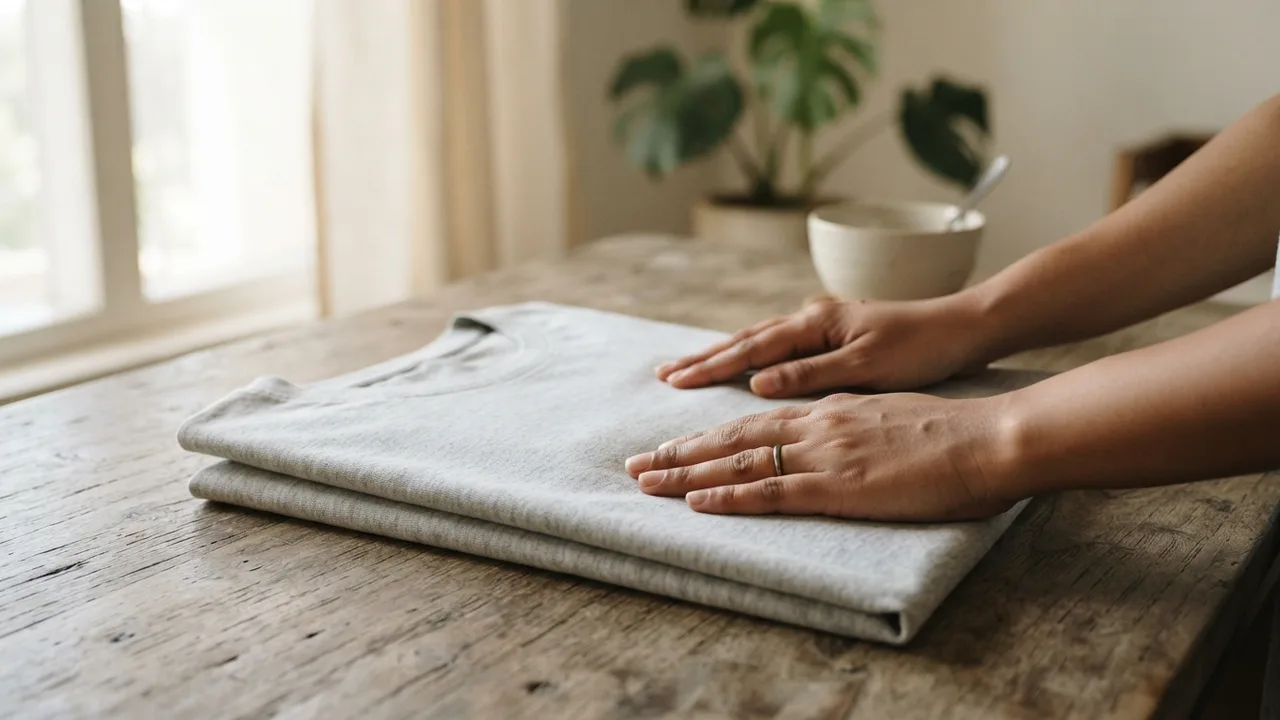
Touch two folded t-shirts on a shelf, same room temperature, same time of day. One feels distinctly cooler under your palm than the other, instantly, before you have even put it on.
That sensation is real physics, not imagination, and it has almost nothing to do with the fabric's actual temperature. Both t-shirts are sitting in the same room, at the same ambient temperature.
What differs is how fast each fabric pulls heat away from your skin the moment you touch it, a property textile scientists call thermal conductivity, and it is the whole story behind every "cool touch" and "cooling fabric" claim on the market. This piece explains the actual mechanism, which fibres and finishes genuinely deliver it, and where the effect matters most in Indian conditions.
The physics: it is about heat transfer speed, not temperature
Your skin senses temperature relatively, not absolutely. When you touch something, nerve receptors in your skin detect the rate at which heat is leaving your body into that object, not the object's actual temperature reading on a thermometer.
A material with high thermal conductivity, meaning it moves heat through itself quickly, pulls warmth away from your fingertip faster than a material with low thermal conductivity does. That faster heat transfer registers to your nervous system as "cold," even though both materials started at exactly the same ambient temperature.
This is the identical principle behind why a metal railing feels colder than a wooden bench on the same winter morning. Metal conducts heat away from your hand far faster than wood does, and your nerves interpret that speed as cold, not the metal's actual temperature, which is the same as the surrounding air.
Fabric works on a smaller scale of the same principle, and it is entirely a surface and touch sensation, not a claim about how the fabric will perform over hours of wear.
What makes some fabrics conduct heat faster than others
Three structural factors determine a fabric's thermal conductivity, and they explain why some cotton feels cooler than other cotton, and why certain synthetics feel dramatically cooler than any natural fibre on first touch.
Fibre density and surface smoothness. Tightly packed, smooth fibres conduct heat more efficiently than loose, textured ones, because there is more direct fibre-to-skin contact area for heat to travel through. This is part of why mercerised cotton, with its smoother fibre surface from the mercerising process, often feels slightly cooler to the touch than untreated cotton of the same weight.
Moisture content at the fabric surface. Water conducts heat roughly 25 times faster than still air. A fabric that holds a small amount of surface moisture, either from ambient humidity or engineered wicking, will feel noticeably cooler on contact than a bone-dry fabric, because that moisture accelerates heat transfer away from your skin.
Fibre type itself. This is the biggest lever. Certain fibres, particularly some synthetics and specially engineered blends, have inherently higher thermal conductivity at the molecular level than cotton does, which is why they can produce a dramatic cool-touch sensation that cotton generally cannot match on contact alone.
The main cool-touch technologies, and how they actually work
Engineered cross-section synthetics. Some polyester and nylon yarns are extruded with a modified cross-section, often flatter or channelled rather than round, specifically to increase surface area and moisture-wicking speed. Faster wicking keeps the surface layer slightly moist, which increases conductivity and produces a stronger cool-touch effect than a standard round-fibre synthetic.
Mineral-infused fibres. Some fabrics have jade, mint, or xylitol-derived compounds embedded into the fibre during production. Xylitol-based finishes in particular trigger a genuine, measurable cooling sensation through an endothermic reaction, meaning the compound actually absorbs a small amount of heat as it interacts with moisture, on top of the base conductivity effect.
Tight, smooth-surface knits. Even without any special fibre or additive, a densely knit, smooth-surface fabric will register as cooler to the touch than a looser, textured knit of the same fibre, purely from the density and surface-contact mechanism described above.
None of these technologies lower the fabric's actual temperature or change how hot you get over the course of a day of wear. They change the initial touch sensation, and in the case of moisture-driven effects, they can offer a modest, real assist to evaporative cooling during actual wear, which is a separate but related benefit.
Cool touch versus breathability: two different things
This is where most marketing blurs a distinction that actually matters a great deal in Indian heat.

| Property | What it measures | Felt when |
|---|---|---|
| Cool touch | Initial heat transfer speed on contact | The instant you touch or put on the fabric |
| Breathability | Airflow through the fabric over time | Throughout hours of wear, especially with movement |
| Moisture-wicking | Speed of moving sweat to the fabric surface | During and after sweating |
A fabric can feel cool on touch and still trap heat over a full day if it does not breathe well. This is genuinely common with some synthetic "cool touch" blends, which deliver a strong first-touch sensation in a fitting room but perform worse than plain cotton over four hours of real wear in humid conditions.
Our guide to breathable fabric for summer covers the airflow side of this equation directly, and it is the metric that matters far more than initial touch for anyone spending real time outdoors in Indian heat between March and October.
Where cool-touch fabric genuinely helps, and where it is a gimmick
The effect is genuinely useful in specific, narrow situations. Bedsheets and pillowcases benefit enormously, since the cool-touch sensation at the moment you get into bed is exactly when it matters most, and you are lying still rather than generating continuous heat through movement.
Gym and athletic wear worn for short, high-intensity sessions can also benefit, since the moisture-driven conductivity effect genuinely assists evaporative cooling during active sweating, provided the base fabric also breathes reasonably well.
For an everyday t-shirt worn through a full working day in Indian conditions, the initial cool-touch sensation matters far less than sustained breathability, moisture management, and fit. A well-made round-neck tee in good combed cotton, cut with enough room to let air move, will keep you more comfortable over eight hours than a synthetic cool-touch tee that felt colder for the first thirty seconds and then trapped heat for the rest of the day.
The honest verdict
Cool-touch technology is real physics, not a fabricated marketing claim, and the fibre engineering behind it is genuinely clever. But it measures and improves a single moment, the instant of contact, not the hours of wear that actually determine whether a t-shirt keeps you comfortable through an Indian afternoon.
Trust the sensation for what it is, a touch-point signal worth noticing in a fitting room, and then check the fabric's breathability and moisture management for the metric that actually predicts how you will feel by 4pm. The two are related but not the same, and conflating them is exactly how a fabric that feels cool on the shelf ends up disappointing you two hours into wearing it.
Testing it yourself before you buy
You do not need a lab to get a rough read on a fabric's real cool-touch and breathability performance before committing to a purchase. A few simple checks, done at home or even in a store, tell you more than most product descriptions will.
The five-second touch test. Rest your palm flat on the folded fabric for five seconds without pressing. A genuinely cool-touch fabric will feel noticeably cooler within the first second or two, and that sensation should be distinct, not subtle, if the fabric is actually engineered for it.
The breath test. Hold the fabric up to your mouth and exhale through it firmly. If you feel your breath pass through with resistance, the weave or knit is too dense to breathe well over a full day, regardless of how cool it felt on touch.
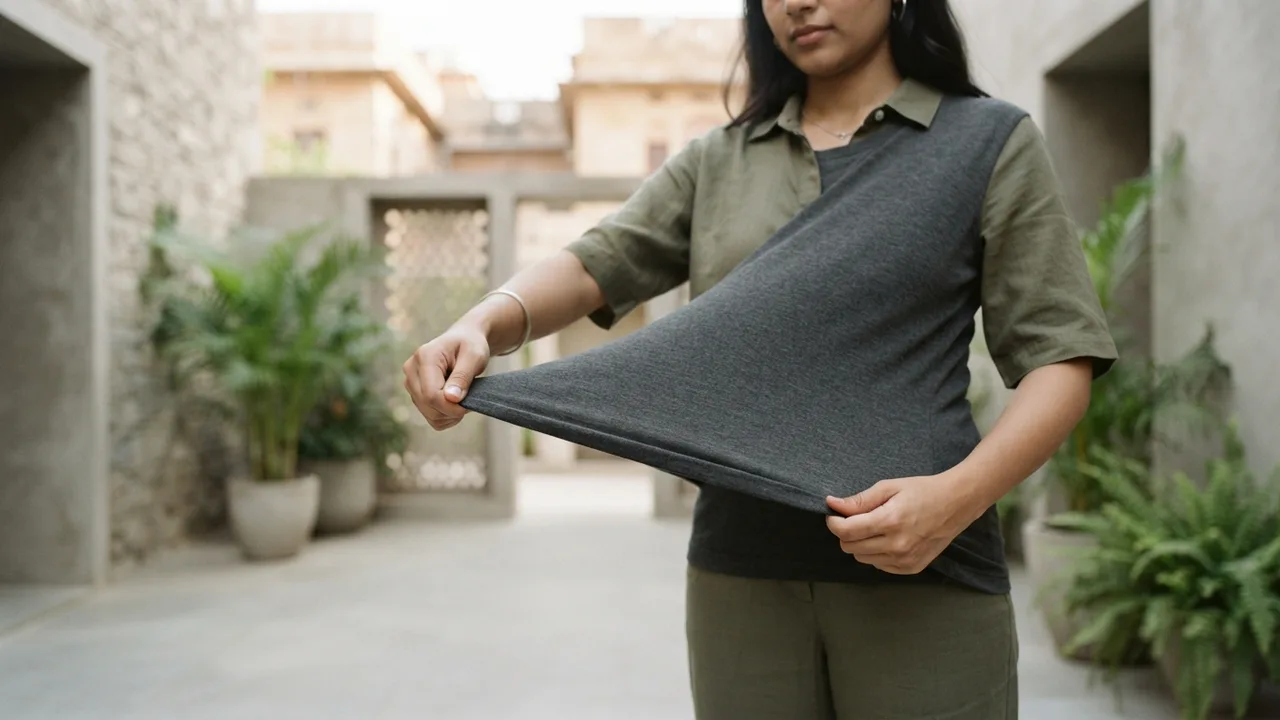
The stretch-and-release test. Pull the fabric gently in one direction and let go. Fabric that snaps back cleanly has good structural integrity in its knit, which generally also means it manages airflow and moisture more consistently over repeated wear than fabric that stays stretched out.
Matching the fabric to the actual day, not the shelf
The best-performing fabric for a monsoon commute is not always the same as the best-performing fabric for a dry, dusty April afternoon, even though both fall under the broad umbrella of "hot weather cotton." Humidity changes which property matters most.
In high-humidity conditions, moisture-wicking speed matters more than raw cool-touch sensation, since the air itself is already close to saturated and evaporation happens slowly regardless of fabric. Our monsoon clothing guide covers this scenario directly, and it is worth reading alongside this piece if your city runs humid for a large part of the year.
In dry heat, breathability and airflow through the weave matter more, since evaporation happens fast as long as air can actually move through the fabric to carry moisture away. This is closer to the territory our summer t-shirts guide covers in full.
Cool-touch technology can genuinely help in both scenarios at the margin, but it is a supporting feature, not the main event, in either one. Choose the base fabric for the climate you actually live in, and treat any cool-touch finish as a welcome bonus layered on top of a fabric that already does the fundamental job well.
Why cotton still wins for most people, most days
Given everything above, it is worth stating plainly why cotton remains the default recommendation for everyday Indian wear despite synthetic fabrics often winning the initial touch test. Cotton absorbs moisture into the fibre core rather than holding it purely at the surface, which spreads sweat across a larger area of fabric and speeds up whole-garment evaporation over the course of hours, even though its initial touch conductivity is lower than some synthetics.
This is the difference between a sprint and a marathon. Synthetic cool-touch fabric often wins the first thirty seconds, the sprint, through superior initial thermal conductivity.
Good cotton usually wins the marathon, the full eight-hour workday, through better sustained moisture management and airflow, assuming the weave and fit are right. Since almost nobody actually experiences a t-shirt for thirty seconds and then takes it off, the marathon performance is the one that should carry more weight in a buying decision.
When a genuinely engineered cooling fabric is worth seeking out
None of this means cool-touch technology is never worth choosing deliberately. For specific use cases, short-duration high-intensity activity, extreme heat exposure for brief periods, or bedding used in a still, low-airflow environment, an engineered cooling fabric can offer a real, noticeable advantage over standard cotton.
The key is matching the technology to the actual use case rather than buying it as a blanket upgrade for every garment in your wardrobe. A well-made everyday cotton round-neck tee and a specialised cool-touch athletic tee are solving genuinely different problems, and owning both, used for the right occasions, beats trying to find a single fabric that wins every scenario at once.
Boring Label
Wear the point of the article.
One honest tee. Heavyweight combed cotton, a collar that holds, a fit that actually fits. No logo, no noise.
Shop the round-neck teeFree shipping across India · Easy returns
Keep reading

Most Breathable Fabric for Summer (India Guide)
Breathability is not just the fibre. Weave, weight, and finish decide whether a tee cools you or clings.

Mercerised Cotton Explained: What the Sheen Really Means
Mercerisation is a century-and-a-half-old finishing process that gives cotton sheen, strength, and deeper colour. Here is what it actually improves and what it does not.

Monsoon Clothing: What to Wear in the Rains
The monsoon punishes the wrong fabrics. Dress for fast-drying and you stay comfortable through it.
Stay in the loop
New writing, no noise
Occasional notes on fit, fabric, and dressing simply well. No spam, unsubscribe anytime.
Subscribe