Sustainability
What a fair-wage t-shirt actually costs to make in India
A line-by-line cost sheet shows fair wages add roughly Rs 75 to a t-shirt, not the 4-5x premium many ethical brands charge. Here is how to tell the difference.

Fair labour typically adds ₹40 to ₹90 to a t-shirt's production cost, not ₹500
The most common objection to "ethical" clothing is that it must cost double. It rarely does.
When you actually break down a t-shirt's cost sheet, labour is a small slice, and paying that slice fairly moves the final price far less than most people assume.
This piece walks through a real cost breakdown for a basic cotton round-neck tee made in Tamil Nadu, shows exactly where fair-wage practices add cost, and explains why a ₹399 "sustainable" tee is a contradiction while a ₹1,199 one can genuinely add up. We will lean on our t-shirt price breakdown piece for the general cost structure and go deeper here specifically on the labour line.
Building the cost sheet from scratch
A basic 180 GSM combed cotton round-neck tee, made in bulk in Tamil Nadu, breaks down roughly like this at the factory gate, before a brand's margin, marketing, and retail markup are added.
| Cost component | Low-compliance factory | Fair-wage compliant factory |
|---|---|---|
| Raw cotton yarn | ₹85 | ₹85 |
| Knitting and dyeing | ₹45 | ₹50 |
| Cutting and stitching labour | ₹28 | ₹65 |
| Quality control and finishing | ₹12 | ₹25 |
| Compliance and audit overhead | ₹0 | ₹15 |
| Factory margin | ₹20 | ₹25 |
| Total ex-factory cost | ₹190 | ₹265 |
The gap between the two columns is roughly ₹75. That is the entire "fair wage premium" at the factory level, and it is the number that gets lost in most conversations about ethical clothing.
Once a brand adds its own margin, GST, packaging, shipping, and retail markup on top of either column, the final shelf price gap widens, but the core labour difference itself stays modest. A brand charging four or five times more and calling it "ethical" is usually padding margin, not paying workers more.
Where the ₹40 to ₹90 actually goes
The biggest single line item that shifts between the two columns is stitching labour, and it is worth understanding why.
Piece-rate versus time-rate pay. Many low-compliance units pay per piece stitched, which pushes workers to rush, sometimes working ten to twelve hour days to hit income targets that a fair eight-hour shift would not cover. Fair-wage units typically pay closer to Tamil Nadu's statutory minimum wage on a time basis, which as of the most recent state notification sits around ₹450 to ₹500 a day for skilled garment workers, topped up with reasonable piece incentives rather than relying on speed alone.
Overtime paid at the correct rate. Indian labour law requires overtime at double the normal rate. Compliant factories actually pay this; non-compliant ones frequently do not, or disguise overtime as "voluntary" unpaid extra hours.
Provident fund and ESI contributions. Fair-wage factories contribute the employer's share of provident fund (currently 12 percent of basic wage) and Employees' State Insurance, which non-compliant units routinely skip by keeping workers off formal payroll or under-reporting headcount.
Audit and certification overhead. Certifications like SA8000, WRAP, or Fair Wear Foundation membership cost factories real money in audit fees and process changes, and that overhead gets spread across every unit produced.
None of these are exotic costs. They are the baseline of what Indian labour law already requires, which means "fair wage" clothing is, in a strict sense, just clothing made in actual compliance with existing law, versus clothing made by skipping it.
Why the skipped costs are usually invisible to the buyer
A shirt made with underpaid, unregistered labour looks identical on the rack to one made fairly. The stitching can be equally neat, the fabric equally soft.
This is precisely why price and brand transparency matter more than visual inspection. Our piece on white-labelling explains how easily two visually identical shirts can carry completely different labour stories, because they may come from entirely different factories despite looking the same.
A brand that discloses its factory relationships, mentions specific certifications, or publishes wage information is doing something that costs it nothing to fake convincingly if it is lying, which is exactly why third-party audits matter more than brand copy. Look for named certifications (SA8000, WRAP, Sedex/SMETA, Fair Wear Foundation) rather than the word "ethical" sitting alone on a product page.
The Tirupur context specifically
Tirupur's garment cluster, which we cover in detail in our Tirupur t-shirt capital piece, illustrates this split at scale. Export-oriented units serving international brands under buyer compliance programs tend to sit closer to the fair-wage column, because losing a compliance audit means losing a contract worth crores.
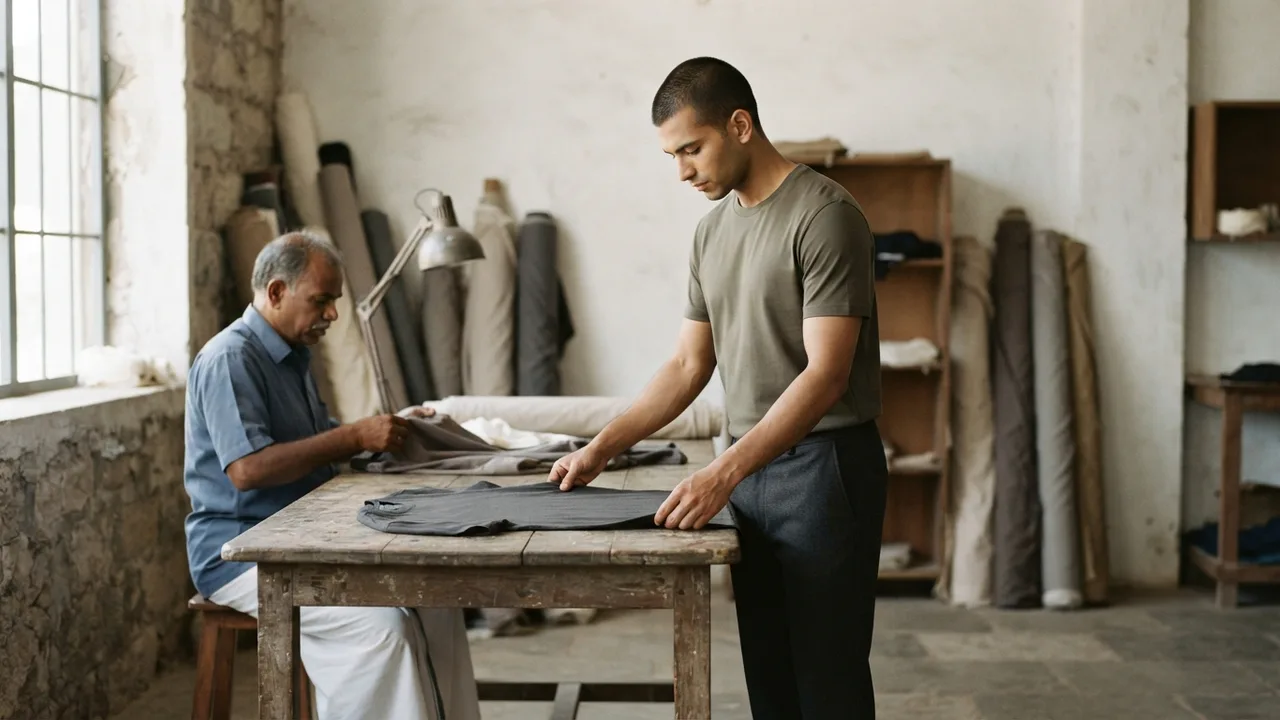
Domestically focused units selling to price-sensitive Indian retailers face less of that external pressure, and some slide toward the lower-compliance column, especially two or three layers down in subcontracting chains where oversight thins out fast.
This is not unique to India. It is the general pattern of global garment manufacturing: compliance tracks buyer leverage, and buyer leverage tracks how much a brand is willing to pay and how closely it audits its own supply chain.
What ₹75 extra a shirt actually buys a worker
It is worth putting a human number on this rather than leaving it abstract. A skilled stitching operator working an honest eight-hour shift at a compliant Tirupur unit, with PF and ESI contributions made, earns in the range of ₹14,000 to ₹18,000 a month.
The same skill level at a non-compliant subcontracted unit, working piece-rate with no benefits and frequent unpaid overtime, can effectively earn ₹9,000 to ₹12,000 for considerably more hours worked. That gap compounds over a working life: no provident fund means no retirement cushion, no ESI means medical costs come entirely out of pocket.
Multiplied across a factory floor of 200 to 400 workers, the aggregate difference in dignity and financial security is significant, even though the per-shirt cost difference is small enough to round to a coffee's worth of money.
The counterargument, and why it does not fully hold
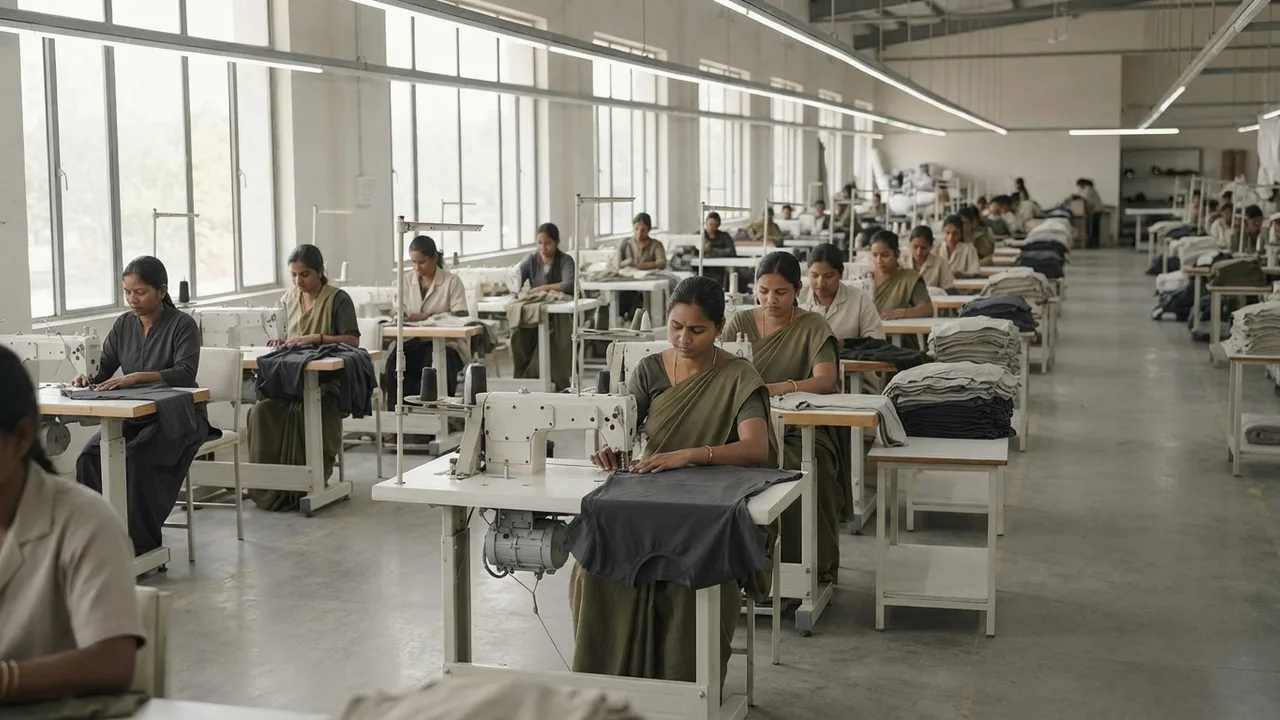
A fair objection: if fair-wage compliance only adds ₹75 to a shirt, why do so many "sustainable" or "ethical" brands charge four to five times more than fast fashion basics?
Part of the honest answer is that ethical brands often also carry smaller order volumes, higher marketing spend to explain their story, and thinner margins on lower unit counts, all of which inflate retail price well beyond the labour delta. That is a legitimate cost structure, not necessarily deception.
But some of it is genuine premium pricing riding on the ethical story, unrelated to actual cost. This is where our guide on spotting fake premium claims becomes directly relevant: a brand's story should be checkable against its price, its certifications, and its factory transparency, not taken purely on faith.
At Boring Label, we work with compliant Tirupur units precisely because the labour cost gap is small enough that there is no honest reason to skip it, and we would rather price a round-neck tee that reflects real production costs than pad margin behind a good story. The specifics of our sourcing sit on our quality page rather than staying vague.
How to evaluate a brand's fair-wage claim in five minutes
You do not need a supply chain audit background to do basic due diligence. A few checks catch most of the gap between real and marketed ethics.
- Search for a named third-party certification (SA8000, WRAP, Sedex, Fair Wear Foundation) rather than the brand's own claim alone.
- Check if the brand names a factory, city, or cluster, versus only using vague words like "artisanal" or "ethically made."
- Compare the price against the cost sheet logic above. A ₹75 to ₹150 premium over an equivalent non-compliant basic tee is coherent; a ₹700 premium needs a better explanation than labour alone.
- Look for wash-durability and fabric transparency alongside the ethics claim. A brand serious about quality usually discloses both, as covered in our t-shirt GSM guide.
- Read return and complaint patterns if visible. Consistently underpaid, rushed labour tends to correlate with inconsistent stitching quality over time.
What happens when brands actually pay the ₹75
A useful way to see this in practice is to look at what changes on the factory floor once a brand commits to the compliant column of the cost sheet.
Workers move from piece-rate uncertainty to a predictable monthly income, which sounds small until you consider that predictable income is what lets a family plan school fees, rent, or a medical expense without borrowing against next month's wages. Provident fund contributions, often dismissed as paperwork, are the only retirement safety net most garment workers will ever have access to.
Turnover also drops sharply at compliant units. A factory paying fairly and on time keeps skilled tailors for years rather than losing them every few months to whichever unit is hiring, and that stability shows up as more consistent stitching quality over time, since experienced hands make fewer mistakes than a constantly rotating floor.
This is the part brands rarely mention in their marketing, because "our workers stay longer" is a less exciting headline than "sustainably sourced." But it is arguably the more meaningful signal, and it is one you can sometimes verify by asking a brand directly how long their production partnership with a given factory has run.
A quick gut check before you trust a claim
If you want a fast sanity check beyond the five-point list above, ask yourself whether the brand's story would survive them naming the actual factory. A brand confident in its sourcing usually will, at least in general terms, a city, a cluster, sometimes a specific compliance certificate number.
A brand that goes vague the moment you ask a specific question, deflecting to broad language like "our partners" or "responsibly sourced," is telling you something too, even if it never says it outright.
This gut check works because storytelling is cheap and traceability is not. Any brand can write "ethically made" on a product page in five minutes.
Naming a real factory, a real certification, or a real audit date requires the underlying relationship to actually exist, which is precisely why it separates genuine sourcing from marketing language dressed up to look like it.
The takeaway
Fair-wage manufacturing is not the expensive proposition it is marketed as. At the factory level, it typically adds well under a hundred rupees to a basic cotton tee, a number small enough that skipping it should raise more questions about a brand than paying it does.
The bigger price gaps you see on shelves usually come from volume, marketing, and margin decisions layered on top, not from the wage line itself. Knowing the actual cost sheet means you can separate a brand genuinely paying its workers fairly from one simply charging more for the same story, and buy accordingly.
Boring Label
Wear the point of the article.
One honest tee. Heavyweight combed cotton, a collar that holds, a fit that actually fits. No logo, no noise.
Shop the round-neck teeFree shipping across India · Easy returns
Keep reading
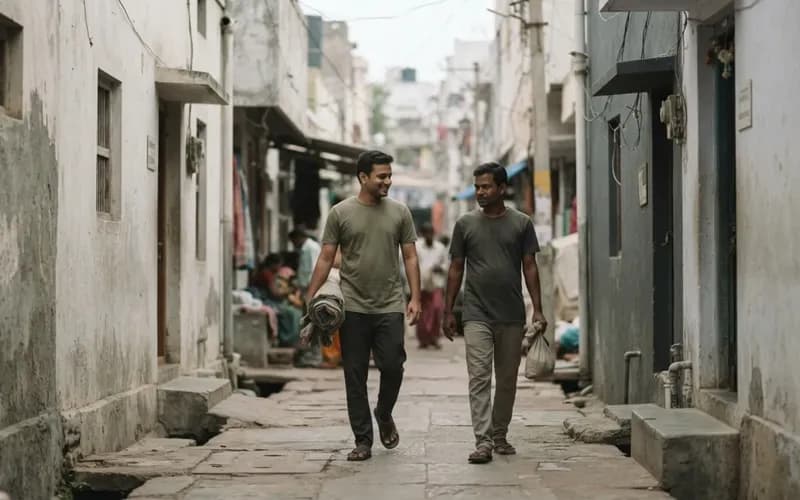
Tirupur: Inside India's T-Shirt Capital
Tirupur exports over a third of India's cotton knitwear from a single dense cluster. Here is how that cluster works and what its label actually promises.

Why 10 Brands Sell the Same Blank Tee: Explained
Many small t-shirt brands sell the exact same factory tee under different labels. Here is how to spot white-labelling and what genuine differentiation looks like.

₹300 vs ₹1,299 T-Shirt: What You Actually Pay For
A plain tee is a plain tee. So why does one cost four times the other? Here is the honest anatomy of a t-shirt's price.
Stay in the loop
New writing, no noise
Occasional notes on fit, fabric, and dressing simply well. No spam, unsubscribe anytime.
Subscribe