Buying
Tirupur: inside India's t-shirt capital
Tirupur exports over a third of India's cotton knitwear from a single dense cluster. Here is how that cluster works and what its label actually promises.
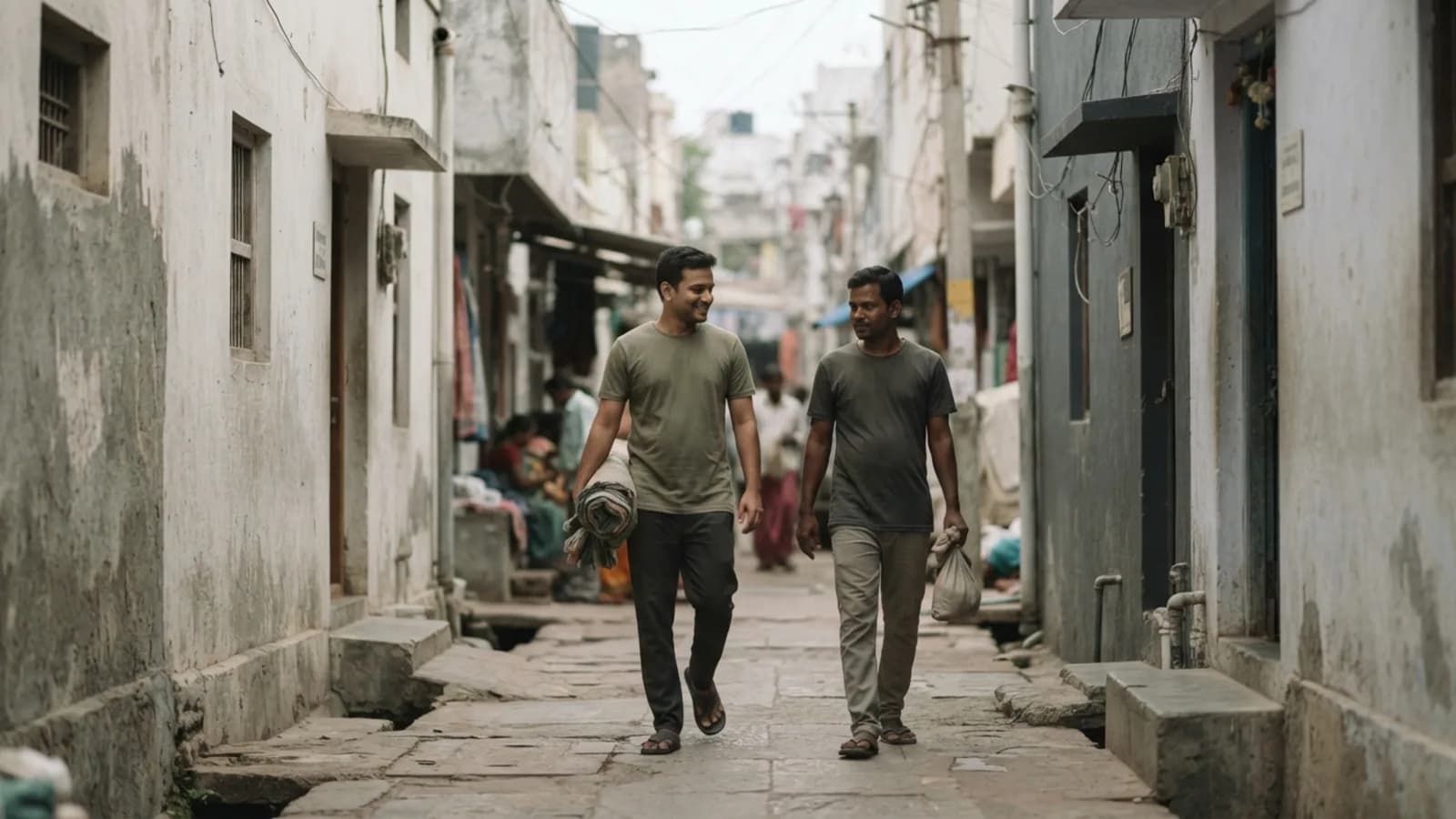
Tirupur makes roughly one in every three cotton knitwear exports from India
If you own more than five t-shirts, odds are decent that one of them started life within a 25 kilometre radius of Tirupur, Tamil Nadu.
The town exports over ₹35,000 crore worth of knitwear a year, most of it cotton t-shirts, and it does this from an industrial cluster smaller than most Indian district towns.
Tirupur did not become "India's t-shirt city" by accident. It has yarn spinning, knitting, dyeing, printing, and stitching all within a short drive of each other, which is the actual reason your basic tee is affordable.
This piece walks through how that cluster works, why it matters for the quality of the tee on your back, and what to actually check when a brand tells you their shirt is "Made in Tirupur."
We will also point you to our deeper guides on t-shirt GSM and how t-shirt prices actually break down, since both connect directly to what happens inside this cluster.
How a cotton boll becomes a t-shirt in one town
A t-shirt has a longer journey than most people assume. Raw cotton gets ginned, spun into yarn, knit into fabric, dyed, cut, stitched, checked, and packed.
In most of the world, those seven steps happen across different cities, sometimes different countries. In Tirupur, they mostly happen within a 15 to 25 kilometre stretch.
That geographic compression is the entire reason the town exists as an industry. Cotton comes in from farms in Maharashtra, Gujarat, and within Tamil Nadu itself.
Spinning mills near Coimbatore turn it into yarn. Tirupur's knitting units convert that yarn into fabric rolls on circular knitting machines, the same machines behind most of your everyday round-neck tees.
From there the fabric goes to dyeing units, then to garmenting factories where it is cut and stitched, then to finishing units for quality checks, ironing, and folding. A tee can pass through six or seven separate small factories before it reaches a carton.
The chain runs: cotton farms to spinning mills to knitting units to dyeing houses to cutting and stitching to finishing and QC, and finally to an export or domestic brand.
No single factory owns this chain end to end, which sounds inefficient but is actually the opposite. Because every stage has dozens of competing units nearby, a brand can shop for the best dyeing house or the sharpest stitching unit for each order, instead of being locked into whatever one vertically integrated factory can do.
Why the cluster keeps prices honest
Economists call this an agglomeration effect. When hundreds of specialized units sit close together, transport costs collapse, and so does the time between order and delivery.
A knitwear order that would take six weeks moving between cities can move in ten days inside Tirupur. That speed matters more than people think, because holding inventory costs money, and every extra week a shirt sits in a warehouse adds to its final price.
The cluster also means intense competition on quality and turnaround, not just price. A dyeing unit that delivers uneven shades loses orders fast, because the next dyeing house is a fifteen minute drive away.
That competitive pressure is a big part of why a well-sourced ₹800 tee from a small Indian brand can genuinely rival fabric quality from t-shirts costing three times as much abroad. We break down where that money actually goes in our t-shirt price breakdown piece, and Tirupur's efficiency is a large chunk of the answer.
None of this means every factory in the cluster is equally good. Tirupur has thousands of units ranging from export-grade facilities working with international brands to small job-work shops cutting corners on finishing.
The town's reputation is an average, not a guarantee, which is exactly why sourcing discipline still matters for any brand buying there.
The scale, in numbers that matter
Tirupur is not a small operation. The cluster directly and indirectly employs over 600,000 workers, spread across an estimated 10,000-plus units of every size, from single-machine job shops to factories running thousands of machines.
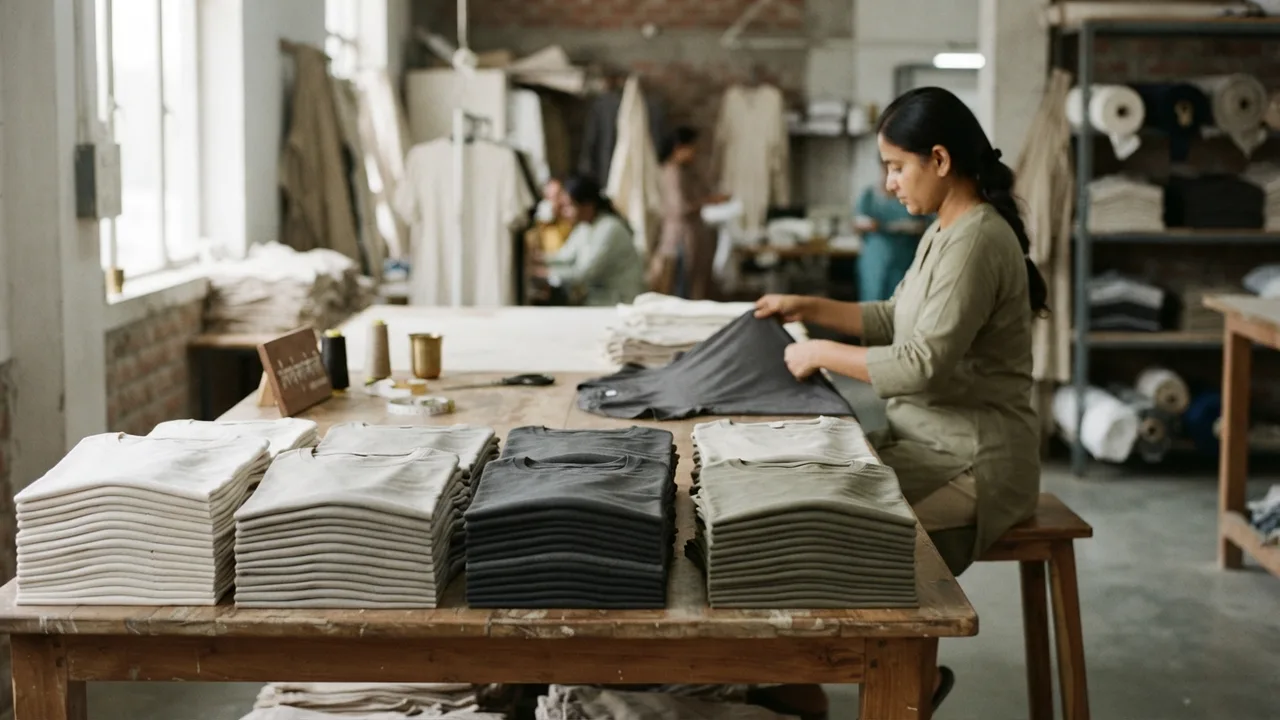
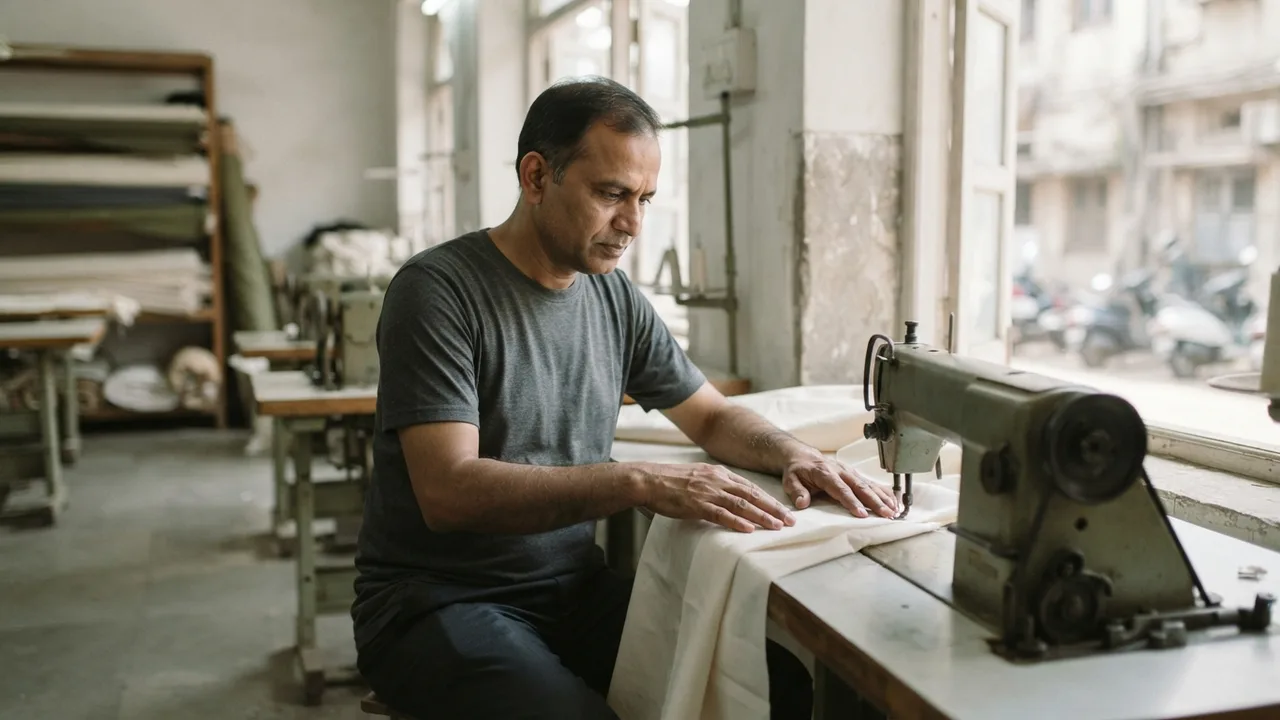
Tirupur's growth from a small handloom town in the 1970s to India's export knitwear capital by the 1990s was built on migrant labour, largely from Bihar, Odisha, West Bengal, and within Tamil Nadu.
That workforce is the town's real infrastructure, more than the machines. A skilled tailor who has stitched collars for fifteen years is doing something no automated line fully replicates yet: catching a slightly off-grain cut before it becomes a crooked seam.
Wages in Tirupur's export units have risen steadily, partly from Tamil Nadu's minimum wage revisions and partly from labour shortages as workers move toward better-paid urban jobs. Skilled tailors and machine operators in compliant units now earn ₹16,000 to ₹24,000 a month depending on role and unit, though subcontracted piece-rate work can pay considerably less per hour worked.
That wage gap between top-tier and bottom-tier units inside the same cluster is exactly why "Tirupur-made" is a starting point for research, not an ending point. If you want the full cost breakdown of what fair wages add to a shirt's price, and why cutting corners there is often invisible to the buyer, read our piece on fair-wage t-shirt costs.
Environment: the part Tirupur had to fix the hard way
Dyeing is water-intensive and, done carelessly, pollution-intensive. Tirupur learned this the hard way in the early 2000s, when the Noyyal river, which runs through the region, became badly contaminated by untreated dye effluent, triggering court orders and mass closures of non-compliant dyeing units.
The cluster's response reshaped the industry. Zero Liquid Discharge (ZLD) treatment became mandatory for dyeing units, requiring wastewater to be treated and recycled rather than released.
It was expensive and painful, and hundreds of smaller dyeing units shut down permanently because they could not afford the upgrade. What survived is a cleaner, more consolidated dyeing sector than existed twenty years ago, though water stress in the region remains a live concern given how thirsty dyeing and washing processes are even with treatment.
This history is worth knowing because it explains why compliant Tirupur units cost more to run than the cheapest possible dyeing process elsewhere in the country, and why that cost shows up in the price of an honestly made tee.
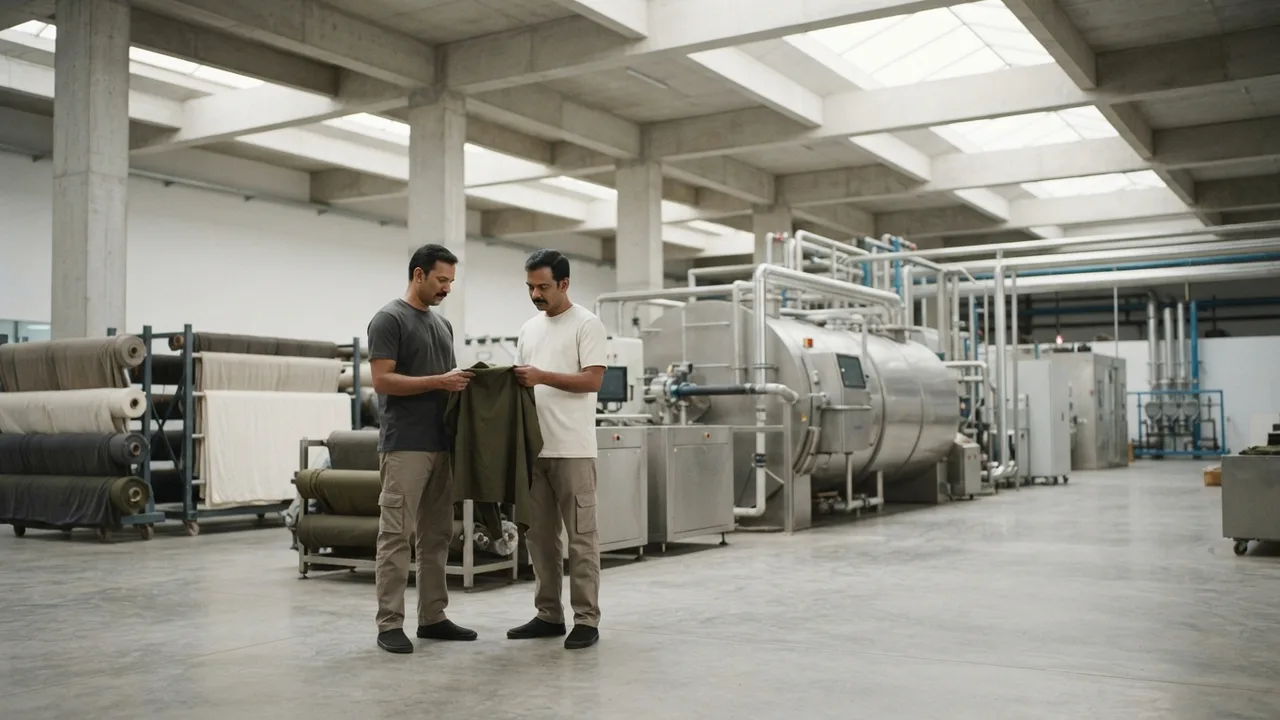
Should sourcing from Tirupur actually change how you shop?
It should change what you ask, not what you assume. A city name on a hangtag is marketing shorthand, useful as a starting point but not proof of anything by itself.
The more useful signals are the ones we have covered across our other pieces: GSM disclosure, fabric composition, wash-test durability claims, and a price that is coherent with the labour and compliance story being told. Our guide on spotting good cotton online walks through exactly how to read a product page for these signals before you buy.
Tirupur is not a guarantee of quality. It is the reason quality is affordable to build, when a brand actually does the work.
The takeaway
Tirupur is the physical machinery behind a huge share of India's t-shirts, and understanding how it works explains both the good and the uneven parts of the industry.
The cluster's density of specialized units is why a well-made tee can be genuinely affordable. Its scale is also why quality varies so much between a ₹299 shirt and a ₹1,499 shirt made twenty minutes apart.
The next time a brand mentions Tirupur, treat it as an invitation to ask better questions, not a reason to stop asking them.
Boring Label
Wear the point of the article.
One honest tee. Heavyweight combed cotton, a collar that holds, a fit that actually fits. No logo, no noise.
Shop the round-neck teeFree shipping across India · Easy returns
Keep reading

Why 10 Brands Sell the Same Blank Tee: Explained
Many small t-shirt brands sell the exact same factory tee under different labels. Here is how to spot white-labelling and what genuine differentiation looks like.

What a Fair-Wage T-Shirt Actually Costs to Make
A line-by-line cost sheet shows fair wages add roughly Rs 75 to a t-shirt, not the 4-5x premium many ethical brands charge. Here is how to tell the difference.
T-Shirt GSM Guide: What the Number Really Means
GSM is the most quoted, least understood number on a tee. Here is what it actually predicts about quality.
Stay in the loop
New writing, no noise
Occasional notes on fit, fabric, and dressing simply well. No spam, unsubscribe anytime.
Subscribe