Fabric
Should you iron t-shirts? the right way if you must
Knit fabric reacts differently to heat than woven shirts. Here is when ironing a t-shirt actually helps and how to do it without damaging the fabric.
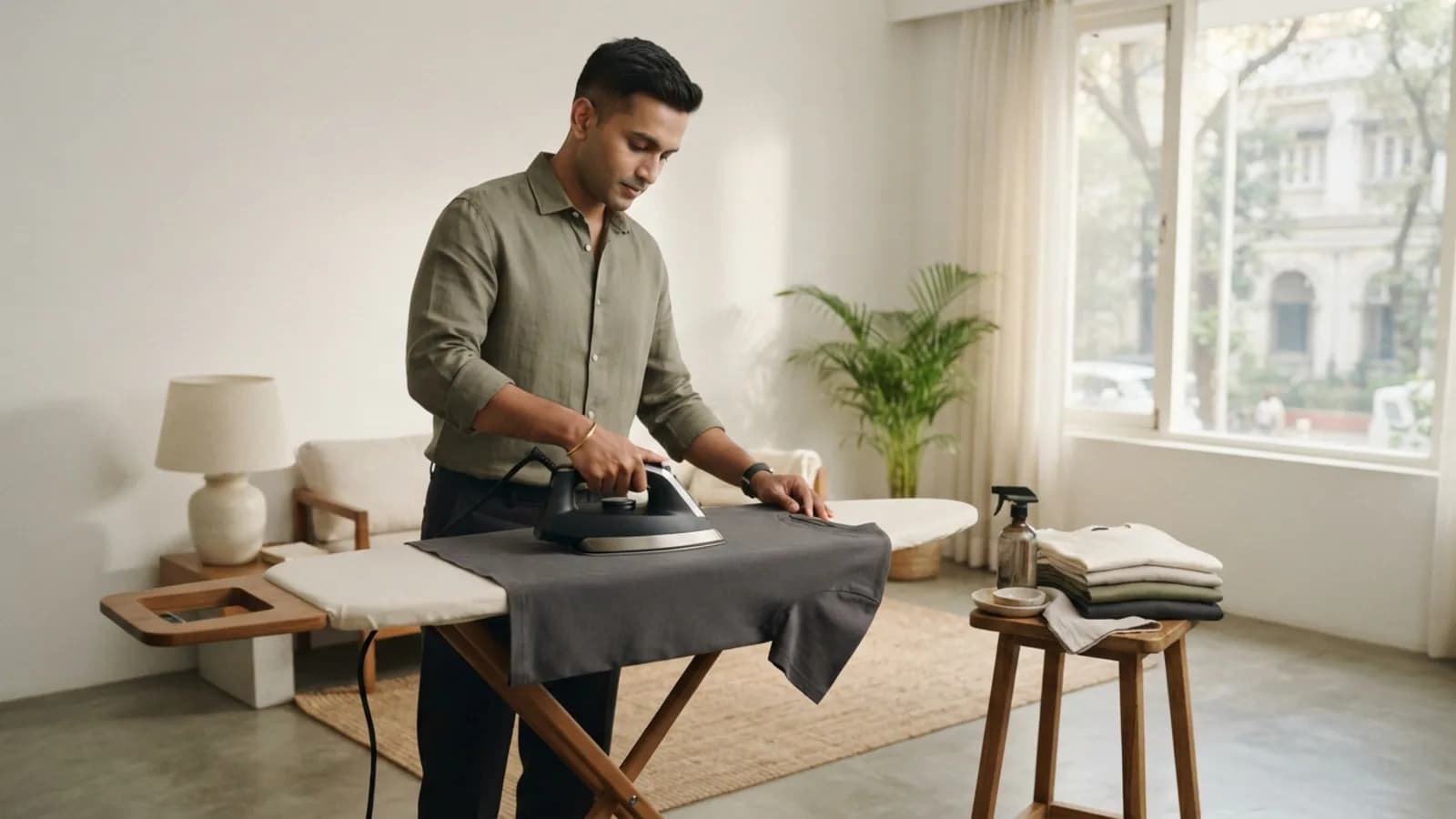
Most cotton tees do not need an iron
The honest answer to "should you iron your t-shirt" is usually no. A well-made cotton tee, folded or hung correctly right after drying, holds its shape well enough for casual and even smart-casual wear without heat ever touching it.
Ironing a t-shirt is a habit borrowed from dress shirts, where crisp structure matters. A tee is a knit garment, not a woven one, and knits behave differently under heat.
That said, there are real situations where ironing helps, and there is a right way and a wrong way to do it if your tee genuinely needs the treatment. This guide covers both.
Why knit fabric reacts differently to heat than woven fabric
A dress shirt is woven, meaning threads cross over and under each other in a fixed grid. That structure holds a crease well and needs heat to look sharp because the grid itself is somewhat rigid.
A t-shirt is knit, built from interlocking loops of yarn, the same basic structure as a sweater. Knits are inherently more elastic and drape-forward, which is exactly why a tee feels comfortable to move in.
Iron a knit the way you would a woven shirt and you risk two problems: flattening the loop structure permanently, which changes the fabric's hand feel and stretch recovery, and creating a shine on the surface where the iron plate presses too hard against synthetic-blend fibres.
This is the core reason most style guides recommend steam over direct pressing for tees, and why a slightly rumpled cotton tee looks intentional in a way a rumpled dress shirt never does.
When ironing actually helps
There are three scenarios where a few minutes with an iron genuinely improves how a tee looks.
Heavier GSM cotton that has been folded for storage. Fold lines on a dense 220 GSM-plus tee, the range covered in our GSM guide, can sit stubbornly across the chest and need more than a quick shake-out to release.
Tees worn under a blazer or open shirt for a smart-casual look. When a tee is layered as a visible base, crisper fabric reads more polished under structured outerwear.
Fabric blends with a higher synthetic content, which wrinkle more aggressively than pure cotton and do not release creases from body heat and humidity the way natural fibre knits often do.
Outside these three cases, a properly folded or hung tee generally looks fine without ever meeting an iron.
The right way to iron a t-shirt, if you must
If your tee falls into one of the scenarios above, do it properly rather than blasting it on cotton setting and hoping for the best.
Turn it inside out first. This is the single most important step. Ironing from the wrong side protects any printed graphics, reduces surface shine on the right side, and is gentler on the fibre structure overall.
Use the medium heat setting, not the cotton-max setting. Most modern cotton tees are lighter weight than the heavy woven shirts irons were originally calibrated for, and full heat risks scorching or, on blends, melting synthetic content.
Add steam or a barely damp pressing cloth. Steam relaxes the knit structure without direct high-heat contact, which is gentler on the loops than dry pressing.
Press, do not drag. Lift and place the iron rather than sliding it across the fabric. Dragging stretches knit fabric out of shape, especially around the neckline and shoulder seams, exactly the kind of distortion covered in our collar sagging guide.
Do the collar and cuffs last, with the least pressure. Ribbed areas like the neckline are more elastic and more prone to permanent stretching under heat and pressure than the flat body of the tee.
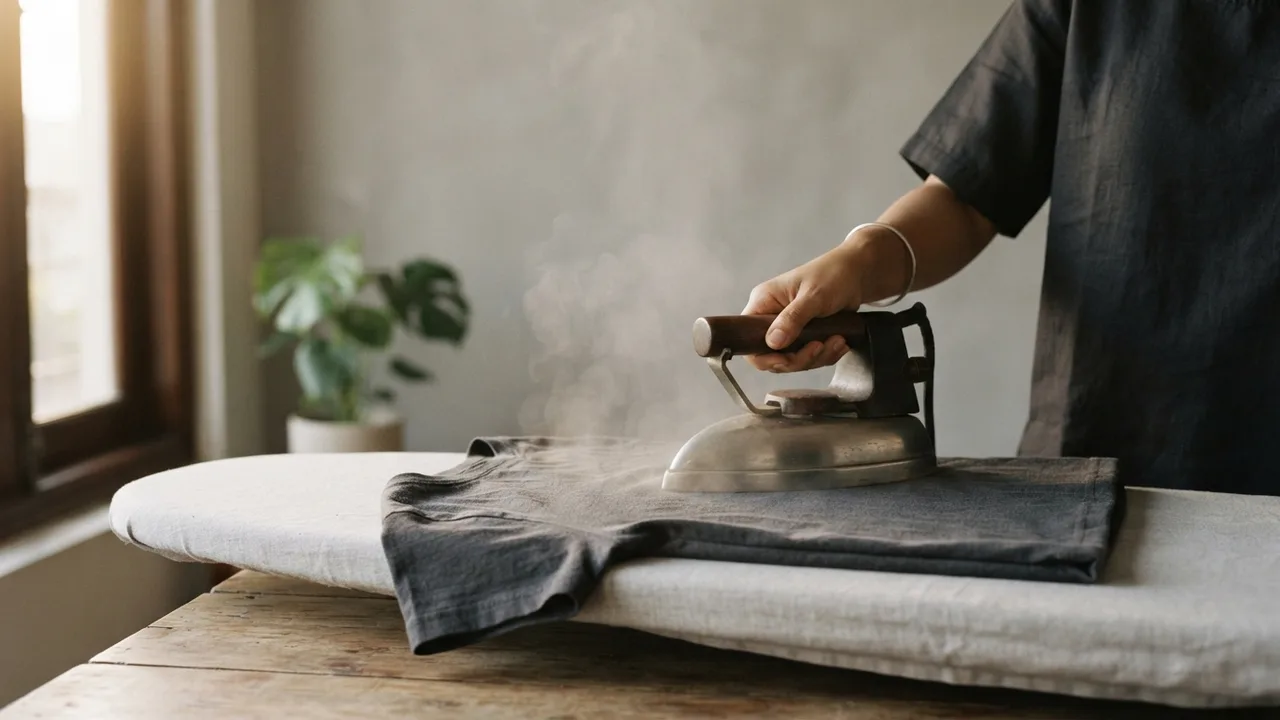
The no-iron alternative that works almost every time
Before reaching for an iron, try this three-step method, which resolves wrinkles on most cotton tees without any heat at all.
- Shake the tee out fully the moment it comes off the drying line or out of the dryer, snapping the fabric to loosen the fibres while they still hold some residual moisture.
- Hang it on a wide-shouldered hanger immediately, letting gravity pull the fabric straight for at least an hour before folding or wearing.
- Steam it in the bathroom. Hang the tee near a hot shower for ten minutes; the ambient steam relaxes most fold and wrinkle lines without any direct contact.
This routine handles the majority of everyday wrinkling, and it is gentler on fabric longevity than repeated ironing, which is worth protecting if you care about how your tees hold up over the kind of wash-count tracking in our 30-wash durability test.
What ironing does to fabric over time
Repeated high-heat ironing is not free. Heat gradually breaks down the natural crimp in cotton fibres, the microscopic waviness that gives a knit its stretch and bounce.
Over dozens of ironing sessions, this shows up as fabric that feels slightly flatter and less springy than it did new, even if the garment has not visibly worn out. It is a slow, cumulative effect rather than a single dramatic change, but it is real.
This is one reason many premium basics are designed to be worn without ironing at all. A round-neck tee built at the right weight and finish should hold its shape from drying alone, which is part of what we mean when we talk about quality construction rather than just fabric weight.
A quick reference table
| Scenario | Iron needed? | Best approach |
|---|---|---|
| Fresh tee, hung right after drying | ✗ No | Shake out, hang |
| Folded tee with stubborn crease | ✓ Sometimes | Steam, medium heat, inside out |
| Tee under blazer for smart casual | ✓ Yes | Full press, low-medium heat |
| Synthetic-blend tee | ✓ Often | Low heat, steam, avoid direct contact |
| Printed graphic tee | ✓ If needed | Inside out only, low heat |
| Ribbed collar or cuffs | ✗ Avoid direct pressure | Steam gently, minimal contact |
The care routine that reduces how often you need to iron
Ironing frequency is mostly determined by what happens before the iron ever comes out. Two habits cut wrinkling dramatically.
Remove tees from the dryer or line the moment they finish, rather than leaving them balled up for hours. Wrinkles set faster and deeper the longer damp fabric sits compressed.
Wash on a gentler cycle with cooler water. Aggressive spin cycles are one of the biggest causes of deep-set wrinkles in knit fabric, and our full wash care guide covers the settings that keep both wrinkling and wear to a minimum.
Get the wash and dry routine right and most tees never need an iron at all, which saves both your time and your fabric's long-term structure.
Steamers versus irons for t-shirts specifically
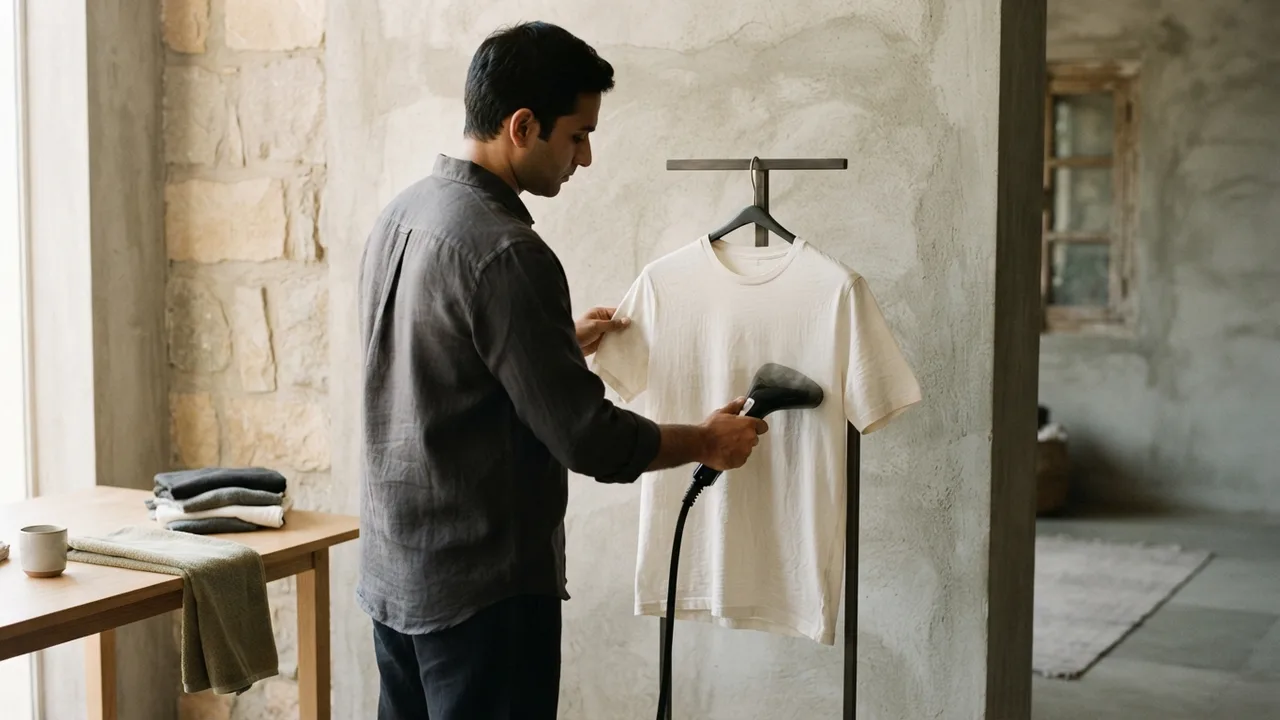
A handheld garment steamer is worth considering if you find yourself reaching for the iron often, because it sidesteps most of the risks direct pressing carries for knit fabric.
Steamers work entirely through vapor, with no direct fibre-to-plate contact, which eliminates the shine and flattening risk that comes from pressing a knit under heat and weight. They are also faster for quick touch-ups, since you can steam a hanging tee in under a minute without setting up a full ironing board.
The trade-off is that steamers are less effective on genuinely stubborn, deep-set creases, the kind that come from a tee sitting folded and compressed for weeks. For that scenario, a proper iron with steam function still does a more thorough job.
A reasonable middle path for most households: keep a small steamer for regular quick touch-ups on hanging tees, and reserve the iron for the occasional stubborn crease or a tee that specifically needs a crisp, structured look under a blazer.
Common mistakes that damage fabric faster than no ironing at all
A few habits do more harm than simply skipping the iron entirely.
Ironing over prints or embellishments directly. Heat and pressure crack plastisol and vinyl prints quickly, and even high-quality screen prints degrade faster under direct high-heat contact. Always flip the garment inside out first, as covered above.
Using the highest heat setting regardless of fabric. Many people default to the cotton-max setting out of habit, without checking whether the specific tee is a lighter weight or contains any synthetic blend that will react badly to that much heat.
Ironing bone-dry fabric with no steam or moisture at all. Completely dry fibre is more brittle and more prone to scorching or permanent flattening than fabric with a little residual moisture or added steam working with the heat rather than against dry fibre.
Leaving the iron stationary too long in one spot, often while reaching for something or checking a phone. Even a few extra seconds of stationary heat on synthetic-blend fabric is enough to cause visible shine or, in worse cases, minor scorching.
Avoiding these four habits protects fabric far more than any specific ironing technique does.
Quick answers to common ironing questions
Can you iron a t-shirt with a printed graphic? Yes, but always inside out and on low heat, since direct high heat on a print is the fastest way to crack or peel it.
Does ironing shrink a cotton t-shirt? Not directly, but excessive dry heat over many sessions can subtly stiffen fibre in a way that makes fabric feel less springy over time, which is a separate issue from the shrinkage that happens in washing and drying.
Is steaming better than ironing for tees? For light touch-ups, generally yes, since it avoids direct fibre contact entirely. For deep, set-in creases, a proper iron with steam still works faster.
Building the habit into your weekly routine
Most people who stop ironing tees regularly do not miss it, once the hang-and-steam routine becomes automatic rather than an extra chore layered onto laundry day.
The habit that makes the biggest difference is timing: dealing with a tee the moment it comes out of the wash, rather than letting it sit balled up in a laundry basket for a day or two. Wrinkles that set into damp, compressed fabric for 24 hours take far more effort to remove later than wrinkles addressed immediately.
If you do keep an iron in rotation for specific pieces, dedicating a fixed few minutes on laundry day, rather than ironing reactively right before leaving the house, produces noticeably better results and less risk of rushed, careless pressing that damages fabric over time.
The bottom line
Iron your t-shirts only when the situation genuinely calls for it: heavy fabric with stubborn creases, layering under structured clothing, or synthetic-heavy blends that will not release wrinkles on their own. For everything else, a proper hang or fold and a few minutes of steam will do the job with none of the long-term wear that repeated ironing causes.
When you do iron, go inside out, medium heat, steam over pressure, and treat the collar gently. Your tees will look sharp and last longer, which is the actual goal behind ironing in the first place.
Boring Label
Wear the point of the article.
One honest tee. Heavyweight combed cotton, a collar that holds, a fit that actually fits. No logo, no noise.
Shop the round-neck teeFree shipping across India · Easy returns
Keep reading
T-Shirt GSM Guide: What the Number Really Means
GSM is the most quoted, least understood number on a tee. Here is what it actually predicts about quality.

Fold or Hang? How to Store Tees So They Keep Their Shape
Hanging and folding each solve one storage problem and cause another. Here is a simple framework for which method fits which tee.
How to Wash T-Shirts So They Last Longer
Your washing machine ages a tee faster than wearing it does. Five habits that undo most of the damage.
Stay in the loop
New writing, no noise
Occasional notes on fit, fabric, and dressing simply well. No spam, unsubscribe anytime.
Subscribe