Fabric
Modal vs Cotton vs Poly-Blend: T-Shirt Fabrics Decoded for India
Feel, breathability, sweat, odour, durability and cost - the honest, India-first guide to choosing a t-shirt fabric.
Three Fabrics, One Hot Country, A Lot of Confused Shopping
Stand in front of a wall of plain t-shirts in India and you are really choosing between three families of fabric, even if the tags do not spell it out. There is cotton, the default everyone grew up with.
There is modal and its cousins - viscose, rayon, Tencel, bamboo - the silky cellulosics that feel impossibly soft on the rack. And there are the blends: cotton-polyester, poly-spandex, tri-blends, the performance-adjacent fabrics that promise to do everything at once.
Each one feels different in your hand, behaves differently on a 42-degree afternoon, and ages differently after fifty washes in hard Indian water.
The trouble is that almost every comparison you find online is written either by a brand selling one of them, or by someone who has never worn the fabric through a Chennai summer or a Mumbai monsoon. So you get sweeping claims - modal is softer, cotton breathes, poly wicks - with no honesty about where each one falls apart.
Soft on day one tells you nothing about how a tee feels by 3pm in July, or whether it still looks decent next April.
This piece is the honest version. We will go fibre by fibre through the six things that actually decide whether you reach for a tee or leave it in the drawer: feel, breathability, sweat and odour, durability, cost over its life, and care.
We will be fair about where modal and blends genuinely win, because they do. And we will explain why, for the everyday tee you wear hardest in Indian heat, long-staple cotton still ends up being the soundest all-round choice - not because it wins every single round, but because it loses the fewest rounds that matter.
First, What These Fabrics Actually Are
You cannot reason about how a fabric behaves until you know what it is made of, so here is the quick, jargon-free version. The differences in feel and performance all trace back to the fibre.
Cotton: A Natural Plant Fibre
Cotton is a natural fibre that grows around the seed of the cotton plant. Each fibre is a hollow, slightly twisted tube of cellulose.
That hollow structure is the reason cotton breathes and absorbs sweat the way it does - the fibre genuinely soaks moisture into itself rather than just carrying it on the surface. Not all cotton is equal, though, and the single biggest variable is staple length: how long each individual fibre is.
Ordinary upland cotton has short fibres, often around 20mm. Long-staple cottons like Supima and Pima run closer to 35 to 38mm.
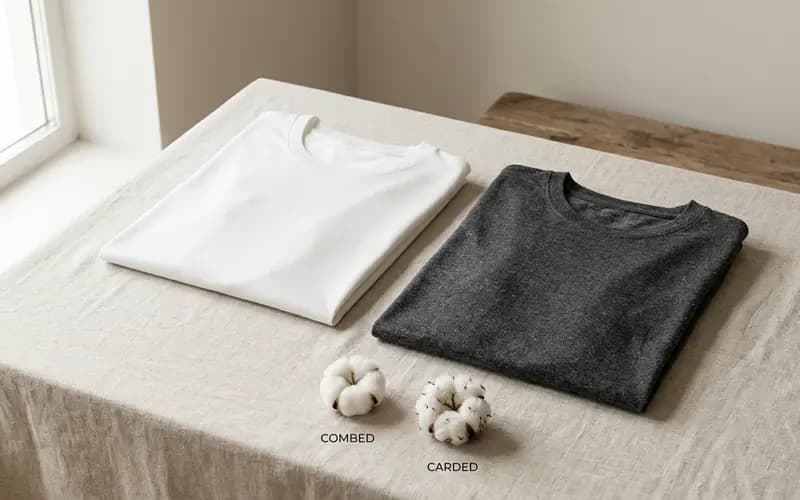
Longer fibres make stronger, smoother, longer-lasting yarn, which is why a long-staple cotton tee feels and ages nothing like a cheap one even though both are "100% cotton". If you want the full picture on that, the difference between combed and carded cotton covers how short fibres get removed to leave only the good stuff.
Modal: A Manufactured Fibre Made From Wood
Modal is not natural in the way cotton is, but it is not synthetic either. It is a regenerated cellulosic fibre: wood pulp, commonly from beech, is dissolved into a solution and then extruded back out as long, smooth, uniform filaments.
So the raw material is plant cellulose - like cotton - but it has been chemically processed into a fibre. The result is a fibre that is extremely fine, very smooth, and remarkably consistent, which is exactly why modal feels so silky and drapes so fluidly.
Viscose, rayon, Tencel (lyocell) and most "bamboo" fabrics are siblings in the same cellulosic family, made by similar processes with different chemistry and different environmental footprints. They share modal's soft, slinky character and most of its strengths and weaknesses.
Poly-Blend: Cotton or Modal Mixed With Plastic
Polyester is a true synthetic - a plastic fibre spun from petroleum derivatives. On its own it is strong, cheap, wrinkle-proof, and quick-drying, but it feels slick, holds odour, and does not breathe like a natural fibre.
You rarely see it solo in a casual tee. Far more common is the blend: cotton-poly (the classic 60/40 or 50/50), or a tri-blend that adds rayon for drape, or a touch of spandex/elastane for stretch.
Blending is an attempt to borrow the best of each - cotton's hand and breathability, polyester's durability and quick-dry, spandex's recovery - in one fabric. Sometimes it works beautifully.
Sometimes you just inherit the weaknesses of all of them at once.
How They Feel In The Hand And On The Skin
Feel is the first thing you judge and the easiest to be misled by, so it is worth being precise about what you are actually feeling.
Modal wins the rack test almost every time. Those fine, smooth, uniform filaments give it a cool, slinky, almost liquid drape and a softness that is genuinely hard to match.
If you rub a good modal tee between your fingers and then a cotton one, the modal feels more luxurious in that moment, full stop. There is no point pretending otherwise - it is softer, and it stays consistently smooth wash after wash rather than going slightly crisp the way cotton can.
Cotton's feel depends entirely on its quality. A cheap, short-staple, carded cotton tee feels decent when new and then turns rough and fuzzy.
A long-staple combed cotton tee feels smooth, substantial, and dry in a way that is different from modal - less slinky, more honest, more "fabric" and less "silk". Many people actually prefer that drier, more grounded hand against the skin, especially in heat, because the slight slipperiness of modal can feel clammy when you are sweating.
Cotton feels like cotton; that familiarity is part of why it endures.
Poly-blends feel like a compromise, which is the point. A good cotton-poly blend can be soft and smooth and resist wrinkling, and a touch of spandex adds a pleasant stretch and recovery that pure cotton lacks.
But blends with a high polyester content often have a faint slickness or plasticky hand that gives them away, and they can feel warmer and less breathable against the skin even when they look identical to cotton on the hanger. Soft is not the same as comfortable once you are warm.
The honest summary on feel: modal is the softest in isolation, long-staple cotton is the most satisfying to wear over a long hot day, and blends sit in between, leaning whichever way their mix leans. Remember too that any tee can feel soft when new because of finishing chemicals and softeners that rinse straight out in the first few washes.
You are trying to judge the fibre, not the factory coating.
Breathability And The Indian Heat Problem
This is where the comparison stops being about pleasant rack-feel and starts being about whether you are comfortable in real Indian weather, so we will spend a little longer here.
Cotton is the breathability benchmark. Its hollow fibres and its ability to absorb a lot of moisture into the fibre itself mean air moves through it freely and it pulls sweat off your skin readily.
The classic knock on cotton is that once it is fully soaked it stays wet and clings, because it holds water rather than shedding it - and that is a fair criticism we will come back to. But for ordinary hot, dry-to-moderate conditions, cotton's airflow and absorbency make it feel cool and natural, which is exactly why it has been the default in hot climates for centuries.
There is a reason your grandparents wore cotton, not a reason to be embarrassed about it. We go deeper on what makes a fabric feel cool in the best breathable fabrics for summer.
Modal breathes well too - better than any synthetic - and it has a genuinely interesting trick: it absorbs and releases moisture faster than cotton. Modal's moisture regain is commonly cited around 13 percent against cotton's roughly 8.5 percent, which in plain terms means modal takes on sweat readily and moves it to the surface to evaporate a little more efficiently.
So in moderate heat a modal tee can feel cool and dry-handed for longer than you would expect. The catch is that modal's smooth, dense filaments do not let air through quite as openly as cotton's more open, textured structure, so in still, heavy, oven-like heat some people find modal feels a touch closer to the skin than a good cotton tee.
Polyester is the laggard on breathability. As a solid plastic filament it does not absorb moisture into itself at all - it can only carry sweat along its surface.
Performance polyester is engineered with channels and finishes to wick that surface moisture and dry fast, and for high-output gym sweat that genuinely works. But for everyday wear in humid heat, a high-poly tee tends to trap warmth and can feel sticky and stifling once you stop moving.
A cotton-poly blend dilutes this - the cotton restores some breathability - but every percentage point of polyester you add nudges the fabric towards "holds heat" and away from "lets it go".
So in pure breathability terms the order is roughly cotton first, modal a close and clever second, and polyester last with blends sitting wherever their ratio puts them. For most of an Indian day, that ranking holds.
The Monsoon Twist: Where The Ranking Flips
Here is the genuinely non-obvious angle, and the one most fabric comparisons miss entirely: humidity changes the answer, and it does not change it the way you would guess.
In dry heat, cotton's absorbency is a gift - it pulls sweat away and lets it evaporate. But in the dead-air humidity of a monsoon or a sticky coastal afternoon, evaporation slows to a crawl.
Now cotton's love of water turns against it. It soaks up sweat and moist air, gets heavy, and clings, because there is nowhere for the moisture to evaporate to.
This is the one situation where a synthetic or a poly-blend can genuinely feel better: polyester holds almost no water, so a poly or poly-blend tee stays lighter and dries faster when the air itself is saturated. If your reality is long, swampy, low-airflow humidity and you are moving a lot, a cotton-rich blend or a technical fabric has a real, defensible edge.
We unpack the wider wet-weather picture in dressing for the monsoon.
Modal sits awkwardly here. It is even more absorbent than cotton, so in extreme humidity it can take on a lot of moisture and, because its fibres lose a meaningful amount of strength when wet, a soaked modal tee can feel heavy and delicate at the same time.
Its faster moisture release helps in moderate damp, but it is not the fabric you want when the air is fully waterlogged.
The honest takeaway is this: no single everyday fabric wins in saturated monsoon humidity, because the thing that makes cotton and modal comfortable in normal heat - absorbing sweat - is the thing that fails when nothing can evaporate. Cotton still clings in extreme humidity; that is a real limit, not a detail to hide.
The practical answer for most people is not to abandon cotton, but to pick a sensible mid-weight in a breathable knit, keep a quick-dry option for genuinely swampy days, and accept that physics beats marketing in a downpour.
Sweat, Smell, And The Odour Problem Nobody Mentions On The Tag
Breathability is about comfort in the moment. Odour is about whether the tee is still wearable after a sweaty day - and this is where the fibres separate most dramatically, often in the opposite direction to what the marketing implies.
Natural and cellulosic fibres - cotton and modal - absorb sweat into the fibre, where it can evaporate, and crucially they do not give bacteria a comfortable plastic surface to colonise. The practical result is that cotton and modal tees tend to resist becoming genuinely smelly.
They can get damp and they will eventually need a wash, but they rarely develop that sharp, set-in stink after a single wear.
Polyester is the opposite, and this is its dirty secret. Because it cannot absorb sweat into the fibre, the moisture and the body oils sit on the surface, and polyester's plastic surface is an excellent home for odour-causing bacteria.
This is why a polyester gym shirt can smell strongly after one workout and why that smell can persist even after washing - the odour compounds bind to the fibre. Performance brands fight this with antimicrobial finishes, but those wash out over time.
A high-poly everyday tee, worn in heat, is the one most likely to announce itself by evening. A cotton-poly blend is better than pure poly but still worse than pure cotton or modal on this front - the cotton helps, but the polyester is still there holding the smell.
Modal handles odour about as well as cotton and sometimes a touch better thanks to its smoothness and fast moisture release, and blends of modal with a little elastane stay fresh reasonably well. But in the all-day-heat, single-wear, must-not-smell scenario that defines a lot of Indian wear, a natural or cellulosic fibre is simply the safer bet than anything plastic-heavy.
This is one of the strongest and least-discussed points in cotton and modal's favour, and it never makes it onto a tag.
Durability: Which Tee Survives The Indian Wash Cycle
A tee is only as good as the number of wears it gives you before it pills, thins, fades, or loses its shape. And in India, where tees often get washed after a single hot-weather wear, durability is tested hard.
Here the picture genuinely surprises people, so it is worth laying out as an honest table rather than a slogan.
| Property | Long-staple cotton | Modal (and cellulosics) | Cotton-poly blend |
|---|---|---|---|
| Pilling resistance | Good (better with long-staple combed) | Very good when new, but weak fibres can fuzz with abrasion | Variable - poly resists pilling but can trap loose cotton fibres into pills |
| Strength when dry | Strong, especially long-staple | Moderate | High (polyester adds tensile strength) |
| Strength when wet | Stays strong | Drops noticeably - modal is weaker wet | High (poly is unaffected by water) |
| Shrinkage | Can shrink with heat if not pre-treated | Low - holds shape well | Low - poly content resists shrinking |
| Colour retention | Good with quality dyeing | Good, takes dye cleanly | Good, but poly and cotton can fade at different rates |
| Shape retention over years | Good | Good, resists sagging | Good, spandex aids recovery; poly can outlast cotton and look odd as cotton thins |
| Behaviour after many hot washes | Ages gracefully if long-staple | Can lose body and feel limp over time | Durable but can look tired - pilled poly, faded cotton |
The honest reading of that table is not "cotton wins everything". Modal resists shrinking better and stays smooth; polyester adds raw strength and shrug-off-the-wash toughness.
Modal's real weakness is hidden in one row: it loses a meaningful chunk of its strength when wet, so it is more vulnerable during the wash itself - exactly when an Indian tee spends a lot of its life. Cheaper modal and viscose can also go limp and lose their body after enough hot washes, trading their lovely initial drape for a tired softness.
Polyester's durability is real but comes with a sting: in a blend, the polyester often outlives the cotton, so you end up with a tee where the cotton has thinned and faded while the poly grid is still going strong, leaving a garment that looks worn out but will not wear through. And blends are where pilling gets unpredictable - loose cotton fibres tangle around the tough poly and lock into stubborn little balls.
If pilling is your particular enemy, the full mechanism in why t-shirts pill explains why fibre type and length matter more than price.
Long-staple combed cotton's case on durability is not that it is indestructible, but that it ages honestly and predictably: it holds strength wet and dry, resists pilling because the short fuzzy fibres were removed, and when it finally goes it goes evenly rather than turning into a patchwork of worn cotton and surviving plastic. For a tee you will wash a hundred times, predictable graceful ageing is worth more than a spec-sheet toughness that looks bad while it lasts.
Cost Over A Tee's Whole Life, Not On The Tag
Price is the lever everyone reaches for first, and it is the most misleading one in isolation, so it deserves the same honest treatment as the rest.
A pure polyester tee is the cheapest to make and the cheapest to buy. A cheap cotton-poly blend is close behind - blending with poly is partly a cost-cutting move, because polyester is cheaper than good cotton.
Plain short-staple cotton is inexpensive too. Modal sits higher because the manufacturing process is involved, and good modal costs real money.
Long-staple combed cotton sits at the premium end because you are paying for better raw fibre and an extra processing step that throws away the short fibres.
But the tag price is the wrong number. The number that matters is cost per wear: what you paid divided by how many good wears you actually got.
A 300-rupee tee that pills, smells, and looks tired after twenty wears costs you 15 rupees a wear and frustrates you the whole time. A well-made tee at 1,299 rupees that stays smooth, fresh, and presentable for two hundred wears costs you under 7 rupees a wear and you actually enjoy it.
The expensive one is literally cheaper, and nicer, per day. We work through this maths properly in the piece on cost per wear, and it changes how you shop.
The honest caveat - and it is an important one - is that price alone never guarantees quality. An overpriced tee can be made of mediocre fibre with a fat margin on top, and a sensibly priced one can be excellent.
Expensive modal is still modal, with modal's wet weakness; cheap long-staple is rare for a reason. So the rule is not "buy the dearest" but "buy the fibre and construction that will give you the most good wears, then check the price is fair for that".
A clear-eyed look at where the money actually goes lives in affordable versus premium tees.
Care: How Hard Is It To Keep Each One Looking Good
Even the best fabric disappoints if it is a pain to look after, and in real homes with real washing machines and Indian summer sun, care matters more than fabric brochures admit.
Cotton is forgiving and familiar. It tolerates normal machine washing, takes a warm iron, and survives the occasional mistake.
Its main vulnerabilities are heat-shrinkage if it was not pre-treated and the slow fuzzing of cheap short-staple versions. The single best thing you can do for any cotton tee is wash it cooler, turn it inside out, and keep it out of a hot dryer - simple habits that dramatically extend its life.
We collected the ones that actually matter in how to wash t-shirts so they last longer.
Modal is low-shrink and holds its shape, which is a genuine convenience, but it demands gentleness for a specific reason: it is weak when wet. A modal tee should be washed cool and gentle and never wrung hard or tumbled hot, because that is precisely when its fibres are most fragile.
Treat it kindly and it stays smooth and shapely for a long time; throw it in a brutal hot wash and it will go limp faster than cotton would.
Poly-blends are arguably the most fuss-free to wash - they resist wrinkles, dry fast, and barely shrink. The catches are heat and odour.
Polyester hates high heat, so a hot wash or a hot iron can damage or glaze the fabric, and the trapped-smell problem means poly-heavy tees sometimes need a stronger wash or a soak to come fully clean, which works against their easy-care image. Quick to dry, slow to de-stink.
On care, no fabric is genuinely difficult, but the profiles differ: cotton is robust and forgiving, modal is shape-stable but fragile when wet, and blends are wrinkle-free but heat-sensitive and odour-prone. For a tee that gets washed constantly through an Indian summer, the forgiving option ages best with the least babysitting.
So Which Should You Actually Buy
Pull all six rounds together and the picture is not a knockout - it is a points decision, and the honest scorecard looks like this.
Modal genuinely wins on initial softness, drape, and shrink-resistance, and it is a lovely choice for things worn close to the skin where silky feel matters most and hard wear does not - loungewear, layering pieces, softer tees you do not thrash. Its weaknesses are real though: it goes weak when wet, can lose its body over many hot washes, and is not the fabric for waterlogged humidity or rough use.
Poly-blends genuinely win on quick-dry performance, wrinkle-resistance, raw strength, and cost, and they earn their place for high-output sweat, travel where fast drying matters, and swampy low-airflow humidity where cotton clings. Their weaknesses are equally real: poorer breathability, and above all the odour problem that makes a poly-heavy tee the first to smell in heat.
For an everyday tee worn all day in warmth, that is a steep tax.
Long-staple cotton does not top every single category, and we are not going to pretend it does. Modal is softer on the rack; poly dries faster in a downpour.
What cotton does is lose the fewest important rounds: it breathes near the top, resists odour near the top, ages honestly and predictably, holds its strength wet and dry, is forgiving to wash, and - when it is long-staple and combed - feels smooth and substantial in a way that holds up over years rather than washes. It is the fabric with no disqualifying weakness for the job most of your tees actually do: be worn hard, in heat, washed often, and still look and feel decent.
It is also why long-staple cotton anchors most thinking on a tight, well-made minimalist wardrobe - a fabric you can trust on repeat is the foundation of buying fewer, better tees.
That is the whole reason we build our basics from long-staple combed cotton rather than chasing the softest rack-feel or the cheapest blend. A plain everyday tee is not a gym shirt or a loungewear piece or a travel quick-dry - it is the workhorse you reach for most, and for that specific job the all-round honesty of good cotton beats a fabric that wins one round and quietly loses three.
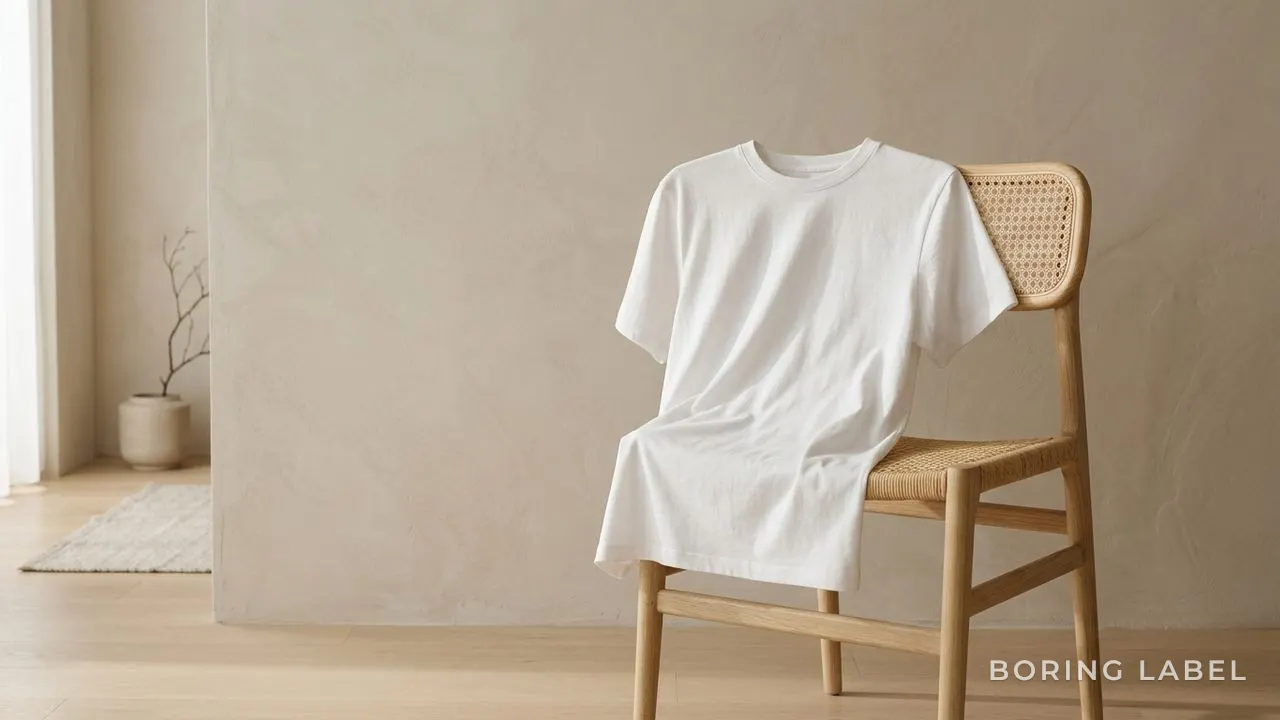
If you want to feel the difference in person, that is the thinking behind our round-neck tee: mid-weight long-staple combed cotton, built for the exact heat-and-wash cycle an Indian wardrobe puts a tee through.
The Honest Bottom Line
There is no single best t-shirt fabric, and anyone who tells you otherwise is selling the one they make. Modal is the softest and most graceful, and a fine choice where feel rules and wear is gentle.
Poly-blends are the most practical for sweat, travel, and saturated humidity, at the cost of breathability and a real tendency to hold smell. And long-staple cotton is the soundest all-rounder for the everyday tee - the one with no glaring weakness in the conditions that define daily Indian wear.
The skill is matching fabric to job rather than chasing a single winner. Buy modal for the soft layering pieces you treat kindly.
Keep a quick-dry blend for the gym and the swampiest monsoon days. And build the core of your wardrobe - the tees you wear hardest and wash most - around good long-staple combed cotton, because over a year of heat and washing it gives you the most genuinely comfortable wears with the fewest disappointments.
Understand the fibres, ignore the rack-feel and the tag price in isolation, and buy for the life of the tee rather than the first five minutes of it. That is how you stop buying t-shirts that let you down by July.
Boring Label
Wear the point of the article.
One honest tee. Heavyweight combed cotton, a collar that holds, a fit that actually fits. No logo, no noise.
Shop the round-neck teeFree shipping across India · Easy returns
Keep reading
Combed Cotton vs Carded: Why It Matters
One extra step removes the short fibres that make a tee fuzz, pill, and weaken. That step is combing.
Most Breathable Fabric for Summer (India Guide)
Breathability is not just the fibre. Weave, weight, and finish decide whether a tee cools you or clings.
Why Your T-Shirt Still Smells After Washing
It looks clean but smells sour the moment it warms up. The real reason is the fabric, not your laundry routine.
Stay in the loop
New writing, no noise
Occasional notes on fit, fabric, and dressing simply well. No spam, unsubscribe anytime.
Subscribe