Styling
What to Wear Under a Bandhgala or Nehru Jacket: The Plain Tee Test
A mandarin collar shows two centimetres of whatever is underneath it. Here is how to make sure that sliver looks intentional.
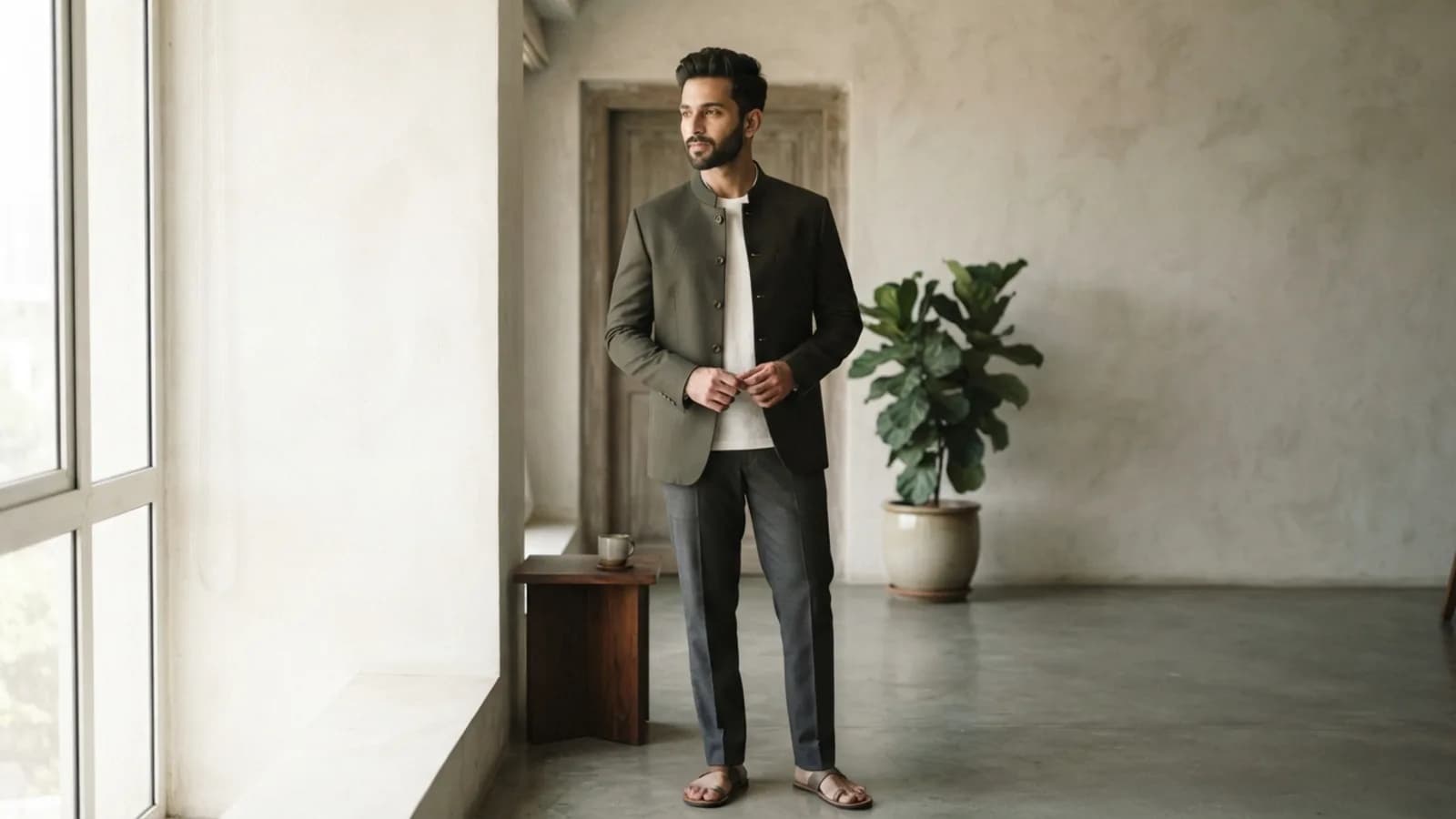
The bandhgala has a problem nobody talks about
A bandhgala or Nehru jacket looks finished on its own. That is the whole point of the silhouette, closed collar, straight lines, no gaping lapel.
But "looks finished on its own" creates a trap. Most men either overdress underneath it with a full shirt and tie that never gets seen, or underdress with whatever vest was lying around, and both choices show.
The jacket has a mandarin collar that sits close to the neck, so whatever you wear under it is visible in a two-inch band at the throat and, depending on the cut, sometimes at the wrists too. That sliver is not nothing.
It is the one place where the outfit either reads as deliberate or looks like you forgot a layer. This guide is about getting that sliver right, and the short answer is that a well-made plain tee often beats a shirt, a kurta, and a vest at the same job.
Why a shirt collar usually loses under a bandhgala
The traditional pairing is a bandhgala over a collared shirt. It works, but it fights the jacket's own logic.
A bandhgala's entire silhouette exists to remove collar clutter from the neckline. Put a spread or point collar shirt under it and you reintroduce exactly what the jacket was designed to hide, a second collar trying to peek out or bunching under the mandarin band.
You end up ironing a collar that nobody will properly see, and if it does peek out crooked, it looks like a mistake rather than a style choice.
There is also a heat problem specific to India. A full shirt under a buttoned, structured jacket in a Delhi wedding hall in October, or a Mumbai reception in a banquet hall with patchy air conditioning, means two layers of woven cotton trapping heat against your torso for four hours straight.
That is the fastest route to a visibly sweated-through jacket lining by the time the pheras start.
The plain tee test
Here is the test that decides whether a plain tee works under your bandhgala: can you see two centimetres of it at the collar, and does that two centimetres look intentional rather than accidental?
A tee passes this test when three things are true. First, the neckline sits exactly right, not so high it bunches against the mandarin collar, not so low it disappears and leaves a gap of bare skin.
Second, the fabric has enough weight and structure to hold a clean line rather than curling or rolling at the edge. Third, the colour reads as considered, usually black, charcoal, deep bottle green, or the exact same tone as the jacket for a tonal effect.
A round-neck tee in a mid-weight cotton, roughly 180 to 200 GSM, does this better than almost anything else in a wardrobe. Anything under 160 GSM tends to look thin and lifeless in that visible sliver.
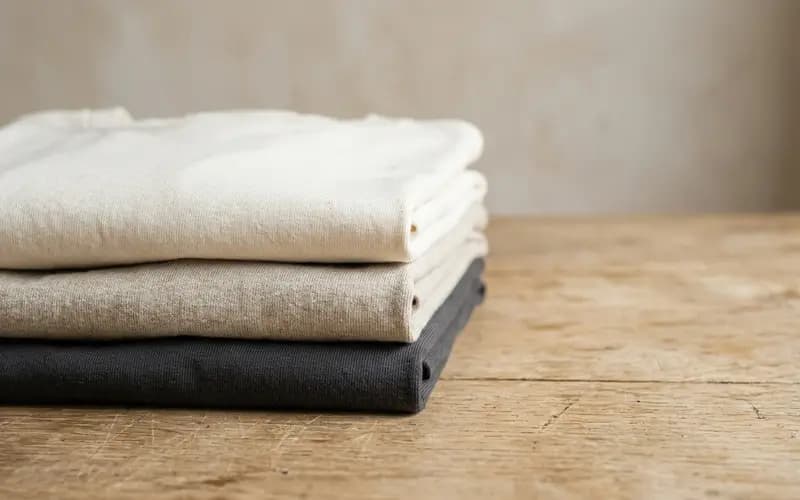
Anything close to 240 GSM plus can look bulky right at the throat, where bulk shows more than anywhere else on the body. Our GSM guide breaks down why that number changes how a fabric drapes, and at the collar, drape is everything.
Colour matching, not colour matching
The instinct with formal Indian menswear is to match everything. Resist that instinct at the collar.
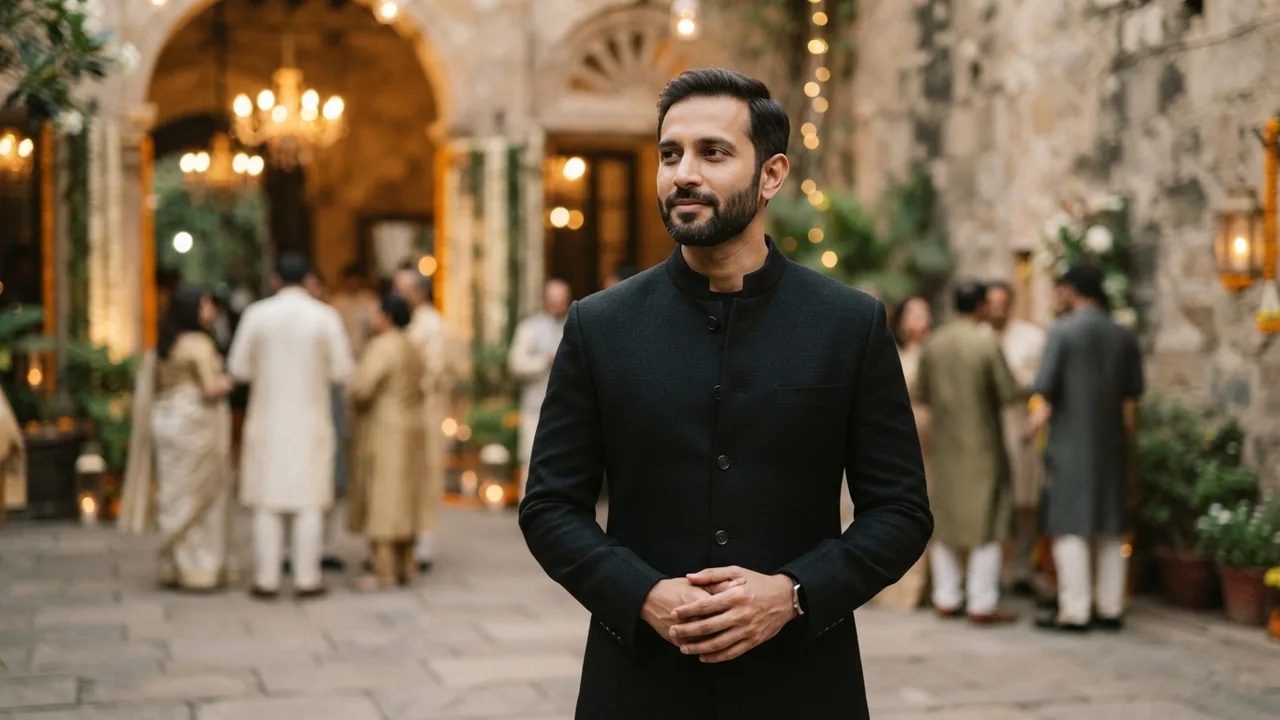
A tee in the exact same shade as the jacket, black under black, deep maroon under deep maroon, reads as the most polished option because the eye sees one continuous colour block instead of a horizontal break. This is the safest and most photograph-friendly choice for a wedding or a corporate event.
The second option is a deliberate contrast, a cream or off-white bandhgala over a black tee, or a navy jacket over a charcoal tee. This works when the contrast is clearly intentional and not just "whatever was clean."
What does not work is an accidental near-match, a jacket in dark navy over a tee in dark grey that looks like it was supposed to match and missed. If you are not confident the tones are either identical or clearly contrasting, go tonal.
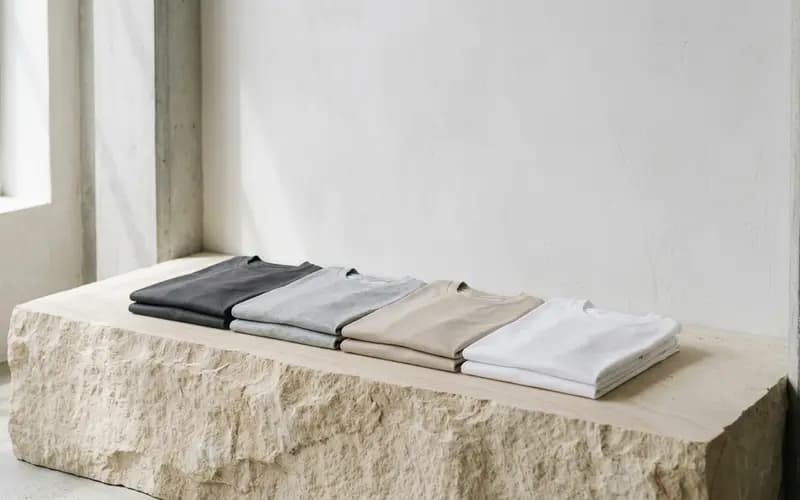
Our piece on essential t-shirt colours has the fuller logic on which shades pull double duty across formal and casual wear, which matters if you are buying one or two tees specifically to live under jackets.
Fit rules specific to this pairing
A tee under a bandhgala has one job that a normal tee does not: it has to disappear everywhere except that two-centimetre band at the collar.
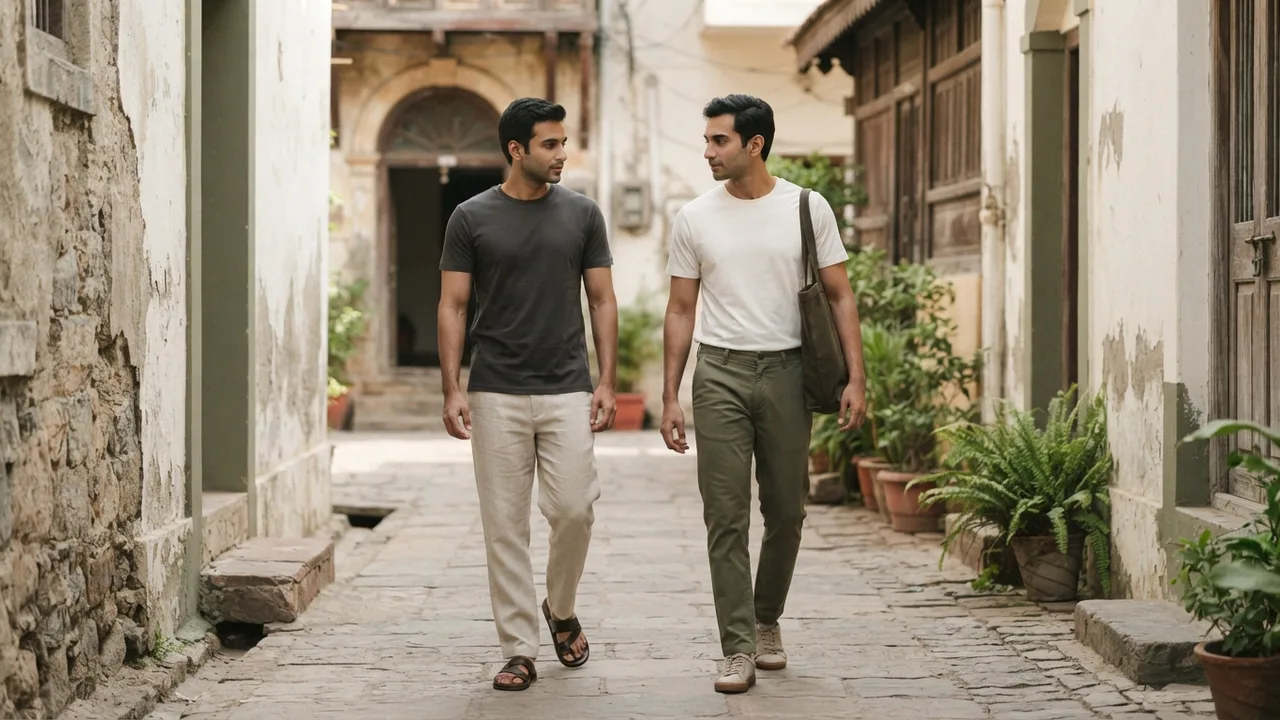
That changes the fit priorities. The body and sleeves should sit close enough that they do not add visible bulk under the jacket's tailored lines, especially across the shoulders and at the underarm, where a boxy tee will show through a fitted bandhgala as unwanted volume.
This is the one occasion where a slightly closer cut than your everyday tee genuinely helps, even if you generally prefer a relaxed fit. Length matters more than people expect.
A tee that is too short will ride up when you sit through a long ceremony, exposing skin at the waist under an open jacket or when you reach for something at a buffet. A tee that is too long will bunch at the waistband under fitted trousers.
The right length sits flat when tucked and does not bunch when you raise your arms, which you will do a lot at a wedding, for photos if nothing else.
Building the full look
Start with the jacket and trousers as your fixed points, since those are what most people notice first. Then work backward to the tee as the connective layer that makes the whole thing look considered rather than assembled at the last minute.
The base: a mid-weight, well-fitted tee in a tone that either matches or intentionally contrasts the jacket, as covered above.
The jacket: fitted through the shoulder and chest, since a loose bandhgala undoes the entire point of the silhouette. If you are unsure between sizes, size down before you size up here, unlike with casual wear.
The trousers: a straight or slim-tapered cut that echoes the jacket's clean lines. Avoid anything baggy, which fights the formality of a mandarin collar above it.
The footwear: leather juttis, loafers, or oxfords depending on how traditional versus contemporary you want the overall look to read. Sneakers under a bandhgala is a specific, deliberate style choice, not a safe default.
This whole system is really the same logic behind smart casual basics, just tightened up for a more formal register. The base layer does the quiet work, and the outer piece gets the credit.
When to skip the tee entirely
The tee-under-bandhgala move is not universal. At a strictly traditional wedding function, sangeet aside, where the dress code leans toward kurta-pajama and full ceremonial dress, a plain tee under the jacket can read as too casual against silk and brocade around you.
In that setting, a fitted kurta or a formal shirt is the safer choice, and our piece on pairing a tee with a kurta covers the adjacent, more casual version of layering that works for daytime functions and less formal events instead.
Corporate events, cocktail receptions, and modern urban weddings are where the tee move earns its keep, because the room already expects a contemporary interpretation of Indian formalwear.
Read the room before you read this guide. A great outfit that fights its context is still a mismatch, no matter how clean the collar looks.
Fabric care for a jacket-and-tee combo
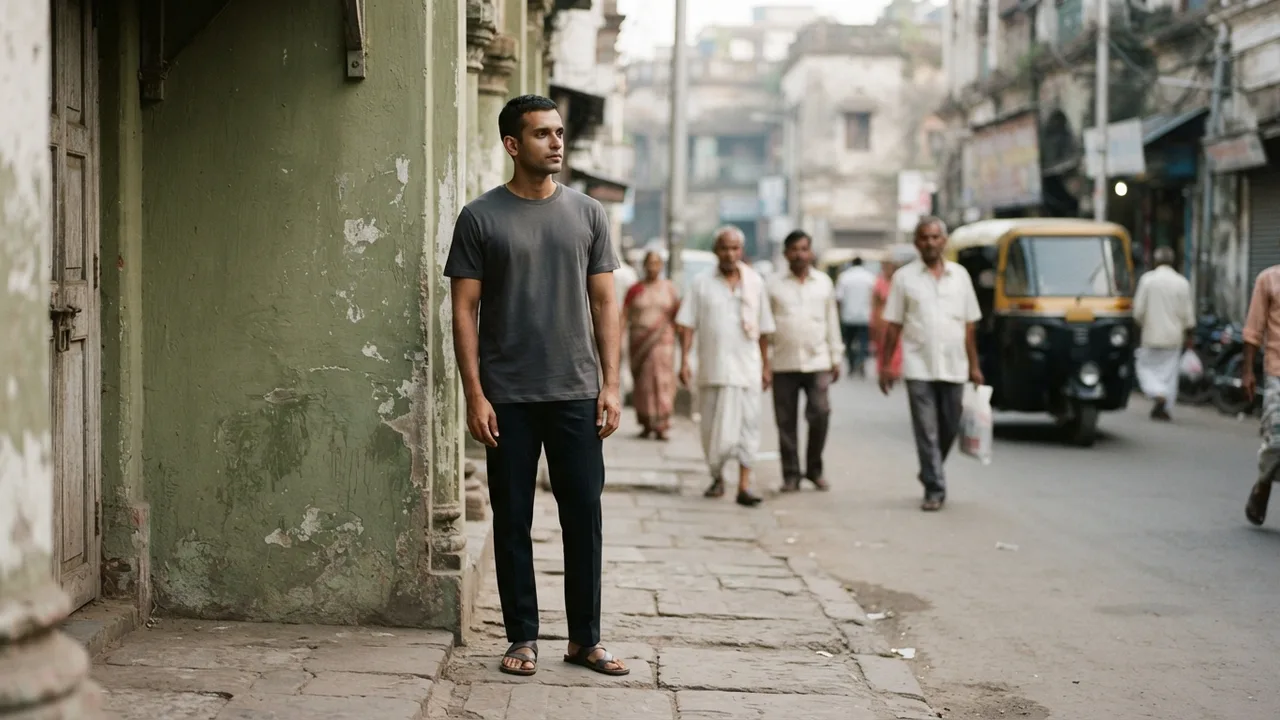
A tee that lives under a structured jacket for four to six hours takes a different kind of abuse than a tee worn alone, mostly from friction against the jacket lining and from trapped body heat.
Cotton-rich blends handle this better than pure heavy cotton, because they release heat and moisture faster during a long, warm event. If your event city runs humid, think Mumbai, Chennai, or Kolkata in the shoulder seasons, lean toward a slightly lighter GSM than you would for a cool Delhi winter wedding.
Wash the tee gently and separately from the jacket after the event, since sweat and cologne residue against the collar band is the first place a garment starts to smell if left too long. Our guide on how to wash t-shirts so they last longer covers the specifics, and it matters more here than on a casual tee, because this one has to survive repeated formal-event duty over years, not just weekends.
A tee built to last through dozens of washes, not a fast-fashion one that pills after five, is worth the extra thought when it is doing visible work at your collar. That is the whole case for buying fewer, better basics instead of a drawer full of thin ones.
Common mistakes to avoid
A few small errors show up again and again in this pairing, and each one is easy to fix once you know to look for it.
Wearing a v-neck instead of a round-neck. A v-neck under a mandarin collar creates an odd double-angle at the throat, since the jacket collar is straight and high while the v-neck cuts down and away. A round-neck sits parallel to the mandarin collar and looks intentional.
Choosing a tee with a printed logo or graphic. Even a small chest logo can show as an unwanted texture through a thin jacket lining or peek out if the jacket shifts during the evening. Stick to a genuinely plain tee for this pairing, no exceptions.
Ignoring the wrist. Some bandhgala cuts have shorter sleeves that reveal a tee's sleeve hem at the wrist, not just the collar. Check this in the mirror with your arms both down and slightly raised before the event, not after you are already at the venue.
The takeaway
The plain tee test comes down to one question: does the two centimetres anyone actually sees look chosen, or does it look like an afterthought.
Get the weight, colour, and fit right, and a simple round-neck tee will outperform a fussy shirt collar every time under a bandhgala. It disappears where it should, holds its line where it shows, and survives a six-hour wedding without wilting.
That is a higher bar than most people expect from something nobody is supposed to notice, but it is exactly why it works.
Boring Label
Wear the point of the article.
One honest tee. Heavyweight combed cotton, a collar that holds, a fit that actually fits. No logo, no noise.
Shop the round-neck teeFree shipping across India · Easy returns
Keep reading

Plain Tee + Kurta: Indo-Western Layering Made Easy
A tee under a kurta beats a shirt for comfort and drape. Three ways to wear the pairing, and when to skip it for something more formal.
The Essential T-Shirt Colours to Own
Buy these colours in this order and every tee works with everything else you own.
T-Shirt GSM Guide: What the Number Really Means
GSM is the most quoted, least understood number on a tee. Here is what it actually predicts about quality.
Stay in the loop
New writing, no noise
Occasional notes on fit, fabric, and dressing simply well. No spam, unsubscribe anytime.
Subscribe