Styling
Plain Tee + Kurta: Indo-Western Layering Without Trying
A tee under a kurta beats a shirt for comfort and drape. Three ways to wear the pairing, and when to skip it for something more formal.
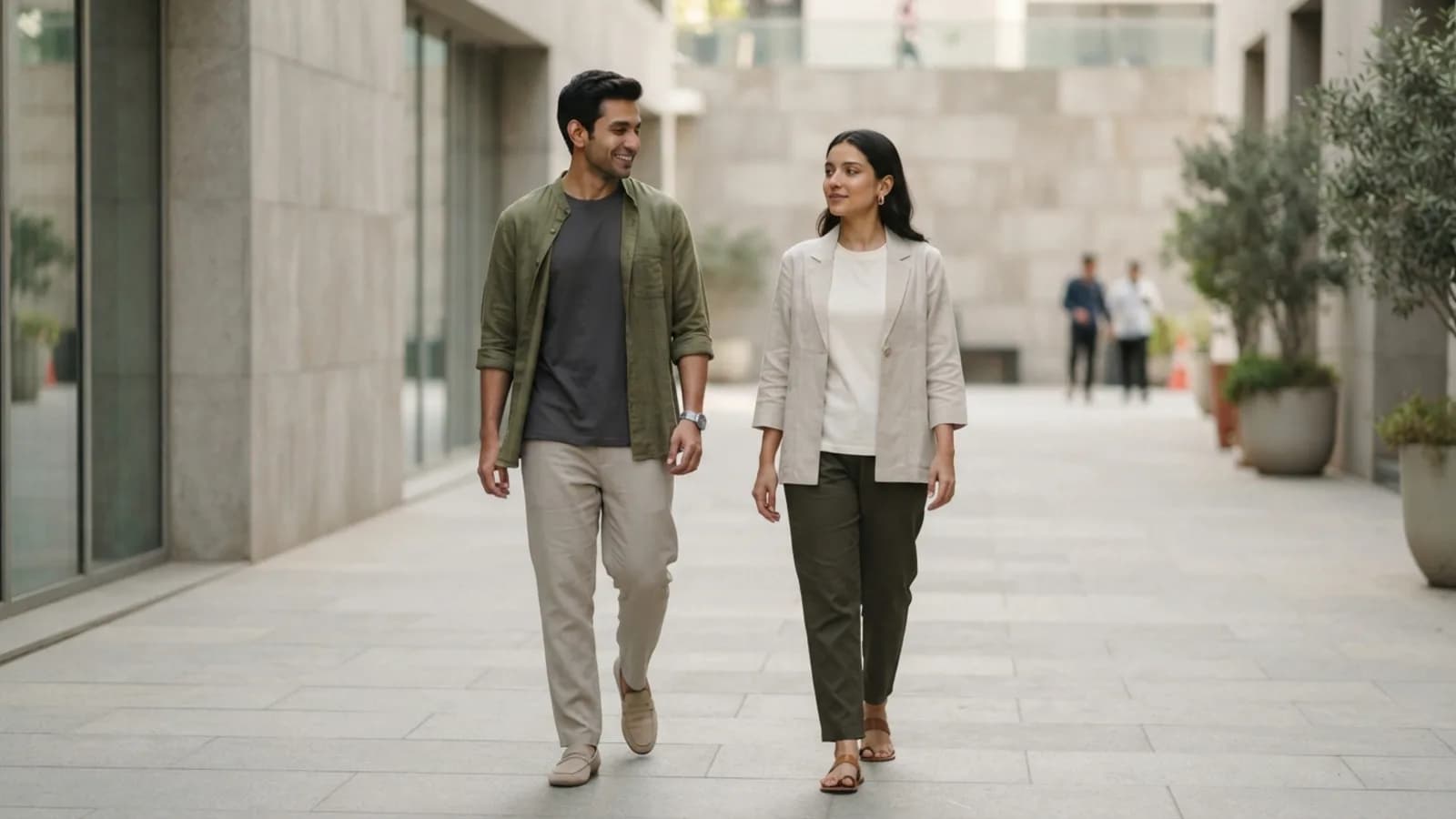
Layering a tee under a kurta is not a compromise
There is a quiet assumption in Indian menswear that a kurta needs a proper shirt underneath it, or nothing at all. Neither is quite right anymore.
A plain tee under an open kurta, or peeking from beneath a short kurta worn like an overshirt, has become one of the easiest ways to get an Indo-Western look right without trying too hard. It works because it borrows the comfort logic of a t-shirt and the visual weight of a kurta at the same time.
This is not a workaround. It is a legitimate combination that solves a real problem, kurtas are often warm and structured through the body, and a shirt underneath doubles that structure in a way that feels stiff for anything other than a formal occasion.
A tee softens the whole silhouette while keeping the kurta's drape intact. This guide covers how to actually get the pairing right, because done badly it looks like you forgot to finish getting dressed, and done well it looks like the easiest outfit you own.
Why a tee works better than a shirt under a kurta
A kurta is already a layer with volume, generally straight-cut, falling past the hip, often in a fabric with some visible texture, khadi, linen, or a light cotton. Adding a structured shirt underneath adds a second layer of stiffness that fights the kurta's natural drape.
A tee, by contrast, sits close to the body without adding bulk, so the kurta's fall stays clean and unbroken. You get the visual effect of the kurta doing all the work, while the tee handles comfort and coverage underneath.
There is also a practical India-specific reason. Kurtas, especially in heavier cotton or silk-blend, trap heat in humid conditions, Mumbai, Chennai, Kolkata through most of the year, Delhi from April through September.
A cotton-poly blend tee underneath wicks sweat faster than a woven shirt would, which matters over a full day of wear at a family function or a long temple visit. Our monsoon clothing guide covers this fabric logic in more depth, and the same principle that makes blends useful in the rains makes them useful under a warm kurta in general.
The three ways to wear it
There is not one correct way to pair a tee with a kurta. Three distinct looks cover most occasions, and picking the right one for the setting matters more than the pairing itself.
The open-kurta layer
Wear the kurta unbuttoned or with just the top button or two closed, tee visible down the placket. This is the most casual and most Indo-Western of the three looks, best for daytime family functions, casual pujas, or a relaxed evening gathering where full traditional dress feels like overkill.
The tee should sit in a colour that either matches or contrasts intentionally with the kurta, following the same logic covered in our piece on tees under a bandhgala for more formal jackets. Deep tones work best here, since a bright or pale tee against an open kurta placket can look mismatched rather than deliberate.
The short-kurta overlayer
A shorter kurta, hitting around mid-thigh or higher, worn over well-fitted trousers or jeans with a tee visible at the neckline and sleeves, is the most contemporary version of this pairing. This works particularly well for younger dressers at weddings, festival gatherings, or brand events where a full-length kurta would feel too traditional.
The kurta functions almost like an overshirt here, and the tee is doing more visible work than in the open-layer version, so fit and colour matter even more.
The peek-through collar
For a fully buttoned kurta with a mandarin or band collar, only the tee's neckline is visible, a look similar to the bandhgala pairing but softer. This is the most conservative of the three and works for formal or religious occasions where a fully buttoned look reads as more respectful.
Colour and fabric pairing rules
The kurta is the dominant visual element in this pairing, so the tee's job is to support it, not compete with it. A few rules keep the combination from looking accidental.
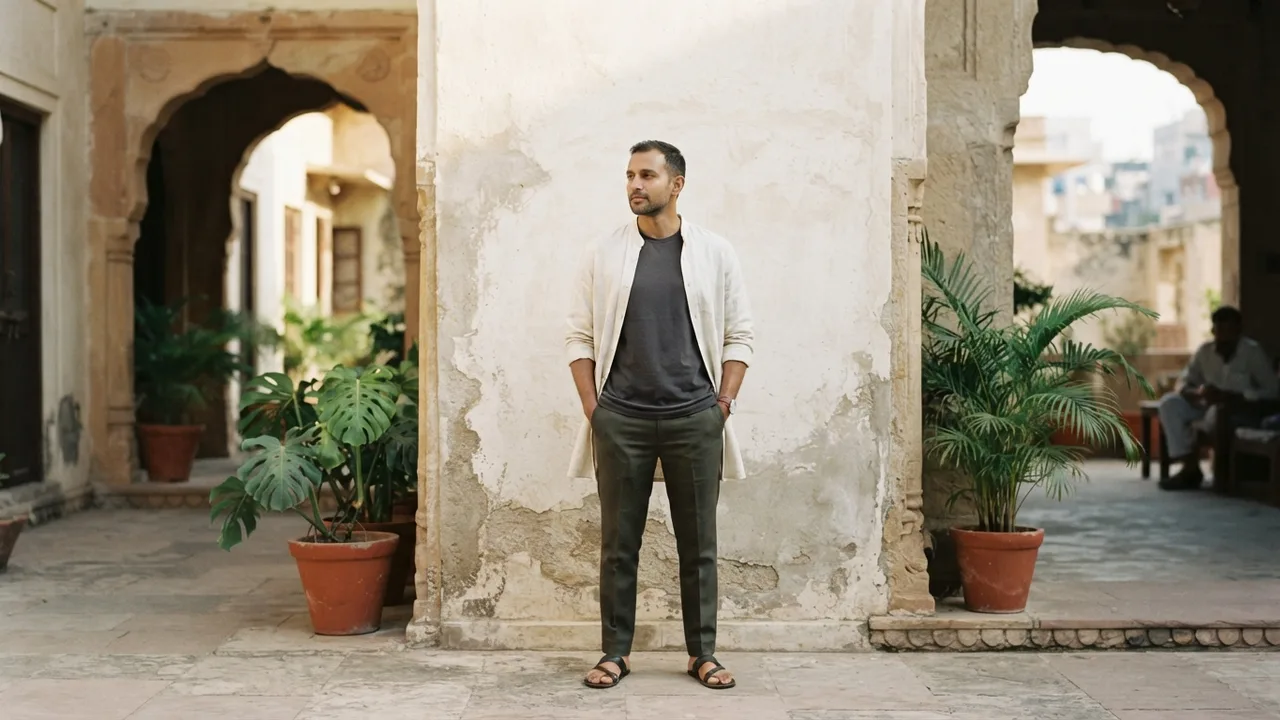
Match tonally or go for clear contrast. A cream or off-white kurta over a black, charcoal, or deep navy tee is close to foolproof, since the contrast is obvious and considered. A kurta and tee in the exact same colour family, both in olive or both in rust, also works well and reads as intentional rather than repetitive.
What fails is a near-miss, a beige kurta over a slightly different beige tee, which looks like an unplanned laundry-day outfit rather than a considered pairing. Our guide on essential t-shirt colours has the fuller palette logic if you are building a rotation meant to work under multiple kurtas.
Weight matters more than most people think. A heavy tee under a light cotton kurta can create visible bulk and ruin the kurta's drape, especially in the open-layer style where the tee's silhouette shows through the placket. A mid-weight round-neck tee, somewhere around 180 to 200 GSM, holds its shape without adding unwanted volume, and our GSM guide explains why that range works across most Indian kurta fabrics.
Fit rules for this specific layering
The tee's fit changes depending on which of the three styles you are going for, which is worth getting right before you buy or reach for one.
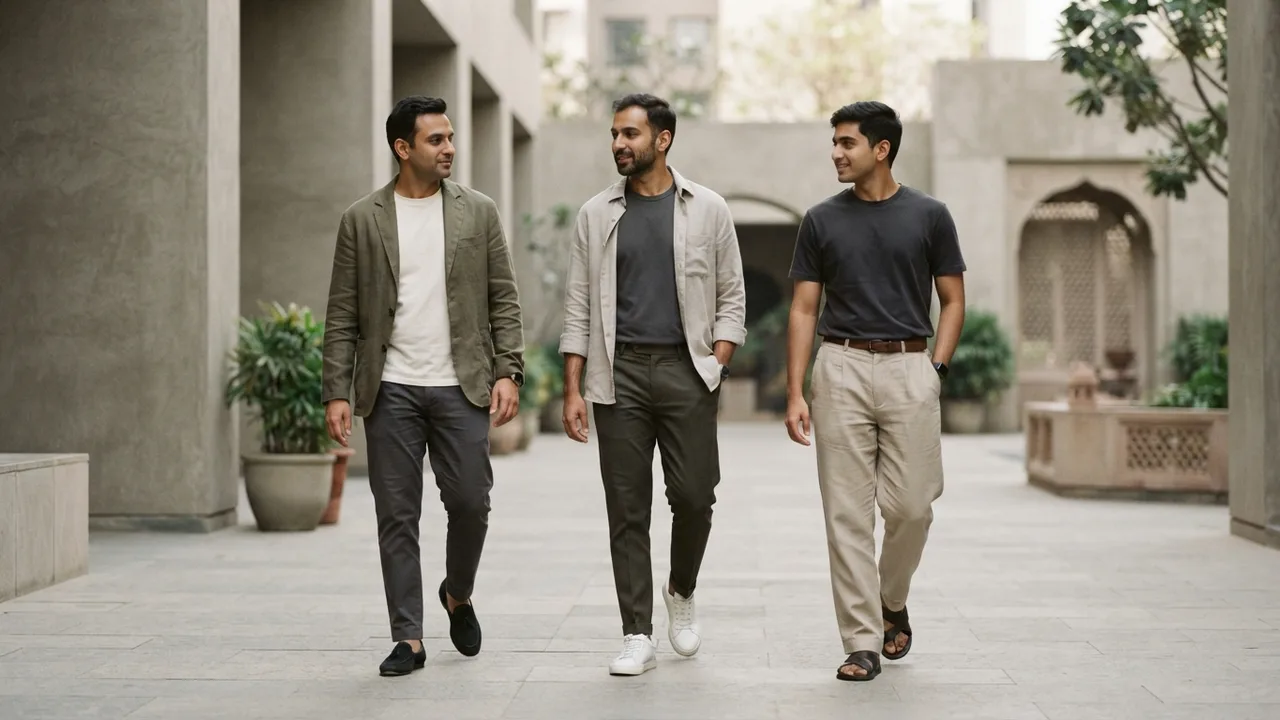
For the open-kurta look, a slightly closer fit through the body keeps the visible strip of tee looking clean rather than baggy against the kurta's straighter lines. For the short-kurta overlayer, a relaxed regular fit works better, since the kurta itself is providing the structure and the tee just needs to sit comfortably underneath without bunching at the neckline.
Length is the detail people miss most often. The tee needs to sit long enough that it does not ride up and show bare skin when you sit down or reach up, but short enough that it does not bunch visibly below the kurta's hem in the short-kurta style.
If you are buying a tee specifically for this kind of layering, try it sitting down before committing, since that is when most length problems reveal themselves.
When to skip this pairing
This combination is Indo-Western by design, and it reads as too casual for the most formal or ceremonial functions, the actual wedding ceremony itself, a strict temple dress code, or a business formal event where a shirt is expected underneath.
Save the tee-under-kurta look for the functions that already lean casual or contemporary, the mehendi, a friend's Diwali gathering, a college reunion with an ethnic dress code, or everyday festive wear rather than the single most formal event on the calendar.
For those higher-stakes occasions, a proper shirt or the bandhgala pairing covered separately is the safer choice.
Building a small rotation around this pairing
If this look works for your lifestyle, you do not need many pieces to make it repeatable. Two or three kurtas in versatile tones, cream, olive, and a deep rust or maroon, paired with three or four tees in dark neutrals, black, charcoal, navy, and one deep colour, gives you enough combinations to avoid repeating an exact outfit across a full festival season.
This is the same capsule wardrobe thinking applied to ethnic wear specifically, buying fewer, better pieces that recombine rather than a full new outfit for every occasion.
Making it work across generations
This pairing skews toward a younger, more contemporary aesthetic, but it does not have to be exclusively so. The version that works across a wider age range leans more conservative, the peek-through collar style with a fully buttoned kurta, a muted colour pairing, and a well-fitted, slightly heavier tee rather than a thin one.
Older family members at a gathering are often more receptive to Indo-Western pairings than expected, provided the outfit still reads as put-together rather than deliberately undone. The details that signal effort, a clean-fitting tee, ironed kurta, well-chosen colours, matter more to that perception than the specific styling choice of open versus buttoned.
If you are dressing for a mixed-generation event, a family wedding function or a large religious gathering, the peek-through style is the safer default, since it delivers the comfort benefit of the pairing without pushing too hard on the casual, contemporary read that an open kurta or short overlayer signals.
Footwear and accessories that complete the look
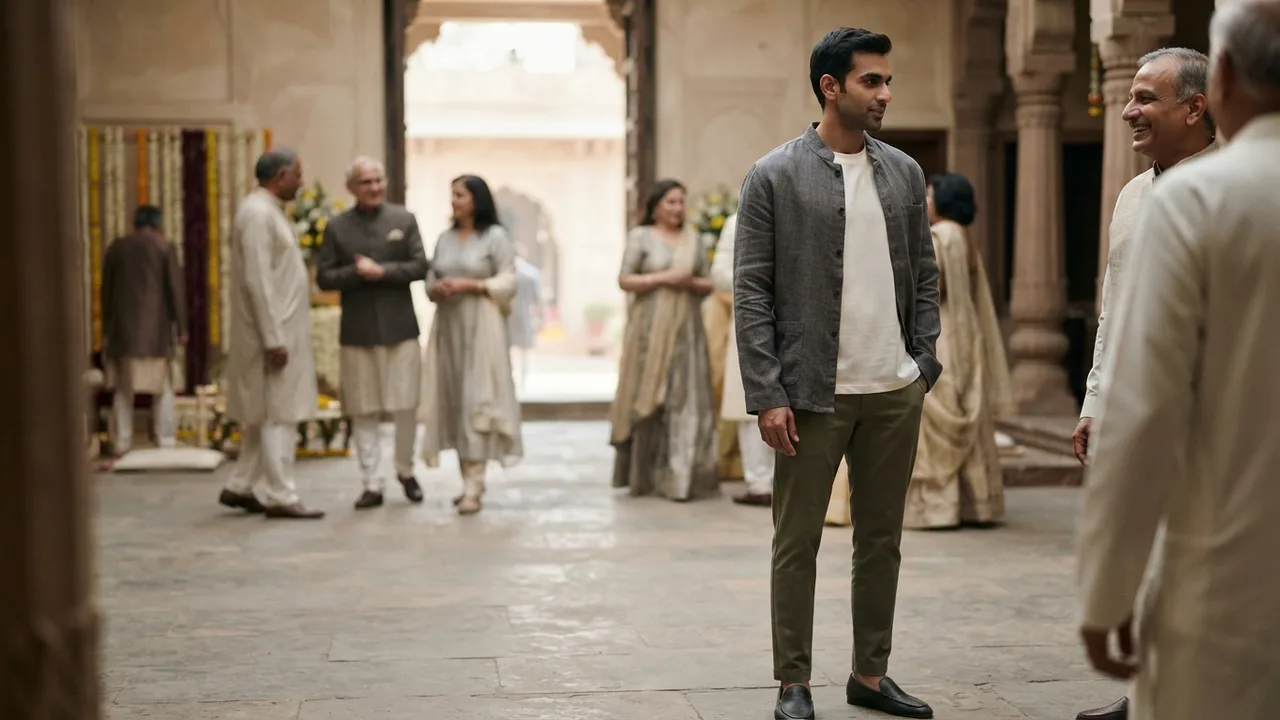
The tee-under-kurta pairing is casual enough that footwear choice actually shifts how formal or relaxed the whole outfit reads, more than in most other Indian menswear combinations. Leather sandals or juttis push the look toward traditional, while clean white sneakers or loafers push it firmly toward Indo-Western.
Neither is wrong, but pick one direction and commit rather than mixing signals, sneakers under a very traditional embroidered kurta can look like a mismatch rather than a deliberate contrast. A simple leather strap watch or a single piece of understated jewellery is usually enough accessory for this look, since the pairing itself is already doing the visual work.
Avoid piling on additional layers, stoles, jackets, unless the weather genuinely calls for it, since the whole appeal of this combination is its ease, and over-accessorising undercuts that.
Caring for a rotation that works this hard
A small rotation of tees that pairs with multiple kurtas across a festival season gets worn and washed more often than a typical everyday tee, since it is doing double duty as both casual wear and festive layering. That repeated use makes fabric quality and wash care matter more than usual.
A cotton-rich blend that resists shrinking and holds its colour through frequent washes, covered in our guide on whether cotton tees shrink, keeps the rotation looking fresh across an entire wedding or festival season rather than fading and losing shape by the third event.
The takeaway
A tee under a kurta is not a shortcut, it is a genuinely better solution to a real problem, kurtas trap heat and a shirt underneath adds unnecessary stiffness. Get the colour pairing, weight, and fit right, and the combination reads as effortlessly considered rather than unfinished.
Keep it for the occasions that call for Indo-Western ease, and reach for a proper shirt when the occasion calls for more formality. That distinction is really the whole skill.
Boring Label
Wear the point of the article.
One honest tee. Heavyweight combed cotton, a collar that holds, a fit that actually fits. No logo, no noise.
Shop the round-neck teeFree shipping across India · Easy returns
Keep reading
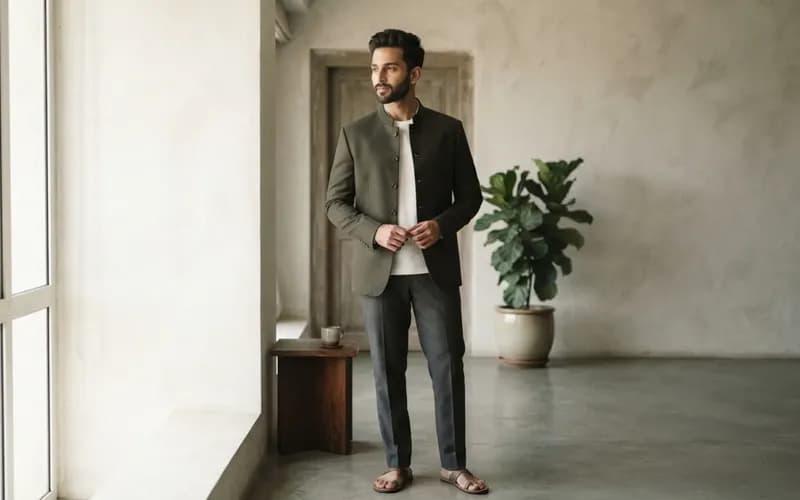
What to Wear Under a Bandhgala: The Plain Tee Test
A mandarin collar shows two centimetres of whatever is underneath it. Here is how to make sure that sliver looks intentional.
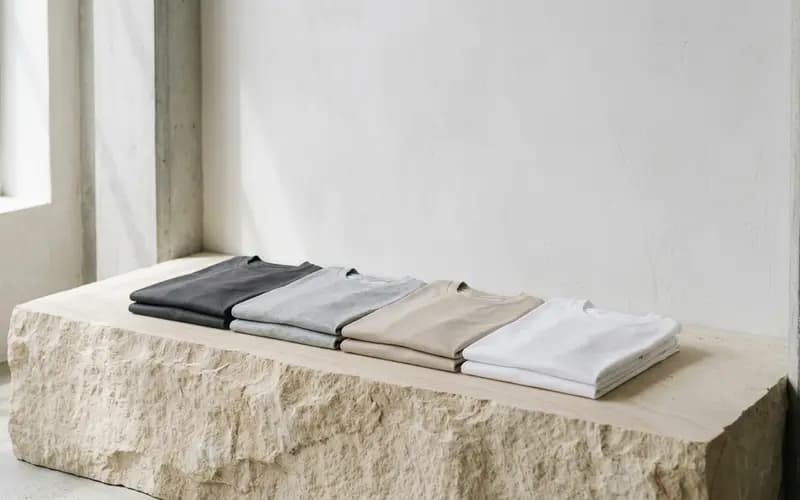
The Essential T-Shirt Colours to Own
Buy these colours in this order and every tee works with everything else you own.
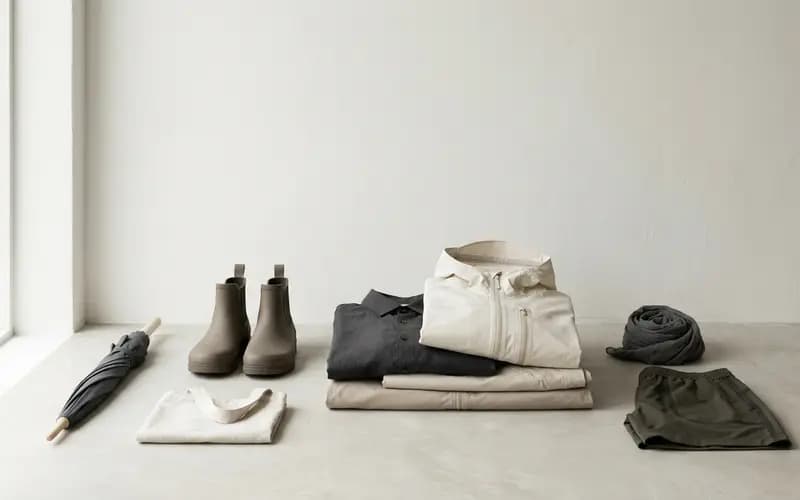
Monsoon Clothing: What to Wear in the Rains
The monsoon punishes the wrong fabrics. Dress for fast-drying and you stay comfortable through it.
Stay in the loop
New writing, no noise
Occasional notes on fit, fabric, and dressing simply well. No spam, unsubscribe anytime.
Subscribe