Styling
Tucked vs untucked: the rule that is not a rule
The tuck decision comes down to garment length, trouser rise and body proportion, not a fixed style rule.
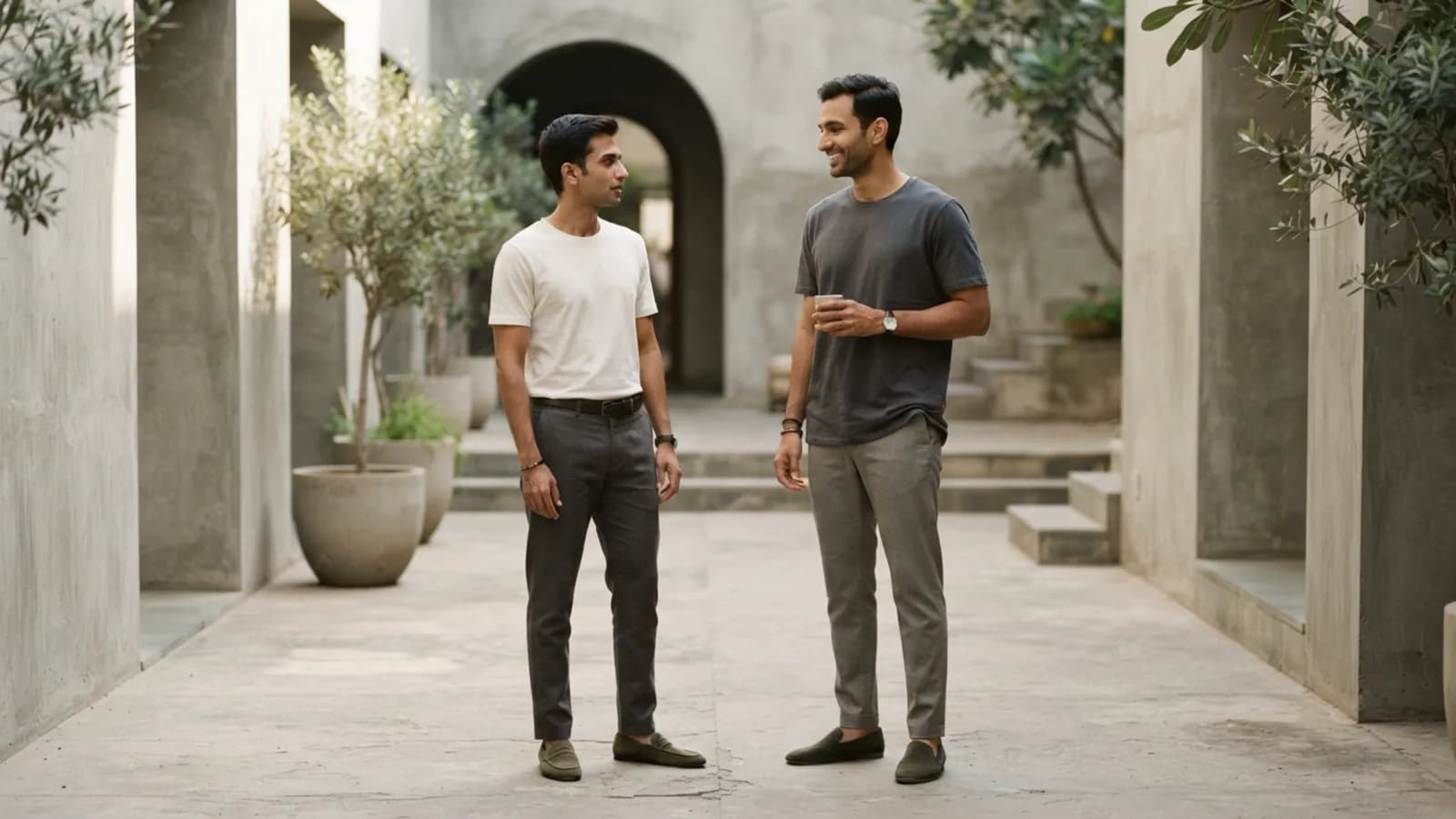
The tuck decision is about proportion, not formality
Most people think tucking in is a formality switch, on for offices, off for weekends. That is not quite it.
Tucking is really a proportion tool. It shortens your torso visually and defines your waist, which is why it works so well with formal trousers and so poorly with low-rise casual fits.
Untucked does the opposite. It lengthens the torso and hides the waistband, which flatters a different set of body types and a different set of trousers entirely.
Once you see it as proportion rather than formality, the whole tucked-versus-untucked question stops being about rules and starts being about your specific build and your specific garment. This sits close to the debate around wearing a t-shirt with formal trousers, because the tuck decision usually gets made at the same time as the trouser decision.
When tucking actually works
A tuck works when your tee or shirt has enough length to stay tucked through a normal day of sitting, walking and reaching. Anything shorter than mid-hip length will pop out of your waistband by lunchtime, which looks worse than never tucking at all.
It also works best with a defined waist, meaning trousers that sit at or near your natural waistline rather than low on the hips. Most Indian formal trousers are cut this way, which is exactly why the classic tucked-tee-with-trousers look reads so naturally here.
A tucked tee under a blazer or bandhgala is a specific case worth knowing well, and our guide on wearing a tee under a bandhgala covers the exact fit rules for that combination.
When untucked works better
Untucked is the more forgiving default for casual wear, and for a reason that has nothing to do with laziness. It elongates the body, which flatters shorter torsos and anyone who wants to look taller without changing anything else.
It also hides waistband gaps, which matters if your trousers or jeans sit slightly loose. A tucked tee over a gap-y waistband draws attention to the exact spot most people want ignored.
Untucked is the default for oversized fits almost without exception, because an oversized tee tucked in usually creates unwanted bulk at the waist rather than the clean drape the fit is meant to have.
The half-tuck is not a compromise, it is a technique
The half-tuck, tucking in only the front few inches of a shirt or tee, gets dismissed as an indecisive middle ground. It is not.
It is a deliberate technique that gives you the waist definition of a tuck with the relaxed length of untucked, and it works especially well with slightly longer tees over jeans or chinos. The trick is committing to it rather than doing it halfway.
Tuck a genuine handful of fabric in at the front, just past the buckle on either side, and let the rest fall naturally. A timid half-tuck with only an inch pulled in looks like an accident, not a choice.
| Tuck style | Best trouser fit | Best body proportion | Formality signal |
|---|---|---|---|
| Full tuck | High or natural waist | Long legs, shorter torso | ✓ Most formal |
| Half tuck | Mid or low waist | Balanced or longer torso | Smart casual |
| Untucked | Low waist, relaxed fit | Shorter legs, longer torso | ✓ Most casual |
| Untucked oversized | Any, worn loose | Any | Streetwear leaning |
Use this as a starting point, not a mandate. Your own proportions will tell you which row fits after you try each once in front of a mirror.
Why the "rule" keeps failing people
The internet is full of confident tuck rules, always tuck with a belt, never tuck a t-shirt, tuck only with formal trousers. Most of these fail because they ignore garment length and body proportion entirely.
A 6 foot tall man with a long torso and a 5 foot 6 man with a short torso should not follow the same tuck rule, even in the identical outfit. The taller man with the long torso often needs a tuck to avoid looking top-heavy.
The shorter-torso man often needs to leave it untucked to avoid looking boxy. Rules that ignore this are why so many people feel like they are guessing every morning.
The better approach, and the one behind most of uniform dressing, is to test both on your own body once, remember what worked, and stop relitigating it daily.
Fabric weight changes the answer too
A heavier tee holds a tuck cleanly because the fabric has enough body to stay put and drape rather than bunch. A lighter, thinner tee tends to ride up and lose its tuck within an hour of movement.
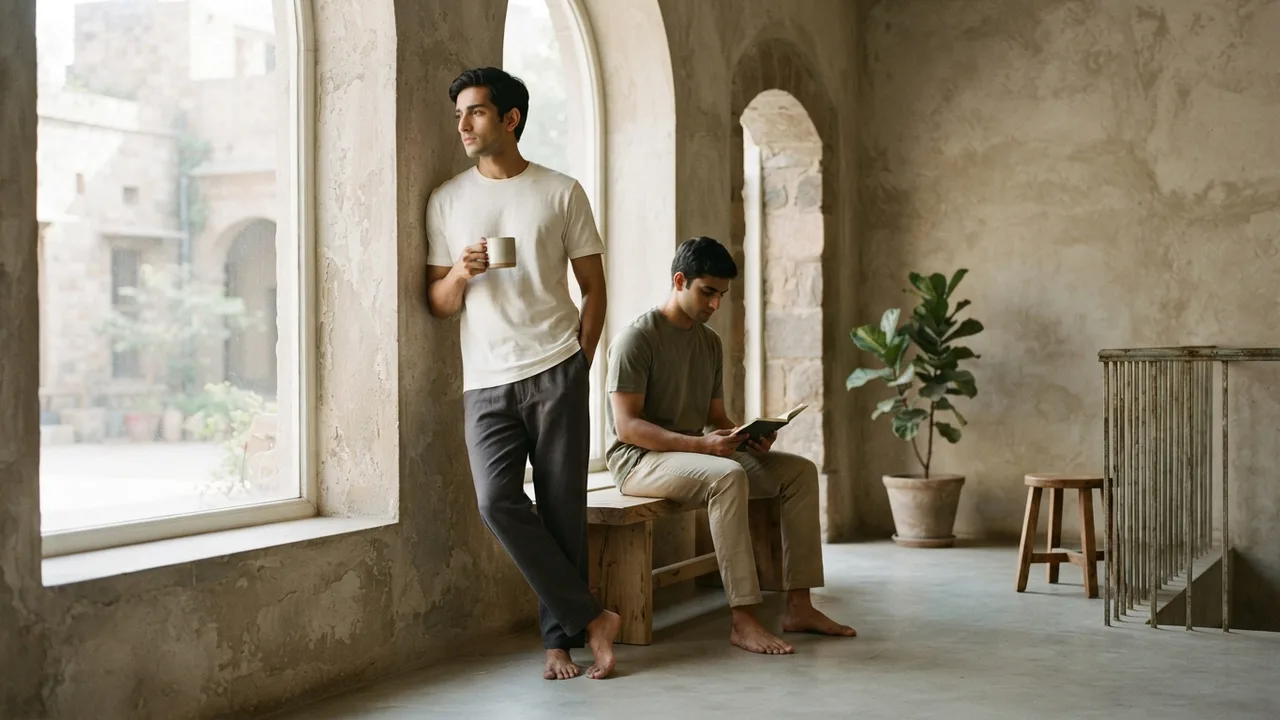
This is one of the underrated reasons a well-made round-neck tee in a substantial cotton works better tucked than a thin budget tee, even at the identical length. Weight, not just length, determines whether a tuck survives a real day.
If you are unsure what weight you are working with, our GSM guide explains how to read the number on a label and what it means for how the garment behaves once tucked.
Belt logic, since it always comes up
A visible belt strongly implies a tuck, and an untucked top over a visible belt genuinely looks unfinished to most eyes. This is one of the few near-absolute rules in this whole topic.
If you are wearing a belt that shows, tuck in at least the front. If you are going fully untucked, either skip the belt or choose one so understated it barely registers, in the minimalist accessories sense of restraint.
Office context in India
Most Indian offices with a business-casual code lean toward tucked-in for collared shirts and either tucked or half-tucked for polos and tees, especially with formal trousers. Full untucked with formal trousers, even a nice pair, tends to read as underdressed in that specific pairing, whatever the trend cycles online suggest.
Casual Fridays and remote-first offices are more forgiving, where untucked with chinos or well-fitted jeans is now standard. If you work in a hybrid setup, keeping one tucked-ready outfit and one relaxed untucked outfit on rotation covers both realities without overthinking it each morning.
The actual decision framework
Skip the rules and run three quick checks instead. Is the garment long enough to stay tucked through a full day.
Do your trousers sit at a defined waist or a low, relaxed one. And is the occasion asking for structure or ease.
Answer those three honestly and the tuck decision makes itself, garment by garment, without needing a universal rule that was never going to fit your build anyway.
How the tuck changes with trouser rise
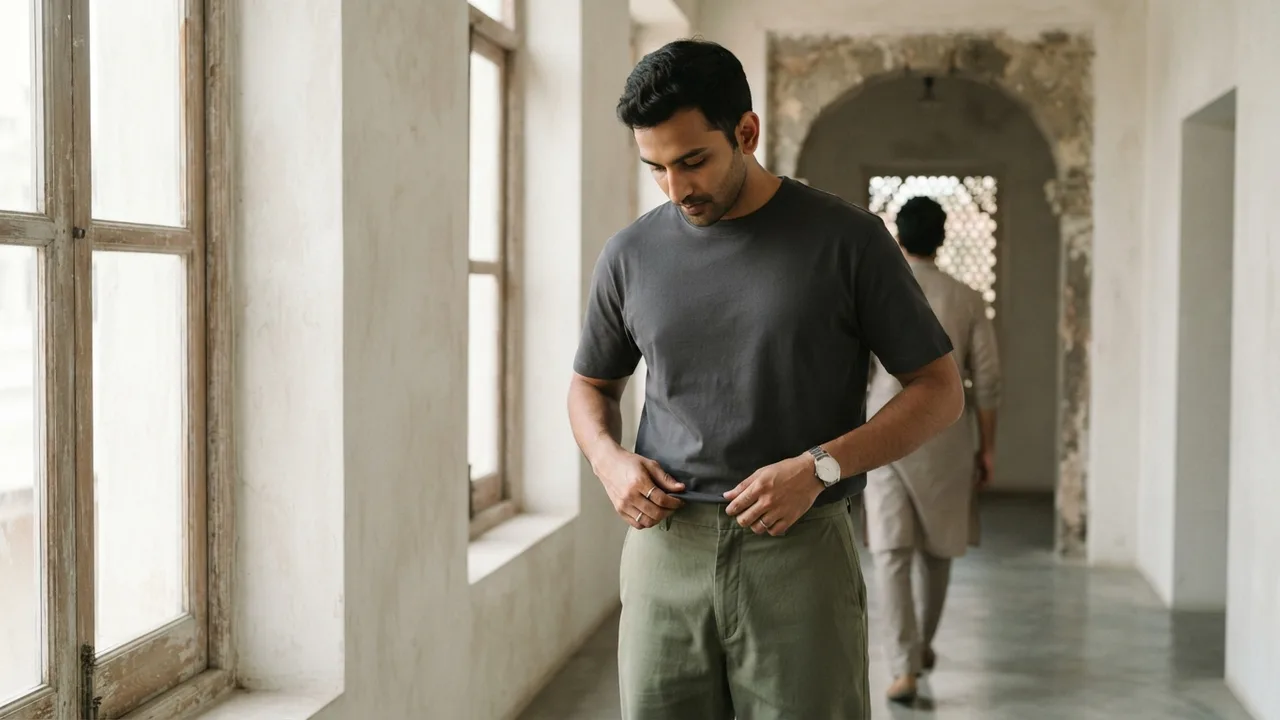
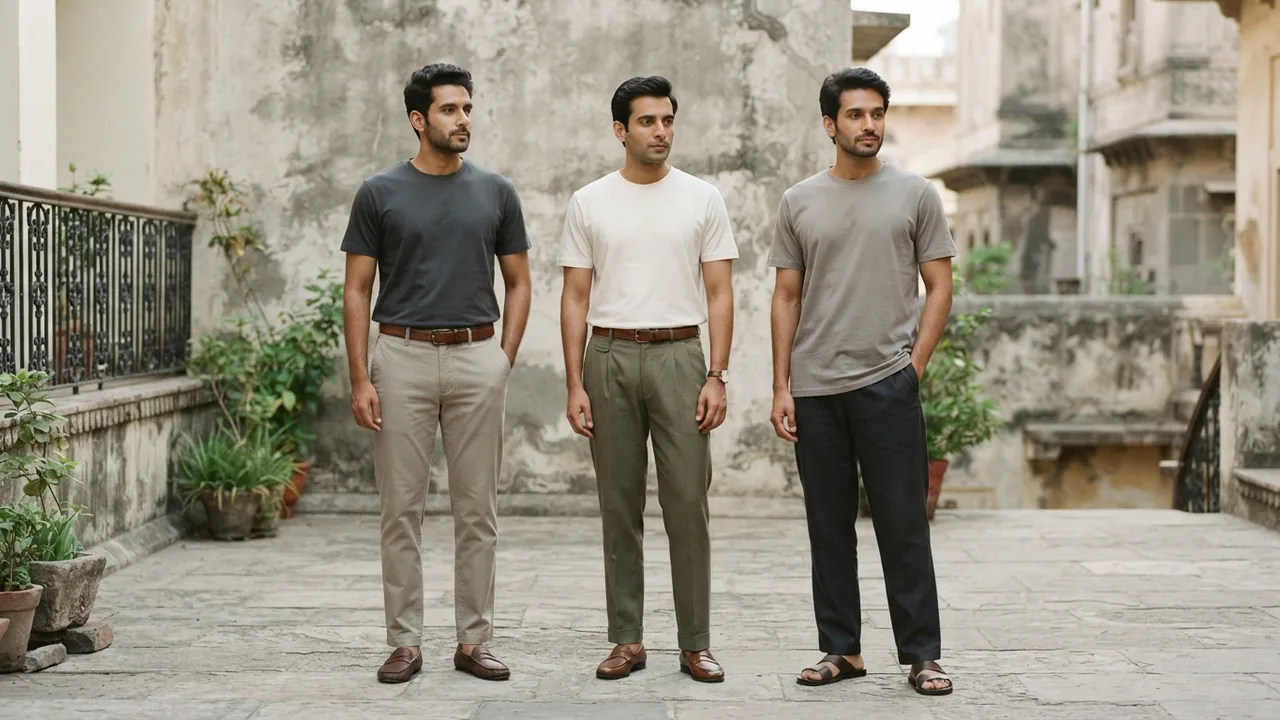
Trouser rise, the distance from crotch seam to waistband, is one of the least discussed variables in this whole debate, and it matters more than most fit advice admits. A high-rise trouser sits above the navel and almost demands a tuck, because leaving it untucked exposes a strange gap between shirt hem and waistband that looks unintentional.
A low-rise trouser sits below the navel and generally looks better untucked, since tucking into a low rise shortens the visible torso in an unflattering way rather than a flattering one. Most modern Indian formal trousers sit at a mid rise, which is exactly why the half-tuck has become such a popular default here, it splits the difference cleanly.
If you already own trousers and are deciding how to wear a new tee with them, check the rise before you decide the tuck. It will save you from guessing.
What tucking does to a t-shirt's fabric over time
Repeated tucking and untucking puts more stress on the hem and the first few inches of fabric near the waistband than most people realise, especially with tighter trousers or a snug waistband. Over months, this can show up as slight thinning or a faint crease line exactly where the fabric gets folded and pulled daily.
A heavier, well-constructed cotton resists this far better than a thin, budget tee, which is one more reason fabric weight and construction quality matter beyond how the garment simply looks. If you regularly tuck a tee into formal trousers, treat it the way you would treat a shirt, meaning slightly gentler washing and a fabric substantial enough to survive the daily fold.
Untucked does not mean untidy
A common misconception is that untucked automatically reads as more casual or less put together than tucked. This is only true if the untucked garment is also oversized, wrinkled or the wrong length.
A well-fitted tee at the correct length, worn untucked with well-fitted trousers, can look just as intentional as a tucked outfit, simply in a different register. The oversized fit guide covers this exact distinction, between deliberate relaxed styling and simply wearing something too big by accident.
The tuck decision and the sizing decision are related but not identical, and conflating them is where a lot of untucked outfits go visually wrong.
!Minimalist editorial photo illustrating a well-fitted tee at the correct length, worn untucked with well-fitted trousers, can look just as intentional as a tucked outfit, simply in a different register. the [oversized fit guide covers this exact distinction, between deliberate relaxed styling and simply wearing something too big by accident., muted neutral tones, soft natural light, premium plain t-shirt context](/images/blog/tucked-vs-untucked/inline-3.webp)
Regional and generational shifts worth knowing
Younger, more casual Indian offices have moved decisively toward untucked and half-tucked defaults over the last several years, especially in tech and creative industries. Traditional sectors, banking, law, government-adjacent roles, still lean tucked as the unspoken expectation, particularly for anything read as a work shirt rather than a casual tee.
If you move between these worlds, for client meetings versus internal days, for instance, keeping both tuck styles in your muscle memory rather than committing to one permanently is the more useful skill. Dressing well is often less about picking a single rule and more about reading which rule the room in front of you is actually using.
Practicing the tuck before you need it
Most men get their tuck wrong on the first attempt of the day, in a rush, in front of a small mirror, with no time to check how it settles once they sit down. A five-minute practice session on a weekend, tucking the same tee three or four different ways in front of a full-length mirror, teaches your hands what a proper tuck actually feels like far faster than trial and error on a Monday morning.
Sit down after each attempt, since sitting is where most tucks fail first, bunching at the front or pulling loose at the sides. If the tuck survives sitting, standing and a short walk around the room, it will survive an actual workday.
The overshirt and jacket variable
Adding an overshirt or jacket on top changes the tuck calculus again, since the visible portion of the tee shrinks to just the collar and a sliver at the waist if it shows at all. In this case, many men can get away with a looser, more casual tuck underneath, because the outer layer is doing most of the formality work and the tee underneath barely registers.
This is worth knowing if you are building outfits around layering basics, since it means your base-layer tuck decision matters less the more structured your outer layer is. Save the precise, deliberate tuck for outfits where the tee is the visible star of the look, not a hidden base layer under something heavier.
A final word on comfort versus appearance
Some men simply find tucking uncomfortable regardless of how good it looks, and that preference is worth respecting over any style rule in this piece. Clothing you cannot stop adjusting all day undermines the confidence a good tuck is supposed to project in the first place.
If untucked is what lets you forget about your outfit and get on with your day, that comfort has real value, and a well-fitted, correctly proportioned untucked look will always beat a technically correct but visibly fidgety tucked one.
Boring Label
Wear the point of the article.
One honest tee. Heavyweight combed cotton, a collar that holds, a fit that actually fits. No logo, no noise.
Shop the round-neck teeFree shipping across India · Easy returns
Keep reading
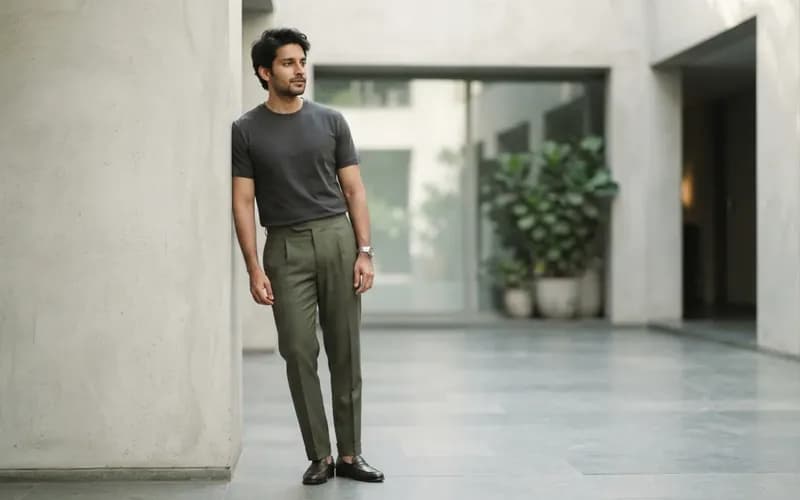
Can You Wear a T-Shirt With Formal Trousers?
A t-shirt can work with formal trousers when fit, fabric weight and colour do the job a collar normally would.
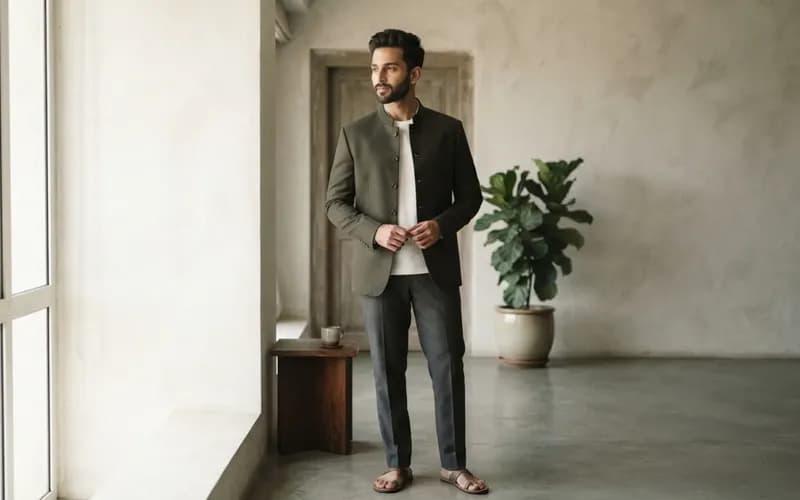
What to Wear Under a Bandhgala: The Plain Tee Test
A mandarin collar shows two centimetres of whatever is underneath it. Here is how to make sure that sliver looks intentional.
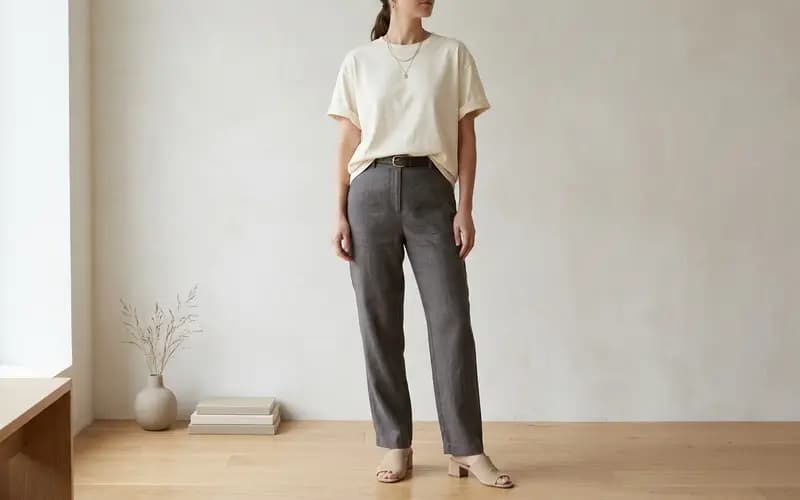
How to Style an Oversized T-Shirt
The line between 'relaxed' and 'borrowed from someone bigger' is all about proportion. Here is how to hold it.
Stay in the loop
New writing, no noise
Occasional notes on fit, fabric, and dressing simply well. No spam, unsubscribe anytime.
Subscribe