Buying
Why no two brands size M match: vanity sizing in India
Letter sizes have stopped meaning anything consistent across Indian t-shirt brands. Here is how vanity sizing works and how to size yourself properly.
The short answer
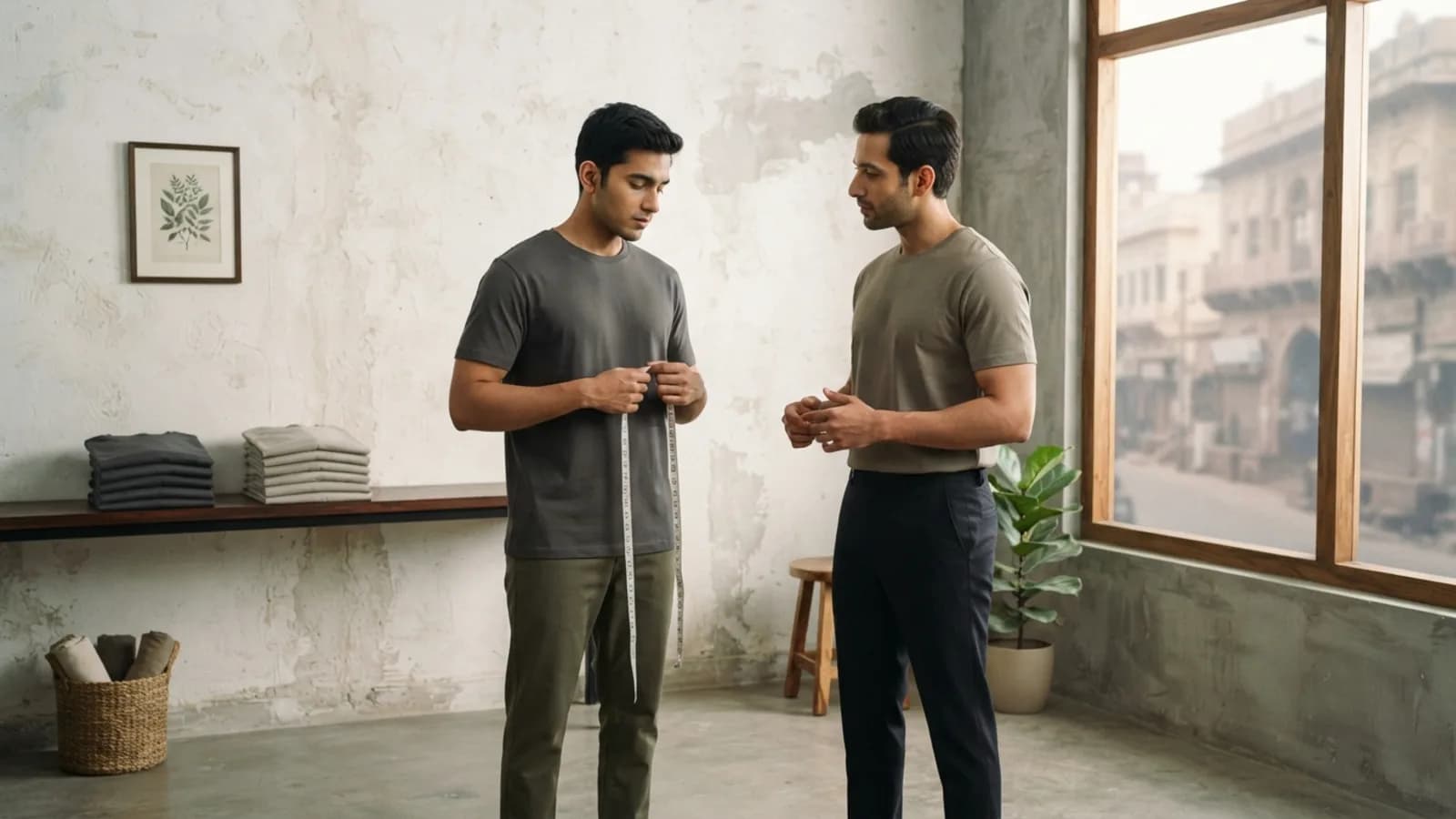
An M from one Indian brand can measure a full two to three inches wider in the chest than an M from another. This is not a manufacturing error repeated across the industry, it is a deliberate practice called vanity sizing, and it means the letter on the label has stopped being a reliable measurement.
Vanity sizing works by quietly widening the actual body measurements assigned to each size label over time, so that a customer who used to buy L now fits into M and feels good about it. The label shrinks in name only. The garment does not actually get smaller.
This guide explains why it happens, how to spot it, and what to check instead of trusting the letter on the tag.
Why brands do this on purpose
Sizing feels emotional in a way most other purchase decisions do not. A customer who "used to be a Large" and now fits into "Medium" experiences a small psychological win at checkout, even though nothing about their body changed. Apparel brands worldwide have documented this effect, and Indian D2C and fast-fashion brands, competing hard for repeat purchases, have adopted it aggressively over the last decade.
There is no enforced sizing standard in India. Unlike some countries with formal national sizing standards tied to actual body measurement surveys, Indian apparel sizing is set entirely by each brand, with zero legal requirement to align with any external reference chart. A brand can call anything "M" as long as it is internally consistent, which most are not even required to be across their own collections.
Marketplace competition rewards flattering fit assumptions. On Amazon and Myntra, size charts are one of the few pre-purchase signals customers can check, and brands that show generous, ego-flattering size assignments can see fewer size-related returns in the short term, even though the actual measurements have not changed for the better.
What actually varies between brands
This is not a vague complaint. Four specific things drift, and they drift independently of each other, which is why "know your size" advice from one brand is nearly useless at another.
Chest and body width. The most commonly inflated measurement. A brand's M can range anywhere from a 38-inch to a 42-inch chest depending entirely on internal convention, with zero external reference point forcing consistency.
Length. Body length on a "regular" tee varies almost as much as width, and length differences are harder to eyeball in a product photo than width is, which makes them the sizing dimension most likely to surprise you after delivery.
Shoulder seam placement. Where the shoulder seam sits relative to your actual shoulder point changes how a tee reads on the body far more than chest width alone. Two tees with identical chest measurements can look completely different in fit if one has a two-inch narrower shoulder placement, a detail our fit guide for broad shoulders covers in depth.
Fabric stretch and recovery. A tee with 5 percent elastane behaves differently at the same nominal size than a 100 percent cotton tee, since the stretch fabric can flatter a slightly larger body into the same size label without actual room. This interacts with sizing in ways that make cross-brand comparison even less reliable.
A real comparison of what "M" can mean
| Measurement dimension | Typical range across Indian brands, labelled "M" |
|---|---|
| Chest width | 38 to 42 inches |
| Body length | 26 to 29 inches |
| Shoulder width | 17 to 19.5 inches |
| Sleeve length | 8 to 9.5 inches |
That range is wide enough that two "M" tees from different brands can differ more from each other than an M and an L from the same brand. The letter is telling you almost nothing on its own.
How to actually find your size, brand by brand
Ignore the letter, check the chart, every single time. Even for a brand you have bought before, if they have released a new collection or changed manufacturers, treat the size chart as the source of truth over the label. Our complete fit guide covers how to read these charts properly, including which measurements matter most for different body types.


Vanity sizing is not a static distortion, it moves over time, which is part of why a brand you trusted five years ago may no longer fit the way you remember.
Size charts get revised upward gradually, not all at once. A brand rarely announces a resizing. Instead, a new collection quietly ships with body measurements a half-inch or inch more generous than the last, framed internally as a "fit refresh" rather than a sizing change, which means loyal repeat customers are the ones most likely to be caught off guard.
International brands entering India often import inflated sizing directly. Some global fast-fashion chains apply the same vanity-sized charts used in Western markets, where average body measurements per size label have drifted upward for decades, directly onto their India listings without recalibrating for the market they are now serving.
Homegrown D2C brands vary the most, precisely because there is no shared reference point. Without an industry body enforcing consistency, newer brands often set their initial size chart somewhat arbitrarily, based on whatever sample size worked for their first production run, then adjust reactively based on return-rate data rather than any external standard.
The return-rate feedback loop
Vanity sizing is partly self-reinforcing once a brand starts down that path. Comfortable, generous "M" measurements reduce size-related returns in the short term, and lower returns look like a design win in a brand's internal data.
But this creates a quiet ratchet effect: once one popular brand widens its charts and sees fewer returns, competing brands often follow to stay competitive on the same metric, and the letter labels drift upward across the category collectively rather than any single brand acting alone. This is closely tied to the same instinct against wearing the same size forever without checking, something our piece on why a t-shirt looks cheap touches on from a different angle, since ill-fitting proportions are one of the fastest ways a genuinely good fabric still reads as low quality.

A practical habit worth building
Keep a simple note on your phone with the actual chest, length, and shoulder measurements of your two or three best-fitting tees. Refer to it every time you shop a new brand, sale or no sale, rather than defaulting to whatever letter size you have worn elsewhere.
This single habit solves the vanity sizing problem more reliably than any amount of brand research, because it sidesteps the labelling system entirely and compares real numbers to real numbers, which is the only comparison that has ever actually mattered.
Why Boring Label measures instead of labels
Publishing actual body measurements rather than relying solely on letter sizes is a small operational choice with an outsized effect on trust. It means a customer comparing our round-neck tee chart against a tee they already own is working with real numbers on both sides, not two brands' independent guesses at what "Medium" should mean.
It also means the size chart does not need periodic quiet revision the way vanity-sized charts eventually do, since the numbers are tied to the actual garment pattern rather than to a marketing impression of generosity. A size chart that does not need to be renegotiated with the customer every year is, in a small way, part of what our quality commitments are actually about.
The bottom line
The letter on a t-shirt label in India today is a marketing choice more than a measurement. Two brands' M sizes can differ by inches, and there is no regulatory floor forcing consistency across the industry.
The fix is not complicated, just slightly more effort than grabbing your "usual size." Measure a tee that already fits you well, compare those numbers against the actual size chart of whatever you are about to buy, and treat every new brand as its own sizing system rather than an extension of the last one. Do that once per brand and you stop guessing for good.
Boring Label
Wear the point of the article.
One honest tee. Heavyweight combed cotton, a collar that holds, a fit that actually fits. No logo, no noise.
Shop the round-neck teeFree shipping across India · Easy returns
Keep reading
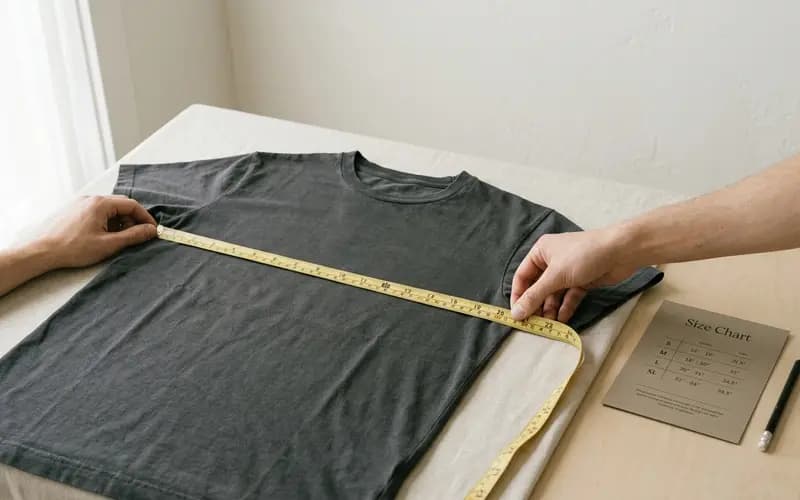
How to Measure T-Shirt Size (No Returns)
Stop guessing from S/M/L. Measure one tee you love and every future order fits.
T-Shirt Fit Guide: How a Tee Should Actually Fit
Most tees fail at the shoulder, not the size label. Here is how a t-shirt should actually sit on your body.
Best T-Shirt Fit for Broad Shoulders & Gym Build
Why most tees pull at the chest and balloon at the waist on a muscular build, and exactly what to look for instead.
Stay in the loop
New writing, no noise
Occasional notes on fit, fabric, and dressing simply well. No spam, unsubscribe anytime.
Subscribe