Fit
The Best T-Shirt Fit for Broad Shoulders and a Gym Build
Why most tees pull at the chest and balloon at the waist on a muscular build, and exactly what to look for instead.
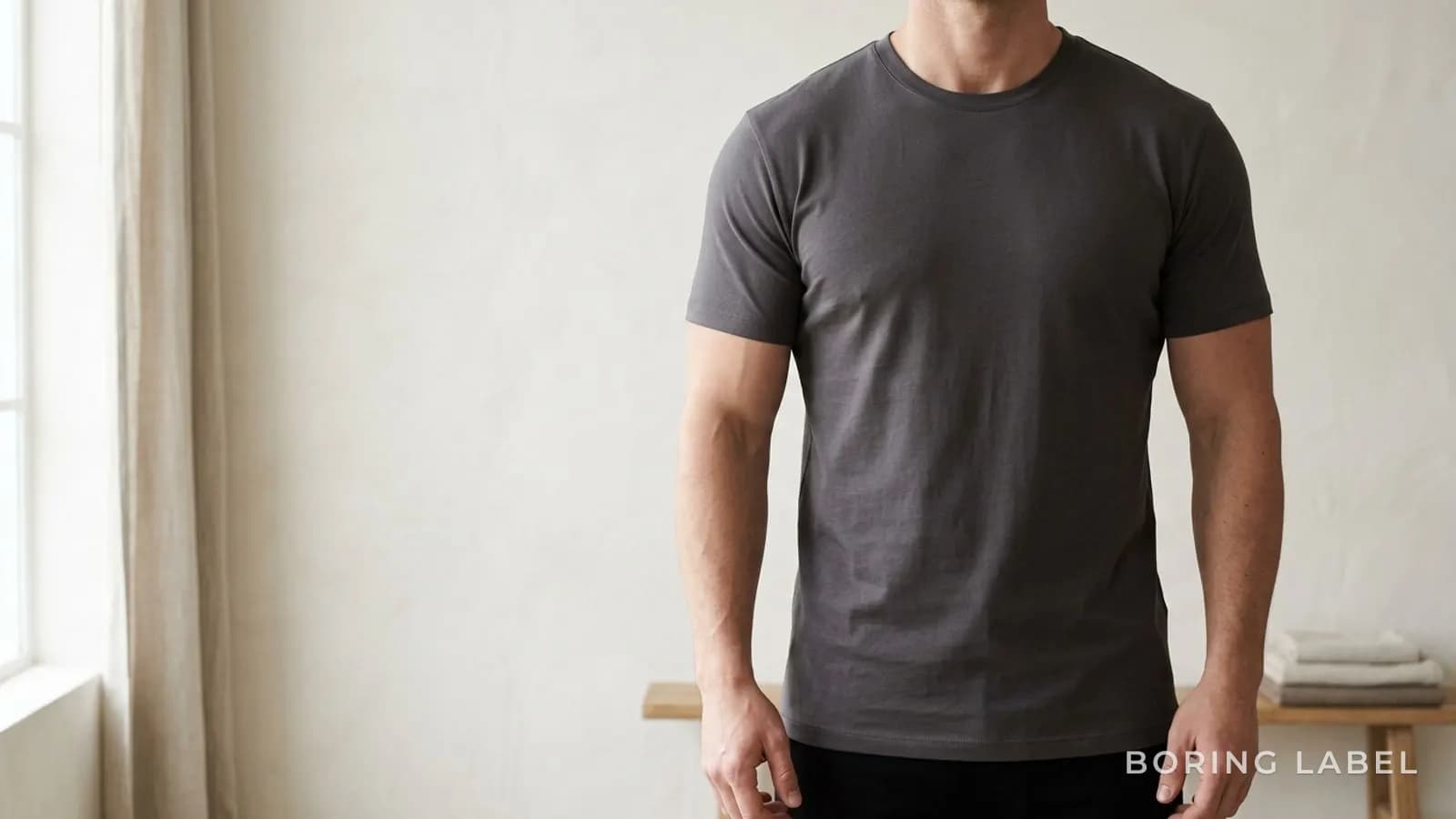
The Tee That Fits Everywhere Except Where It Matters
You build the shoulders. You build the chest.
You put in the work in the gym for months, sometimes years, and then you go to buy a plain t-shirt and the most ordinary garment in the world refuses to cooperate. The medium pulls tight across your chest and grips your arms like a tourniquet.
So you size up to the large, and now it fits your chest fine, but the shoulder seams have slid halfway down your biceps, there is a small tent of loose fabric hanging off your waist, and the whole thing makes you look heavier and softer than you actually are. Neither size is right.
Both are wrong in opposite directions.
This is the single most common fit complaint among men with broad shoulders and a trained build, and it is almost never the wearer's fault. It is a geometry problem baked into how most plain tees are cut.
The standard t-shirt block is drawn for an average frame - a torso that runs more or less straight from chest to waist, with modest shoulders and average arms. Drape that block over a V-shaped frame and the maths simply does not work.
The fabric runs out at the chest and shoulders before it runs out at the waist.
By the end of this you will understand exactly why your tees pull and balloon, what to look for in the four things that actually decide whether a tee fits a built frame - the shoulder seam, the chest-to-waist taper, the sleeve, and the fabric stretch - and how to test all of it before you spend a rupee. You will also learn why sizing up is a trap, and why the answer is rarely a bigger tee but almost always a better-cut one.
Why the Standard Tee Fights a Built Frame
Start with the shape you are actually working with. A trained upper body is wider at the top and narrower at the bottom - broad across the shoulders and lats, full through the chest, then drawing in to a waist that has not grown at anywhere near the same rate.
Tailors call this a drop: the difference in inches between your chest measurement and your waist measurement. An average frame might have a drop of four to six inches.
A lean, trained frame can run ten inches or more.
A plain t-shirt, meanwhile, is cut as a fairly simple tube. The front and back panels are roughly rectangular, the side seams run more or less straight down, and the whole thing is sized off a single number - the chest. When you pick a tee, you are really only choosing how big the chest is, and everything else scales up or down with it in fixed proportions designed for an average drop.
Here is where it breaks. If you buy for your chest, the tube is correct around your chest but far too wide at the waist, because the cut assumes your waist is only a few inches smaller than your chest, not ten.
So the surplus fabric has nowhere to go and hangs loose. If instead you buy small enough to take in that waist, the chest and shoulders are now strangling you, because you have shrunk the whole tube to fix one end of it.
The garment cannot be loose at the waist and snug at the chest at the same time, because nobody built that shape into it. You are trying to wear a cylinder on a wedge.
That single mismatch - a straight-cut tube on a tapered frame - is the root of every symptom that follows. The pulling, the ballooning, the sliding seams, the fabric that bunches when you move - all of it traces back to a block drawn for a body shape that is not yours.
Understanding this reframes the whole problem. You are not too big for tees and you do not need to lose your shoulders.
You need a tee whose cut acknowledges that a chest and a waist can be very different widths.
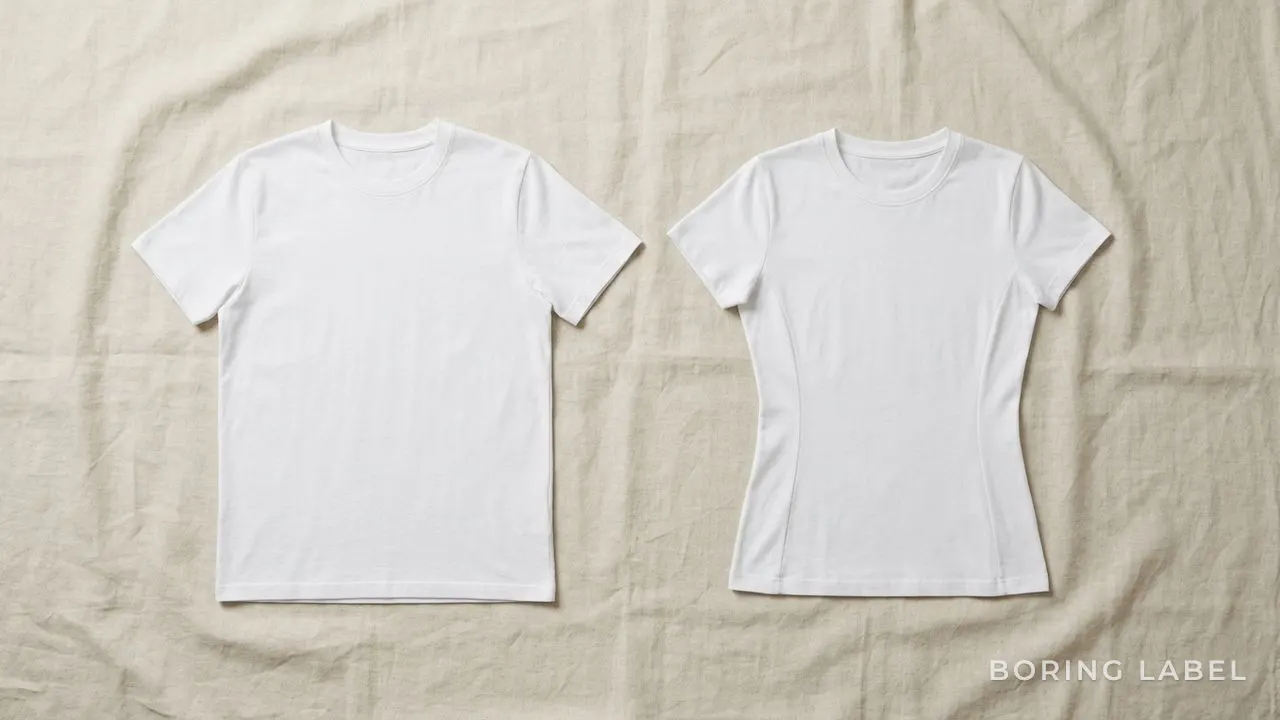
The Four Things That Actually Decide the Fit
Forget size labels for a moment. Whether a tee flatters a built frame comes down to four construction details, and a tee can get its size right and still fail on any one of them.
Get all four right and the tee works regardless of what letter is on the tag. We will take them one at a time, because each fails in its own recognisable way.
1. The Shoulder Seam - Where the Whole Tee Hangs From
The shoulder seam is the most important single feature on the tee, and the one most people never check. It is the anchor point: the entire garment hangs off your shoulders, so if the seam sits in the wrong place, nothing below it can fall correctly. The chest hangs wrong, the sleeves twist, the body never drapes clean - and no amount of sizing fixes it, because the problem is location, not volume.
The rule is simple. The shoulder seam should sit right at the edge of your shoulder, where the flat top of your shoulder turns and starts to drop down into your arm - roughly over the bony point at the end of your shoulder. Not on top of the shoulder, pulled in toward your neck, and definitely not dropped down onto your upper arm.
For a built frame, this is exactly where sizing up does its worst damage. When you buy a larger tee to clear your chest, you do not just get a wider body - you get a wider shoulder span too, because the whole block scales together.
The seam that was meant to sit on your shoulder edge now lands an inch or two down your bicep. This is the dropped-shoulder look, and on a relaxed streetwear tee it can be deliberate and fine.
But on a tee that is meant to fit, a seam sitting on your arm reads as too big, drowns your actual shoulder width, and ironically makes broad shoulders look less defined, not more - because the eye reads the seam as the edge of your shoulder, and you have just moved that edge inward.
A correctly placed seam does the opposite. It sits at your true shoulder edge, so the full width of your shoulders reads as shoulder, and the sleeve drops cleanly from there.
This one detail does more for how built you look in a tee than anything else. Our t-shirt fit guide walks through seam placement and the other landmarks in more detail, but if you check only one thing, check this.
2. The Chest-to-Waist Taper - The Fix for the Balloon
This is the feature that directly solves the tent-at-the-waist problem, and it is the single thing most basic tees lack. Taper means the side seams are not cut straight down - they come in through the waist, so the tee is wider at the chest and narrower at the hem. A tapered tee is built with a drop already in it, which is exactly the shape a trained frame needs.
A straight-cut tee has parallel side seams: the width at your hem is the same as the width at your chest. On an average body that is fine.
On a V-shaped frame it guarantees loose fabric at the waist, because the cut is carrying your full chest width all the way down to a waist that does not need it. That surplus is the balloon.
It is not that the tee is too big - the chest might be perfect - it is that the tee has no taper to take in the part of you that is narrower.
When you are shopping, look at the side seam. Hold the tee up and look at the line from armpit to hem.
If it runs dead straight, the tee will hang loose at your waist no matter how well it fits your chest. If it curves gently inward - chest wider, waist nipped - that tee has a taper, and it will follow your shape instead of hanging off it.
You do not want a dramatic, painted-on hourglass; you want a clean, gentle taper that removes the surplus without clinging. The difference between a tee that makes you look built and one that makes you look bulky is very often just this curve in the side seam.
A word of honesty here: taper has a limit. A very lean waist on very broad shoulders - a drop well into double digits - is genuinely hard for any off-the-rack tee to fit perfectly, because mass-produced cuts have to serve a range of bodies, not just the extremes.
A good tapered tee will get you most of the way there and look clean. The last bit of precision, if you want it, is the territory of made-to-measure or tailoring.
Knowing that limit saves you the frustration of expecting a high-street tee to perform like a bespoke one.
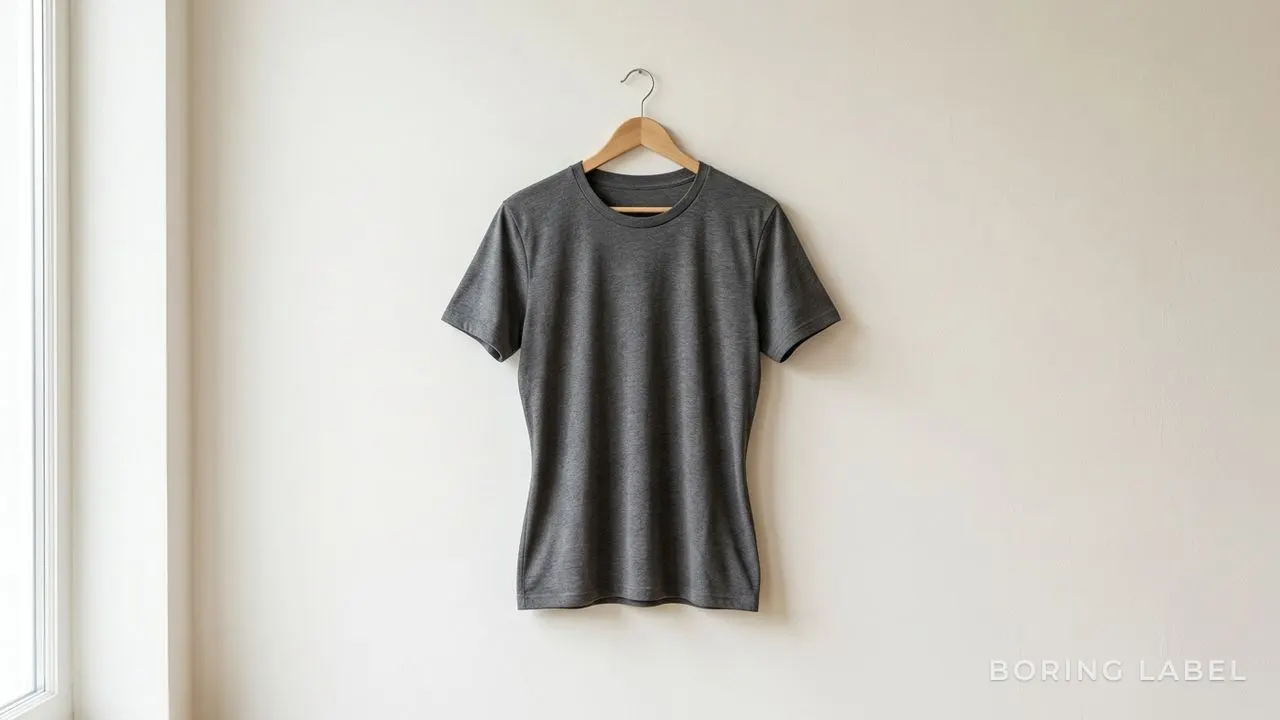
3. The Sleeve - Bicep Room Without the Balloon
Sleeves are where trained arms get betrayed twice. First, the sleeve opening can be too tight, so it grips and rings your bicep, cutting off the line of the arm and looking strained. Second - and this is the part people miss - the sleeve can be too long and too loose, hanging like a flag past the widest part of your arm so that your developed bicep ends up framed by a sad pocket of empty fabric.
The sleeve has to do two things at once: clear the bicep with enough room to sit without gripping, and end at a length that finishes around the middle of your upper arm, roughly mid-bicep, so it shows the arm rather than swallowing it. On a built frame the second point matters more than most realise. A sleeve that ends too low, past the belly of the bicep, hides the very muscle you would want a fitted tee to show, and the loose fabric there reads as bagginess even if the rest of the tee is sharp.
There is a structural detail behind good sleeves called the armhole, and it is worth knowing because it quietly decides how a tee moves. A higher, smaller armhole - cut closer up into the underarm - keeps the body of the tee stable when you raise your arms, so the whole tee does not lift up with them.
A low, dropped armhole feels roomy on the hanger but ties the sleeve to the body, so reaching for something drags the entire hem upward. For someone with the lats and shoulders to actually move fabric around, a higher armhole is the difference between a tee that stays put and one that rides up every time you lift your arm.
You cannot always see this on a rack, but you can feel it: try the tee, raise your arms overhead, and watch whether the hem stays roughly where it was or climbs toward your ribs.
Cut and length together are also why the choice between fits matters so much for your frame. If you want the full breakdown of how a regular cut differs from a relaxed one and which suits which body, we cover it in oversized vs regular fit - but the short version for a built frame is that a clean regular fit with a proper taper almost always flatters more than an oversized cut, which tends to hide your shape rather than follow it.
4. Fabric and Stretch - The Quiet Multiplier
The first three are about the pattern - the shape the tee is cut into. The fourth is about the cloth itself, and it changes how forgiving all the rest of it can be. Fabric is the difference between a tee that fits your numbers on paper and one that actually feels right when you move.
There are two kinds of give in a t-shirt, and it helps to keep them apart. The first is mechanical stretch - the natural elasticity of a cotton knit.
Jersey, the standard t-shirt fabric, is knitted rather than woven, and the loops of yarn let it stretch and recover to a degree even when it is pure cotton. A well-knit cotton tee has enough natural give to accommodate a full chest and broad back through movement without the seams straining, which is why the quality of the knit matters as much as the fibre.
The second is added stretch - a small percentage of elastane (you will see it as spandex or Lycra on labels) blended in. A touch of elastane, often two to five percent, lets the fabric flex more around the chest, shoulders and arms and snap back to shape, which can genuinely help a built frame by giving the cloth somewhere to go when you flex or reach.
But it comes with an honest trade-off worth knowing. Elastane is more sensitive to heat and tends to break down faster than cotton, especially in a hot dryer, so a high-elastane tee can lose its shape and go slack at the collar and cuffs sooner.
It also breathes less well than pure cotton, which matters a great deal in Indian heat where a tee is often your only layer.
So there is a balance to strike. Pure long-staple combed cotton, well knitted, has enough mechanical stretch for most built frames and stays cool and durable - which is why it is the backbone of a good everyday tee.
A small dash of elastane can add comfort for very muscular arms and chests, but a lot of it trades away breathability and longevity. For the climate most Indian wardrobes live in, a good cotton knit with a smart cut beats a stretchy synthetic blend that runs hot and sags within a year.
The cut should do the heavy lifting; the stretch is there to take the edge off, not to rescue a bad pattern.
The fabric also decides how the tee drapes once it is on you, which interacts with everything above. A flimsy, thin jersey clings to every contour and shows the surplus at your waist even when the cut is decent, while a fabric with a bit of body holds its line and skims rather than grips. If you want to understand how fabric weight plays into this, our GSM guide explains what the number means and why a sensible mid-weight tends to flatter a built frame better than the thinnest fabric on the rack.
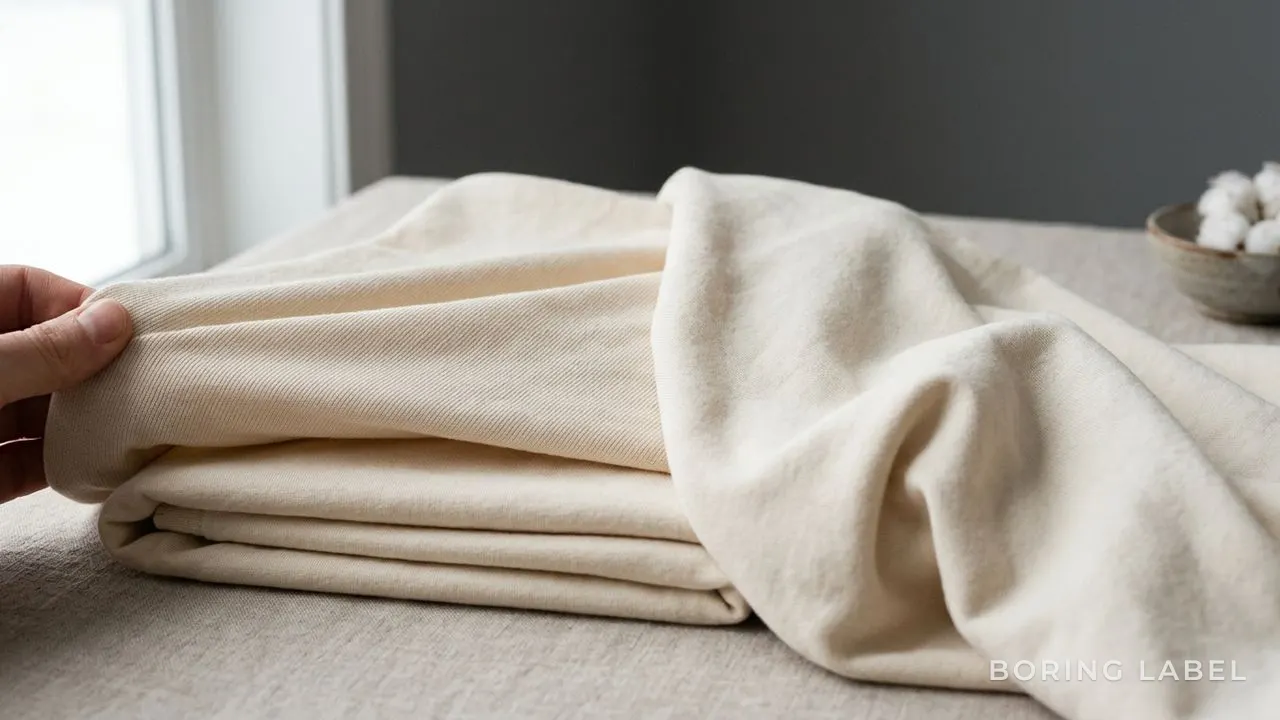
Reading It All on the Rack: A Quick Comparison
Put the four levers together and you have a checklist you can run in under a minute, before you even try the tee on. Here is how the right and wrong versions of each show up in your hand and in the mirror.
| What to check | Wrong for a built frame | Right for a built frame |
|---|---|---|
| Shoulder seam | Drops onto the upper arm; shoulders look soft | Sits at the shoulder edge; full width reads as shoulder |
| Side seam | Straight from armpit to hem; loose at waist | Gentle inward curve; follows the taper of your torso |
| Sleeve length | Hangs past the belly of the bicep, loose | Ends around mid-bicep, clears the arm without gripping |
| Armhole | Low and dropped; hem rides up when arms lift | Higher and closer; body stays put through movement |
| Fabric | Thin, clingy, or heavy synthetic stretch | Mid-weight cotton knit with natural give and body |
| Overall shape | A wide tube; bulky, heavier-looking | A clean wedge; sharp, built-looking |
None of this requires a tape measure in the shop, though measuring helps when you are buying online. The seam test, the side-seam test, and the arms-overhead test cover most of it by feel. When you do want numbers - especially for online orders where you cannot try anything on - measuring a tee you already own and like is far more reliable than trusting size labels, and our guide on how to measure a t-shirt shows exactly which lengths to take and how to compare them.
Not Every Built Frame Is the Same Build
It is worth saying that broad shoulders and a gym build are not one body - they are a family of bodies, and the fit that flatters one can let down another. Understanding roughly where you sit helps you predict which of the four levers will give you the most trouble, so you can prioritise the right one when you shop.
The lean, V-shaped frame - wide shoulders and back, well-defined chest, a genuinely small waist - has the largest drop, and for this body the taper is everything. The shoulders and chest are rarely the problem; it is the waist that balloons in almost any straight-cut tee.
If this is you, you can be ruthless about side-seam shaping and forgiving about chest room, because a tapered tee in your true size will read sharp even if the chest is on the roomier side. The risk for this frame is over-tapering into something that clings to the lower stomach and looks vain; aim for a clean line, not a squeeze.
The thicker, powerlifter or rugby-type frame - heavy through the chest, shoulders and arms, with a fuller midsection - has a smaller drop, sometimes barely more than an average build, but far more mass everywhere up top. For this body the chest and the armhole matter most, and a deep taper is the wrong instinct, because there is no narrow waist to taper into; a sharply nipped hem will just grip and ride up.
What this frame wants is a generous chest, a high armhole that lets the arms move, and a near-straight or only gently shaped body that skims the midsection rather than fighting it. Chasing a dramatic V on this build leads straight back to the too-tight tee.
The lean-bulk or in-progress frame - shoulders and arms coming along, waist not yet at its leanest - sits in between, and the honest advice is to fit the part of you that is most developed and let the rest catch up. Usually that means buying for the shoulders and chest and accepting a touch of room at the waist, since a slightly relaxed waist looks far better than a strained chest. As your composition changes the same well-cut tee will simply sit a little cleaner over time, which is one more reason to invest in cut over a perfect this-week fit.
The point of all this is not to box yourself into a category - bodies do not read labels any more than tees do - but to notice that the lever you most need is not the same for everyone. A lean frame fights the waist; a thick frame fights the chest and armhole; a transitioning frame should fit its strongest point. Knowing which fight is yours stops you optimising for the wrong thing.
The Back, the Length, and the Bits Behind You
Most fit advice, including most of this article so far, talks about the front of the tee because that is what you see in the mirror. But two parts you cannot easily see decide a surprising amount of how a tee actually wears on a built frame: the back across your lats, and the length down to the hem.
Trained lats are wide, and they flare when your arms move. A tee cut narrow across the upper back will feel fine standing still and then pull tight the moment you reach forward, fold across the shoulder blades, and tug the front taut.
This is why a tee can pass the mirror test face-on and still feel restrictive in use - the constraint is behind you. When you run the reach test, pay attention to the back as much as the chest: extend your arms forward and notice whether the fabric across your shoulder blades goes drum-tight or moves with you.
A tee with enough room and give across the back will let you reach without the whole garment locking up. This is also where a good knit with honest mechanical stretch earns its keep, because the back is the area that most needs to expand and recover as you move through a normal day.
Length is the other quiet factor. A built frame often has a longer, more developed torso, and a tee cut short will ride up over the waistband, expose the midriff when you lift your arms, and generally look like it shrank.
But too long is its own problem - excess length pools at the hem, hides the waist you have, and drags the proportions down so the whole silhouette reads heavier. The target is a hem that sits around the middle of your fly, give or take, long enough to stay tucked in by gravity through normal movement but short enough that the body of the tee finishes near your natural waistline rather than mid-thigh.
A correctly placed hem is part of what makes a tee look intentional on a strong frame; a wrong one undoes a good cut from the bottom up. When you measure a tee you already like for online ordering, take the body length as well as the chest and shoulders - it is the measurement people most often forget and most often regret.
Why Sizing Up Is the Wrong Reflex
It is worth dwelling on the sizing-up trap, because it is the instinct almost every built guy reaches for first, and it makes the problem worse in a specific, predictable way.
When the medium grips your chest, going up to a large feels like the obvious fix - and it does solve the one thing you noticed, the tightness across the chest. But sizing up scales the whole garment at once.
You get a wider chest, yes, but also a wider neck opening, a longer and looser sleeve, a longer body, and - the real damage - a shoulder seam that now sits down your arm and a waist that is wider still. You have fixed the chest by making four other things wrong.
The tee no longer pulls, but it now hangs, and hanging fabric on a trained frame reads as bulk, not size. People end up looking bigger in the wrong way: softer, heavier, less defined.
The correct move is almost always to keep the size that fits your shoulders and chest and instead change the cut - find a tee with a taper that takes in the waist, an armhole that sits higher, and a sleeve that ends in the right place. A well-cut tee in your true size will fit your chest without choking it and skim your waist without ballooning, because the shape is built in rather than borrowed from a bigger size.
The lesson is the same one that runs through good dressing generally: fit is about shape, not volume. Adding volume to fix a shape problem just creates a different shape problem.
This is also why two tees of the same labelled size can fit you completely differently. Size tells you roughly how much fabric.
Cut tells you what shape that fabric is in. For a built frame, cut wins every time, which is why a so-called slim or tailored tee in your normal size often fits better than a regular tee a size up - not because it is smaller, but because it is shaped.
Building Around the Tee: Proportion and Styling
Once the tee fits, a couple of styling habits make a built frame read as sharp rather than heavy, and they cost nothing.
The first is to let the shoulders be the widest visible point and keep everything below clean and close. A tee that fits the shoulders and tapers to the waist already does this, but tucking the front hem loosely into your waistband - a half-tuck - sharpens the V further by drawing the eye to the narrowest point.
The second is colour. A solid, mid-to-dark colour gives the eye a single clean shape to read, so your actual proportions come through; busy prints and big logos break up that line and add visual noise that flattens the effect you are going for.
There is a reason most people who dress well on a strong frame lean on plain, solid tees - the body does the talking, and a plain round-neck tee in a good colour is the cleanest possible canvas for it. If you want to take the colour thinking further, essential t-shirt colours covers which shades earn their place in a small wardrobe.
There is a deeper payoff to getting this right beyond any single outfit. A built frame is genuinely well served by owning fewer, better tees rather than a drawer full of compromises.
Once you know your size and the cut that works, you can buy the same well-fitting tee in a few colours and stop gambling on every purchase. That is the logic behind a minimalist capsule wardrobe: a small set of pieces you know fit, worn in rotation, beats a pile of almost-right ones you keep reaching past.
For a frame that is hard to fit off the rack, finding the one tee that works and repeating it is not boring - it is the whole solution.
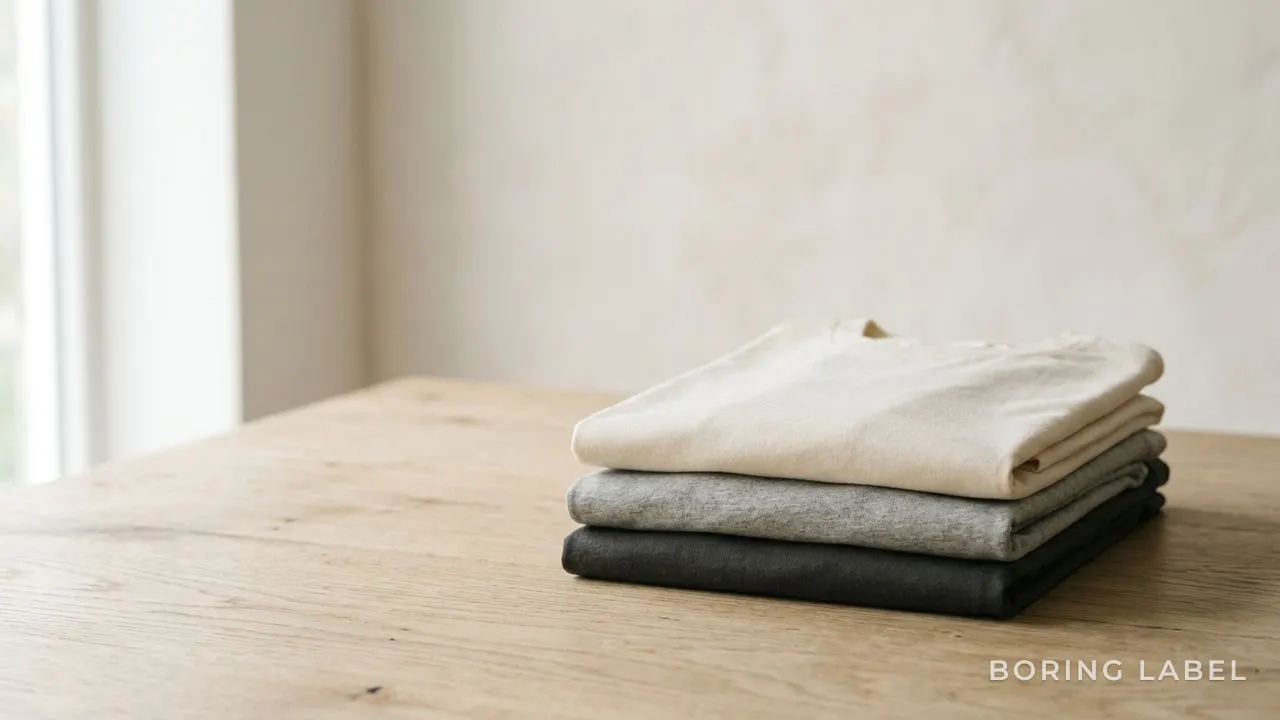
What a Well-Cut Tee Actually Does for a Built Frame
Step back and the whole thing comes down to one idea: a tee that fits a trained body is one whose cut admits that your chest and your waist are different widths, and whose shoulder seam, sleeve, armhole, and fabric all work with that fact instead of against it. Get those right and the tee stops being a daily annoyance and starts doing what good clothing is supposed to do - disappear, and let the frame underneath read clearly.
You will know it when you find it. The chest has room without strain.
The shoulders end where your shoulders actually end. The sleeves sit clean around the arm and finish in the right place.
The waist is skimmed, not tented, and when you reach overhead the hem stays roughly where it was. Nothing pulls, nothing balloons, nothing slides.
You stop being aware of the tee at all, which is the surest sign it fits.
Be honest with yourself about the limits, too. No off-the-rack tee will be perfect on every extreme of build, and the more dramatic your drop from chest to waist, the closer you edge toward needing tailoring for a flawless line.
But the gap between a badly cut basic and a well-cut one is enormous, and most of the frustration men feel about tees comes from never having worn a properly cut one to compare against. A good tapered cotton tee in your true size, with the seam in the right place and a sleeve that respects your arm, is not a luxury for a trained frame - it is the baseline that makes everything else you wear look intentional.
The work you put into the shoulders deserves a tee that shows them off, not one that fights them. Stop sizing up.
Start buying for shape. The right tee was never bigger - it was just better cut.
Boring Label
Wear the point of the article.
One honest tee. Heavyweight combed cotton, a collar that holds, a fit that actually fits. No logo, no noise.
Shop the round-neck teeFree shipping across India · Easy returns
Keep reading
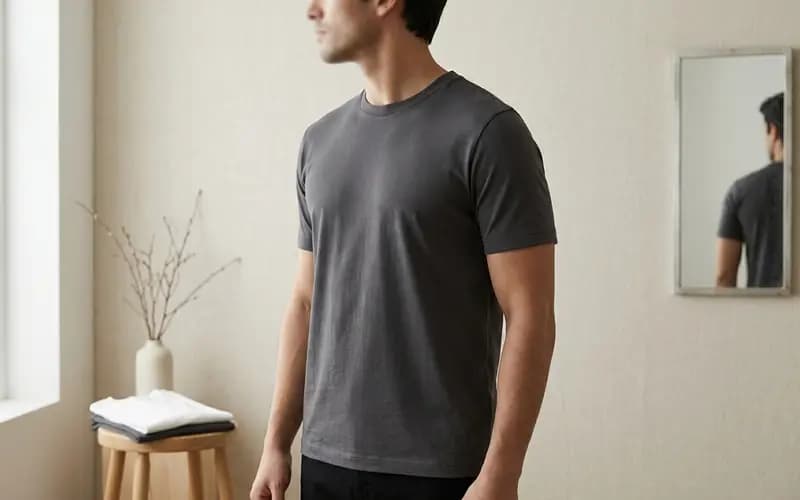
T-Shirt Fit Guide: How a Tee Should Actually Fit
Most tees fail at the shoulder, not the size label. Here is how a t-shirt should actually sit on your body.
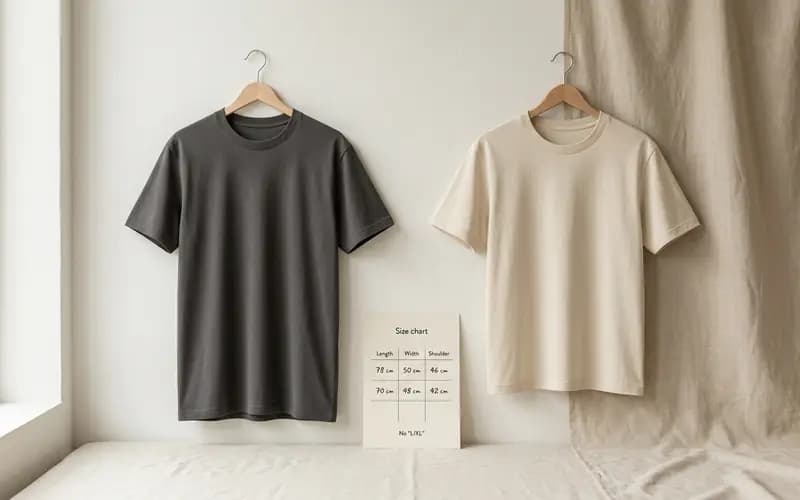
T-Shirt Fit for Tall and Short Men: Length Guide
Why the same size fails tall and short men in opposite directions - and how four measurements fix it.
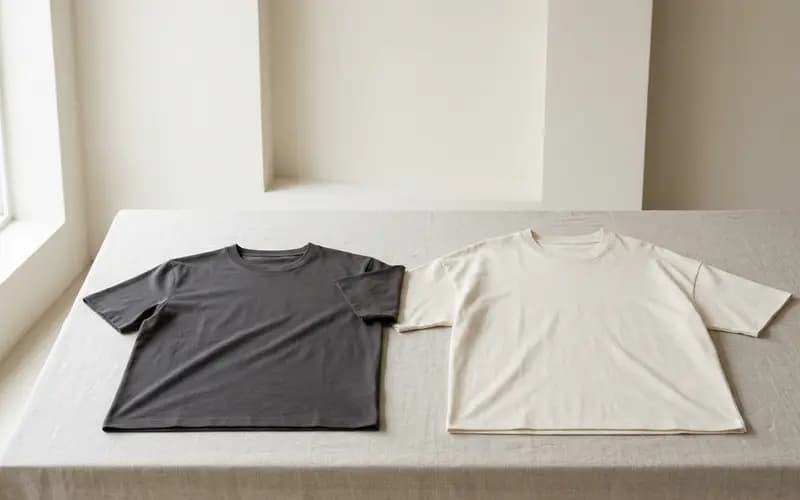
Oversized vs Regular Fit T-Shirt: Which Suits You
One drapes, one frames. Neither is 'better' — it depends on your frame and what you wear it with.
Stay in the loop
New writing, no noise
Occasional notes on fit, fabric, and dressing simply well. No spam, unsubscribe anytime.
Subscribe