Styling
Dressing for video calls: what actually reads well on camera
Webcams compress colour and flatten texture, so mirror-tested outfits do not always translate. Here is what actually reads well on a video call.
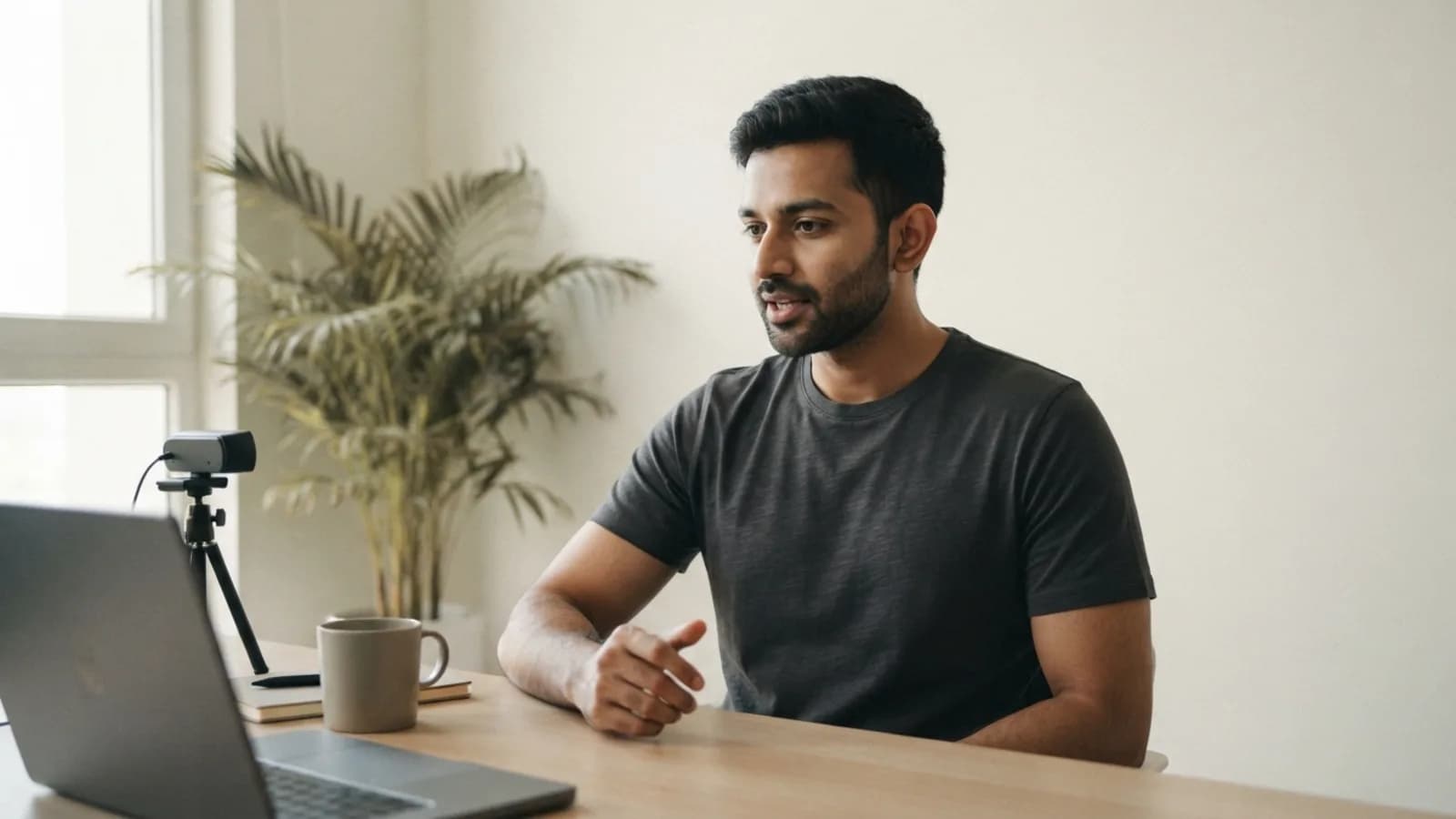
What reads well on camera is not what reads well in a mirror
Most people dress for video calls the same way they dress for in-person meetings, and then wonder why they look slightly off on screen. A webcam compresses colour, flattens texture and crops the body at the chest, which means the rules that work in a mirror do not automatically carry over.
This guide covers exactly what changes when a camera, not a room, is the audience: which colours hold up under compression, which fabrics avoid the moire effect, and how to dress the 40 percent of your body a webcam actually shows.
Work-from-home and hybrid setups have made this a near-daily decision for a huge share of India's white-collar workforce, and getting it right takes less effort than most people assume.
Why webcams distort colour and texture
A webcam sensor is far smaller and less capable than even an average phone camera, and most video call software compresses the feed further to save bandwidth. That compression hits fine detail and colour saturation the hardest.
Pure white can blow out and lose detail against most home lighting, while pure black can crush into a shapeless blob with no visible fabric texture. Both extremes remove information the compression algorithm decides it does not need, and the result looks flatter and less premium than the same tee looks in person.
Mid-tones survive compression far better because they sit in the range the sensor and codec handle most accurately. This is one of the few situations where the safest, most boring colour choice is also the objectively correct technical one.
The best colours for video calls, ranked
Based on how colour and light behave through a typical laptop webcam and standard video call compression, here is how common t-shirt colours perform.
| Colour | How it reads on camera | Verdict |
|---|---|---|
| Mid-tone navy | Holds detail, reads professional | ✓ Excellent default choice |
| Olive or muted sage | Warm, holds detail, flattering against most skin tones | ✓ Strong choice |
| Charcoal grey | Clean, holds detail without crushing | ✓ Very good |
| Pure white | Often blows out under indoor lighting | ✗ Risky, avoid for important calls |
| Pure black | Can crush into a flat, textureless block | ✗ Avoid unless lighting is strong |
| Bright red or orange | Can bleed and oversaturate on compression | ✗ Avoid, distracting on screen |
Our essential t-shirt colours guide covers the broader logic behind a tight colour palette, and video calls are the one setting where that palette advice has a hard technical backing, not just a style preference.
Fabric texture and the moire problem
Fine, tight patterns, herringbone weaves, small checks, thin pinstripes, can create a strange rippling distortion on camera called the moire effect, where the fabric pattern interferes with the camera's pixel grid. This almost never happens with a genuinely plain t-shirt, which is one more argument in its favour for video-heavy work.
A smooth, solid-colour knit in a mid-weight cotton gives the camera the cleanest possible surface to render. Our combed cotton vs carded guide explains why combed cotton also holds a cleaner, more even surface than carded, which matters slightly even on camera since combed fabric has fewer stray fibres catching the light.
Dressing for the crop, not the whole outfit
A typical video call frame shows roughly the collarbone up to the top of the head, with a wider frame sometimes showing down to the chest. This changes what actually matters in a video-call outfit compared with an in-person one.
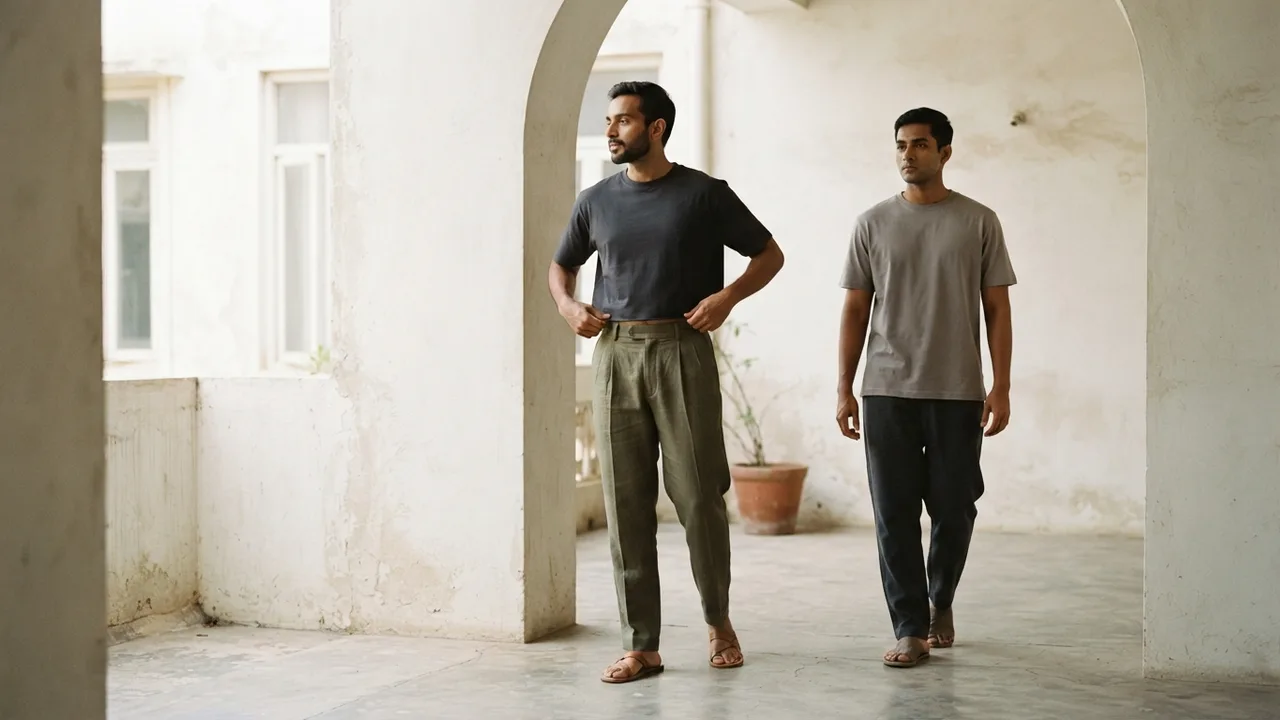
Neckline shape becomes disproportionately important because it sits right at the edge of frame and frames the face. A round neck generally photographs cleaner and more neutral than a deep v-neck, which can look casual or slightly off in a professional call, and a crew neck can look slightly stiff and formal for most remote-work contexts.
Fit around the shoulders and chest matters more than fit lower down, since that is the only part of the fit a camera will ever show. A regular fit tee that sits cleanly at the shoulder without pulling or bunching looks tidy on camera even if the rest of the outfit below frame is joggers.
Lighting changes what colour actually works
The same tee can look completely different depending on whether your setup uses daylight from a window or an artificial ring light. Warm artificial light, common in most home offices after sunset, shifts colours slightly warmer, which makes cool-toned navy and grey look slightly muddier than they would in daylight.
If most of your calls happen in the evening under warm bulbs, lean slightly toward cooler mid-tones, a true charcoal rather than a warm grey, to counteract the shift. If your setup faces a window with natural daylight, warmer tones like olive and rust read more accurately and vividly.
This is a small adjustment, but it explains why a tee that looked great on one call can look slightly off on another taken at a different time of day.
The two-tee video-call kit
Building a dedicated video-call wardrobe is unnecessary. Two tees, chosen with the rules above, cover almost every remote work scenario.
A mid-tone navy or charcoal round-neck tee works as the default for most calls, internal meetings, quick syncs, casual client check-ins. A slightly sharper olive or deep grey piece, ideally under a light overshirt or blazer for the shoulders visible on camera, covers higher-stakes calls, interviews, client pitches, board updates.
Keep both in a mid-weight cotton in the 180-200 GSM range our GSM guide covers, heavy enough to hold shape and drape cleanly on camera without wrinkling from a few hours at a desk.
Camera position and framing habits worth fixing once
A tee that reads well on camera can still look off if the camera itself is poorly positioned, and this is worth fixing once rather than compensating for with clothing choices every day. A laptop camera at desk height, looking up the nose and neck, distorts proportions no outfit can correct.
Raising the laptop on a stand or a stack of books to roughly eye level fixes this permanently, and it also changes how a round neck sits in frame, closer to how it looks when someone is speaking to you at eye level in person rather than looking down from above. This single adjustment often does more for how "put together" you look than any wardrobe change.
Distance from the camera matters too. Sitting too close exaggerates any wrinkling in the fabric right at the collar, while a moderate distance, roughly arm's length, lets a plain tee's clean lines read the way they are meant to.
Testing your own setup once, properly
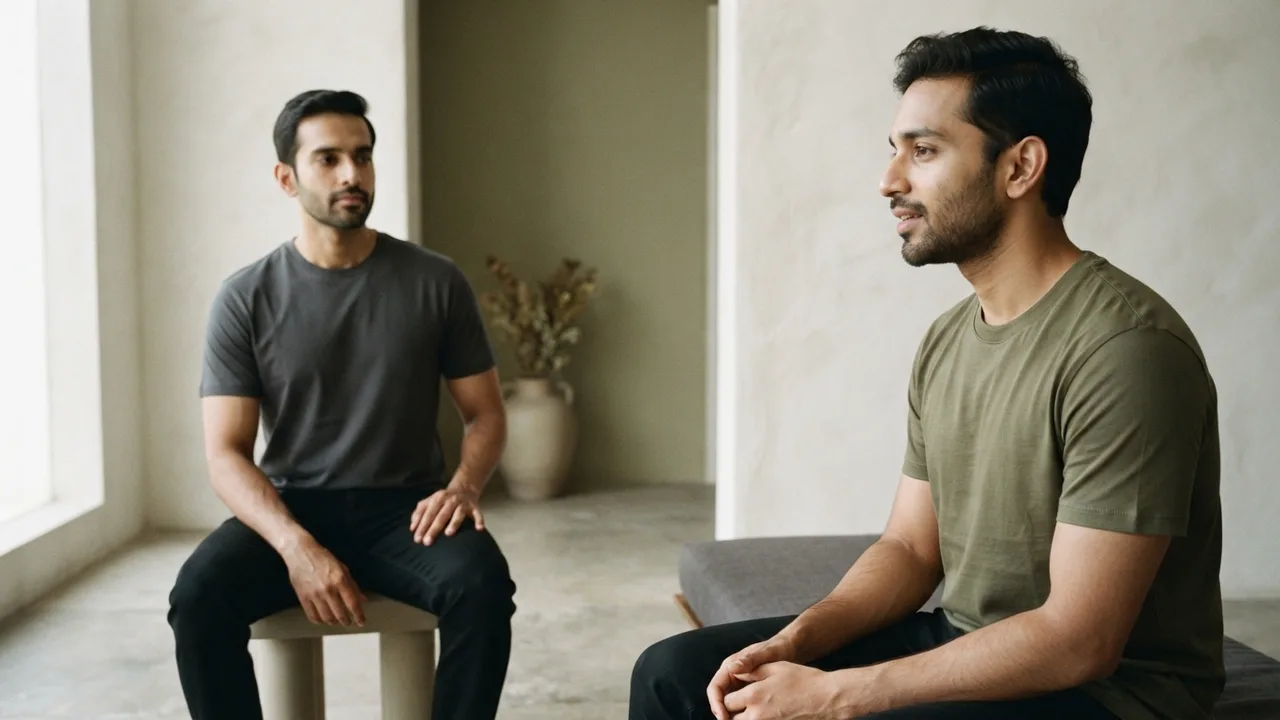
Every webcam, room and lighting setup behaves slightly differently, which means the general colour advice in this guide should be verified against your own camera before an important call, not assumed to apply exactly as written. A five-minute test, wearing two or three candidate tees in front of your actual laptop with your actual lighting, tells you more than any general guide can.
Record a short test clip rather than relying on the live preview, since some video call software applies compression only during an actual live session rather than in the local preview window. Play it back and check specifically for blown-out highlights, crushed shadows and any strange rippling in the fabric texture.
Once you have identified your two or three camera-safe tees this way, the daily decision is essentially solved for as long as your setup, desk, lighting, camera, stays the same. It is a small one-time investment of effort that pays off every single working week afterward.
Building the habit rather than the wardrobe
The goal of everything in this guide is to remove video-call outfit anxiety as a recurring decision, not to build an elaborate new wardrobe. Once you know which two tees hold up on your specific camera, in your specific lighting, the daily decision collapses to almost nothing.
This mirrors the same logic behind minimalist capsule wardrobes more broadly: a small, tested, repeatable set of choices beats an unlimited wardrobe that requires fresh judgment every single day. For remote and hybrid workers, video calls are frequent enough that this small fix compounds into real time and mental energy saved over a working year.
Grooming and background do more work than most people think
Once colour, fabric and neckline are sorted, the two remaining variables that shift a video-call impression are background and grooming, not the outfit itself. A cluttered or busy background pulls attention away from a clean, well-chosen tee just as effectively as a badly chosen one would.
Keep the background simple, and let the outfit do quiet, unremarkable work in the frame rather than competing for attention. This mirrors the exact logic behind quiet luxury dressing: the goal on a video call is not to be noticed for your clothes, but to look composed enough that nobody thinks about them at all.

Caring for tees that live on camera
A tee worn for video calls several times a week gets more wear cycles than most people expect, since remote workers often reach for the same two or three "camera-safe" pieces on repeat. Washing them properly protects the exact qualities that make them work on screen.
Fading and pilling both show up more clearly on camera than in person, since compression tends to exaggerate uneven texture and colour patches rather than smooth them out. Our how to wash t-shirts so they last longer guide covers the cold-wash, gentle-cycle routine that keeps colour even and fabric smooth through frequent use.
The takeaway: dress for the sensor, not just the meeting
Video calls have quietly become one of the most common settings people get dressed for every week, and most wardrobes were never built with a webcam in mind. The fix is small: mid-tone colours over extremes, plain solid fabric over fine patterns, a round neck that frames the face cleanly, and a fit that holds at the shoulder.
None of it requires new clothes. It just requires knowing which two or three pieces in your existing rotation happen to be camera-safe, and reaching for them on the days that matter.
FAQ
What colour t-shirt is best for video calls? Mid-tone colours like navy, olive and charcoal hold detail best under video compression. Pure white can blow out and pure black can lose all texture, so both extremes are best avoided for important calls.
Why do patterned shirts look strange on video calls? Fine, tight patterns can create a rippling distortion called the moire effect when they interfere with the camera's pixel grid. Solid plain fabric avoids this entirely.
Does neckline matter for video calls? Yes. A round neck generally frames the face more neutrally than a deep v-neck or a stiff crew neck, and it is the one part of an outfit a webcam almost always shows clearly.
Boring Label
Wear the point of the article.
One honest tee. Heavyweight combed cotton, a collar that holds, a fit that actually fits. No logo, no noise.
Shop the round-neck teeFree shipping across India · Easy returns
Keep reading
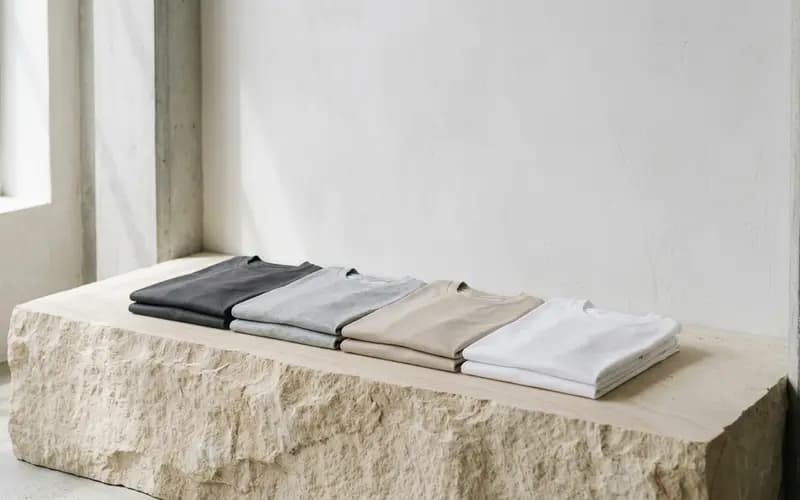
The Essential T-Shirt Colours to Own
Buy these colours in this order and every tee works with everything else you own.
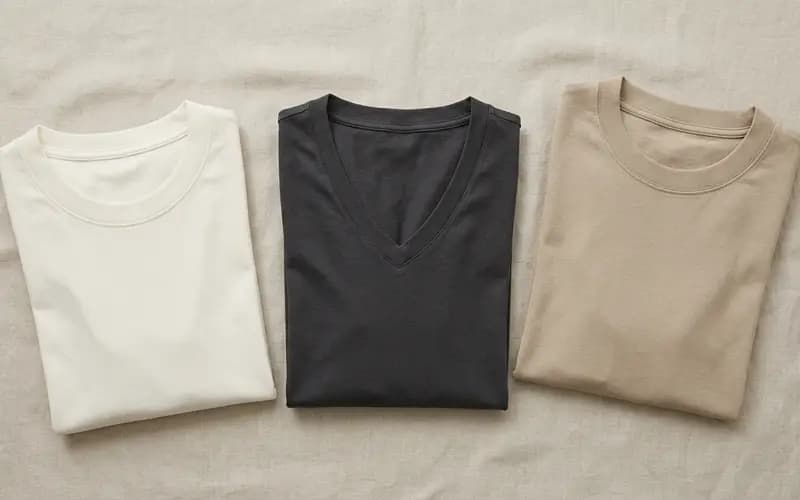
Round Neck vs Crew vs V-Neck: Which Suits You
Round, crew or V-neck? How each neckline reads against your face and build - and the honest everyday pick.
Quiet Luxury in India: What It Really Means
Quiet luxury arrived in India as a hashtag. Underneath it is an old idea: let the cloth do the talking.
Stay in the loop
New writing, no noise
Occasional notes on fit, fabric, and dressing simply well. No spam, unsubscribe anytime.
Subscribe