Fabric
Linen vs cotton for Indian heat: the honest matchup
Linen and cotton solve different problems in Indian heat. This guide breaks down where each fibre wins by climate, cost, and durability.

Linen and cotton solve different problems
Linen and cotton are not rivals in the way brands like to pretend. They are tools for different jobs.
Linen wins on airflow and heat release. Cotton wins on softness, structure, and how it behaves against skin for a full working day.
In Indian heat, the honest answer is that you probably want both, in different garments, for different hours of the day. This piece walks through the actual fibre differences, where each one wins in Indian conditions, and how to build a wardrobe that uses them correctly instead of picking a side out of loyalty.
Where the two fibres actually come from
Cotton is a seed fibre. It grows as a soft boll around cottonseed, and the individual fibre strands, called staple, can be short or long depending on the variety.
Longer staple cotton, like Supima or Pima, spins into smoother, stronger yarn. Our Supima vs regular cotton guide breaks down why staple length changes how a tee feels years into ownership.
Linen comes from the stalk of the flax plant, not a seed pod. That is the root of almost every practical difference between the two fabrics.
Flax fibres are longer, stiffer, and hollow at the core. That hollow structure is why linen breathes the way it does and why it creases the way it does. Same plant family problem, one structural trait causing both effects.
The heat performance gap, with real numbers
Linen's hollow fibre core moves air and moisture faster than cotton's solid one. In lab comparisons of moisture-wicking rate, linen typically clears water from its surface 20 to 30 percent faster than a comparable weight of cotton.
That number matters more in Chennai in May than it does in Shimla in December. A 34°C day with 70 percent humidity is exactly the scenario linen was built for.
Cotton is not far behind on comfort, though. It has a natural ability to absorb up to 25 percent of its own weight in moisture before feeling wet to the touch, which is why a good cotton tee still feels dry-ish through a humid commute even as it is quietly doing work.
The difference shows up over the full day, not the first hour. Linen stays cooler as the day goes on because it releases heat faster; cotton holds a bit more warmth and moisture as hours pass.
If you are outdoors, on a bike, or walking between meetings in peak Delhi summer, linen's faster drying cycle is the more forgiving choice. If you are seated in an office with functioning air conditioning for eight hours, that gap barely registers, and cotton's smoother hand against skin becomes the deciding factor.
The trade-off nobody mentions: how each one ages
Linen creases. This is not a manufacturing flaw, it is the fibre being stiff and doing exactly what stiff fibres do under movement.
Some people love the rumpled look. Others find it reads as unkempt in a formal office, which is a legitimate concern in a country where business casual still leans conservative in many workplaces.
Cotton, particularly a well-made round-neck tee in a mid-to-heavy GSM, holds its shape through a full day with minimal creasing. That structural stability is a real advantage for anyone who wants to look put-together without constant adjustment.
On longevity, cotton generally wins the durability argument for everyday basics. A tightly knit cotton tee at 180 to 220 GSM, the range our GSM guide recommends for daily wear, survives 100-plus washes without much visible change.
Woven linen, especially lightweight linen used in shirts, is more prone to fibre breakage at stress points like elbows and collar folds over the same wash count. It is a beautiful fabric that asks for gentler handling than cotton does.

City-by-city: when linen actually earns its place
India's climate zones are not uniform, and the linen-versus-cotton call should not be either.
In Chennai, Mumbai, and coastal Kerala, where humidity sits above 70 percent for most of the year, linen's faster drying is a genuine daily comfort win, especially for outdoor time.
In Delhi and the north Indian plains, summer heat is dry rather than humid for long stretches, which actually favours cotton slightly. Cotton's moisture retention keeps a thin evaporative layer against skin that feels cooling in dry heat, similar to how a damp cloth cools a room.
In Bengaluru and Pune, moderate year-round temperatures mean the difference barely matters for most of the year. Fit and GSM decide comfort more than fibre choice does here.
Our breathable fabrics for summer guide covers this climate-zone logic in more depth if you are building a full seasonal wardrobe rather than picking one shirt.
Cost and where the money actually goes
Linen is more expensive to produce. Flax farming yields less usable fibre per hectare than cotton, and linen yarn spinning is slower and more mechanically demanding because the fibre is stiff and prone to breaking during processing.
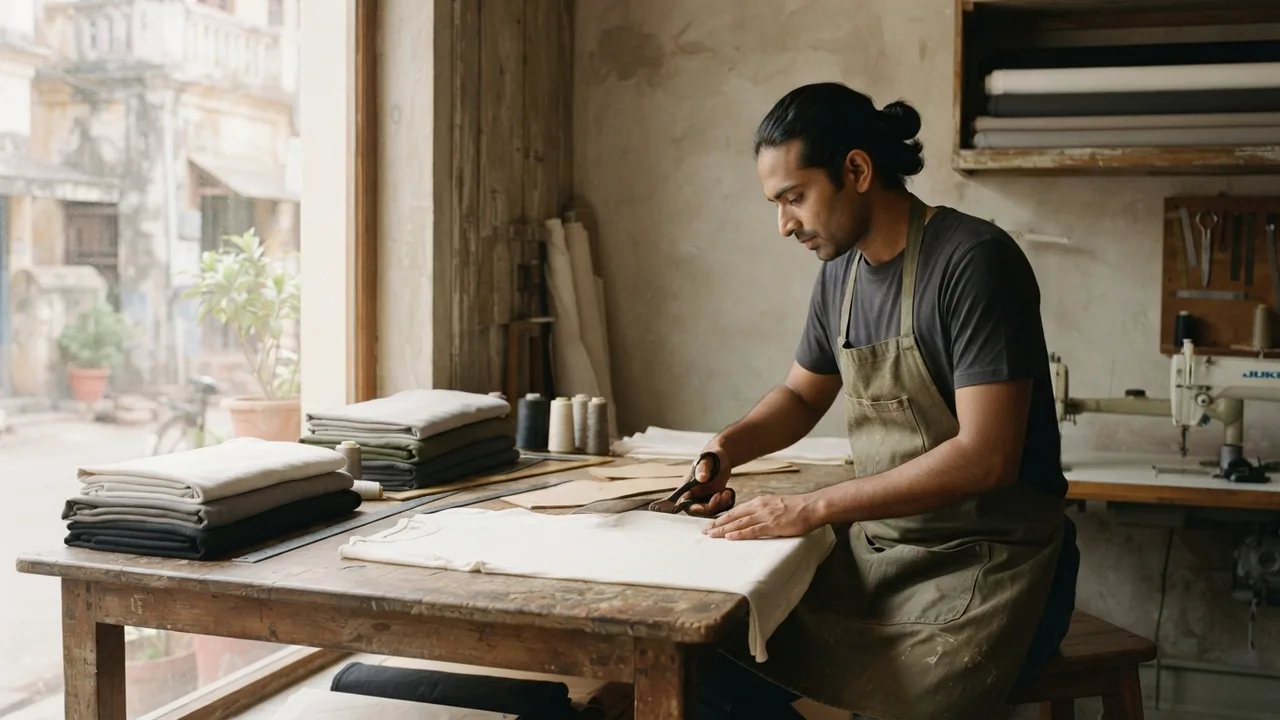
Retail linen shirts in India typically run ₹1,800 to ₹4,000 for a quality piece, while a well-made cotton tee sits comfortably in the ₹800 to ₹1,800 range for the same tier of construction.
That price gap is not marketing markup. It reflects real differences in raw material cost, yield, and processing complexity, the same kind of honest cost breakdown our pricing guide applies to cotton garments.
If budget matters and you are choosing one fabric for a five-day work wardrobe, cotton gets you more comfortable, durable garments per rupee.
A data table to settle the specifics
| Property | Linen | Cotton |
|---|---|---|
| Heat release speed | ✓ Faster | ✗ Slower |
| Softness against skin | ✗ Coarser initially | ✓ Softer |
| Wrinkle resistance | ✗ Creases fast | ✓ Holds shape |
| Durability, everyday wash cycle | ✗ More delicate | ✓ More robust |
| Cost per garment | ✗ Higher | ✓ Lower |
| Humid coastal climate performance | ✓ Excellent | ✓ Good |
| Dry heat climate performance | ✓ Good | ✓ Excellent |
Building a wardrobe with both, sensibly
The realistic answer for most Indian wardrobes is not choosing one fibre forever. It is assigning each fibre to the role it does best.
Cotton tees, in a mid-weight knit, become the daily default for office days, gym, errands, and anything that needs to survive frequent washing without babying. They are the backbone piece, the kind our quality standards page focuses on getting right for exactly this everyday role.
Linen earns its spot as the weekend shirt, the evening-out layer, or the outdoor-heavy travel piece where its faster drying genuinely changes how you feel by 6pm. Keep two or three linen pieces rather than building a whole wardrobe around a fibre that needs more careful care than cotton does.
This split also solves the crease problem by design. You are not wearing linen into a client meeting where wrinkles read poorly, and you are not wearing heavy cotton on a humid Chennai afternoon where linen would have kept you noticeably cooler.
Blends: the middle ground people skip past

A linen-cotton blend, usually 55/45 or 60/40, is worth considering before you commit fully to one fibre or the other.
The blend borrows linen's faster drying and slightly cooler feel while keeping a good share of cotton's softness and shape retention. It also creases less aggressively than pure linen, because cotton fibres interrupt the stiff flax structure just enough to soften the wrinkle pattern.
The trade-off is that a blend rarely excels at either property the way a pure fabric does. You get a fabric that is more forgiving day to day but slightly less breathable than pure linen and slightly less soft than pure cotton.
For a first purchase, a blend shirt is a reasonable way to test whether you actually notice linen's heat advantage in your own routine before spending on pure linen pieces. Many Indian menswear brands now stock linen-cotton shirting specifically for this reason, pricing it between the two pure fabrics.
Washing differences that catch people off guard
Care requirements diverge almost as much as comfort does, and getting this wrong is where a lot of linen disappointment starts.
Linen should generally be washed in cold water on a gentle cycle, and it does best air-dried rather than machine-dried, since heat from a dryer accelerates fibre breakage at the same stress points that already crease first. Ironing linen while still slightly damp is far easier than ironing it bone dry, a detail most people learn only after fighting a fully dried, deeply creased shirt.
Cotton is considerably more forgiving. A well-constructed cotton tee tolerates machine washing and moderate dryer heat far better, provided you follow the basics in our wash care guide, which covers cold-water washing and gentle cycles for maximizing garment life either way.
If you travel often or do not want to think much about laundry logistics, that gap alone can be reason enough to lean cotton for your everyday rotation and save linen for pieces you are willing to hand-wash or dry-clean occasionally.
Quick answers to common fabric questions
Does linen actually keep you cooler than cotton, or is that just marketing? It is real, backed by measurable differences in heat and moisture release, not just a texture illusion. The hollow flax fibre genuinely moves air faster than solid cotton fibre.
Can you wear linen to a formal Indian office? Yes, in a structured linen shirt rather than a casual kurta-style cut, though expect some creasing through the day. Many workplaces now treat linen as acceptable business casual, especially through peak summer months.
Is a linen-cotton blend a good starting point if you have never tried linen? Generally yes, since it lets you test linen's comfort benefits without committing to its higher care demands or cost right away.
The honest verdict
Neither fabric is objectively better. Linen breathes faster and looks effortlessly relaxed but costs more, creases constantly, and needs gentler washing.
Cotton is softer, sturdier, cheaper, and holds its shape, but trails linen slightly in raw heat release during the most humid stretches of the year.
For most people building a working wardrobe in Indian conditions, cotton should be the majority fabric, roughly 70 to 80 percent of tees and casual shirts, because it survives daily wear better and costs less per wear over time.
Linen fills the remaining slice for the days heat and humidity peak together, or when the outfit calls for a more relaxed, textured look. Pick the fibre for the job, not for the label, and both will earn their place in the cupboard.
Boring Label
Wear the point of the article.
One honest tee. Heavyweight combed cotton, a collar that holds, a fit that actually fits. No logo, no noise.
Shop the round-neck teeFree shipping across India · Easy returns
Keep reading
Most Breathable Fabric for Summer (India Guide)
Breathability is not just the fibre. Weave, weight, and finish decide whether a tee cools you or clings.
T-Shirt GSM Guide: What the Number Really Means
GSM is the most quoted, least understood number on a tee. Here is what it actually predicts about quality.

Bamboo Fabric Tees: An Honest Take on the Hype
Bamboo t-shirts are mostly viscose rayon once processed. Here is what survives from the original plant and how it stacks up against cotton for daily wear.
Stay in the loop
New writing, no noise
Occasional notes on fit, fabric, and dressing simply well. No spam, unsubscribe anytime.
Subscribe