Styling
Plain tees for men over 40: the second simplification
A second wardrobe simplification happens after 40, driven by taste rather than budget. Here is how to rebuild around plain tees that actually fit.
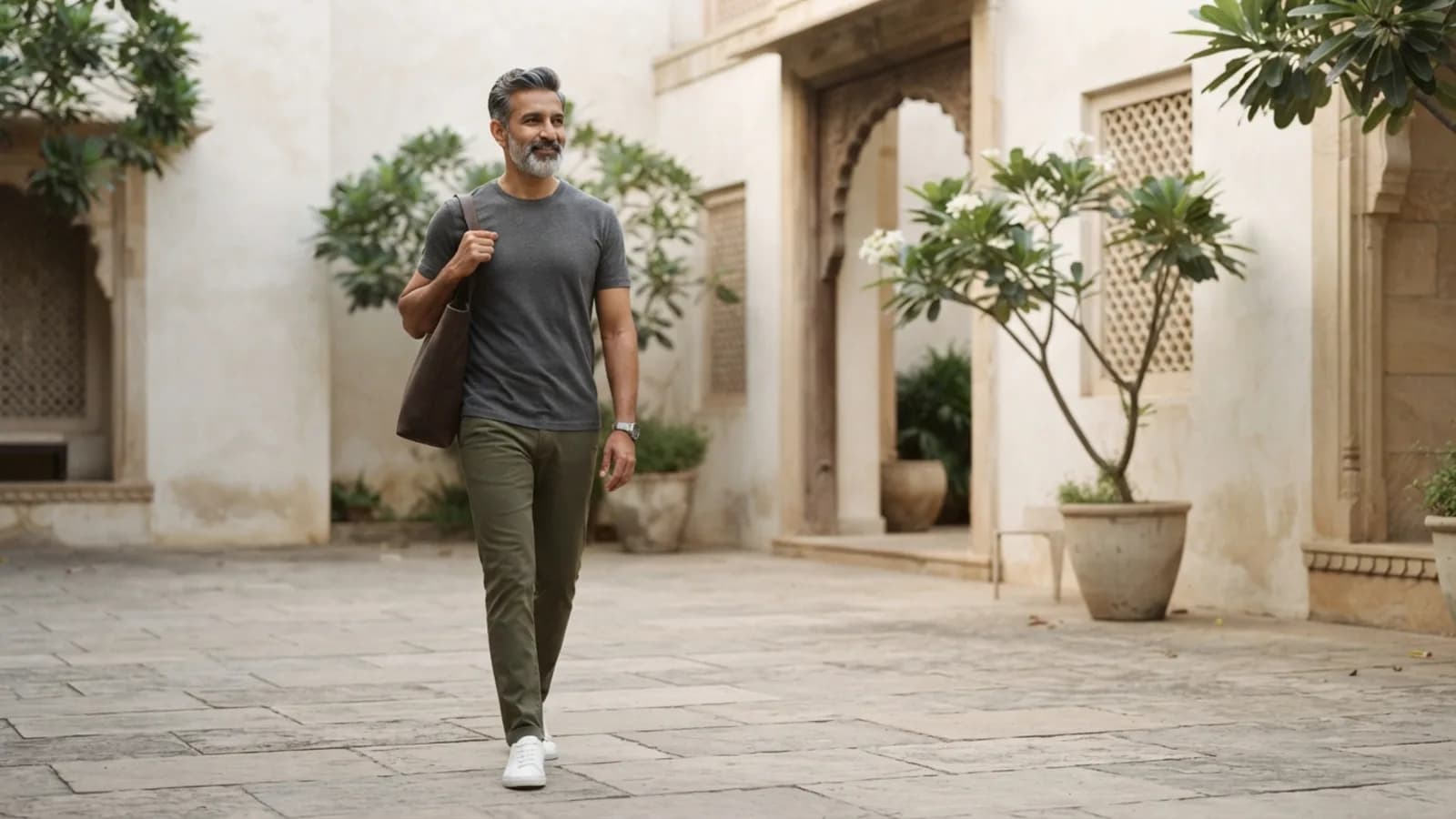
The second simplification happens after 40, not in your twenties
Most men simplify their wardrobe once, in their twenties, when money is tight and trends still matter. A second, quieter simplification happens later, usually after 40, and it has nothing to do with budget.
By this point you know what fits, what colours suit your skin, and what you will actually wear on a Tuesday. The noise of trend-chasing has faded, and what is left is a shorter, sharper list of clothes that work every single time.
Plain t-shirts sit at the centre of that list. Not because logos and prints stopped being available, but because a well-cut plain tee now does more work with less effort than anything louder ever did.
This guide covers what actually changes in a man's wardrobe needs after 40 and how to rebuild around plain tees without it reading as either a midlife crisis or giving up.
What changes physically after 40
Bodies shift gradually, and clothes that fit at 30 often sit differently a decade later. Shoulders can narrow slightly, torsos often carry more weight through the middle, and skin tone can shift with sun exposure and age.
None of this is a decline. It is just data that should change what you buy.
A slim fit that once looked sharp can start to emphasise a midsection instead of a chest. A regular or slightly relaxed fit usually reads better on a mature frame because it skims rather than clings, and it does so without looking baggy if the shoulder seam and hem length are right.
Fabric weight matters more too. A tee that is too thin can look cheap and cling in the wrong places, while one that is too heavy can feel stiff on a body that wants comfort over structure by this stage of life. The 180-220 GSM range explained in our GSM guide is the sweet spot most men over 40 land on.
Why loud prints stop working the way they used to
A graphic tee reads as playful on a 25-year-old and can read as trying too hard on a 45-year-old, fairly or not. This is not about age-shaming; it is about what a print signals versus what a plain tee signals.
A print draws the eye to itself and, by extension, invites a judgment about taste in that specific graphic. A plain tee draws the eye to fit, colour and grooming instead, which tends to age far better because those elements are under your control and rarely go out of style.
Our piece on why plain clothing beats loud fashion covers the psychology behind this shift in more depth, and it applies with extra force once you are past your twenties and dressing more for how you carry yourself than for what is trending.
The colour question after 40
Skin tone can shift subtly with age and sun exposure, and colours that worked at 25 do not always flatter the same way at 45. This is worth an honest look, not a guess.
Warmer undertones tend to hold up well against olive, rust, and warm charcoal. Cooler undertones lean better toward navy, true black, and slate grey.
Our guide to t-shirt colours for Indian skin tones breaks this down properly, and it is worth revisiting in your 40s even if you settled your colour picks a decade ago, because grey hair and slightly changed skin tone both shift what reads as flattering.
Building the after-40 core
Here is what a lean, well-considered rotation looks like at this stage, compared with the more experimental wardrobe most men carry in their 20s and 30s.
| Wardrobe element | Twenties approach | Over-40 approach |
|---|---|---|
| Prints and logos | Frequent, trend-driven | ✗ Rare, only if genuinely loved |
| Fit | Slim, body-conscious | ✓ Regular, comfortable but sharp |
| Colour palette | Wide, experimental | ✓ Tight, flattering, repeatable |
| Fabric weight | Whatever is cheap | ✓ Mid-heavy, structured |
| Quantity | Many, low cost each | ✓ Fewer, higher quality each |
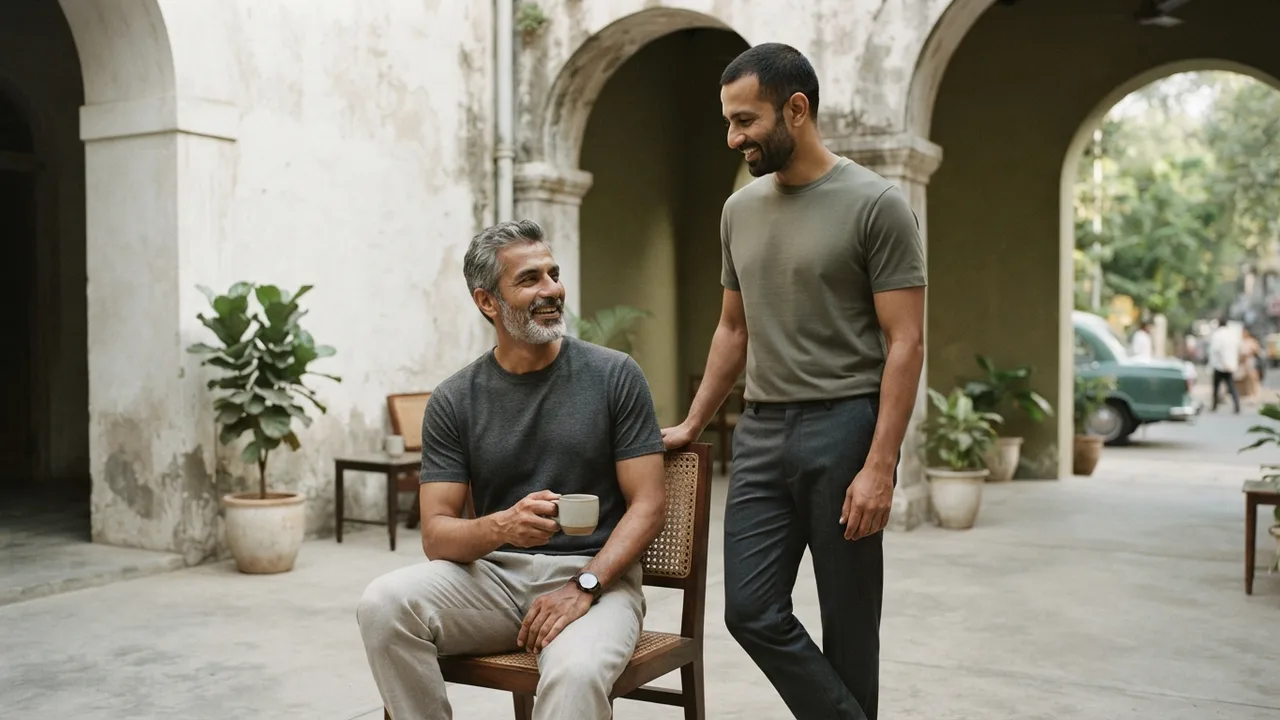
Five to seven plain tees in two or three flattering colours, all in a consistent fit, cover almost every situation a man over 40 moves through: weekend errands, casual Fridays, evening drinks, travel. A round-neck tee in a mid-heavy combed cotton holds its shape through repeated wear far better than the thin, printed tees most men accumulated in their 20s.
The quiet-luxury logic fits this stage of life well
Quiet luxury as a style movement is really just this same instinct dressed up with a name: understated pieces, high fabric quality, no visible branding. It happens to map almost perfectly onto what men over 40 already want from their clothes.
Our quiet luxury in India piece explains how this looks on a realistic Indian budget, without needing European luxury house prices to get the effect. The core idea is that a well-made plain tee, correctly fitted, reads as more expensive and more deliberate than a printed tee three times its price.
That is a useful thing to know at any age, but it lands with particular force once you have stopped needing clothes to announce anything about you.
Grooming, posture and the whole picture
Clothes do only part of the work at this stage of life, and it is worth being honest about the rest. Grooming, a clean shave or a well-trimmed beard, tidy hair, matters more with age because skin and hair texture change and a plain tee draws more attention to the face than a busy print ever did.
Posture also compounds with fit in ways men rarely account for. Years at a desk can round the shoulders forward, and a tee cut for an upright frame will bunch slightly at the chest and pull at the back on a rounded one.
This is less a clothing problem than a fit-testing problem: try a tee on while seated at a desk, not just standing in front of a mirror, since that is closer to how most men over 40 actually spend their day. If it pulls or rides up while seated, the fit is wrong regardless of how it looks standing still.
None of this requires a personal stylist or a big spend. It requires paying attention to the same handful of details, fit at the shoulder, colour against skin tone, fabric weight, consistently rather than chasing a new trend every season.
What to actually retire from the closet
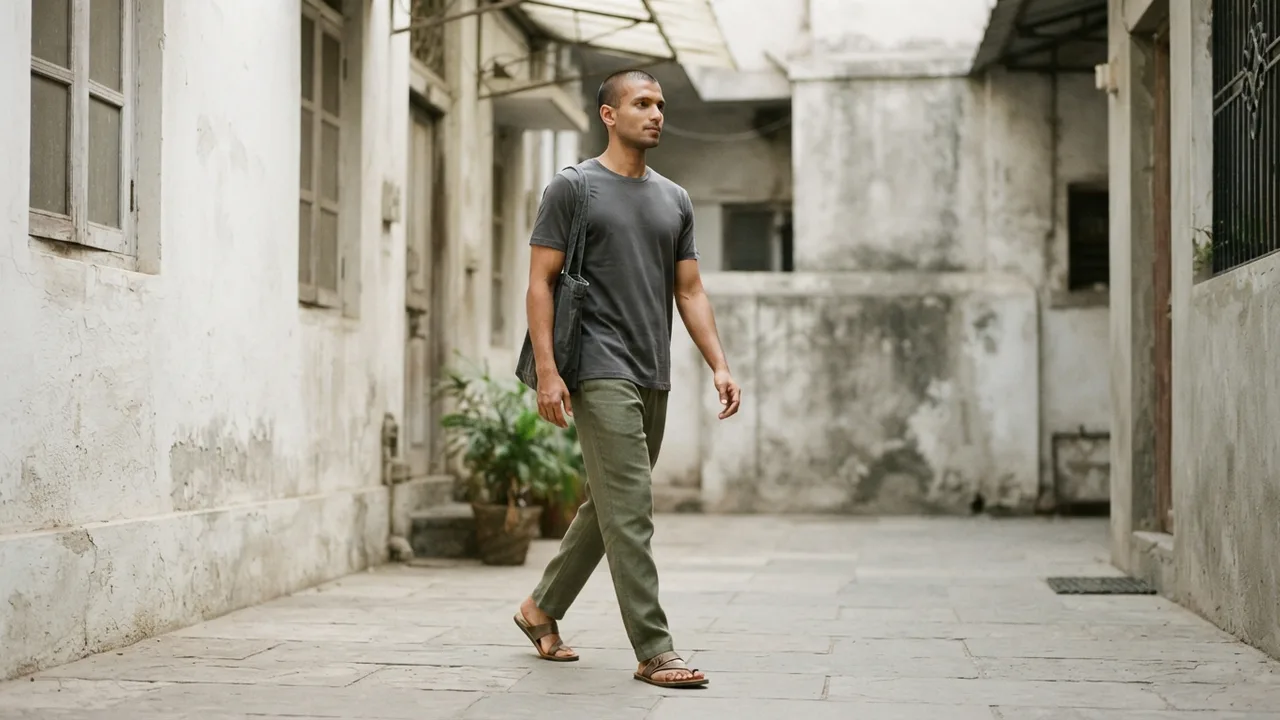
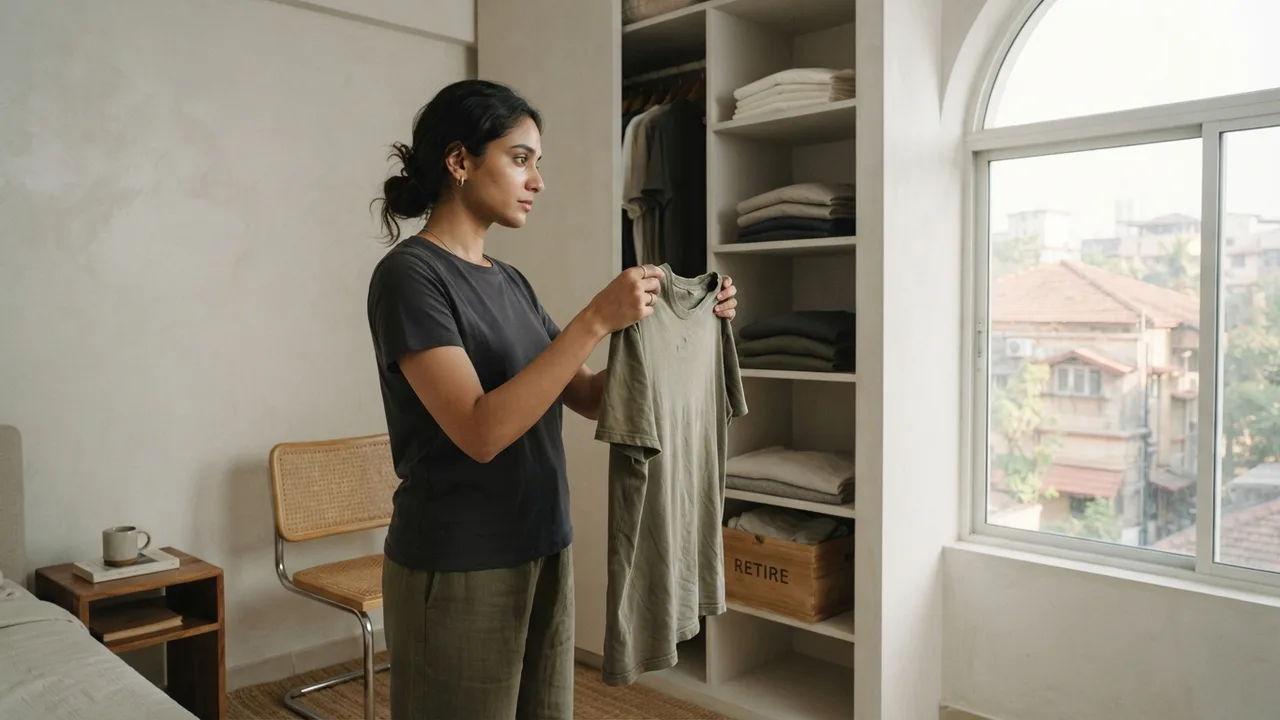
A second simplification is not complete until something leaves the wardrobe, not just something new arrives. Three categories are worth a hard look after 40.
Anything with a faded, cracked or peeling print no longer reads as casual; it reads as neglected. Anything in a fit that was chosen for a body shape a decade ago and never revisited is quietly working against you every time you wear it.
And anything bought purely because it was cheap, rather than because it fit and suited you, is usually the first thing that looks tired next to a well-made plain tee. Clearing these out is not about minimalism for its own sake; it is about making sure the five or seven pieces you do keep are actually doing their job every time you reach for them.
Fit checks worth doing again at 40
Most men have not had their sizing properly checked since they were in their 20s, and bodies change enough over two decades that the old size chart guess no longer applies. Our how to measure your t-shirt size guide takes fifteen minutes and is worth doing again now.
Pay particular attention to shoulder seam placement and sleeve length, since these are the two measurements that shift most with changing shoulder width and often go unnoticed until a tee looks slightly off in photos. A tee that is a size too big through the body but correct at the shoulder will still look sloppy; get the shoulder right first, then adjust body width from there.
If you carry more weight through the midsection than you did a decade ago, resist the instinct to size up across the board. Sizing up the whole garment usually just adds excess fabric everywhere, including the shoulders and sleeves, which makes the fit look worse, not better. A relaxed regular fit in your correct shoulder size does more for a changing midsection than a full size-up ever will.
Caring for fewer, better tees
Once the rotation shrinks to five or seven pieces worn on repeat, each one has to survive far more washes than a wardrobe of twenty rarely-worn tees. Cold washes, mild detergent, and air drying out of direct sun all extend the life of dark colours and prevent the fading covered in our why t-shirt colours fade guide.
This matters more with hard water, common across large parts of India, which speeds up both fading and fabric stiffening if you are not deliberate about wash settings. Our full care guide has the specific routine that keeps a mid-heavy cotton tee looking new well past the first year.
!Minimalist editorial photo illustrating once the rotation shrinks to five or seven pieces worn on repeat, each one has to survive far more washes than a wardrobe of twenty rarely-worn tees. cold washes, mild detergent, and air drying out of direct sun all extend the life of dark colours and prevent the fading covered in our [why t-shirt colours fade guide., muted neutral tones, soft natural light, premium plain t-shirt context](/images/blog/plain-tshirts-men-over-40/inline-3.webp)
Shopping less often, but shopping better
The second simplification usually comes with a lower purchase frequency too, not just fewer categories of clothing. Where a man in his 20s might buy a new tee every month chasing whatever felt current, a man over 40 buying five or seven considered pieces a year, replacing only what has genuinely worn out, spends less overall while looking more consistently put-together.
This shift also changes what "worth it" means at checkout. A tee bought to last two or three years of regular wear justifies a higher price than one bought to be replaced in a few months regardless of cost, and our affordable vs premium t-shirts comparison lays out exactly where that break-even point tends to sit.
Buying less often also means each purchase deserves more attention: trying it on, checking the shoulder seam, confirming the colour against your actual skin rather than a product photo. That small amount of extra care at purchase time is what separates a wardrobe that quietly works from one that requires constant re-buying to compensate for early mistakes.
The takeaway: dressing for yourself, not an audience
The first simplification, in your twenties, is usually about money and fitting in. The second, after 40, is about knowing exactly what works and refusing to spend attention on anything else.
Plain t-shirts, correctly fitted and in a tight, flattering colour palette, are the natural endpoint of that second simplification. They are not a retreat from style.
They are what style looks like once you have stopped needing it to prove anything.
FAQ
Should men over 40 stop wearing graphic t-shirts entirely? Not entirely, but they should be occasional rather than the default. A rotation built mostly on plain tees, with the odd graphic piece worn deliberately, reads better than a wardrobe full of prints.
What fit works best for men over 40? A regular or slightly relaxed fit generally flatters a mature frame better than a slim cut, because it skims the body rather than clinging to areas that have changed shape over time.
How many plain t-shirts does a man over 40 actually need? Five to seven, in two or three flattering colours and a consistent fit, cover most weekly needs without the wardrobe feeling repetitive or cluttered.
Boring Label
Wear the point of the article.
One honest tee. Heavyweight combed cotton, a collar that holds, a fit that actually fits. No logo, no noise.
Shop the round-neck teeFree shipping across India · Easy returns
Keep reading
Against Loud Fashion: The Case for Boring
Loud clothes shout for a season and embarrass you for years. We are making the boring argument.
Best T-Shirt Colours for Indian Skin Tones
Cream over stark white, olive over grey: the neutral tee colours that actually suit warm Indian skin, and how to build a palette.
Quiet Luxury in India: What It Really Means
Quiet luxury arrived in India as a hashtag. Underneath it is an old idea: let the cloth do the talking.
Stay in the loop
New writing, no noise
Occasional notes on fit, fabric, and dressing simply well. No spam, unsubscribe anytime.
Subscribe