Styling
Polo vs plain tee: when each one wins
The polo and the plain tee solve different problems. Here is exactly when each one earns its place in an Indian wardrobe.
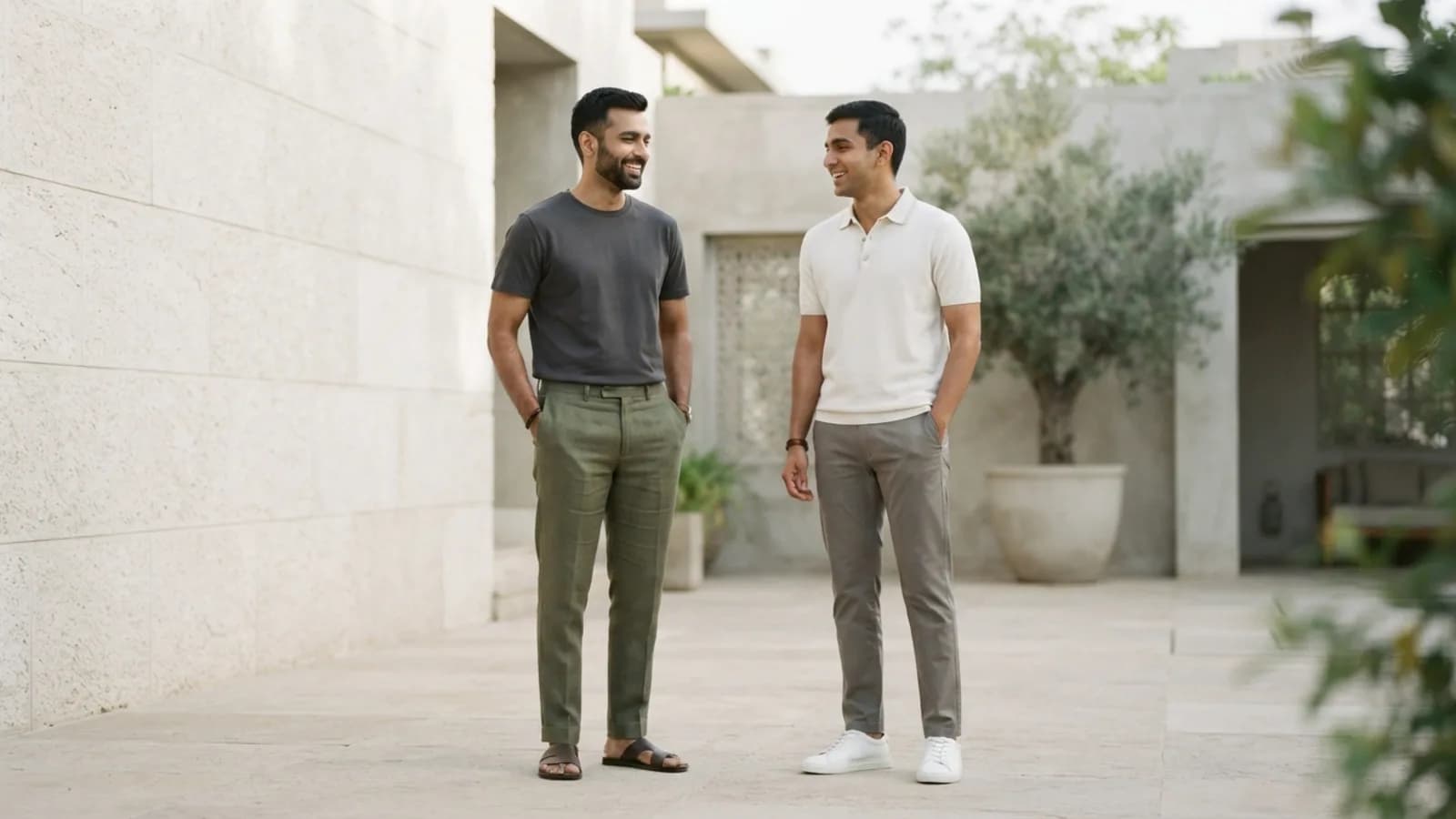
The short answer
A polo signals "I made an effort but I am not wearing a shirt." A plain tee signals nothing at all, which is exactly why it works everywhere else.
That single difference decides most of the debate. Polos carry a collar and a placket, both borrowed from tailored clothing, so they read half a notch more formal than a round-neck tee.
Plain tees carry neither. They are the base layer of casual dressing, not a compromise version of something dressier.
Neither one is "better" in the abstract. The real question is which one wins in a given room, on a given day, under a given jacket.
This piece breaks that down by occasion, fit, fabric, and the practical India-specific stuff nobody tells you until you have already sweated through a bad polo at a wedding lunch.
Where the polo actually wins
The polo has one job it does better than any t-shirt: bridging the gap between "formal" and "I refuse to wear a collar shirt today."
Golf clubs, resort dress codes, and semi-formal daytime events almost always specify "collared shirt," and a polo is the only casual option that satisfies that rule. A round-neck tee will get you turned away at the door of most Indian golf clubs and several premium resort restaurants that still enforce old-school dress codes.
Client-facing but non-suit days are the other clear win. If you work in a role where a t-shirt feels too casual but a full shirt feels like overkill, a well-fitted knit polo in navy or white splits the difference convincingly.
It also photographs better under a blazer for casual Fridays and off-site meetings, since the collar gives the jacket something structured to sit against, unlike a tee's crew or round neckline which can look slightly undressed under tailoring.
But the polo has real weaknesses too, and being honest about them matters more than the sales pitch.
Where the polo loses, badly
Two problems keep coming up with polos, and they are both fabric problems, not design problems.
Piqué knit polos trap heat. The waffle-textured piqué weave that most polos use was designed for airflow, but in practice the collar and placket add extra layers of fabric right at the neck, which is exactly where Indian summer heat concentrates.
A 220 GSM piqué polo in Mumbai in May is a genuinely uncomfortable garment by 2pm.
The collar curls, and it curls fast. Cheap and mid-range polos use a spread collar with minimal interlining, and after four or five washes in Indian hard water it starts curling upward at the tips.
Once that happens, no amount of ironing fixes it permanently. You are looking at a garment on a countdown clock the day you buy it, unless the brand has invested in proper collar construction, which most under a certain price point have not.
There is also the fit problem. Polos are traditionally cut with more room through the body than a fitted tee, which was fine for the 1980s golf-course silhouette but reads baggy and dated against the slimmer, structured casualwear most Indian men under 40 actually wear now. Our guide on slim vs relaxed vs regular fit covers this fit logic in more depth, and most of it applies double to polos, where a boxy cut ages the whole outfit by a decade.
Where the plain tee wins, decisively
The plain round-neck tee wins almost everywhere the dress code is not explicitly asking for a collar.
Everyday wear, weekends, travel, and layering are all territory a good tee owns outright. It is lighter, it breathes better without a collar trapping heat, and it pairs with everything from denim to chinos to shorts without a second thought.
It is the honest base of a minimalist wardrobe. If you are building a capsule wardrobe, the plain tee is doing structural work that a polo cannot: it layers under jackets and overshirts without adding bulk at the collar, and it does not fight for attention the way a polo's placket and buttons do.
It ages better per wash, if the construction is right. A tee has fewer failure points than a polo. No collar to curl, no placket buttons to lose, no ribbed cuffs at the sleeve that can stretch out.
The only real vulnerability is neckline stretch on the round neck itself, which is a construction and fabric issue our tshirt collars piece covers directly. Buy a tee with a properly ribbed, weft-knit collar band and this stops being a concern for years, not months.
It is cheaper to get right. A genuinely good plain tee, made from combed cotton at a real GSM with reinforced seams, costs less to produce well than a genuinely good polo, because there is no collar interlining, no placket, no buttons.
That is part of why Boring Label makes the round-neck tee the anchor product rather than a polo. It is the garment that does the most work for the least fuss, and getting it right - fabric, weight, drape - pays off across more days of the year than a polo ever will.
A direct comparison table
| Factor | Polo | Plain round-neck tee |
|---|---|---|
| Dress code coverage | Wins where "collared" is required | Loses where collar is mandatory |
| Everyday comfort | Warmer, collar traps heat | Cooler, breathes freely |
| Failure points | Collar curl, placket buttons, cuff stretch | Mainly neckline stretch if poorly made |
| Layering under jackets | Bulkier at the neck | Clean, sits flat under structure |
| Price-to-quality ratio | Harder to get right cheaply | Easier to get genuinely good at a fair price |
| Longevity in Indian humidity | Collar degrades faster in hard water washes | Fewer parts to degrade |
| Versatility across occasions | Narrower - office-casual and resort | Broadest - office, weekend, travel, layering |
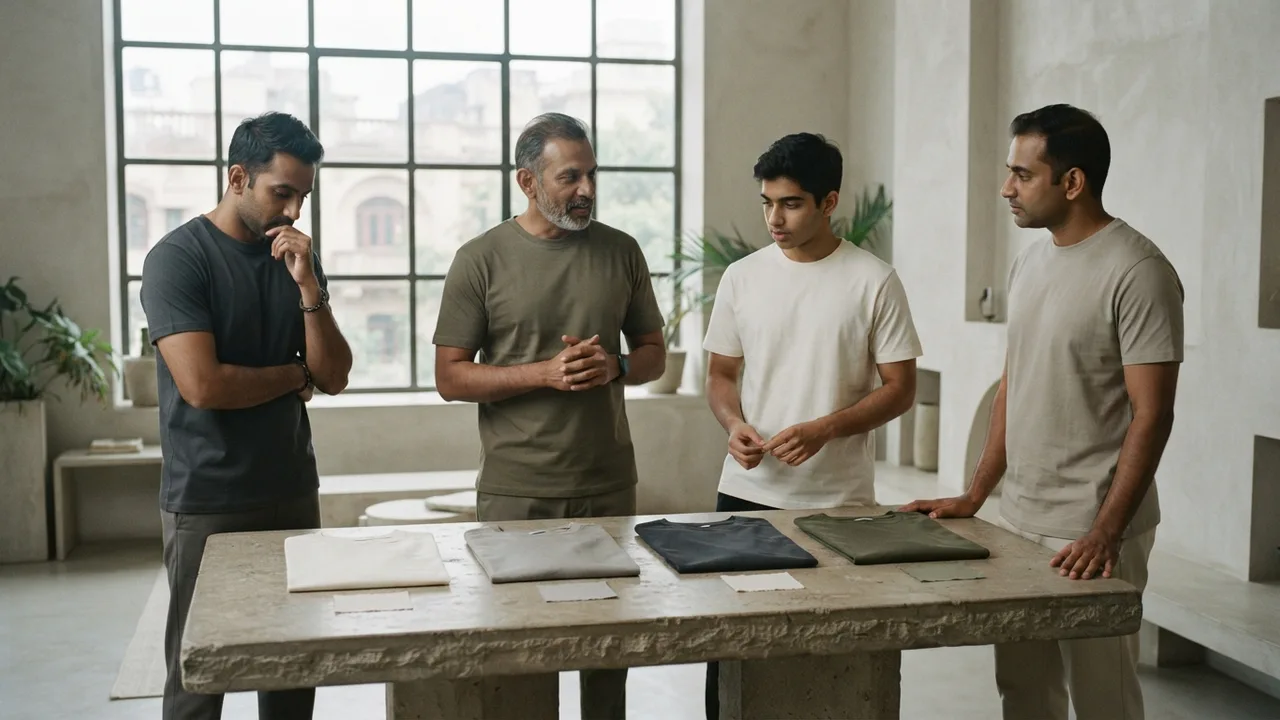
The India-specific factors nobody mentions
Three things matter here that most global style guides skip entirely.
Hard water and collar interlining do not get along. Most Indian tap water is harder than what polo manufacturers test against, and the fusible interlining inside a collar breaks down faster in hard water washes. This is a bigger deal in Delhi, Chennai, and most of Rajasthan than it is in, say, Mumbai or coastal Kerala where the water is comparatively softer.
Marketplace polo listings hide the collar construction entirely. You cannot see interlining quality in a product photo, and most Amazon and Myntra listings do not mention it. Our piece on marketplace vs D2C stock explains why this information gap tends to be worse for structured garments like polos than for simple tees, where there is less to hide.
Heat management differs by city, not just season. In Bengaluru or Pune, where evenings cool down, a polo works fine for most of the year. In Chennai, Hyderabad, or Delhi summers, the collar-trapped-heat problem shows up almost daily from March through September.
So which one should you actually buy
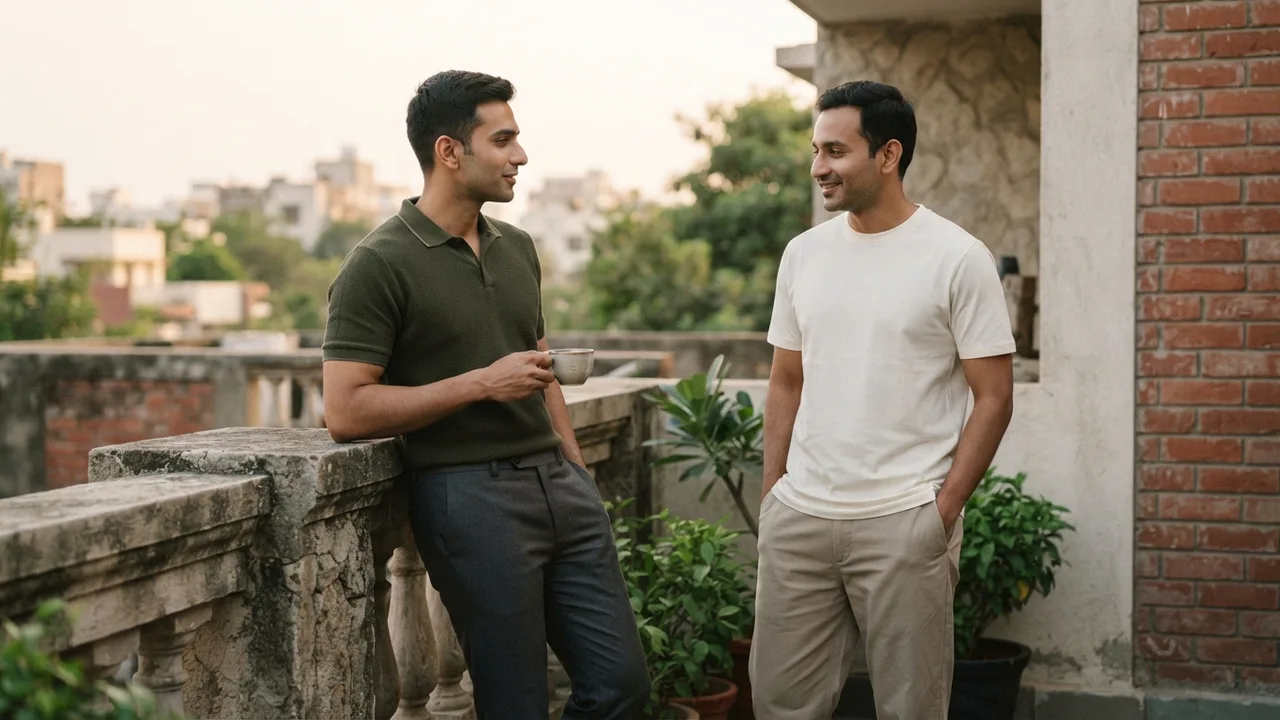
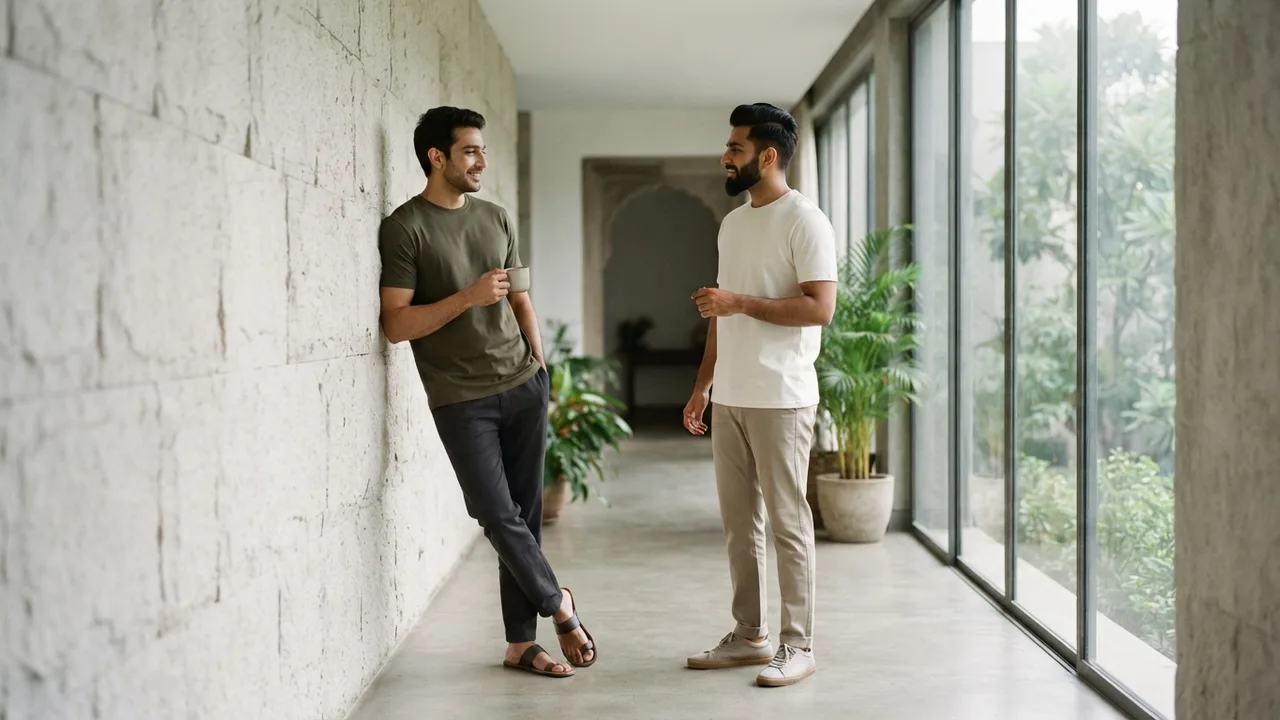
If you already own three or four good plain tees and are filling a specific gap - a golf trip, a resort weekend, a semi-formal client lunch - buy one or two well-made polos and treat them as occasion pieces, not daily wear.
If you are starting from zero or rebuilding a wardrobe, buy the tees first. They cover more days, more climates, and more use cases per rupee spent, and they are the harder garment to get visibly wrong once the fabric and fit are right.
Check the fabric weight before either purchase using our GSM guide, since GSM matters even more on a polo where the collar adds a second layer of the same fabric at the neck.
Fabric behaves differently on each garment
The same 100 percent cotton can perform very differently on a polo than on a plain tee, because the construction around it changes the physics.
Piqué versus jersey knit. Most polos use a piqué knit, a slightly textured, more open weave chosen for structure and a crisp look. Most plain tees use a single or double jersey knit, which lies flatter and drapes closer to the body.
Piqué's texture holds its shape better through the day, which is why polos look less rumpled by evening. Jersey moves and creases more, but it also breathes better against skin, which matters more in Indian heat than a crisp look does for most of the year.
Weight tolerances differ too. A 220 GSM piqué polo feels noticeably heavier and stiffer than a 220 GSM jersey tee at the identical number, because piqué's looped structure carries more air and bulk per gram than a flat jersey knit does. If you are comparing GSM numbers across the two garment types expecting them to feel the same, you will be surprised, and our GSM guide explains why the number alone never tells the whole story.
The maintenance gap
Polos ask more of your laundry routine than tees do, and this is rarely mentioned before purchase.
Collar starching or steaming. To keep a polo's collar crisp rather than floppy, some wearers iron or lightly steam it after every wash, an extra step a round-neck tee never requires since there is no structured collar to maintain.
Button care. Buttons need to be checked periodically for loose thread, and a lost button mid-wear is a visible, immediate problem in a way that a small pull on a plain tee's hem is not.
Placket alignment after washing. Machine washing can shift a polo's placket slightly out of true alignment over many cycles, something worth checking every few washes. Our washing guide covers gentler wash settings that help both garment types last longer, though the benefit compounds more for structured pieces like polos.
A plain tee, by comparison, asks almost nothing beyond a normal wash cycle and reasonable drying, which is part of why it remains the lower-maintenance staple for people who do not want laundry to become a second job.
!Minimalist editorial photo illustrating placket alignment after washing. machine washing can shift a polo's placket slightly out of true alignment over many cycles, something worth checking every few washes. our [washing guide covers gentler wash settings that help both garment types last longer, though the benefit compounds more for structured pieces like polos., muted neutral tones, soft natural light, premium plain t-shirt context](/images/blog/polo-vs-plain-tshirt/inline-3.webp)
What Indian weather data actually supports
India Meteorological Department data consistently shows most major Indian cities spending six to eight months a year above 30 degrees Celsius, with humidity frequently above 60 percent in coastal and northern plains regions alike. That climate reality favours garments with fewer heat-trapping layers at the neck and torso for the majority of the calendar year.
This is not an argument that polos have no place in an Indian wardrobe. It is a reminder that the climate math tilts toward the plain tee for most days, and the polo earns its slot on the smaller number of days that specifically call for a collar.
The bottom line
The polo and the plain tee are not competing for the same job. One is a narrow-purpose garment for occasions that specifically want a collar.
The other is the daily-use foundation of a working wardrobe. Most people need far more of the second than the first, and most wardrobes in India are better served by getting three or four plain tees genuinely right before a single polo enters the rotation.
Buy the tee for the 300 days a year. Buy the polo for the other 20, and buy it well when you do.
Boring Label
Wear the point of the article.
One honest tee. Heavyweight combed cotton, a collar that holds, a fit that actually fits. No logo, no noise.
Shop the round-neck teeFree shipping across India · Easy returns
Keep reading
The Henley: The Forgotten Third Option
The henley fills the gap between a plain tee and a shirt, but cheap construction ruins most versions. Here is how to buy and wear it right.
Slim vs Relaxed vs Regular Fit: Pick by Body Type
Stop blaming your body for a bad tee. A simple decision tree for picking slim, regular, or relaxed by your actual build.
Why T-Shirt Collars Sag and Stretch (and How to Stop It)
The neck almost always dies first. The four reasons collars sag - and how to spot a good one before you buy.
Stay in the loop
New writing, no noise
Occasional notes on fit, fabric, and dressing simply well. No spam, unsubscribe anytime.
Subscribe