Seasonal
The Post-Monsoon Wardrobe Reset Checklist
Monsoon humidity damages fabric even in the cupboard. A six-step checklist to reset your wardrobe before the dry season begins.

Your wardrobe took more damage than you think
Most people notice monsoon damage in the moment, a shoe that got soaked, a shirt that smelled off after one humid week. What they miss is the cumulative damage sitting quietly in the cupboard by the time October arrives.
Three to four months of 80 to 95 percent humidity does slow, invisible work on fabric, elastic, and metal fittings, even on clothes you barely wore during the season. By the time the rains actually stop, most Indian wardrobes need a genuine reset, not just a wash.
This checklist covers what to actually do once the monsoon breaks, roughly late September in the south and October further north, before you head into the dry, comfortable months that follow. Skip it and you carry hidden mildew, weakened elastic, and faded colour straight into winter without realising why nothing quite feels right anymore.
Step one: the full inventory pull
Before you wash or fix anything, pull every single garment out of the wardrobe, including the things you did not wear all monsoon. Damp cupboards damage stored clothes almost as much as worn ones, since humidity gets into a closed space and sits there for months regardless of what is touching it.
Lay everything out and check for three specific things: a musty smell that persists after airing, visible spotting or discolouration, especially on light fabrics, and any stiffness or crunch in the fabric that was not there before monsoon started. Our guide on why t-shirts smell after washing covers the biology of what is actually happening when a garment holds onto that trapped-humidity smell even after a wash.
Anything with a smell that survives a normal wash needs a deeper intervention, not just another spin in the machine.
Step two: the mildew and musty-smell fix
A garment that smells musty even after washing has bacteria or mould living in the fibres, not just surface dirt sitting on top. A regular detergent wash will not fully clear this, since the bacteria are embedded deeper in the weave.
Soak the garment in cold water with a cup of white vinegar for thirty minutes before washing normally, which breaks down the bacterial buildup that plain detergent misses. For anything still smelling after that, a second soak with baking soda dissolved in water, followed by a wash in the hottest water the fabric care label allows, usually clears even stubborn cases.
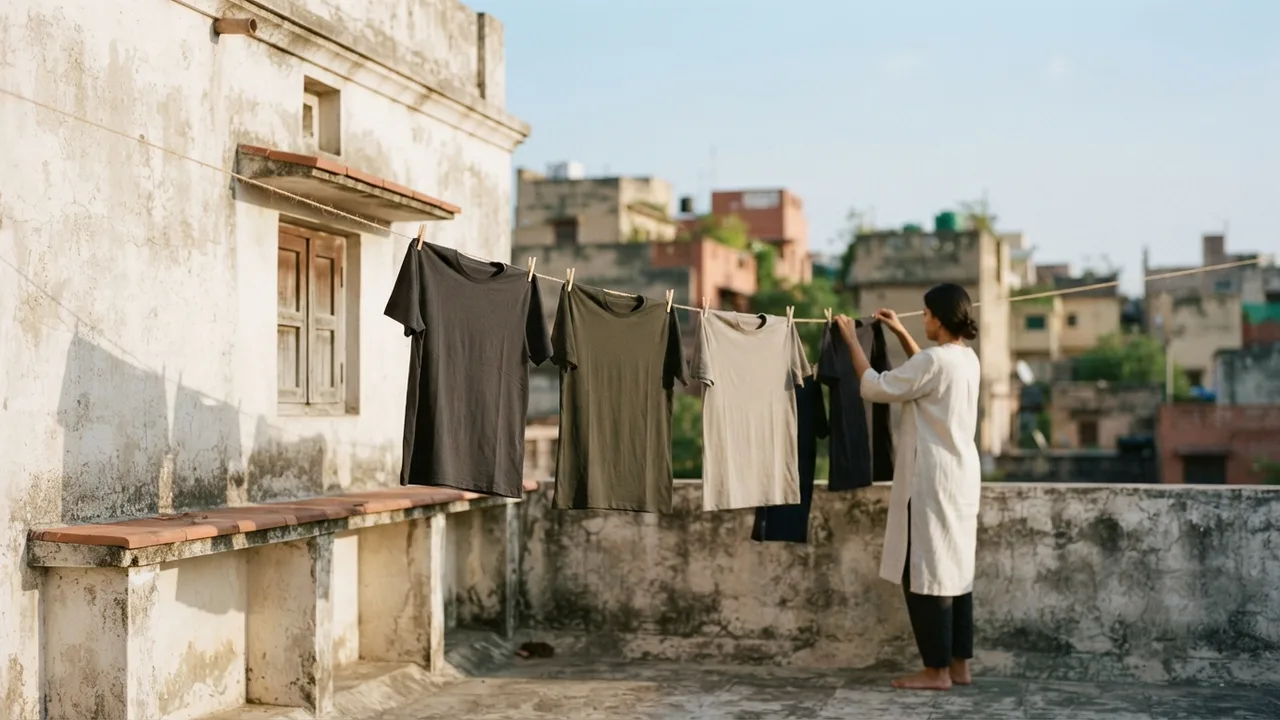
Sun-dry rather than machine-dry wherever possible during this reset. UV light kills the bacteria causing the smell in a way that indoor drying alone cannot, and after a monsoon of forced indoor drying, this is the first real chance most Indian households get to use direct sun on their laundry again.
Step three: check for colour damage and fading
Humidity accelerates dye breakdown in a way most people do not associate with monsoon specifically, they blame it on washing frequency instead. But four months of damp storage plus more frequent washing, since sweat and humidity mean clothes get worn less between washes, adds up to real fading by the time the season ends.
Check dark tees and kurtas for uneven fading, particularly along fold lines and at the collar, where moisture sits longest in storage. Our piece on why t-shirt colours fade explains the actual mechanism, UV exposure and repeated wash cycles both break down dye molecules, and monsoon storage conditions make both worse than usual.
If a garment has faded unevenly rather than uniformly, it is usually beyond saving with home fixes, and this is the point to retire it rather than keep wearing something that looks patchy in daylight. White garments deserve special attention here.
Check for the early yellow tinge that comes from trapped moisture and body oils sitting against fabric for extended periods, covered in more depth in our guide on why white t-shirts turn yellow. Catching this early, with a proper whitening soak, saves garments that would otherwise be unwearable by December.
Step four: elastic, seams, and structural checks
Humidity does not just affect colour and smell, it also degrades elastic and weakens stitching over months of damp storage. This is the step most people skip entirely, and it is the one that determines whether your innerwear, waistbands, and fitted garments still fit properly come winter.
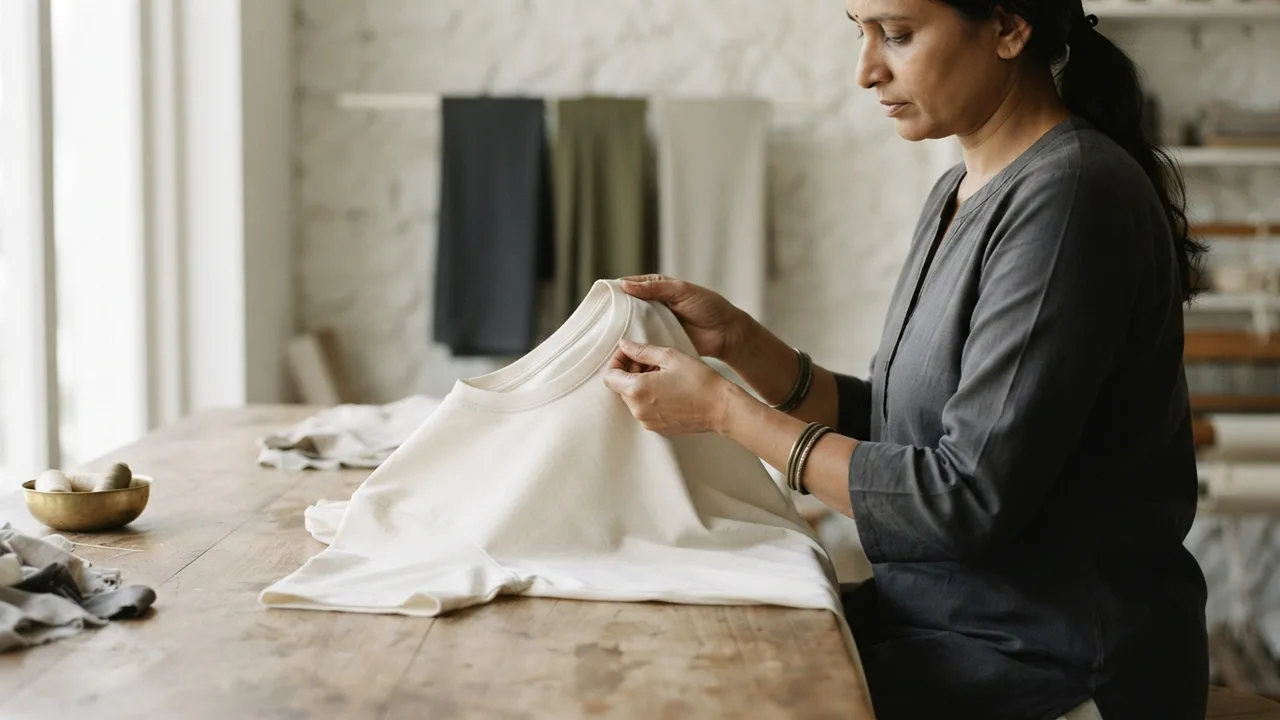
Stretch the waistbands on anything elastic-dependent and check for slackness that was not there in June. Examine seams on frequently worn monsoon pieces, tees, casual shirts, for any looseness or fraying, since damp fabric under repeated wear stresses stitching faster than dry fabric does.
Our guide on tshirt twisting after wash covers a related structural issue, how wash and dry habits distort a garment's shape over time, and the post-monsoon reset is exactly the moment to catch this before it becomes permanent.
Step five: the keep, repair, retire decision
Once everything is inspected, sort into three honest piles rather than defaulting everything back into the wardrobe. This is the step that actually resets the wardrobe rather than just cleaning it.
| Condition | Action | Why |
|---|---|---|
| Clean, no smell, no fade | Keep, fold, and return | No damage, ready for the dry season |
| Musty smell, treatable | Vinegar or baking soda soak, then sun-dry | Bacteria embedded, salvageable with the right wash |
| Uneven fade or stiffness | Repair if minor, otherwise retire | Dye and fibre damage, cosmetic issues will not reverse |
| Elastic slack, seams fraying | Retire or repurpose as loungewear | Structural damage affects fit and function permanently |
| No smell but unworn all season | Keep only if it still earns wardrobe space | Question whether you actually reach for it |
That last row matters more than people expect. If something sat in the cupboard through an entire monsoon without getting worn once, the post-monsoon reset is the honest moment to ask whether it deserves the space at all, rather than automatically re-folding it back in.
Our piece on tees you never wear has the fuller framework for making that call without sentimentality getting in the way.
Step six: rebuild for the dry season ahead
Once the damaged and unworn pieces are out, use the reset as a chance to actually rebuild toward what you will wear through the comfortable, dry months from November through February. This is generally the most wearable stretch of the Indian calendar, cool mornings, warm afternoons, no humidity fighting your fabric choices.
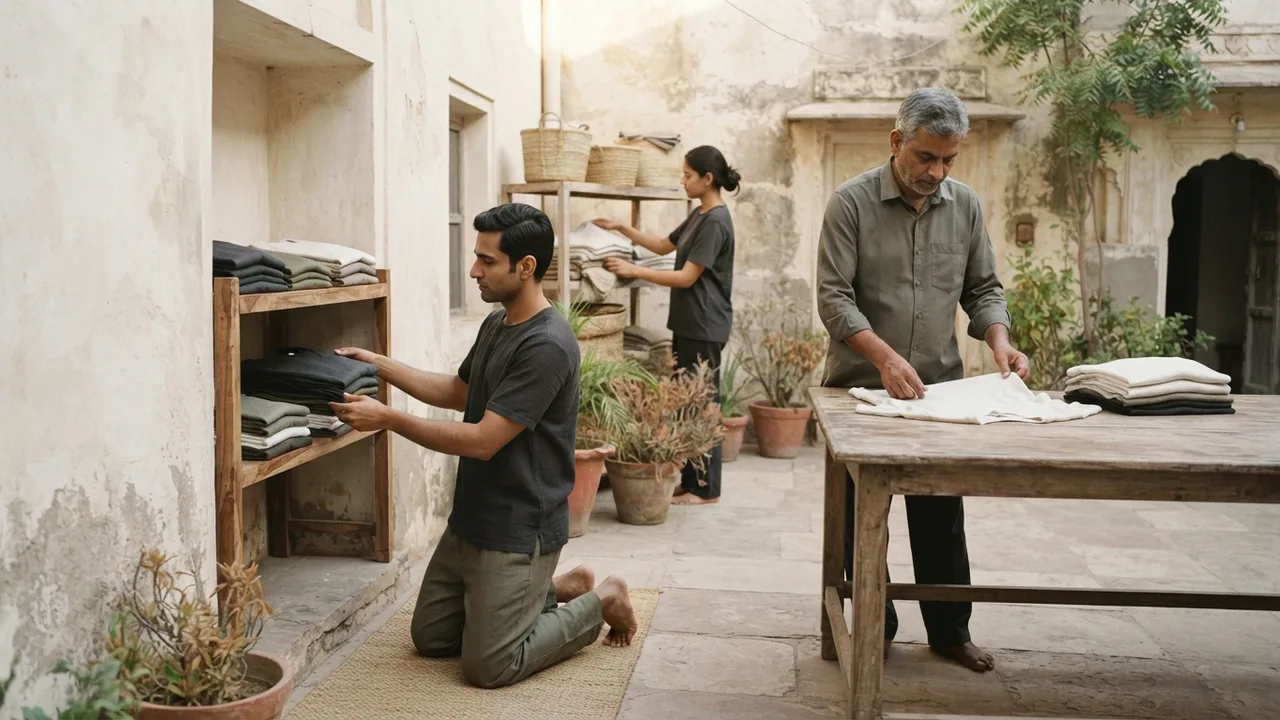
A few well-made round-neck tees in versatile, season-spanning colours are worth prioritising here, since the dry season is when a good cotton tee actually gets to perform the way it is meant to, without fighting 90 percent humidity every single day. Our buy less, wear more piece covers the broader logic of using a seasonal reset to replace volume with quality rather than simply restocking what was lost.
Check that whatever you are keeping or adding still fits the way you want. Post-monsoon is also, conveniently, when most people notice fit issues most clearly, since the season's forced layering and looser monsoon clothing can mask small changes that show up again once you are back in fitted basics. Our t-shirt fit guide is worth a re-read at this exact point in the year.
The care routine going forward
Once the reset is done, a small monthly habit prevents the same accumulation from happening again next monsoon. Air out the wardrobe fully at least once during the dry season, even briefly, and store silica gel packs year-round rather than only reaching for them once humidity is already a problem.
Our washing guide covers the ongoing care routine that keeps garments in good shape between seasonal resets, so next October's version of this checklist is a much shorter list.
Timing the reset to your city
!Minimalist editorial photo illustrating our [washing guide covers the ongoing care routine that keeps garments in good shape between seasonal resets, so next october's version of this checklist is a much shorter list., muted neutral tones, soft natural light, premium plain t-shirt context](/images/blog/post-monsoon-wardrobe-reset/inline-3.webp)
The exact window for this reset shifts depending on where you live, since monsoon does not end on the same date across India. Mumbai and the western coast typically see the rains taper off by late September, Delhi and the north by early to mid-October, and parts of the south, particularly Chennai and Tamil Nadu, can see a second wet spell from the northeast monsoon running into November and December.
Doing the reset too early, while intermittent rain is still likely, risks storing freshly cleaned clothes back into a cupboard that will get humid again within days. Wait for a genuinely settled dry stretch, usually signalled by consistently lower humidity readings and fewer scattered showers over a week or more, before committing to the full inventory pull described above.
If your city has a second wet spell later in the year, plan for a lighter follow-up check in November or December rather than assuming the single September or October reset covers the whole season. This is particularly relevant for anyone in Chennai, Puducherry, or coastal Andhra Pradesh, where the northeast monsoon can undo an early reset just as effectively as the main monsoon did.
Footwear and accessories need the same reset
Clothes are not the only thing that suffers through monsoon storage. Leather shoes, bags, and belts left unused in a humid cupboard for months develop their own version of the mildew and fading problems covered above, often worse, since leather holds moisture differently than cotton.
Wipe down leather goods with a dry cloth and check for any white or green mould spotting before the dry season, treating affected areas with a proper leather cleaner rather than water, which can worsen the damage. Canvas shoes and sneakers benefit from the same sun-drying approach as clothing, a few hours of direct light kills the bacteria responsible for that persistent shoe smell that monsoon storage tends to lock in.
Doing this alongside the clothing reset, rather than as a separate task weeks later, means your entire wardrobe, not just the garments, is genuinely ready for the months ahead.
The takeaway
A post-monsoon reset is not optional maintenance, it is the one moment each year where hidden humidity damage becomes visible enough to actually fix. Pull everything out, treat what can be saved, retire what cannot, and use the dry season ahead as the reward for doing the work properly.
Do this once, properly, in early autumn, and the wardrobe you build through winter will actually earn its keep instead of quietly carrying monsoon damage you never noticed.
Boring Label
Wear the point of the article.
One honest tee. Heavyweight combed cotton, a collar that holds, a fit that actually fits. No logo, no noise.
Shop the round-neck teeFree shipping across India · Easy returns
Keep reading
Monsoon Clothing: What to Wear in the Rains
The monsoon punishes the wrong fabrics. Dress for fast-drying and you stay comfortable through it.
Why Your T-Shirt Still Smells After Washing
It looks clean but smells sour the moment it warms up. The real reason is the fabric, not your laundry routine.
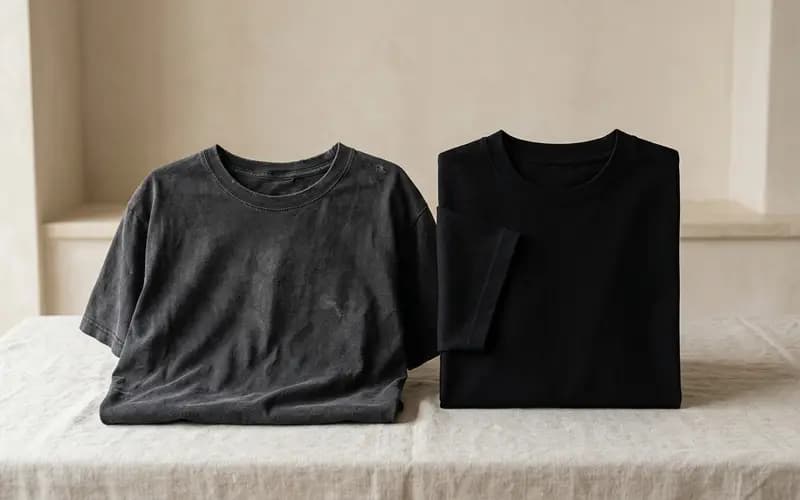
Why T-Shirt Colours Fade (and How to Keep Black Black)
Fade is not bad luck. It is dye chemistry meeting sunlight, heat and your washing machine - and most of it is in your control.
Stay in the loop
New writing, no noise
Occasional notes on fit, fabric, and dressing simply well. No spam, unsubscribe anytime.
Subscribe