Fabric
Why thread count means nothing for t-shirts
Thread count works for bedsheets and shirts, not knit t-shirts. GSM, staple length, and spinning method are the numbers that actually predict quality.

A bedsheet number that migrated to the wrong garment
Thread count sells bedsheets. Somewhere along the way, it started showing up in t-shirt marketing too, as though a higher number always means better quality, exactly like it does with cotton sheets.
It does not work that way for a knit t-shirt, and the reason is a basic construction difference that most shoppers never get explained clearly. This piece covers why thread count is close to meaningless for t-shirts specifically, and which numbers you should actually be checking instead.
If you have read our GSM guide, you already understand the metric that thread count gets confused with. This piece exists to draw a hard line between the two, because conflating them leads to genuinely bad buying decisions.
Why thread count exists as a metric at all
Thread count measures the number of horizontal and vertical threads woven into one square inch of fabric. It was developed for and makes sense on woven fabrics, the kind used in bedsheets, dress shirts, and formal trousers, where threads run in two perpendicular directions, called warp and weft, interlocking at right angles.
In a tightly woven fabric, a higher thread count generally does correlate with a finer, denser weave, which can mean a smoother hand feel and, up to a point, better durability. This is a real and useful relationship for woven fabric.
The critical detail is that this entire framework assumes a woven structure. And a t-shirt is not woven.
T-shirts are knit, and knit fabric works differently
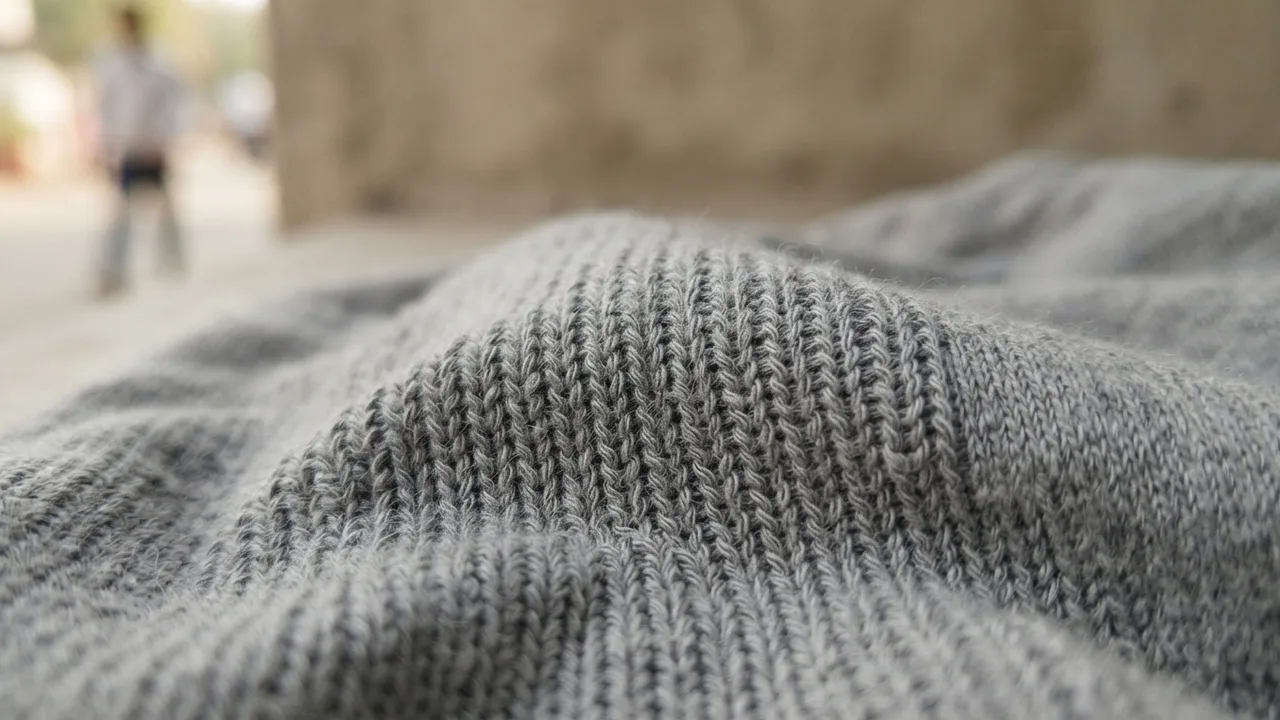
A t-shirt is made from knit fabric, typically single jersey or interlock knit, constructed from a single continuous thread looped through itself repeatedly, the same basic principle as a hand-knitted sweater scaled up to industrial speed. There is no warp and weft grid to count.
Because there is no perpendicular thread structure, the thread count measurement simply does not apply in any meaningful way to a t-shirt's fabric. Any thread count figure printed on a t-shirt tag is, at best, a repurposed or approximated number carried over from woven fabric conventions, and at worst, a number invented to sound technical.
Knit fabric gets its stretch, its softness, and its drape from the loop structure itself, not from thread density in the woven sense. This is also why a t-shirt stretches when you pull it and a dress shirt does not, a structural difference, not a quality difference.
What actually determines t-shirt quality instead
If thread count is not the right number, what should you check? Four metrics actually correlate with how a t-shirt performs and lasts.
GSM (grams per square metre). This measures fabric weight and density, and it is the closest legitimate equivalent to thread count for a knit garment, though it measures something related but distinct. Our full GSM guide explains the practical weight ranges and what each one means for fit and feel.
Yarn count and staple length. This measures the fineness and length of the individual cotton fibres spun into yarn before knitting. Longer staple fibres, like those in combed or Supima cotton, produce stronger, smoother, less pilling-prone yarn regardless of the final fabric weight. Our comparison of combed cotton versus carded cotton and Supima versus regular cotton both dig into why fibre length matters more than almost any other single variable.
Knit density and stitch construction. This measures how tightly the loops are formed during knitting, independent of the fabric's overall weight. A dense, well-constructed knit resists stretching out of shape and holds its structure through repeated wear far better than a loosely knit fabric of the same GSM.
Ring-spun versus open-end spinning. This measures how the yarn itself was spun before knitting. Ring-spun yarn is stronger and smoother than open-end spun yarn of the same fibre, and it is one of the biggest hidden quality signals brands rarely put on the front of the tag.
Thread count versus the metrics that actually matter
| Metric | Applies to t-shirts | What it actually tells you |
|---|---|---|
| Thread count | No, woven-fabric concept | Little to nothing on a knit garment |
| GSM | Yes | Fabric weight and density |
| Staple length / yarn count | Yes | Fibre fineness, strength, pilling resistance |
| Knit density | Yes | Shape retention and stretch recovery |
| Ring-spun vs open-end | Yes | Yarn strength and surface smoothness |
If a t-shirt brand leads its marketing with a thread count figure, that is a signal worth noticing, not because the brand is necessarily dishonest, but because it suggests the marketing was written without a clear understanding of knit versus woven construction. Better brands lead with GSM, yarn type, and spinning method instead, because those are the numbers that actually predict how the tee behaves.
Where the confusion causes real buying mistakes
The practical harm shows up in two ways. First, shoppers sometimes pass over a genuinely well-made t-shirt because it does not list a thread count, assuming the absence signals lower quality, when in fact the absence signals the brand knows the metric does not apply.

Second, and more costly, some listings print an inflated or fabricated thread count specifically because shoppers respond to it, on a garment where the actual yarn and knit quality is mediocre. This is a form of the same problem covered in our guide to spotting a fake premium t-shirt, where an impressive-sounding number substitutes for genuine construction quality.
The fix is simple. Ignore thread count entirely on knit garments, and check GSM, staple length, and spinning method instead, which is exactly the label information a well-made round-neck tee should list clearly rather than leaning on a borrowed bedsheet metric.
The takeaway
Thread count is a real, useful number, just for the wrong garment category. On sheets, dress shirts, and other woven fabrics, it tells you something genuine about weave density.
On a knit t-shirt, it is either a repurposed approximation or an invented figure, and neither deserves to influence your purchase decision. Next time a t-shirt tag leads with thread count, treat it as a small red flag, and go looking for GSM, staple length, and spinning method instead. Those are the numbers that actually predict whether the tee in your hand will still look good after fifty washes.
Why the confusion persists in Indian retail specifically
Bedsheet and shirting retail in India has used thread count as a headline number for decades, well before knit t-shirts became a premium category of their own. That familiarity is exactly why the number migrated over, since shoppers already trusted it from a completely different product category.
Online marketplaces compound the problem, since a listing algorithm rewards keyword-dense titles, and "high thread count" reads as a searchable, trust-building phrase regardless of whether it technically applies to the garment. This is less often a deliberate deception and more often a copywriting habit carried over from adjacent categories, but the effect on a shopper's decision is the same either way.
The fix on the buyer's side is straightforward once you know to look past it. Treat any number on a listing as a claim to verify, not a fact to accept, and prioritise the metrics that are structurally correct for the fabric you are actually buying.
A quick label-reading exercise

Next time you shop for a t-shirt online, try this two-minute exercise before adding anything to your cart. Scroll past the marketing copy at the top of the listing and go straight to the specifications section.
Look specifically for GSM, cotton type such as combed, carded, or Supima, and spinning method such as ring-spun. If the listing has all three clearly stated, that is generally a strong signal the brand understands and controls its own fabric quality.
If the listing instead leads with thread count, vague phrases like "premium fabric," or no specification section at all, treat that as a prompt to dig further, either by checking the brand's other product pages for consistency or by reading our guide to reading t-shirt label jargon before you commit. A well-made round-neck tee should be able to answer all three questions without hiding behind a borrowed metric, and so should anything else you are considering.
One number, correctly used, beats five used incorrectly
The broader lesson here extends past thread count specifically. A single accurate, relevant metric, whether that is GSM, staple length, or wash-test durability, tells you more than a handful of impressive-sounding numbers borrowed from the wrong product category.
Learn which numbers actually apply to the garment type you are buying, and the rest of the label reading gets much easier, on t-shirts and everywhere else fabric shopping takes you.
What about non-cotton knits, does thread count apply there either
The same logic holds for any knit fabric, regardless of fibre content. A modal t-shirt, a viscose blend, or a polyester-cotton athletic tee are all constructed using loop-based knit structures, not woven grids, so thread count is equally inapplicable across the board.
Our comparison of modal versus cotton versus poly blends is a useful companion read here, since it covers the metrics that do matter for each of those fibre types, and none of them is thread count. The construction method, knit rather than woven, is what determines whether the metric applies, not the specific fibre used to make the yarn.
This is worth knowing because "thread count" claims occasionally show up on blended and synthetic knit tees too, not just pure cotton ones, riding on the same borrowed credibility from the bedsheet category. The rule stays consistent regardless of fibre: if it is knit, thread count is not the number to trust, full stop.
A brief note on woven cotton shirts, where the rule flips back
It is worth being precise here, since the goal is accuracy, not blanket suspicion of every number a brand prints. Formal shirts, most chinos, and any woven cotton garment genuinely are constructed with a warp and weft grid, and thread count is a legitimate, meaningful metric for those specific product categories.
If you are buying a formal shirt rather than a t-shirt, thread count claims deserve real consideration, generally in the 80 to 140 range for quality cotton shirting fabric, with diminishing practical returns above that range despite what some ultra-high thread count marketing implies. The distinction to hold onto is simple: woven garment, thread count applies and is worth checking; knit garment like a t-shirt, it does not, and GSM plus yarn quality take its place.
Boring Label
Wear the point of the article.
One honest tee. Heavyweight combed cotton, a collar that holds, a fit that actually fits. No logo, no noise.
Shop the round-neck teeFree shipping across India · Easy returns
Keep reading
T-Shirt GSM Guide: What the Number Really Means
GSM is the most quoted, least understood number on a tee. Here is what it actually predicts about quality.
Combed Cotton vs Carded: Why It Matters
One extra step removes the short fibres that make a tee fuzz, pill, and weaken. That step is combing.

T-Shirt Label Jargon Decoded: What Actually Matters
What pre-shrunk, bio-washed, GSM, single jersey and ring-spun really mean - and which terms are quality signals versus marketing.
Stay in the loop
New writing, no noise
Occasional notes on fit, fabric, and dressing simply well. No spam, unsubscribe anytime.
Subscribe