Seasonal
Layering tees in Indian winters: Delhi cold vs Mumbai cold
A city-by-city guide to choosing tee weight and layering order for Delhi's dry winter versus Mumbai's mild humid cold.

Delhi cold and Mumbai cold are not the same problem
Ask someone in Delhi and someone in Mumbai what "winter layering" means and you get two different answers. Delhi in January drops to 6-8 degrees at night with dry air and real chill.
Mumbai in January rarely dips below 18 degrees, and the humidity never fully leaves. Layering advice written for one breaks down completely in the other, which is why so much generic winter content feels useless once you actually try it in an Indian city.
The honest starting point is that India does not have one winter. It has a dry, cold north and a mild, humid coast, and your base layer needs to know which one it is dealing with.
This guide splits the two properly: what to wear under a jacket in Delhi's dry cold, what actually works in Mumbai's mild damp evenings, and how a plain tee does different jobs in each. For the reverse problem, our monsoon clothing guide covers what happens when the humidity comes back with rain attached.
Why dry cold and humid mild cold need different tees
Cold air holds almost no moisture, so in Delhi your skin and your sweat both dry fast even in a heavy jacket. The tee underneath has one job: trap a thin layer of warm air against your body without irritating skin that is already drier from the season.
A slightly heavier cotton, in the 180-220 GSM range, does this well. It has enough substance to hold warmth without feeling like a second jacket, and our GSM guide explains why that number matters more than most people realise when picking a base layer.
Mumbai's cold is a different animal entirely. Eighteen degrees with 60-70 percent humidity does not feel cold so much as pleasantly cool, and the real enemy is still moisture, not temperature.
A heavy tee in Mumbai in December will trap sweat the same way it would in October, just with a jacket added on top for no real thermal reason. The right base there is closer to a summer-weight tee, lighter and better ventilated, layered under something that adds style more than warmth.
This is the single biggest mistake people make moving between the two cities: they pack Delhi-weight cotton for a Mumbai winter and wonder why they are damp under a jacket that never needed to insulate anything.
The layering order that actually works
Layering is not just stacking clothes. It is choosing what each layer does and making sure no two layers fight over the same job.
Base layer: the tee against your skin
This layer manages moisture and comfort, nothing else. In Delhi, a mid-to-heavy cotton round-neck does this reliably; our round-neck tee sits in the weight range that holds warmth without bulk, which matters once you add a sweater on top and need the base to stay slim.
In Mumbai, keep this layer lighter and closer to what you would wear in October, because the jacket above it is doing the visual and light-warmth work, not the base.
Mid layer: the piece that actually keeps you warm
In Delhi this is a sweater, a light wool jumper, or a thicker overshirt, the layer that does the real insulating. In Mumbai this layer is often skipped entirely or replaced by a single light jacket, because there is rarely enough cold to justify true insulation.
Our layering basics piece covers how to choose a mid layer that adds warmth without adding bulk at the shoulders, which is the detail that separates a good layered look from a bulky one.
Outer layer: the one everyone sees
This is your jacket, coat, or shawl, chosen for both warmth and how it reads. In Delhi it needs to cut wind; in Mumbai it mostly needs to look right in cool evening air, because the wind chill barely exists on the coast.
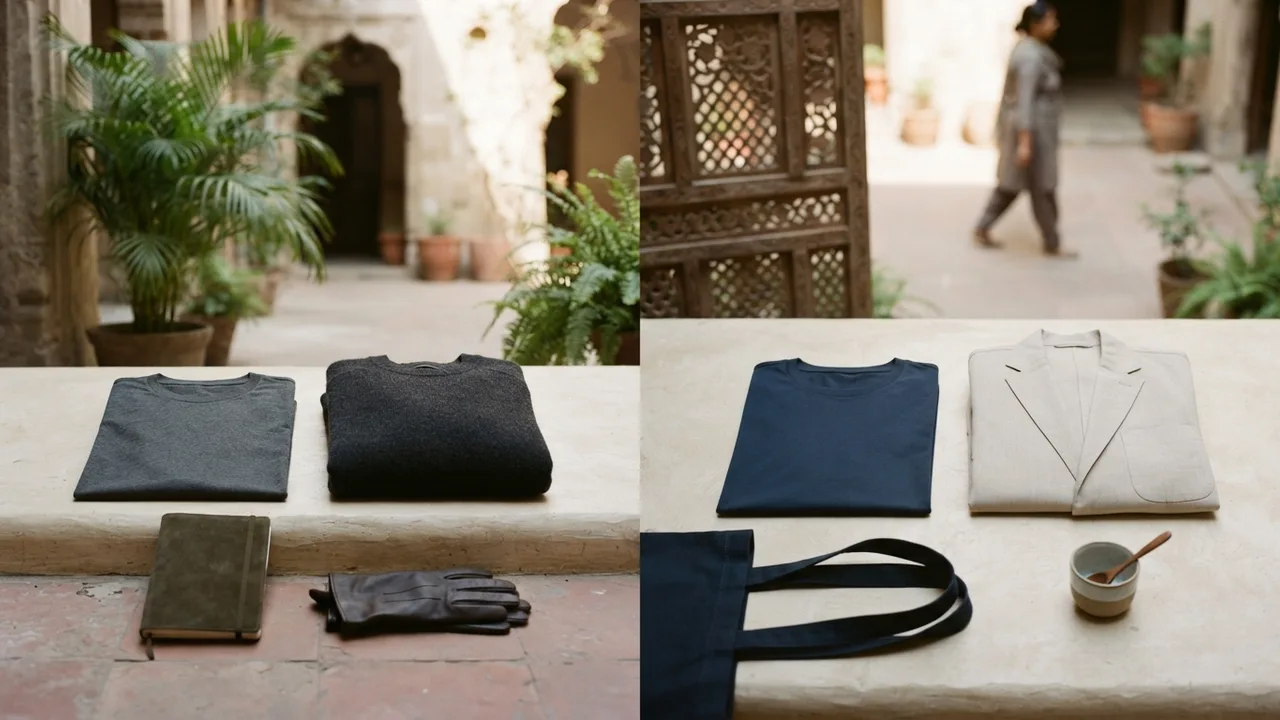
City-by-city comparison at a glance
Here is how the two climates actually differ, and what that means for your base layer choice.
| Factor | Delhi and north India winter | Mumbai and coastal winter |
|---|---|---|
| Typical night temperature | ✓ 6-10°C, real cold | ✗ 16-20°C, mild cool |
| Humidity | ✓ Low, air feels dry | ✗ Moderate to high, still humid |
| Best tee weight | 180-220 GSM, mid-heavy cotton | 140-180 GSM, light cotton |
| Mid layer need | ✓ Essential, wool or fleece | ✗ Optional, often skipped |
| Skin dryness risk | ✓ High, needs moisturising | ✗ Low, humidity protects skin |
| Wind factor | ✓ Significant, cuts through thin layers | ✗ Minimal, rarely an issue |
Cities like Bengaluru, Pune, and Hyderabad sit somewhere between the two, closer to Mumbai's mild pattern but with drier air and cooler mornings. If you live in one of those, lean toward the Mumbai weight but keep one heavier tee on hand for the occasional cold snap.
Colour choices change with the season too
Winter layering is also where colour logic shifts from summer rules. In hot months, dark colours absorb heat you do not want.
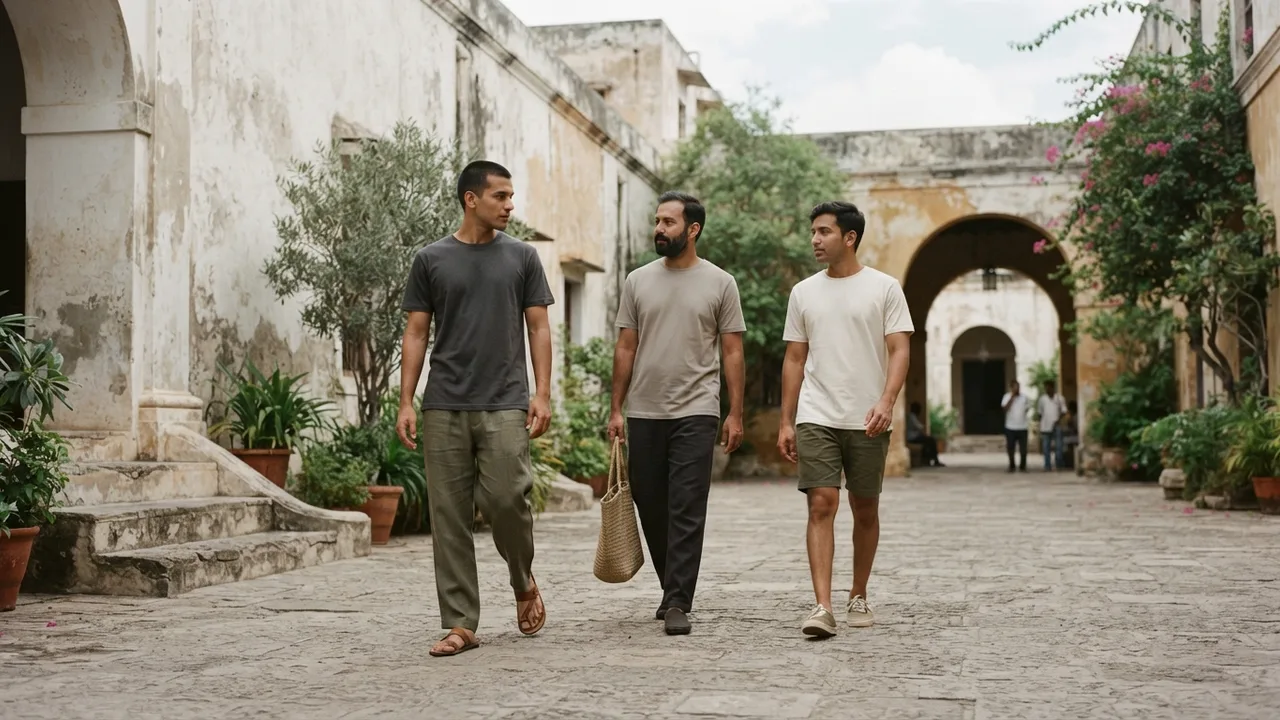
In winter, that same heat absorption becomes an asset, especially on sunny Delhi afternoons when a dark tee under an open jacket picks up warmth from direct sun. Charcoal, deep navy, and espresso brown all do double duty in winter: they hide the season's dust and pollution grime better than pale colours, and they read as more deliberate under layers than bright shades do.
Our essential t-shirt colours guide breaks down why a tight core of neutrals outperforms a wardrobe of trend colours, and winter layering is the season where that logic pays off most, because every one of those neutrals sits quietly under a sweater or jacket without clashing.
Fit matters more when you are stacking layers
A tee that fits well alone can feel wrong once you add two more layers on top of it. The base layer needs to sit close enough to the body that it does not bunch under a sweater, but not so tight that it restricts movement once you are wrapped in three pieces of clothing.
A regular, slightly fitted cut works best as a base layer for this reason; anything oversized adds bulk exactly where you do not want it once a jacket goes over the top. If you are unsure which cut you are currently wearing, our oversized versus regular fit comparison will help you sort your existing tees into base-layer-friendly and outer-layer-friendly piles before the cold sets in.
Caring for layered tees through a dry winter
Dry winter air is hard on both skin and cotton. Frequent washing in hot water strips natural oils from fibres already stressed by low humidity, which is part of why winter tees feel scratchier by February than they did in November.
Wash in cool or lukewarm water, skip the fabric softener that coats fibres and traps static, and let tees air dry fully before folding them into a layering rotation. Our full routine in how to wash t-shirts so they last longer covers the specifics, and most of the advice there applies even more directly once a tee is doing double duty as an invisible base layer for three months straight.
Static is the other winter-specific annoyance, mostly a Delhi and north India problem thanks to the dry air. A lightly damp cotton tee, dried away from direct heaters, holds far less static than one dried too fast near a room heater.
Building a small winter tee rotation
You do not need a different tee for every layering combination. Four to five tees, split by weight and colour, cover both a Delhi cold snap and a Mumbai mild evening if you choose them with intent.
Two mid-heavy tees in charcoal and navy for the coldest days and for anyone in the north. Two lighter tees in the same neutral family for Mumbai-style mild evenings or for layering under a jacket once winter eases into a warmer February.
One slightly warmer piece, whether that is a heavier cotton or a light wool-blend tee, for the handful of genuinely cold mornings almost every Indian city gets at least once a season. That is a complete winter base-layer wardrobe, and every piece earns its place across both climates rather than sitting unused for eight months of the year.
What changes if you travel between the two climates
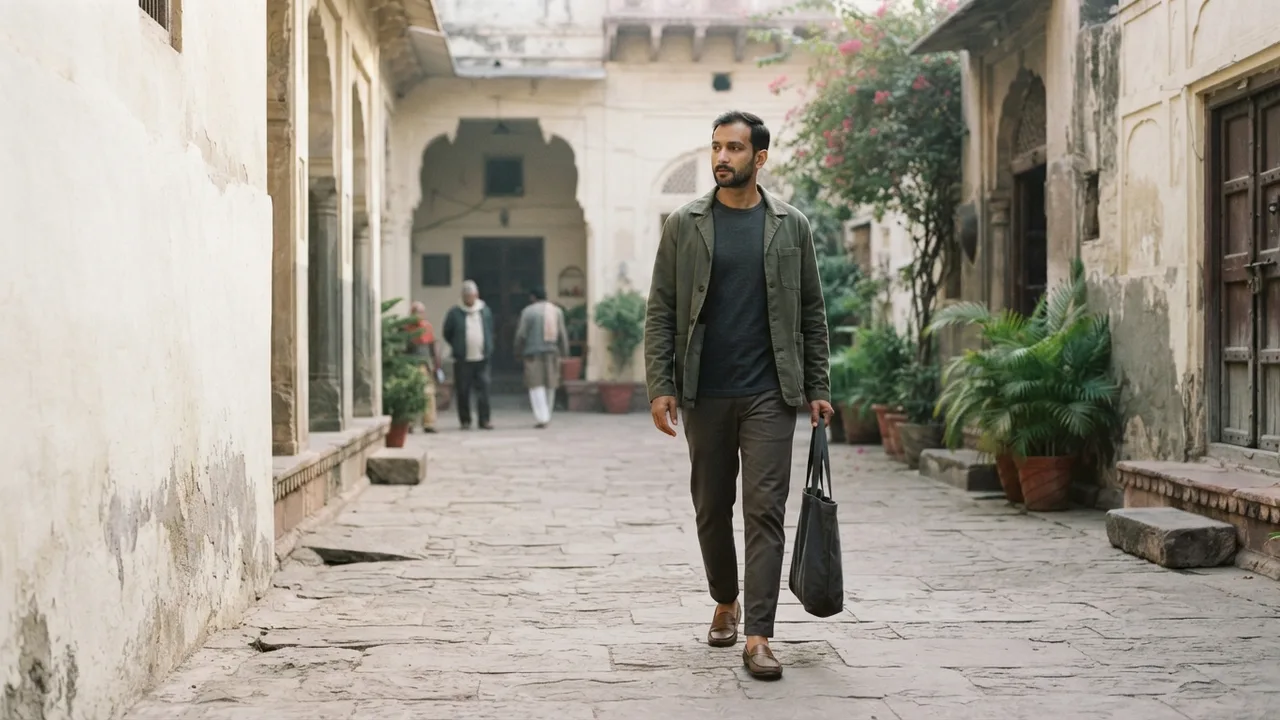
A growing number of people now split their year between a northern city and a coastal one, whether for work, family, or simply visiting relatives over the festive and wedding season that runs through the Indian winter. Packing for that kind of split trip means carrying both weights rather than committing to one.
The mistake to avoid is assuming your home city's winter logic applies everywhere you land. Someone flying from Delhi to spend New Year's in Goa or Kochi will overheat fast in a heavy jacket built for north Indian dry cold, because coastal winter evenings rarely justify true insulation even after dark.
The reverse trip is just as common a mistake. Someone flying from Mumbai to Delhi for a winter wedding season often underestimates how sharply the temperature drops after sunset, arriving with only light layers built for coastal mild cold and no mid layer to add once the evening chill sets in.
The fix is simple once you know to plan for it: pack one mid-heavy tee and one light tee regardless of where you are travelling, plus a compact mid layer you can leave in the bag if it turns out you do not need it. That single extra tee weighs almost nothing in a suitcase and solves the entire mismatch problem in either direction.
Kids, elders, and layering for the whole family
Family winter travel across Indian cities adds another layer of complexity, because children and elderly family members regulate temperature differently than a healthy adult does. Children tend to run warmer and overheat faster in layered outfits, so a lighter base tee under one mid layer usually works better for them than the adult-weight combination, even in genuinely cold Delhi mornings.
Elderly family members often need the opposite adjustment, feeling cold at temperatures a younger adult would find comfortable, which means erring toward the heavier end of the GSM range covered earlier and adding a mid layer sooner rather than later in the day. If you are packing or shopping for a multi-generation winter trip, buy the base tees in one consistent, easy neutral like navy or charcoal across the family, since it simplifies both packing and the inevitable laundry sorting that a shared hotel room or family home involves.
The takeaway: layer for your city, not for winter in general
Generic winter advice assumes one climate, and India refuses to give it one. Delhi's dry cold wants weight and insulation; Mumbai's mild humidity wants breathability with a jacket doing the visual work.
Pick your base tee weight based on where you actually live, not on what a global style guide assumes winter looks like. Get that one decision right, and the rest of your winter layering, the sweaters, the jackets, the colours, all fall into place without a second thought.
Boring Label
Wear the point of the article.
One honest tee. Heavyweight combed cotton, a collar that holds, a fit that actually fits. No logo, no noise.
Shop the round-neck teeFree shipping across India · Easy returns
Keep reading
Layering Basics: Build Outfits That Work
Layering is the multiplier on a small wardrobe. Get three rules right and a tee becomes ten outfits.
T-Shirt GSM Guide: What the Number Really Means
GSM is the most quoted, least understood number on a tee. Here is what it actually predicts about quality.

Monsoon Clothing: What to Wear in the Rains
The monsoon punishes the wrong fabrics. Dress for fast-drying and you stay comfortable through it.
Stay in the loop
New writing, no noise
Occasional notes on fit, fabric, and dressing simply well. No spam, unsubscribe anytime.
Subscribe