Styling
The full-sleeve tee in India: underrated or impractical?
Full-sleeve tees solve real problems, sun exposure and AC swings, but only in the right fabric and season.
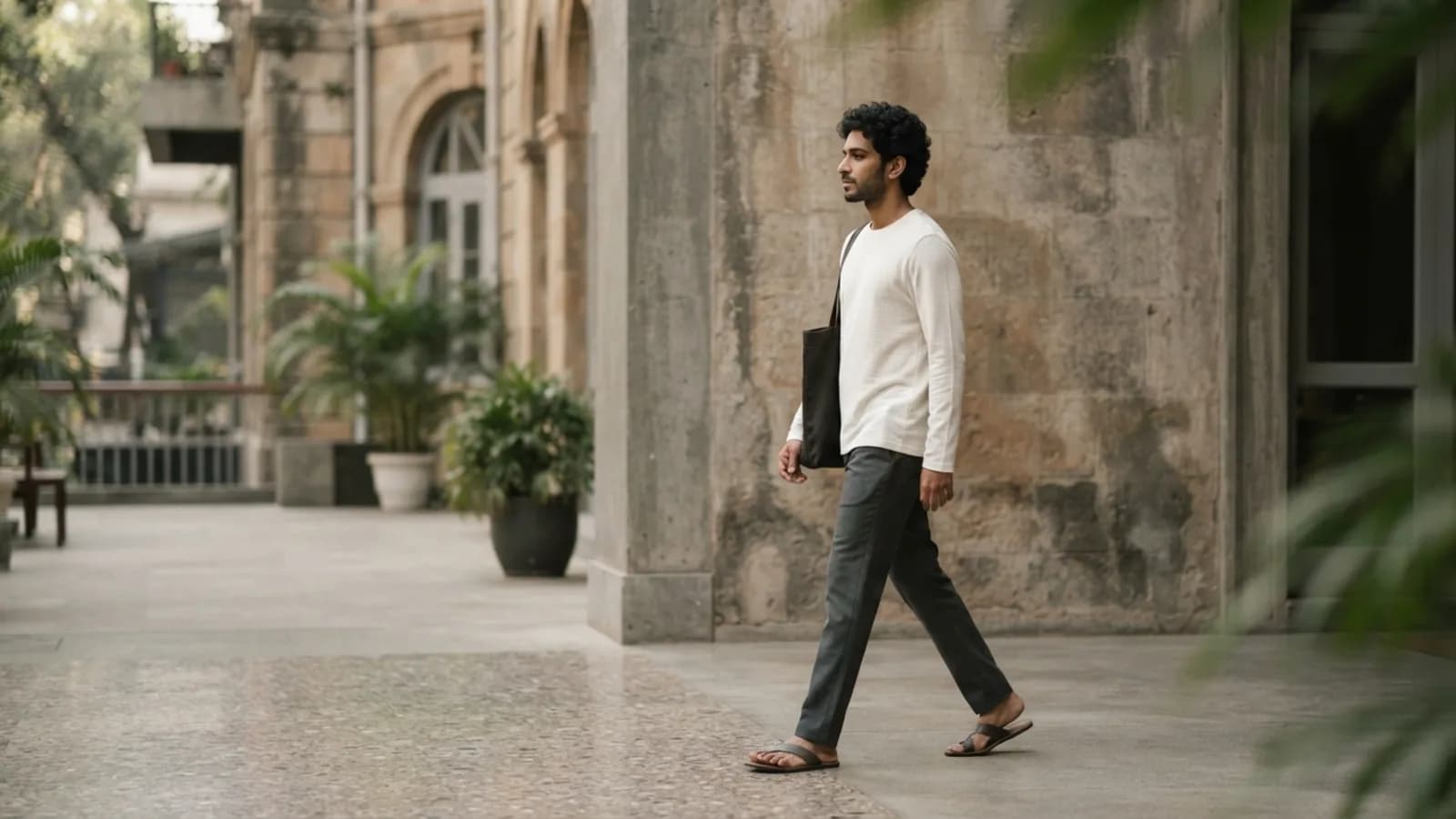
The full-sleeve tee is more practical than it gets credit for
Full-sleeve t-shirts have a reputation problem in India. They get dismissed as too warm, too formal, or simply unnecessary in a country that is hot most of the year.
That reputation is only half deserved. In the right fabric and the right season, a full-sleeve tee solves problems a short-sleeve tee cannot, sun protection, air-conditioning swings, and a slightly more finished look without adding a whole extra layer.
The real question is not whether full-sleeve tees work in India. It is when, and in what fabric, which is the same question that drives most of our fabric-first thinking, including the piece on breathable fabric for summer.
Where full-sleeve genuinely wins
The strongest case for a full-sleeve tee in India is sun exposure. Commuting on a bike, walking to the metro, or any regular outdoor stretch exposes your forearms to direct sun that a short sleeve leaves unprotected.
A light, breathable full-sleeve tee blocks a meaningful amount of that exposure without needing sunscreen reapplied every few hours. This matters more than most people realise in a country where UV index regularly crosses eight or nine for months at a stretch.
The second strong case is the air-conditioning swing that defines most Indian office life. You step from 40 degree heat outside into an over-cooled office, and back out again several times a day.
A full-sleeve tee, especially in a mid-weight cotton, handles that swing better than a short sleeve, because you are not reaching for a jacket indoors and then sweating in it the moment you step out.
Where full-sleeve genuinely struggles
Peak summer, roughly April through June across most of India, is where full-sleeve tees earn their impractical reputation honestly. In 42 degree heat with no air conditioning, extra fabric on your arms is extra heat retention, full stop.
This is not a fabric problem you can engineer entirely away, though a very light, open-weave cotton narrows the gap. If you live somewhere that hits peak Indian summer temperatures without much AC relief, short sleeves remain the more sensible daily default for that window.
The other real weakness is layering bulk. A full-sleeve tee under a shirt or jacket adds visible bulk at the wrist and shoulder that a short-sleeve tee never creates, which matters if you are layering for smart casual office looks.
The fabric variable that decides everything
A heavy, dense full-sleeve tee in India is a mistake almost everywhere except peak winter in the north. The same fabric logic from our GSM guide applies here with extra weight, since you are covering more skin with the same material.
A lighter cotton, ideally in the 160 to 190 GSM range with an open, breathable knit, keeps a full-sleeve tee wearable through most of the year outside of peak summer. Combed cotton in this weight range breathes noticeably better than a thicker, tighter knit of the identical fibre.
Our comparison of combed cotton versus carded explains why the finishing process, not just the weight number, changes how a fabric feels against skin over a long, humid day.
| Season | Full-sleeve verdict | Best fabric weight |
|---|---|---|
| Peak summer (Apr-Jun) | Avoid for most regions | N/A, short sleeve preferred |
| Monsoon | Good, with quick-dry fabric | 150-180 GSM, light blend |
| Winter (north India) | ✓ Excellent | 200 GSM plus, denser knit |
| Mild months (Oct-Feb south) | ✓ Good | 170-200 GSM cotton |
| AC-heavy office days | ✓ Good year-round | 170-190 GSM cotton |
Styling a full-sleeve tee so it does not look like a base layer
The biggest styling mistake with full-sleeve tees is treating them as an undergarment rather than a standalone piece. Push the sleeves up to just below the elbow, and a full-sleeve tee instantly reads as a deliberate style choice instead of something you forgot to take a jacket off over.
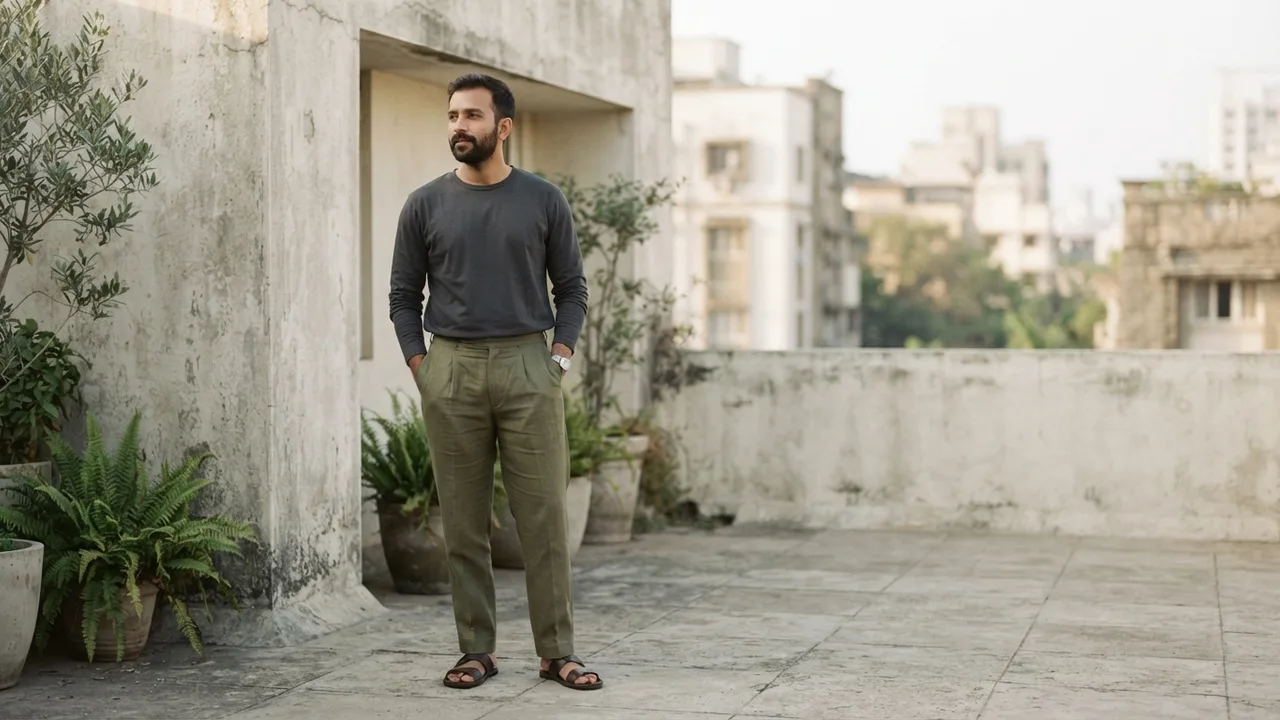
This half-rolled sleeve is one of the simplest ways to add texture and intention to an otherwise plain outfit, similar to the layering moves in layering basics. Pair it with the same neutral colour discipline covered in essential t-shirt colours, since a busy pattern on a full-sleeve tee reads far busier than the same pattern on a short sleeve, simply because there is more fabric carrying it.
A well-fitted full-sleeve round-neck tee in a mid-weight cotton works cleanly with chinos for office-casual days and with denim for weekends, without needing a jacket over it in most AC-cooled indoor settings.
Regional differences worth knowing
North India's sharp winter makes full-sleeve tees a genuinely useful daily piece for four to five months a year, layered under a jacket or worn alone indoors. South India's milder, more consistent temperature range makes full-sleeve tees more of an AC-office and evening piece than an all-day default.
Coastal cities with high humidity, Mumbai, Chennai, Kolkata, need the lightest, most breathable full-sleeve fabric of anywhere in the country, since heat and humidity compound each other. If you live in a coastal city, treat GSM as a harder ceiling than someone in drier Delhi or Bengaluru would.
Care differs slightly from short-sleeve tees
More fabric surface means more area to trap sweat and odour, particularly at the cuffs and underarms where full-sleeve tees see the most friction. Washing slightly more often than you would a short-sleeve tee in the same rotation is a reasonable adjustment, not overkill.
Our guide on how to wash t-shirts so they last longer covers the cold-water, gentle-cycle basics that apply here, with one addition specific to full sleeves: turn the cuffs right-side out before washing, since they trap the most grime and benefit from direct water contact rather than being folded inward.
The honest verdict
A full-sleeve tee is not a year-round Indian staple the way a short-sleeve tee is, but dismissing it entirely ignores real seasonal and situational advantages, sun protection, AC-swing comfort, and a slightly more finished look with zero extra layers. Owning two or three in a light, breathable cotton, reserved for winter months, heavy AC days and sun-exposed commutes, is a more useful addition to a minimal wardrobe than most people assume before they actually try it.
Underrated, not impractical. That is the honest answer once you match the fabric to the season instead of judging the sleeve length alone.
The sun-protection case, backed by actual behaviour
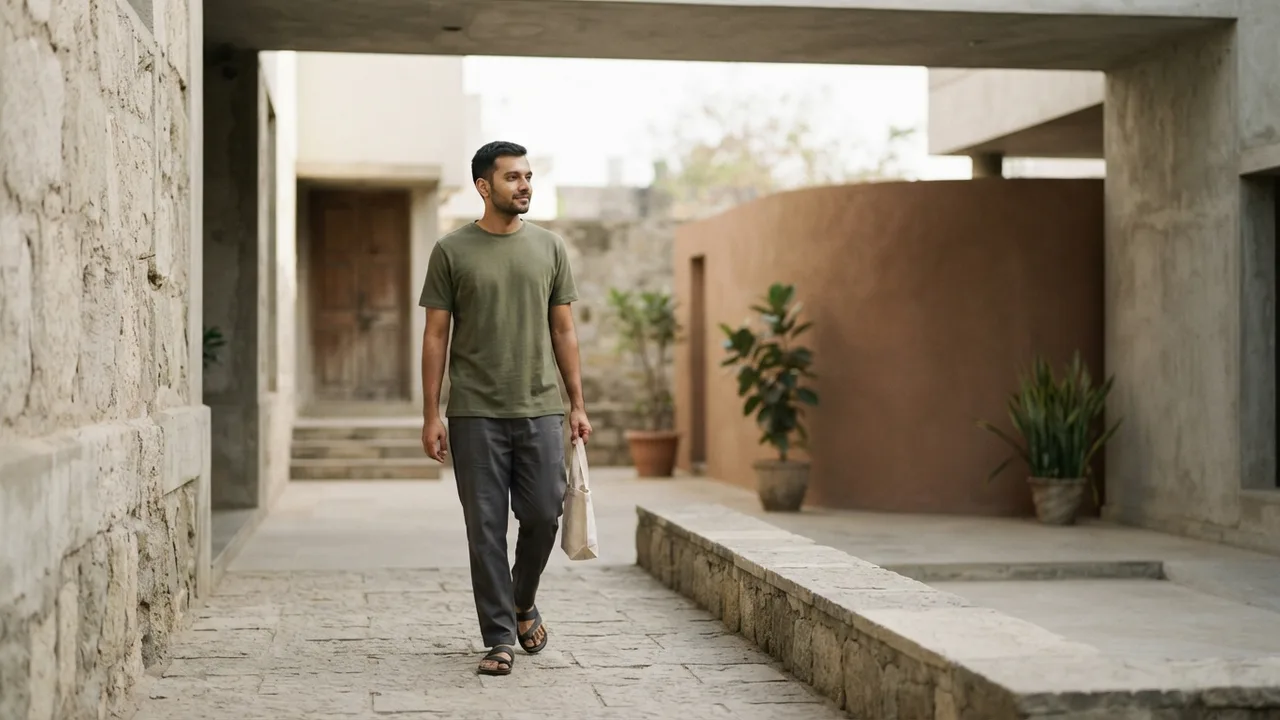
Anyone who commutes by bike or scooter in India already knows the arms take the worst of the sun, and most riders instinctively reach for a jacket or arm sleeves to cover up rather than accept the exposure. A well-fitted full-sleeve tee in a light cotton does the same job with less bulk and less heat retention than a riding jacket, since it is a single thin layer rather than a padded one.
This is a genuinely practical, not purely aesthetic, reason full-sleeve tees deserve more consideration in an Indian wardrobe than they typically get. If you already own arm sleeves for commuting, a good full-sleeve tee can often replace them entirely for shorter rides.
Full-sleeve tees and skin tone
The same warm-versus-cool logic that applies to short-sleeve tees applies here, but the effect is slightly more pronounced because a full-sleeve tee covers more skin, which means more surface area reflecting colour back toward the face and neck. Warmer undertones generally do well in olive, rust, warm navy and camel full-sleeve tees.
Cooler undertones tend to suit charcoal, true navy and black more naturally. Our t-shirt colours for Indian skin tones piece covers this mapping in detail, and it is worth a look before committing to a full-sleeve colour, since a poor match is more visible across more fabric than it would be on a short sleeve.
Full-sleeve as a travel piece
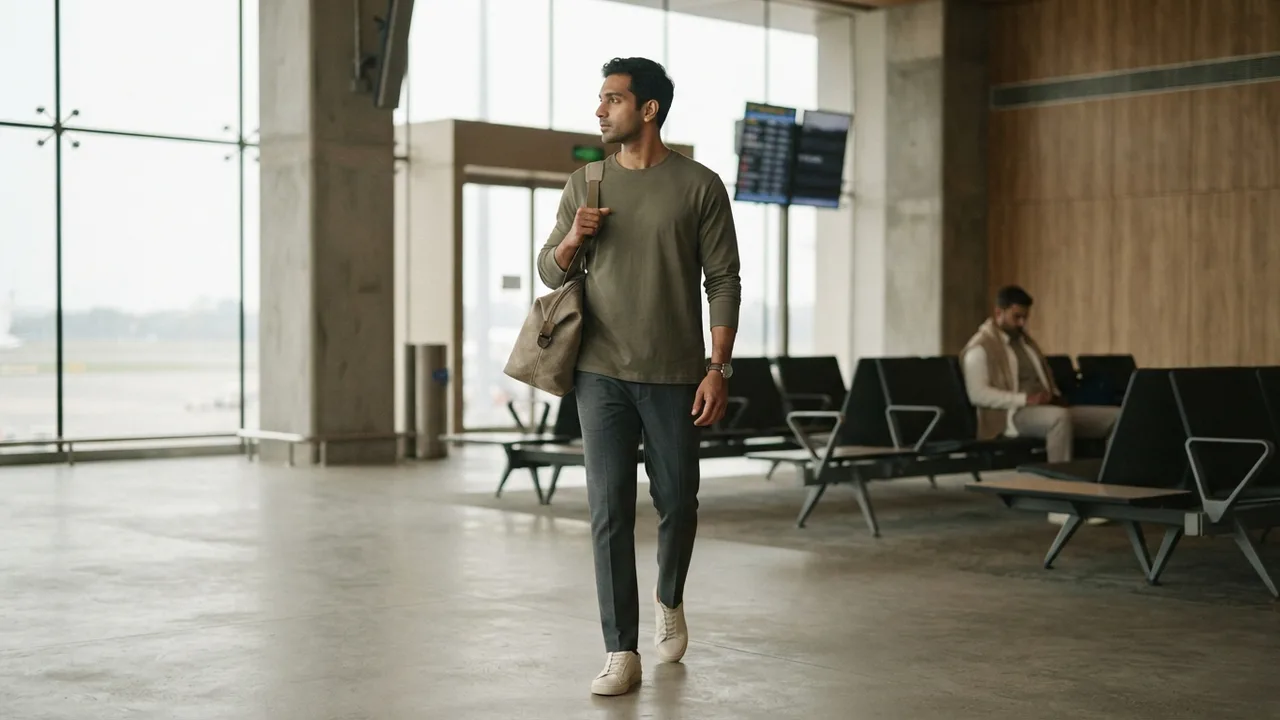
A full-sleeve tee earns a specific place in a travel wardrobe that short sleeves cannot fill as well. Flights are cold, airport air conditioning is aggressive, and destinations often swing between climate extremes within a single trip.
A light full-sleeve tee, worn alone or layered under a jacket, adapts to more of that range than a short sleeve plus a separate layer would, while taking up less space in a bag. This fits the same efficiency logic behind minimalist travel wardrobe planning, where fewer, more adaptable pieces beat a larger, more specialised collection.
A realistic full-sleeve rotation for most Indian wardrobes
For someone living in a typical Indian city with a mix of AC office days, occasional outdoor commuting and a real but not extreme winter, three full-sleeve tees is a sensible starting point rather than a full wardrobe replacement. One in a darker neutral for office and evening wear, one in a lighter tone for weekend and travel use, and one slightly heavier piece reserved for the coolest months.
This mirrors the disciplined, small-rotation thinking behind how many t-shirts you actually need, just applied to the full-sleeve category specifically rather than the wardrobe as a whole. Three well-chosen pieces, worn on the days they actually make sense, will get more genuine use than a drawer full of full-sleeve tees bought on impulse and worn twice.
Fit considerations specific to full-sleeve tees
Sleeve fit deserves more attention than most buyers give it, since a full-sleeve tee that is correct through the body but too tight or too loose through the arm undermines the whole garment. Sleeves that are too tight restrict movement and show every flex of the forearm in a way that reads as gymwear rather than a considered piece.
Sleeves that are too loose bunch and flap, especially in a breeze or under a jacket, and lose the clean line that makes a full-sleeve tee look deliberate in the first place. The ideal sleeve sits close enough to follow the arm's natural taper without clinging, similar to how the body of the tee itself should sit, a principle covered more broadly in our t-shirt fit guide.
Cuff length matters too. A cuff that ends precisely at the wrist bone, neither riding up the forearm nor swallowing the hand, is the length that reads most intentional across both casual and slightly dressed-up contexts.
Why full-sleeve tees photograph and layer better under low light
Evening events, indoor dinners and dimly lit venues are settings where a full-sleeve tee often outperforms a short sleeve visually, since the extra fabric adds a small amount of structure and coverage that reads slightly more finished under low, warm lighting. This is one more reason full-sleeve tees deserve a place in an evening-oriented capsule, not just a functional, sun-protection role during the day.
Paired with the same neutral, considered colour choices that anchor the rest of a quiet luxury wardrobe, a full-sleeve tee can quietly become one of the more versatile pieces in a small, well-edited Indian wardrobe, worn far more often than its underrated reputation would suggest.
Boring Label
Wear the point of the article.
One honest tee. Heavyweight combed cotton, a collar that holds, a fit that actually fits. No logo, no noise.
Shop the round-neck teeFree shipping across India · Easy returns
Keep reading
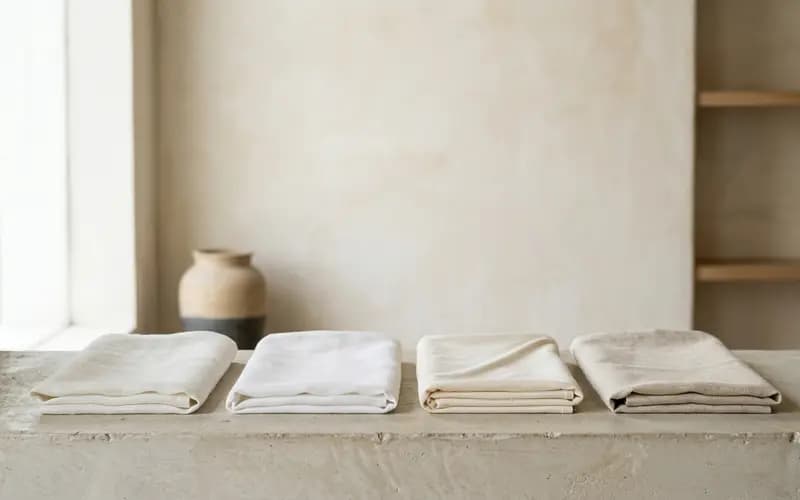
Most Breathable Fabric for Summer (India Guide)
Breathability is not just the fibre. Weave, weight, and finish decide whether a tee cools you or clings.
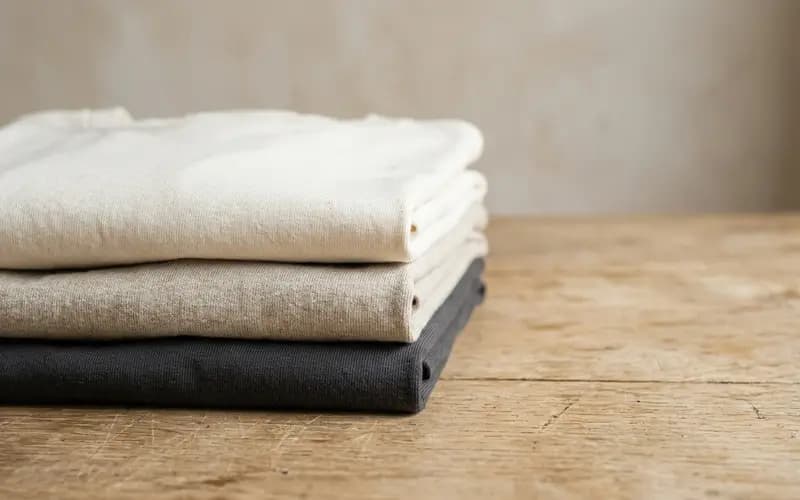
T-Shirt GSM Guide: What the Number Really Means
GSM is the most quoted, least understood number on a tee. Here is what it actually predicts about quality.
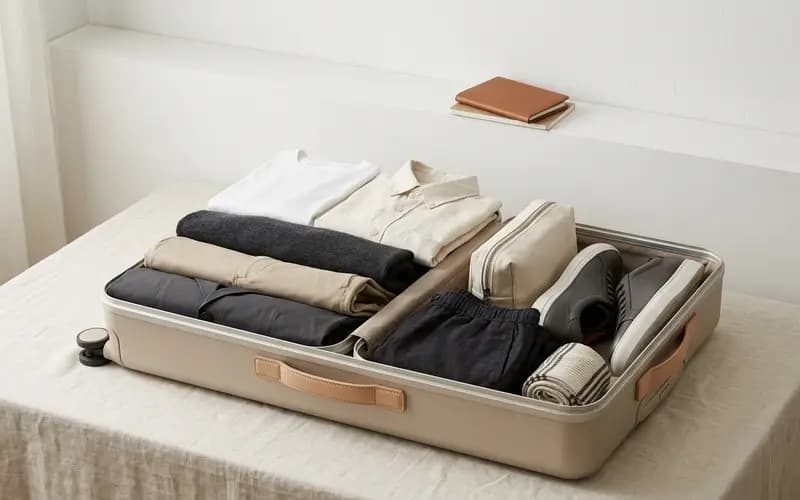
Minimalist Travel Wardrobe: Pack Light, Look Good
The secret to packing light is not rolling technique. It is a wardrobe where everything matches everything.
Stay in the loop
New writing, no noise
Occasional notes on fit, fabric, and dressing simply well. No spam, unsubscribe anytime.
Subscribe