Fit
T-Shirt Fit for Tall and Short Men: The Length and Proportion Guide
Why the same size fails tall and short men in opposite directions - and how four measurements fix it.
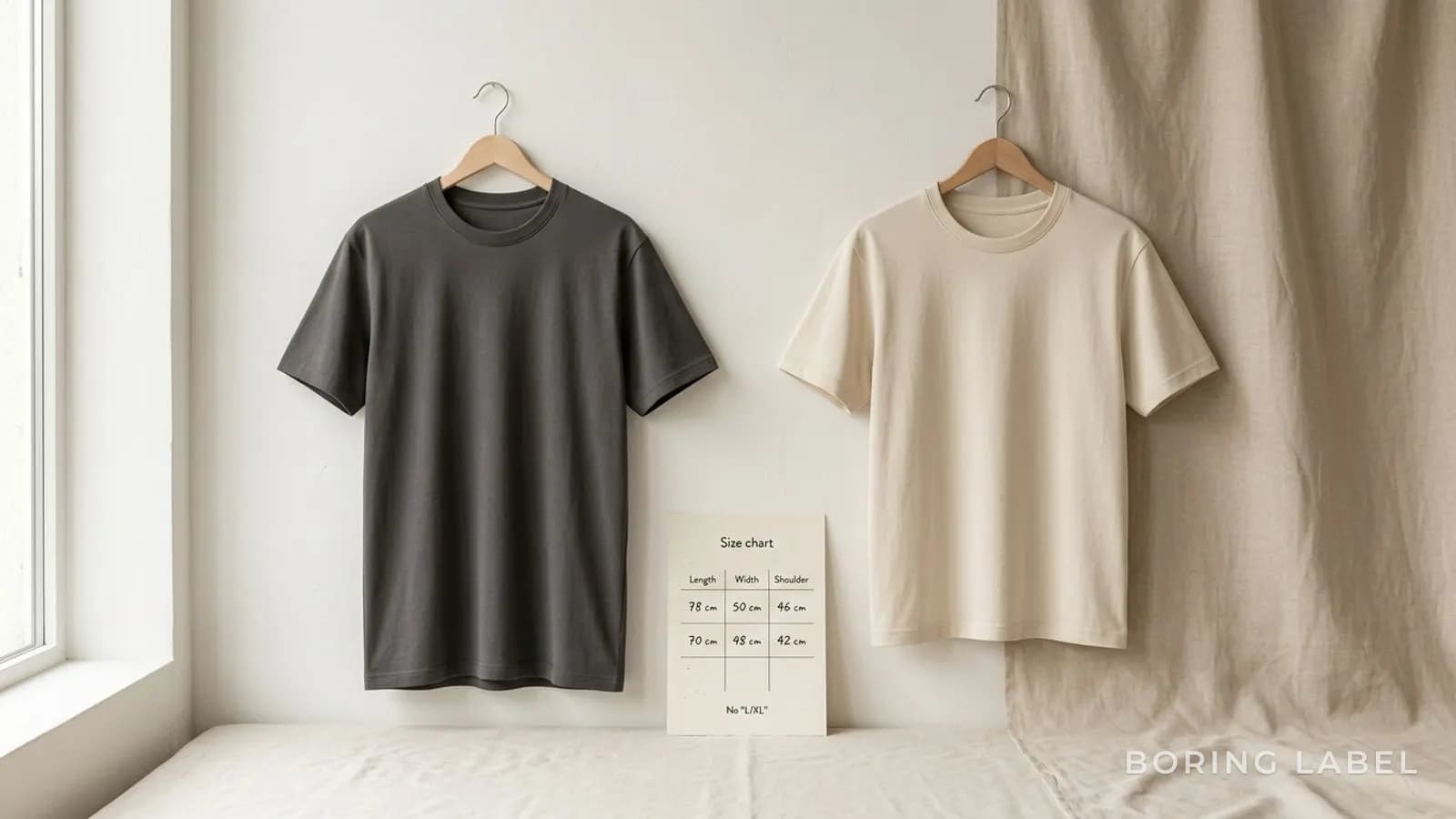
When the Same Size Fails Two Different Men
Two men walk into the same shop and pick up the same plain tee in the same size. One is six foot three.
The other is five foot five. Both bought medium because that is what they always buy.
On the tall one, the hem sits above the belt, rides up when he reaches for a shelf, and exposes a strip of stomach every time he lifts his arms. On the short one, the same tee falls past the hip, the sleeves end near the elbow, and the shoulder seams hang halfway down the upper arm.
Same garment, same label, two completely different problems - and both men will probably blame themselves.
They should not. The tee was cut for an imaginary average man who is roughly five foot ten with average-length arms and an average torso, and almost nobody is exactly that.
The further you sit from that average in either direction, the more a standard size fights you. The tall man fights a tee that is too short.
The short man fights a tee that wears like a nightgown. Neither problem is about the chest measurement everyone obsesses over.
Both are about length and proportion, which size charts barely mention and shop tags ignore entirely.
This guide is about those two problems and how to solve them with measurements rather than guesswork. By the end you will know exactly where a tee should hit, how to read the four numbers that actually decide fit, why shoulder placement quietly ruins more tees than chest size ever does, and how to use a size chart to predict fit before you spend a rupee.
No body type is wrong. The tees just need to match the body, and that starts with knowing what to measure.
The Four Numbers That Decide Fit
When people talk about t-shirt size they usually mean one number - chest - and a letter. Small, medium, large.
But a tee is a three-dimensional object draped on a three-dimensional body, and a single chest number cannot describe it. There are four measurements that together decide whether a tee fits, and once you know them you stop shopping by letter and start shopping by shape.
Body Length
This is the big one for tall and short men, and the one shop tags almost never print. Body length is measured from the highest point of the shoulder - where the shoulder seam meets the collar - straight down to the bottom hem.
It decides where the tee ends on your torso. Two tees can share an identical chest and differ by three or four centimetres in body length, and that difference is the entire gap between a hem that sits right and one that rides up or swamps you.
A tall man with a long torso needs more body length or the hem creeps up toward his waist. A short man with a shorter torso needs less, or the hem drops past his hip and reads as a dress.
Chest can be perfect on both men and the tee can still fail, because the failure is vertical, not horizontal. This is why body length deserves to be the first number you check, not an afterthought.
Chest Width
Chest width is usually given as the flat measurement across the tee from underarm to underarm, which you double to get the full circumference. This is the number most charts lead with and the one most people already understand.
It decides how the tee sits around your torso - skimming, fitted, relaxed, or loose. A standard relaxed cut tends to build in three to four inches of ease over your actual chest measurement so you can breathe and move.
Useful, but on its own it tells you almost nothing about whether the tee will be the right length, which is the whole point of this article.
Shoulder Width
Shoulder width is the measurement across the back from one shoulder seam to the other. It is the quiet decider of how put-together a tee looks, because the shoulder seam is the most visible fit line on the whole garment.
When shoulder width matches your frame, the seam sits neatly on the edge of your shoulder bone and everything below it hangs cleanly. When it is wrong, the seam falls down your arm or pulls up toward your neck, and no amount of correct chest or length can rescue the look.
We give shoulders their own section below because they matter more than their small place on a size chart suggests.
Sleeve Length
Sleeve length is measured from the shoulder seam down to the sleeve hem. On a standard short-sleeve tee it should land somewhere around the middle of your upper arm - not cutting in at the armpit, not flapping near the elbow.
It is the measurement people notice least until it is wrong, and then it is all they can see. Tall men with long arms often find standard sleeves end too high and tight; shorter men find the same sleeves reach past the natural stopping point and bunch.
Four numbers, then: body length, chest width, shoulder width, sleeve length. Chest is the one everyone checks and the one that matters least for the tall-and-short problem.
The other three - especially body length - are where fit is actually won or lost. If you want a fuller walkthrough of taking these on yourself, our guide to how to measure your t-shirt size covers the method in detail; this article is about what those numbers mean once you have them.
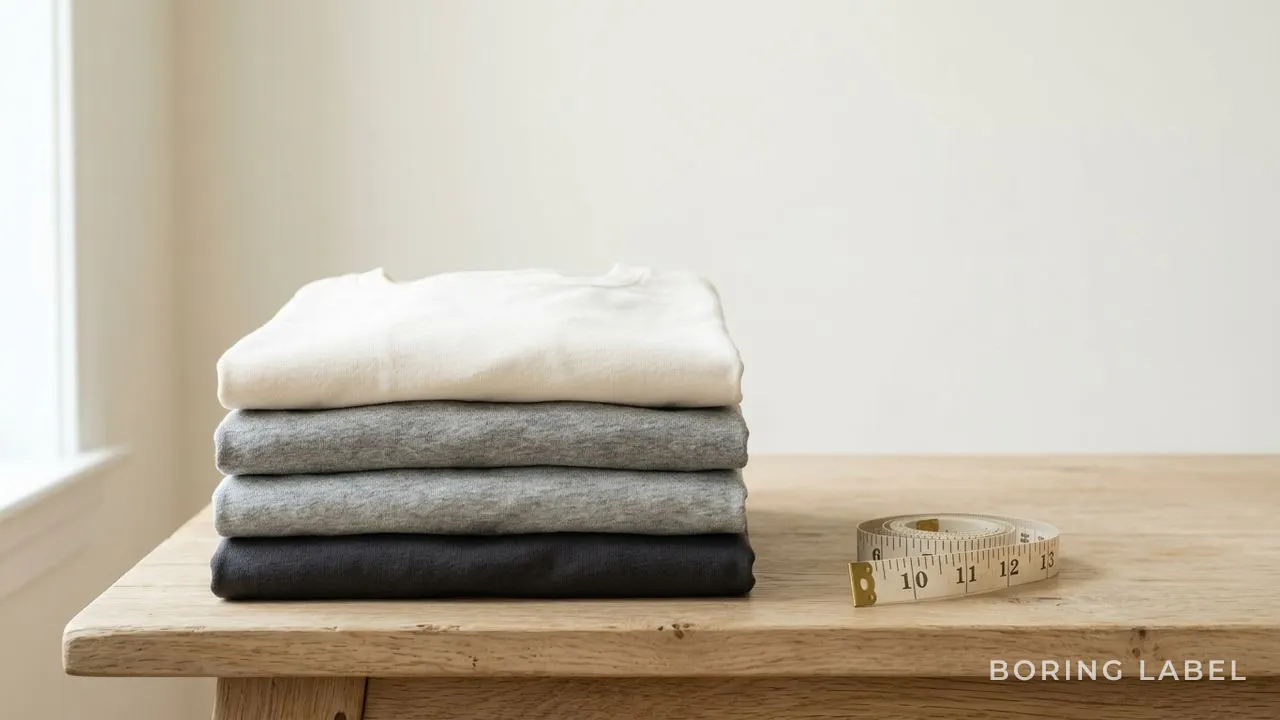
Where a Tee Is Supposed to End
Before fixing the tall and short problems, it helps to agree on the target, because most people have never been told where a tee is actually meant to stop. The vague sense that it should be somewhere around the waist is not precise enough to shop by.
For a plain tee worn untucked - which is how most are worn - the hem should fall roughly at the middle of your fly, or about an inch or two below your waistband, covering the belt line and the top of your hips without going further. That length lets the tee sit cleanly over jeans or trousers, covers you when you raise your arms, and reads as deliberate rather than accidental. It is long enough to stay put and short enough to keep your proportions looking balanced.
A couple of useful reference points. If the hem sits above your belt and flashes skin when you reach up, the tee is too short - the classic tall-man problem.
If the hem drops to mid-thigh or covers most of your front pockets, it is too long - the classic short-man problem. The sweet spot between those is narrow, maybe four or five centimetres of acceptable range, which is exactly why body length matters so much and why a tee cut for the average man so easily misses it for everyone else.
There is one honest caveat. If you tuck your tees in, the maths changes - you want a couple of extra inches of body length so the tee stays tucked when you move and reach, rather than untucking itself by lunchtime. Most plain tees are designed to be worn out, so the untucked target above is the default, but if you are a tucker, read every body-length number with two or three extra centimetres in mind.
The Tall Man's Problem: The Tee That Is Always Too Short
If you are tall, you already know this dance. You size up - medium to large, large to extra large - hoping the bigger size will finally be long enough.
Sometimes it helps a little. Mostly it gives you a tee that is now too wide and baggy through the chest and shoulders while still being not quite long enough in the body, because standard sizing adds width far faster than it adds length as you go up the sizes.
You end up with a tent that still rides up. Sizing up is the wrong tool for a length problem.
The real issue is torso length, and it is independent of how broad you are. A tall man frequently has a longer torso than the average the tee was cut for, so the body length that suits an average frame leaves the hem sitting too high on him.
The fix is not a bigger size, it is more body length at a size that still fits your chest and shoulders. That is precisely what a dedicated tall cut does: a proper tall size adds length - often an inch and a half to three inches in the body, plus around an inch on the sleeves - without ballooning the width.
The shirt gets longer where you need it and stays the right shape everywhere else.
Where tall cuts are not available, the practical move is to shop by the body-length number rather than the letter. A taller man should look for the longest body length he can find that still matches his chest and shoulders, and accept that a slightly trimmer chest with adequate length almost always looks better than a loose chest with a hem that rides up.
Length you cannot fake; a touch of extra room through the body you can live with. The tees that work hardest for tall men tend to be the ones honest enough to publish a generous body length and stand behind it, rather than relying on you to size up into bagginess.
One more tall-specific note on sleeves. Longer arms often make standard sleeves feel tight and short, ending high on the bicep and gripping. A tall cut usually lengthens the sleeve a little to match, which both feels better and looks more balanced - a sleeve that ends mid-bicep on a long arm reads far cleaner than one that has crept up toward the armpit.
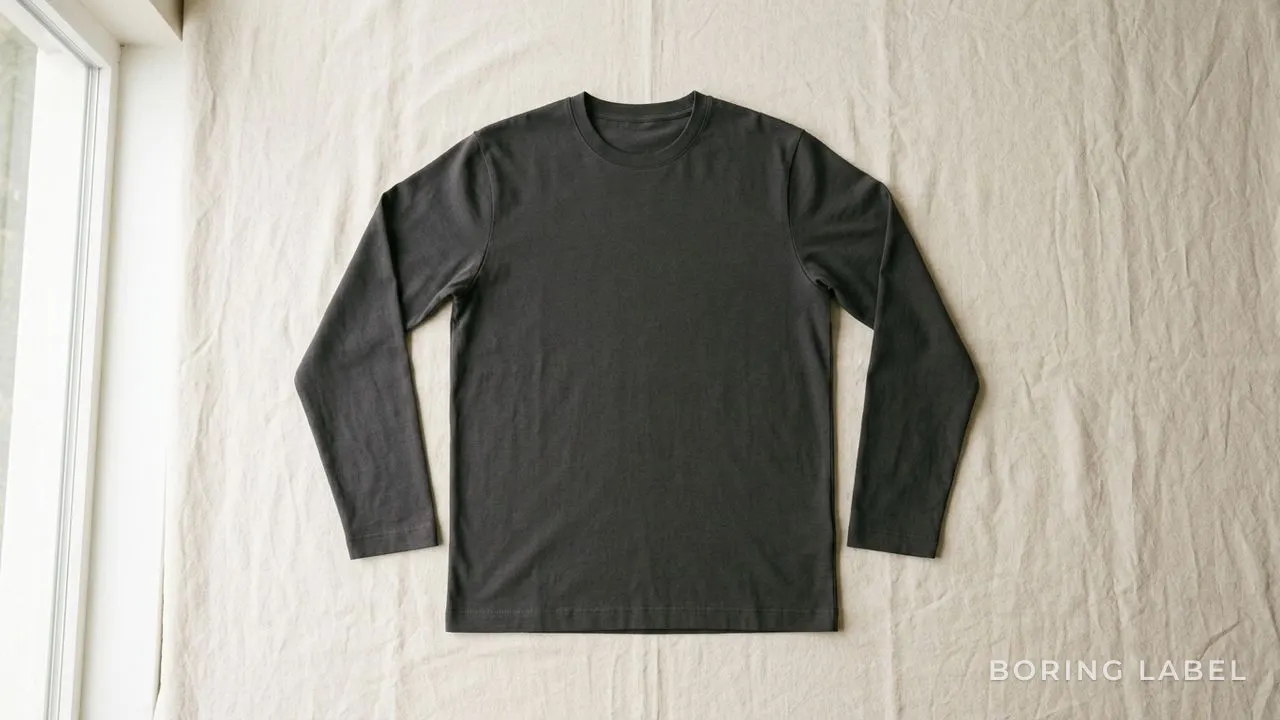
The Short Man's Problem: The Tee That Wears Like a Dress
The shorter man has the opposite trouble, and it is just as much about length, just in the other direction. A standard tee cut for an average torso is simply too long for a shorter frame.
The hem drops well past the hip, sometimes to the upper thigh, the shoulder seams slide down the arm, and the sleeves reach lower than they should. The whole tee looks borrowed from someone bigger, and it visually shortens the legs by lowering the point where the torso appears to end - the exact opposite of what most shorter men want.
The instinct here is to size down, and unlike sizing up for tall men, this instinct is closer to right - but it comes with a trap. Sizing down does shorten the body and pull the shoulders in, which is what you want.
But it also narrows the chest, and if your chest does not shrink to match, you end up with a tee that fits the length but strains across the front and clings. The goal is the same as for the tall man, just mirrored: find the body length that suits your torso at a chest width that still fits your build.
For many shorter men with average or slim chests, sizing down genuinely solves it. For shorter men who are also broad or muscular, it does not, because the chest fights back.
When sizing down strains the chest, the better answer is a tee with a shorter body length to begin with, or a cut described as boxy or cropped, where the body is deliberately shorter relative to the width. Failing that, a shorter man is often better served by a slim or regular cut than a relaxed or oversized one, because relaxed cuts pile length and width on top of a frame that needs neither. If you are weighing how much room to carry overall, our breakdown of oversized versus regular fit is worth a read - for most shorter men, regular wins, and oversized fights the frame.
Shoulders deserve a flag for shorter men too. Because standard tees set the shoulder seam for a wider average frame, a shorter and slimmer man often finds the seam falling well down his arm. Pulling the size down helps, but the cleanest fix is a tee whose shoulder width genuinely matches yours, which brings us to the measurement that quietly decides more than any other.
Shoulders: The Seam That Decides Everything
Of the four numbers, shoulder width punches far above its weight, because the shoulder seam is the single most visible fit line on a tee. People read it without knowing they are reading it.
Get it right and the tee looks tailored even if it is a plain ten-rupee-feeling basic. Get it wrong and the most expensive tee in the world looks sloppy.
The rule is simple to state and easy to check. The shoulder seam should sit right at the edge of your shoulder - on the bony point where your shoulder ends and your arm begins.
From there the sleeve falls cleanly down the arm and the body hangs straight. That single line of alignment is what makes a tee look like it belongs to you.
There are two ways it goes wrong, and both are common in standard sizing. If the seam droops down your upper arm, the shoulder is too wide for you - the tee is oversized through the shoulders whether or not the chest fits, and the sleeve starts in the wrong place, dragging the whole drape down.
This is the everyday complaint of shorter and slimmer men in standard tees. If instead the seam pulls inward and sits up toward your neck, with the sleeve gripping high on the arm, the shoulder is too narrow - common when a broad man sizes down for length and the shoulders cannot follow.
Here is why shoulders matter more than chest for the tall-and-short question: chest has ease built in, a few inches of slack that forgive a lot, but the shoulder seam has almost no forgiveness. It is either on your shoulder bone or it is not, and your eye catches the difference instantly.
So when you are choosing between two tees and cannot get everything perfect, prioritise the one whose shoulder width matches you. A correct shoulder with a slightly loose chest still looks intentional.
A perfect chest with the seam halfway down your arm never does. Shoulder placement is also one of the hidden reasons a tee can look cheap regardless of fabric - a dropped, sloppy seam reads as ill-fitting before anyone notices the cotton.
How to Actually Read a Size Chart
A size chart is the only tool that lets you predict fit before you buy, and most people skim past it to the letter and the chest number. Used properly it tells you almost everything this article is about. Here is how to read one like someone who knows what they are looking for.
First, find your own four numbers - or at least your body length and shoulder width, the two that decide the tall-and-short outcome. The cleanest way is to measure a tee you already own that fits you well, laid flat, rather than measuring your body, because a flat-garment measurement compares directly with how charts are written.
Lay your best-fitting tee flat, smooth out the wrinkles, and measure body length from the high point of the shoulder to the hem, chest from underarm to underarm, shoulder seam to shoulder seam across the back, and sleeve from shoulder seam to sleeve hem. Those four numbers are your target, and now every chart in the world becomes legible.
The full method, including the common mistakes, is in our t-shirt measuring guide.
Second, compare against the chart by number, not by letter. Find the column for each measurement and locate the size whose numbers sit closest to yours, with body length and shoulder as your priorities. Do not assume your usual letter carries across brands - a medium in one label can be a different shape entirely from a medium in another, which is exactly why measuring beats memorising your size.
Here is a simplified way to think about what the numbers are telling you for the two problem cases:
| What you measure | Tall man, long torso | Short man, short torso |
|---|---|---|
| Body length | Pick the longest available that still matches your chest | Pick a shorter one; too long reads as a dress |
| Chest width | Hold to your real size; do not size up just for length | Hold to your real size; do not size down past your chest |
| Shoulder width | Match your frame; ignore the urge to size up | Match your frame; the seam should hit your shoulder bone |
| Sleeve length | Look for a touch extra; long arms need it | Standard is usually fine; avoid overly long sleeves |
Third, and most important, prefer brands that actually publish all four numbers. A chart that lists chest and nothing else is hiding the measurement that matters most for tall and short men.
A chart that gives you body length, shoulder, chest, and sleeve for every size is one you can trust to predict fit, and a brand willing to print those numbers is usually a brand confident its tees hit them. The honesty of the size chart is itself a signal.
If you want the broader picture of how fit terms fit together, our t-shirt fit guide maps the whole landscape; this section is the practical drill for the two extremes.
Why Standard Sizing Misses So Many People
It is worth understanding why this problem exists at all, because once you see the logic you stop taking the bad fit personally and start shopping around it. Mass-market tees are graded from a single fit model - a sample body the brand cuts its base size on - and then scaled up and down by a fixed set of increments. Each size up adds a predictable amount to the chest, a bit to the length, a bit to the shoulders, and so on, in fixed steps.
The trouble is that real bodies do not scale in those neat, locked-together steps. Height and torso length vary independently of chest.
A man can have a large chest on a short torso, or a slim chest on a long torso, and standard grading has no way to serve him because it ties length to width. To get more length you must take more width, and to lose width you must lose length.
The two are welded together in a way real bodies simply are not. That is the whole reason a single size fails the tall man and the short man in opposite directions: the grading assumes their proportions match their chest, and they do not.
This is also why the answer is rarely to keep changing sizes within one badly-graded range, and usually to find a cut whose base proportions suit you - a tall cut, a boxy cut, a slim cut - or a brand whose standard fit happens to sit closer to your shape and is honest about its numbers. You are not looking for a different letter.
You are looking for a different starting proportion. Understanding this turns a frustrating guessing game into a deliberate search, and it is closely related to why a well-chosen plain tee outperforms a pile of poorly-fitting ones - a point we make in our case for the minimalist capsule wardrobe, where fit, not quantity, does the heavy lifting.
The Honest Limits of Getting Fit Right
A few caveats, because precise fit is powerful but not magic, and pretending otherwise would be the kind of overselling this whole approach is meant to avoid.
First, no single tee fits every body perfectly, and no brand can publish numbers that suit everyone at once. The best a brand can do is choose sensible, honest proportions, hit them consistently, and tell you exactly what they are so you can judge the fit against your own four numbers before you buy.
A good size chart does not promise a perfect fit; it gives you the information to predict yours. That is the realistic goal.
Second, fabric matters alongside the numbers. A heavier, structured fabric holds its cut and its length more faithfully; a thin, flimsy one drapes unpredictably and can cling and ride up regardless of how good the measurements look on paper, which is part of why weight is worth understanding too - see our GSM guide. Two tees with identical measurements can wear differently if one is substantial and the other is thin, so read the numbers and the fabric together.
Third, your own preference is part of the answer. Some men genuinely like a longer, looser tee; some like it trim and short.
The measurements tell you where a tee will sit, not where you must want it to sit. Use them to get what you intend, not to chase a single correct look.
The point of knowing your numbers is to put you in control of the outcome rather than at the mercy of a tag.
And finally, a tee that fits beautifully can still age badly if the cotton is poor - fit and longevity are separate questions. A great cut on a fuzzy, short-fibre fabric will pill and thin and lose its shape no matter how well it sat on day one, which is its own subject in combed versus carded cotton. Fit gets you a tee that looks right today; fabric is what keeps it looking right.
Putting It Together: Buy by the Numbers, Not the Letter
If there is one habit to take from all of this, it is to stop shopping by the letter on the tag and start shopping by the four numbers behind it - with body length and shoulder width leading the way, because those are the two that the tall man and the short man keep getting wrong in opposite directions. Chest is the easy part. The length and the proportion are where fit is actually decided, and they are exactly the parts a careless size chart leaves out.
So the method is simple and it works for any body. Measure a tee you already own and love, laid flat, and write down its four numbers - that is your target.
Then read every size chart against those numbers rather than against your usual size, prioritising body length and the shoulder seam. If you are tall, hunt for length without buying into bagginess, and favour a tall cut where you can find one.
If you are short, control the length without strangling the chest, and lean toward regular and slim rather than oversized. And whatever your height, give weight to brands honest enough to publish all four measurements, because a brand that tells you exactly where a tee will sit is a brand that has thought about fit rather than hoping you will size around its gaps.
That last point is most of why we settled on a single, carefully-proportioned round-neck tee with its measurements stated plainly rather than a wall of vaguely-sized options - a fit you can check against your own numbers before you commit, made in a long-staple combed cotton that holds that fit wash after wash, priced at ₹1,299. We cannot make one tee that is right for every body on earth; nobody can.
What we can do is be honest about exactly where ours sits, so the tall man and the short man can both decide, with real numbers in hand, whether it will sit right on them. The average man the industry quietly designs for does not exist.
The measurements do, and once you know yours, a good tee stops being a gamble and becomes a decision.
Boring Label
Wear the point of the article.
One honest tee. Heavyweight combed cotton, a collar that holds, a fit that actually fits. No logo, no noise.
Shop the round-neck teeFree shipping across India · Easy returns
Keep reading
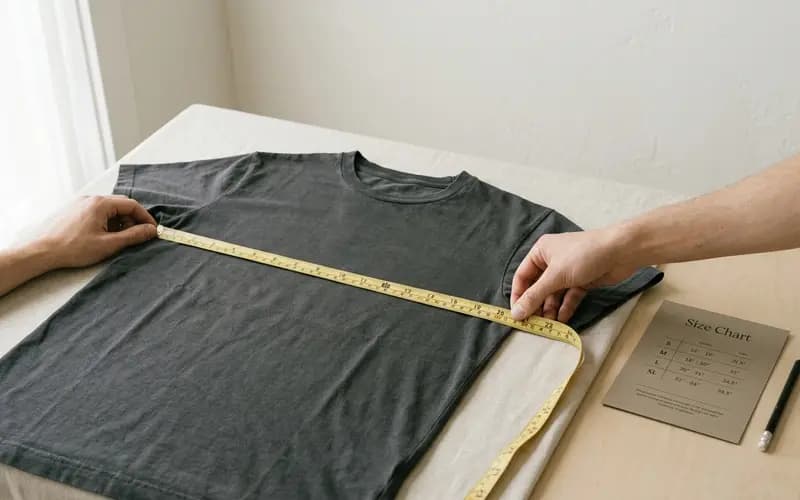
How to Measure T-Shirt Size (No Returns)
Stop guessing from S/M/L. Measure one tee you love and every future order fits.
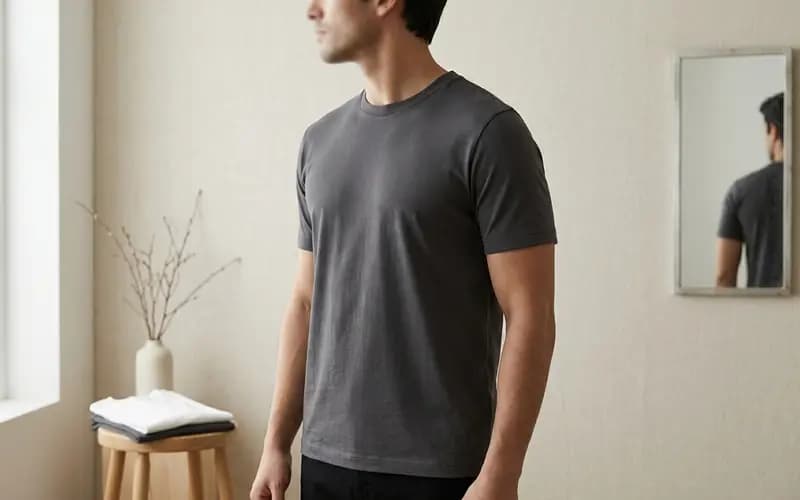
T-Shirt Fit Guide: How a Tee Should Actually Fit
Most tees fail at the shoulder, not the size label. Here is how a t-shirt should actually sit on your body.
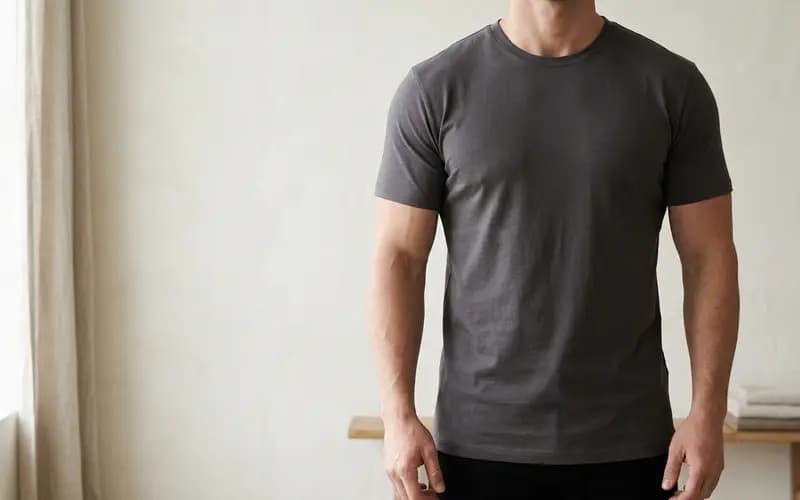
Best T-Shirt Fit for Broad Shoulders & Gym Build
Why most tees pull at the chest and balloon at the waist on a muscular build, and exactly what to look for instead.
Stay in the loop
New writing, no noise
Occasional notes on fit, fabric, and dressing simply well. No spam, unsubscribe anytime.
Subscribe