Lists
T-Shirt Myths, Debunked
A lot of confident t-shirt advice is just wrong. Here are nine myths, debunked.
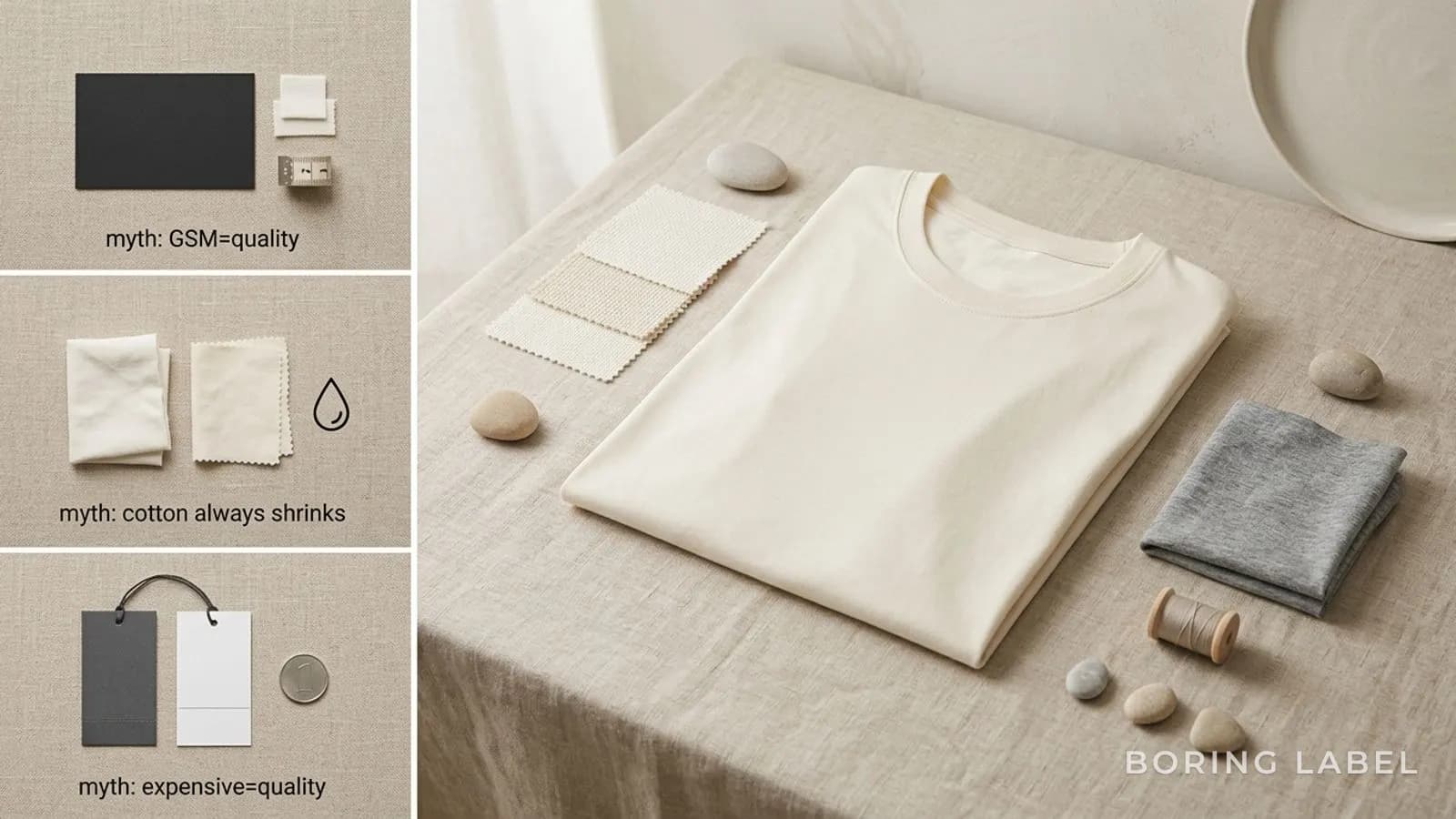
Confident advice is not the same as correct advice
The t-shirt is the most-owned garment on earth, which means everyone has an opinion about it and almost no one has checked theirs. A lot of what passes for t-shirt wisdom is repeated because it sounds right, not because it is.
Higher number, better thing. Expensive, therefore good.
Natural, therefore superior. These shortcuts feel like knowledge, and they quietly cost you money - either on tees that are worse than the ones you skipped, or on tees that are no better than cheaper ones you could have bought.
This is a list piece, so we will keep it sharp. Nine myths, each one stated plainly and then taken apart with simple, first-principles facts.
No brand-bashing, no fake studies, just the actual mechanics of how a t-shirt is made and how it behaves. By the end you should be harder to fool at the shelf and quicker to spot the genuinely good tee among the confident-sounding rubbish.
Where a myth connects to something worth going deeper on, we have linked our fuller guides. But each debunk stands on its own. Read them in any order.
The nine myths
Myth 1: Higher GSM always means better quality
This is the big one, the myth that drives more bad purchases than any other. GSM - grams per square metre - measures a fabric's weight, nothing more.
People have decided that heavier equals better, so a 240 GSM tee must beat a 180 GSM one. It does not.
It just weighs more.
A heavier tee is denser and often more durable, yes. But denser also means hotter, slower to dry, and frequently stiffer.
In Indian heat, a 240 GSM tee can be actively unpleasant - it traps warmth and clings when you sweat, while a well-made 180 GSM tee breathes and moves. Weight is a property to match to a purpose, not a score to maximise.
A great summer tee and a great winter layering tee will have very different GSMs, and both can be excellent.
What actually predicts quality is the yarn and the knit, not the gross weight. A 180 GSM tee made from long-staple combed cotton will outlast and outperform a 230 GSM tee made from cheap, short-fibre carded cotton, despite weighing less.
The number on the tag tells you how thick the cloth is. It tells you nothing about how good it is.
Our GSM guide walks through how to read the number sensibly instead of worshipping it.
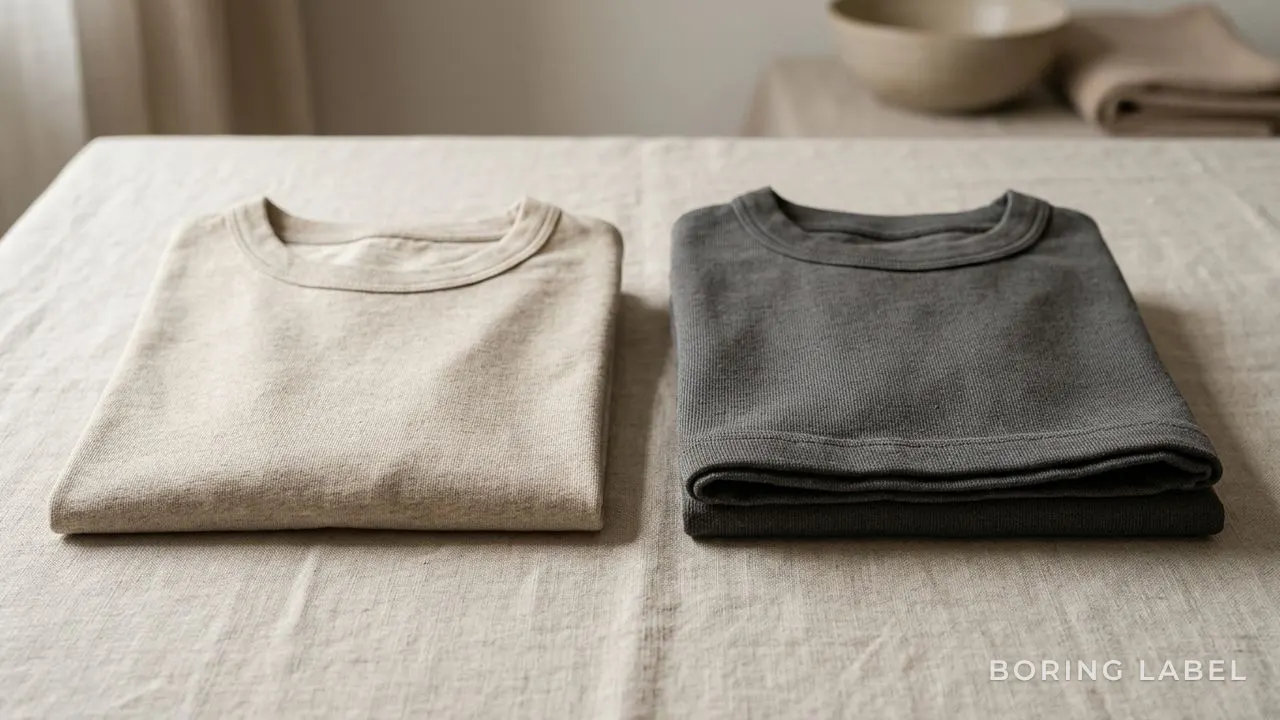
Myth 2: Cotton always shrinks, so size up
Half-true, which is why it survives. Cotton can shrink, but it is not a law of nature, and sizing up to compensate is usually the wrong fix.
Shrinkage comes mainly from heat and agitation - hot washes and hot dryers - relaxing fibres that were stretched tight during knitting and finishing. A tee that has been pre-shrunk during manufacturing has already had most of that movement taken out of it, and good tees almost always are. The remaining shrinkage on a quality pre-shrunk tee is small, often a couple of percent, the kind of thing you would struggle to notice.
So sizing up to leave room for shrinkage usually just leaves you with a tee that is too big from day one and only slightly less too big after a few washes. The better move is to buy your true size and control the shrinkage with how you wash and dry - cold water, low or no heat drying.
Do that and a pre-shrunk tee holds its size for years. The myth turns a laundry habit into a sizing mistake.
Myth 3: More expensive means better quality
If only. Price is set by a long list of things that have nothing to do with how good the cloth is: brand markup, marketing budgets, retail margins, the logo, the shop's rent.
A tee can cost 2,000 rupees and be mostly markup over a 400-rupee blank, or it can cost 700 and be genuinely well made. The price tag is not a quality reading.
This does not mean cheap is good and expensive is a scam. It means you have to judge the tee, not the price.
Check the fabric weight and feel, the knit, the collar construction, the seams. Those tell you what you are buying.
The number on the tag mostly tells you about the company's positioning. We took this apart in full in affordable vs premium t-shirts, but the headline is simple: extra money should buy better fabric and construction, and often it does not.
Learn the signs of a good tee and you can find them at any price, and avoid being overcharged for a bad one.
Myth 4: Pilling means the fabric is low quality... and there is nothing you can do
Pilling - those little balls of fibre that form where a tee rubs against itself or a bag strap - gets blamed on bad fabric, full stop. That is half right and unhelpfully fatalistic.
Pilling is caused by short fibres working loose and tangling under friction. Cheap carded cotton, full of short fibres, pills readily.
Long-staple combed cotton, which has had its short fibres removed, pills far less. So fibre quality genuinely matters, and the myth is right about that much.
The full mechanism is in why t-shirts pill if you want it.
But the fatalism is wrong. Friction is the other half of the equation, and you control friction.
Washing inside out, avoiding overloaded machines, skipping the harsh tumble dry - all of these cut the rubbing that pulls fibres loose. You can take a tee that would have pilled and keep it smooth for years with gentler handling.
Pilling is partly the fabric and partly the care, and the care half is entirely in your hands. Treating it as pure bad luck just means you stop doing the things that prevent it.
Myth 5: 100 percent cotton is always better than a blend
Cotton has earned a halo, and blends have inherited a stigma. Natural good, synthetic bad. It is a clean story and it is too simple.
Pure cotton is wonderful for softness and breathability in dry conditions, and for a tee you want to feel great against the skin, it is hard to beat. But it has real weaknesses: it is slow to dry, wrinkles freely, and loses shape over time.
A well-judged blend - cotton with a small amount of polyester or elastane - can dry faster, hold its shape better, and resist wrinkling, while keeping most of cotton's comfort. In the monsoon especially, a cotton-rich blend often beats pure cotton outright because it sheds water so much faster, as we argue in monsoon clothing.
The point is not that blends beat cotton. It is that the best fabric depends on the job.
Pure cotton for a soft, breathable everyday tee in dry heat. A touch of elastane for a tee that needs to hold its shape.
A poly blend for something that has to dry fast. Reaching for 100 percent cotton every time, on principle, leaves good options on the table.
Judge by purpose, not by purity.
Myth 6: Dark colours fade faster, so they are a worse buy
People avoid black and navy tees expecting them to fade to grey within months and write off the colour as a poor investment. Some do fade fast - but the fading is usually about dye quality and washing habits, not the colour being inherently doomed.
A dark tee dyed properly, with the colour fixed well into the fibre, holds its depth for a long time. A cheaply dyed one bleeds and fades quickly.
You often cannot tell which is which on the shelf, but you absolutely control the bigger variable: how you wash it. Hot water, harsh detergent, drying in direct sun and frequent washing all strip colour, and they strip it from a dark tee faster simply because the change is more visible.
Cold washes, gentle detergent, inside out, and drying in shade keep black looking black for years.
So the real comparison is not dark versus light. It is well-dyed and well-washed versus poorly-dyed and roughly-washed.
A good black tee, cared for, is one of the best-value pieces you can own, and avoiding dark colours over fading fear means missing out on the most versatile shades there are. The laundry side is covered in how to wash t-shirts so they last.
Myth 7: A slimmer fit always looks smarter and more flattering
Somewhere in the last couple of decades, slim got conflated with smart, and a generation squeezed itself into tees a size too small believing it looked sharper. It often does the opposite.
A tee that is too tight clings to every lump it finds, pulls across the chest, rides up at the waist and rucks at the shoulder seams. None of that is flattering, and none of it reads as smart - it reads as a tee that does not fit.
What actually looks good is a tee that fits, full stop: shoulder seam sitting at the edge of your shoulder, body skimming rather than gripping, hem ending around mid-fly. That clean fit flatters far more people than a slim one does, because it follows the body instead of fighting it.
There is also no single right silhouette. A relaxed fit can look just as considered as a fitted one, depending on your frame and what you wear it with - the comparison is laid out in oversized vs regular fit.
Smartness comes from the tee fitting your shoulders correctly, not from how tight it is everywhere else. Chasing slim for its own sake just buys you discomfort that looks like discomfort.
Myth 8: Wash a new tee less to keep it looking new
The instinct makes sense - washing wears clothes out, so wash less and they last longer. For t-shirts worn against the skin in a hot climate, this backfires.
Sweat, body oils and dead skin build up in the fabric, and over time they degrade fibres and set in odour and yellowing, especially around the collar and underarms. A tee that is worn repeatedly without washing in Indian heat is being slowly damaged by what you are leaving in it, not protected. The collar goes dingy, the fabric stiffens, and the smell becomes permanent. Skipping washes does not preserve a tee; it ages it differently and often worse.
The real lever is not washing less - it is washing gently. Cold water, inside out, mild detergent, air drying.
Done that way, a wash barely stresses the fabric at all while clearing out everything that would otherwise rot it from the inside. You can wash a quality tee after every wear, as a hot climate demands, and have it last for years, provided each wash is gentle.
The damage was never the washing. It was the heat and the harsh handling people pair it with.
Myth 9: Branded tees are made better than unbranded ones
The logo is supposed to be a promise of quality. Sometimes it is.
Often it is just a logo. Plenty of branded tees are made in the same factories, from the same cotton, as the unbranded blanks beside them - the difference you are paying for is the printed name, not better cloth.
This is the quiet truth behind a lot of t-shirt spending: a known brand can charge a large premium for a tee that is, materially, ordinary, because the name does the selling. Meanwhile a no-logo tee from a maker who put the money into fabric and construction instead of marketing can be plainly better made and cost less.
The logo tells you who is selling the tee. It does not tell you how well it was made.
The smarter dressers tend to figure this out and drift toward plain, unbranded basics judged purely on quality, which is the whole argument of no-logo clothing. You are not paying to advertise someone's brand, and you are forced to judge the tee on what it actually is - fabric, knit, collar, seams - which is exactly how you should have been judging it all along.
The absence of a logo is not a downgrade. Often it is the tell of someone who decided to spend on the cloth instead.
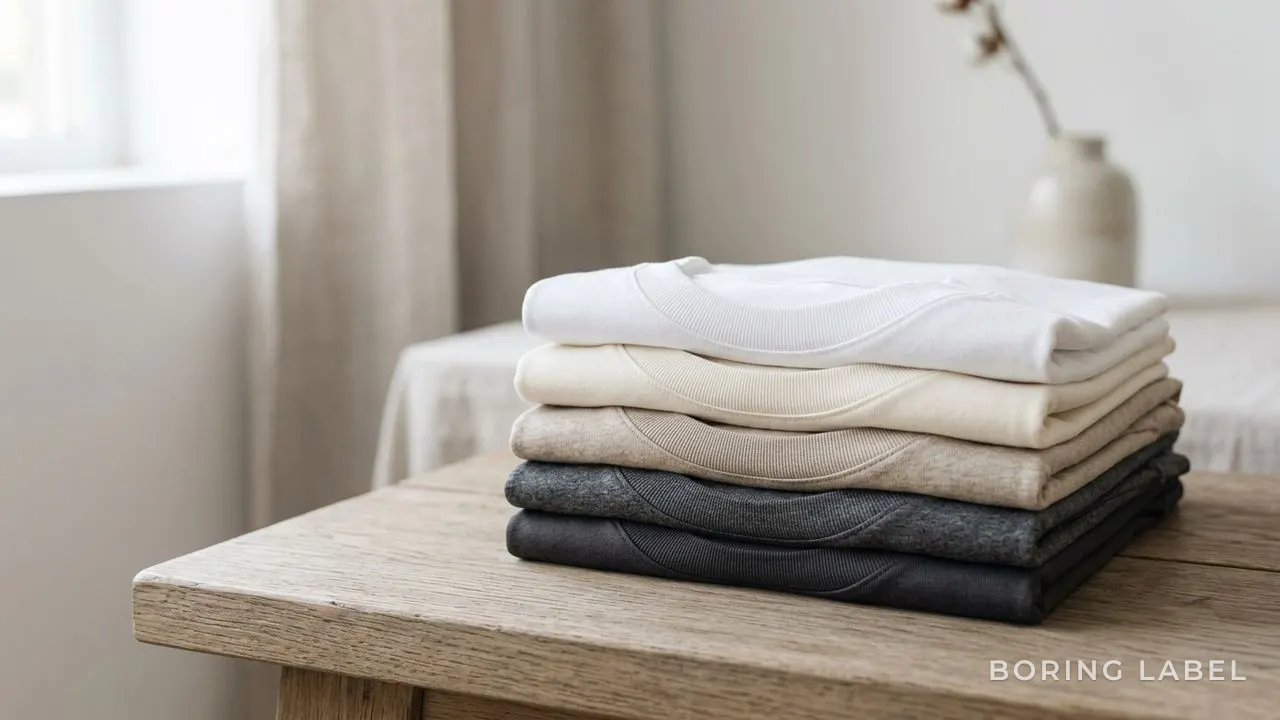
The takeaway: judge the tee, not the story
Run back through the nine myths and a single pattern jumps out. Almost every one of them is a shortcut - a way to judge a tee without actually looking at it.
Trust the big number. Trust the price.
Trust the word cotton. Trust the logo.
Trust the slim cut. Every shortcut is a way of outsourcing your judgement to something that is easy to read but does not actually tell you what you need to know.
The fix is the same in every case: look at the tee itself. Feel the weight against its purpose, not as a high score to chase. Check the yarn and the knit, because that is where quality lives.
Read the collar and the seams. Match the fabric to the job - dry heat, monsoon, layering.
Care for it gently so it lasts. None of that requires expertise, just the willingness to stop trusting the confident-sounding shortcut and start trusting your own eyes and hands.
Do that and you stop overpaying for myths. You buy fewer, better tees, you keep them longer, and you become very hard to sell a mediocre one to. That is the whole return on un-learning nine pieces of bad advice: a wardrobe full of tees that are good because they are actually good, not because someone told you a number, a price or a name that made them sound that way.
Boring Label
Wear the point of the article.
One honest tee. Heavyweight combed cotton, a collar that holds, a fit that actually fits. No logo, no noise.
Shop the round-neck teeFree shipping across India · Easy returns
Keep reading
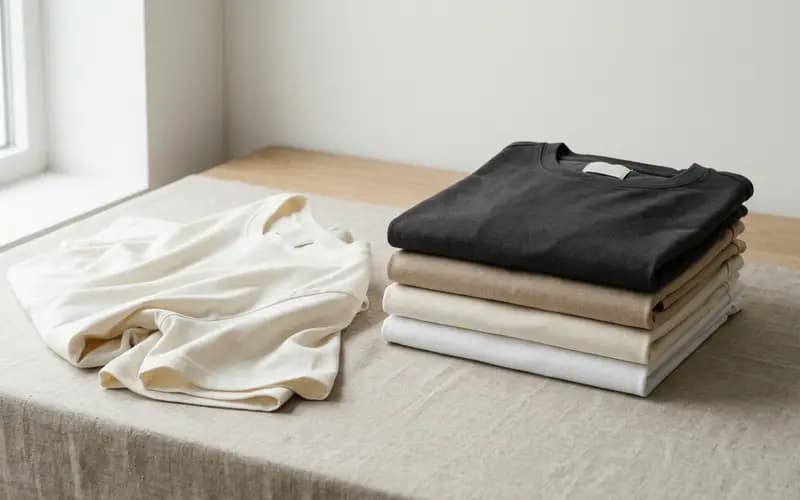
T-Shirt Label Jargon Decoded: What Actually Matters
What pre-shrunk, bio-washed, GSM, single jersey and ring-spun really mean - and which terms are quality signals versus marketing.
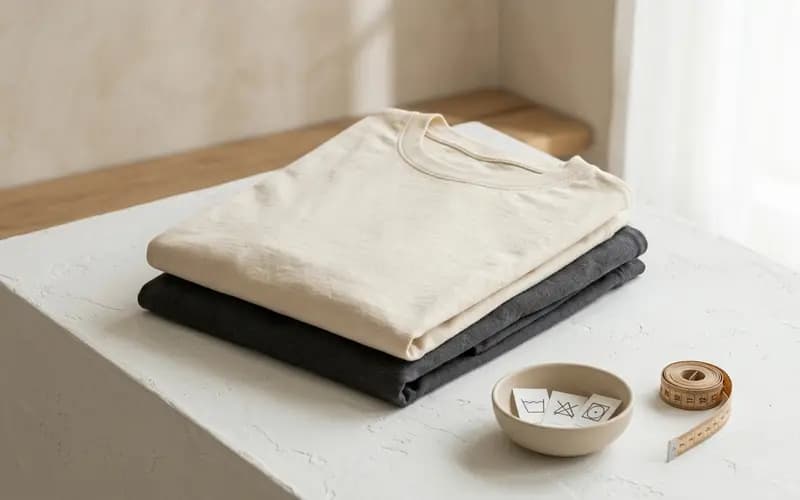
Do Cotton T-Shirts Shrink? Why, How Much & How to Stop It
Why cotton tees shrink, how much to expect, and the simple care routine that keeps a good tee its size.
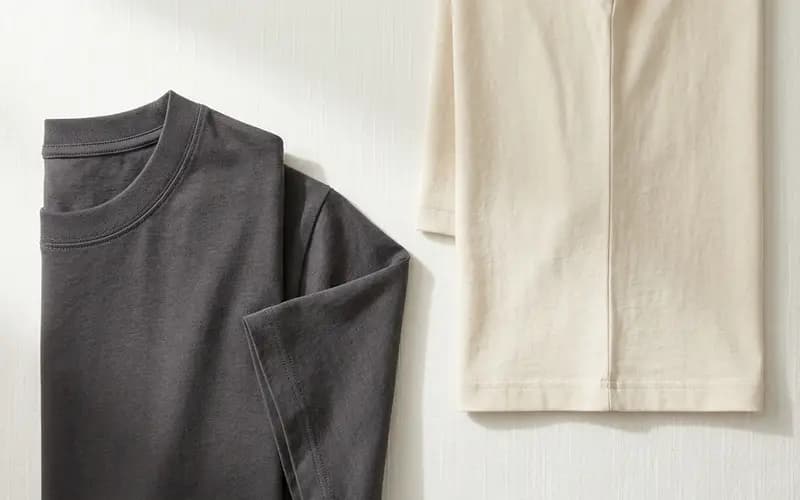
Why Your T-Shirt Looks Cheap (and the Fix)
It is rarely the price. It is the collar, the GSM, and the seam — three things you can spot in seconds.
Stay in the loop
New writing, no noise
Occasional notes on fit, fabric, and dressing simply well. No spam, unsubscribe anytime.
Subscribe