Fabric
The 240 GSM heavyweight tee trend: structure, drape, and when it backfires
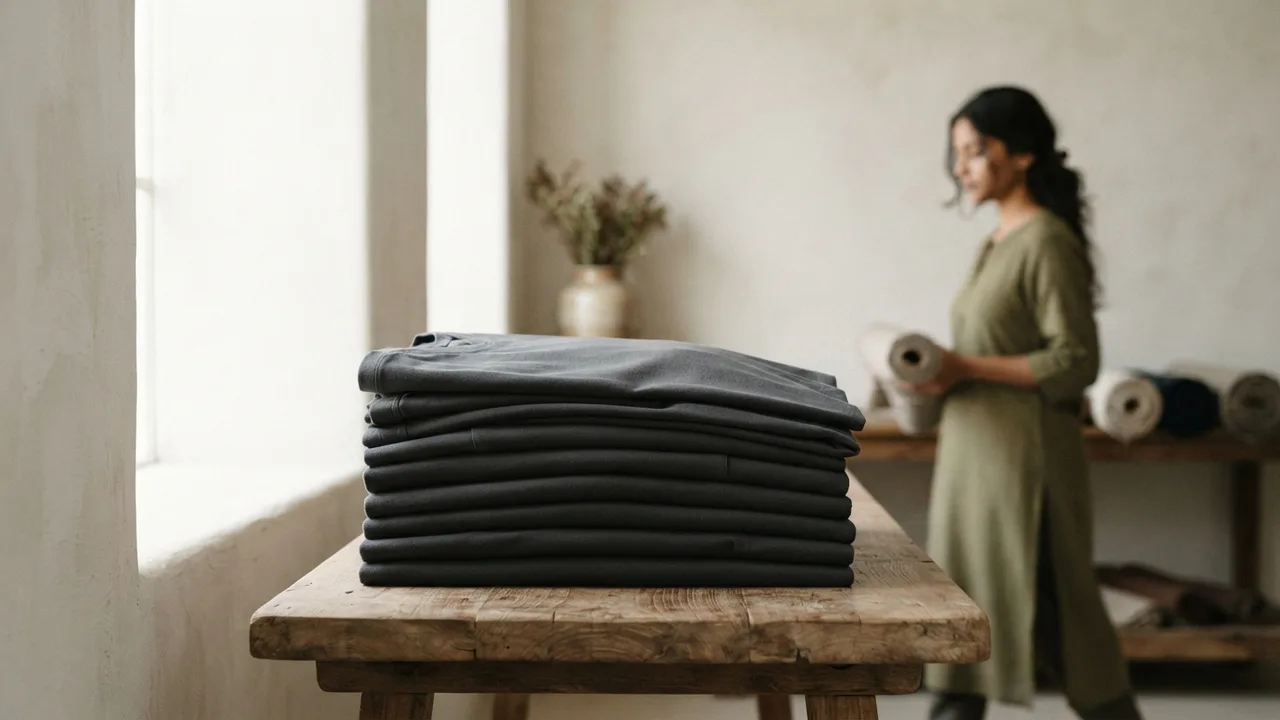
Heavyweight 240 GSM cotton gives a tee structure and drape, but it trades away breathability and quick drying. Here is when the weight genuinely pays off and when it works against you.

Why 240 GSM tees are suddenly everywhere
Walk into any premium menswear store in India right now and you will see the same number stamped on hangtags. 240 GSM.
It has become shorthand for quality, the same way "Supima" or "combed cotton" got used a few years ago. Brands print it big because heavier sounds better.
But GSM is a measure of fabric weight, not a verdict on quality. A tee can be heavy and badly made, or light and excellent.
This piece is about what 240 GSM actually does to a t-shirt, where it genuinely helps, and where it works against you. We will also cover the three ways it backfires in Indian conditions, because nobody selling you a heavyweight tee will bring that up first.
For the full weight spectrum and what each range means, our GSM guide is the place to start. This piece goes deeper into the specific 220 to 260 GSM band that most "heavyweight" tees now occupy.
What GSM actually measures
GSM stands for grams per square metre. Cut a one-metre square of fabric, weigh it, and that number is the GSM.
It tells you how much material is packed into a given area. Nothing more, nothing less.
A 150 GSM tee uses roughly 60 percent of the fabric a 240 GSM tee does for the same size. That difference shows up in hand feel, drape, and price.
It does not automatically show up in durability, because durability depends on yarn quality, knit construction, and finishing far more than on raw weight. A loosely knit 240 GSM fabric can pill faster than a tightly knit 180 GSM one.
What heavier fabric actually changes
At 220 to 260 GSM, a few physical things happen that lighter tees do not do.
Structure. The fabric holds its shape on the body instead of following every contour. Shoulders sit squarer, the hem does not curl, and the tee looks the same at 6pm as it did at 9am.
Opacity. Heavyweight cotton does not show your skin or the seams of whatever is underneath. This matters more than people admit, especially for lighter colours.
Drape weight. The fabric falls in cleaner, heavier folds rather than clinging or fluttering. It reads as substantial when you pick it up off a shelf, which is exactly why brands lean on the number.
Perceived value. Rightly or wrongly, heavier feels more expensive to most people's hands. That perception is not wrong exactly, since heavier fabric does cost more to produce, but it is not the whole story either. Our piece on why a t-shirt looks cheap covers the other factors that matter just as much as weight.
Where 240 GSM genuinely wins
Three use cases make heavyweight cotton worth the extra cost and the extra warmth.
Structured, boxy fits. If you want a tee that holds an oversized or boxy silhouette without collapsing into a shapeless bag, you need weight. Light fabric in a loose cut just droops.
Air-conditioned environments. Offices, malls, and flights in India run cold enough that a heavier tee reads as comfortable rather than stifling. If most of your day happens indoors under AC, the case for heavyweight gets much stronger.
Longevity under wash cycles. More fibre per square metre generally means more fibre left after years of washing, provided the base cotton quality is good. Our 30-wash durability test shows how weight and yarn quality interact over real use, not just on day one.
A well-made round-neck tee at this weight range is built for exactly this brief: structure that survives a full day, without tipping into stiffness.
Where it backfires
Here is the part most listicles skip. Heavyweight fabric has three genuine failure modes, and all three show up more in India than in cooler markets.

It traps heat
Cotton breathes by letting air move through its fibres and by wicking moisture to the surface where it can evaporate. More fabric mass slows both processes down.
At 30 to 40 degrees Celsius with humidity above 60 percent, a 240 GSM tee holds body heat noticeably longer than a 160 GSM one. Riders on a scooter, anyone standing on a platform waiting for a train, and outdoor workers all feel this within twenty minutes.
If your day involves real outdoor exposure between April and September in most of India, heavyweight is fighting the climate, not working with it. Our guide to summer t-shirts and breathable fabric both make the case for going lighter in peak heat, and this is the fabric-weight version of that same argument.
It dries slowly
More fibre means more absorbed moisture, whether that moisture is sweat, humidity, or rain. A heavy tee that gets soaked can take three or four times longer to dry than a light one of the same fibre.
In the monsoon, or in any city with high ambient humidity for months at a time, this is a real problem. Our monsoon clothing guide covers why slow-drying fabric becomes a mildew risk, not just a comfort issue, once the air itself is already saturated.
It hides construction problems poorly, but hides them differently
This one surprises people. Heavy fabric is more forgiving of thin, low-quality yarn because the sheer mass disguises weak spots, at least until the fabric is washed a dozen times.
Then the truth comes out in the form of pilling, thinning at friction points, and a stretched-out collar. A cheap 240 GSM tee made from short-staple, low-grade cotton will feel great on day one and fall apart by month three, arguably worse than a cheap lightweight tee because the buyer trusted the number and stopped checking anything else.
Weight is not a proxy for yarn quality, knit density, or finishing. It never was. If a brand's only quality claim is the GSM figure, that is worth noticing.
How to tell if a 240 GSM tee is actually well made
Weight alone tells you almost nothing about whether the fabric will hold up. Check these four things before you trust the number on the tag.
| Check | What to look for | Red flag |
|---|---|---|
| Yarn count | Combed or ring-spun cotton stated on the label | Only "100% cotton" with no spinning method |
| Knit density | Fabric feels dense when stretched gently, springs back | Fabric thins visibly when pulled |
| Seam finish | Flat, even stitching with no puckering | Loose threads or uneven seam allowance |
| Weight consistency | Same thickness across the whole garment | Thinner patches near seams or hem |
Our guide to spotting good cotton online and reading t-shirt label jargon both go deeper into these checks if you are buying without touching the fabric first, which is most of us now.
Should you buy a 240 GSM tee
The honest answer depends on how you actually spend your day, not on what feels premium in a store under AC.
If you work indoors, want a structured boxy fit, and live somewhere with real winters or heavy AC exposure, 240 GSM is a strong pick. It will outlast lighter fabric and hold its shape through hundreds of washes if the underlying yarn is good.
If you spend real time outdoors in Indian heat, commute without AC, or live somewhere humid for half the year, a 180 to 200 GSM tee in combed or Supima cotton will serve you better day to day. Comfort compounds. A tee you actually want to wear in July beats a heavier one sitting unworn in a drawer from March to October.
The smartest wardrobes mix both. A couple of heavyweight tees for cooler months and structured looks, and a larger rotation of mid-weight tees for the eight or nine months a year most of India runs warm. Neither weight is universally right, and any brand telling you otherwise is selling a number, not a t-shirt.
Buy the weight that matches your actual life, check the yarn quality behind the label, and let the GSM figure inform your decision instead of making it for you.
How 240 GSM compares across the weight spectrum

It helps to see the full range side by side rather than judging 240 GSM in isolation. Indian brands generally split cotton tee weight into four rough bands, and each band trades off comfort against structure differently.
Light, 130 to 160 GSM. These tees feel almost weightless, move air freely, and dry fast after a wash or a sudden downpour. They also show more skin through the fabric and lose shape faster under repeated stretching, so they suit hot, humid days over structured looks.
Mid, 170 to 200 GSM. This is the range most people should default to for year-round Indian wear. It balances breathability with enough body to hold a clean silhouette, and it is the sweet spot our own round-neck tee is built around for exactly that reason.
Heavy, 210 to 240 GSM. Structure becomes the dominant trait here, at some real cost to airflow. This band suits AC-heavy days, cooler months, and boxier fits where drape matters more than ventilation.
Extra heavy, 250 GSM and above. Mostly reserved for outerwear-adjacent pieces like heavyweight sweatshirts and structured jackets rather than everyday tees, since the heat retention becomes uncomfortable for most people in a standard t-shirt cut.
Knowing where 240 GSM sits on this spectrum matters more than knowing the number alone. It is heavy, but not the heaviest, and it is squarely a cool-season or indoor-day fabric rather than an all-weather one.
The price question nobody asks directly
Heavier fabric costs more to produce, full stop, since it uses more raw cotton per garment and often more processing time. But price and GSM do not move in a perfectly straight line, and that gap is where a lot of overpriced heavyweight tees hide.
A 240 GSM tee made from cheap, short-staple cotton can still cost less to produce than a well-made 180 GSM tee spun from long-staple combed cotton with a tight, even knit. Yet the heavier tee often sells for more, purely because the number on the tag reads as more premium to most shoppers.
Our breakdown of what actually goes into a t-shirt's price covers this gap in detail, and GSM is only one line item among several that determine true production cost. If a heavyweight tee is priced well above a mid-weight option from the same brand, ask what specifically justifies the jump, rather than assuming weight alone explains it.
A quick gut check before you buy
Before adding a 240 GSM tee to your cart, run through three fast questions. Where will you actually wear it, mostly indoors under AC or mostly outdoors in real heat.
What colour and fit are you buying it in, since structured, darker, indoor-leaning pieces benefit most from the extra weight. And does the listing name the yarn type and knit density, or does it lean on the GSM number alone to justify the price.
Answer those three honestly, and you will know within a minute whether the heavyweight tee in front of you is solving a real problem for your wardrobe, or just sounding impressive on a hangtag.
Boring Label
Wear the point of the article.
One honest tee. Heavyweight combed cotton, a collar that holds, a fit that actually fits. No logo, no noise.
Shop the round-neck teeFree shipping across India · Easy returns
Keep reading
T-Shirt GSM Guide: What the Number Really Means
GSM is the most quoted, least understood number on a tee. Here is what it actually predicts about quality.
The 30-Wash Test: How to Judge T-Shirt Durability
Most tees survive the first wash. The honest test is thirty. Here is what fails, when it fails, and how to check before you commit.
Best Summer T-Shirts for Indian Heat
Indian summer is a stress test for a tee. These fabrics, fits, and colours pass it.
Stay in the loop
New writing, no noise
Occasional notes on fit, fabric, and dressing simply well. No spam, unsubscribe anytime.
Subscribe