Styling
The Plain T-Shirt For Men Over 30 - Dressing Your Age Without Trying Too Hard
Why loud tees age badly after 30, and the fit, colour and fabric that make a plain tee look quietly grown-up.
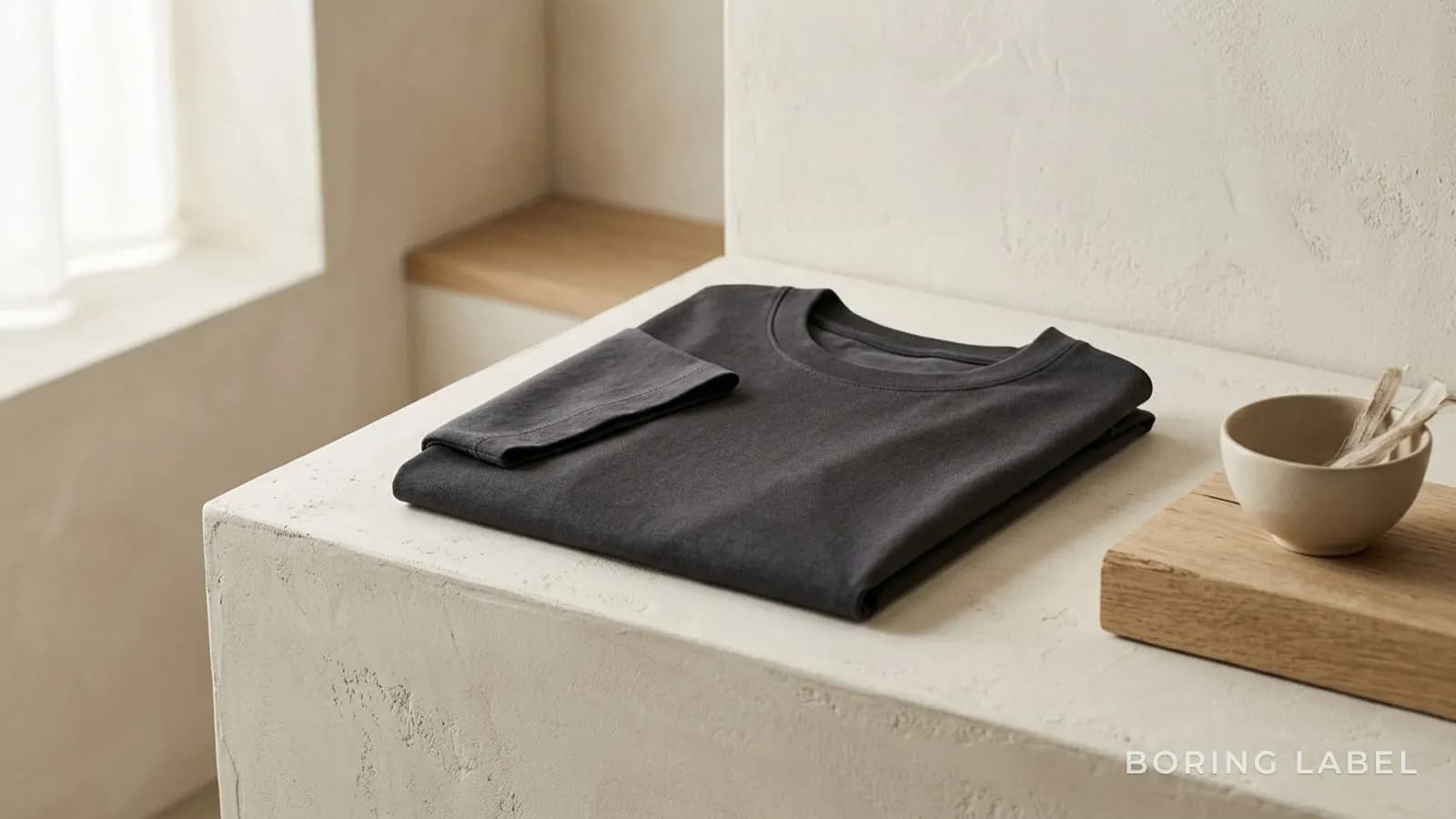
The Tee That Quietly Started Working Against You
Somewhere in your thirties, a strange thing happens to your wardrobe. The clothes did not change, but the way they read did.
The faded band tee you have owned for a decade, the printed slogan you bought because it made you laugh, the slightly boxy graphic shirt with the big chest logo - all of them used to look fine, even good. Now they look like you are reaching backwards.
Nothing about you got worse. The signal just shifted.
This is not vanity and it is not a midlife crisis. It is simply that what a t-shirt says about you depends heavily on your age, and the rules quietly invert around thirty.
In your twenties, a loud tee reads as fun and current. In your thirties and beyond, the same loud tee tends to read as either trying too hard or not trying at all.
Both are worse than the thing you actually want, which is to look like a grown man who has his act together without obviously dressing for it.
The good news is that the fix is almost insultingly simple, and it costs less effort than the wardrobe you are running now. By the end of this you will understand exactly why graphic tees and cheap fits start working against you with age, why a clean well-fitting plain tee is the single highest-leverage thing you can wear, and the specific fit, colour, and fabric choices that make a plain shirt read as quietly expensive rather than quietly forgettable. No fashion rules for their own sake - just the mechanics of why some men over thirty look effortless and most look like they got dressed in 2014.
Why Loud Tees Read Worse As You Get Older
Let us be precise about what actually goes wrong, because "dress your age" is useless advice on its own. The problem with a graphic or slogan tee past thirty is not the graphic itself. It is what the graphic forces a stranger to do with their attention.
A Logo Dates You To A Specific Year
Every printed tee is a time-stamp. A band logo pins you to the year you bought it.
A brand wordmark pins you to whatever that brand meant at its peak. A trend graphic - the oversized varsity print, the ironic slogan, the streetwear collab - pins you to the exact season it was cool.
None of these age gracefully, because they were never designed to. They were designed to be current, and current has a short shelf life.
A plain tee has no time-stamp. A well-cut crew neck in a good colour looked right in 1995 and will look right in 2035.
When you remove the graphic, you remove the thing that can go out of date, which is most of the reason older men in plain tees look settled and older men in printed tees often look stuck. It is the same quiet logic behind the broader case for no-logo clothing: the moment you put someone else's design on your chest, you hand them control of how current you look.
The Graphic Eats The Attention That Should Go To You
A printed tee makes a stranger's eye land on the print first - the words, the image, the brand. In your twenties that is fine; the print is doing the talking and you do not mind.
In your thirties you generally want the opposite. You want the first read to be you - your face, your build, how put-together you seem - not a slogan about coffee or a faded tour date.
A loud shirt is a small act of hiding behind something, and at a certain age hiding behind a graphic reads as slightly unsure rather than playful.
A plain tee does the reverse. With nothing competing for attention, the eye goes straight to fit, posture, grooming, and face.
That is exactly where you want a grown man's attention budget spent. This is the core mechanic behind so much of quiet luxury in India and elsewhere: the clothes recede so the person comes forward.
Cheap Fabric Stops Being Forgivable
There is a third thing that turns on you with age, and it is the harshest. In your twenties, a cheap tee reads as broke-but-young, which is charming and temporary.
In your thirties, the same cheap tee - thin, slightly translucent, fuzzing at the seams, collar curling up - reads as not caring, which is neither charming nor temporary. The exact same shirt sends a generous signal at twenty-three and an unflattering one at thirty-five.
We dig into why some tees telegraph cheapness in why a t-shirt looks cheap, but the short version is that the older you get, the more a worn-out basic stops looking carefree and starts looking careless.
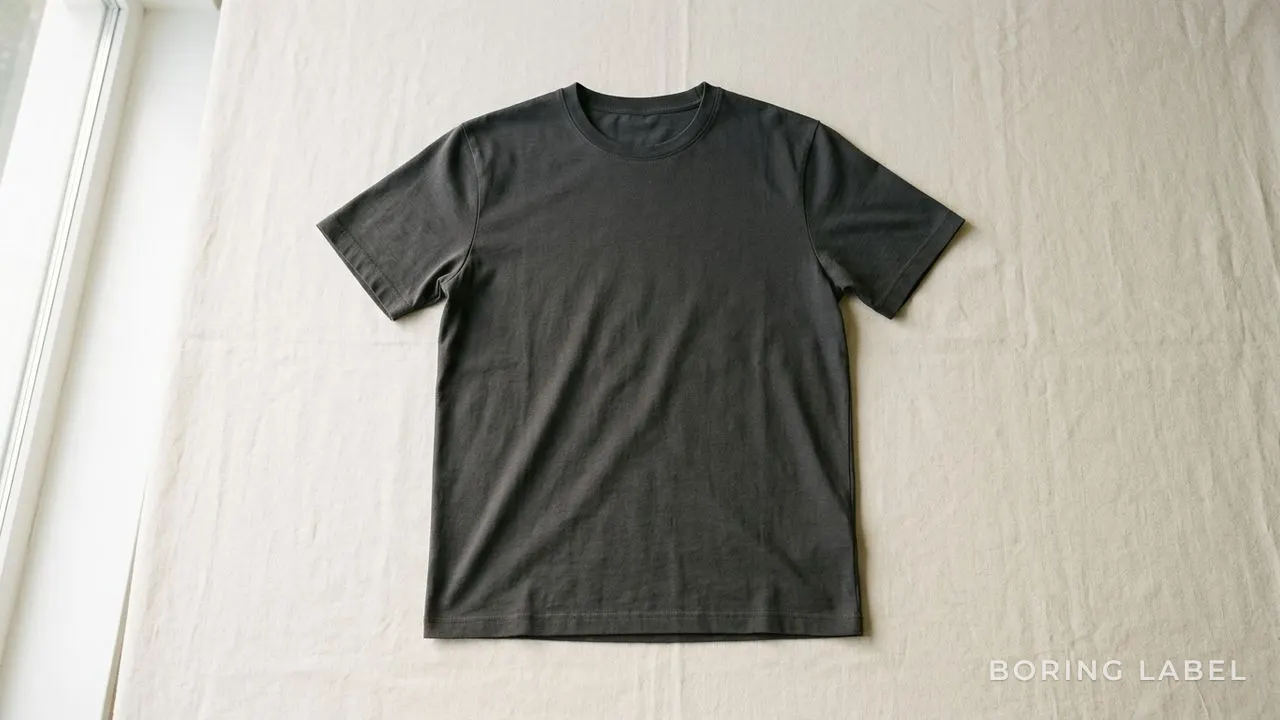
The Case For The Plain Tee: Maturity Without Effort
Here is the reframe that makes everything else click. Dressing your age is not about dressing older.
It is about dressing so that nothing in the outfit is asking for attention it has not earned. A plain tee is the purest version of that idea - it is a garment with nothing to prove, which is precisely why it reads as confident.
It Removes Every Wrong Note At Once
Think about all the ways a t-shirt can go wrong: a dated graphic, a slogan that no longer suits you, a brand you have aged out of, a print that fights your colouring. A plain tee deletes every one of those failure modes in a single move.
There is no graphic to date, no slogan to outgrow, no logo to advertise. What is left is the only thing that matters - cut and colour and cloth.
You go from a garment with five ways to look wrong to one with essentially none.
This is the same restraint logic that runs through minimalism and restraint as a dressing philosophy. You are not adding taste. You are subtracting everything that could undercut it.
It Makes You Look Like You Decided, Not Defaulted
There is a difference between a man who clearly chose a clean plain tee and a man wearing whatever was on top of the pile. The choice shows.
A plain tee in a considered colour, fitting properly, in fabric with a bit of substance, reads as a deliberate decision - the same way a single good watch reads more grown-up than three novelty ones. The absence of decoration becomes the decoration.
That quiet deliberateness is most of what people mean when they call a man's style effortless, and it is the whole premise behind uniform dressing: a few good plain pieces, repeated, so you never have to win the morning.
It Scales With Everything You Now Own
By your thirties you probably have a few decent things - a jacket, proper shoes, a watch, better jeans. A loud graphic tee fights those pieces; it pulls the outfit back toward casual and a little juvenile no matter what you layer over it.
A plain tee does the opposite. It is the neutral base that lets a blazer, an overshirt, or a good pair of trousers do their job.
It is the most cooperative garment you can own, which is exactly why it belongs at the centre of any smart-casual basics wardrobe.
Fit: The One Thing That Beats Everything Else
If you change only one thing after reading this, change the fit. A plain tee that fits is the entire trick; a plain tee that does not fit is just a different way of looking sloppy.
Fit matters more than colour, more than fabric, more than brand. A modest tee that fits beats an expensive one that does not, every time.
Here is what "fits" actually means for a man over thirty, point by point, because the word gets thrown around uselessly.
The Shoulder Seam Is The Whole Game
The single most important measurement on a t-shirt is where the shoulder seam sits. It should land right at the edge of your shoulder, where the flat top of your shoulder meets the curve of your arm - not halfway down your bicep, not pulled up onto the shoulder.
Get this right and the shirt hangs cleanly off your frame. Get it wrong and no amount of good fabric saves you: a seam drooping down your arm reads as a shirt that is too big, which reads as either borrowed or bought without trying.
This is the first thing to check in any shop and the first thing covered in our full t-shirt fit guide. Stand in front of a mirror, find the shoulder seams, and if they are sitting south of your actual shoulder edge, size down until they sit right.
The Sleeve Should End Mid-Bicep, Clean
A sleeve that ends mid-bicep and sits relatively close - not tight, not flapping - flatters almost every arm. Too long, drooping toward the elbow, and the shirt looks oversized and shapeless, which past thirty reads as giving up rather than relaxed.
Too short and tight and it reads as trying to show off the gym. The grown-up sweet spot is a sleeve that skims the widest part of the arm and stops, with a hem that is neither painted on nor billowing.
The Body Skims, It Does Not Cling Or Drown
The torso should follow the rough shape of your body without gripping it. You want to be able to pinch a small amount of fabric at the waist - an inch or two - not a fistful, and not nothing.
A fistful means it is too big and you look heavier and less assembled than you are. Nothing to pinch means it is too tight and every meal shows.
The skimming middle is the look that makes a plain tee read as quietly tailored.
The Hem Lands At Mid-Fly
Length is the quiet killer. A tee that hangs to mid-thigh shortens your legs and drags the whole silhouette down; a cropped one that rides up looks like it shrank.
The grown-up length ends somewhere around the mid-point of your fly to just below your belt - long enough to tuck if you want, short enough to leave out cleanly. When in doubt, slightly shorter looks more deliberate than slightly longer.
If you want the precise method for getting all of this right before you buy, including measuring a tee you already own and trust, the how to measure t-shirt size walk-through covers it. The point to carry away is blunt: a man over thirty in a properly fitted plain tee looks better than the same man in a designer graphic that fits like a sail.
A Quick Fit Reference
| Detail | Looks too young / sloppy | The grown-up fit |
|---|---|---|
| Shoulder seam | Halfway down the bicep | Right at the shoulder edge |
| Sleeve | Drooping to the elbow, or painted on | Skims mid-bicep, ends clean |
| Body | A fistful of fabric, or shrink-wrapped | Pinch an inch or two at the waist |
| Length | Mid-thigh, or riding up | Mid-fly to just below the belt |
| Overall read | Borrowed, careless, or trying hard | Decided, easy, in proportion |
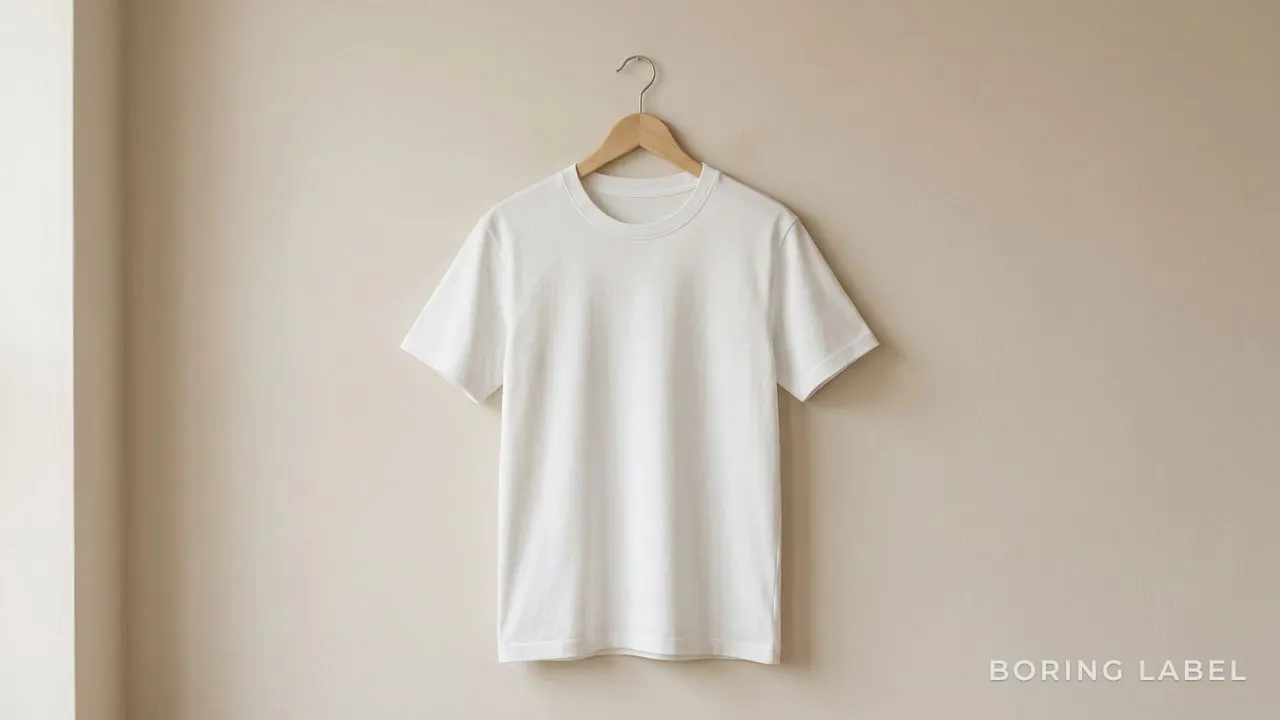
Colour: The Grown-Up Palette
Once the fit is handled, colour is where you can either reinforce the quietly-put-together look or undo it. The principle is simple and it is the opposite of what the high street pushes at younger men: fewer, calmer, more useful colours.
You are not building a rainbow. You are building a small set of shades that work with everything you own and never shout.
Start With The Three That Always Work
There is a core trio that flatters nearly everyone and goes with nearly everything: white, a true black or soft charcoal, and a mid grey. These are the backbone of a grown man's tee drawer because they are endlessly combinable and quietly flattering.
White reads clean and fresh and lifts the face. Black and charcoal read sharp and slimming and pair with anything.
Grey is the unsung hero - softer than black, less stark than white, and the easiest colour to wear under a jacket. If you owned only these three in good fabric and good fits, you would be better dressed than most.
Our take on the essential t-shirt colours makes the same case in more detail, but the trio is the foundation.
Then Add Earthy, Muted Tones - Not Brights
When you are ready to extend past the core, go toward muted, slightly dusty colours rather than saturated ones: a soft navy, a deep olive, a warm sand or stone, a muted burgundy. These read as considered and grown-up precisely because they are not loud.
A muted olive tee looks like a choice; a neon green one looks like a phase. The rule of thumb that ages well: if a colour looks like it belongs on a child's toy, it probably belongs in your twenties.
Dusty, slightly greyed-down versions of colours almost always read more expensive than their bright counterparts - which is much of the quiet trick behind a monochrome outfit or a tonal one.
Why Calm Colour Reads As Expensive
There is a real reason muted colours look more premium, and it is not snobbery. Cheap fast-fashion dye tends to be flat and slightly harsh - the colour sits on the surface looking a little plasticky.
Quieter, more complex shades are harder to get cheaply right, so the eye has learned, fairly or not, to associate calm colour with care and loud colour with cheap. You can lean on that association for free.
Pick the dusty version, skip the bright one, and the same plain tee reads up a price bracket.
Match Colour To Your Life, Not A Chart
The honest caveat: the "best" colours are the ones that suit your colouring and your actual days. Very pale skin can get washed out by stark white and lifted by soft grey or navy; deeper skin tones often carry bright white and clean black beautifully.
And a man whose week is mostly meetings wants different proportions to a man whose week is mostly weekends. Do not over-engineer it.
Start with the trio, add two or three muted tones you are actually drawn to, and stop. A tight palette is the entire point of a minimalist capsule wardrobe for men - a small set that all works together beats a big set that mostly fights.
Fabric: Where Grown-Up Quietly Lives
This is the part most men skip, and it is the part that separates a plain tee that looks intentional from one that looks like an undershirt that escaped. Past thirty, fabric is doing more work than you think, because at close range and in good light, cheap cloth is obvious and forgiving twenties-charm no longer covers for it.
Thin And Translucent Is The Tell
The fastest way a plain tee betrays its price is thinness. A tee you can see your skin or your other layer through, that clings to every contour, that feels papery between your fingers - that reads cheap no matter how well it fits.
A grown-up plain tee has a bit of substance: enough weight to hang off the body cleanly, to hold its shape through the day, to drape rather than shrink-wrap. It does not have to be heavy.
It has to feel like cloth, not like a serviette. Weight here is measured in GSM, and our GSM guide explains the numbers, but the quick version is that a sensible mid-weight reads far more expensive than a flimsy lightweight.
Smooth Beats Fuzzy, And It Lasts
Run your fingers across the surface. A good tee feels smooth and slightly cool; a poor one feels fuzzy and warm, with a faint nap that catches your fingertip.
That fuzz is short fibre poking out of the yarn, and it is the future pilling and bobbling you can already feel. Smoothness comes from longer, better-prepared cotton, and it is most of why one plain tee stays looking new for years while another goes bobbly in a month.
The full mechanism is in combed cotton vs carded, but for a grown man the practical upshot is this: smooth fabric keeps looking deliberate, fuzzy fabric starts looking neglected, and neglected is the one thing you are trying to avoid.
Long-Staple Cotton Is The Quiet Upgrade
If you want the version of plain that reads quietly premium without a single visible cue, the fabric is where you spend. Long-staple cottons - Supima and the like - start with naturally longer fibres, which makes the finished cloth smoother, stronger, and more colour-clean than ordinary cotton.
There is no logo announcing it. It just feels and looks better in the hand and in the mirror, and it survives the heavy wash cycles that a tee in regular rotation takes.
The difference between long-staple and ordinary cotton is laid out in Supima vs regular cotton, and it is the closest thing to a free upgrade in plain tees: same plain shirt, quietly better cloth.
Honest Limits Of Fabric
Two caveats, because pretending otherwise would be selling you a fantasy. First, no cotton tee is magic in extreme heat - even the best long-staple cotton will cling a little when it is genuinely humid, though a smoother, well-woven cloth clings less and breathes more evenly than a fuzzy cheap one.
If your days are spent in peak Indian summer, weight and weave matter as much as fibre; our notes on breathable fabric for summer cover that trade-off. Second, price alone never guarantees fabric quality.
There are expensive tees made of mediocre cloth and modest ones made of excellent cloth. Trust your fingers and the smoothness test over the price tag.
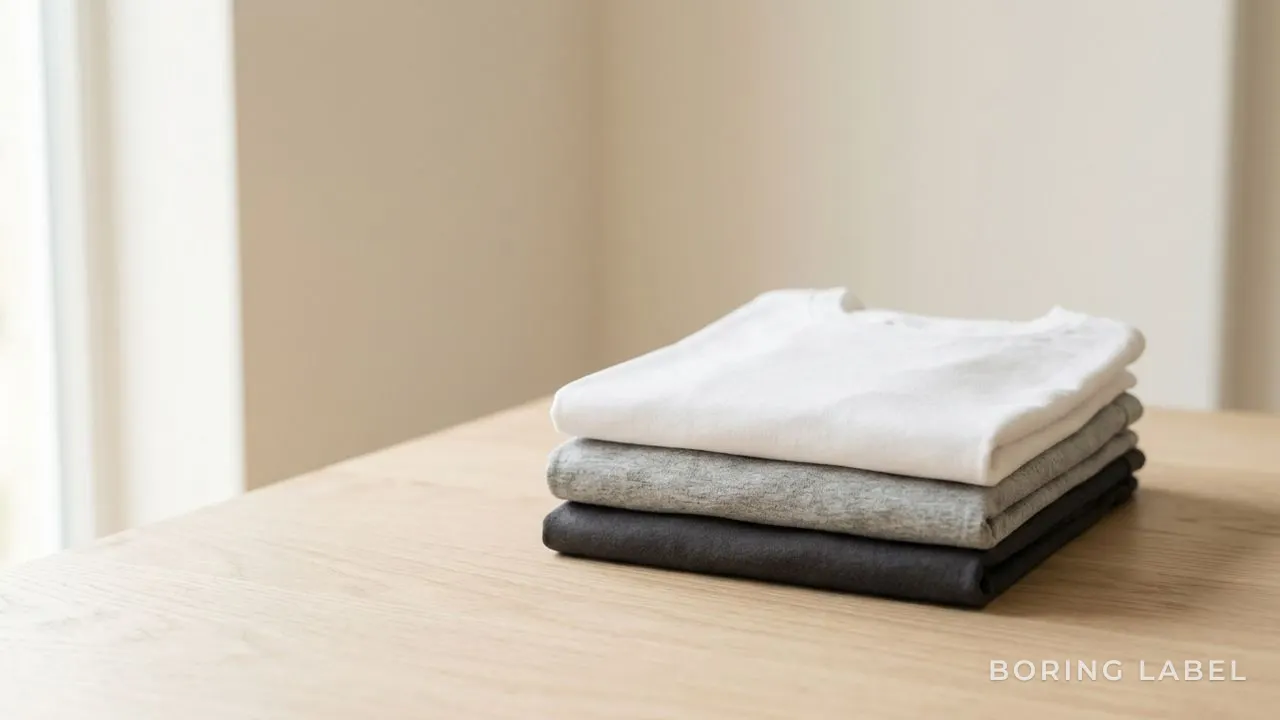
Putting It Together: The Grown-Up Tee, Worn
Knowing the parts is one thing; wearing them is another. Here is how the fit, colour, and fabric choices actually play out across a normal week, so the advice stops being abstract.
The Tee On Its Own
Worn solo, the plain tee lives or dies on fit and fabric, because there is nothing else in the frame. A charcoal or white tee that sits right on the shoulder, skims the body, ends at mid-fly, and is made of cloth with some substance is a complete outfit with good trousers and clean shoes.
Nothing more is required, and nothing more is wanted. This is the look people read as "he just throws things on and looks good," and the truth is he chose three things carefully and then stopped thinking about it.
That is the entire promise of wearing the same clothes every day - decide once, repeat, look consistent.
The Tee Under A Layer
This is where the plain tee earns its keep in your thirties. Under an unstructured blazer, an overshirt, a denim or chore jacket, a plain tee is the clean line at the neck that makes the whole layer look intentional.
A graphic tee under a blazer fights the jacket; a plain one completes it. The colour does quiet work here too - a tee a shade or two off the jacket reads tonal and considered, which is the backbone of grown-up layering.
If you want the mechanics of stacking pieces without bulk, layering basics is the place, but the headline is that a plain tee is the most cooperative base layer you can own.
The Tee And The Cost-Per-Wear Argument
Here is the part that makes the whole approach financially sane rather than precious. A man over thirty in a small set of good plain tees actually spends less per wear than a man with a drawer full of cheap printed ones.
The cheap printed tee gets worn a handful of times before the print cracks, the shape goes, or the trend passes - then it sits unworn. A good plain tee gets worn weekly for years and looks right the whole time.
Divide the price by the wears and the "expensive" plain tee is the cheaper garment. We lay this maths out in cost per wear, and it is the quiet reason buying fewer, better basics is not indulgence - it is arithmetic.
The broader case for owning less and reaching for it more is in buy less, wear more.
Common Mistakes Men Over Thirty Make With Plain Tees
Even men who have got the message often trip on the details. A few specific traps, because the difference between a plain tee that works and one that does not is usually one of these.
Mistaking "Plain" For "Cheap"
The most common error is treating plain as a licence to buy the cheapest possible shirt. Plain is not the same as basic-and-disposable.
A plain tee is doing all its talking through fit and fabric, so cutting those is cutting the only things that matter. A three-pack of thin, badly cut white tees is not the grown-up move; one well-made one is.
Plain raises the stakes on quality, it does not lower them.
Holding On To Tees Past Their Death
A plain tee has a lifespan, and a grey-ish, stretched-collar, slightly bobbled white tee is worse than a graphic one because it just looks tired. The collar going slack is usually the first sign, followed by the colour dulling and the shoulders thinning.
The grown-up discipline is to retire a tee when it stops looking crisp, not when it falls apart. Washing it properly buys you a lot of that lifespan - how to wash t-shirts so they last longer covers the handful of habits that keep a plain tee looking new far longer.
Buying Too Many, In Too Many Colours
The instinct, once you decide to "do plain tees properly," is to buy fifteen in every shade. Resist it.
A tight set - the core trio plus two or three muted tones, all in fits and fabric you trust - outperforms a sprawling drawer every time, because every shirt in it is one you actually reach for. The point of going plain is to make getting dressed easier, not to turn your tee drawer into another decision.
This is exactly the restraint behind a proper capsule wardrobe: small, considered, complete.
Sizing Up For Comfort
Many men size up as they get older, assuming a looser tee is more comfortable and more forgiving. Usually it is neither.
An oversized tee reads as bigger than you are and less assembled than you are; a properly fitted one in soft, substantial fabric is just as comfortable and far more flattering. Comfort comes from good cloth and the right cut, not from extra room.
If you are unsure where you sit on the spectrum, the oversized vs regular fit comparison is worth a read - but for most men over thirty, a clean regular fit is the safer, sharper call.
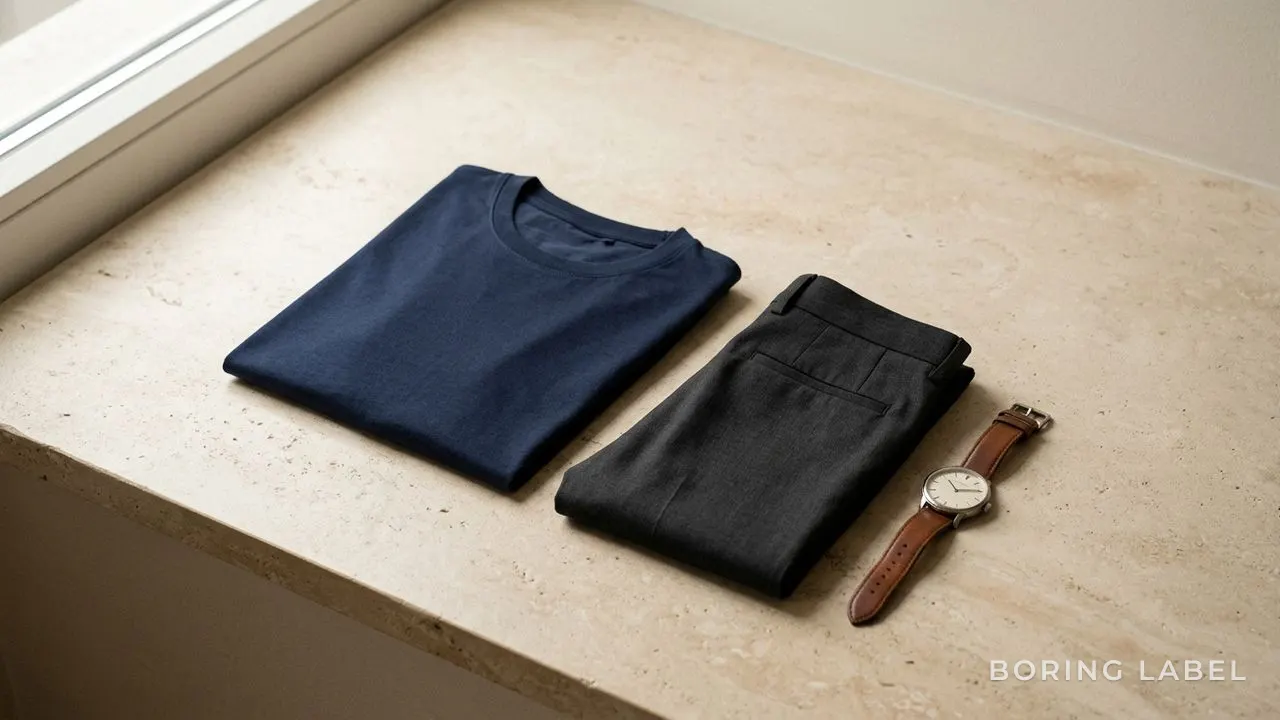
The Round-Neck, And Why It Is The Adult Default
A short word on neckline, because it is the last small decision and it matters more than men assume. The crew neck - the plain round neck - is the grown-up default for a reason.
It is clean, it suits almost every face and frame, it sits well under a jacket, and it never tips into trying-too-hard the way a deep V or a fashion neckline can. A round neck worn alone looks complete; worn under a layer, it frames the collarbone cleanly without showing chest.
It is the quiet, dependable shape, and dependable is the whole brief past thirty.
That is exactly the thinking behind our own round-neck tee: a plain crew in long-staple combed cotton, cut to sit right on the shoulder and skim rather than cling, in the calm colours a grown man actually wears, made with the Indian climate in mind. No graphic to date, no logo to advertise, nothing asking for attention it has not earned. At a steady price it is built to be the shirt you reach for on the days you do not want to think about clothes - which, in your thirties, is most days.
The Takeaway: Look Like You Stopped Trying To Be Noticed
The shift that happens around thirty is not really about t-shirts. It is about what you want your clothes to do.
In your twenties you want them to say something. After thirty, the most attractive thing they can do is say nothing at all and let you come forward - your face, your build, your ease.
A loud tee gets in the way of that. A clean, well-fitting plain tee gets out of the way of it.
So the playbook is short. Sort the fit first - shoulder seam on the shoulder, body skimming, hem at mid-fly - because fit beats everything.
Keep the colours calm - the core trio plus a couple of muted tones, never the bright version. Spend where it does not show, on fabric with substance and smoothness, ideally long-staple cotton that stays looking new.
And then stop. Buy fewer, buy better, wear them weekly, retire them when they tire.
Do that and you arrive at the thing every well-dressed man over thirty has quietly figured out: the most grown-up way to dress is to look like you are not trying, while having quietly made every choice that matters. A plain tee, done right, is the simplest possible version of that.
Nothing to date, nothing to outgrow, nothing to advertise - just good cloth, a clean cut, and you, looking like you have it handled. Which, at this point, you do.
Boring Label
Wear the point of the article.
One honest tee. Heavyweight combed cotton, a collar that holds, a fit that actually fits. No logo, no noise.
Shop the round-neck teeFree shipping across India · Easy returns
Keep reading
Smart Casual Basics Every Wardrobe Needs
Smart casual confuses people because nobody defines it. Here is the basics list that nails it.
Quiet Luxury in India: What It Really Means
Quiet luxury arrived in India as a hashtag. Underneath it is an old idea: let the cloth do the talking.
No-Logo Clothing: Why Less Branding Wins
A logo turns you into free advertising. No-logo clothing is a quiet refusal — and it ages far better.
Stay in the loop
New writing, no noise
Occasional notes on fit, fabric, and dressing simply well. No spam, unsubscribe anytime.
Subscribe